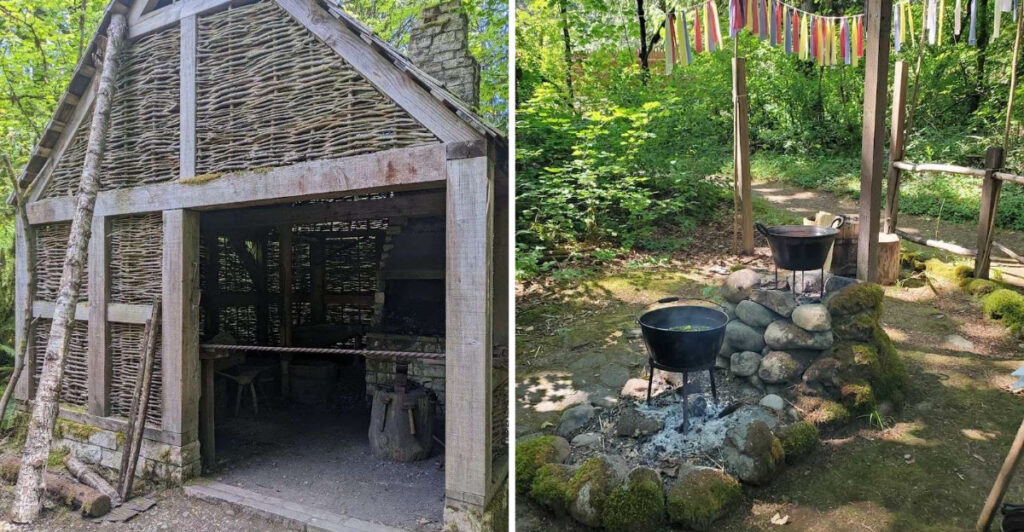
Your dinner reservation comes with a small timing problem. It is roughly 650 years early.
This Washington medieval dining experience does not simply borrow a few old recipes and dim the lights. The entire evening is modeled on a rural English village inn in 1376.
It is filled with medieval food, live minstrels, storytelling, period language, and a loaf of bread that moonlights as your plate.
Modern habits receive the night off. Phones stay away, and forks never received an invitation. Nobody is asking whether you would like to scan a QR code.
Instead, you eat with your fingers, learn what a borde knyfe is, and discover that dinner becomes much more interesting when the tableware requires a history lesson.
Washington has plenty of unusual restaurants, but very few ask you to leave several centuries at the door.
Your bucket list may need to clear an entire evening.
Dinner Begins In The Year 1376
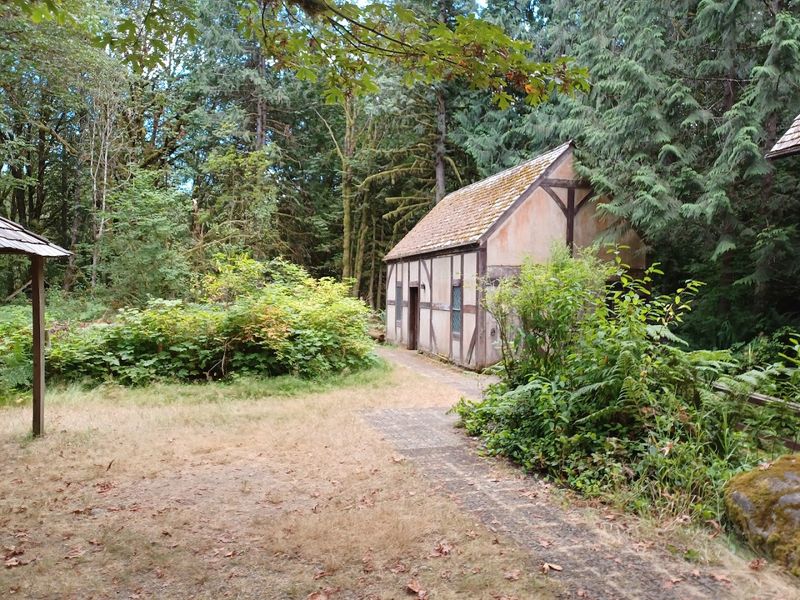
The date on your calendar says 2026. Camlann has politely chosen to ignore it.
Bors Hede Inne was built and opened in 1993 as part of Camlann Medieval Village. The inn was designed to represent a gathering place in a small rural village in southwestern England during the year 1376.
That larger setting makes the experience far more convincing than a dining room decorated with a few shields and wooden benches.
Camlann operates as a living-history museum where interpreters demonstrate parts of fourteenth-century daily life.
Depending on the day and program, visitors may encounter medieval cooking, blacksmithing, pottery, weaving, woodworking, music, and writing across the village grounds.
Bors Hede serves as the village inn within that reconstructed community. Guests are treated less like customers selecting dinner and more like travelers arriving somewhere to eat, rest, and hear the latest story.
The shift begins before the first course reaches the table. The grounds, buildings, language, and service all work together to separate the evening from an ordinary restaurant visit.
You are not merely ordering food inspired by history. For a few hours, history has taken over the reservation.
The Dining Room Makes 2026 Wait Outside
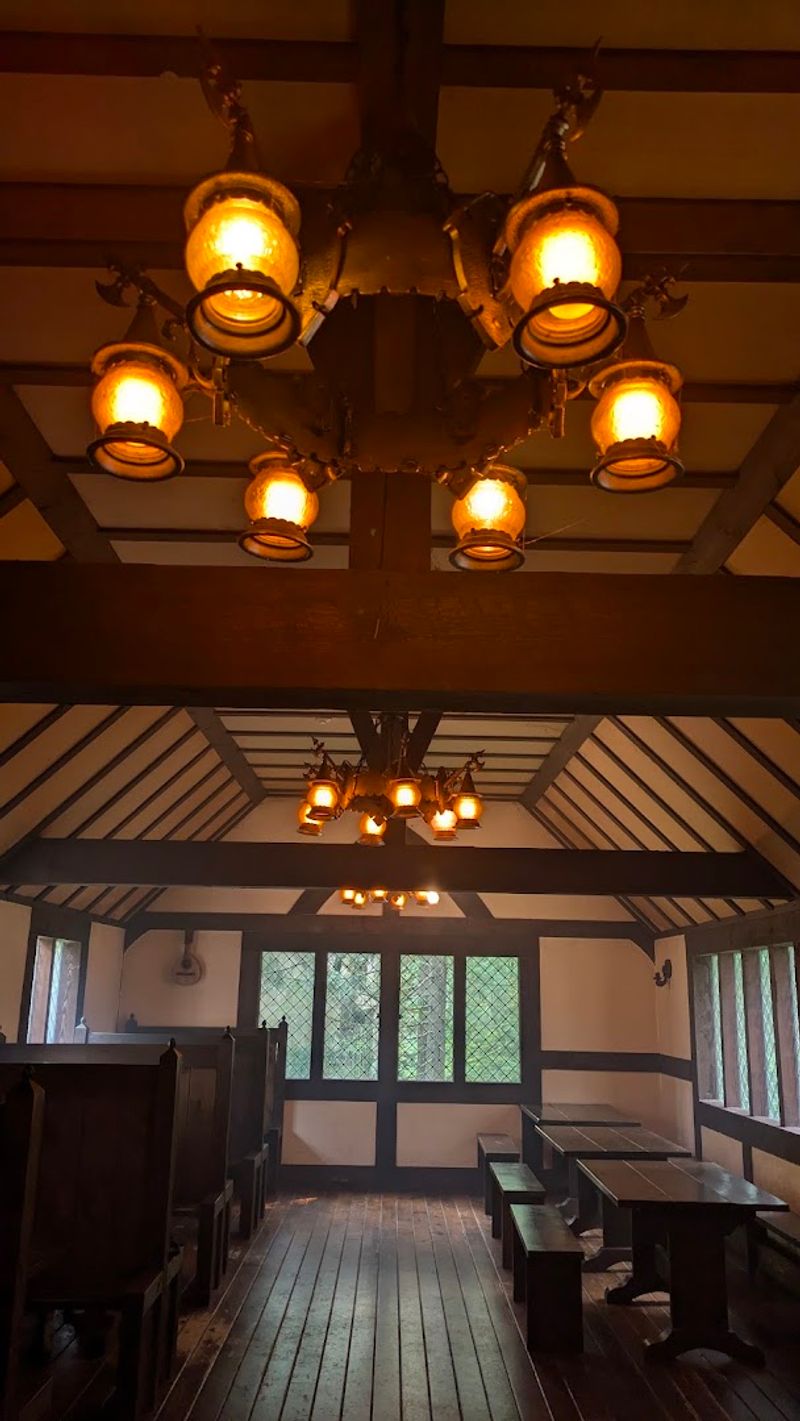
The wrought-iron-hinged door has one important job: keep the modern world from following you inside.
Beyond it waits a softly lit medieval dining hall warmed by the fire. The room avoids the usual distractions of a modern restaurant, allowing the historic presentation and live entertainment to carry the evening.
The published dining guidance asks guests to refrain from using phones, taking photographs, or recording video during service. That rule may initially cause a few nervous glances toward hidden pockets, but it supports the entire experience.
Nobody is rearranging the table for a photograph while the food cools. Nobody is watching a video with the volume accidentally turned up. The meal receives everyone’s full attention, which may be the most historically surprising detail of all.
Food arrives on pewter platters. Beverages are poured from earthen pitchers into drinking goblets, helping the table maintain its period character without turning the service into a display case.
The setting does not rely on one dramatic prop. Small details continue appearing as the evening moves forward.
By the time you realize nobody has checked a notification in twenty minutes, the fourteenth century has already won.
You will find this place at 10320 Kelly Road NE, Carnation, WA 98014.
Bread Takes Over The Dinner Plate
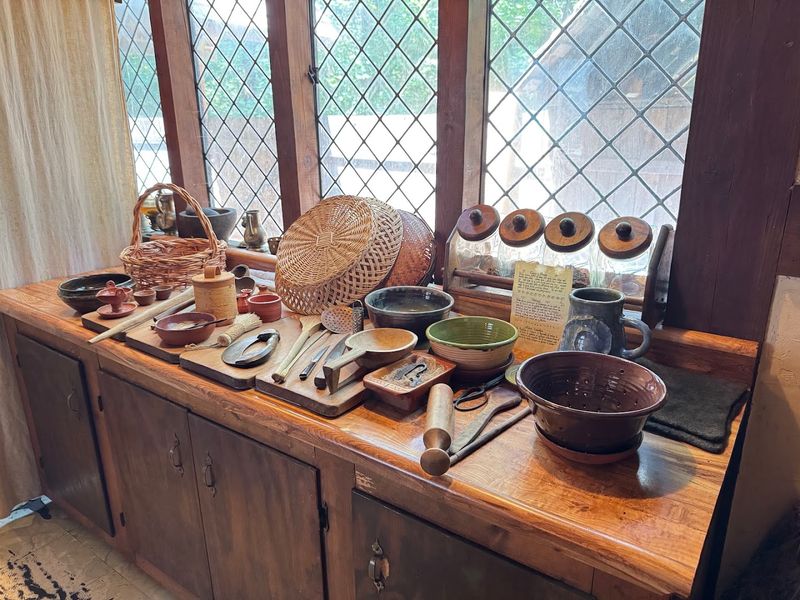
A plate you can eat is either excellent historical planning or bread showing off.
Each guest receives a trencher, described on the published menu as a halved sourdough loaf used in place of a conventional plate. Food is first presented on pewter platters before portions are transferred onto the bread.
The arrangement immediately changes the pace of dinner.
You eat using your fingers, a spoon, and a borde knyfe, the period term for a table knife. The familiar fork-and-knife routine disappears, leaving you to pay closer attention to the food and how you handle it.
The trencher also performs more than one job. It holds the meal, absorbs sauces, and gradually becomes part of dinner itself. Ordinary plates contribute very little by comparison.
Eating this way feels interactive without requiring a complicated performance. You are still having dinner. The tools, textures, and presentation simply make the process harder to ignore.
By the end of the course, the bread has carried the food, collected the flavors, and made a convincing argument for edible tableware.
A plate you can finish afterward gives the meal a punchline most modern restaurants cannot match.
Fourteenth-Century Recipes Run The Kitchen
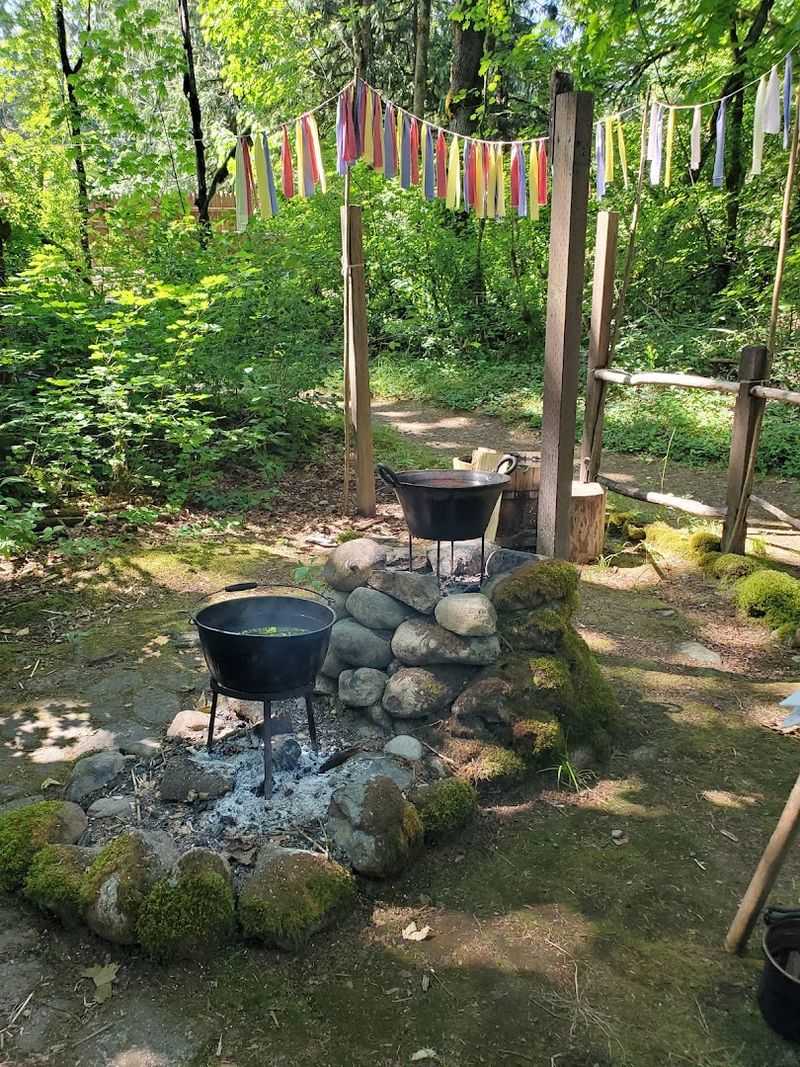
Medieval food has spent years being accused of blandness without being given a proper chance to defend itself.
Bors Hede builds its menus around recipes associated with fourteenth-century English cooking. The published materials cite medieval culinary sources, including The Forme of Cury, Diversa Cibaria, and other period texts.
That research produces dishes far more layered than the usual image of plain bread and a mysterious bowl of stew.
The menu has included rastons filled with poppy seeds, fennel, and currants, along with greens and herb salad, almond cakes, seasonal fruit, and English cheeses.
Rotating entrée selections have featured roast pork with a spiced savory sauce, salmon with hazelnut sauce, chicken with cinnamon and almond sauce, and a chicken-and-pork pie prepared with dried fruit and cranberries.
Specific dishes can change, so the exact meal may vary with the evening or event. That uncertainty fits the experience better than a permanent laminated menu would.
Vegetarian options are available. Guests should disclose allergies during booking or contact the kitchen at least 24 hours ahead. The kitchen is not gluten-free or nut-free, an important detail for anyone with dietary restrictions.
History may decide the recipe. Your appetite still gets the final vote.
Music And Storytelling Refuse To Stay In The Background
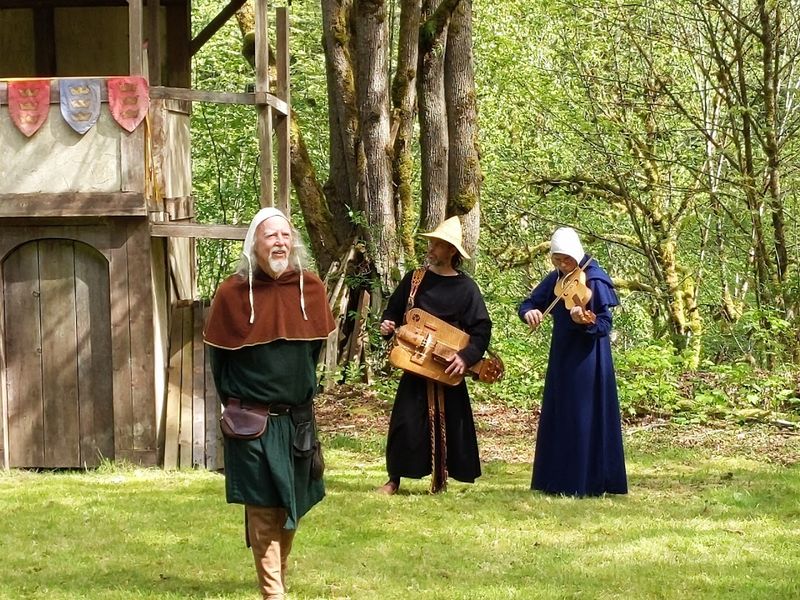
The playlist has been dismissed. The minstrels are handling dinner.
Live music and storytelling are woven into regular meals at Bors Hede rather than saved for one formal performance after dessert.
That placement matters. A song, tale, or exchange between courses keeps the evening moving without making the entertainment feel detached from the food.
The performers help establish the character of the inn and give guests another connection to the world Camlann is recreating. You are not listening to generic background music while trying to remember where you parked.
You are sharing the room with storytellers and musicians whose presence makes sense within the setting.
Entertainment can vary depending on the event. Regular dinners feature music and storytelling, while Camlann’s festival and seasonal feast programming may include additional period-inspired entertainment such as dancing, puppetry, or magic.
That means one visit may not unfold exactly like another. The unpredictability gives the evening energy without forcing guests into constant participation.
You can listen, laugh, eat, and occasionally wonder when your last dinner came with an actual minstrel. A restaurant speaker hidden above the ceiling suddenly feels painfully underqualified.
Even Handwashing Gets Its Own Ceremony
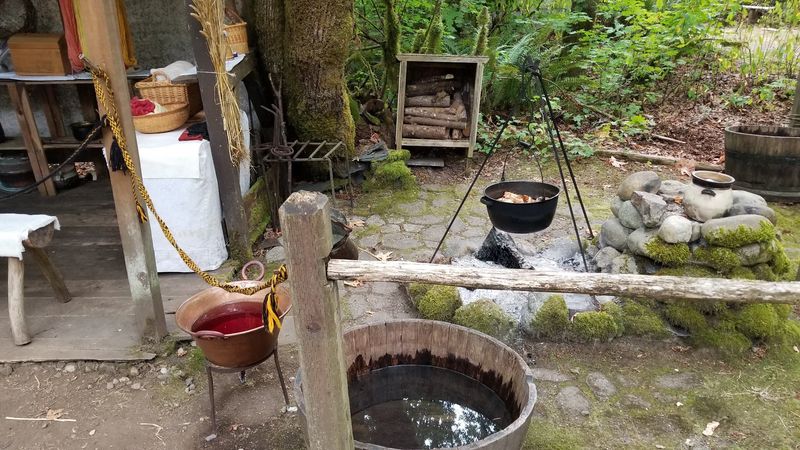
Before dinner begins, your hands receive more attention than they do at most spas.
The server brings linens and scented water to the table so guests can wash before the food arrives. The ritual is practical because much of the meal is eaten by hand, but it also signals that the evening follows its own rules.
Period language continues throughout the service. The table becomes the borde. The innkeeper is the hosteler. Your knife is a borde knyfe.
Those terms are not limited to a printed explanation that everyone forgets five minutes later. They become part of the interaction.
The server also explains what the kitchen has prepared, helping guests understand dishes that may carry unfamiliar names or ingredients.
Each detail is small on its own. Together, they make the meal feel far more cohesive than a restaurant that relies on decoration alone.
You are not expected to arrive fluent in Middle English or ready to perform a character. Curiosity is enough.
By the time the scented water disappears and the first platter arrives, washing your hands has somehow become the opening scene.
Reservations Open The Door To The Inne
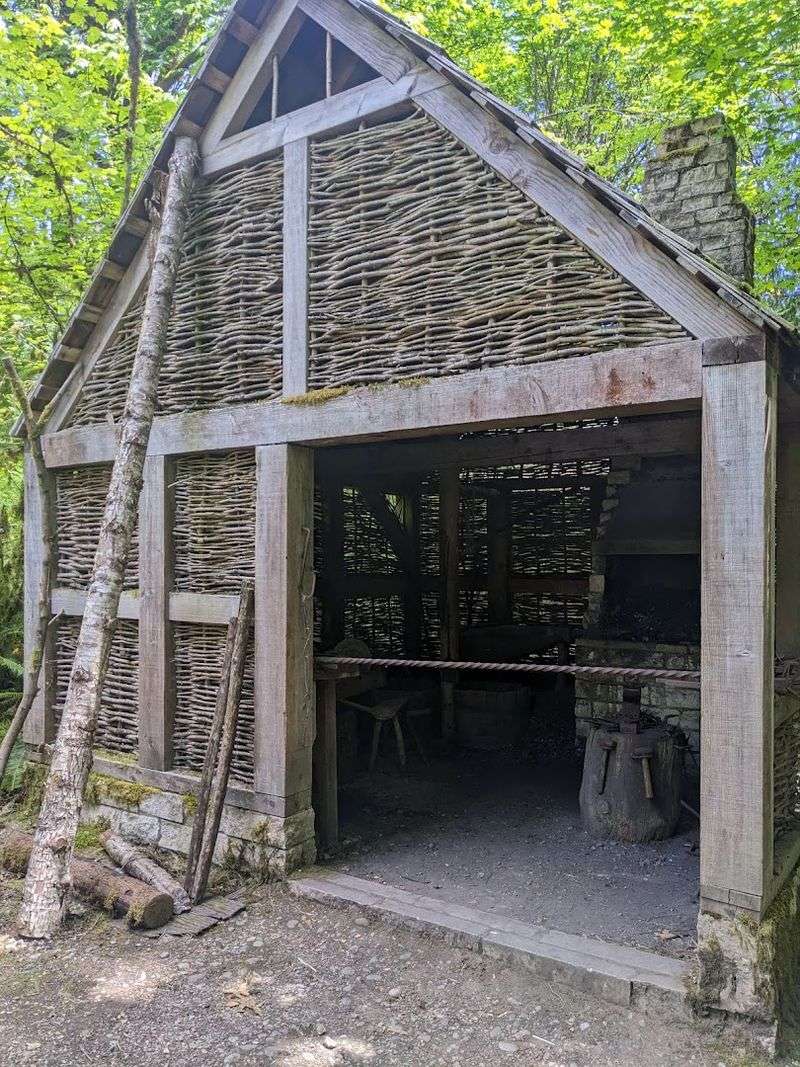
Spontaneity is wonderful until it leaves you standing outside a medieval inn without a confirmed seat.
Bors Hede currently serves dinner year-round on Saturdays and Sundays, with seatings available between 5 and 7 p.m. Reservations must be requested at least 24 hours in advance.
The restaurant confirms bookings manually by text or email, so submitting a request is not the same as receiving a completed reservation. Wait for confirmation before rearranging your weekend around the fourteenth century.
The outdoor living-history village operates on weekends from May through September. Visiting during that season gives you the opportunity to explore Camlann and encounter interpreters before the meal.
Bors Hede continues offering medieval dining beyond the main village season, making the experience available during cooler months as well.
Camlann also schedules seasonal feasts with distinct menus and additional entertainment. Those events follow their own calendars and may have limited availability, so checking the current schedule before choosing a date is essential.
The advance planning does not make the dinner inconvenient. It makes the evening feel deliberate.
You are reserving medieval recipes, live minstrels, storytelling, an edible bread trencher, and several hours without your phone. That deserves more preparation than deciding between takeout and leftovers.