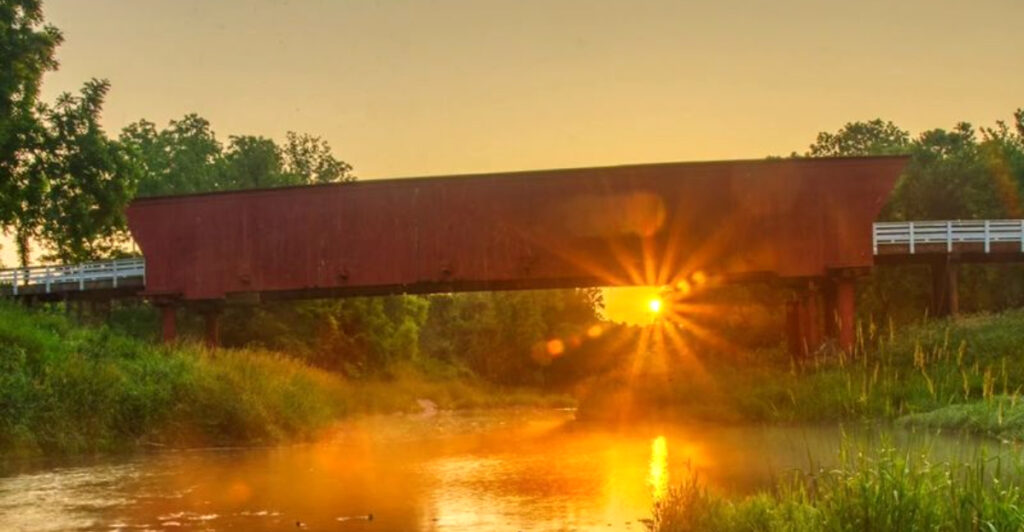
Iowa is not the first place my brain goes when someone says “Hollywood love story,” which is probably why this spot works so well.
It does not feel polished or staged. It feels quiet, rural, and real.
You drive out on gravel roads, hear the water below, and see old timber that looks like it has been holding onto stories for a very long time.
I came for the movie connection, because of course I did.
Then the bridge itself took over. The setting has a calm, slightly dramatic mood that makes you understand why a simple wooden structure in Madison County still pulls people in decades later.
For anyone curious about what a famous love story looks like after the cameras leave, this Iowa stop is worth slowing down for.
The Bridge That Started It All
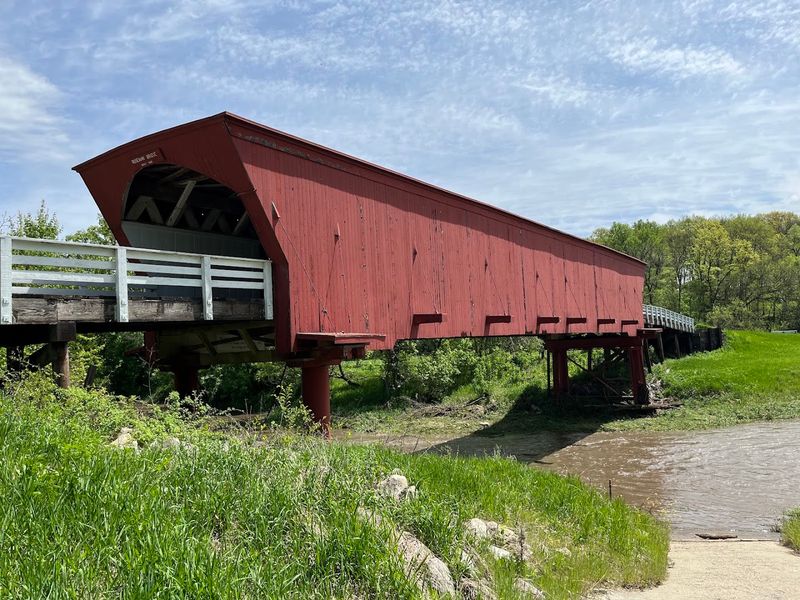
Built in 1883, the Roseman Covered Bridge is one of six remaining covered bridges in Madison County, Iowa, and it is the one that carries the most name recognition by a wide margin.
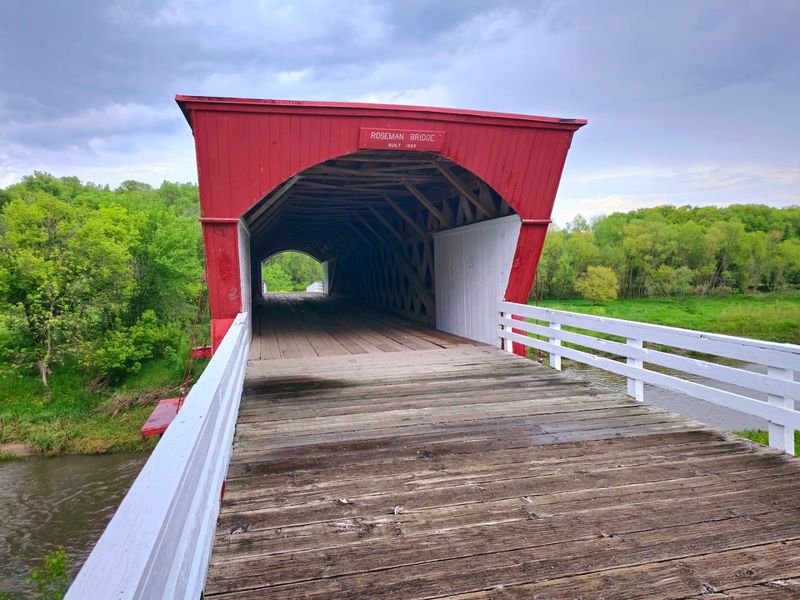
The covered span stretches 104 feet over the Middle River, and its wooden framing has held up through well over a century of Iowa winters, spring floods, and curious tourists.
You can find it at 2451 Elderberry Ave, Winterset, IA 50273, which sounds simple enough until you realize the last stretch of road is gravel. Most passenger cars can handle the route in normal conditions, though drivers should take extra care after severe weather.
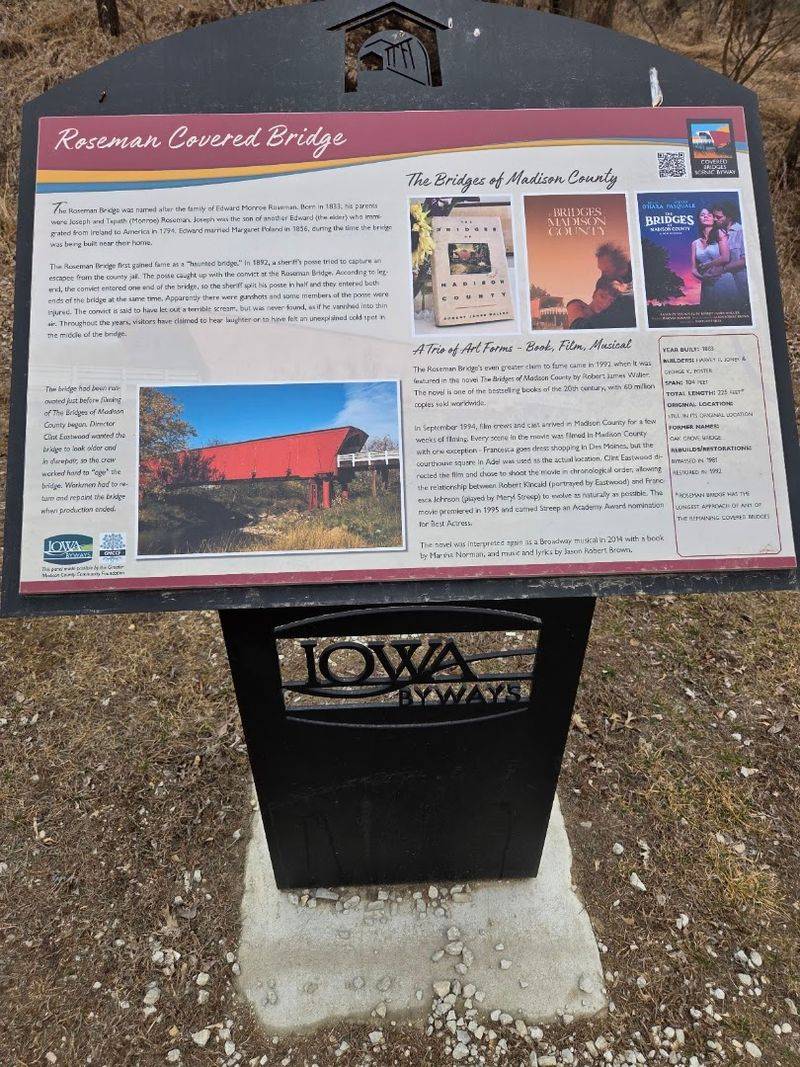
The bridge is open to the public, and there is no admission fee. An information kiosk near the parking area gives a solid overview of the bridge’s past.
First-time visitors often spend longer here than they planned, partly because the sound of the water rushing over rocks below the bridge is the kind of thing that makes you slow down without realizing it.
How a Novel Turned a Bridge Into a Legend
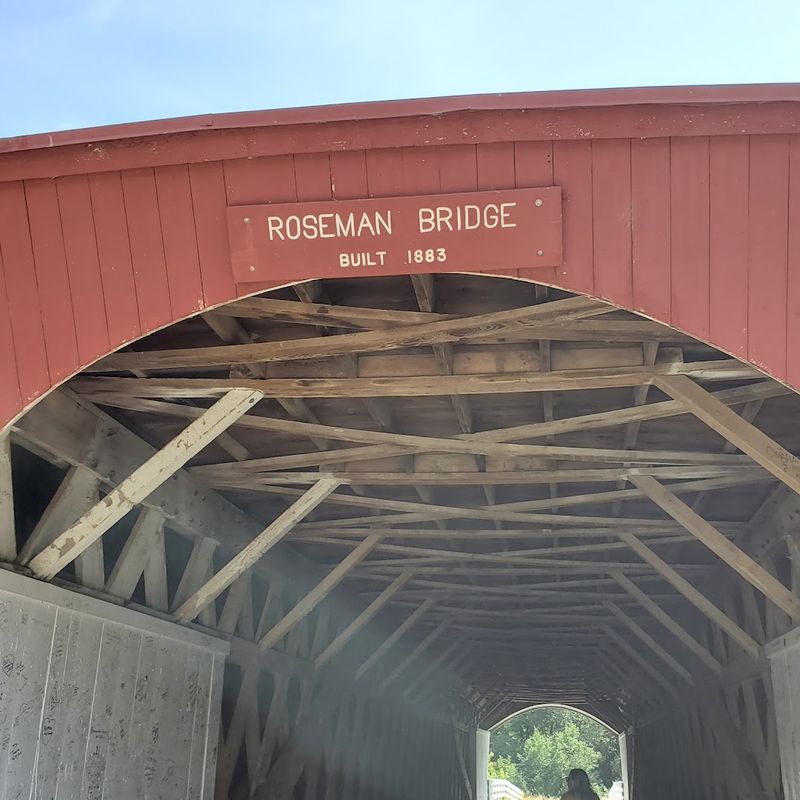
Robert James Waller published “The Bridges of Madison County” in 1992, and the book became an international publishing phenomenon.
The story follows a four-day romance between a traveling National Geographic photographer named Robert Kincaid and a farm wife named Francesca Johnson, who first meet at her farmhouse after he stops to ask for directions to the Roseman Bridge.
Waller was an Iowa native, and he drew from the real landscape of Madison County to build the setting. The Roseman Bridge appears by name in the novel, which gave it an identity that no amount of local tourism marketing could have created on its own.
By the time the 1995 film adaptation came out, with Clint Eastwood directing and starring alongside Meryl Streep, the bridge had already become a point of pilgrimage for readers.
The movie only deepened that pull.
People who have never set foot in Iowa know the name Roseman, and that kind of cultural reach, earned entirely through storytelling, is something the bridge wears with quiet confidence.
What the Film Crew Left Behind and What They Did Not
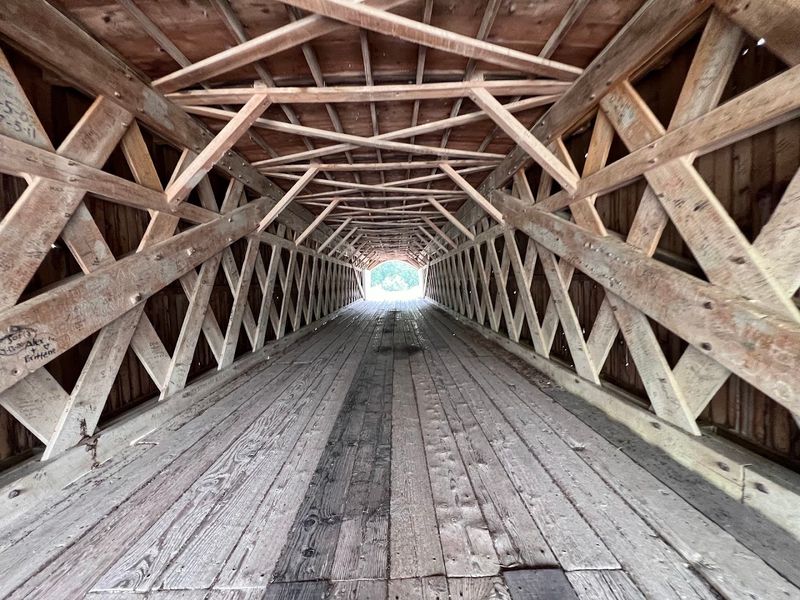
Filming took place in Madison County in 1994 for the movie released the following year, and the Roseman Bridge appears in key scenes.
Clint Eastwood wanted to use the real bridges rather than studio recreations, which meant the production brought cameras and crew to these gravel roads in rural Iowa.
The bridge had recently been renovated, so the film crew temporarily aged its exterior to make it look older and more weathered for the movie’s 1965 setting. Workers later returned to repaint the bridge after production ended.
What the crew did not leave behind was a permanent movie set or replica. You are walking through the actual historic bridge where those scenes were filmed.
The walls inside the bridge contain graffiti left by visitors over the years, mostly names, hometowns, and dates. It creates a layer of informal history that gives the interior a noticeably different texture from a freshly painted surface.
Somewhere in those layers of pen and marker, there are notes from people who drove out here specifically because of a book they read in 1992.
The Ghost Story That Predates the Romance
Long before Waller put the Roseman Bridge in a novel, the bridge already had a ghost story attached to it.
Local legend holds that in 1892, a man accused of a crime fled from a posse and ran into the bridge, only to vanish completely. No one ever found him inside or on the other side, and the story spread that he had simply disappeared into the timber.
The legend earned the bridge a local nickname: the haunted bridge. Madison County leans into this history around Halloween, and a few visitors mentioned stopping by specifically for nighttime photos during the holiday.
The atmosphere at dusk, with the creek rushing below and the wooden walls closing in on both sides, does tend to cooperate with spooky intentions.
Whether you believe in the ghost or not, the story adds a second layer to the bridge’s identity that feels completely separate from the Hollywood connection.
This is a structure that had its own mythology before a single camera ever pointed at it, and that detail tends to surprise people who assumed the fame started in 1992.
Best Time to Visit and How the Light Behaves
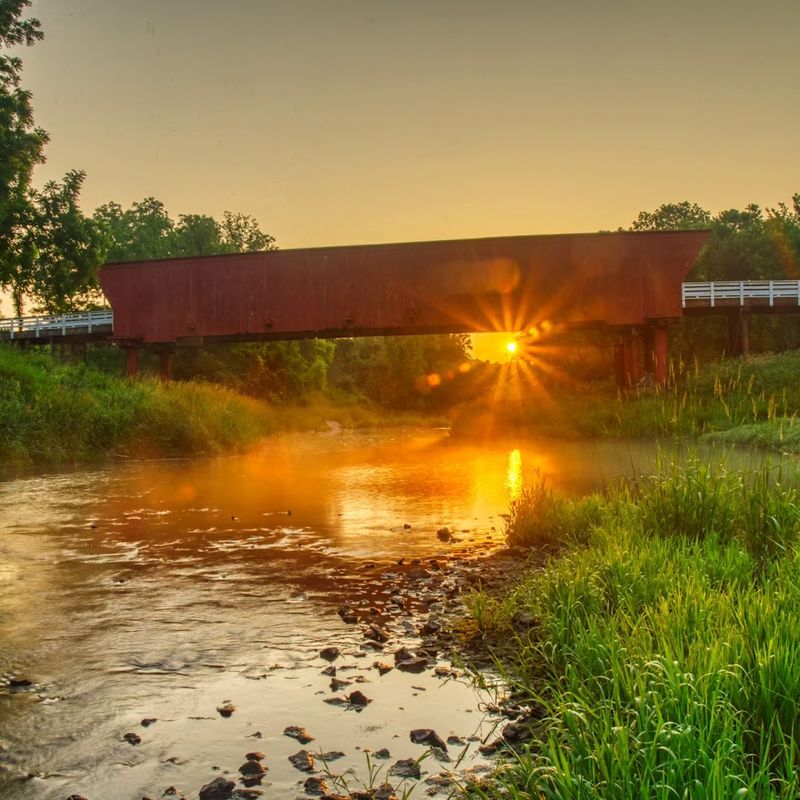
Dawn and dusk are not just poetic suggestions here. The way the light hits the bridge at those hours is genuinely different from midday, when the sun sits high and flattens the texture of the old wood.
Early morning light catches the grain of the timber and reflects off the creek in a way that makes the whole scene look like it was staged for a photograph, even though nothing has been arranged.
Fall is the most popular season, and for good reason. The surrounding trees turn in late October, and the contrast between the red-brown wood of the bridge and the orange and gold of the leaves makes for a combination that photographers plan trips around.
Summer visits are quieter and greener, with the creek running fuller and the wildflowers lining the gravel roads in full display.
Winter visits are less common but have their own appeal. A dusting of snow on the roof of the bridge and ice along the creek bank turns the whole scene quieter and more austere.
Whichever season you choose, arriving at either end of the day rather than midday will reward the effort with noticeably better light and fewer people sharing the parking area.
The Gift Shop, the Kiosk, and the Practical Stuff
A small gift shop operates near the Roseman Bridge, though its hours are not always predictable. Multiple people have shown up to find it closed, so treat the gift shop as a bonus rather than a guarantee.
When it is open, it carries local items, books about the bridges, and some Madison County memorabilia that you will not find at a chain store.
The information kiosk near the parking area is always accessible and provides a clear overview of the bridge’s construction history, its place in the covered bridge network, and details about the film connection.
It is a better orientation tool than most national parks offer, and it costs nothing to read.
Parking is limited, so arriving early on weekends helps. The bridge no longer allows vehicles to drive across it, which means you walk through on foot.
The gravel steps near the bridge can take you down toward the creek for a lower angle view of the structure, and that perspective is worth the short scramble.
One practical note: mind your step on the way down, and keep an eye out for bees, which a few visitors have mentioned finding near the base of the bridge.
Six Bridges, One County, and a Scenic Drive Worth Planning
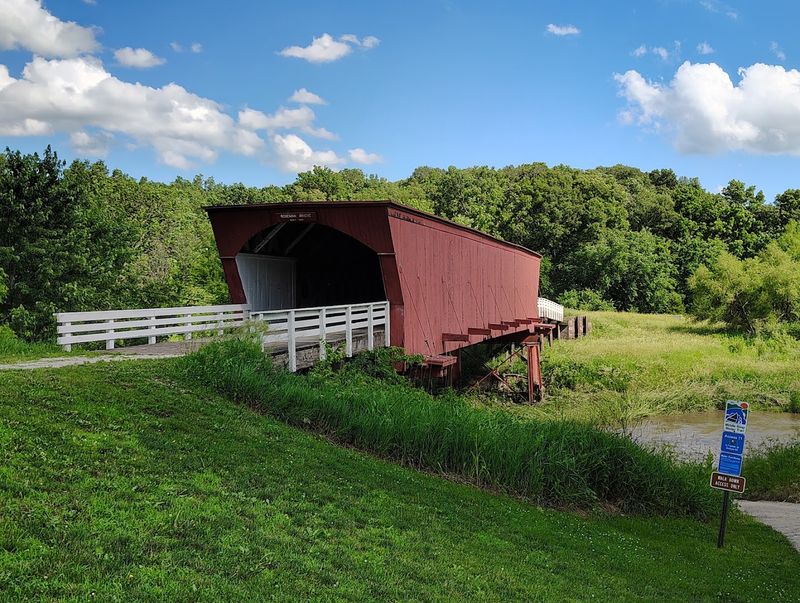
Madison County once had at least 19 documented covered bridges. Most were dismantled, deteriorated, or otherwise disappeared over time.
Six remain today, five of which are original, and the county has connected its bridges and other attractions through the Covered Bridges Scenic Byway. Roseman is the most famous stop, but the others each carry their own history and their own atmosphere.
Some bridges have plaques indicating whether they sit in their original locations or were moved at some point. That detail matters if you are interested in the engineering and preservation side of the story rather than just the film connection.
Several bridges also include modern preservation and protective features, practical additions that can feel a little surprising when you notice them but make complete sense given how irreplaceable the structures are.
The drive between bridges takes you through flat stretches of farmland and then over rolling hills, past fields of wildflowers and along roads lined with trees that form a canopy overhead in summer. A map from the Winterset Welcome Center will help you sequence the stops efficiently.
Visitors can cover all six in a single day without feeling rushed, and the drive itself becomes part of the reason to go.
Winterset Beyond the Bridge and Why You Should Stay Longer
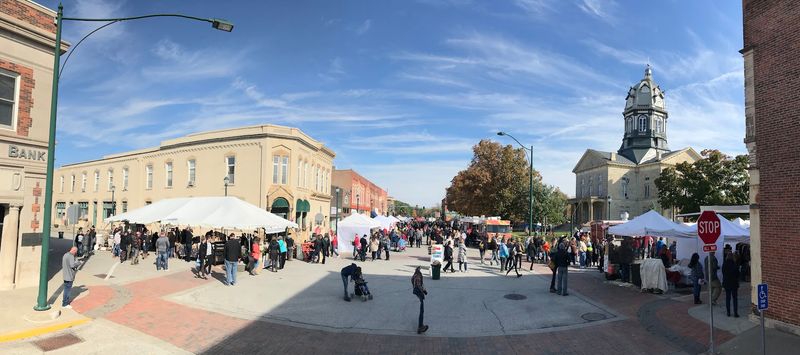
Winterset is a small Iowa town that punches well above its size in terms of what it offers a day visitor.
John Wayne was born here in 1907, and his birthplace museum sits in the downtown area as a well-maintained tribute to one of Hollywood’s most recognizable figures.
The combination of Wayne’s birthplace and the Bridges of Madison County connection gives this town an unusual double claim to cinematic history.
The downtown square has the Iowa Quilt Museum, local restaurants, and a Welcome Center that can set you up with maps, recommendations, and a clear sense of how to spend the rest of your day.
The staff at the Welcome Center can also help arrange guided tours of the bridges if you prefer having someone explain the history in person rather than reading it off a kiosk.
Plan to arrive in Winterset first, grab a map, get a meal, and then head out to the bridges in the afternoon. That sequence works better than the reverse, especially if you want to catch the Roseman Bridge at dusk without rushing.
The bridge is about eight miles southwest of Winterset, close enough that doubling back is easy and worth doing.