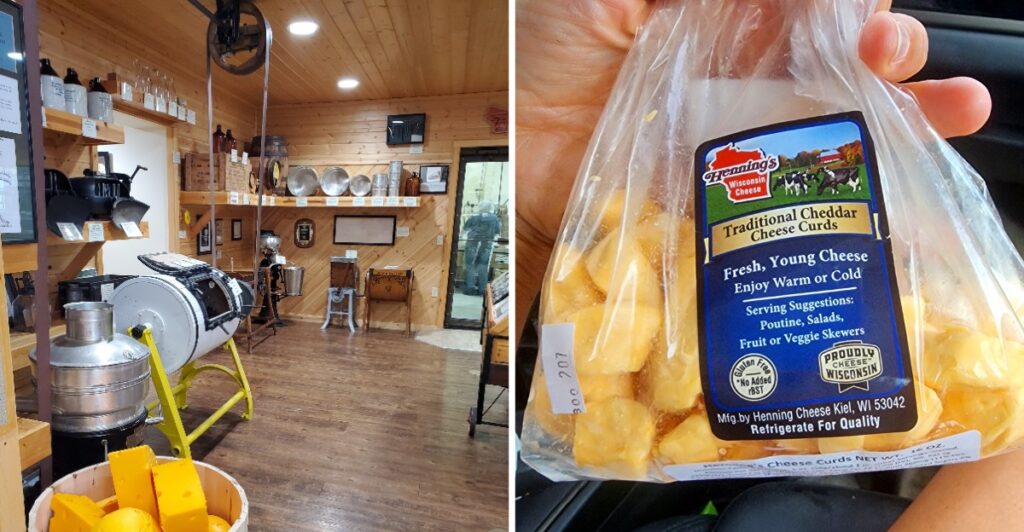
Fresh cheese curds are not known for waiting around.
If you want them warm, weekday morning is your best move.
That is when production is in full swing. Fresh curds follow soon after.
The Wisconsin connection runs deeper than the cheese counter.
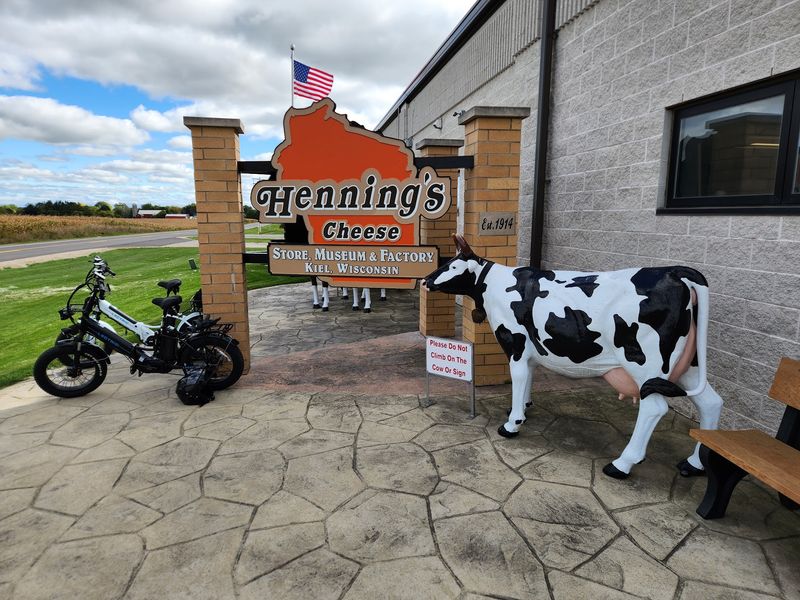
The family has been making cheese since 1914, and the business still works with milk from nearby dairy farms.
There is more to see than what is coming out of production that day, too. Old cheesemaking equipment gives you a look at how much the process has changed over the years.
Saturday still works if you want to shop and browse.
But if warm curds are the mission?
I would set the alarm and let breakfast know it has competition.
Watch Cheesemaking Through The Viewing Windows
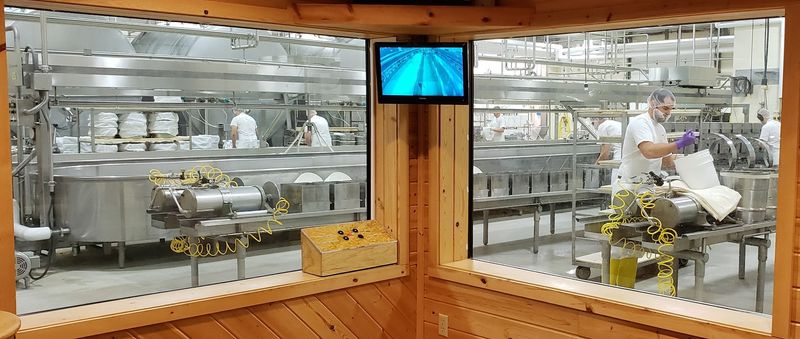
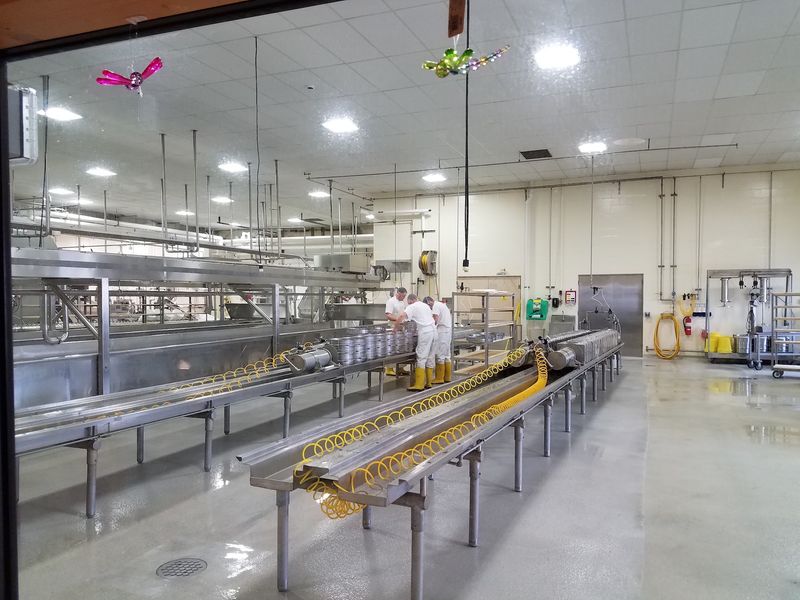
Henning’s store and museum include viewing windows that look into the production area, giving visitors a direct view of cheesemaking in progress.
Production viewing is best in the early morning from Monday through Friday. The exact work underway can vary with the day’s schedule, so an early arrival gives you the strongest chance of seeing activity on the factory floor.
From the viewing area, you can watch current production before moving on to the store and museum.
Do not assume the factory will be active every minute the store is open. Store hours extend beyond the main morning production window, and production needs can shift from day to day.
If watching cheese being made is your priority, choose a weekday morning. Shopping allows a broader window because the store stays open beyond the main production-viewing period.
The store is open Monday through Friday from 7 a.m. to 4 p.m. and Saturday from 8 a.m. to noon. It is closed on Sunday.
Once you have seen the production area, the rest of the visit can stay simple: browse the cheese cases, sample available cheeses, and save time for the museum before you leave.
Fresh Warm Curds Are A Weekday Specialty
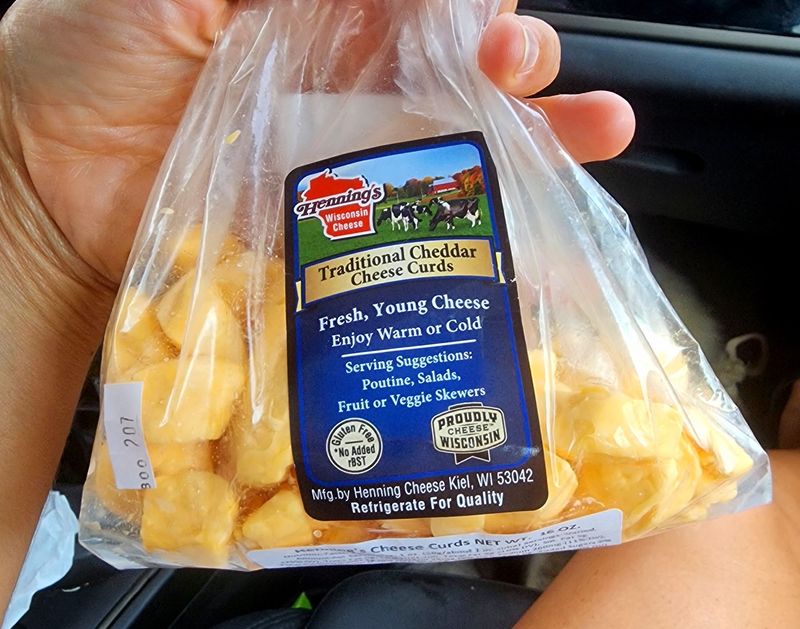
Fresh, warm cheese curds are available Monday through Friday, which makes weekday timing useful for more than just the viewing windows.
Curds are sold in several varieties, including traditional, two-tone, white, garlic-and-dill, and Cajun options. Availability can change with production, so the exact selection may not be identical every day.
Fresh curds are known for their springy texture and characteristic squeak when very fresh. If that is the experience you want, buy them close to the time they were made rather than waiting until the end of a long day on the road.
A small cooler is useful if the curds are traveling farther than the next stop. It keeps the purchase easy to manage once the bag leaves the store.
Weekday mornings also let you combine two parts of the visit in one trip: watch production first, then shop for fresh curds while you are already there.
Saturday hours are shorter, and the regular fresh, warm curd schedule is tied to Monday through Friday. If warm curds are the main reason for stopping, plan around the weekday schedule instead of hoping for the same setup on Saturday.
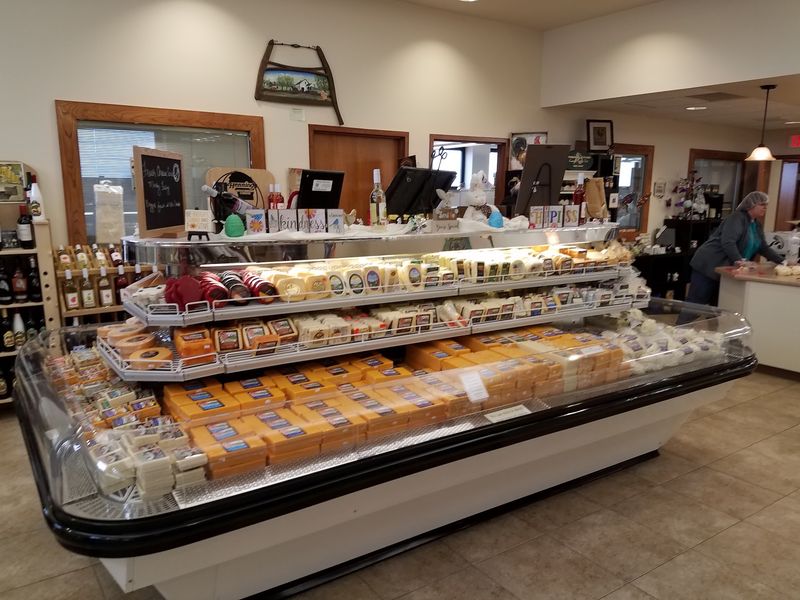
Beyond curds, the store carries blocks, cuts, flavored cheeses, and other products made by the company, so the counter can turn into a much longer stop than a single bag of curds.
The Family Cheese Business Began In 1914
Henning’s family history begins in 1914, when Otto and Norma Henning bought a small rural cheese factory near Kiel.
Founder Otto Henning received his Wisconsin cheesemaking license in 1914.
The business continued through later generations. Everett and Jellane Henning took over in 1963, and the company eventually expanded at its current location while keeping the family name attached to the cheese operation.
The timeline stretches from the 1914 beginning through the 1963 transition to the next generation and into the family’s current involvement in the business.
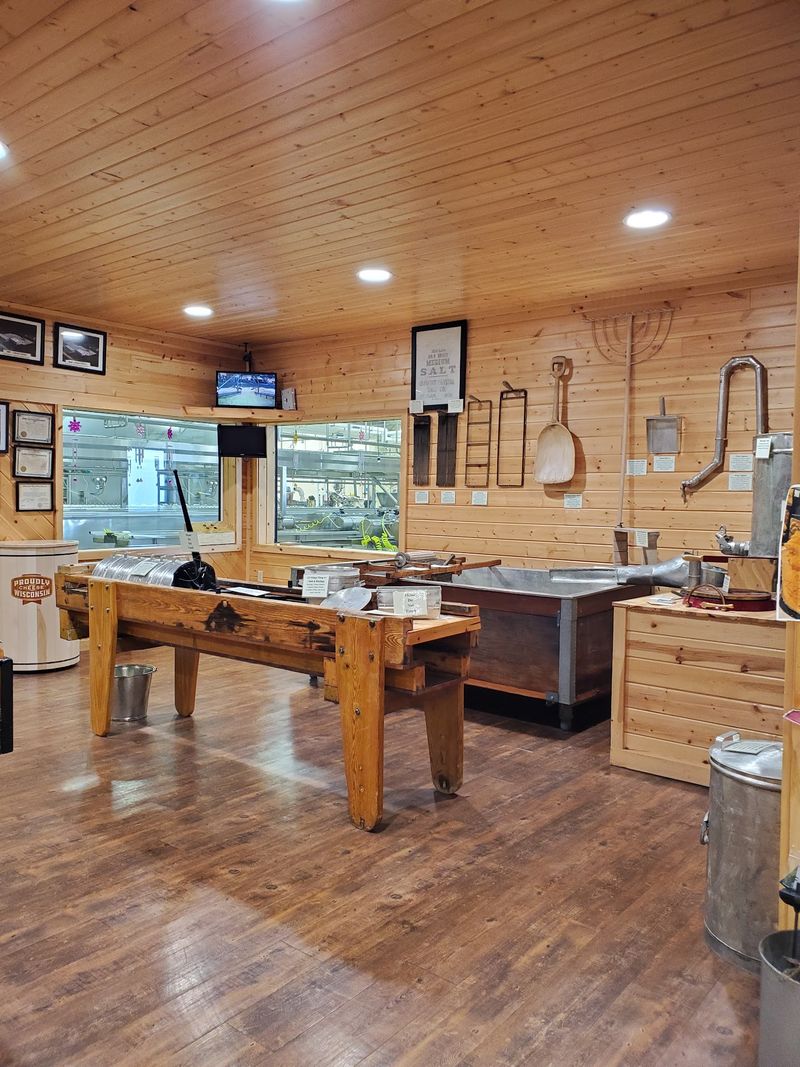
That history also sits alongside the modern production floor. A visitor can look through the windows at current equipment, then step into the museum and see tools from earlier periods.
If you like food history, spend a few minutes with the older equipment after watching production. The contrast between the current factory floor and the museum displays is easy to see without leaving the building.
Today, local milk, family ownership, and cheesemaking remain connected within the same operation near Kiel.
Four Generations Continue The Family Operation
Henning’s operates as a fourth-generation family cheese company.
Members of the Henning family remain involved in the business today, including Everett Henning’s grandchildren Mindy, Rebekah, Joshua, and Zachary.
They expanded their growing cheese factory again in 1986.
The family name still appears across the products, store, and factory, while several descendants remain involved in the present operation.
Inside the store, samples are available, which can make it easier to compare cheeses before choosing what to take home. The selection can vary, so start with what is available that day rather than arriving with a fixed tasting list.
If you are choosing among several styles, ask practical questions about texture, sharpness, heat level, or how a cheese is commonly used. That keeps the decision focused on what you actually want to eat.
The family story also appears through the museum and historical displays, where older equipment places the current factory within a longer local cheesemaking timeline.
That makes the museum an easy next stop after the viewing windows, especially if you want to compare present-day production with the tools used by earlier cheesemakers.
By the time you move back to the retail cases, the visit has covered several layers of the same business: family history, current production, older equipment, and finished cheese ready to take home.
Milk Comes From Farms Within Thirty Miles
Henning’s sources its milk exclusively from small local family dairy farms within a 30-mile radius of the factory.
The dairy farmers pasture-feed their cows when weather conditions permit.
The milk used in production comes from those nearby family dairy farms.
The factory sits within Wisconsin dairy country, and the milk used there comes from family dairy farms within 30 miles.
The company’s cheese lineup includes Cheddar, Colby, Monterey Jack, and flavored varieties.
Henning uses vegetable-based annatto to color some of its cheeses.
If you are building a small take-home selection, compare a familiar cheese with one style you do not buy often.
You can move from the production windows to the retail cases and see finished cheeses made from milk sourced close to the factory.
iFor a take-home selection, keep the choice simple by pairing one familiar style with a cheese that uses a different texture, age, or seasoning.
A Wisconsin Master Cheesemaker Guides Production
Kerry Henning is a certified Wisconsin Master Cheesemaker, with certifications in Cheddar, Colby, and Monterey Jack.
His Master Cheesemaker certifications were earned in 1999 for Cheddar and in 2002 for both Colby and Monterey Jack.
Wisconsin’s Master Cheesemaker program requires extensive professional experience, formal coursework, a three-year apprenticeship, cheese-quality evaluations, and a final written examination.
The company’s lineup includes Cheddar, Colby, Monterey Jack, Pepper Jack, Habanero Jack, and flavored Cheddars.
The cheese store and museum are at 20201 Point Creek Road, Kiel, WI 53042. Use that address for the factory store itself, and aim for an early weekday arrival if production viewing and warm curds are both part of the plan.
Once inside, keep the shopping strategy simple. Pick a familiar cheese first, then add one style with a different texture, age, or level of heat.
That approach gives you a practical way to explore the case without turning the visit into a formal tasting session.
The Museum Shows Earlier Cheesemaking Tools
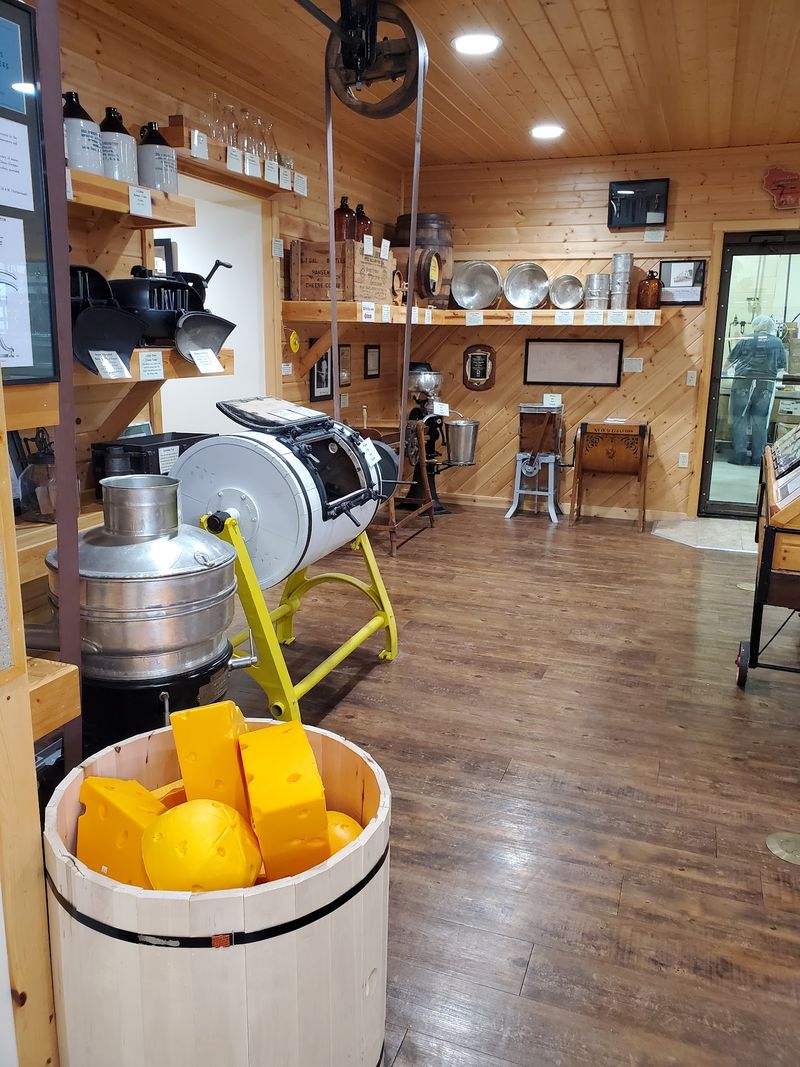
The cheese museum opened in 2008 inside the store.
Its displays include an old cheese vat, cheese press, cream separator, butter-making equipment, butterfat-testing tools, a can washer, cheese forms, milk-receiving equipment, and wooden cheesemaking tools.
The museum places those older tools in the same building as the current production area, so you can examine both during one visit.
It also screens a video explaining the cheesemaking process.
Instead of leaving the property to find a separate history stop, you can move directly from the production windows to older tools in the same building.
Allow enough time to read the displays rather than treating the museum as something to pass on the way to the checkout counter.
The older vat, press, separators, and hand tools also make the differences between past and present equipment easy to notice.
After the museum, return to the store for anything you decided not to buy on the first pass. Samples can help narrow the choice, while the cases give you room to compare different styles and sizes before checking out.
If you are carrying cheese for the rest of a road trip, bring a cooler so the final stop at the counter does not complicate the drive.
A weekday morning can combine production viewing, fresh warm curds, shopping, and the museum in one stop.