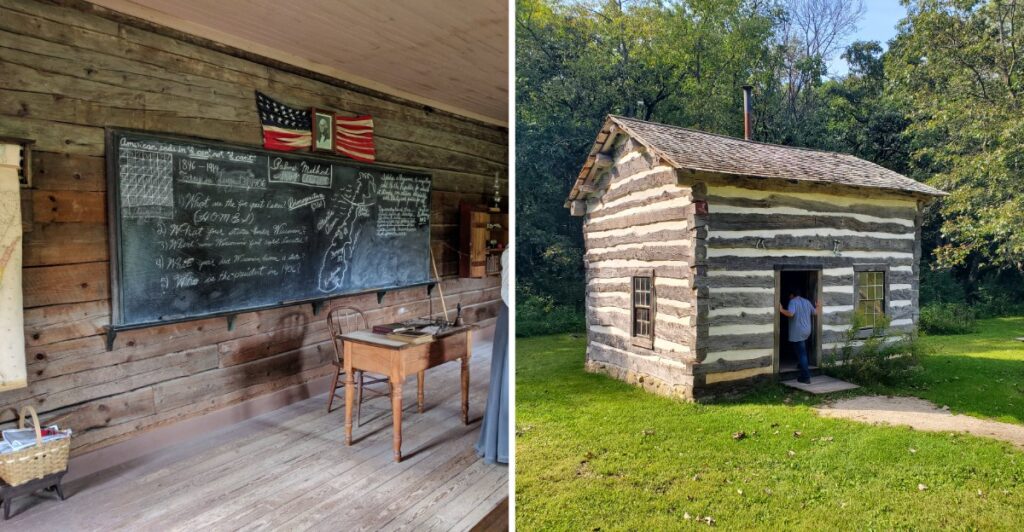
Imagine liking an old farmhouse so much that moving it seems easier than saying goodbye.
Wisconsin actually did that here.
Historic buildings were documented around the state, carefully dismantled, and rebuilt across hundreds of acres. Now you can walk through the results instead of staring at them behind glass.
And walking is definitely part of the deal.
One doorway may lead into a furnished home. Farther along, a barn or workshop sends you into a completely different chapter of daily life.
The space between them matters too. Fields and woodland paths keep the visit from feeling like one long museum hallway.
There is a tram when your feet start filing complaints.
With dozens of historic buildings scattered around, trying to see everything is ambitious.
History has 600 acres to unfold here, which leaves one lovely dilemma: where do you begin?
Sixty Historic Buildings Spread Across 600 Acres
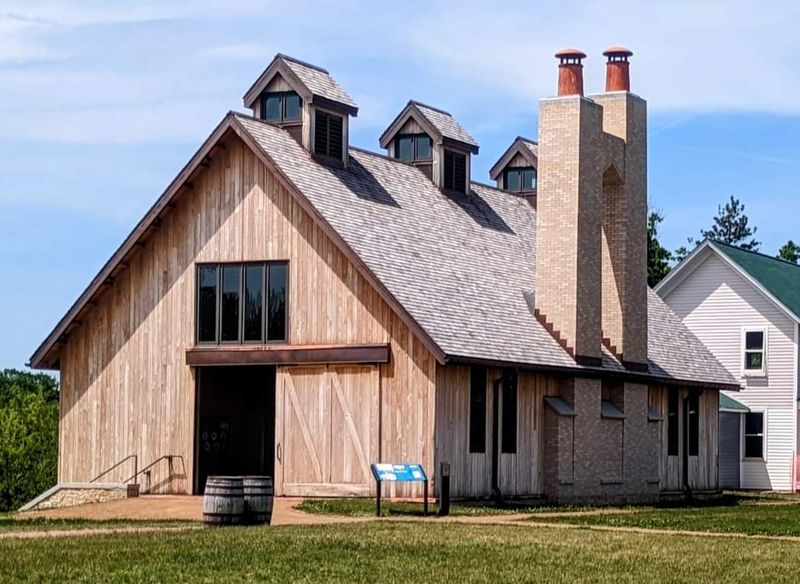
Old World Wisconsin first opened in 1976 as Wisconsin’s official bicentennial project.
Researchers had traveled across the state looking for historic buildings connected with early immigrants and migrants, documenting farmhouses, outbuildings, shops, and small-town structures before selected buildings were moved to Eagle.
That work created a site with 60 authentically restored historic homes, farms, stores, and workshops.
The landscape around them matters too. Woodlands, prairie, wetlands, fields, paths, and open space separate the different historic areas rather than squeezing everything onto one museum block.
The distance helps the buildings make more sense. A farm should not feel like it shares a backyard with a general store, and a rural home gains context when the next stop requires an actual walk. The spacing also means comfortable shoes earn their keep early.
Not every building functions the same way on every visit. Staffing, programming, weather, and seasonal activities can affect what is happening inside particular spaces. That gives the day some flexibility instead of turning it into a race through 60 identical stops.
Pick two or three areas that matter most, then leave room for detours. The building that steals the extra ten minutes may not be the one anyone circled first.
Crossroads Village Packs A Town Into One Walkable Area
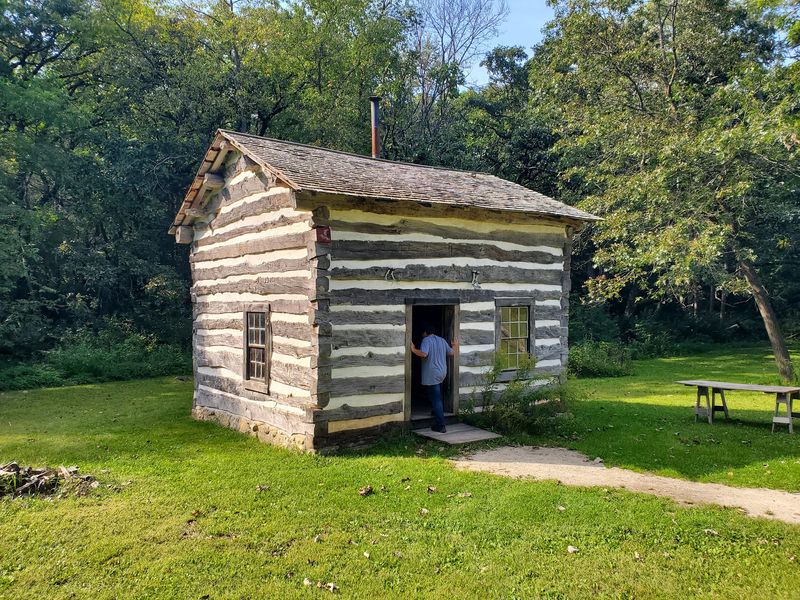
Crossroads Village shifts the experience from scattered farmsteads to a compact small-town setting.
Historic buildings sit close enough together that visitors can move between a general store, blacksmith shop, chapel, homes, and other community spaces.
The general store turns shopping history into something easier to picture. Shelves, counters, goods, and the layout show how one business could handle many of the everyday needs now divided among several modern stores.
A few doors away, the blacksmith shop changes the soundtrack. Demonstrations can put hammer, forge, and metalworking techniques into motion, while the nineteenth-century chapel offers a quieter interior with pews and a pulpit.
This is also a good place to slow down and look at the buildings themselves. Doorways, windows, floor plans, counters, and workspaces reveal practical decisions people once made without needing a long explanation attached to every object.
Families may find the tighter layout useful before heading toward the farms. Several experiences fit into a smaller area, so younger legs can rack up discoveries without immediately racking up miles.
Start with the store or follow the sound of the forge. Crossroads Village gives indecisive groups a rare advantage: both choices are close.
Farmsteads Show How Different Communities Built Daily Life
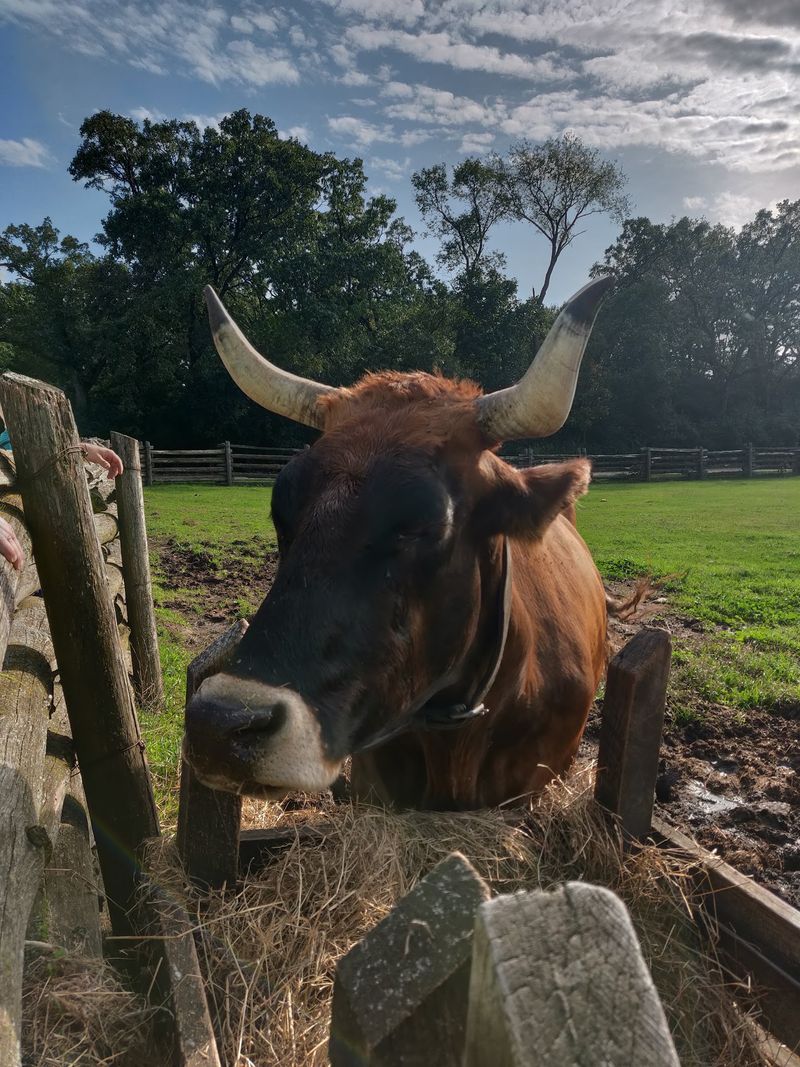
The farming areas widen the distance again and shift attention toward fields, barns, livestock, tools, gardens, and household routines.
Old World Wisconsin uses these spaces to explore several communities that shaped the state, including Pomeranian, Polish, Hessian, and African American farming stories.
The buildings do more than provide old walls for artifacts. Farmhouses, barns, outbuildings, equipment, and surrounding land show how work and home life overlapped.
Cooking, planting, animal care, harvesting, repairs, and food preservation all belonged to the same yearly rhythm.
Historic farm buildings also reveal differences that are easy to miss when every old house is grouped under one label.
Construction methods, room arrangements, barn forms, and tools could vary with cultural traditions, available materials, family needs, and the period represented.
Fall brings traditional harvesting, wool work, pickling, preserving, and other demonstrations tied to the agricultural calendar.
This is the part of the visit where distance becomes noticeable. Farms naturally spread out, and paths between them take more time than a quick lap around Crossroads Village.
Use the tram when the feet start negotiating. Saving some energy for the next farmhouse is more useful than proving everyone can walk all 600 acres.
Scandinavian Homesteads Change The Shape Of Home
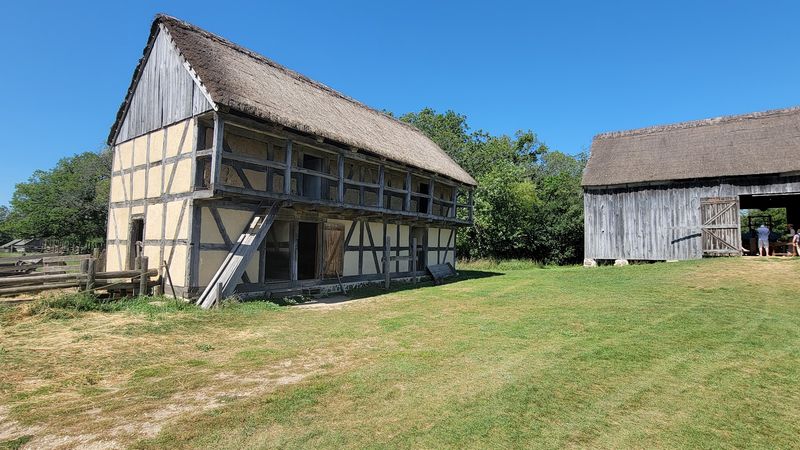
Another section focuses on Finnish, Danish, and Norwegian immigrant homesteads. Log cabins, timber construction, stoves, farm buildings, and household spaces make it possible to compare how Scandinavian families adapted familiar building traditions to life in Wisconsin.
The area includes an 1890s Finnish farm, a 1910s Finnish farm, an 1890s Danish farm, an 1840s Norwegian settler’s cabin, and an 1860s Norwegian farm. Moving among them prevents “Scandinavian” from becoming one oversized category.
A cabin from the 1840s does not tell the same story as a farm several decades later. Materials, available resources, family circumstances, and changing technology affected what a home could look like and how work happened around it.
Step inside when a building is open and the scale becomes easier to read. Rooms can be compact, windows smaller than modern ones, and household objects arranged around jobs that once consumed far more time.
Look at the practical details rather than trying to memorize every date. Where is the stove? How much storage is there?
Which tools stay close to the house, and which belong farther out?
That turns architecture into a small puzzle instead of a lecture. The answer is usually connected to how somebody cooked, worked, stayed warm, or made limited space behave itself.
Hands-On Activities Keep The Visit Moving
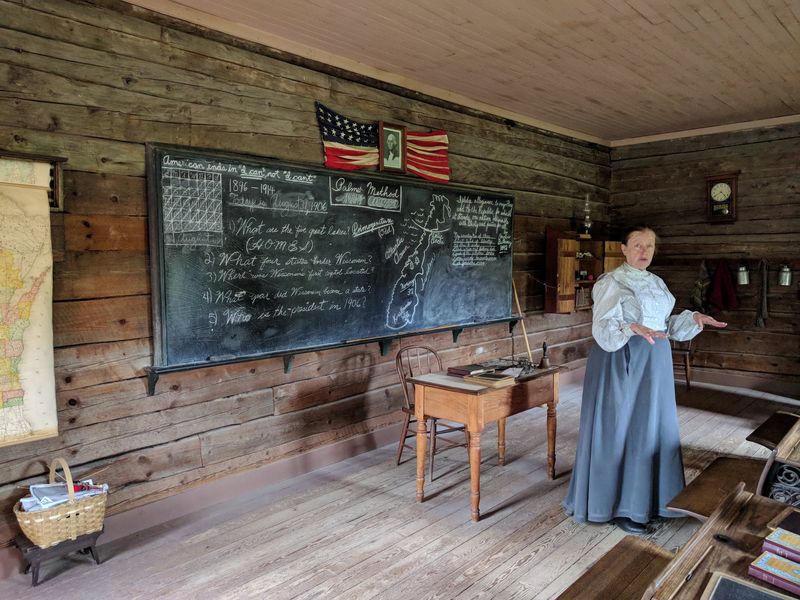
Old World Wisconsin does not ask visitors to spend the entire day looking through doorways. Hands-on experiences are built into the site, although individual activities can vary with staffing, season, weather, and programming.
Depending on the day, hands-on activities may include helping bake bread, trying on period clothing or wooden shoes, shopping in the historic general store, and exploring traditional crafts.
Some make-and-take experiences require a separate token, so anyone with one particular activity in mind should check availability before building the day around it.
Wagon Works adds another interactive stop inside the 1880s Wagon Shop. Visitors can work with model wagons, historic-style tools, materials, schematics, and design ideas connected with nineteenth-century transportation.
Blacksmithing provides a different kind of motion. The forge and shop connect tools, repairs, and transportation to the people who had to make or mend essential metal objects before replacement parts were a quick order away.
Children can participate without the day turning into a school assignment, and adults have enough detail to stay occupied while the younger crew experiments.
Choose one activity that requires hands, not just eyes. After several houses and barns, building, trying, turning, or testing something changes the rhythm at exactly the right time.
The New Welcome Center Gives The Day A Clear Starting Point
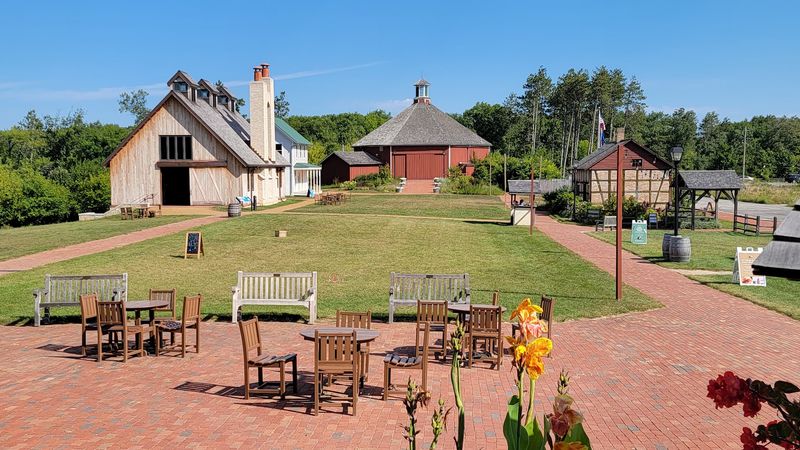
Old World Wisconsin marked its 50th anniversary in 2026 with a new Welcome Center that opened during the July anniversary celebrations.
The facility now serves as the entry and exit point for visitors, with ticketing, site information, upgraded restrooms, water bottle fillers, a museum store, an open-air plaza, and access to the tram center.
That makes the first few minutes easier to organize. Instead of trying to solve 600 acres from the parking lot, stop for information, look over the grounds, and decide which historic area gets first claim on the day.
Old World Wisconsin is at W372 S9727 Hwy 67, Eagle, WI 53119.
Visitors enter through the new Welcome Center at the main gate off Highway 67 just south of Eagle. Highway construction that affected access earlier in 2026 was completed in July.
Old World Wisconsin opened in 1976 and reached its 50th year in 2026, while the historic buildings remained central to the experience.
Do the practical work here. Fill the water bottle, check the day’s activities, and settle the first destination. Future feet will appreciate the preparation.
Tram Rides Make A Full Day Easier To Pace
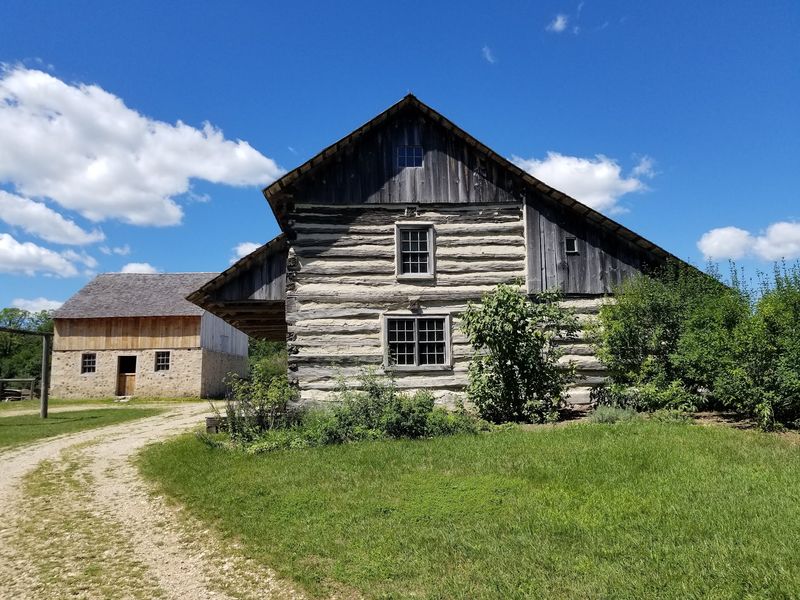
Old World Wisconsin recommends allowing a full day for a first visit, and many guests spend about five hours exploring the grounds. With historic areas spread across 600 acres, those five hours can fill quickly.
Complimentary trams run through the property during regular seasonal hours. They connect the spread-out historic areas and give visitors a way to alternate walking with riding rather than treating transportation as an all-or-nothing choice.
A good rhythm is simple. Walk through one area, ride to the next, then decide how much energy remains before tackling another stretch on foot.
Anyone visiting with children or family members who tire more quickly can use the tram to keep the day from becoming an endurance test.
Old World Wisconsin operates seasonally, and programming changes throughout the year. In September 2026, fall activities focus on farms, harvest work, preservation, animals, and the changing Kettle Moraine landscape, with additional special-event dates later in the year.
Check the calendar before making a special trip for one demonstration or building activity. Then stop scheduling every half hour.
There are 60 historic structures and 600 acres competing for attention. Missing one doorway is not a failed visit. It is simply a very good excuse to leave something for another day.