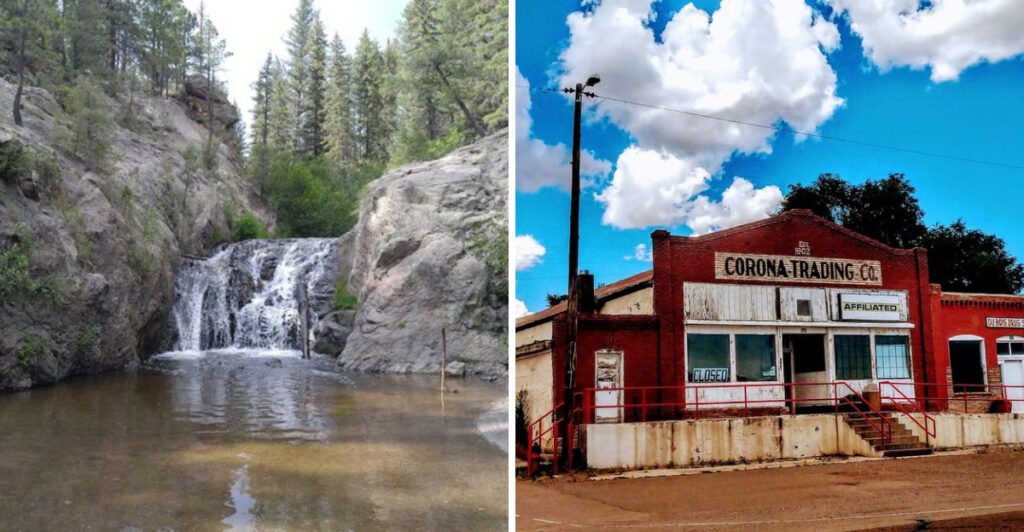
The best road trips usually start with a little doubt. Should we turn here?
Is this even the right road? In New Mexico, that question can lead straight to a town you’ll talk about for years.
Not because it’s flashy. Because it feels like you found the story before everyone else did.
One town might have ancient ruins just beyond the last houses. Another might have warm water rising under a huge sky.
Down the road, a quiet main street can make you slow your steps without thinking. Nothing feels staged.
Nothing feels rushed.
That’s the beauty of these small stops. They give you space to wander, ask questions, and notice what most travelers miss while chasing the next big attraction.
Keep your plans soft. Let one wrong turn become part of the day.
The places that stay with you are often the ones you didn’t expect to love most.
1. San Ysidro
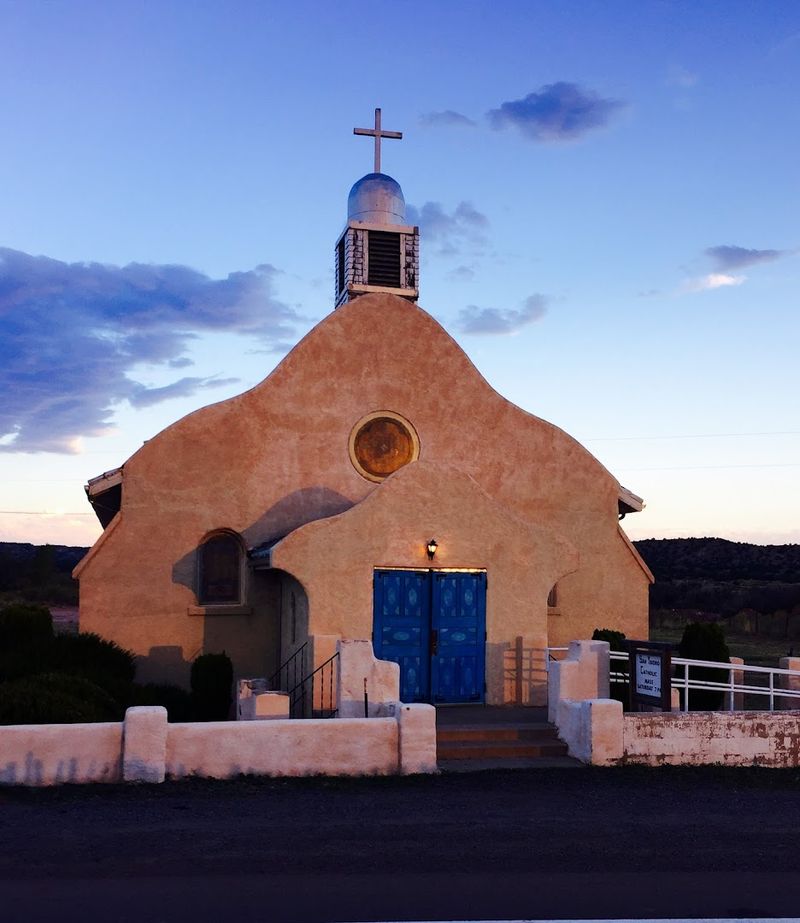
At the doorstep of the Jemez Mountains, this quiet Sandoval County village, ZIP 87053, sits along US Route 550. Most drivers pass through without lifting a foot off the gas pedal.
That is their loss, because stopping here means entering a landscape where the desert floor meets dramatic canyon country in a way that feels almost theatrical.
The village carries the calm energy of a place that has never needed to advertise itself, where the horizon stretches wide and the sky performs a different show every hour.
I spent a morning here simply sitting near the old church, watching the light move across the mesa walls and feeling the particular kind of stillness that only truly remote places can offer.
San Ysidro serves as a natural launch point for exploring Ojito Wilderness, a protected stretch of badlands and fossil-rich terrain that rewards anyone willing to hike a little off the marked path.
Fossils, petrified wood, and ancient cultural traces are part of the wider Ojito landscape, though visitors should leave anything they find in place.
The village itself has a timeless quality, with adobe walls and low-slung buildings that seem to grow straight out of the earth rather than being placed on top of it.
Local ranching culture runs deep here, and the people you meet carry a straightforward warmth that matches the landscape perfectly.
If you are heading toward Jemez Springs and you blink through San Ysidro without stopping, turn around and give this quiet crossroads the twenty minutes it deserves, because the view from the roadside alone is worth every second.
2. Jemez Springs
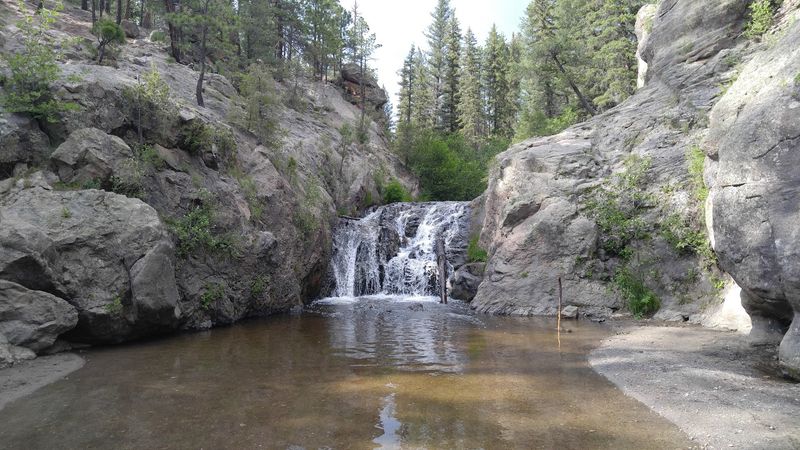
Inside a narrow red rock canyon carved by the Jemez River, this little village in Sandoval County, New Mexico 87025 feels like a secret that the mountains have been keeping for centuries.
I pulled off the road expecting a quick stretch break and ended up spending an entire afternoon moving between steaming pools and ancient stone walls.
The Jemez Historic Site sits right in the heart of things, preserving a large Pueblo complex alongside a Spanish colonial mission that together tell a layered story of cultures meeting in a rugged landscape.
The quiet ruins gave me a rare connection to the past, without the crowded feeling that busy monuments often bring.
Natural hot springs are part of the landscape here, while bathhouses and developed soaking spots in town offer the easiest, most reliable access for travelers.
The surrounding Jemez Mountains shift into a full golden and crimson display when fall arrives, making the canyon drive alone worth the trip.
Bathhouses in town offer a more comfortable soak for those who prefer a roof overhead, and the small shops along the main road carry locally made goods worth browsing.
Trails fan out from the village into forests and meadows that most visitors never reach because they assume a town this small has nothing to offer beyond a gas stop.
Jemez Springs proved me completely wrong on that assumption, and I left with muddy boots, a clear head, and a mental note to return before the first snow covers the canyon rim.
3. Des Moines
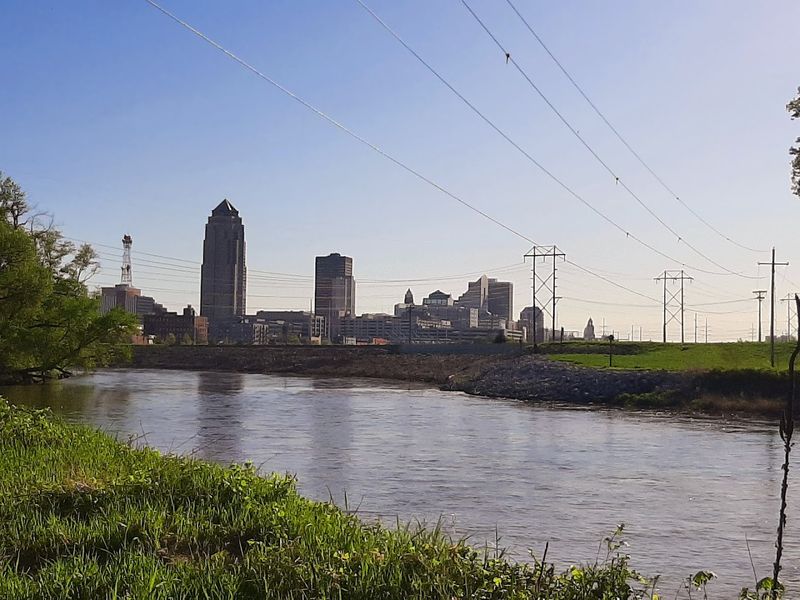
Des Moines is a real town here, and no, it is not a typo on the map.
This tiny community sits on the high plains of Union County, New Mexico 88418, near the base of Sierra Grande, the tallest volcano in the Raton-Clayton Volcanic Field.
I came here chasing a rumor about dark skies and left with a genuine appreciation for how much the northeastern corner of the state hides from casual visitors.
The grasslands roll out in every direction, interrupted only by volcanic cones and mesa edges that remind you the ground beneath your feet has a dramatic geological past.
Capulin Volcano National Monument sits just a short drive away, where you can hike the rim of a cinder cone and look down into a remarkably preserved crater formed tens of thousands of years ago.
That rim view, with the plains spreading out below in every direction, genuinely earns the word breathtaking, especially when the wind is up and the horizon seems endless.
Des Moines itself is small and unassuming, with a grid of streets and a community that has held on through the kind of isolation that would send most people packing long ago.
The nearby Kiowa National Grassland offers miles of trail and open riding country for those who want to explore the plains on horseback or on foot.
A stop here feels like finding a chapter in local history that the tour buses simply never bothered to include on their routes.
4. Corona
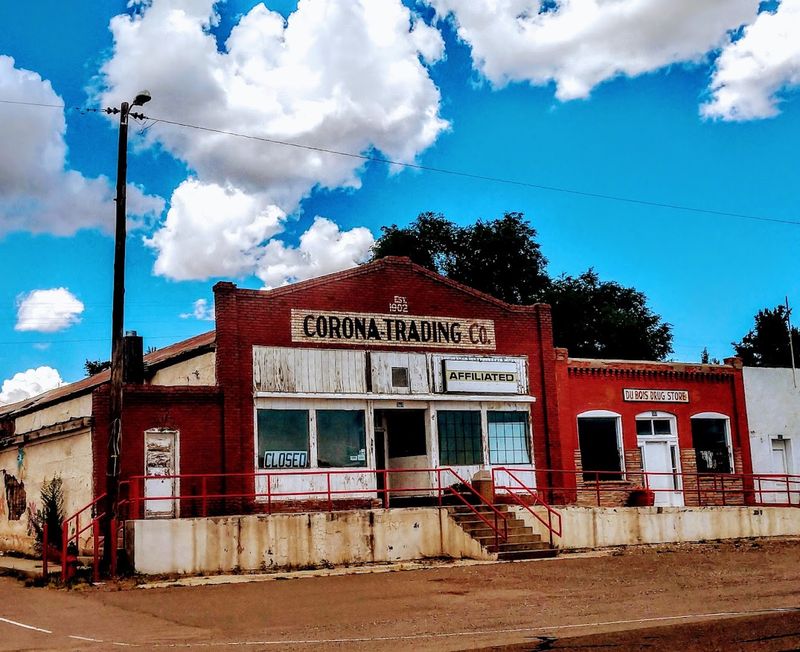
Out on the lonesome plateau of Lincoln County, ZIP 88318, Corona rewards the traveler who deliberately drives toward the middle of nowhere instead of away from it.
The town sits on a windswept stretch of rangeland where cattle outnumber people by a comfortable margin, and the nearest traffic jam is probably in another state.
What pulls curious visitors here is partly the landscape itself, a broad, semi-arid plateau ringed by distant mountains that changes color from hour to hour as the light shifts overhead.
I stopped in Corona on a solo road trip across the central part of the state and found a community that felt genuinely rooted in ranching traditions that have not changed much in generations.
The town is also near sites associated with the alleged 1947 Roswell incident, including areas outside Corona that have become part of UFO lore.
Whether you are a true believer or a committed skeptic, driving these empty roads at night under a sky full of stars does make the imagination run a little wild.
The surrounding grasslands and pinon-juniper foothills offer quiet hiking and wildlife watching, with pronghorn antelope often visible from the roadside without any effort at all.
Corona has no tourist infrastructure to speak of, which is exactly the point, because the adventure here is in the openness itself, the kind of wide, unmediated space that is genuinely hard to find anymore.
The place feels less like a destination and more like a discovery you made entirely on your own terms, especially when the road behind you goes silent.
5. Mosquero
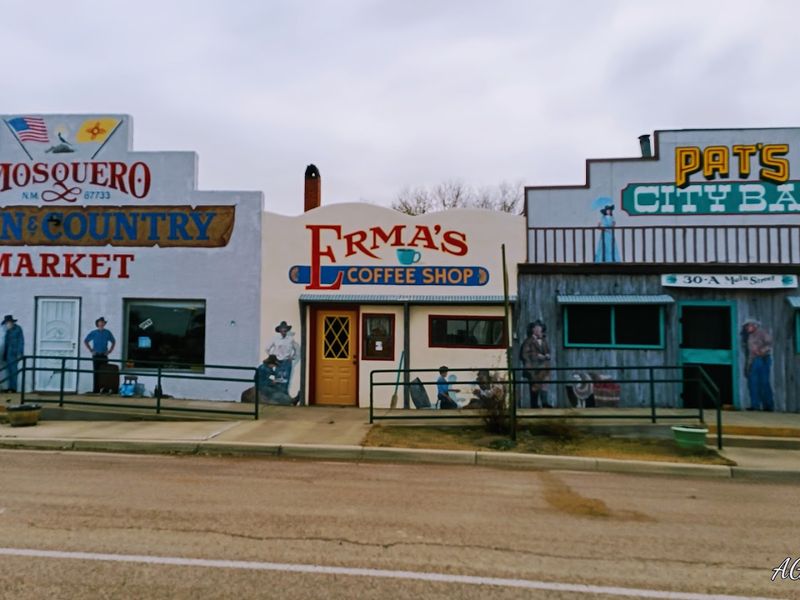
Mosquero, the tiny seat of Harding County, holds a particular kind of quiet. You only find it in places where the land has simply outrun the people for decades.
The town sits on mesa country above the Canadian River breaks, looking out over red clay hills and open rangeland that stretch without interruption toward the Texas border.
I drove into Mosquero on a Tuesday afternoon and counted more historic storefronts than active businesses, which sounds discouraging until you realize that the emptiness is the entire point of being here.
The Canadian River canyon country nearby is one of the state’s most underappreciated natural features, with layered red rock walls, cottonwood-lined banks, and a sense of wildness that the more famous canyons out west have long since traded for parking lots.
Hikes and off-road exploring around the mesa edges reward anyone patient enough to navigate the unmarked county roads that web across this part of the state.
Harding County as a whole has the feel of a living time capsule, where ranching families have worked the same land for generations and the pace of life follows the seasons rather than a calendar.
The courthouse in Mosquero is a small but proud structure that anchors the town square and gives the place a sense of civic dignity that belies its size.
The dark skies here are extraordinary, with no light pollution for miles in any direction and a Milky Way display on clear nights that will make you forget every city skyline you have ever admired.
Mosquero is not a stop you stumble onto, it is one you earn.
6. Folsom
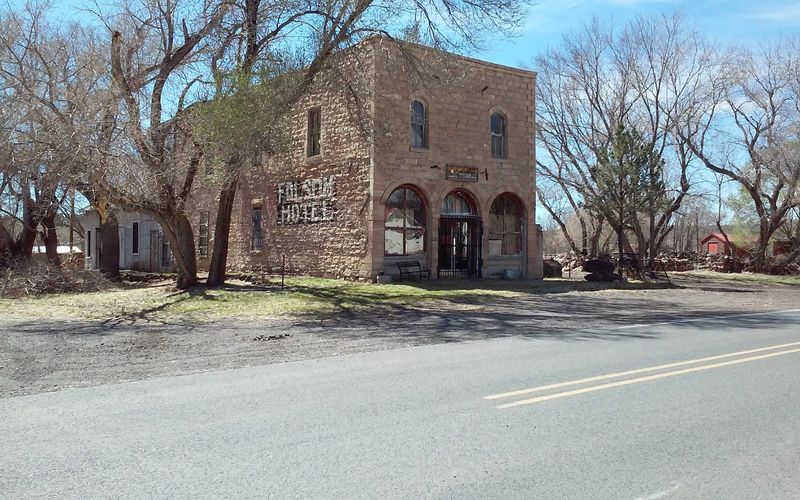
Folsom carries the kind of historical weight few small towns can claim. Even fewer manage to do it while staying this beautifully, stubbornly small.
The village sits in Union County, ZIP 88419, near the Dry Cimarron River valley, and one of the most significant archaeological discoveries in North American history began nearby almost by accident.
In the early twentieth century, a local cowboy named George McJunkin found ancient bison bones in a nearby arroyo, a find that eventually helped prove humans had lived in North America far earlier than many people had previously believed.
I visited the Folsom Museum on a quiet weekday and spent far longer than I planned, absorbed in the story of how a single bone bed changed the entire understanding of human prehistory on this continent.
The surrounding Dry Cimarron country is rugged and green in a way that surprises people who expect nothing but dust from this northeastern corner, with limestone canyons and rolling pastures that feel more like Colorado than the Chihuahuan Desert.
Folsom Falls is a striking seasonal waterfall in the wider area, though access can vary, so it is worth checking local conditions before planning around it.
The village itself is a handful of streets with well-kept historic buildings that give it the look of a place that chose character over convenience a long time ago and never looked back.
The area can be rewarding for wildlife lovers, with wild turkey, mule deer, and occasional black bear making appearances in the surrounding hills.
Folsom rewards the kind of traveler who reads the historical marker instead of just photographing it.
7. Glenrio
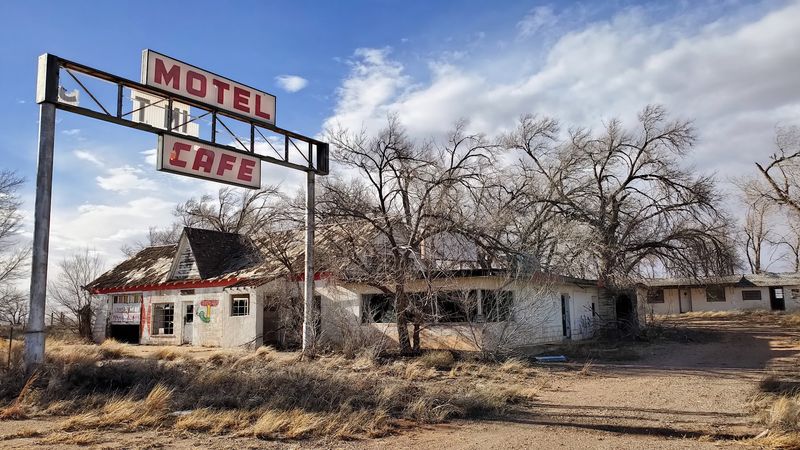
Along the ghost of old Route 66, this Quay County community, ZIP 88434, straddles the New Mexico and Texas state line. It feels like time simply walked away and left the lights on.
The town was once a busy stop for cross-country travelers on the Mother Road, with gas stations, a motel, a cafe, and the particular buzz of a place that lived entirely off the energy of passing through.
Interstate 40 bypassed Glenrio in the 1970s, the traffic disappeared almost overnight, and the town followed it into a slow, photogenic silence.
I walked the cracked pavement between the empty buildings on a windy afternoon and felt the particular melancholy of a place that had one golden era and knew exactly when it ended.
The abandoned structures are part of the Glenrio Historic District, listed on the National Register of Historic Places in 2007, giving the town recognized historic status even as many buildings remain weathered and fragile.
Photographers and Route 66 enthusiasts make pilgrimages here specifically for the visual drama of rusted signs, collapsed rooflines, and faded painted walls against the enormous flat sky of the Llano Estacado.
The state line marker sits right in the middle of the old main street, letting you stand in two states at once, which is a small but genuinely fun moment in an otherwise solemn place.
At sunrise and sunset, the light turns the whole scene golden, and the lack of any other visitors on most days means you get this entire faded world entirely to yourself.
Glenrio is proof that abandonment can be its own kind of monument.
8. Encino
In the middle of Torrance County, ZIP 88321, Encino sits so quietly that the highway barely slows down to acknowledge it. That is exactly what makes stopping here feel like a small act of rebellion against the modern need to always be somewhere else faster.
The village occupies a flat stretch of high desert grassland where the horizon is so wide and unbroken that the sky feels genuinely enormous in a way that photographs never quite capture.
I pulled over here during a long cross-state drive and found myself standing next to my car for a solid ten minutes just listening to the wind and watching a hawk work the thermals above the rangeland.
Encino sits along US Route 60, a long east-west corridor that has connected communities across the middle of the state for generations.
The surrounding Estancia Valley is rich with ranching history, and the open land around Encino has been worked by families who understand the particular discipline of making a life in a dry, demanding landscape.
Pronghorn antelope are a common roadside sight in this part of Torrance County, and a small herd sprinting across the open flats at full speed is a genuinely thrilling moment that costs nothing but attention.
The night skies here are extraordinary, with a darkness and clarity that remind you how much artificial light normally stands between you and the actual universe overhead.
Encino has no grand attraction, no museum or monument or famous trail, just open land, honest quiet, and the rare pleasure of a place that asks absolutely nothing of you.