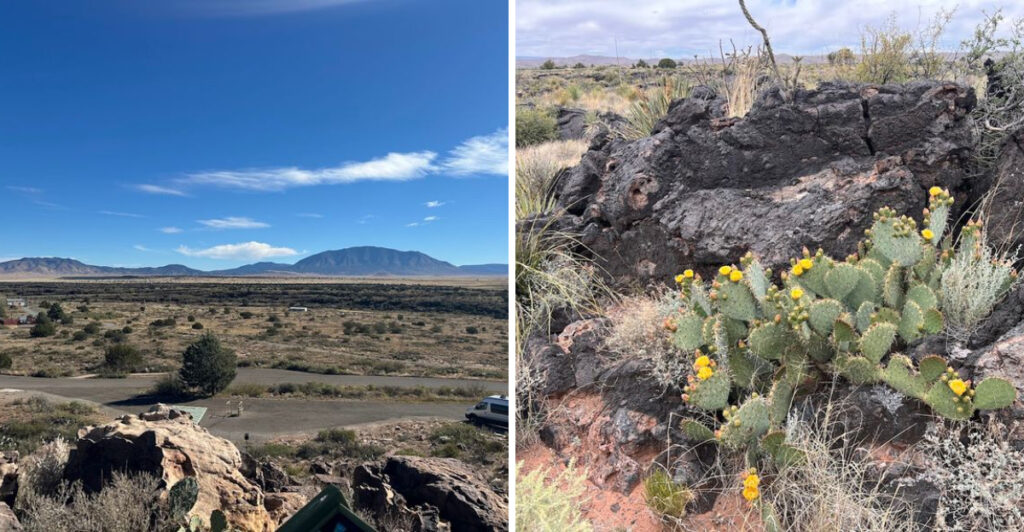
The desert can play tricks on your eyes, but this scene is real. A river of black rock appears to have stopped in motion, leaving ripples, folds, and cracked surfaces stretching beyond the trail.
At first glance, the landscape seems empty. Look closer, and plants rise through narrow openings while lizards disappear against the dark basalt.
Visitors can follow a paved path over the ancient flow, pausing beside formations shaped when molten lava cooled thousands of years ago. The scale is hard to grasp until the surrounding mountains make the field look even larger.
New Mexico is known for dramatic terrain, yet this place feels unlike a desert stop. It is strange, accessible, and surprisingly full of life.
These eight facts explain how the lava field formed, what survives there now, and why walking over it feels like stepping onto ground frozen in the middle of a powerful geological moment.
A Trail Carved Through Frozen Lava
Not every geological wonder makes you work hard to reach it. The Malpais Nature Trail at this recreation area is a three-quarter-mile paved path that cuts directly through the heart of the ancient lava flow, making the experience accessible to nearly everyone.
Interpretive signs line the route, offering real geological context about what you are seeing beneath and around your feet.
For those who want a longer walk on natural ground, the Kipuka Trail is an approximately 2.25-mile out-and-back route that leaves the concrete path and explores the Chihuahuan Desert beside the lava flow. The newer trail provides another rewarding way to experience the vegetation and wildlife surrounding this remarkable volcanic desert landscape.
I found the combination of both trails surprisingly rewarding, giving a sense of the full range of this landscape. The paved trail takes roughly thirty minutes to complete at a relaxed pace.
Sturdy shoes are still a smart call since the surrounding rock is sharp and unforgiving once you step off the pavement. The trail system at Valley of Fires Recreation Area at 6158 US-380, Carrizozo, NM 88301 truly earns its reputation as a truly memorable must-walk route.
Black Rock That Still Looks In Motion
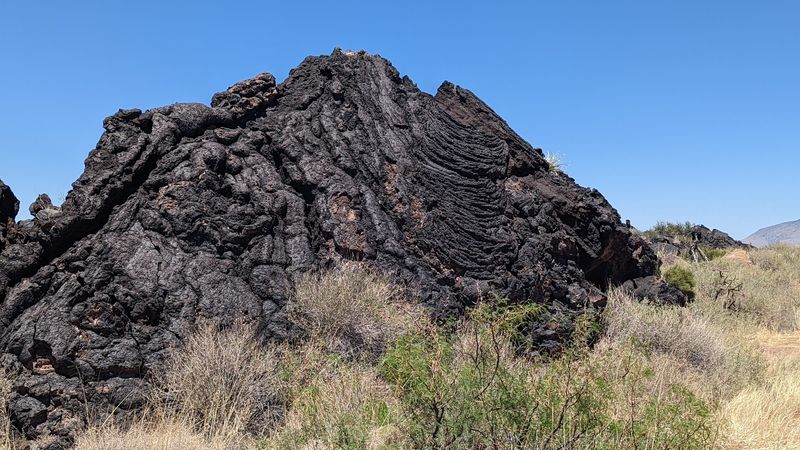
Roughly 2,000 to 5,000 years ago, a vent called Little Black Peak released a torrent of molten rock that traveled an astonishing 44 miles into the Tularosa Basin. What hardened from that outpouring is the Carrizozo Malpais, one of the youngest lava flows in the entire continental United States.
Its relative youth is part of why it still looks so dramatically fresh and unsettled.
Up close, the basalt surface reveals ropy, twisted pahoehoe textures that genuinely appear to be mid-ripple, as if the rock caught itself in the act of flowing and simply stopped. From a distance, the field reads as a wide dark brushstroke across the pale desert.
The closer you get, the more intricate and almost sculptural the details become.
Buckled pressure ridges run across the surface where cooling crust folded against itself, and collapsed gas bubbles dot the terrain like frozen breath. The dark color absorbs heat efficiently, making midday visits feel noticeably warmer than the surrounding desert.
Early morning light does something remarkable to all those curves and ridges, casting shadows that make the whole field look like it is still quietly shifting.
Desert Life Pushing Through The Cracks
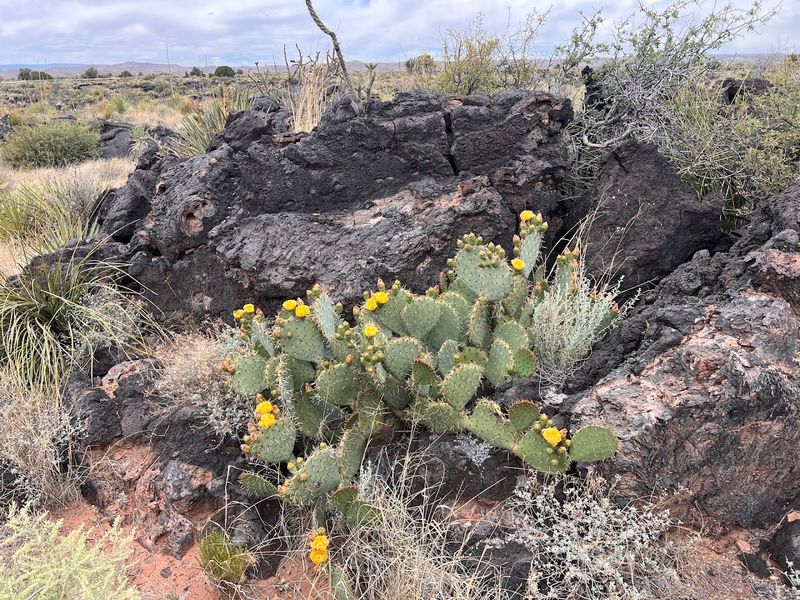
A first glance at the lava field might suggest nothing could possibly survive here, but that impression falls apart fast. The Chihuahuan Desert plants at this site are genuinely tenacious, finding just enough soil in every fissure and hollow to put down roots and keep growing year after year.
Creosote, mesquite, banana yucca, sotol, and multiple species of cactus all thrive across the flow.
Tiny accumulations of windblown dust and decomposed rock gather in the cracks over time, forming thin but workable pockets of soil. Seeds carried by wind or animals land in these pockets and, against considerable odds, germinate.
The result is a patchy but surprisingly lush mosaic of green scattered across the black rock surface.
Wildlife has also claimed this landscape with confidence. Dark-colored lizards blend almost perfectly into the basalt, while cottontail rabbits dart between rocky outcrops.
Mule deer and barbary sheep move through the area, and overhead, golden eagles, roadrunners, and owls patrol the sky. The ecosystem here is a quiet testament to how stubbornly life insists on finding a foothold, even in the most uninviting terrain imaginable.
Rippling Lava Locked Beneath Your Feet
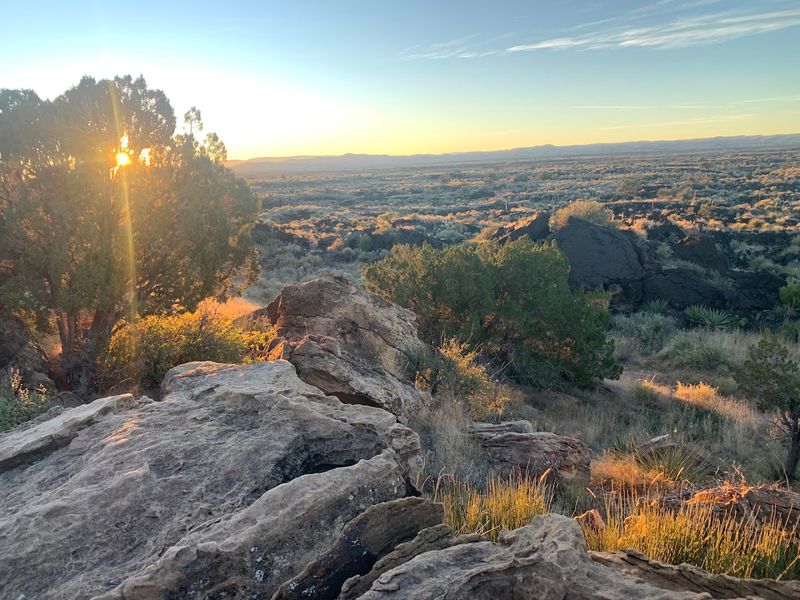
Standing still on the trail and just looking down is one of the more quietly spectacular things you can do here. The pahoehoe lava beneath the path displays a permanent record of motion, its surface shaped into long, undulating waves that froze exactly as the molten rock was slowing down.
Every curve tells part of the story of how this material moved across the desert floor thousands of years ago.
Pressure ridges are another feature that rewards a closer look. These are raised folds in the crust that formed when the still-moving interior pushed against the already-cooling outer layer, wrinkling it like a slow-motion collision.
They can rise several feet above the surrounding surface and run for impressive distances across the flow.
Collapsed lava bubbles appear as shallow depressions or pits scattered across the terrain, marking spots where gas pockets once inflated the crust before it gave way. Each of these features layers onto the others to create a kind of geological storyboard.
I kept finding myself stopping mid-walk just to study a particularly dramatic section of rock, amazed that so much dynamic history could be packed into something that now sits completely, permanently still.
A Volcanic Expanse That Feels Endless
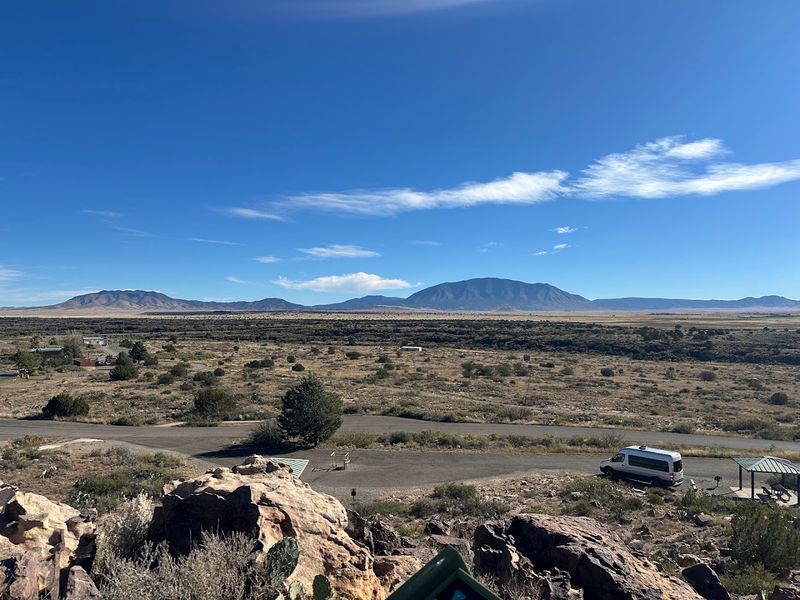
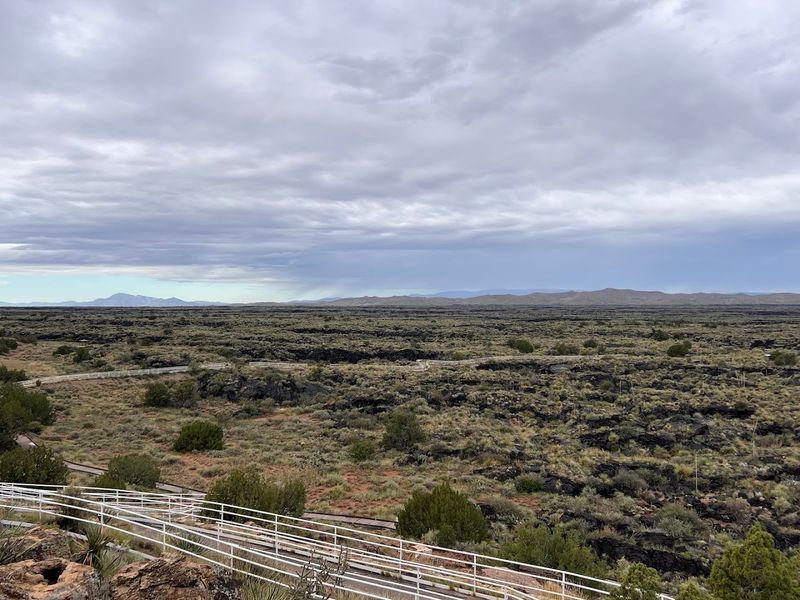
Numbers help put the scale of this place into perspective. The Carrizozo Malpais covers approximately 125 square miles, stretches four to six miles wide in places, and reaches depths of up to 160 feet in certain sections.
That is a staggering volume of rock produced by a single volcanic event, and standing at any elevated point within the recreation area makes those numbers feel very real.
The campground sits on a raised ridge that overlooks the western edge of the flow, and the view from there is one of the best in the park. The dark field spreads out below like a vast, textured carpet, with the pale desert and distant mountain ranges forming the edges of the picture.
Sunset from this vantage point turns the black rock through shades of copper and deep purple.
That sense of endlessness is not just visual. The quiet out here is substantial, broken mainly by wind and the occasional bird call.
New Mexico has no shortage of dramatic landscapes, but few places deliver the specific feeling of standing at the edge of something ancient and enormous quite like this lava field does on a clear, still morning.
Jagged Basalt Framed By Distant Peaks
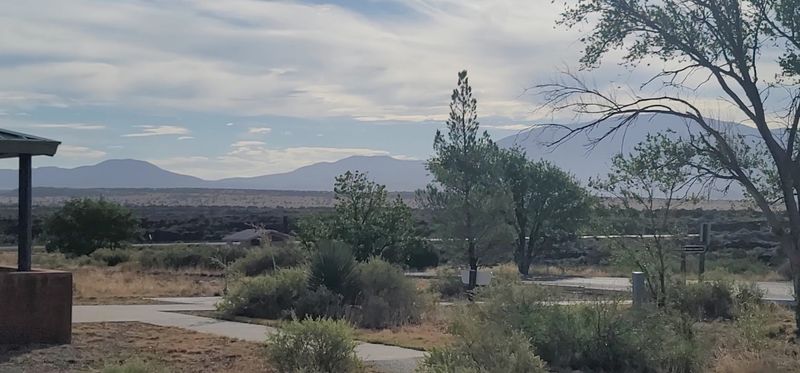
The visual contrast here is one of the most striking things about the site. Dark, angular basalt fills the foreground in every direction, and then the eye travels outward to find mountain ranges rising against the sky on multiple horizons.
The Sacramento Mountains define the eastern edge of the view, occasionally carrying snow on their upper slopes well into spring.
Little Black Peak, the source vent responsible for this entire flow, sits to the north and can be spotted from various points along the trail. It is a quietly dramatic landmark, a small, dark cone that somehow produced all of this.
Sierra Blanca Peak appears in the distance beyond it, and the Gallinas Mountains shape the northeastern skyline. The San Andres Mountains mark the western boundary of the Tularosa Basin.
Photographers tend to linger here longer than they planned. The combination of foreground texture and background depth creates compositions that change significantly depending on the time of day and season.
I found the late afternoon light particularly compelling, when the low sun picks out every ridge and hollow in the basalt and the mountains shift through warm gold tones behind them.
Secret Openings Inside The Ancient Flow
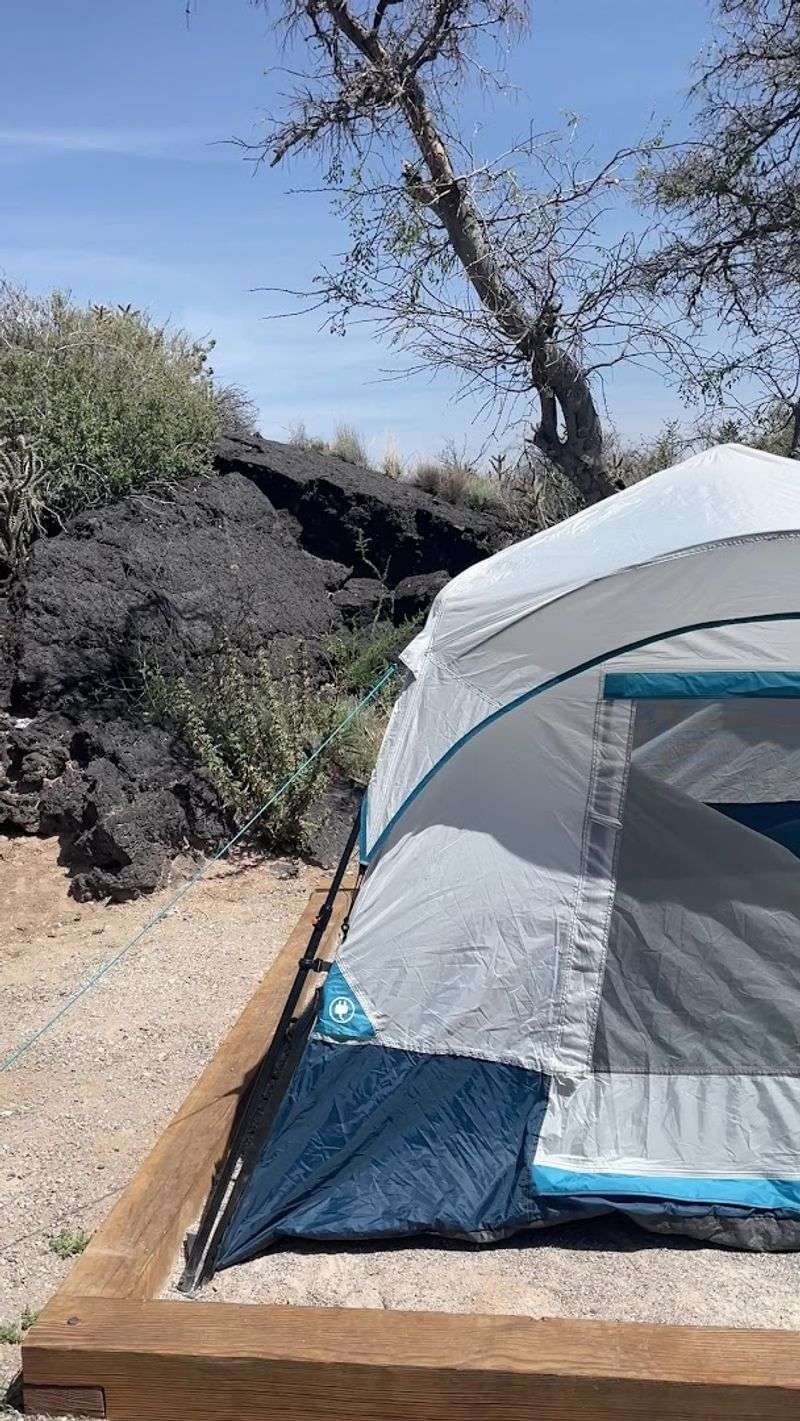
The surface of the lava field gets most of the attention, but what lies just beneath it is equally fascinating. As the Carrizozo Malpais cooled, it left behind a network of features that hint at the powerful forces involved in its creation.
Lava tubes are among the most intriguing of these, formed when the outer crust of a flowing lava channel hardened while molten rock continued moving inside, eventually draining away and leaving a hollow passage.
The Carrizozo flow achieved much of its remarkable overall length because lava traveled through insulated tubes extending away from Little Black Peak. Within the broader field, fissures, pits, collapse depressions, and other striking volcanic features show where the crust fractured or shifted during and after the eruption.
Rock shelters also formed naturally in some areas where overhanging basalt created small sheltered protected spaces.
Staying on designated paths is essential here since uneven terrain around openings can be unstable and the sharp edges of fresh-looking basalt are unforgiving. The recreation area staff encourages curiosity but also appropriate caution.
These features reward attentive visitors who slow down and look carefully rather than moving quickly through this rugged volcanic landscape.
An Otherworldly Walk Across Black Rock
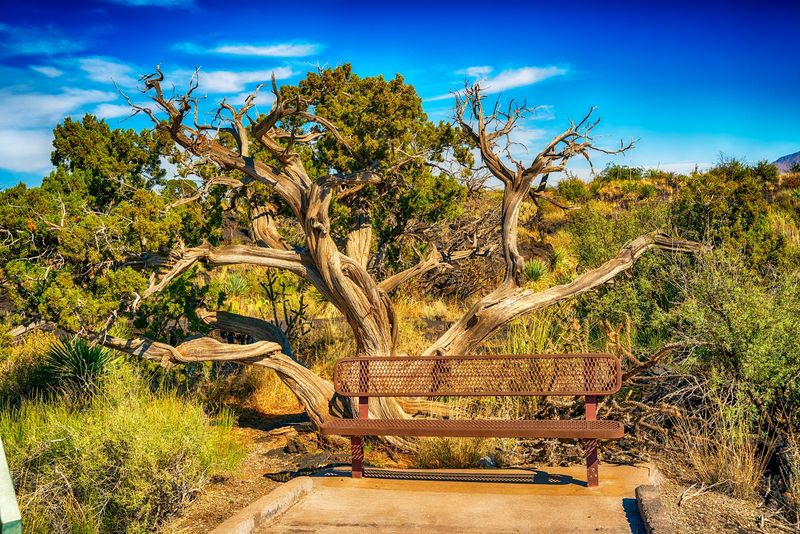
Few walking experiences in New Mexico produce quite the same effect as moving through this landscape. The black rock surrounds you on both sides of the trail, and the combination of strange textures, desert silence, and distant mountain views creates a mood that is hard to categorize.
Peaceful is part of it. Surreal is another part.
The paved Malpais Nature Trail makes the journey accessible without diminishing the impact of the surroundings. Completing the loop takes about thirty minutes at a comfortable pace, though most visitors find themselves stopping frequently to examine rock formations, read interpretive signs, or simply take in the view.
Bringing water is a practical necessity since the dark rock radiates significant heat during warmer months.
Sunrise and sunset visits reward early risers and late-stayers with light conditions that transform the entire field. The rock shifts from flat black to something warmer and more dimensional as the angle of the sun changes.
Visiting during cooler months reduces the heat and the insects that can be persistent in summer. This walk manages to feel both easy and genuinely memorable, which is a rare combination for any trail anywhere.