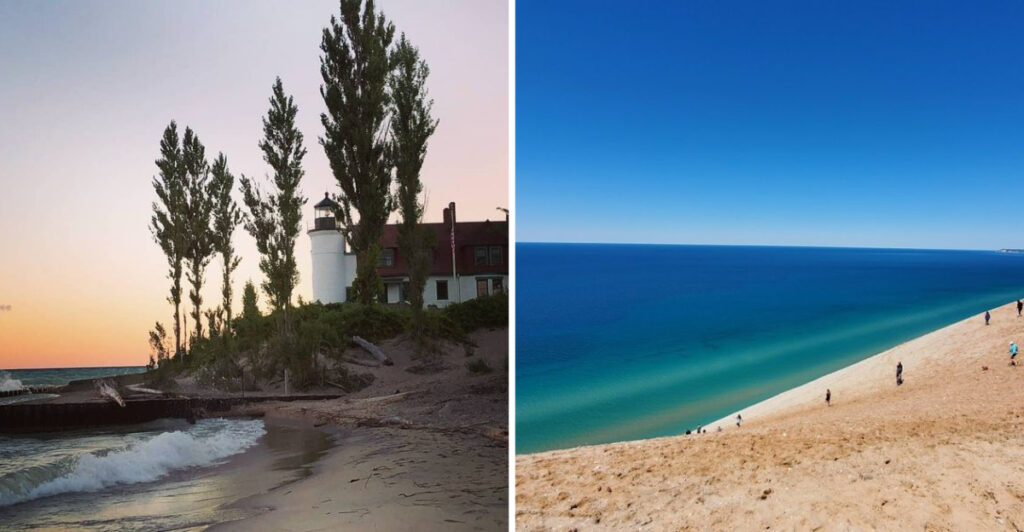
Michigan does not ease into pretty. It grabs your attention before the trip even has a chance to act casual.
One minute, the plan sounds simple enough. Stop for a quick look, stretch a little, maybe pretend the schedule still matters.
Then the view changes, the light hits just right, and suddenly everyone understands why “five more minutes” keeps turning into half the afternoon. That is the pull of these towns.
They make ordinary road trips feel like something worth framing, not because they try too hard, but because every slow turn seems to reveal another reason to pause.
The best part is how naturally it happens. Nobody has to hunt for the perfect angle when the whole place seems ready for one.
Michigan is full of towns that make a camera feel useful, and these spots bring the kind of scenery that can make a travel calendar jealous.
1. Mackinac Island
Horse hooves and bicycle bells give Mackinac Island its first bit of magic. Cars are famously absent, so the island’s scenery moves at a slower, more photogenic pace.
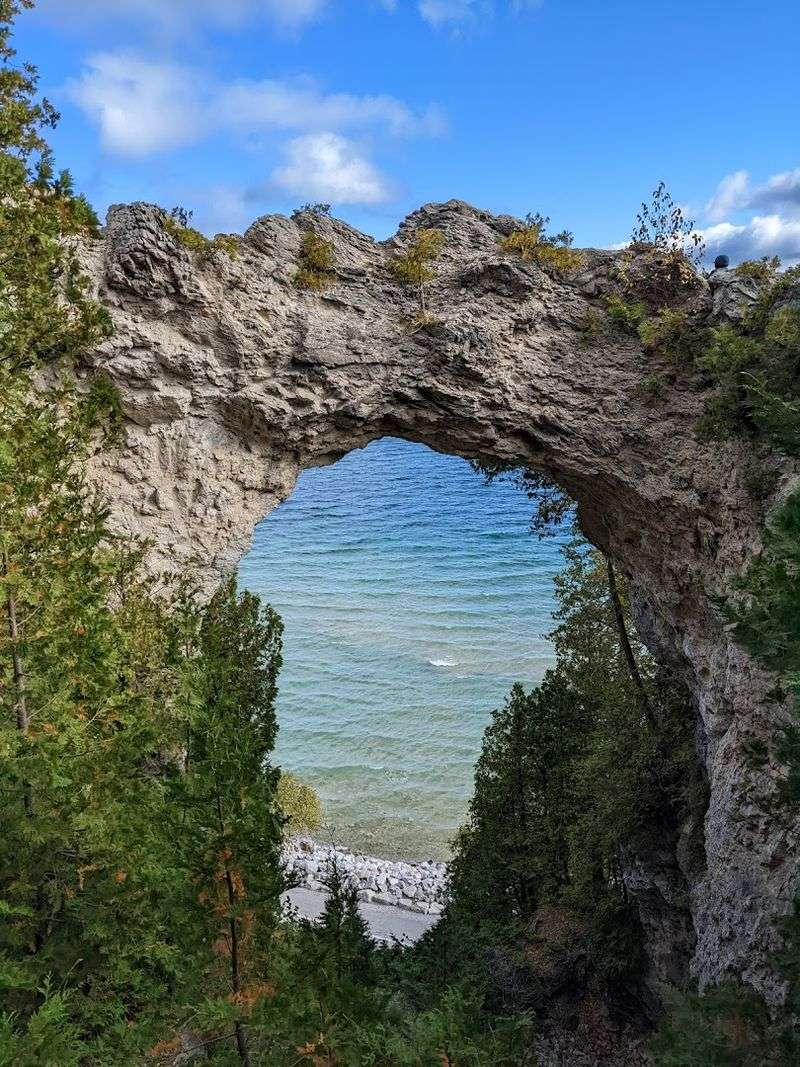
Arch Rock rises more than 140 feet above the waters of Lake Huron. The natural limestone arch frames blue water, treetops, and sky in one clean view.
Visitors can reach the landmark on foot, by bike, by carriage, or by taxi. The shoreline road adds water views, stone edges, bicycles, and passing carriages before the climb begins.
Every turn seems to offer another angle on the island’s quiet drama. The view from above gives Lake Huron a bright, open sweep.
Down below, Victorian buildings and harbor activity add color to the wider scene. Pastel storefronts, lake wind, and ferry whistles keep the harbor side just as ready for a calendar page. Spring and early fall bring softer light and thinner crowds than peak summer.
The island still feels lively, but the pace leaves more room for wandering. Arch Rock may be the headline, but Mackinac Island keeps adding smaller shots all day. By the last ferry, the day usually feels much busier than planned.
2. Charlevoix
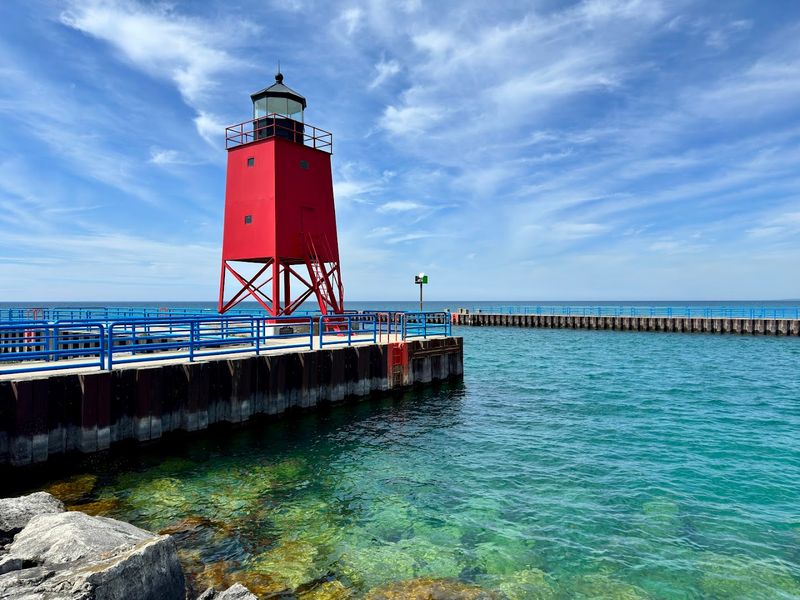
Charlevoix sends a red lighthouse straight into the lake view without wasting a second. The South Pier Lighthouse overlooks Lake Michigan near the Pine River Channel.
Boats move through the channel while downtown waits behind the water. The pier gives every photo layers, with lake, light, boats, and shoreline stacked together.
The pier remains classic, especially when the red tower pulls against blue water. Earl Young’s mushroom houses bring a completely different surprise nearby.
His work includes 26 residential houses and four commercial properties shaped by stone, cedar shakes, and playful lines.
The cottages add curved roofs, boulders, wide eaves, and storybook proportions to neighborhood streets. One odd detail usually leads to another before the walk is done.
Downtown Charlevoix adds flower baskets, storefronts, marina edges, and water views within a compact stroll.
The town changes textures quickly without losing its lakeside mood. Even rainy skies can help, turning the red tower into a brighter point on the pier.
Sunset can turn the pier warm, soft, and almost theatrical. When the lighthouse glows against Lake Michigan, Charlevoix starts looking ready for a cover.
3. Leland
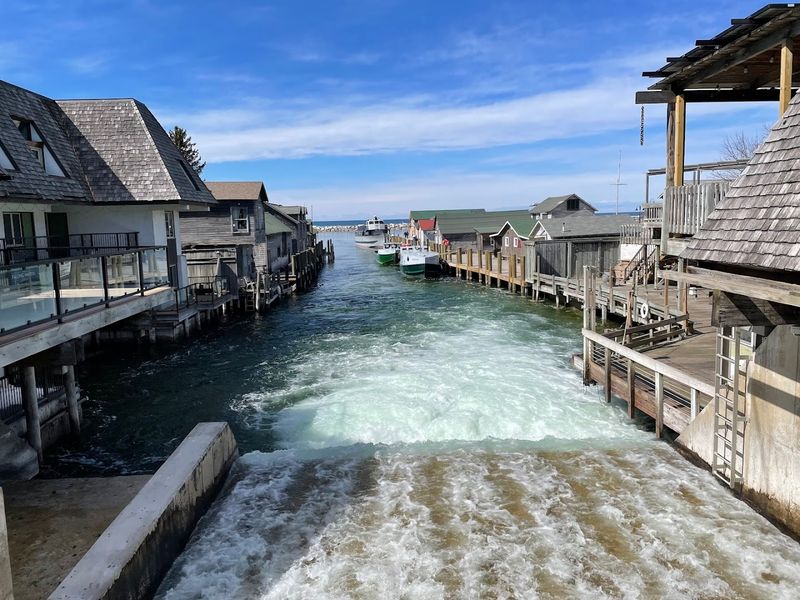
Weathered fishing shanties leaning over the river give Leland its strongest first impression. Historic Fishtown looks textured, practical, and beautiful without needing polish.
Fishtown Preservation describes the area as shanties, smokehouses, overhanging docks, fish tugs, and charter boats along the Leland River.
The waterfront keeps a visible connection to Great Lakes fishing culture. Leland’s own history page calls Fishtown one of the last working and thriving fishing districts on the Great Lakes. European settlers arrived in the 1850s and helped shape the current village.
Dark wood, silver water, ropes, buoys, and weathered boards give the scene a lived-in quality. Morning light brings out textures that bright midday sun can flatten.
The docks still feel active rather than decorative, with fishing heritage visible in the narrow lanes and buildings. The whole scene carries salt, wood, water, and work.
Smokehouse signs, dock ropes, and gulls over the river add little pieces of movement. The Leelanau Peninsula adds orchards, lake views, and rolling roads around the village. A short walk in Leland can become a full northern Michigan photo day.
4. Saugatuck
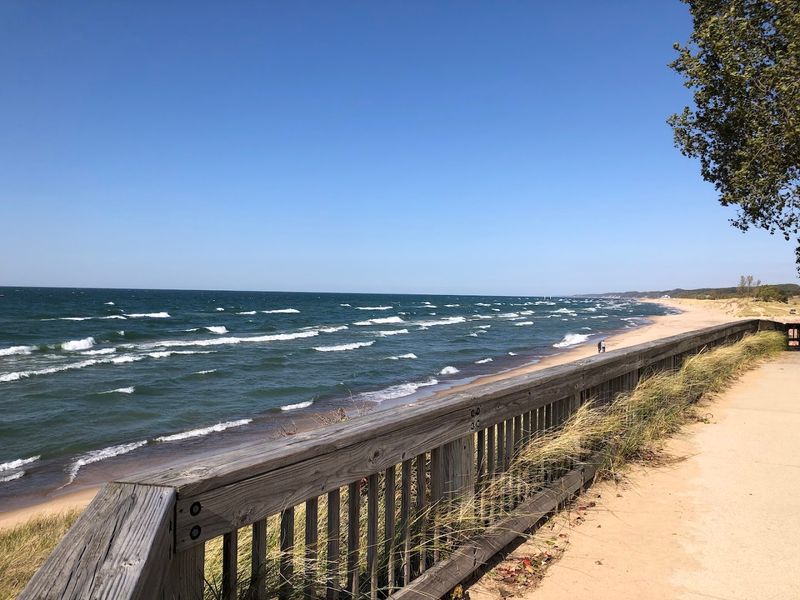
Soft sand and high dunes make Oval Beach feel larger than a regular beach stop. Saugatuck places that shoreline close to a town already known for art and color.
The city notes that Oval Beach sits among rolling dunes near the Kalamazoo River and Lake Michigan. At the waterline, the beach still feels open, sandy, and easy to photograph.
Dune views give photographers height without needing a long mountain climb. From above, the beach curves along the lake while water and sand divide the frame cleanly.
Downtown Saugatuck brings galleries, shops, murals, cottages, and a creative little-town pulse. The streets add color after the shoreline has already taken over the day.
Lake Michigan sunsets become the main event when the sky starts shifting late in the day. Peach, coral, purple, and blue can stack over the water in quick succession.
The beach photographs beautifully when the last light starts touching the dunes. The climb above the beach leaves shoes sandy, and memory cards crowded.
Saugatuck’s beauty does not stay parked at the shoreline. By dusk, the sand, town, and lake have usually filled the camera together.
5. South Haven
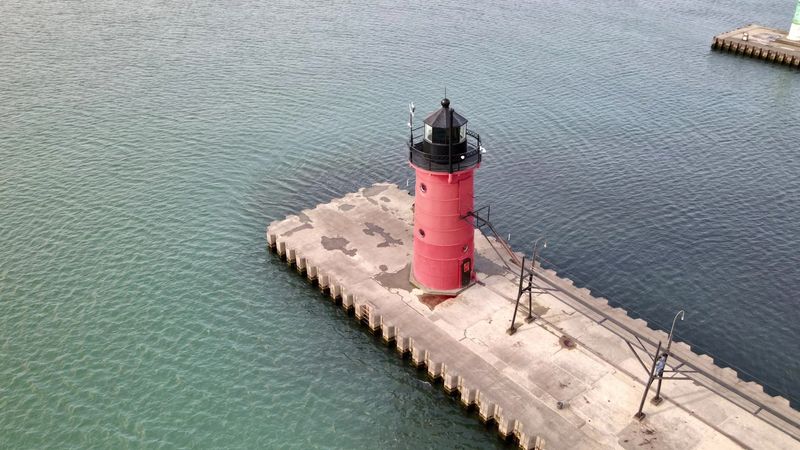
South Haven’s red lighthouse pulls the whole waterfront toward the pier. The South Haven Lighthouse stands on the south pier where the Black River meets Lake Michigan.
Michigan’s travel site notes the landmark was built in 1903 and has welcomed travelers for more than 100 years.
Its location on Water Street places it right at the city’s most recognizable view. From there, the walk toward the tower becomes part of the picture.
Waves, gulls, railings, and open water keep the scene moving around the red structure. Each step down the pier makes the lighthouse feel a little more dramatic.
Wide beaches sit on both sides of the pier, giving photographers several shots without going far. Painted cottages and waterfront streets add more summer color beyond the sand.
South Haven also leans into blueberry country through the annual National Blueberry Festival. The festival celebrates the region’s identity as the Blueberry Capital of the World.
On breezy days, waves add motion while the tower stays perfectly still. The lighthouse is strongest when the sky starts softening near sunset.
Evening turns the pier into a long red line pointing straight into Lake Michigan.
6. Frankfort
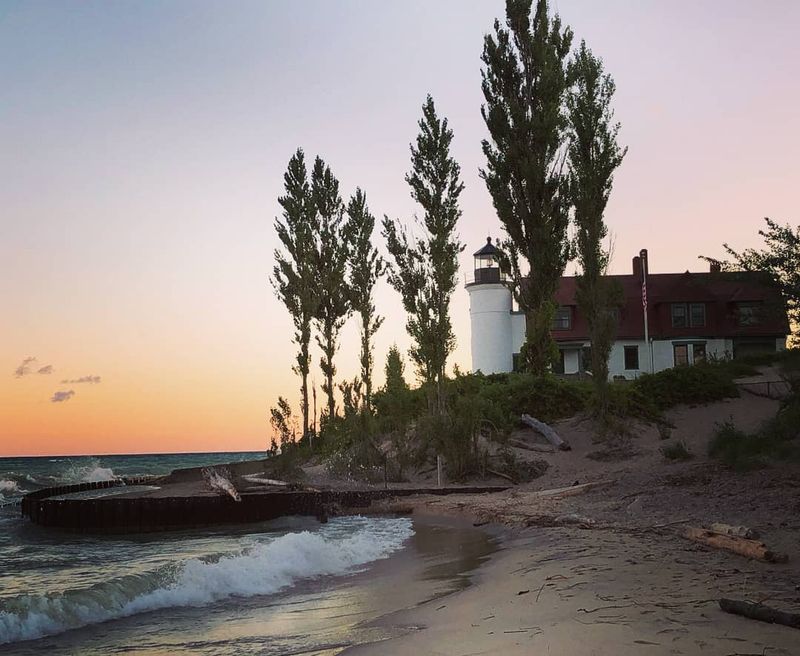
Point Betsie looks quiet at first, then the lake and sky start taking over. The lighthouse sits along Lake Michigan north of Frankfort and south of Sleeping Bear Dunes.
The original 1858 lighthouse stands with its keeper’s residence, fog signal building, and Boathouse Museum.
Its shoreline setting stays clean, open, and wonderfully uncluttered.
The site marks the south entrance to the Manitou Passage. The red-roofed building, pale tower, beach grass, and open water create a classic Great Lakes frame.
Nothing nearby competes with the lighthouse or the lake. Summer sunsets warm the white walls, while winter can bring ice and wild shoreline texture. Autumn gives the scene sharper air and less crowded sand.
Frankfort adds a small harbor, relaxed downtown, and access to the Benzie County shoreline. The nearby M-22 drive keeps adding lake views before and after the stop.
A quiet beach walk here can fill more frames than a busy boardwalk. Point Betsie rewards patience more than speed. Stay long enough, and the light changes the whole mood without moving a single building.
7. Glen Arbor
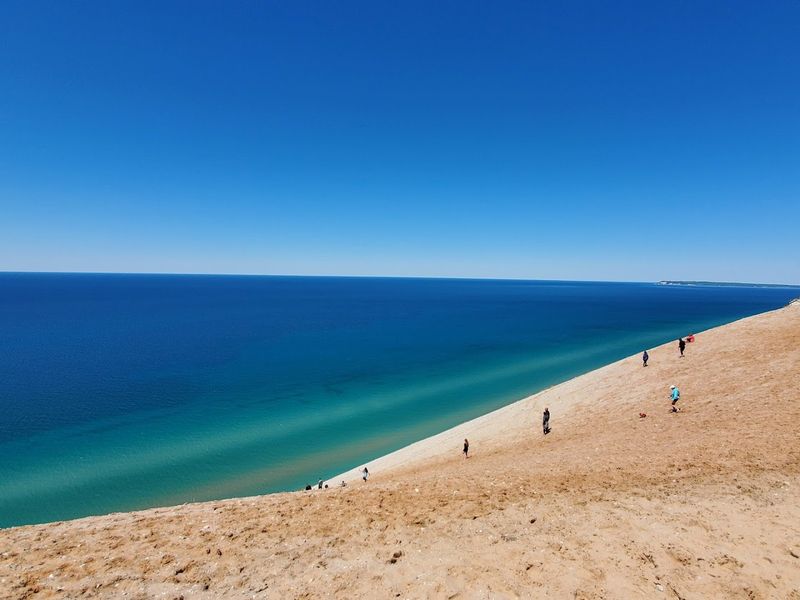
At the Dune Climb, the sand rises like a challenge before anyone takes a step. Sleeping Bear Dunes turns Lake Michigan scenery into something wide, bright, and physical.
The National Park Service describes the Dune Climb as a 284-foot wall of glistening sand. The open dune forms the eastern edge of the Sleeping Bear Plateau. There is also a Dune Center, restrooms, and a picnic area.
The climb can be strenuous, especially when deep sand starts working against every step.
The run back down toward the picnic area carries its own kind of joy. From higher points, pale sand and blue water create one of Michigan’s sharpest color contrasts.
Wide-angle views can make the dunes look almost unreal. Glen Arbor village nearby brings shops, snacks, galleries, and a relaxed northern pace after the sand.
The stop shifts quickly from huge dunes to small-town storefronts. Wind patterns on the sand create fresh lines long before footprints arrive.
Early morning gives the dunes cooler air and cleaner footprints. By midday, the sand remembers every visitor, and the scene starts telling a busier story.
8. Petoskey
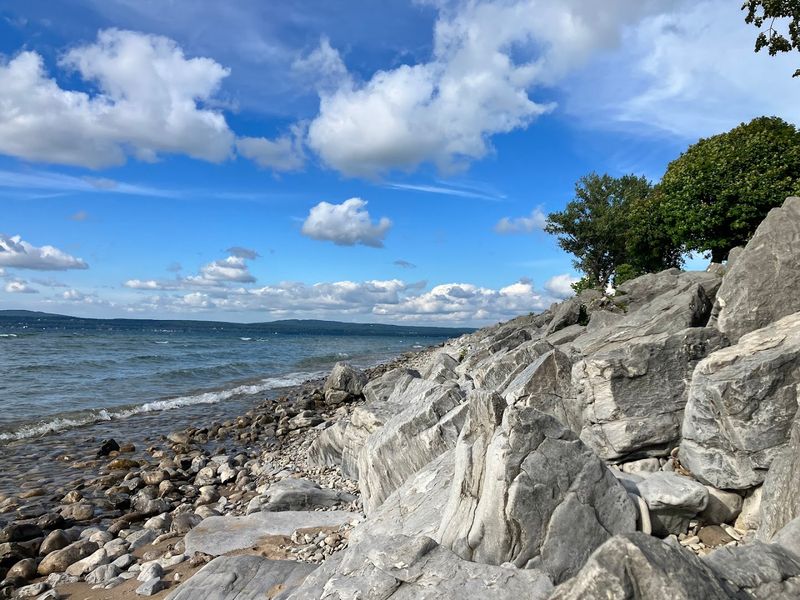
Little Traverse Bay changes color so easily that the shoreline can steal an hour. Bay Front Park West gives Petoskey a clean waterfront stage for that shifting water. The city describes Bayfront Park as a reclaimed waterfront park with 7,800 feet of public shoreline.
Marina views, walkways, park lawns, and open water give photographers several easy compositions.
The park also connects toward downtown through a pedestrian tunnel. Petoskey stones add a smaller detail for anyone who likes shoreline hunting.
Michigan’s official travel site describes them as fossilized prehistoric coral with a distinct six-sided pattern.
The Gaslight District brings storefronts, restaurants, galleries, and a walkable downtown mood close to the water.
Big bay views and small shopfront details sit only minutes apart. Early morning can soften the bay with mist, while evening brings color over the water. Both hours give the park a different personality.
The shoreline paths keep the bay close while downtown stays within easy reach. Petoskey works best when the eye moves between wide water and tiny stone patterns. The bay gets attention first, but the details keep the visit interesting.
9. Harbor Springs
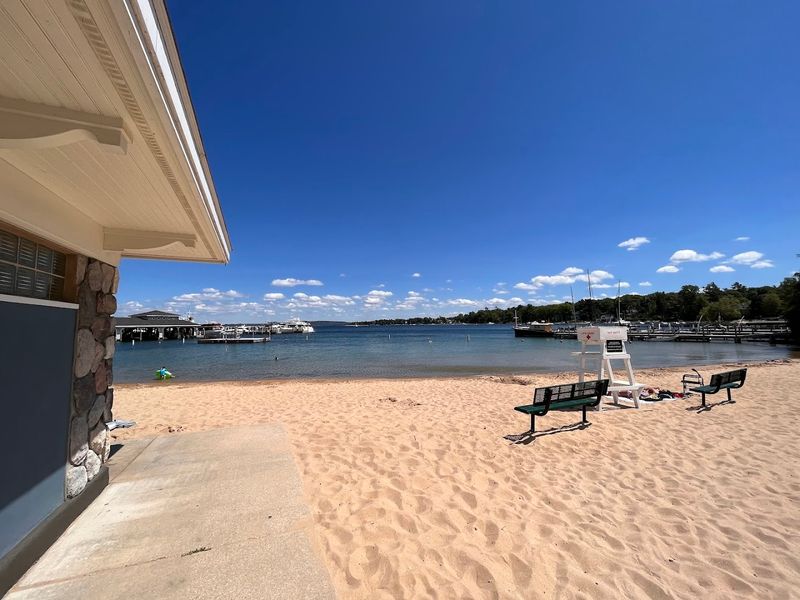
Harbor Springs slows the frame before the beach even comes into view. Zorn Park City Beach sits near downtown, facing the calm side of Little Traverse Bay.
The city says Zorn Park Beach is located on Bay Street just west of the central business district. Clear bay water, flower plantings, lawns, and boats give the shoreline a refined little-harbor look.
The beach is small, but the surrounding scene feels carefully arranged. Summer visitors may find lifeguards on duty when weather allows, according to city information.
Public restrooms, shaded lawns, and picnic tables add practical comfort near the sand. Main Street brings boutiques, galleries, restaurants, and a quiet resort-town mood within a short walk.
Harbor Springs looks especially good when sailboats sit still against blue water. Fall gives the bay another personality when color rolls down the hillsides. Red, orange, and gold reflections can make the water look almost painted.
The view has a polished hush, especially in the quieter morning hours. A small beach, a calm bay, and a few white sails do plenty here.
Harbor Springs ends the day with understatement instead of noise.
10. Frankenmuth
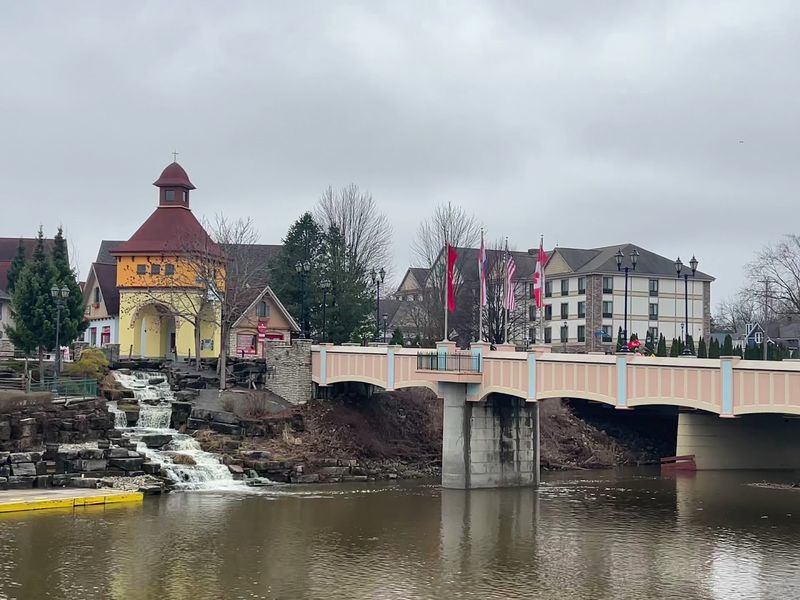
A covered bridge over the Cass River gives Frankenmuth its storybook anchor. Frankenmuth’s tourism site says the bridge was completed in 1980 with craftsmanship inspired by older covered bridges.
The structure is built mostly of Douglas fir and covered with cedar shingles. The Holz-Brücke on Covered Bridge address is: Lane Frankenmuth, MI 48734.
The bridge joins the Bavarian Inn Lodge and festival grounds with the Main Street side. Its timber frame, river setting, and pedestrian access give photographers several strong pictures.
The best view often comes from stepping back across the water. Frankenmuth’s Bavarian style adds flower boxes, timber-framed facades, seasonal decorations, and village-like storefronts nearby.
German settlers founded the town in the 1800s, and that heritage still shapes the scene. Autumn brings warm color along the Cass River, while winter adds lights and holiday decorations. Spring and summer bring flowers, crowds, and the easiest walking weather.
River reflections, wooden beams, and flowers give the bridge several moods in one short walk. The reflection below the bridge can be just as charming as the bridge itself. Frankenmuth closes with wood, water, color, and a full storybook frame.