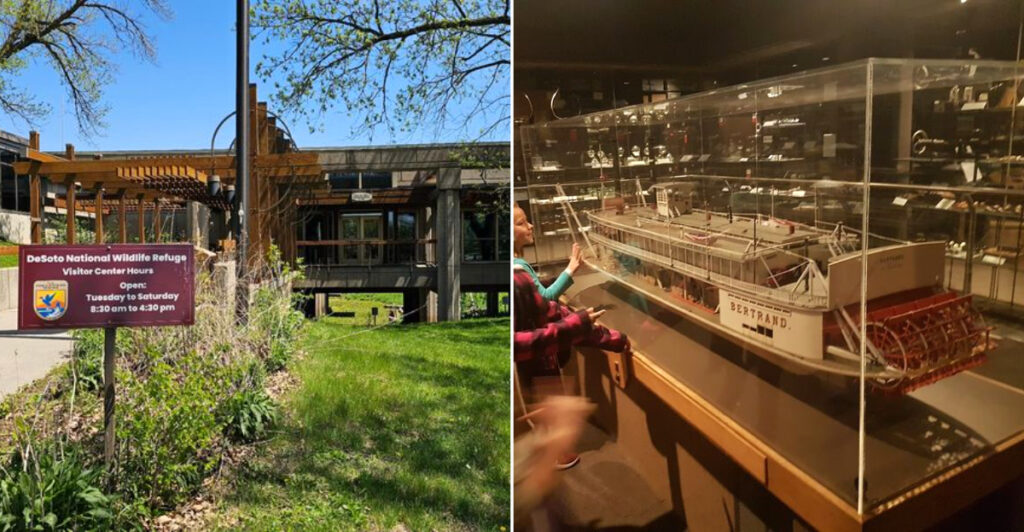
History usually asks you to squint a little, but this Iowa stop does the opposite.
Here, the past shows up with waffle irons, jars, tools, boots, and the kind of everyday cargo that makes 1865 feel less like a textbook date and more like somebody’s shopping list got frozen in time.
A steamboat went down along the Missouri River, the mud kept its secrets for more than a century, and somehow Iowa ended up with one of the strangest, most fascinating time capsules in the Midwest.
And the setting? That is the bonus nobody sees coming.
One minute you are staring at objects pulled from a sunken riverboat, and the next you are looking through glass at a wildlife refuge where eagles, snow geese, and quiet water turn the whole visit into something bigger than a museum stop.
So yes, this is a history trip. But it is also a nature break, a road trip curveball, and the kind of place that makes you say, “Wait, how did I not know this was in Iowa?”
The Steamboat Bertrand and Its Remarkable Story
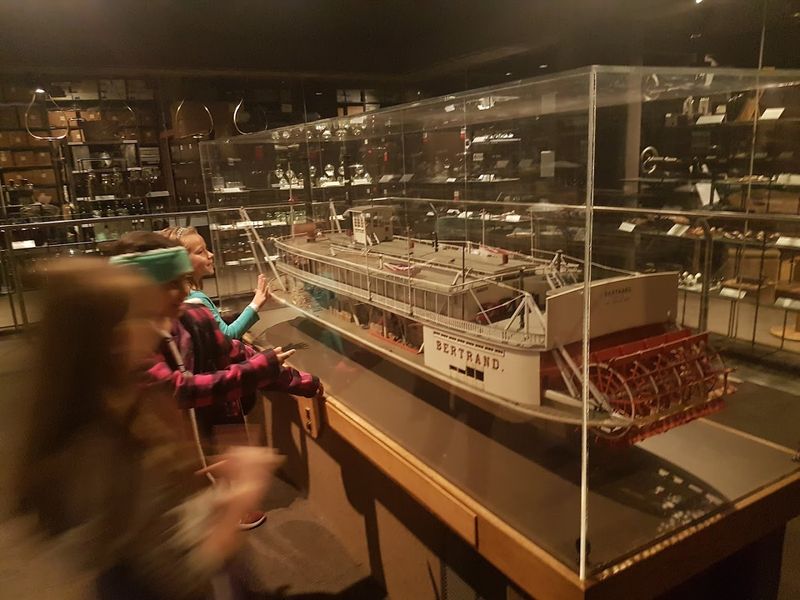
In 1865, the steamboat Bertrand was hauling supplies up the Missouri River toward the Montana gold fields when it struck a submerged log and began to sink.
The crew survived, but the cargo did not.
The boat slipped into the riverbed and was gradually buried under water and silt as the Missouri shifted course over the following decades.
What made the recovery so extraordinary was how well the mud preserved everything. After modern salvors located the wreck in 1968, the cargo was excavated by late 1969, revealing an enormous collection of remarkably intact items.
Canned goods, leather boots, mining equipment, household tools, and personal belongings all emerged in surprisingly preserved condition.
The Bertrand was not carrying luxury goods. It was loaded with the practical supplies that frontier settlers needed, which makes the collection feel deeply human rather than just historically distant.
You can find all of this at DeSoto National Wildlife Refuge and Museum, located at 1434 316th Ln, Missouri Valley, IA 51555, where the artifacts are displayed in a thoughtfully organized museum inside the visitor center.
What the Bertrand Museum Actually Looks Like Inside
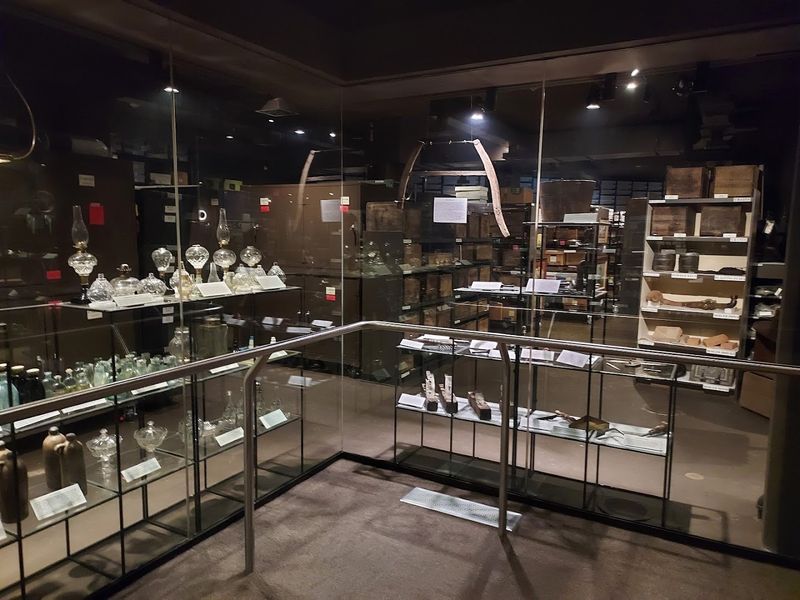
Most people expect a small side room with a few dusty relics. What they actually find is a full museum area lined with glass cases holding artifacts from a collection of almost 250,000 recovered items.
The sheer volume of material is what gets you first.
One section displays preserved food containers, including sealed cans that still held their original contents when excavated. Another area focuses on clothing and personal items, from boots to combs to buttons.
Mining tools, hardware, and frontier trade goods fill additional cases, giving a clear picture of what daily life demanded in 1865.
The labeling throughout is clear and informative without being overwhelming, so you can move at your own pace without needing a guide. Kids who might gloss over typical museum text tend to stop and stare at the actual objects, especially the bullwhips and the waffle irons.
One visitor compared the whole thing to an Amazon shipment from 160 years ago, and honestly, that framing is pretty accurate. Every item on display was headed somewhere specific, for someone specific, and that human thread runs through the entire collection.
The Visitor Center Layout and Glass Viewing Area
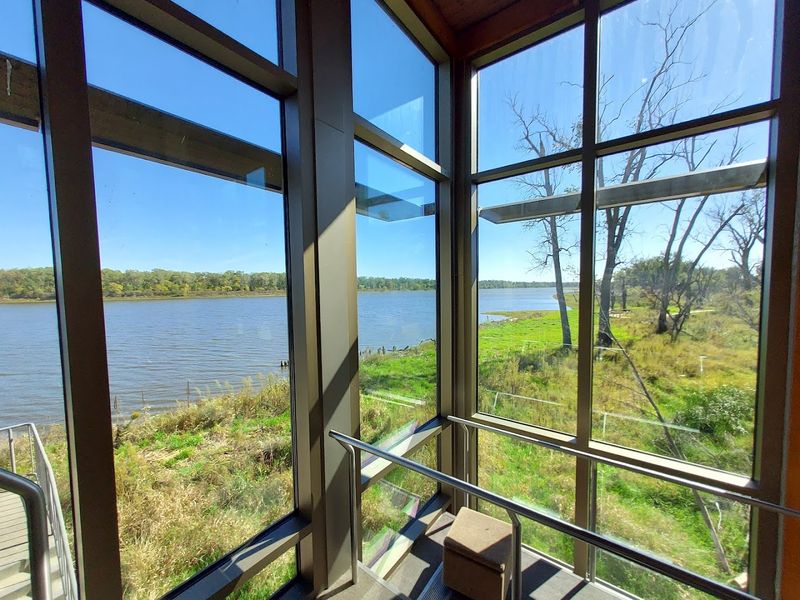
The visitor center at DeSoto is not a small roadside building. It is a well-designed facility with large glass windows that look directly out over DeSoto Lake, giving you an unobstructed view of the water and whatever wildlife happens to be on it that day.
On one side of the building you have the Bertrand museum, and nearby you have the wildlife viewing area looking out over the lake.
The setup means you can shift from studying a 160-year-old waffle iron to watching birds over the water without ever walking outside.
During colder months, that indoor viewing setup is genuinely practical rather than just a nice bonus.
The visitor center also offers nature and wildlife exhibits, maps, brochures, staff guidance, and viewing windows that make it easier to understand the refuge before heading outside.
The gift shop carries a solid selection of wildlife-related books, field guides, and souvenirs.
The whole space is clean, accessible, and well maintained, which reflects how seriously the U.S. Fish and Wildlife Service takes this property.
Birdwatching During Migration Season
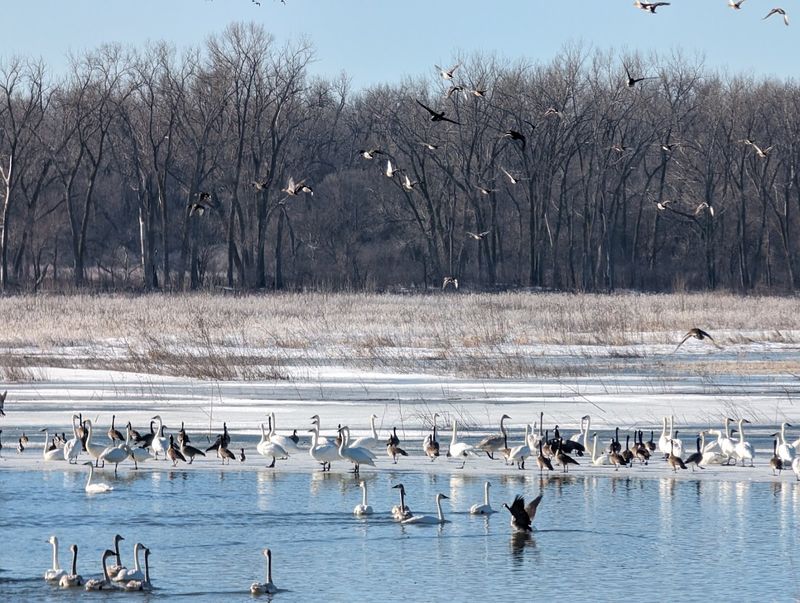
Migration season at DeSoto is a completely different animal from a quiet weekday visit in July.
In the fall and early spring, the refuge hosts large numbers of ducks, geese, and other migratory waterfowl that use the Missouri River corridor as a major flyway.
The numbers can climb dramatically during peak migration windows, especially when conditions line up just right.
When a large flock lifts off the water at once, the sound alone is something that people describe long after the trip ends. It is loud, layered, and oddly moving in a way that is hard to prepare for.
The visitor center is a good place to ask about recent sightings, and the refuge also maintains current wildlife information that can help you time a migration-season visit.
Beyond the big migration events, bald eagles are also a major draw, with winter and early spring often offering especially strong viewing. The indoor viewing windows help you pick out distant birds that you would otherwise miss entirely.
Birders with their own binoculars and cameras will find plenty of open sightlines from both the indoor area and the outdoor trails nearby.
The Auto Tour Route and Scenic Drive
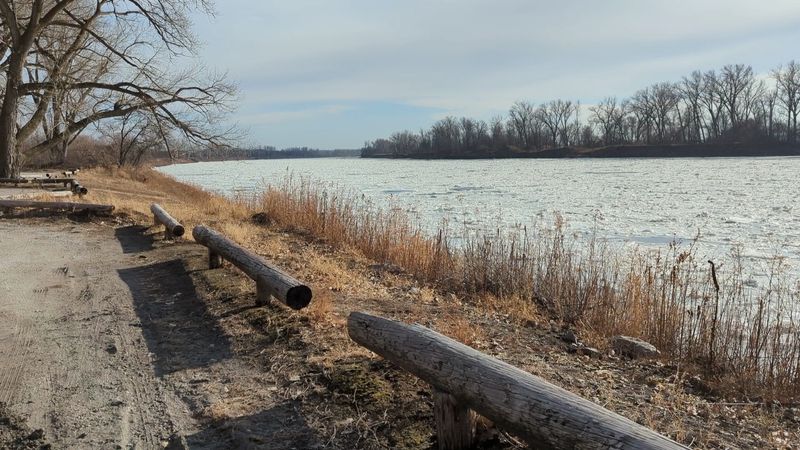
One of the low-effort highlights of a DeSoto visit is the auto tour route. It changes seasonally to protect wildlife and minimize disturbance during important migration periods.
You drive slowly, stop at pullouts, and scan the surrounding wetlands, grasslands, and tree lines for whatever happens to be out there that day.
The paved road from the visitor center toward the Missouri River Overlook and Bob Starr Wildlife Overlook is open year-round, while the eastern gravel road loop and South Gate Recreation Area are open from April 15 through October 14.
I drove the route on a weekday morning and had much of it almost entirely to myself. The paved portions are manageable for standard vehicles, and the seasonal gravel sections should be checked with current conditions in mind.
The auto tour is also a practical option for visitors who have mobility limitations and cannot easily walk the longer trails.
It covers enough ground to give you a real sense of the refuge’s scale without requiring you to spend the whole day outside.
Hiking Trails and the Cottonwood Nature Trail
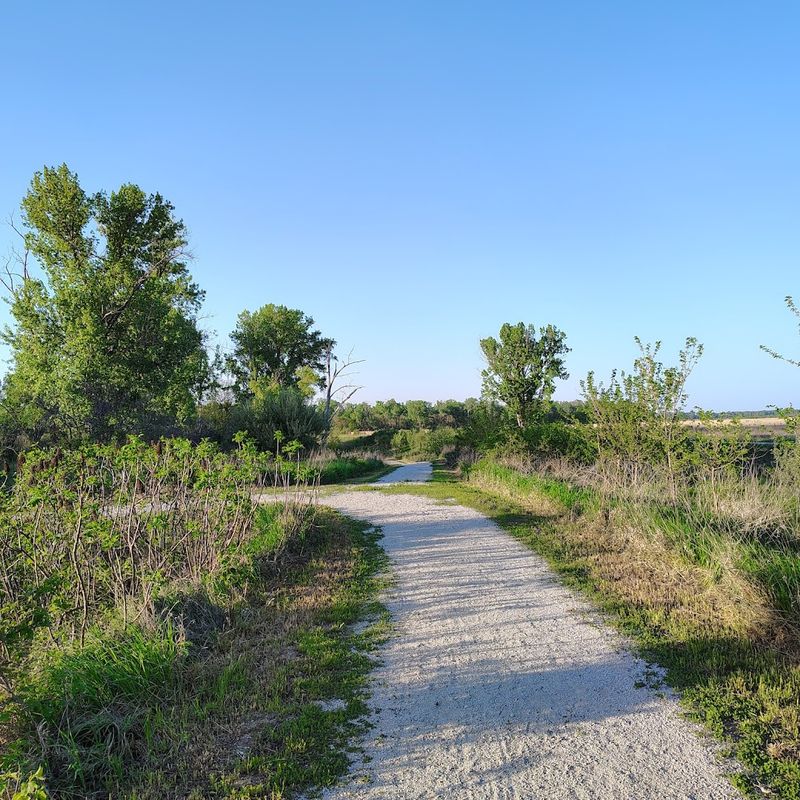
The trail system at DeSoto covers several easy routes. From the short Bertrand Discovery Site Trail to the Cottonwood Nature Trail, Grassland Nature Trail, Green Heron Trail, and Missouri Meander Trail.
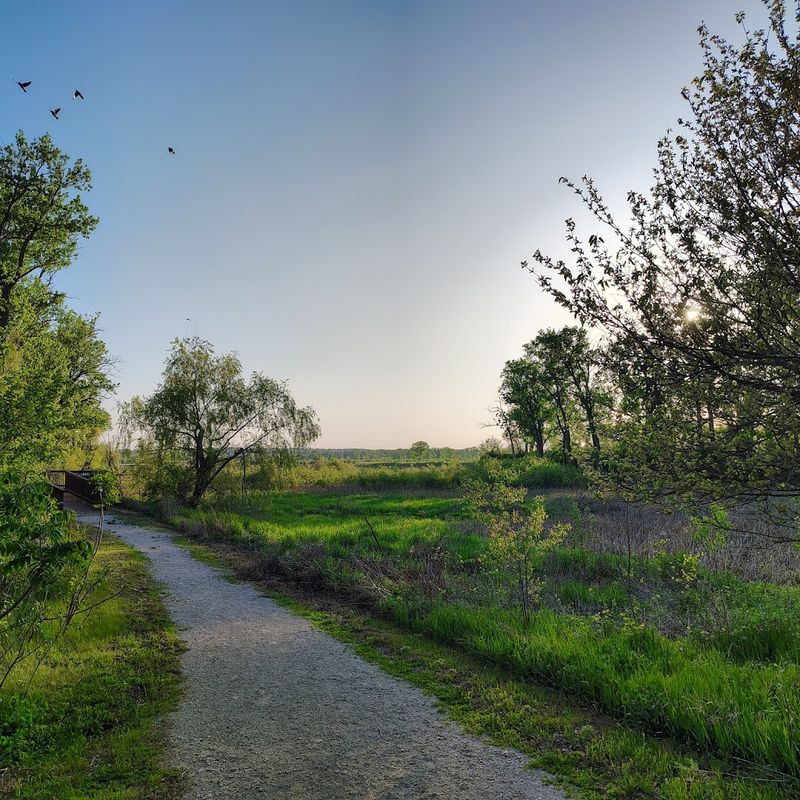
The Cottonwood Nature Trail is one of the most consistently recommended walks on the property, offering a compacted gravel route through bottomland cottonwood forest with chances to spot deer, turkey, migratory birds, and lake views.
The Bertrand Discovery Site Trail is also short and easy, looping around the excavation site where the steamboat was found. Official trail information lists it as wheelchair friendly, kid friendly, and dog friendly.
I picked up enough mud on my shoes to confirm that spring visits call for waterproof footwear.
The refuge is also known for morel mushroom hunting in spring when seasonal public-use areas are open, but visitors should follow refuge rules and posted area closures.
Ticks are active during warmer months, and insect repellent is a smart move anywhere around bottomland forest, grassland, and wetland habitat.
Wildlife Beyond the Birds
Bald eagles and migrating geese get most of the attention at DeSoto. However, the refuge supports a much wider range of wildlife that rewards patient observation.
White-tailed deer move through the property regularly, and spotting them along the auto tour route or near the tree lines at dusk is common enough that you should keep your eyes open even when you are not actively looking.
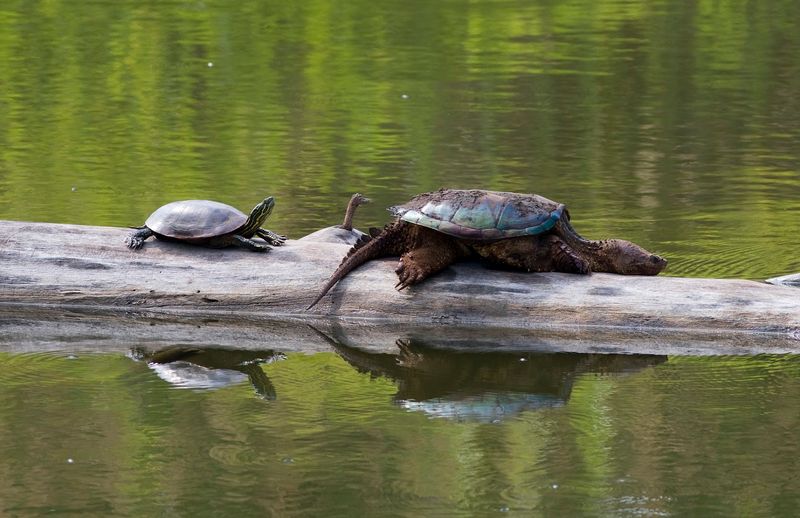
The lake and surrounding wetlands support turtles, which can often be seen basking on logs visible through the visitor center’s glass wall. Great blue herons, various duck species, and other waterfowl use the lake throughout the year.
During warmer months, monarchs and other pollinators can also be part of the refuge experience, especially around milkweed and flowering plants along seasonal trails.
The diversity of habitat on the property, including open water, grassland, wetland, and woodland, is what allows so many different species to use the refuge across different seasons.
A summer visit looks completely different from a fall migration visit, which is part of why some people come back multiple times a year and keep finding something new to observe.
Admission Cost and Practical Visitor Tips
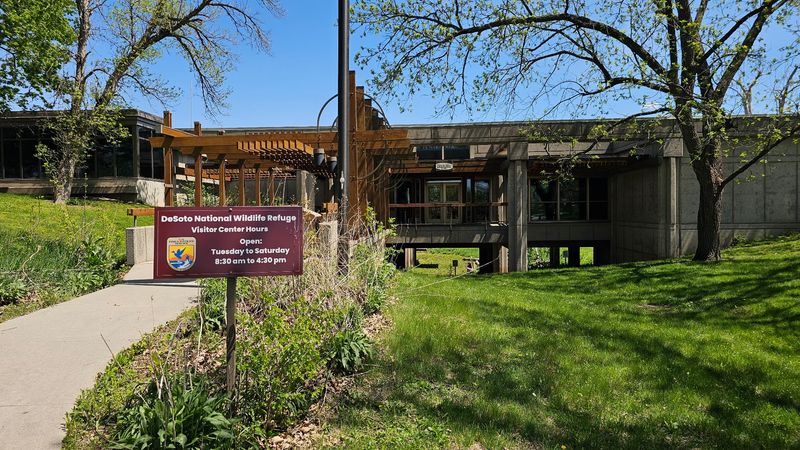
At just three dollars per vehicle, DeSoto offers one of the best value-to-experience ratios of any federally managed refuge in the region.
That daily entrance fee covers access to the refuge roads, trails, dig site, visitor center, and Bertrand museum, which means a family of five pays the same as a solo traveler.
The visitor center and Bertrand Museum are open Tuesday through Saturday from 8:30 AM to 4:30 PM, except for certain federal holidays. Refuge roads and trails are open from a half hour before sunrise to a half hour after sunset.
It is worth calling ahead at 712-388-4800 if you have specific questions about current conditions or special events.
Parking is spacious and can accommodate large vehicles and RVs without much difficulty. Checking current refuge information before your visit is useful if you want updates on migration activity, road access, or seasonal closures.
Restrooms are available at the visitor center during business hours, and pit toilets are also located in several refuge areas.
Why This Place Works for Families and Solo Travelers Alike
DeSoto manages to appeal to very different kinds of visitors without trying too hard to be all things to all people.
Families with kids have the exhibits inside the visitor center, including wildlife displays and the Bertrand collection, which holds attention better than most museum signage ever could.
Solo travelers and couples who want a quieter half-day outdoors find the trails, auto tour, and birdwatching areas easy to navigate at their own pace. The refuge rarely gets crowded, which means you can sit at the viewing windows for as long as you want without feeling like you need to move on for someone else.
Photographers come for the migration events and the eagle sightings, anglers show up during the refuge’s permitted fishing season, and history enthusiasts make the drive specifically for the Bertrand collection.
Iowa does not always land on short road trip lists, but DeSoto earns a spot on any itinerary that runs through the Missouri River corridor.
Pack snacks, charge your camera, and plan for at least two to three hours if you want to cover the museum, a trail, and the auto tour properly.