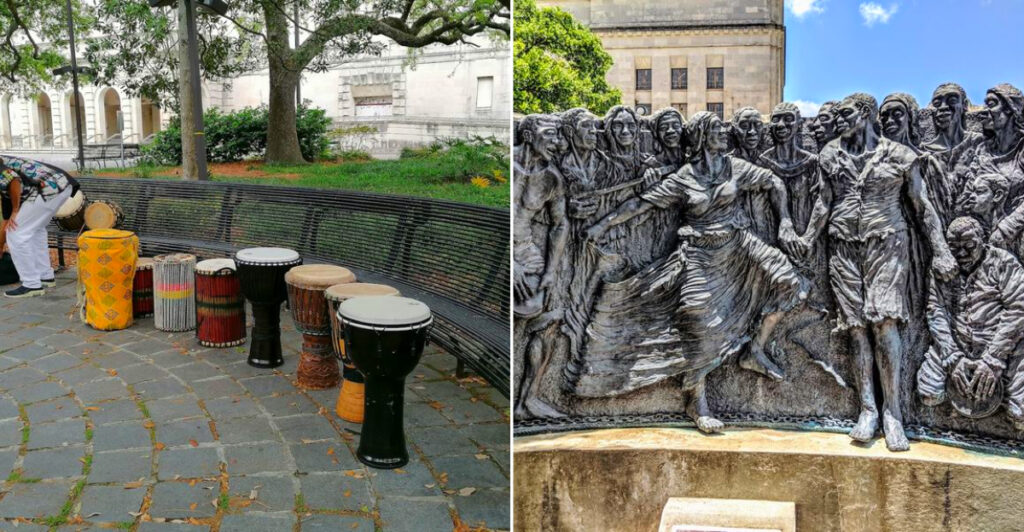
Every musical tradition in New Orleans traces part of its lineage back to one open patch of ground inside Louis Armstrong Park.
Congo Square is where enslaved plus free people of color gathered throughout the 18th plus 19th centuries to trade, socialize, plus dance to rhythms that mixed African, Caribbean, plus European traditions into something that had never existed before.
The Bamboula, the tresillo, the habanera, rhythms that would eventually become jazz, funk, bounce, plus brass band music all started right here under open sky before anyone thought to write them down.
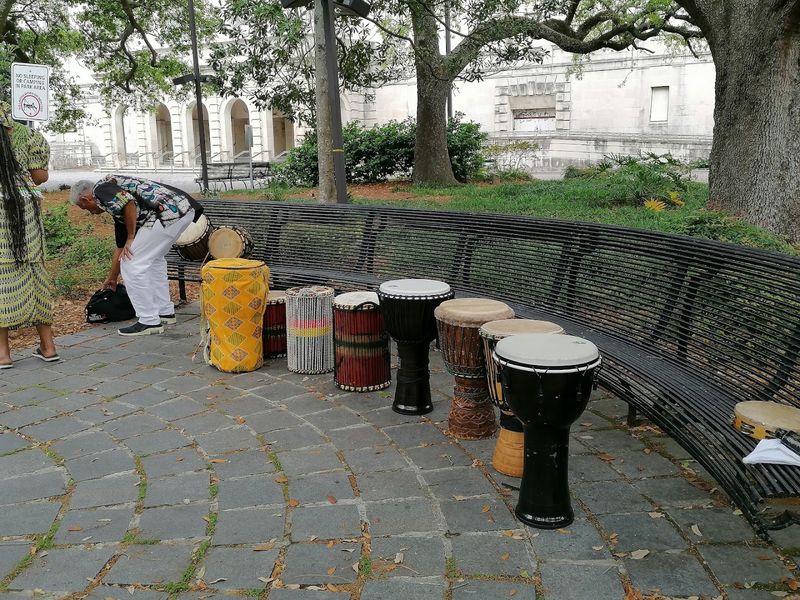
Today the square hosts live performances, drum circles, plus cultural gatherings that continue the tradition of communal music-making that never actually stopped.
Walk past the statues plus the oak trees, stand where the ground has absorbed centuries of rhythm, plus you start to understand why this city sounds like nowhere else on earth.
A Historical Crossroads
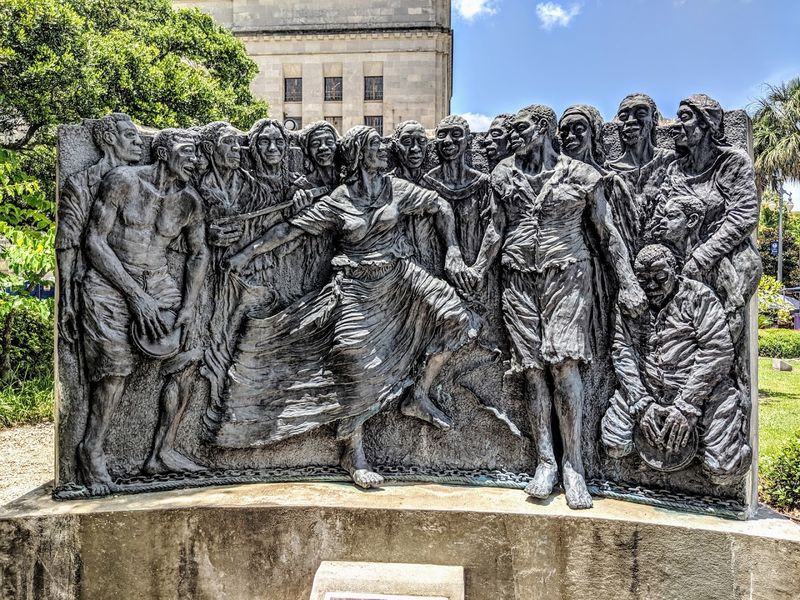
Congo Square is one of those places where the past and present occupy the same bench; the ground remembers gatherings that predate the city’s modern layout.
I spent time reading the plaques and listening to storytellers who trace the square’s use by Native peoples, then as a designated space where enslaved Africans could gather on Sundays under colonial-era regulations. That continuity anchors the site in an unusually direct way.
The park’s caretakers and preservationists point out that these Sunday gatherings were not mere pastimes but crucial cultural practices: markets, ceremonies, and dances that preserved identities. Knowing that history reshapes a casual visit into something reverent, and it changes how you move through the space.
Rampart Street Opens Into Congo Square
Congo Square sits inside Louis Armstrong Park at 701 North Rampart Street in New Orleans, Louisiana, on the Tremé side of the French Quarter. Approach along North Rampart Street and look for the park’s gates near the Municipal Auditorium.
Once through the Rampart Street entrance, turn left and follow the interior walkway toward the open paved gathering space in front of the auditorium. The square is not visible as a separate roadside attraction, so the park entrance is the essential first landmark.
Congo Square has no dedicated parking lot. Use legal street parking or a nearby public garage, then enter Louis Armstrong Park on foot and follow the paths and signs toward the square.
The Cradle Of American Sound
Walking the square, it’s easy to imagine the seed rhythms that blossomed into New Orleans jazz and beyond; Congo Square is widely acknowledged as a foundational source for many American music traditions.
I found myself following a drummer’s cadence, noting how syncopation and call-and-response patterns carried outward through generations.
Musicians explain that rhythms like Bamboula and Juba provided building blocks for jazz, blues, and more.
Scholarship supports this, and local artists point to the square as a living archive rather than a static monument.
For visitors, recognizing that lineage makes the drum circle feel like both celebration and continuing cultural work, an audible link between past and present.
Within Louis Armstrong Park
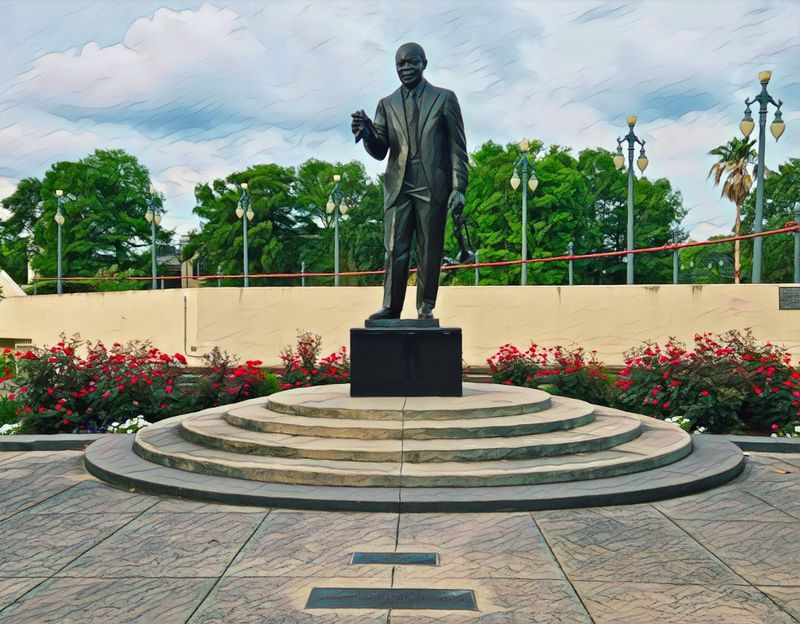
Congo Square sits in the southwest corner of Louis Armstrong Park, which itself is an interpretive landscape dedicated to the city’s musical history. On my walk I passed sculptures honoring Louis Armstrong and other pioneers, and the park’s lagoon provided a quietly reflective counterpoint to the square’s energy.
The park layout helps frame the square as both a communal stage and a contemplative site.
Entry from North Rampart Street places you near interpretive panels and convenient seating, which is handy if you want to catch a drum circle without standing the whole time. The park’s scale and placement make Congo Square feel protected within a larger cultural campus while still being easy to reach from the French Quarter.
Preserving A Living Legacy
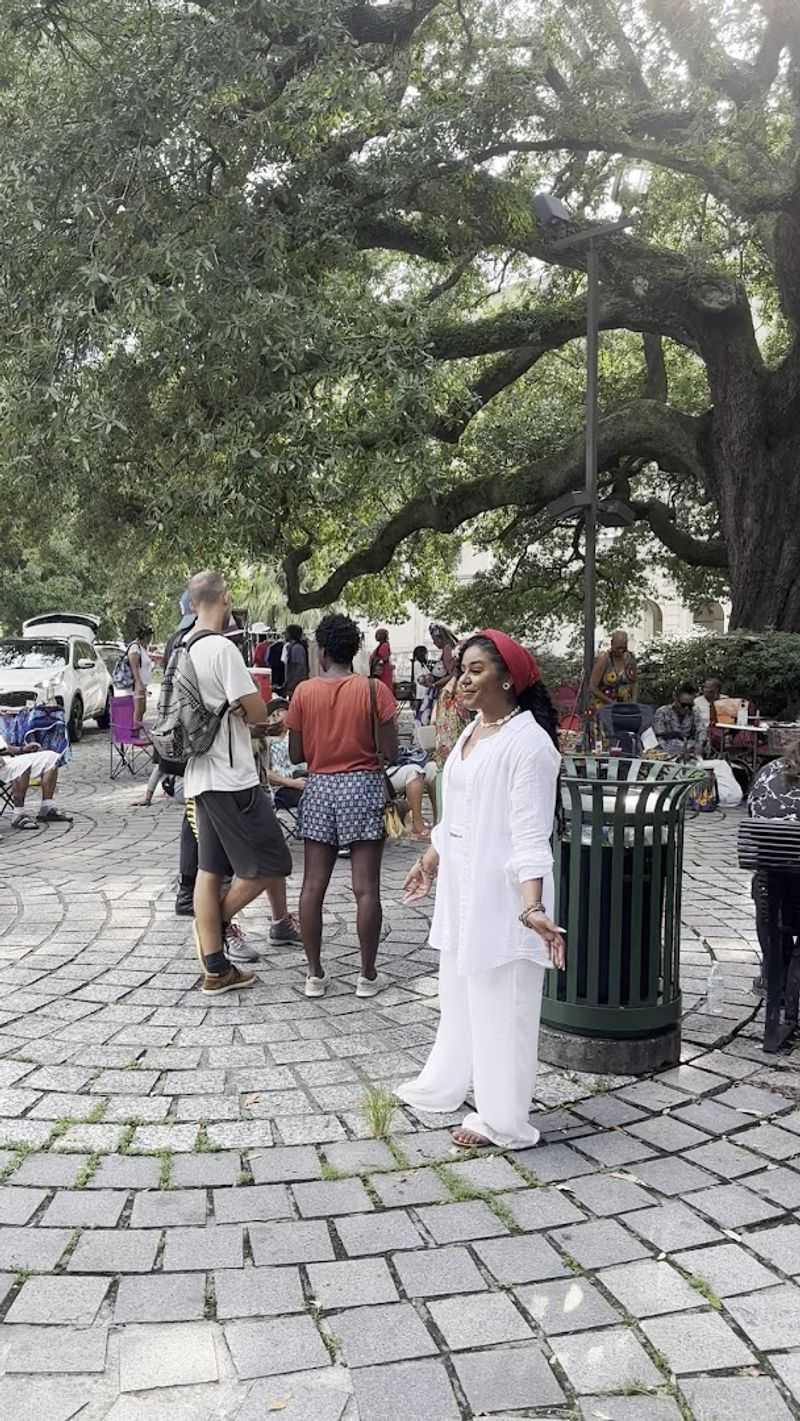
The work to keep Congo Square alive is ongoing and community-led; organizations like the Congo Square Preservation Society play a key role in organizing weekly events and educational programs.
I spoke with volunteers who described the Living Classroom field trips and workshops that teach young people drumming, dance, and the square’s layered history. Those programs feel like investment in cultural continuity rather than tourist programming.
Their presence also helps protect the square from becoming a static monument, keeping it connected to the musicians, dancers, families, and tradition bearers who continue shaping its meaning through participation, teaching, storytelling, and collective care across generations in New Orleans.
When preservation is done thoughtfully, you can see it reflected in vibrant Sunday gatherings and interpretive outreach. If you visit, consider supporting these groups through donations or by joining a workshop; it’s a direct way to help sustain the site’s future for local generations.
Seasonal Festivals And Traditions
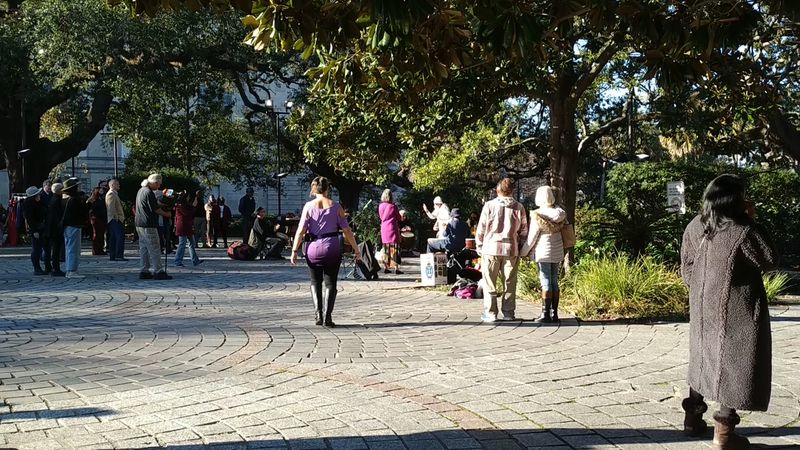
Congo Square hosts seasonal festivals that amplify its historic role as a cultural magnet, most notably the Congo Square Rhythms Festival which brings African, Caribbean, and Gulf Coast artists together.
I attended a smaller festival day and noticed artisans, food vendors, and musicians converging in a way that felt like an expansion of the Sunday gatherings.
These events draw larger crowds but keep the roots of ritual and communal music-making intact.
Festival schedules vary year to year, so checking the park’s and preservation society’s calendars helps with planning. Arrive early to find seating under shade and to catch the opening moments, which often include traditional invocation and dance that set the tone for the day.
Sculptures And Memorials
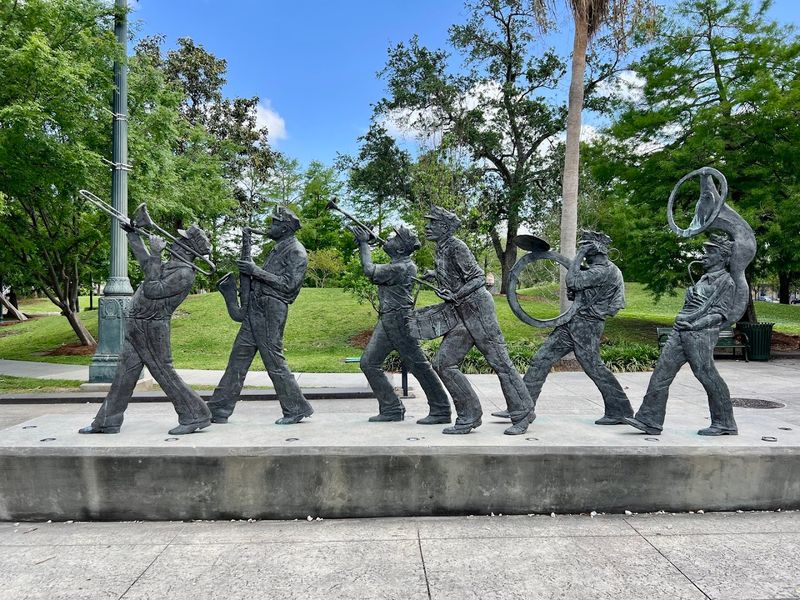
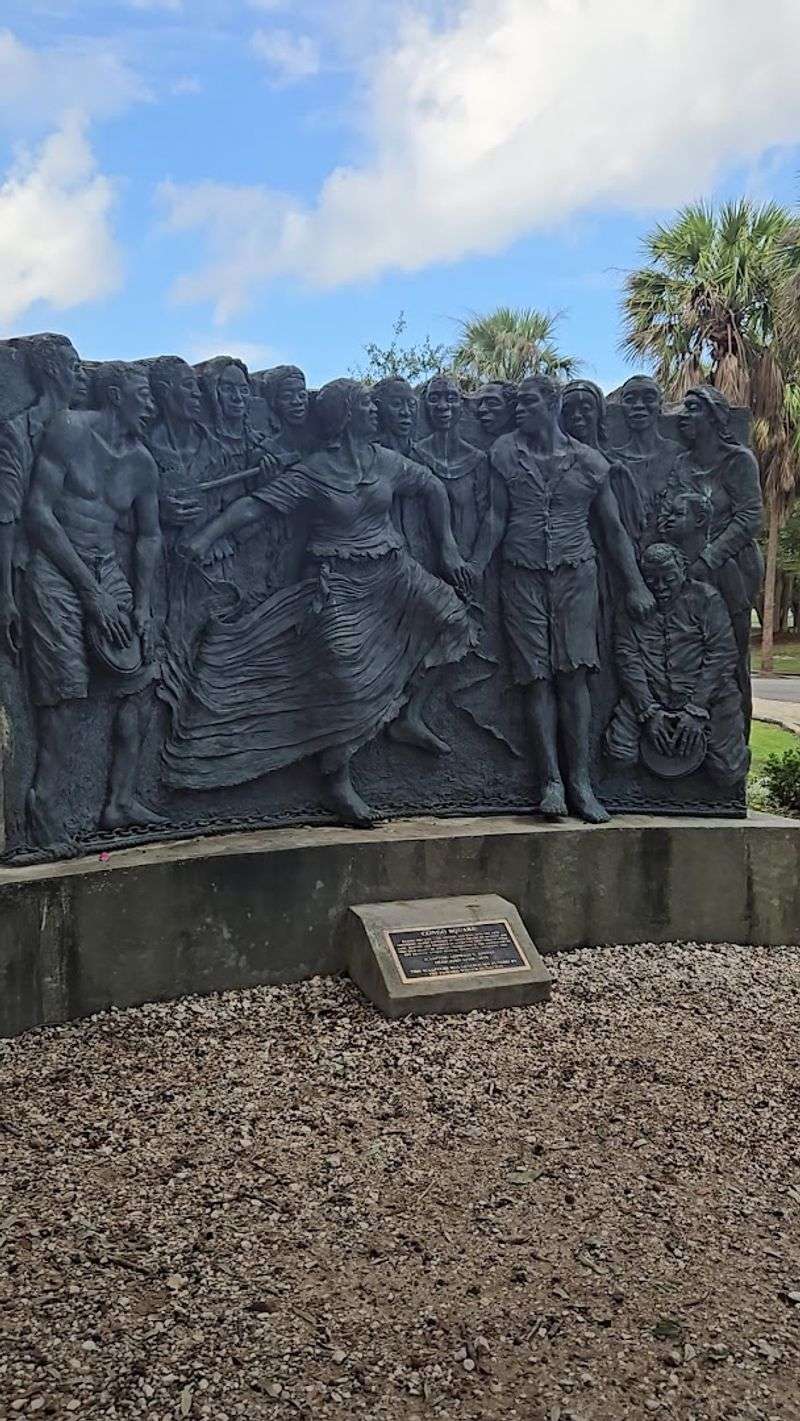
The park’s sculptures and memorials create an open-air museum that contextualizes Congo Square within New Orleans’ musical lineage.
I walked among bronze figures and plaques honoring musicians and cultural leaders, and found that each piece offered a small, focused story that complements the living traditions in the square.
The artwork gives visitors historical anchors to attach the drum circles and dances to names and dates.
Because signage is sometimes sparse, spending time at each monument and reading accompanying text enriches a visit.
The sculptures also provide excellent sheltered seating and shaded spots to observe a drum circle while still honoring the performers and their lineage.
Local Storytellers And Guides
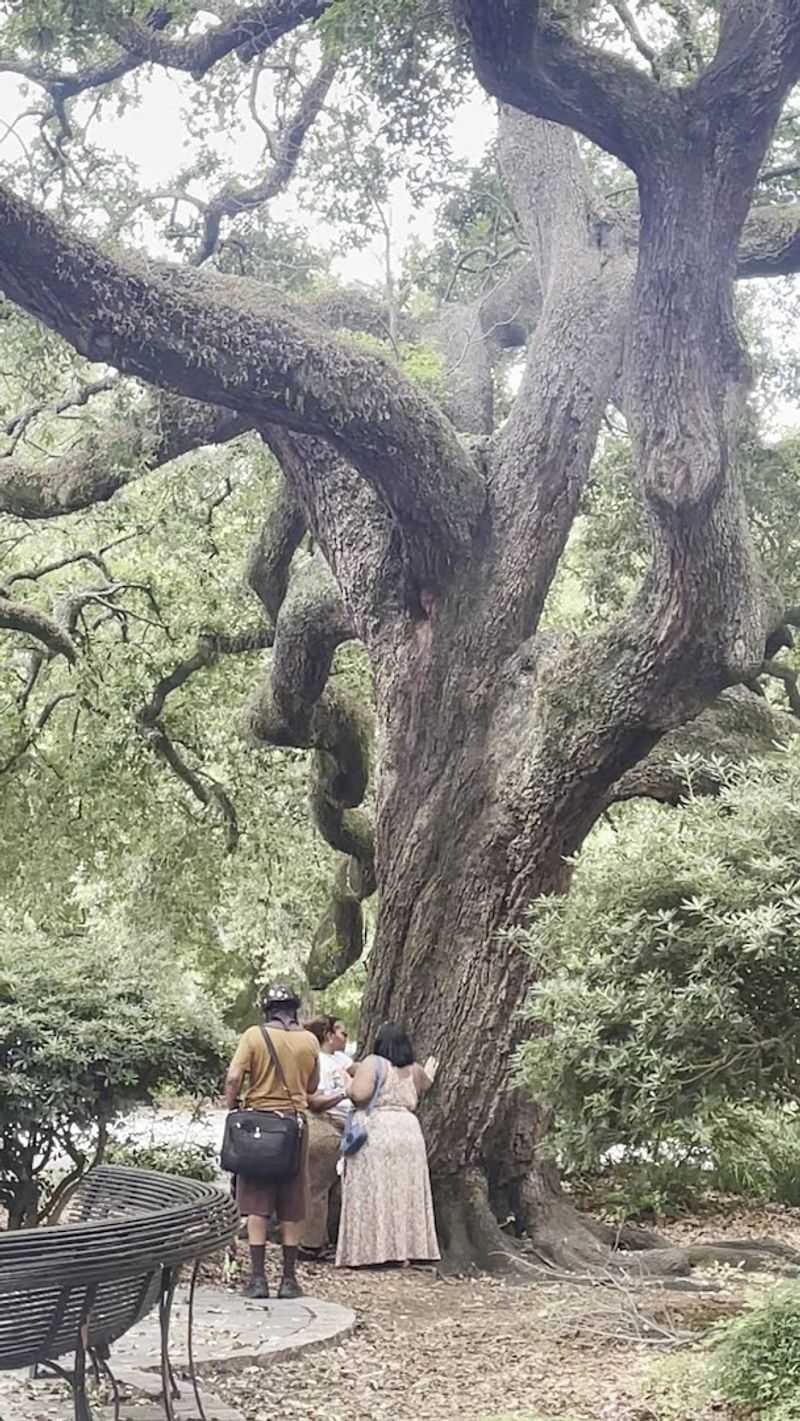
One of the most memorable parts of visiting Congo Square was meeting local storytellers who share oral histories on site; they often add personal memories and lineage details that plaques cannot capture.
During a visit I lingered for a talk from a longtime local who mixed historical fact with personal recollection, and the narrative made the square’s past feel immediate and human.
These interactions are part of how the square educates and grounds visitors.
If you meet a storyteller, listen and tip if you can, they often rely on donations and their insights transform a casual stop into a layered learning experience. Approach with questions and respect for their time and knowledge.
Practical Visit Tips
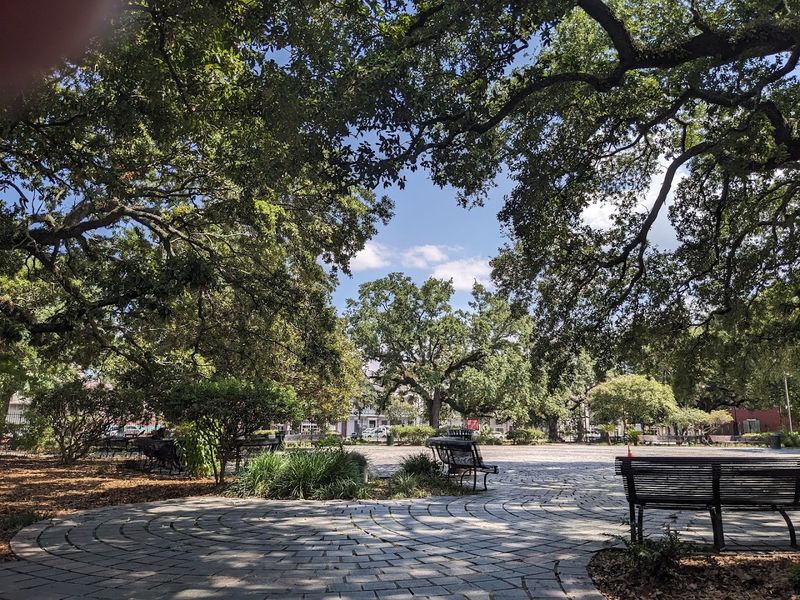
Plan your visit around the square’s schedule, Sundays between midafternoon and early evening are most lively due to the drum circles, while weekdays tend to be quieter. I learned that arriving early on popular days secures a shaded bench and a better vantage point for both drumming and dance.
The park is open daily until early evening, and entry is free, but small donations to preservation groups are appreciated and go a long way.
Accessibility is good near the main entrance, but paths can be uneven in places, so wear comfortable shoes. Bring water, a hat for shade, and an open ear for spontaneous performance and storytelling from locals who often volunteer their time to visitors.
Seasonal Quirks And Weather Notes
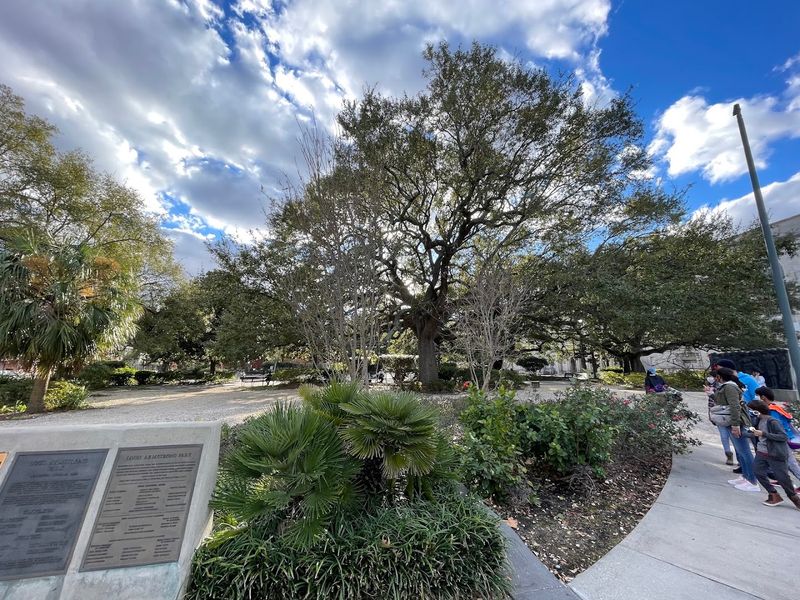
The park’s atmosphere shifts with the seasons, in summer the shade under the live oaks is precious and drum circles feel humid and exuberant, while winter Sundays are crisper and crowd sizes sometimes shrink.
I visited in early spring and found the trees in subtle bloom, lending a soft, green canopy that made the percussion sound even warmer.
Rain can change plans quickly, since much of the activity is outdoors and shade shelters are limited.
Check the forecast before you go; if a storm threatens, organizers sometimes move or shorten events. On pleasant days arrive early to claim a spot under the ancient oaks, which remain central to the square’s spirit regardless of season.
Respectful Visitor Habits
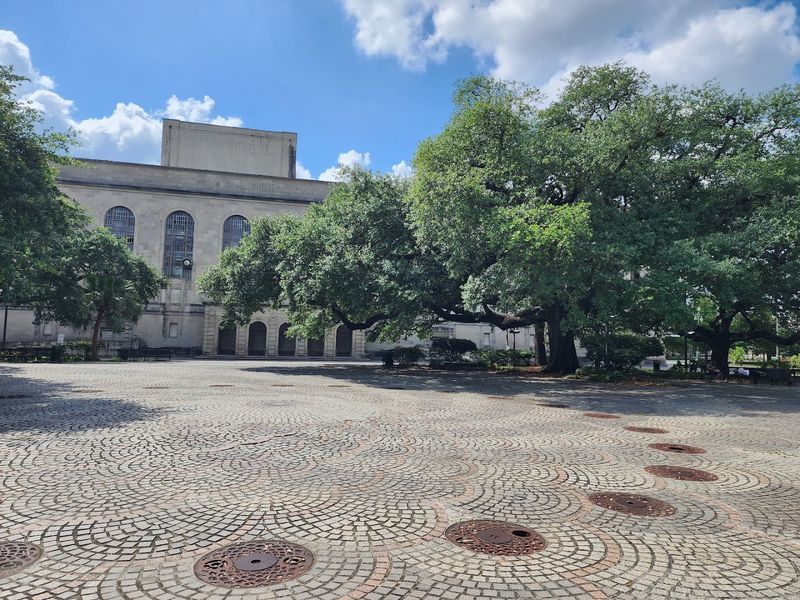
When engaging with Congo Square, respectful behavior matters more than flashy outfits or performance; the gatherings are cultural and often spiritual. I noticed that seasoned visitors observe first, join if invited, and avoid recording or spotlighting individuals without permission.
Tipping storytellers and drummers directly is a common practice that supports local custodians of tradition, and asking before photographing keeps interactions considerate. Remember that participation is a privilege, not an expectation, and that quiet attention can be the most meaningful form of respect.
Listening carefully, following local cues, and allowing community members to set the tone protects the gathering’s integrity from intrusion.
Keep conversations low during performances, stay clear of the central circle unless invited, and follow any posted rules. This approach helps maintain the square as a living, breathing space rather than a backdrop for casual tourism, and it ensures the traditions there can continue undisturbed for future generations.