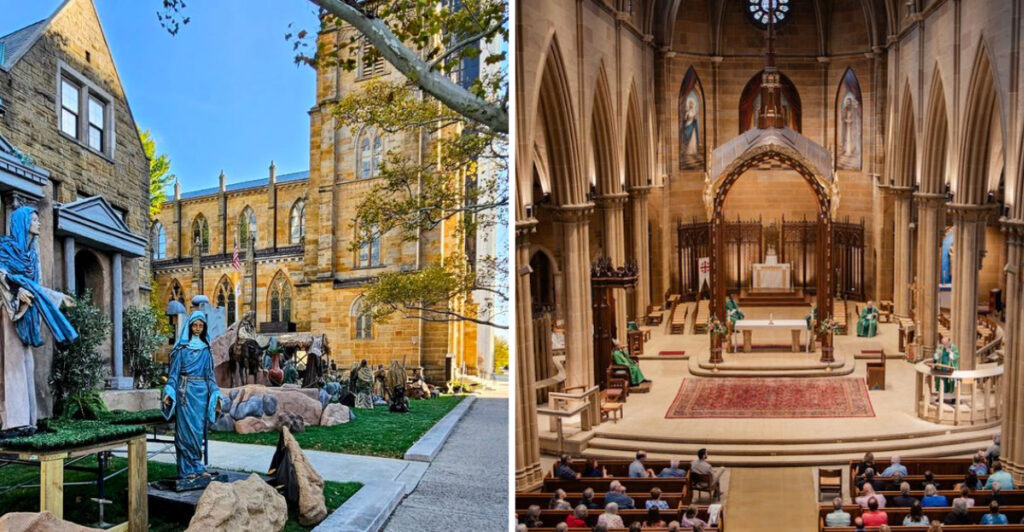
Columbus has been hiding a 312-foot idea in plain sight.
The tower was supposed to rise above downtown with three clock faces and ten bells. It never reached the planned height, but the ambition still clings to this Gothic Revival cathedral like unfinished business.
That is your first clue that this is not an ordinary church stop.
Walk around the exterior, and the questions start piling up. Why does the stone look warmer than the buildings around it? How did marble connected to St. Patrick’s Cathedral end up in Ohio?
And what happened to the second tower that was meant to join the skyline?
Inside, the nave sends your eyes upward before you can decide where to look first. Stained glass, clustered columns, and a vaulted ceiling make a quick visit increasingly unrealistic.
Ohio has kept this architectural plot twist downtown since the 1870s. The missing towers are only where the story begins.
Broad Street Has Been Carrying This History Since 1878
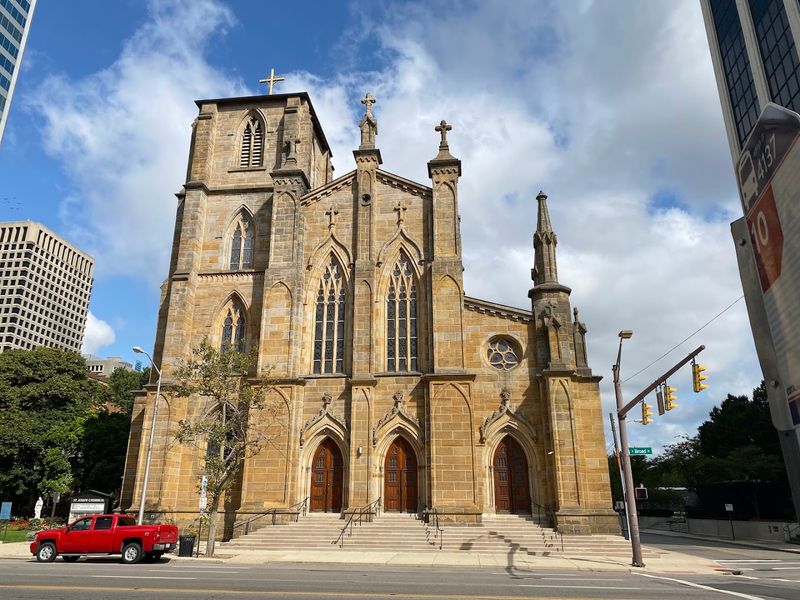
Nearly 150 years is a long time to stand beside downtown traffic without becoming background scenery.
St. Joseph Cathedral celebrated its first Mass on Christmas Day in 1872, even though interior work was still incomplete. The building was formally consecrated on October 20, 1878, placing its history firmly within the growth of nineteenth-century Columbus.
Today, it remains the Mother Church of the Diocese of Columbus. This is not a preserved shell waiting for visitors to admire it from behind a rope. Regular Masses and diocesan events continue beneath the same arches.
That active role gives the cathedral more weight than an ordinary historic building. The stone walls have witnessed changing streets, changing skylines, and generations entering for worship rather than sightseeing.
Architectural research identifies the cathedral as an early major example of Gothic Revival architecture in Ohio. That matters because its pointed forms and vertical emphasis arrived when Columbus was still building much of its modern identity.
You can find it at 212 E Broad Street, Columbus, OH 43215, right in the center of downtown. The address is hardly secret, but knowing what you are looking at makes the whole block more interesting.
Next time you pass, resist the urge to glance once and keep walking. A building that waited this long for your attention can probably hold it for five minutes.
Local Stone Gives The Exterior Its Own Columbus Accent
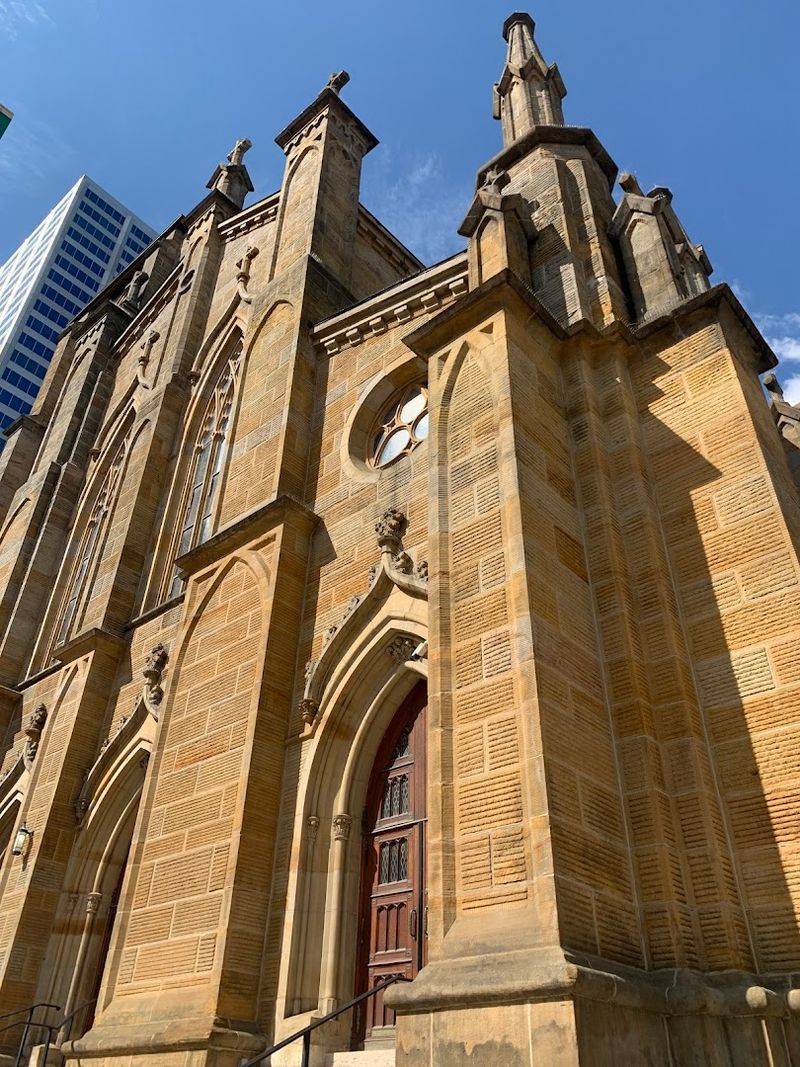
The cathedral may speak Gothic, but its stone has a distinctly Ohio address.
Much of the exterior material came from quarries in Licking and Fairfield counties. Its finished surface gives the walls their recognizable yellow-toned appearance, setting the cathedral apart from darker gray stone churches.
Additional stone details came from other parts of central Ohio. Freestone from Pickaway County was used around windows, while some brackets were cut from Columbus limestone.
Those materials connect the building physically to the region rather than merely placing a European-inspired design on an Ohio street. The cathedral may borrow its architectural language from medieval tradition, but the walls themselves came from nearby ground.
Sunlight changes how those surfaces appear. On brighter days, the warmer yellow and brown tones stand out more clearly, while cloud cover gives the stone a quieter, heavier presence.
There is no single correct hour to visit. Morning light, afternoon sun, and an overcast sky each reveal something different, so do not let the absence of perfect weather cancel the stop.
Photographs tend to flatten stone into color. Standing beside it lets you see the texture, variation, and weight that a phone screen politely removes.
Run your eyes along the facade rather than rushing toward the door. Local geology has been doing part of the decorating since the nineteenth century.
The Interior Changes The Scale Of The Conversation
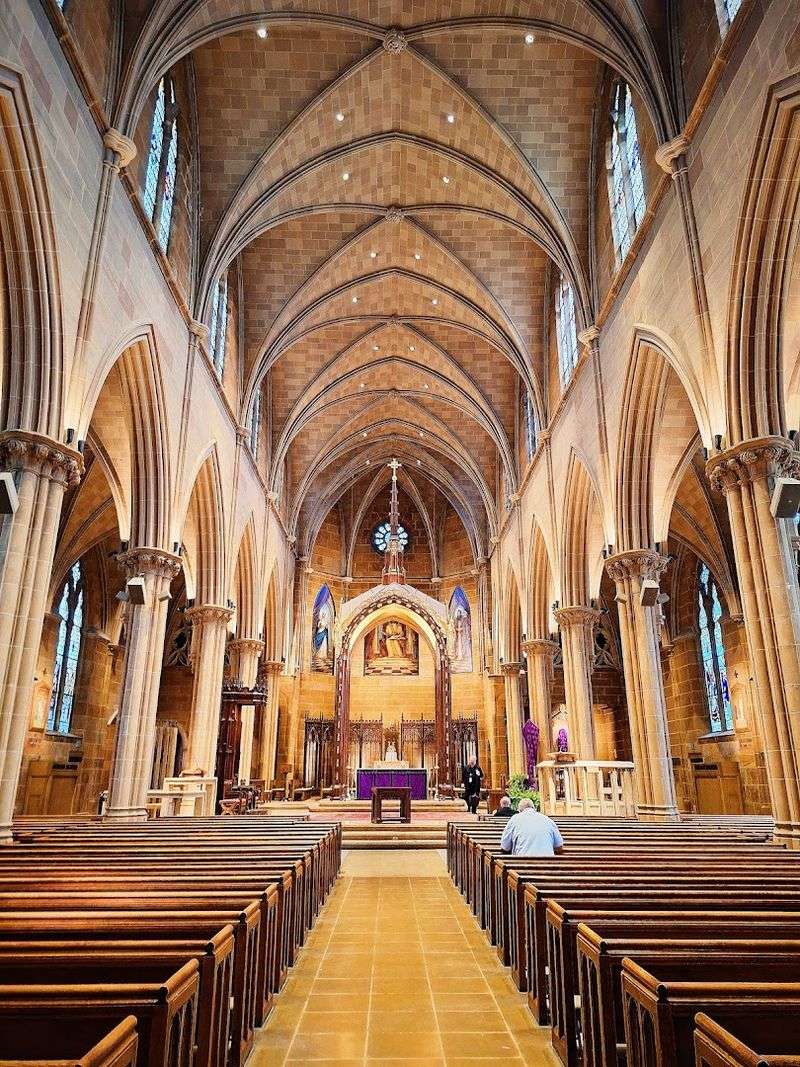
The nave wastes no time showing off. One step inside, and your neck is suddenly doing more architectural research than the rest of you.
Clusters of Gothic columns line the nave and support the clerestory walls above. Their repeated vertical lines guide your attention toward a groined ceiling formed from painted plaster.
Pointed arches continue the rhythm established outside, while stained-glass windows introduce religious figures, symbols, and shifting color. The interior feels ordered without feeling plain.
Several major changes occurred over time. In 1914, columns were replaced, electric lighting was installed, new altars were constructed, and a marble altar rail replaced the earlier wooden one.
The 1978 renovation altered the sanctuary again. Pews and sections of the altar rail were removed near the front, while the altar and baldachin were moved forward and other chapel elements were rearranged.
The baldachin still commands attention above the sanctuary. Its canopy-like structure frames the altar and gives the eye a destination after traveling through the nave.
Hard stone surfaces and the high interior create a naturally resonant setting for music and spoken liturgy. That does not guarantee every visitor will become an acoustics expert, but even a quiet footstep tends to sound more important in here.
Give yourself a few minutes to sit rather than performing a quick lap. The cathedral has spent more than a century perfecting stillness, and you can probably spare one bench.
New York Marble Quietly Enters The Ohio Story
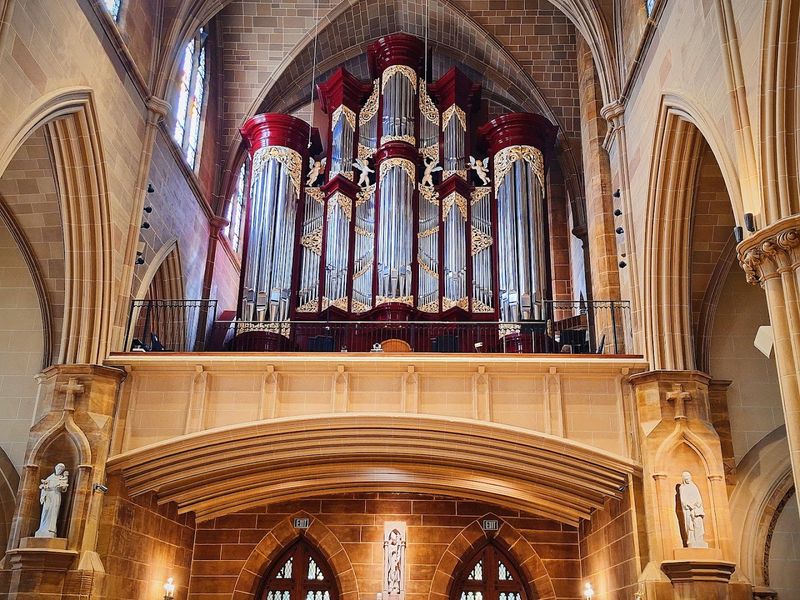
Here is the detail that makes people lean closer: the altar marble shares its quarry origins with St. Patrick’s Cathedral in New York City.
Cardinal John McCloskey donated the marble used for the main altar. It came from New York State quarries that also supplied stone for the interior of St. Patrick’s.
The side altars were later built using marble from the same source. That creates a documented material connection between the Columbus cathedral and one of the country’s most famous Catholic churches.
The link does not make the two buildings architectural twins. Their scale, design, history, and national profiles remain very different.
It does, however, give the sanctuary an unexpected connection beyond Ohio. Stone extracted from the same quarry system ended up serving prominent religious spaces in two very different American cities.
Look closely at the altars and the marble begins feeling less like a decorative surface and more like part of a larger architectural journey. Quarries rarely receive much attention once the finished work is installed, but here the source adds another layer to the story.
You do not need to have visited St. Patrick’s to appreciate the connection. Still, anyone familiar with the New York cathedral may enjoy discovering that Columbus carries a small piece of the same geological history.
Consider it the architectural version of finding out two impressive strangers share a hometown.
This Is Still A Cathedral Before It Is A Sightseeing Stop
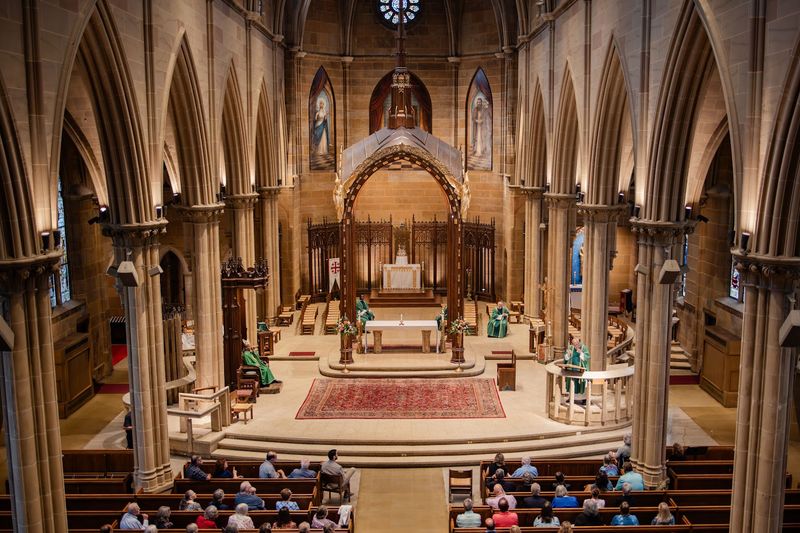
Before walking inside with your camera ready, remember that people may be praying, attending Mass, rehearsing music, or preparing for a diocesan event.
St. Joseph Cathedral remains an active place of worship, not a museum operating around tourist hours. Visitors should check the current Mass and event schedule before planning an interior visit.
That small amount of preparation helps you avoid arriving during a service when casual sightseeing would be disruptive. It also gives you the chance to notice scheduled concerts and musical programs held throughout the year.
The exterior can be appreciated at any time from the public street. Even when the doors are not accessible for a casual visit, the stonework, arches, tower, and Broad Street facade still justify a pause.
When entering, keep voices low and follow any posted guidance. Photography policies and access can change depending on services or events, so let the cathedral set the rules rather than assuming every corner is open.
This is one of those places where slowing down improves the experience immediately. Rush through, and you will remember a few arches. Stay attentive, and the details begin connecting into a much larger story.
You are welcome to admire the architecture. Just allow the building to remain what it was constructed to be.
Why A Downtown Detour Belongs In Your Columbus Plans
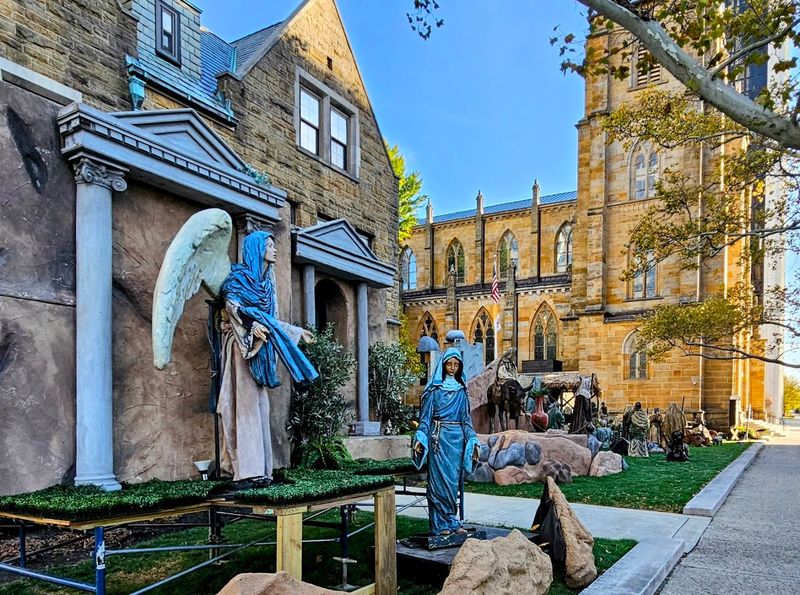
You do not need an entire afternoon, a formal tour, or a suitcase full of architectural knowledge.
St. Joseph Cathedral works as a brief downtown stop because the history is visible before you read a single date. The local stone, Gothic arches, incomplete tower, stained glass, marble altars, and active religious life all occupy the same address.
Its location also makes the visit practical. You can add it to a walk through central Columbus without reorganizing the entire day around one building.
That accessibility may be part of why people pass too quickly. When something stands directly beside familiar streets, it becomes easy to assume it will still be there next time.
The cathedral has already been waiting since the nineteenth century. Your schedule is probably the less impressive excuse.
Check the service calendar, approach respectfully, and spend a little time looking beyond the most obvious features. Count the arches, study the stone, imagine the missing towers, and notice how the interior redirects your attention.
By the time you return to Broad Street, downtown may look slightly more ordinary than it did before. That is what happens when one building raises the architectural standards for the entire walk home.