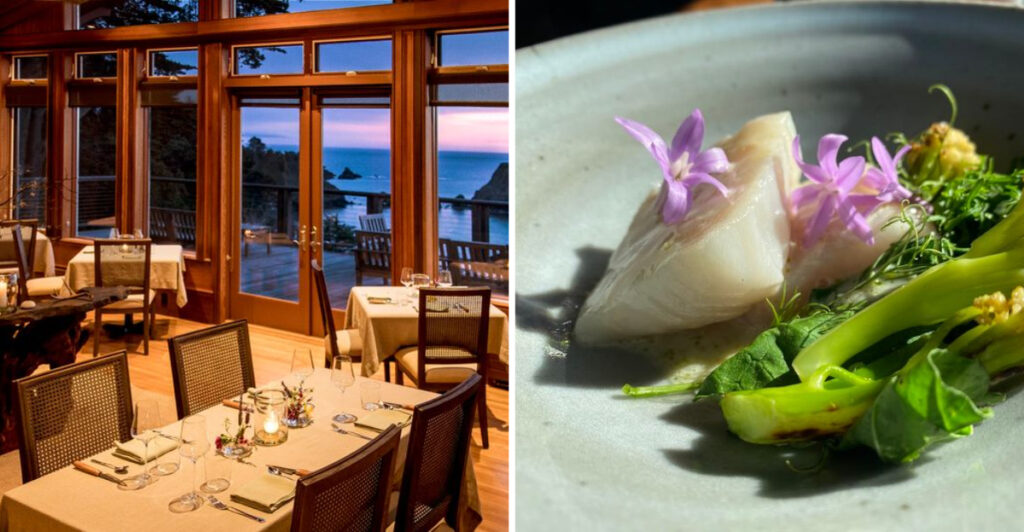
The reservation starts testing your patience before dinner has even entered the room.
Highway 1 bends, the Pacific flashes between cliffs, and your estimated arrival time becomes a hopeful suggestion. By the time the dining room appears above the water, the drive has already stripped away the usual rush.
Inside, the intimate dining room seats just twenty guests, with a menu guided by nearby coastal harvests and the changing season. California is not merely scenery here. It has effectively joined the kitchen staff.
The evening feels less like checking off a famous restaurant and more like the Mendocino Coast becoming part of the meal. The menu shifts, the light changes, and the ocean keeps stealing your attention.
Trust the road and let California prove that dinner can begin miles before anyone unfolds a napkin.
The Highway 1 Journey Makes Dinner Feel Like A Grand Arrival
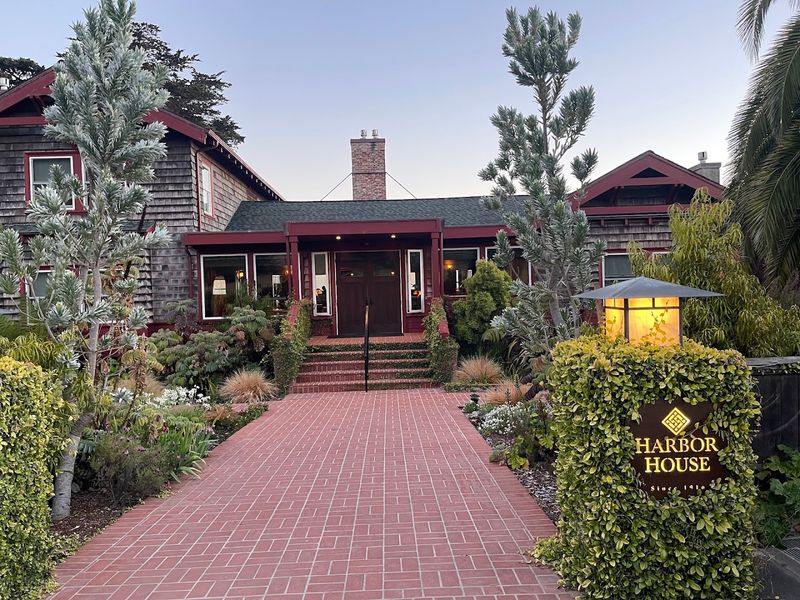
The drive is not a commute. It is the restaurant’s very long amuse-bouche.
Reaching Harbor House means following Highway 1 through Mendocino County, where coastal bluffs, redwood stands, tight bends, and sudden ocean views keep the road from becoming background scenery.
Elk is a small community, and the surroundings grow quieter as the inn approaches. The route leaves behind wider highways and familiar roadside development, replacing them with cliffs, trees, and stretches of largely undeveloped coastline.
That distance gives the arrival more impact. Harbor House does not appear beside a crowded commercial strip or announce itself with oversized signs. It emerges above the Pacific after the road has already adjusted your pace.
Greenwood State Beach sits nearby, and the coastline drops sharply toward the water below the property. Even before dinner begins, the setting has made a clear argument for putting the phone away.
Travel time can be longer than the mileage suggests because Highway 1 prefers curves over efficiency. That inconvenience quickly starts looking intentional.
By the time the inn appears, you have not merely driven to dinner. You have been properly introduced.
A Twenty-Seat Dining Room With An Ocean View
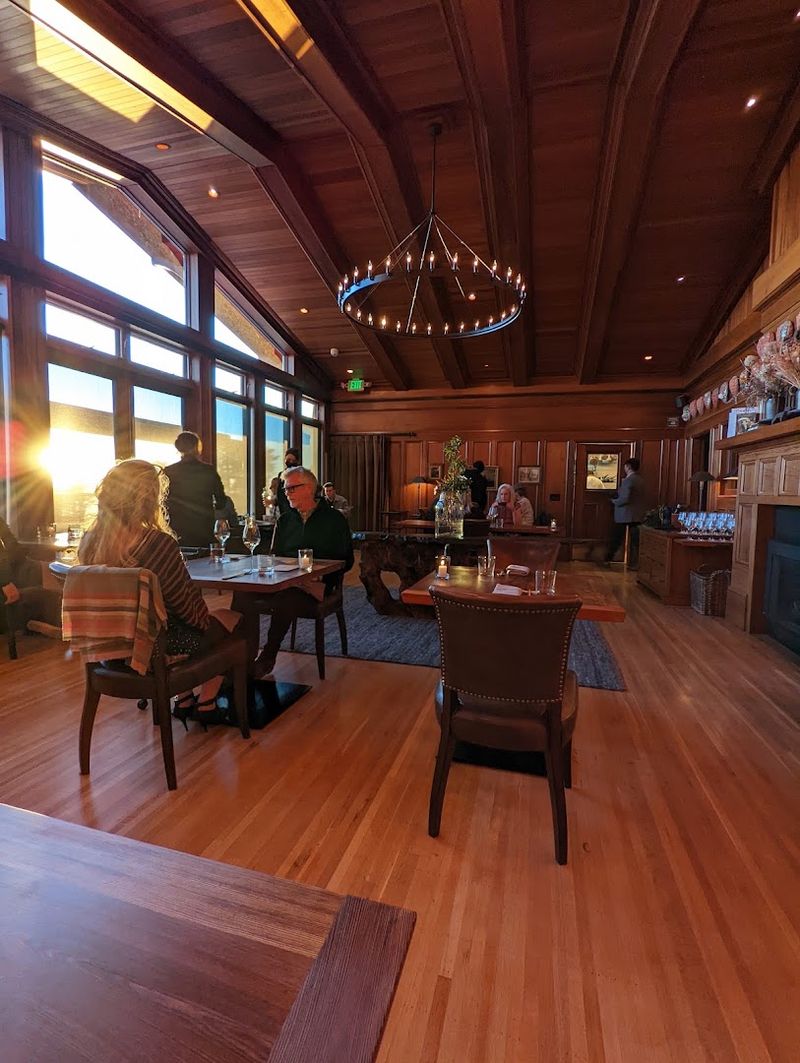
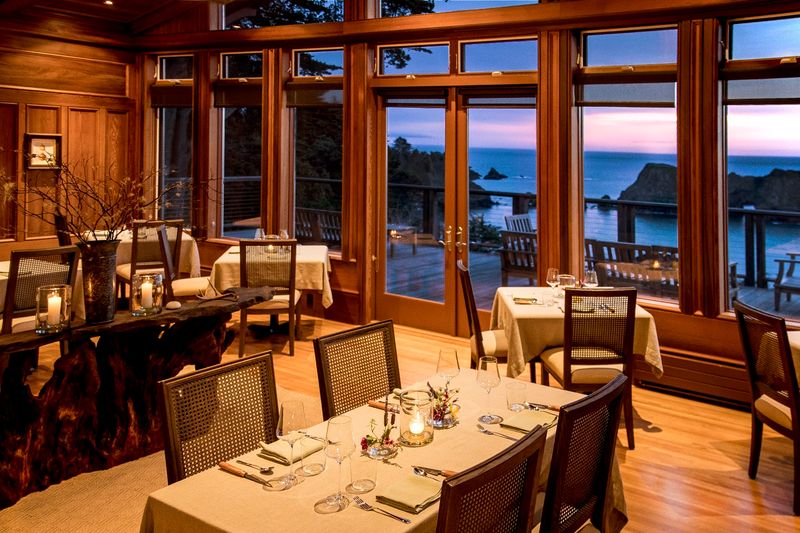
A twenty-seat dining room does not leave much room for anonymity. It also leaves no bad seat for the ocean.
Large windows place the Pacific beside the tasting menu, keeping the water visible as the light changes throughout dinner.
Early courses may arrive while the coast still holds warm color. Later, the horizon darkens, reflections appear in the glass, and the dining room settles into a quieter mood.
The room occupies part of a 1916 Craftsman-style inn. Wood paneling, antique details, and the smaller scale give it warmth without turning the evening into a formal performance.
That intimacy also shapes the pacing. Guests are not moving through a rushed sequence of plates or competing with a crowded dining room. The tasting-menu format encourages everyone to settle in while the kitchen controls the rhythm.
Reservations are required, and the limited number of seats makes advance planning sensible. Twenty chairs can disappear from a booking calendar with alarming speed.
The scale is part of the appeal, but it also creates a clear expectation: this is not a spontaneous stop after casually wandering through Elk.
Secure the table first. Highway 1 will provide plenty of suspense afterward. Once dinner begins, the Pacific remains close enough to join every course without reaching for your fork.
A Menu Shaped By The Coast
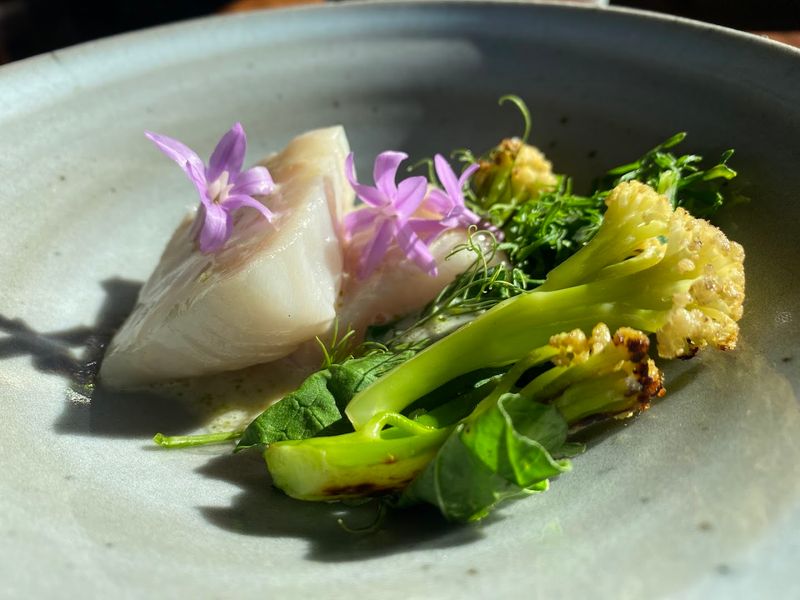
At Harbor House, the coast does not merely inspire the menu. It behaves more like the executive chef’s demanding colleague.
The tasting menu changes according to the season, weather, available harvests, and ingredients that can be gathered or sourced nearby.
That flexibility means dishes cannot always be predicted far in advance. A course served during one part of the year may disappear when the coast moves into another season.
Sea vegetables, wild mushrooms, foraged herbs, coastal greens, and farm-grown produce have all played roles in the kitchen’s cooking. The menu responds to what is available rather than forcing ingredients into a fixed year-round program.
Nearby tide pools, forests, farms, and fishing waters all influence what reaches the table.
Dietary restrictions should be communicated before the reservation. A daily-changing tasting menu gives the kitchen room to adapt creatively, but advance notice matters when every course is connected to a tightly planned sequence.
This style of cooking asks guests to release some control. You may not know every plate before arriving, and that is part of the point.
The coast has checked the forecast, reviewed the harvest, and made a few decisions on your behalf.
Your job is considerably easier. Sit down and see what made the cut.
Playing With Fire And Smoke
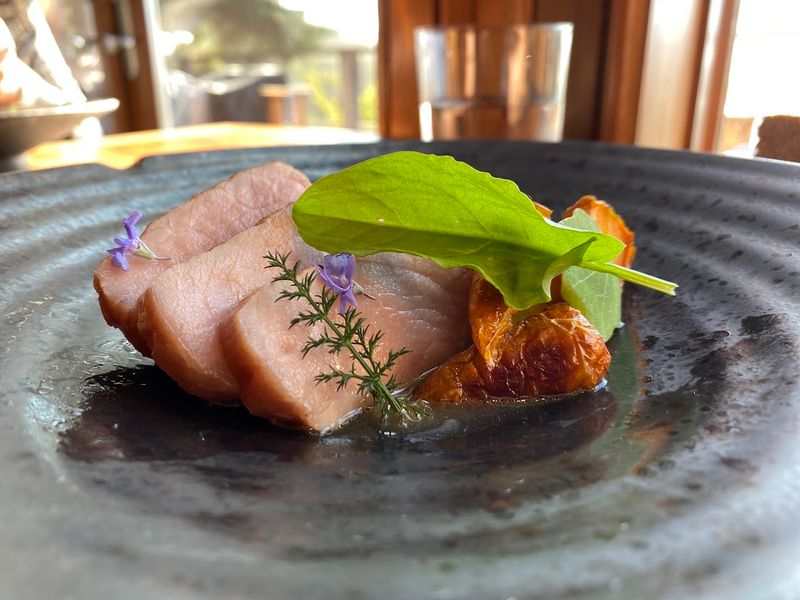
Harbor House does not need kitchen theatrics when actual fire is available.
The cooking frequently relies on fire, steam, and smoke to shape flavor and texture. Each method is used according to the ingredient rather than applied as a decorative signature.
Smoke can deepen seafood without covering its natural character. Past menus have included black cod smoked over bay laurel, allowing the chosen wood to become part of the dish rather than an invisible cooking tool.
Fire brings char, crisp edges, and concentrated flavor to vegetables and proteins. Steam handles more delicate ingredients by preserving moisture and softness where direct heat might take over.
The restraint matters. Sauces and garnishes support the central ingredient instead of sending it into witness protection.
Harbor House has earned two Michelin stars, recognition tied to the kitchen’s technical precision and consistent point of view.
It also holds a Michelin Green Star for its sustainability practices. Those distinctions add weight to the restaurant’s reputation. Still, the plates remain connected to simple forces: heat, water, smoke, salt, and time.
Complicated cooking does not always need to look complicated. Here, fire gets the final word, smoke adds punctuation, and steam keeps everyone from shouting.
The Ranch That Keeps The Kitchen Close To The Land
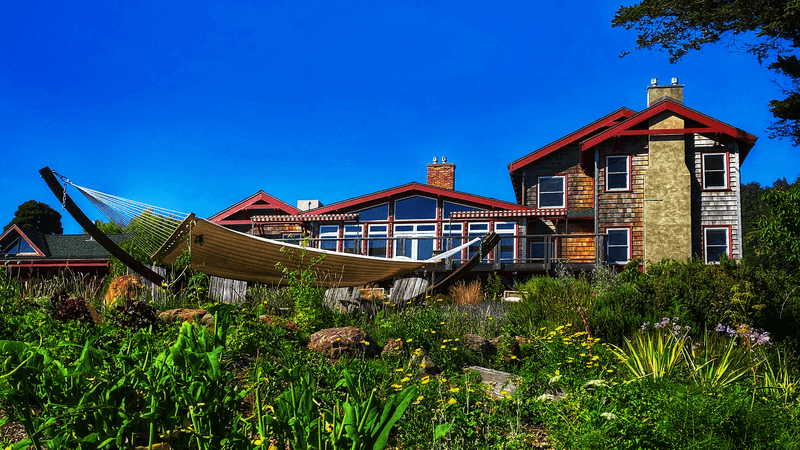
Many restaurants know the names of their farmers. Harbor House can point toward its own 320-acre ranch.
Located south of Point Arena, Harbor House Ranch grows vegetables and other crops specifically for the kitchen.
That relationship allows the culinary team to choose varieties for flavor, texture, and intended use rather than prioritizing shelf life or long-distance shipping.
Produce can move from the ranch to the restaurant without spending days in a distribution system. The shorter route supports freshness while giving the kitchen greater knowledge of how ingredients were cultivated.
The ranch also provides room for experimentation. Crops can be selected with particular dishes, seasons, preservation methods, or cooking techniques in mind.
That level of control reinforces the restaurant’s broader sustainability work. The Michelin Green Star recognizes practices extending beyond a few locally sourced ingredients, including decisions tied to land management and kitchen operations.
The ranch does not make the restaurant completely self-sufficient, nor does it remove the need for regional fishermen, foragers, and farms. It adds another close connection between the dining room and the land surrounding it.
Farm-to-table can sometimes sound like a phrase looking for a menu. At Harbor House, the farm has acreage, a job description, and a very short commute.
Coastal Ingredients Served On The Plate
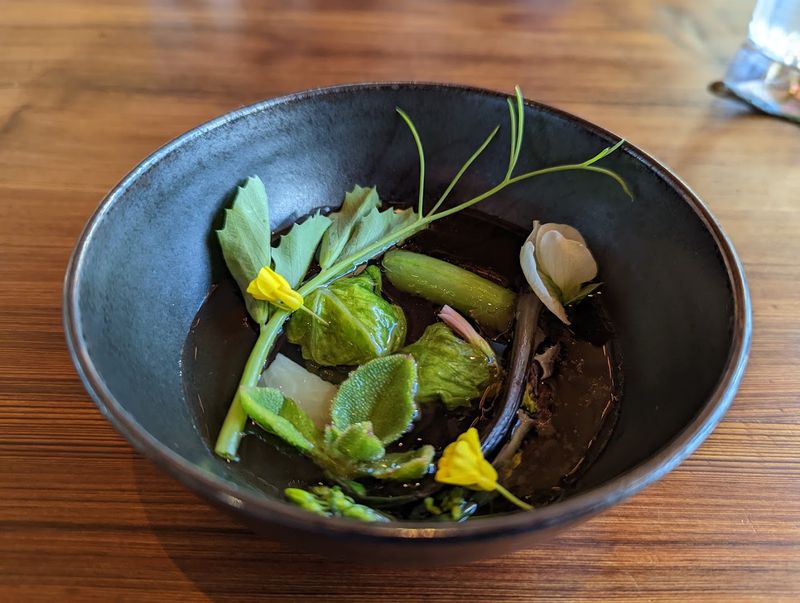
The Pacific does not spend the evening posing outside the windows. It also clocks in for dinner service.
Past Harbor House menus have included sourdough with sea-lettuce butter, red abalone with rice, and rockfish paired with smoked butter.
These examples may not appear during every visit because the tasting menu changes with availability. They do, however, show how directly the kitchen works with Northern California’s coastal ingredients.
Sea lettuce brings a marine quality to butter without turning the bread course into a novelty act. The flavor quietly connects the table to the shoreline beyond the glass.
Abalone carries deep cultural and culinary ties to the Northern California coast. Serving it with rice gives the ingredient room to remain central rather than surrounding it with unnecessary competition.
Rockfish offers another regional connection. Smoked butter can add warmth and depth while allowing the fish to retain its own flavor and texture.
The same principle applies throughout the menu. Coastal ingredients are not added simply because the restaurant happens to have an ocean view. They appear because the kitchen understands how to prepare them with focus.
You may not receive these exact dishes during your reservation. The coast is seasonal, the menu listens, and substitutions are part of the arrangement.
Still, one thing remains likely: the ocean will find a way onto the table before dessert arrives.
Why Harbor House Deserves A Spot On The California Bucket List
A bucket-list meal should require more than a reservation and a reliable parking app.
Harbor House combines a remote Highway 1 setting, a twenty-seat dining room, a changing tasting menu, a working ranch, two Michelin stars, and a Michelin Green Star in one coastal property.
Any single feature could attract attention. Together, they create an experience built around place rather than spectacle.
The drive separates the restaurant from everyday routines. The windows keep the Pacific present throughout dinner. The ranch, nearby farms, forests, and coast influence the ingredients, while fire, steam, and smoke shape how they are served.
None of that guarantees every course will match every diner’s personal preferences. Tasting menus involve trust, and highly seasonal cooking can challenge anyone who prefers to order familiar favorites.
That willingness to surrender the usual choices is part of what makes the evening distinctive.
Reservations are required, and planning ahead is necessary. The restaurant operates on a limited schedule, so current dining dates and availability should be confirmed directly before arranging the drive.
Harbor House Inn sits at 5600 South Highway 1 in Elk, with the Pacific stretching beyond its windows.
The meal will eventually end. The drive home will begin. Somewhere along the curves, you may notice that the bucket list has quietly promoted this dinner into permanent memory.