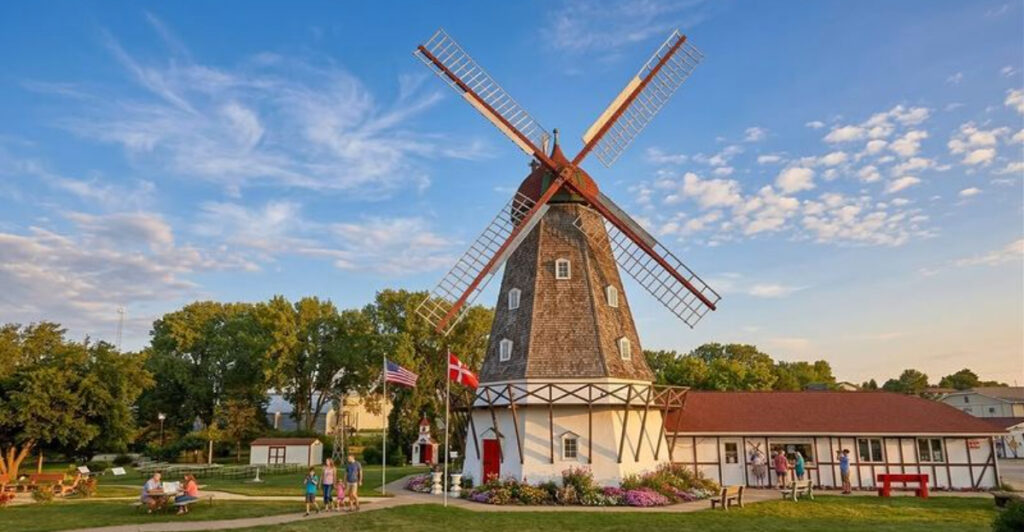
What happens when a tiny Iowa town decides that blending in is simply not on the agenda?
Windmill sails turn above the prairie, Danish traditions still shape daily life, and the streets carry a personality that feels wonderfully unexpected for a town of just over 600 people. Elk Horn does not need flashy attractions to get your attention, because its character does that job almost immediately.
This is the kind of Iowa stop that makes you slow down, look twice, and wonder why you had not heard about it sooner.
A Town That Kept Its Danish Soul Intact
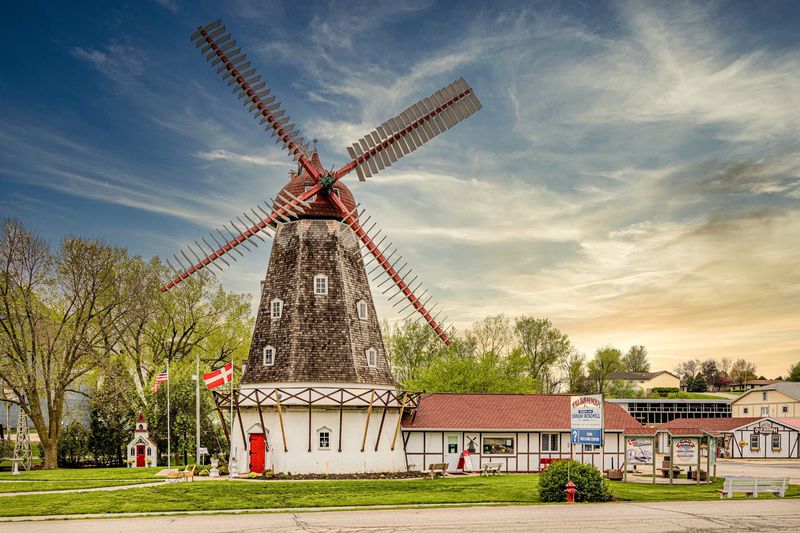
Most American small towns drift toward sameness over time, losing whatever made them distinct in the first place. Elk Horn went the other direction.
Settled in the 1860s and 1870s by Danish immigrants who wanted to build something familiar far from home, the town has held onto its cultural identity in ways that feel deliberate and proud rather than nostalgic and dusty.
The street names, the architecture, the food, the festivals, and the community events all carry traces of Denmark that have survived for well over a century.
You can feel it the moment you drive in, not because someone put up a welcome sign telling you about it, but because the details are woven into the physical fabric of the town itself.
Elk Horn is located at Iowa 51531 in Shelby County, about 65 miles northeast of Omaha, Nebraska.
The drive in gives you open farmland in every direction, which makes the town’s European-flavored personality feel even more unexpected when it finally comes into view.
The Windmill That Actually Works
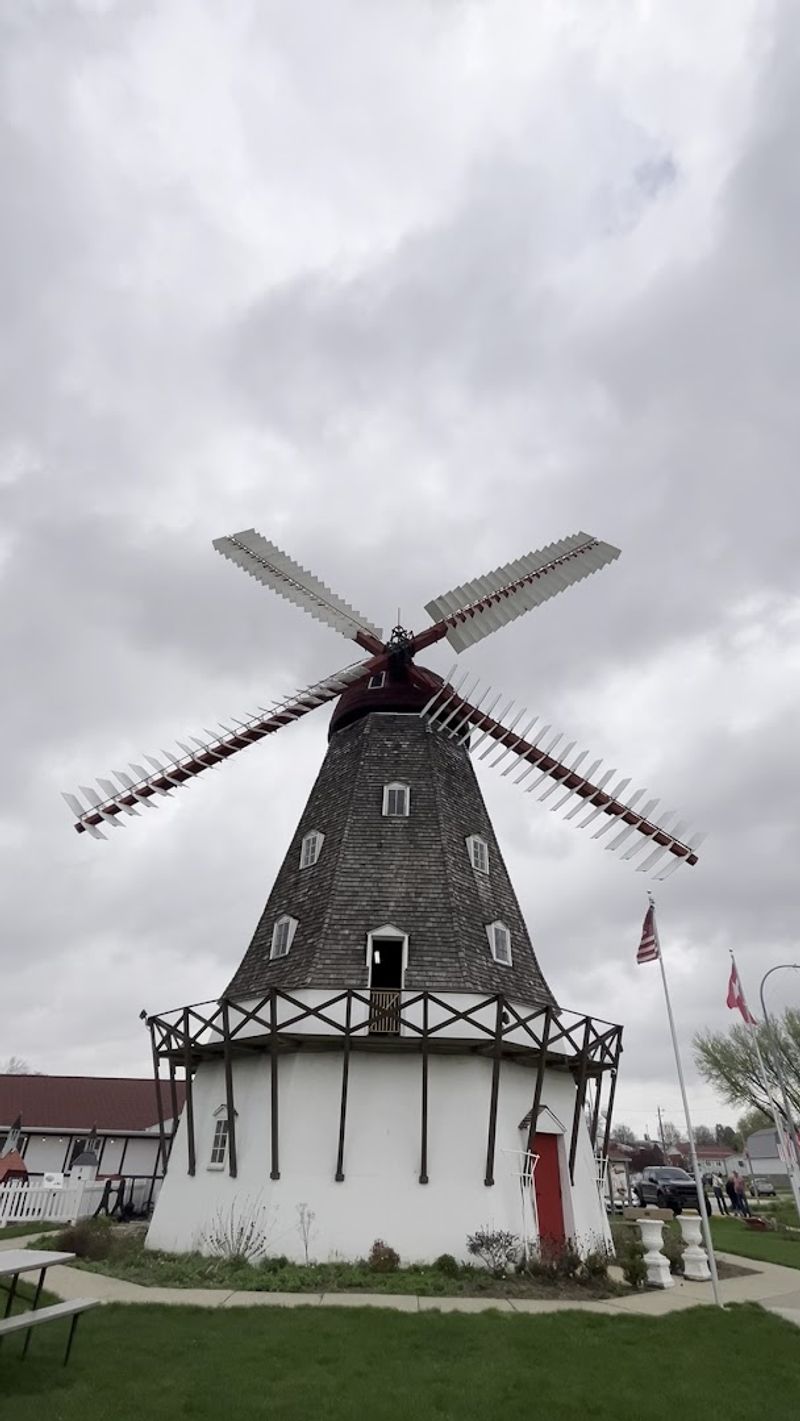
Few things in the American Midwest stop a traveler in their tracks quite like a fully functional Danish windmill sitting in the middle of a small Iowa town.
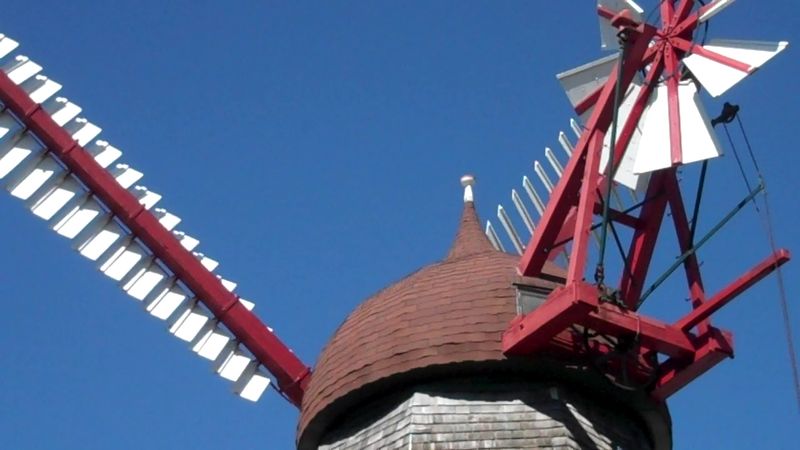
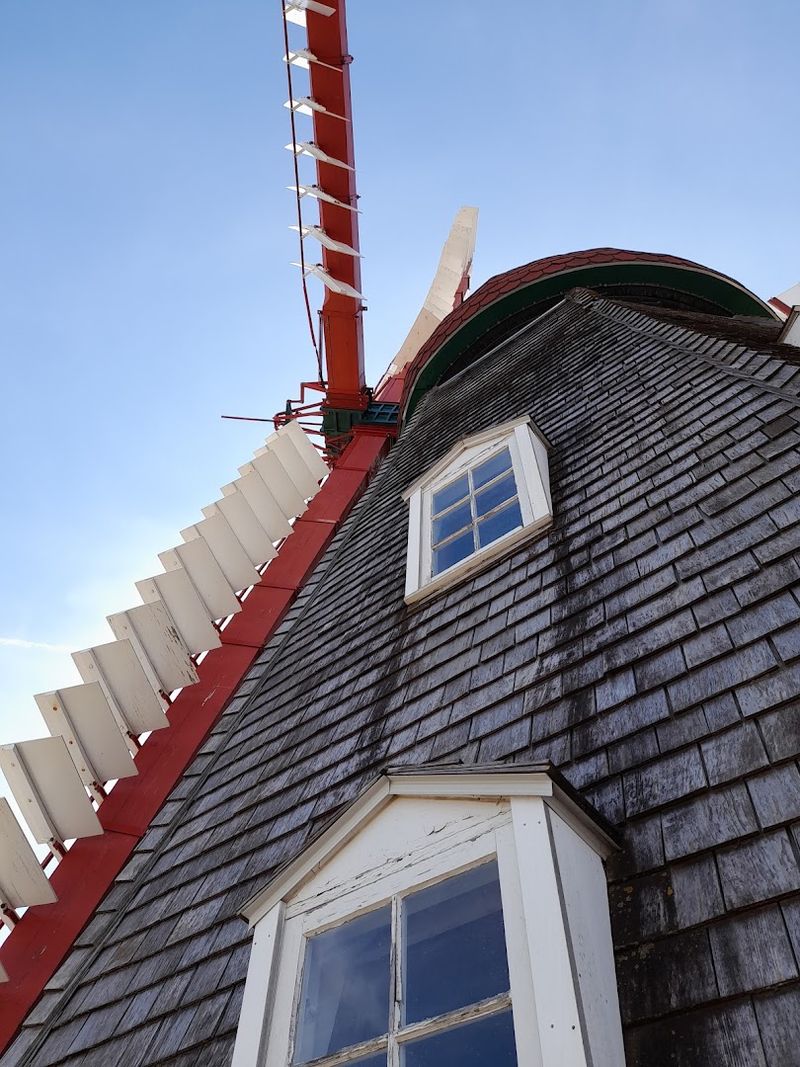
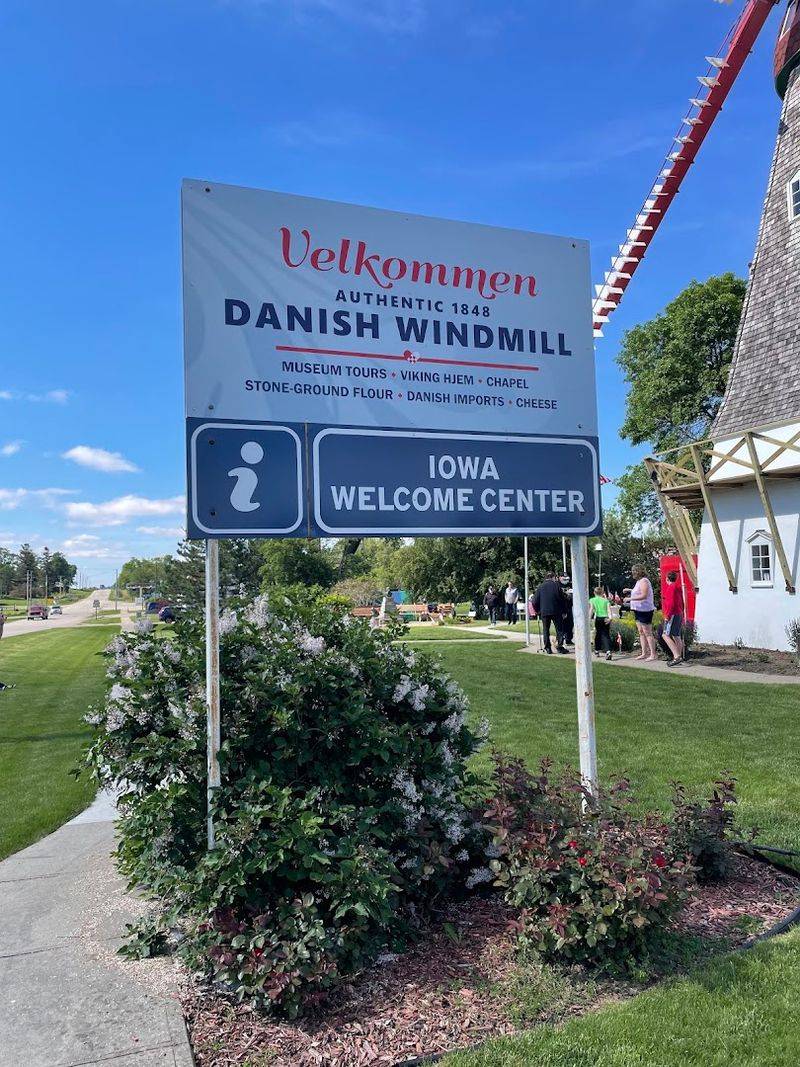
The Elk Horn windmill is not a replica or a decorative prop. It was built in Denmark in 1848, dismantled, shipped across the Atlantic, and reassembled in Elk Horn in 1976 by community volunteers who raised the funds and did much of the physical work themselves.
That story alone is worth the visit. The windmill stands about 60 feet tall and its wooden sails still turn when the wind cooperates, which in this part of Iowa is fairly often.
On a breezy afternoon, watching those sails move against a wide open sky gives you a visual that feels completely out of place in the best possible way.
You can go inside during operating hours and climb to the upper levels for a closer look at the gears and mechanisms.
The view from up there stretches across the surrounding farmland in a way that makes the surrounding countryside feel enormous and the town feel even more like a carefully preserved pocket of another world.
The Museum Of Danish America
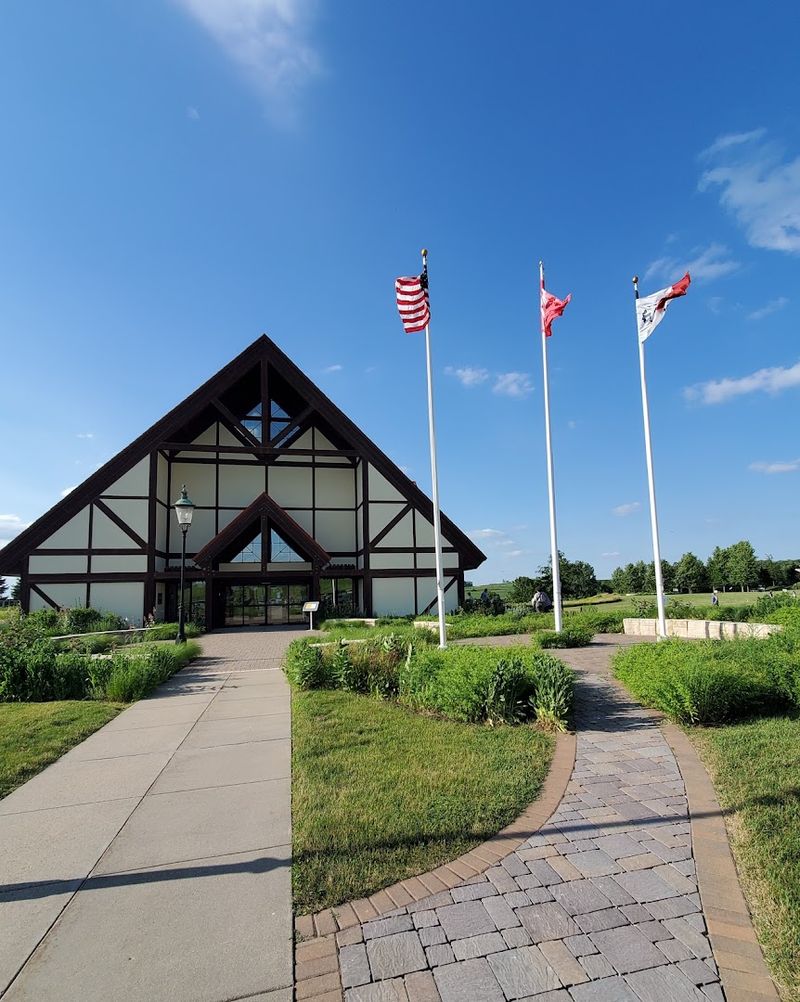
Right in the heart of Elk Horn sits one of the most focused and well-executed cultural museums in the entire state.
The Museum of Danish America tells the story of Danish immigration to the United States with a level of care and detail that goes well beyond what you would expect from a town of 600 people.
The permanent collection covers Danish folk traditions, immigration patterns, family histories, and the cultural contributions Danish Americans have made across the country.
The exhibits are thoughtfully designed and accessible, meaning you do not need to know anything about Danish history going in to find the whole thing genuinely interesting.
Rotating exhibits keep the experience fresh for repeat visitors, and the museum regularly hosts cultural events, lectures, and workshops that connect the local community with the broader Danish-American story. The gift shop stocks Danish cookbooks, handcrafted goods, and items you would not find at a typical tourist shop.
Plan to spend at least an hour here, though two hours goes by faster than you would expect. The museum manages to make cultural history feel personal rather than academic, which is harder to pull off than it sounds.
Danish Food You Did Not Know You Were Missing

One of the fastest ways to understand a culture is to eat its food, and Elk Horn takes that opportunity seriously.
The town has built a small but dedicated food identity around Danish traditions, and the results are worth planning your visit around.
Aebleskiver are the headline item, and if you have never had one, picture a round pancake puff about the size of a golf ball, cooked in a special cast-iron pan, and served with powdered sugar and raspberry jam. They are light, slightly crispy on the outside, and soft in the middle.
Local events and festivals often feature them fresh off the griddle, and the smell alone is enough to pull you across a parking lot.
Danish pastries, rye bread, and traditional cookies also show up regularly at local shops and community events. The flavors lean toward cardamom, marzipan, and butter in ways that feel old-fashioned in the most satisfying sense.
Food here is not just sustenance. It functions as a form of cultural memory, connecting the present-day community to the families who first carried these recipes across the ocean more than 150 years ago.
Tivoli Fest And The Town That Knows How To Celebrate
Every Memorial Day weekend, Elk Horn transforms into something that feels significantly larger than its population would suggest.
Tivoli Fest is the town’s annual Danish-American celebration, named after the famous Tivoli Gardens in Copenhagen, and it draws thousands of people from across Iowa and neighboring states.
The festival fills the streets with folk dancing, live music, traditional costumes, craft vendors, and enough Danish food to keep you busy for the entire weekend. The energy is genuinely festive without feeling corporate or overproduced.
Local families have been participating for generations, which gives the whole event a warmth that organized tourism rarely manages to replicate.
Folk dancing demonstrations are a highlight, with performers in traditional Danish dress moving through choreography that has been passed down through community dance groups for decades. Children participate alongside adults, and the crowd tends to gather close and stay engaged rather than drifting past.
If your travel schedule has any flexibility at all, timing a visit to Elk Horn around Tivoli Fest is the single best way to see the town operating at its fullest and most expressive.
It is the kind of local event that reminds you why small towns are worth seeking out in the first place.
Walking The Town Without A Plan
Elk Horn rewards slow walking. The town is compact enough that you can cover most of it on foot in a relaxed hour, and the details you pick up along the way are the kind that do not show up on any official map or brochure.
Danish flags hang from porches and storefronts throughout the year, not just during festival season. Some front yards feature folk art or garden decorations that reference Danish traditions.
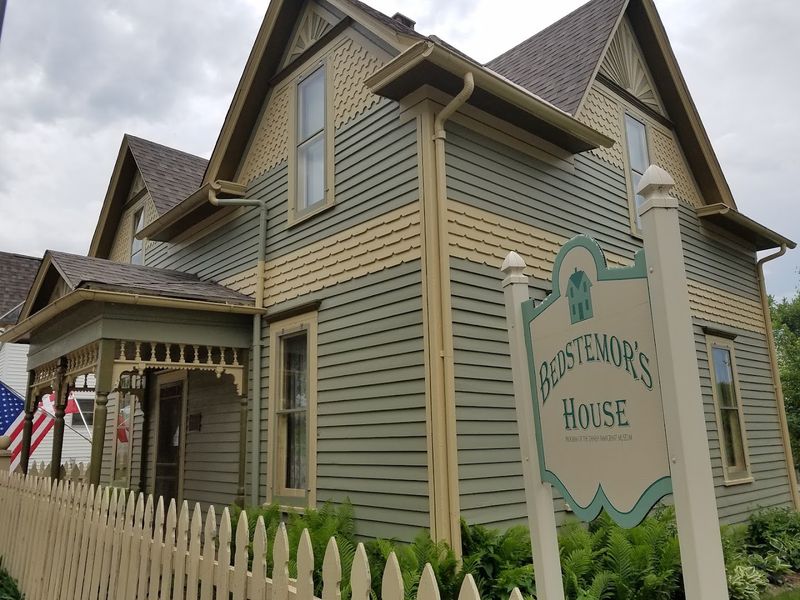
A few of the older homes have architectural details that echo Scandinavian styles, subtle but noticeable once you start looking for them.
The pace of life here is slow in a way that feels earned rather than sleepy. People wave from their porches.
The streets are quiet enough that you can hear wind moving through the trees.
There are no traffic jams, no parking stress, and no crowds pushing you along faster than you want to go.
I spent about two hours just wandering without a destination and came away with a clearer picture of the town than any guidebook could have provided.
Some places are best understood at walking speed, and Elk Horn is absolutely one of them.
Practical Things Worth Knowing Before You Go
A few practical notes can save you from unnecessary surprises on a visit to Elk Horn. The town is small, which means dining options are limited and hours can be irregular, especially outside of festival season.
Checking ahead before you arrive is a smart move, particularly if you are planning your trip around a specific restaurant or museum visit.
The Museum of Danish America has set operating hours, and admission is charged, though the fee is modest and well worth it. The windmill has its own visiting hours that can change seasonally, so confirming before you go prevents a wasted trip to a locked door.
Parking is free and easy throughout town, which is a genuine relief after navigating larger Iowa cities. The terrain is walkable, making it accessible for most mobility levels without much difficulty.
The town sits just off Interstate 80, making it a natural stop for road trippers crossing the state.
Omaha is about an hour southwest, and Des Moines is roughly an hour and a half east, so Elk Horn fits neatly into a larger Iowa road trip without requiring a major detour.
Cell service is reliable, and the town feels safe and welcoming for solo travelers and families alike.
Why A Town This Small Carries This Much Weight
Six hundred people is not a lot. Most American cities have more residents in a single apartment complex than Elk Horn has in the entire town.
And yet Elk Horn punches well above its weight when it comes to cultural identity, community investment, and the kind of experience that stays with you after you leave.
The reason, I think, comes down to intention. The people here have made deliberate choices to preserve, celebrate, and share their Danish heritage rather than let it fade quietly into generic Americana.
The windmill project alone required years of fundraising and community labor. The museum required sustained institutional commitment.
Tivoli Fest requires hundreds of volunteers every single year.
None of that happens by accident. It happens because a community decided that its story was worth telling and worth keeping alive, and then backed that decision with real effort over many decades.
Iowa has plenty of small towns that are easy to drive past without a second thought. Elk Horn is the kind that makes you pull over, get out of the car, and spend the afternoon figuring out exactly what you stumbled into.
That is a rare quality, and Elk Horn has earned it honestly.