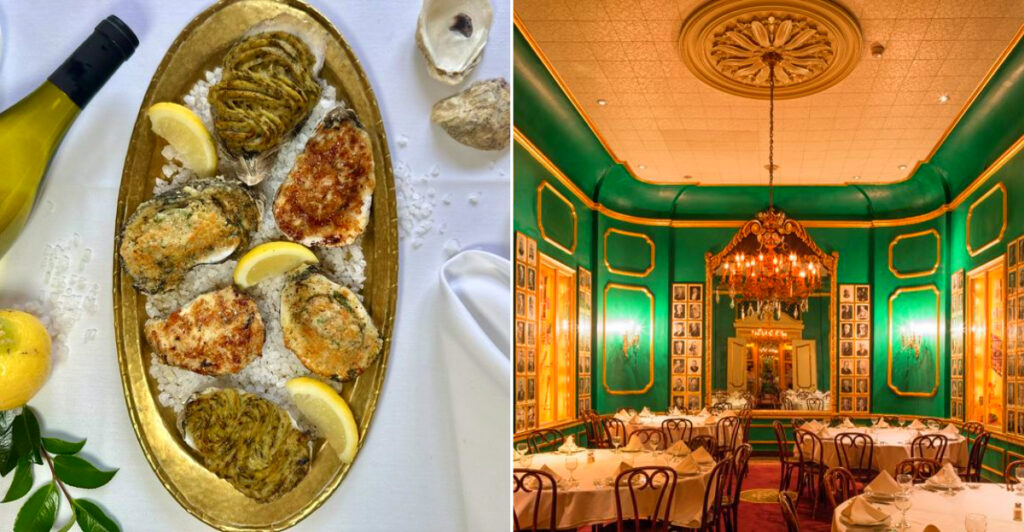
Walking through the dining rooms feels like walking through a timeline, because each room was added in a different decade plus none of them have been remodeled enough to lose the feel of when they were built.
The restaurant has been operating in the same spot since 1868, which means the walls have absorbed more dinner conversations than most buildings will ever hear.
I sat in a room with murals that have been there longer than anyone reading this has been alive, plus I ate oysters Rockefeller because they were invented here, in this kitchen, by this family, over a hundred and forty years ago.
The service moves at the pace of a place that knows it does not need to rush. Since 1868, a single French Quarter restaurant in Louisiana has served oysters, baked Alaska, and generations of families who keep coming back to the same room.
Order The Original Oysters Rockefeller
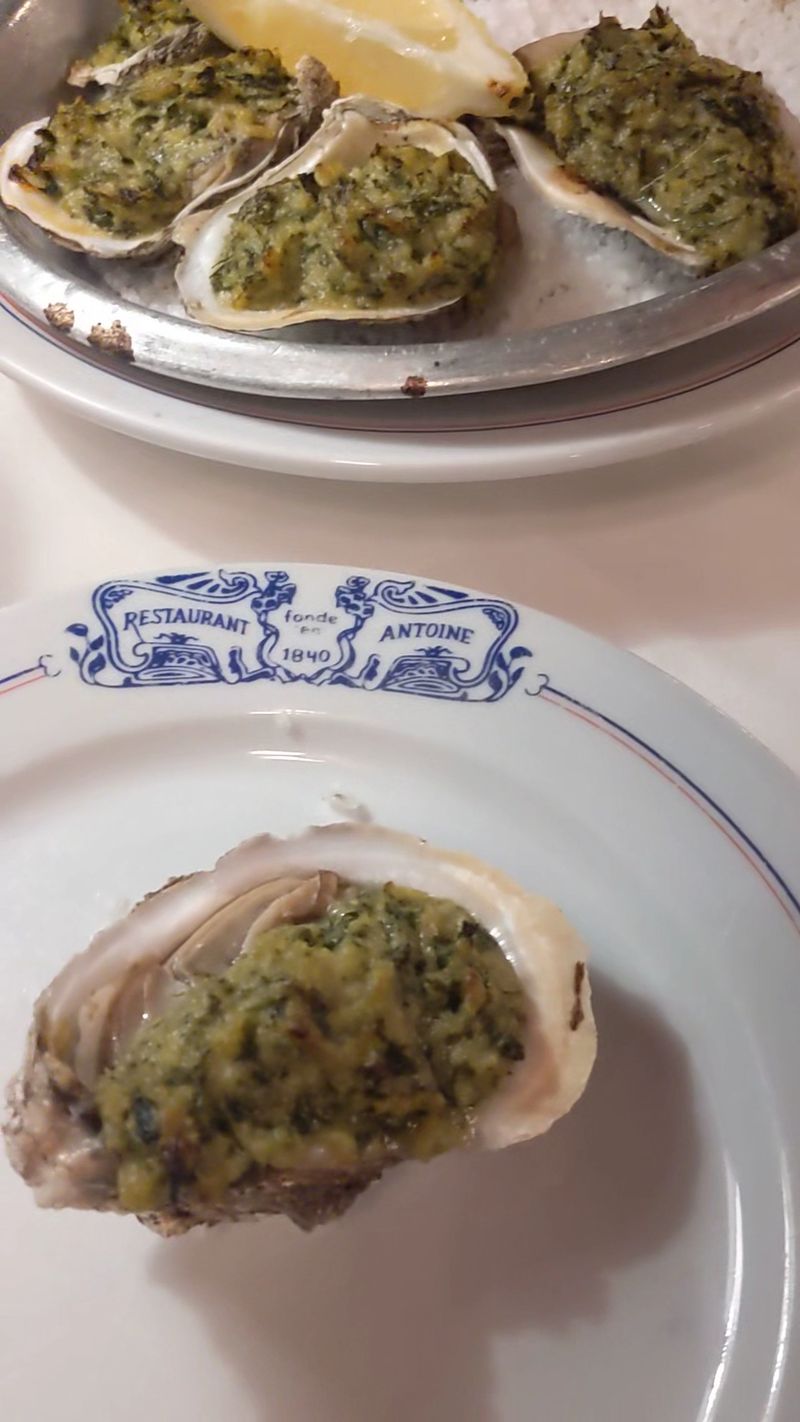
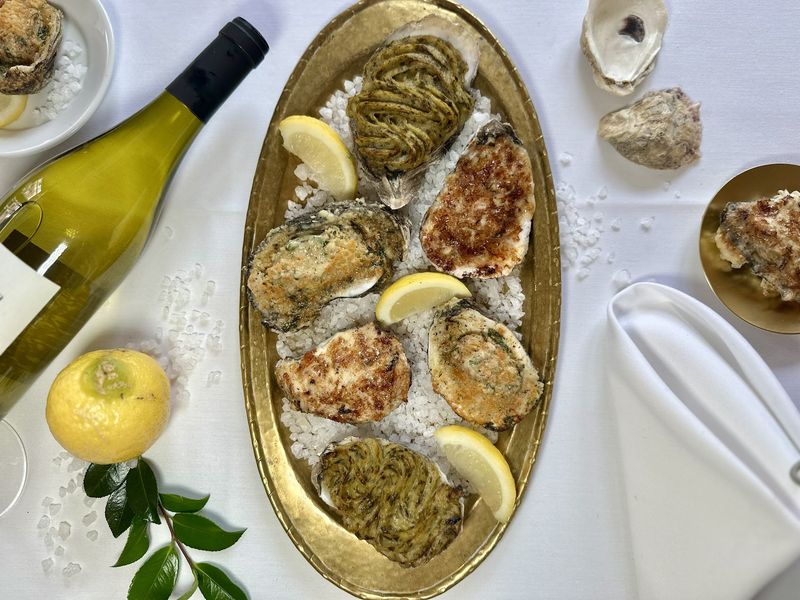
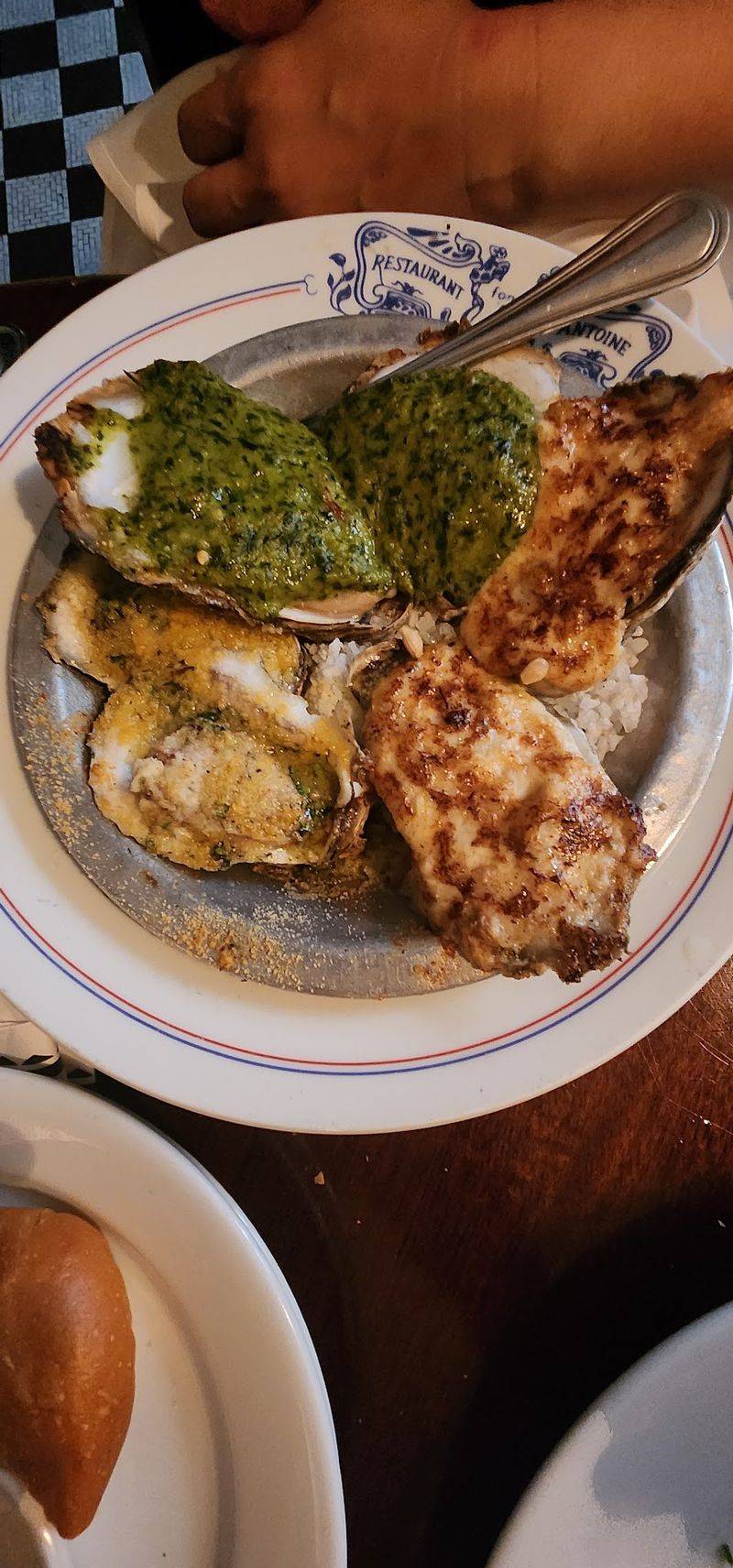
A vivid green topping makes Oysters Rockefeller look almost theatrical when the plate reaches the table. Jules Alciatore created the dish at Antoine’s in 1899 after French escargot became difficult to obtain, proving that a shortage can occasionally produce something splendid.
Baked oysters sit beneath a rich sauce whose exact recipe remains a guarded family secret. The dish was named for John D.
Rockefeller because its flavor and richness seemed worthy of one of that era’s wealthiest men.
Order it here rather than treating it as merely another oyster appetizer. Many restaurants serve versions, but Antoine’s is the birthplace, and that history changes how the plate feels.
Let the oysters cool briefly before taking a bite, since the shells arrive hot. Pair them with lighter courses if you plan to continue through several classics.
Sharing an order also leaves room for pompano, potatoes, and dessert.
Royal Street Puts Antoine’s Around The Corner
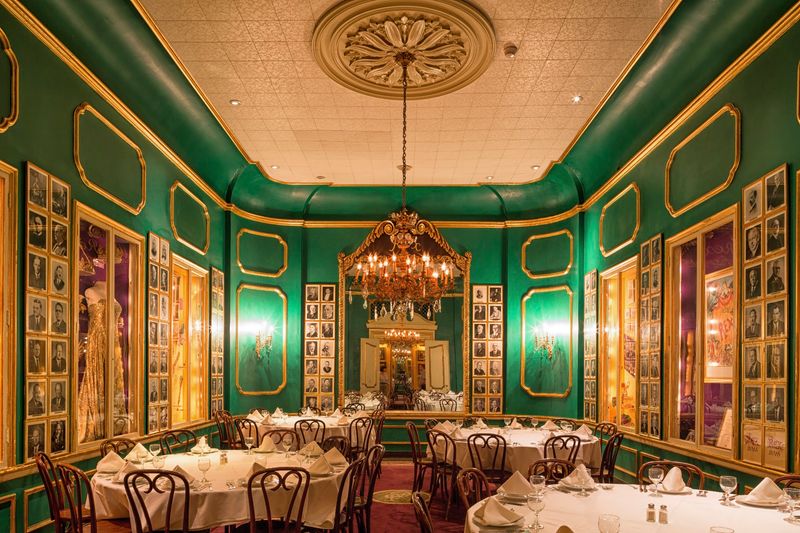
Antoine’s Restaurant sits at 713 St. Louis Street in the French Quarter of New Orleans, Louisiana, just off Royal Street. Aim for the central Quarter and use St. Louis Street for the final approach rather than expecting a standalone property outside the neighborhood grid.
Once you reach Royal Street, Antoine’s is only a short distance along St. Louis Street, with the restaurant entrance opening directly onto the historic block. The surrounding French Quarter streets are narrow and busy, so the last few blocks are easier when taken slowly rather than searching for curbside space at the door.
Antoine’s does not advertise dedicated restaurant parking, so use legal street parking or one of the nearby commercial garages and lots. A garage at 535 Chartres Street is roughly a tenth of a mile away, leaving only a short walk back through the Quarter to the St. Louis Street entrance.
Look Inside The 1840 Room
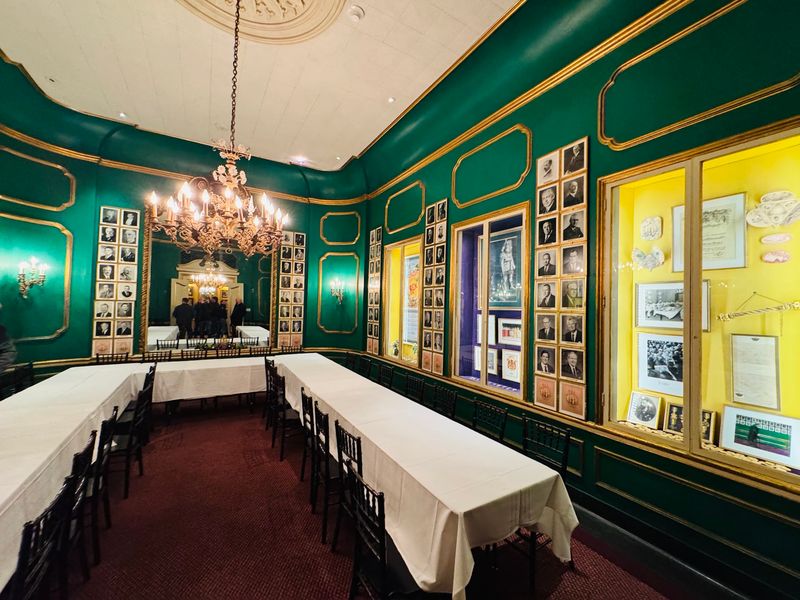
Some dining rooms decorate their walls; the 1840 Room seems to keep an entire family archive around the tables. Designed to recall Antoine’s earliest decor, the space offers a close look at the restaurant’s beginnings without separating history from the meal.
Among its unusual treasures are a handsome silver duck press and an antique cookbook published in Paris in 1659. Such objects reveal how French culinary traditions traveled, changed, and became part of New Orleans Creole cooking over many generations.
Ask politely whether the room can be viewed if your table is located elsewhere. Access may depend on private events and how busy the restaurant is, so treat any visit as a welcome bonus rather than a guarantee.
Take time to examine the displays instead of snapping one hurried photograph. Small details make the room memorable, and your server may know stories that labels cannot tell.
Quiet curiosity works especially well here.
Unwrap Pompano En Papillote
Opening a parchment packet at the table gives Pompano en Papillote a small moment of suspense. Inside rests prized Gulf pompano, gently cooked with seasonings while the folded paper traps moisture, aroma, and heat around the fish.
The creation is attributed to Jules Alciatore and reflects the French techniques woven through Antoine’s Creole menu. Parchment cooking protects the fish from harsh heat, producing tender flesh and concentrated flavor without burying the main ingredient beneath heavy decoration.
Choose this signature when you want a dish tied closely to both local seafood and restaurant history. Open the packet carefully because hot steam can escape at once.
Pompano has a delicate character, so taste it before adding anything at the table. Availability and preparation can change with current menus, making it wise to ask when reserving or ordering.
If offered, it provides a graceful counterpoint to richer starters such as Oysters Rockefeller and soufflé potatoes.
Dress For The Dining Room
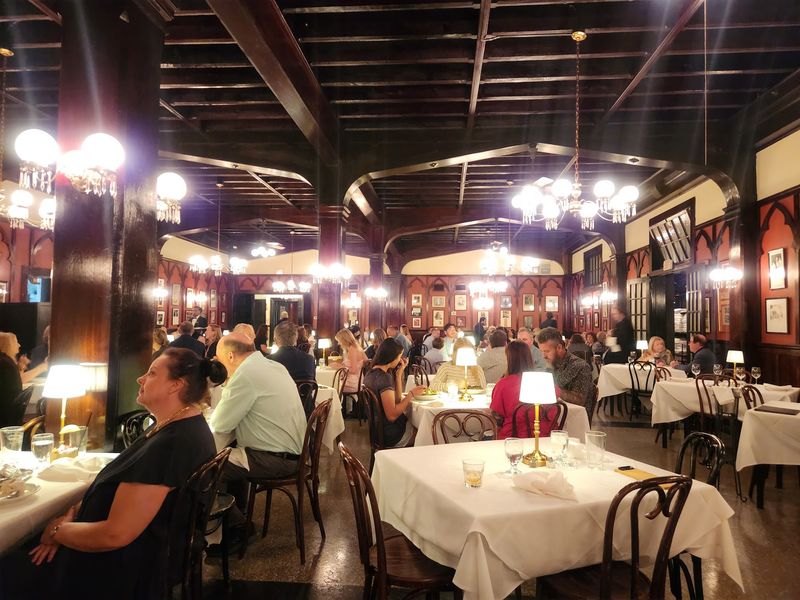
Clothing sets the first course here before any bread reaches the table. Antoine’s suggests business casual attire, a choice that supports the polished atmosphere without requiring guests to dress as if they are attending a royal banquet.
Collared shirts and neat clothing are sensible choices, while athletic wear, beach attire, baseball caps, and flip-flops should stay at the hotel. Jackets for gentlemen have traditionally been encouraged, so checking the restaurant’s current guidance before leaving is the safest approach.
Plan your outfit early if Antoine’s follows a day of French Quarter sightseeing. Carrying a fresh shirt or returning to change can prevent an awkward doorway discussion.
Comfortable but tidy shoes are useful because the restaurant contains long corridors and numerous rooms. Dressing thoughtfully also makes celebrations feel more special and suits the white-tablecloth surroundings.
When uncertain, call the restaurant directly at 504-581-4422. A brief question is easier than guessing, particularly when policies or special events affect expectations.
Ask About The Mystery Room
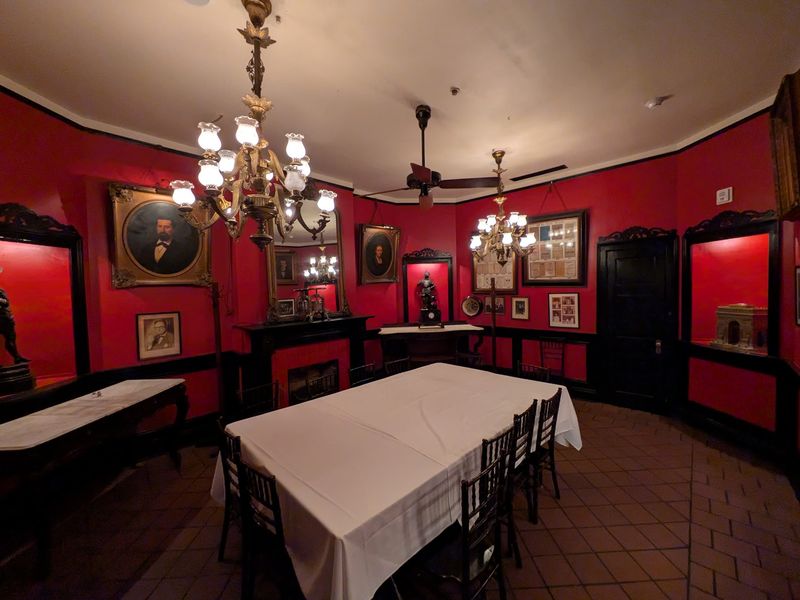
A concealed doorway gives Antoine’s history a playful wrinkle that no ordinary dining room could manage. During Prohibition, patrons reportedly reached a private space through a hidden entrance located within the ladies’ restroom, adding secrecy to an already winding restaurant.
The room gained its name from a sly response associated with suspicious questions about coffee cups: “It’s a mystery to me.” That phrase survived as part of Antoine’s folklore and reflects the resourceful humor found throughout New Orleans history.
Ask your server about the Mystery Room when service allows, but remember that tours are not automatically included with every meal. Dining rooms may be occupied, closed, or reserved for private gatherings.
A quiet period after lunch can offer a better chance to hear the story than the busiest dinner hour. Even without entering, learning where the concealed route once operated helps reveal how the building evolved.
Its corridors hold stories as layered as the menu itself.
Explore The Mardi Gras Rooms
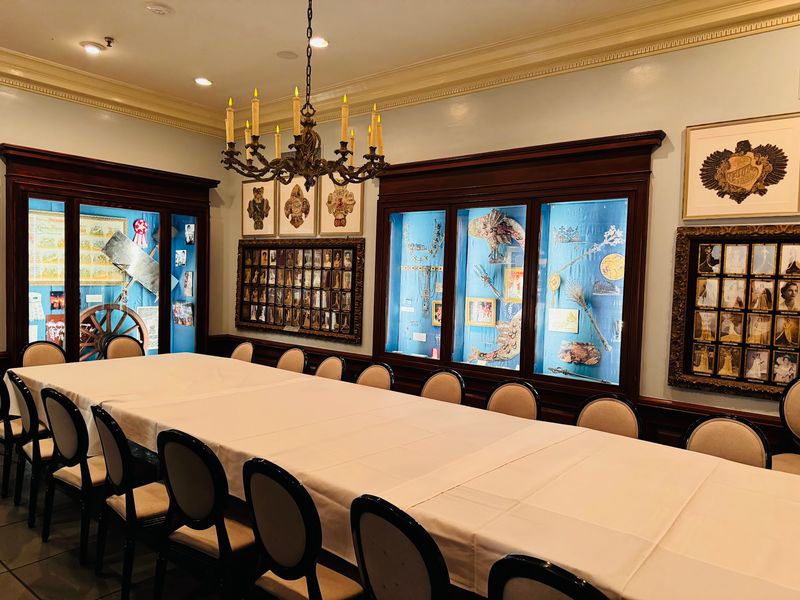
Turn one corner at Antoine’s and Carnival history suddenly takes over the walls. The restaurant contains about 15 themed dining rooms, creating a maze of spaces that feels surprisingly large compared with its St. Louis Street entrance.
Several rooms honor famous New Orleans Mardi Gras organizations, including Rex, Proteus, and Twelfth Night. Photographs, favors, and other memorabilia connect formal dining with the city’s parade traditions, social history, and enduring appetite for pageantry.
If seeing the rooms matters to you, mention your interest when making a reservation, while understanding that a particular table cannot always be promised. Private parties and scheduled events often determine which spaces are available.
After your meal, ask whether a short look around is possible rather than wandering into occupied rooms. Each area has a different personality, so notice the objects instead of simply counting doorways.
The result is a compact lesson in Carnival culture, delivered between courses and corridors.
Try Eggs Sardou At Brunch
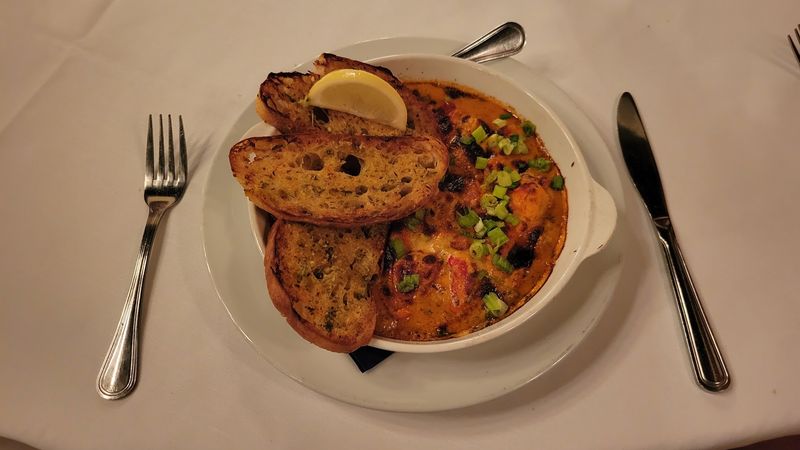
Poached eggs rarely arrive with quite as much architecture as Eggs Sardou. At Antoine’s, the classic Creole dish brings together artichoke bottoms, creamed spinach, tender eggs, and smooth hollandaise in carefully stacked, comforting layers.
Every part contributes something different: artichoke adds gentle earthiness, spinach brings richness, and the soft yolk blends into the sauce. The combination feels refined, yet its warm flavors still suit an unhurried New Orleans brunch.
Choose Eggs Sardou when breakfast standards seem too ordinary but a large seafood entree feels ambitious early in the day. Cut through every layer in one bite to understand why the ingredients belong together.
Because hollandaise and creamed spinach are both substantial, balance the meal with a simpler starter or fresh side. Antoine’s brunch and lunch hours vary by day, so consult the official schedule and reserve before visiting.
Arriving hungry is sensible, since this famous egg dish has considerably more presence than its tidy presentation suggests.
Catch The Soufflé Potato Trick
Golden potato pillows arrive looking inflated by kitchen mischief rather than ordinary cooking. Antoine’s Pommes de Terre Soufflés are thin slices transformed through a demanding twice-frying method, which makes them swell into crisp, hollow shapes.
Tradition links Antoine Alciatore to the dish through his apprenticeship in France, where he may have witnessed its early creation. Whatever their precise path to New Orleans, the potatoes became one of the restaurant’s most recognizable accompaniments.
Do not expect a fluffy center like mashed potatoes or a standard french fry. The pleasure comes from the contrast between a delicate shell and an airy interior that collapses with a light crunch.
Eat them soon after arrival because their texture is best while hot and crisp. Sharing sounds polite, although the pile disappears with suspicious speed.
Order them beside fish or meat, or treat them as a separate classic worth studying. Few potatoes make technique so visible, amusing, and delicious.
Plan Ahead For Baked Alaska
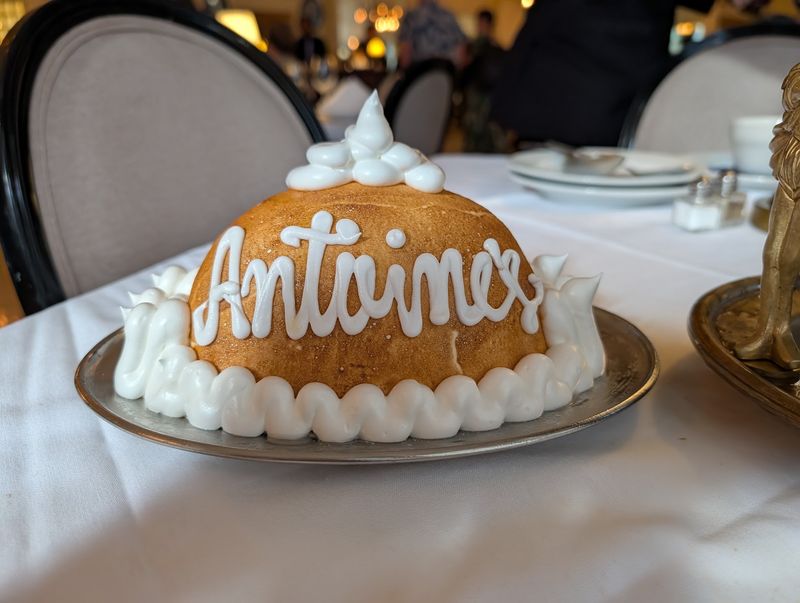
Baked Alaska does not slip quietly onto an Antoine’s table. The grand dessert combines French vanilla ice cream and pound cake beneath a thick covering of meringue, browned outside while the frozen center remains cold.
Its size and formal presentation make it especially suited to birthdays, anniversaries, or groups willing to share. The contrast is the real pleasure: toasted meringue, soft cake, and chilled ice cream meet in each spoonful without becoming muddled.
Order Baked Alaska when the meal begins, not when dessert menus arrive, because the kitchen needs preparation time. Confirm the current serving size with your server, particularly if only two people are dining.
A lighter main course can preserve enough appetite for the finale, though restraint becomes difficult once the meringue appears. Photograph it promptly, then eat before the ice cream softens.
For anyone who enjoys old-school dining rituals, the dessert provides an appropriately dramatic final chapter without sacrificing flavor to spectacle.
Make The Most Of Skilled Service
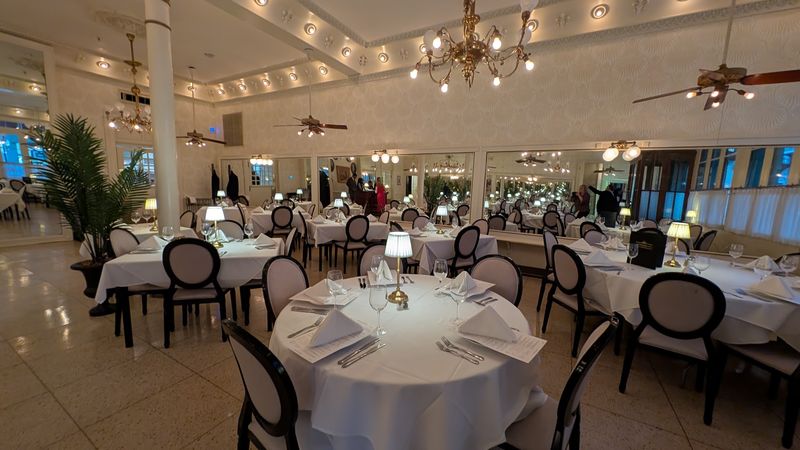
Watch closely and the service at Antoine’s reveals its own kind of choreography. Plates land neatly, courses follow a measured pace, and knowledgeable staff can explain dishes or building details that otherwise remain hidden behind names and closed doors.
Historically, aspiring waiters completed apprenticeships lasting two to three years before fully taking the role. Such training supported the polished hospitality associated with the restaurant and helped pass practical knowledge from experienced staff members to newer generations.
Use that knowledge by asking focused questions about signature dishes, room history, or suitable portions. Mention celebrations when reserving, since advance notice helps the team plan, although special touches should never be assumed.
Speak up politely if timing, dietary needs, or menu descriptions require clarification. Servers can also advise whether a room tour is possible after the meal.
The best exchange feels collaborative rather than stiff: guests show patience and interest, while the staff supplies context that turns dinner into a distinctly Antoine’s experience.