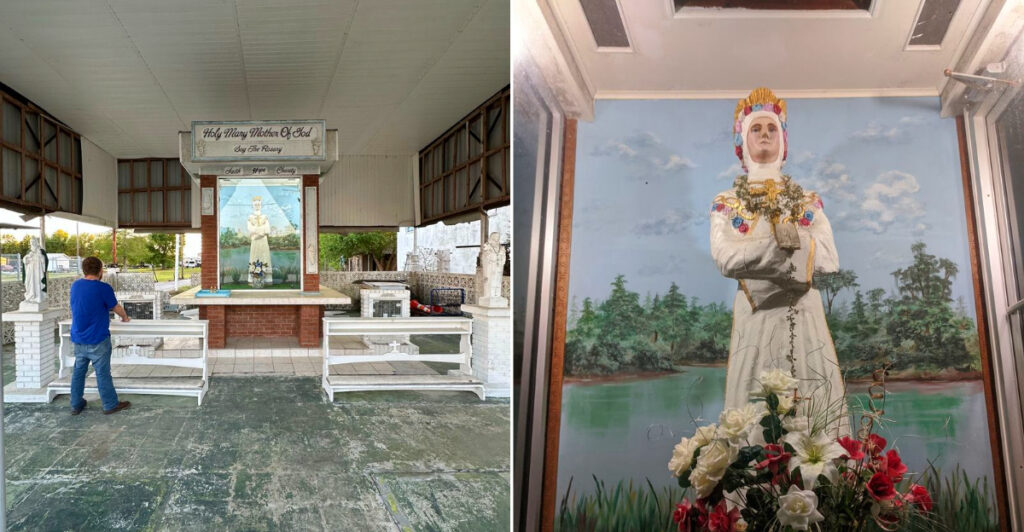
Deep in Golden Meadow, where bayou roads stretch past marshes and weathered homes, I found one of those Louisiana roadside stops that immediately makes you wonder what happened here. At first glance, it seems humble and almost easy to miss.
Then you hear the story behind it. A local man reportedly built the shrine after saying he saw the Virgin Mary while praying at Our Lady of Prompt Succor Church in 1974. Whether you interpret that experience as a miracle, a powerful memory, or an enduring local mystery, the devotion it inspired is unmistakable.
This unusual Golden Meadow shrine is a fascinating Louisiana hidden gem shaped by faith, folklore, and one man’s extraordinary vision.
What stayed with me most was its intimacy. There is no monumental architecture or polished tourist spectacle, just handmade details, religious imagery, and the feeling that you have stumbled into somebody’s deeply personal story. Keep reading, because that story only gets stranger and more fascinating.
Notice How Modest The Setting Feels
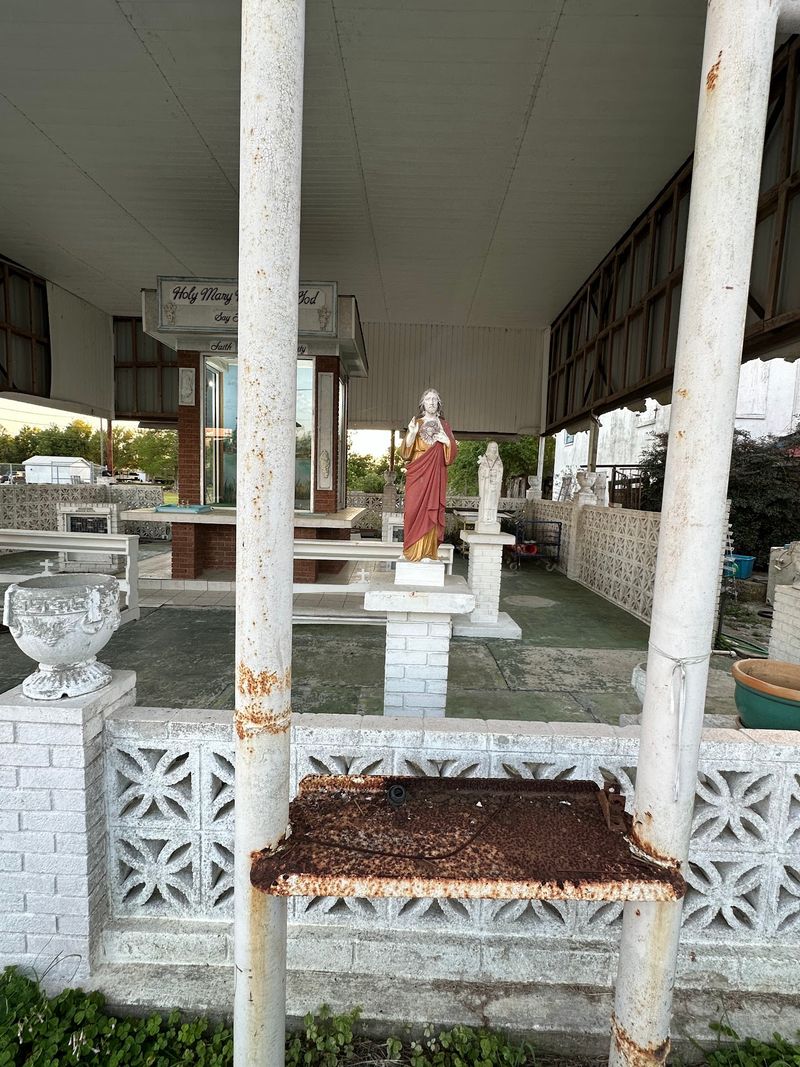
Nothing about Holy Mary Shrine tries to impress with size. The building is simple, sheltered by an aluminum siding roof and eaves, and set in a way that feels close to everyday life in bayou country.
That plainness matters because it keeps the focus on devotion, not spectacle.
Many religious sites aim for awe through height, stone, or stained glass. Here, the effect comes from understatement.
The shrine feels homemade in the best sense, shaped by one person’s purpose rather than a committee’s plan.
Travelers expecting a dramatic monument may need to reset their eyes. Small places often reveal themselves slowly.
Give this one a minute, and its quiet character begins to stand out against the roadside scenery of Golden Meadow in a memorable way.
Cochennic Lane Is The Clue Beside The Bayou
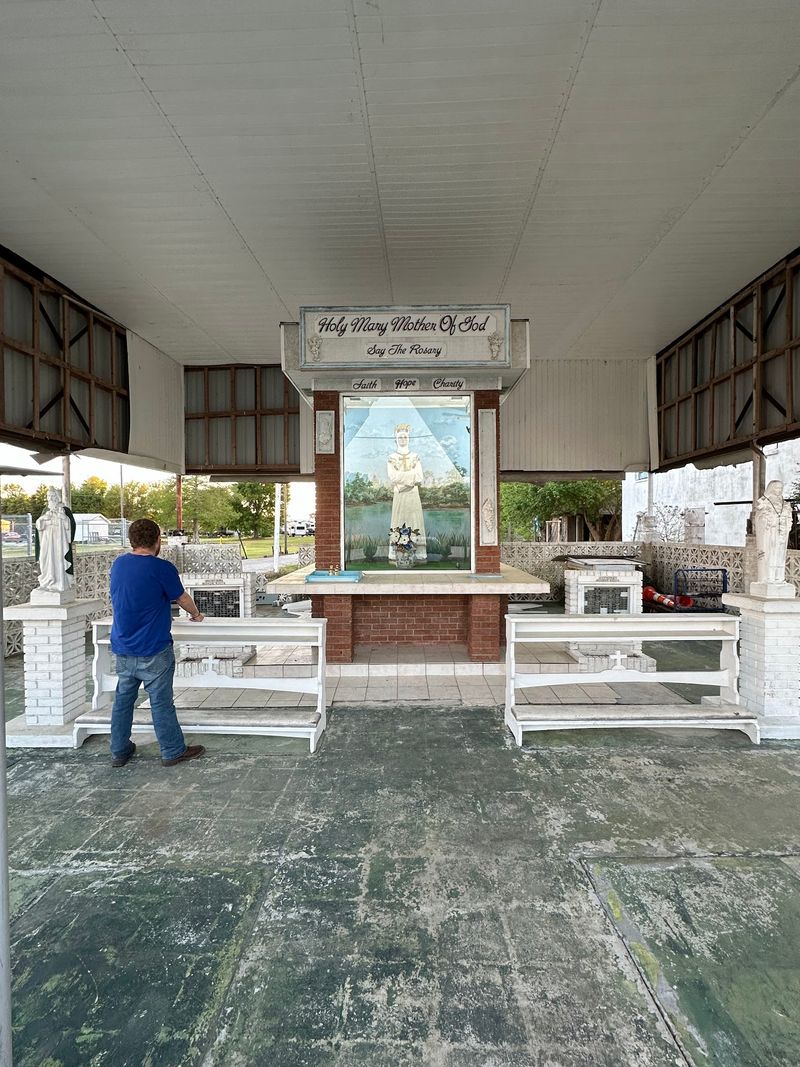
Holy Mary Shrine sits at 405 N Bayou Drive in Golden Meadow, Louisiana, directly along the main bayou-side route through town. Follow LA-1/North Bayou Drive through Golden Meadow and use Cochennic Lane as the key landmark for the final approach.
The shrine stands at the corner of Cochennic Lane and North Bayou Drive, so there is no turn into a large church complex or separate attraction road. It is a small roadside devotional site, and the bayou-side setting makes the last stretch feel more residential than touristy.
Pull off only where it is safe and legal near the shrine, then continue the final few steps on foot. There is no verified dedicated visitor parking lot, so avoid blocking nearby driveways or the roadside while stopping to visit.
Look Closely At The Cypress Mary
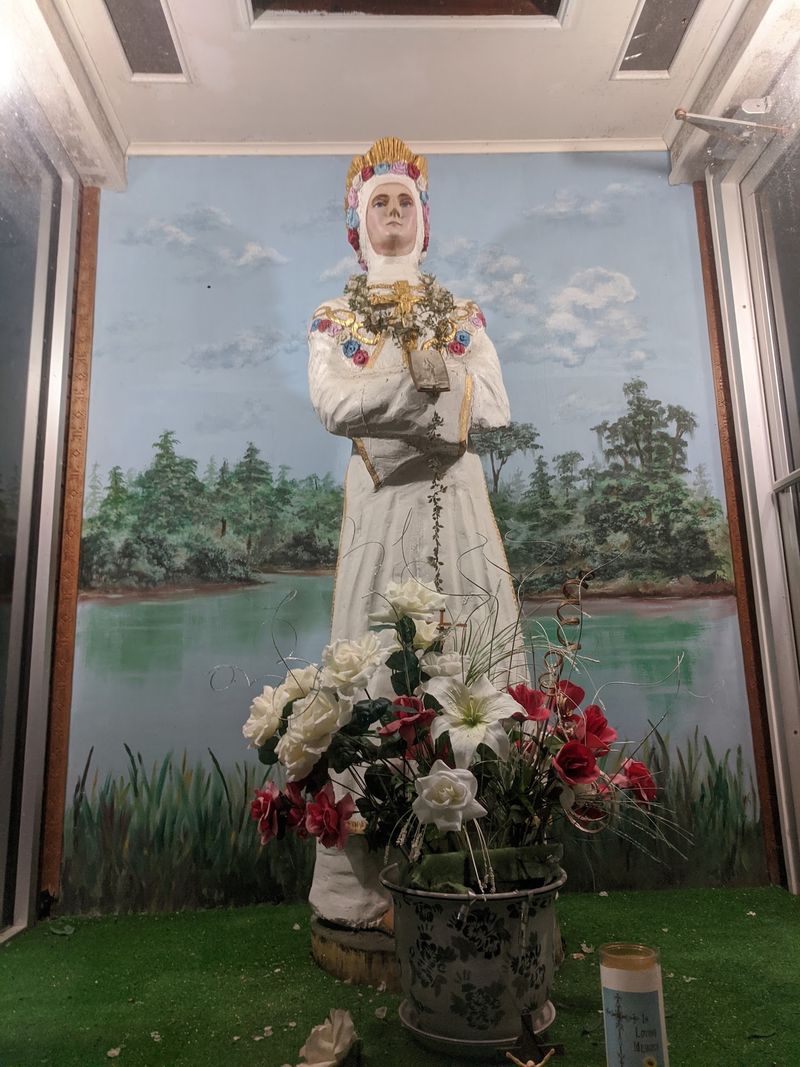
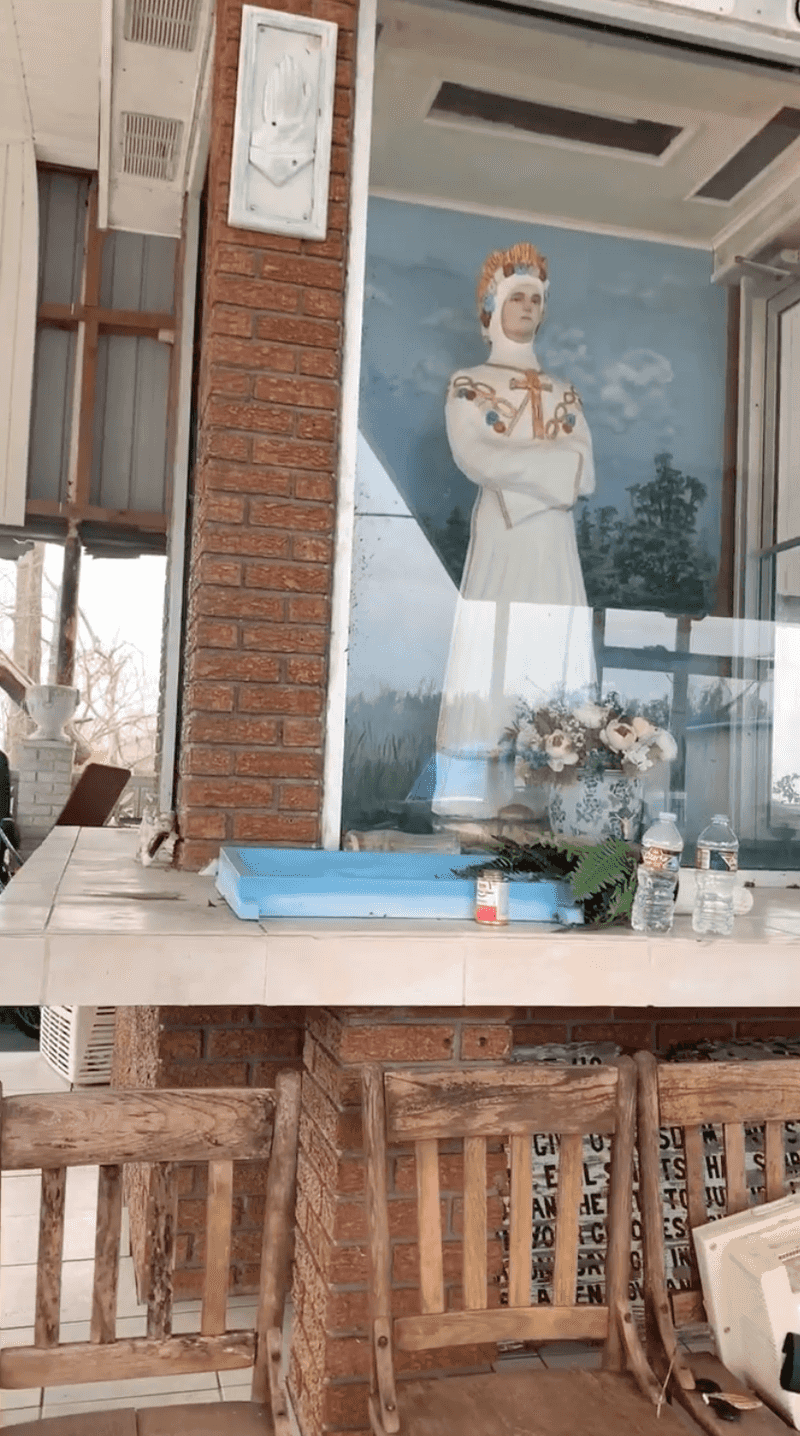
The most striking object inside is the image of Mary carved from a red cypress tree. Joffery Cochennic had it made to match the height and description he remembered from his vision, including her reported beauty and presence.
That gives the statue an unusual role. It is not only decoration, but a physical attempt to preserve a memory.
Red cypress also fits the region. The material ties the sacred image to local land and local craft, which makes the shrine feel deeply rooted in south Louisiana rather than imported from somewhere else.
Spend extra time with the carving instead of rushing past it. Notice its scale, its texture, and the way memory becomes form.
The statue carries the heart of the whole site in one carefully chosen figure for visitors.
Read The Letter On Display
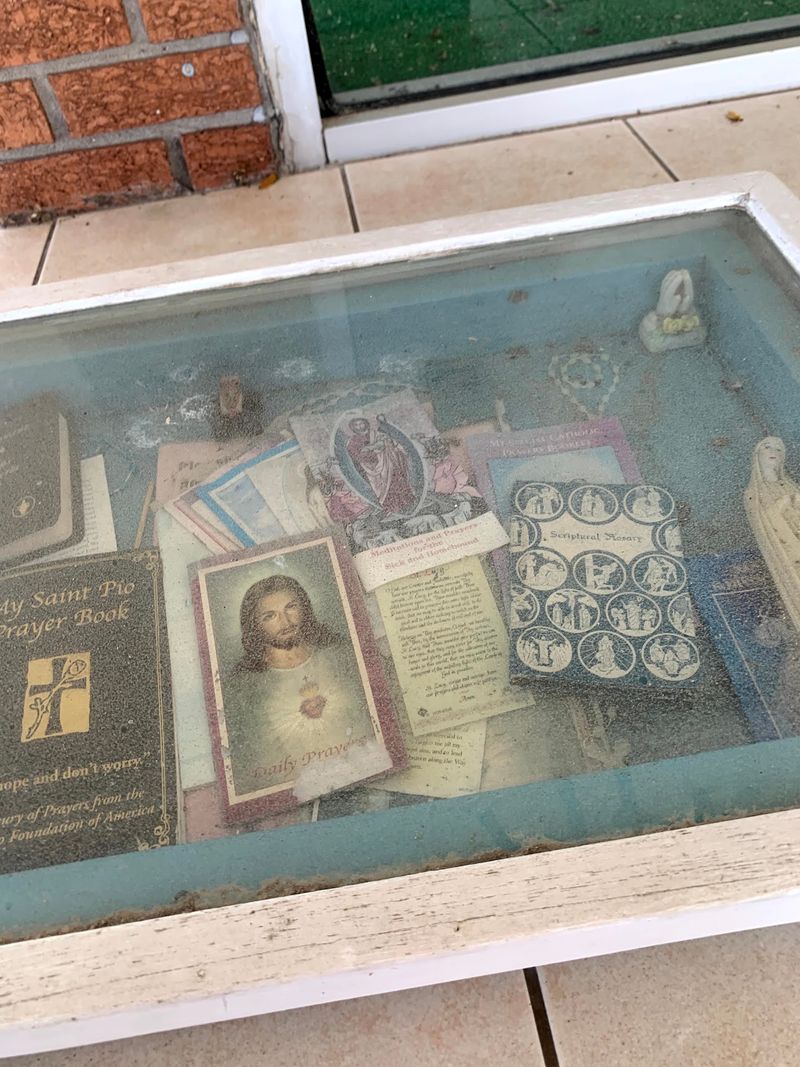
A letter can sometimes explain a place better than a plaque, and that is true here. The shrine includes a displayed 1988 letter from Joffery Cochennic that tells his account of the miracle that inspired the site.
Reading it adds a human voice to the room.
Without that written testimony, visitors might only see statues and folk art. With it, the shrine becomes more specific and more personal.
The letter bridges the gap between event and structure, showing how one experience turned into decades of devotion.
Slow down enough to read every line. Whether a person approaches the story with faith, curiosity, or caution, the document anchors the visit in first-hand belief.
It also helps explain why this small shrine continues to matter within the surrounding bayou community today.
Use The Benches For A Real Pause
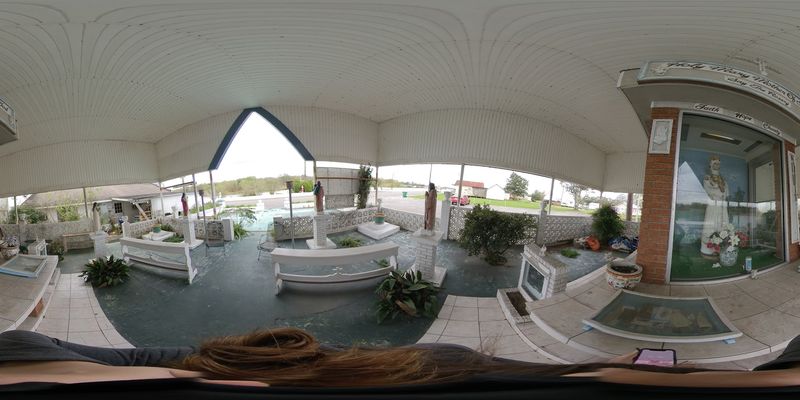
One of the best tips here is also the easiest: sit down. Benches inside the Holy Mary Shrine invite people to stop, breathe, and let the place settle around them.
In a world full of quick photos and quicker exits, that small act changes the whole experience.
The room is not large, yet it encourages stillness better than many bigger attractions. A few quiet minutes can help visitors notice the shrine’s handmade details, the devotional arrangement, and the steady sense of care built into the site.
Families, road trippers, and curious history fans can all benefit from treating this as more than a pass-by stop. Reflection fits the shrine better than speed.
Even without a religious motive, simple quiet feels appropriate in a place created from deeply held belief and memory.
Pay Attention To The Folk Art Feel
Some places are memorable because they are refined. Others stay with you because they are personal, layered, and a little unexpected.
Holy Mary Shrine leans into that second category through improvised local art and devotional objects that give the interior its own character.
The effect is less formal chapel, more lived-in act of faith. Alongside the central Mary figure, additional statues of Jesus, Mary, and Joseph complete the setting.
Nothing feels mass-produced into perfect sameness, which is exactly why the shrine has such a distinct voice.
Visitors interested in regional culture should not overlook that handmade quality. It reflects a Louisiana tradition where spirituality, craft, and everyday materials often meet.
Looking carefully at these details reveals the shrine as folk expression as much as a religious destination for many curious travelers.
Treat It As Living Local Culture
Bayou country has a way of folding faith into daily life, and this shrine shows that clearly. Holy Mary Shrine is not just a curiosity with an unusual backstory.
It also reflects local traditions tied to family, prayer, and the land around Golden Meadow.
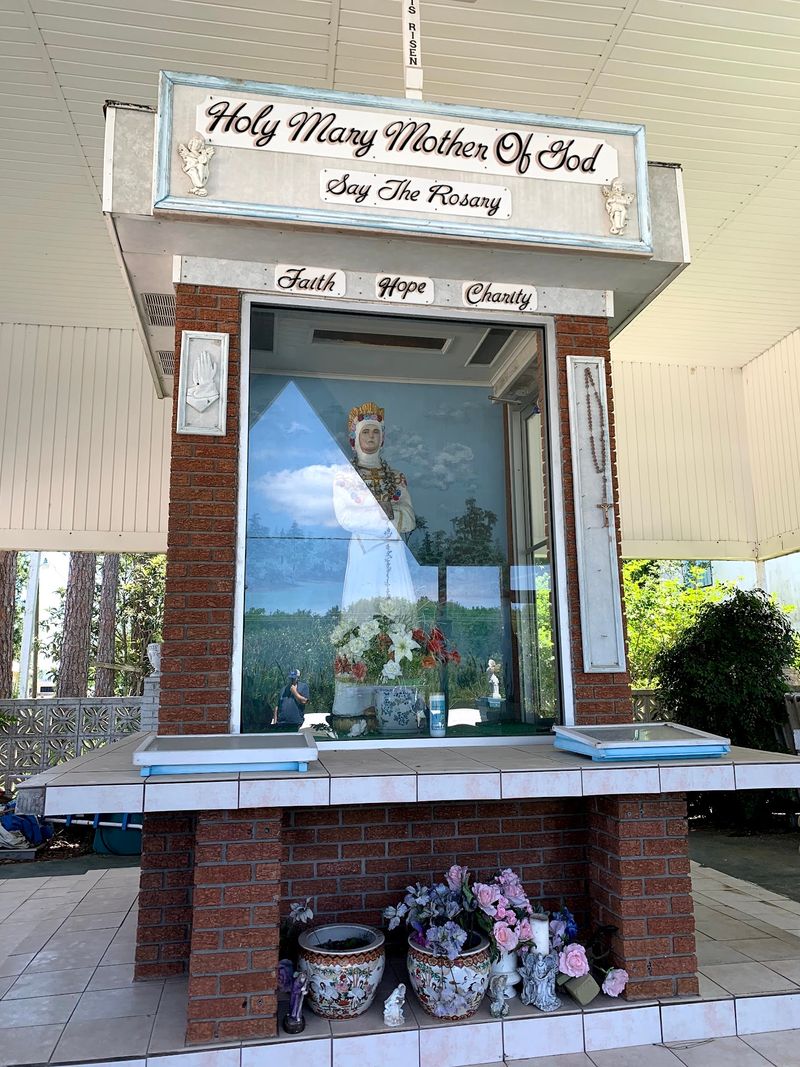
Offerings such as candles and flowers have often been left at the shrine, showing that people use it as an active place of petition and remembrance. That ongoing practice matters.
It turns the site from a static object into something closer to a living custom.
Approach the space with the same respect you would bring to a small neighborhood chapel. Even visitors who come mainly for history or architecture will understand more if they remember that the shrine still carries meaning beyond sightseeing for local people and passing pilgrims alike.
Go During Open Daylight Hours
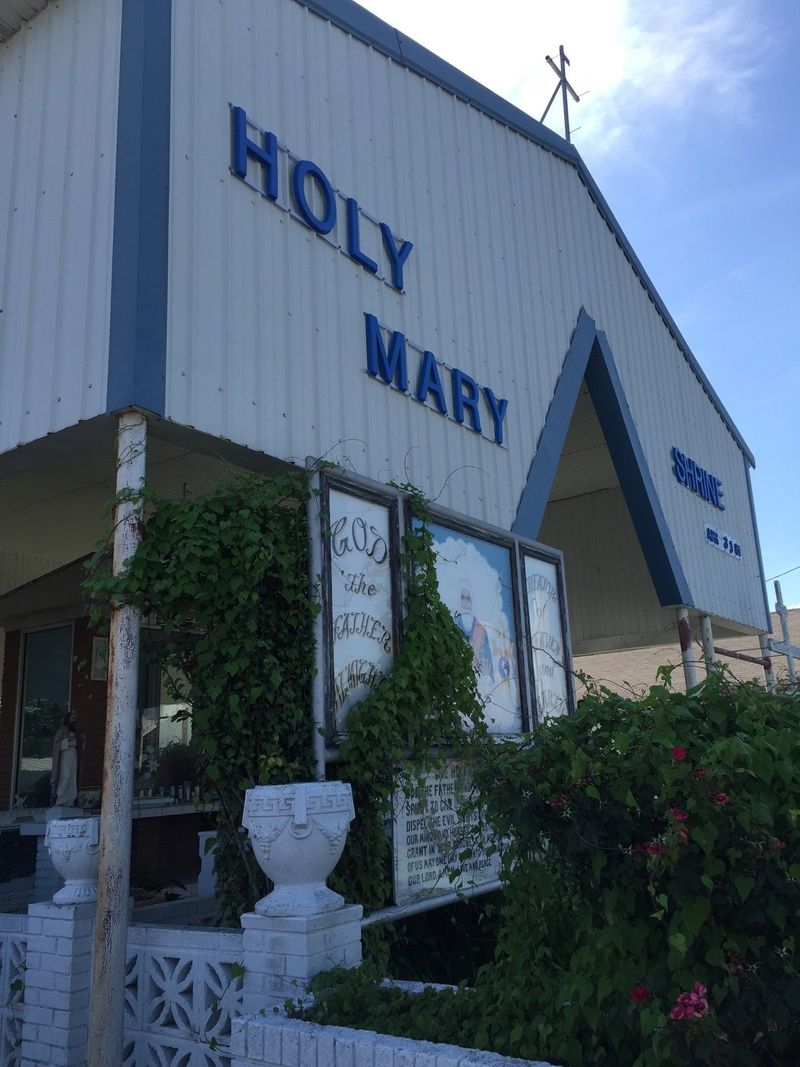
Practical details can save a trip, especially in a place that feels slightly tucked away. According to current place information, Holy Mary Shrine is open daily from 7 AM to 7 PM.
Daylight hours suit the visit anyway, since the setting and exterior details are easier to appreciate with natural light.
Golden Meadow is deep enough into bayou country that planning ahead helps. Check directions before leaving, keep expectations grounded, and allow a little extra time for the drive.
The shrine works best as a thoughtful detour, not a rushed errand between bigger stops.
Morning often brings a calmer mood, while later afternoon can soften the whole scene. Whenever you go, simple preparation makes room for the place to do what it does best, which is surprise people quietly.
Keep Expectations Different From A Museum
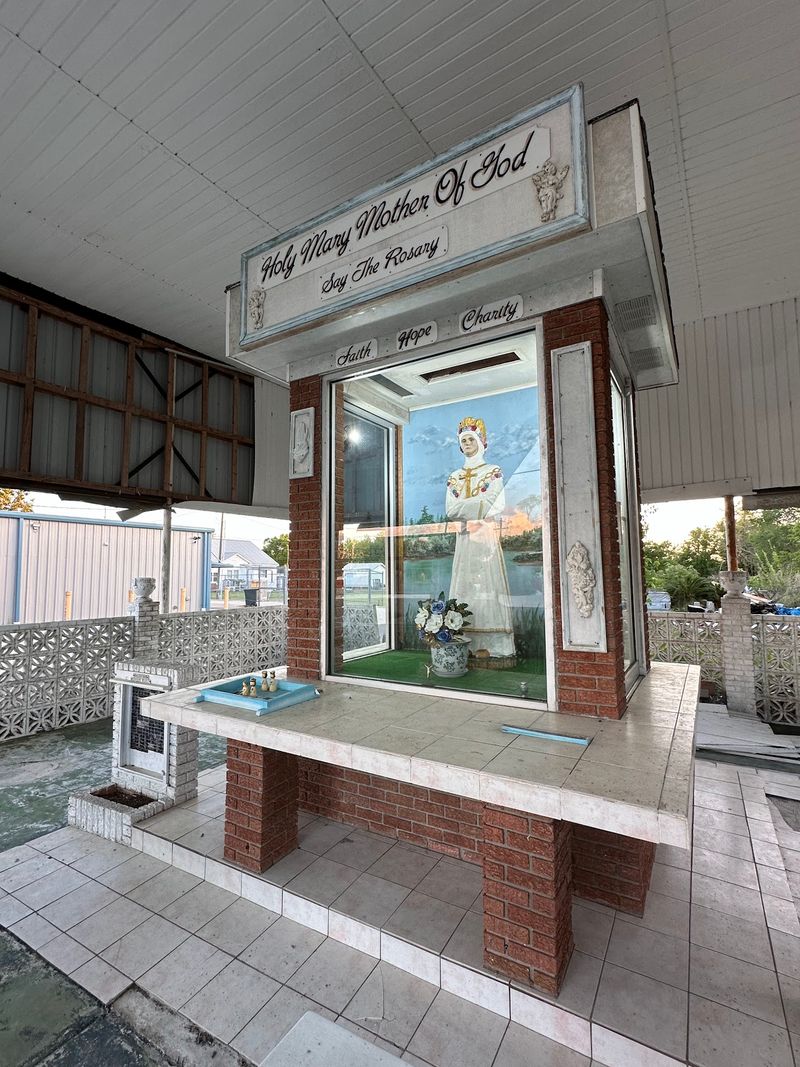
Maps may label Holy Mary Shrine as a museum, but that word only tells part of the story. Anyone arriving for polished exhibits, formal interpretation, or a staffed institution may miss what makes the place special.
It is better understood as a personal devotional site that visitors can enter.
That difference matters because it shapes how to look at everything inside. The shrine is intimate, handmade, and rooted in one man’s claimed miracle.
Its meaning comes from testimony, symbolism, and local memory more than from standard museum presentation.
A flexible mindset helps. Think of the stop as part folk shrine, part religious art environment, part community witness.
Once expectations shift, the visit becomes richer and less confusing. Some places resist tidy categories, and this modest Golden Meadow landmark is one of them for many travelers.
Bring A Respectful Eye For Preservation
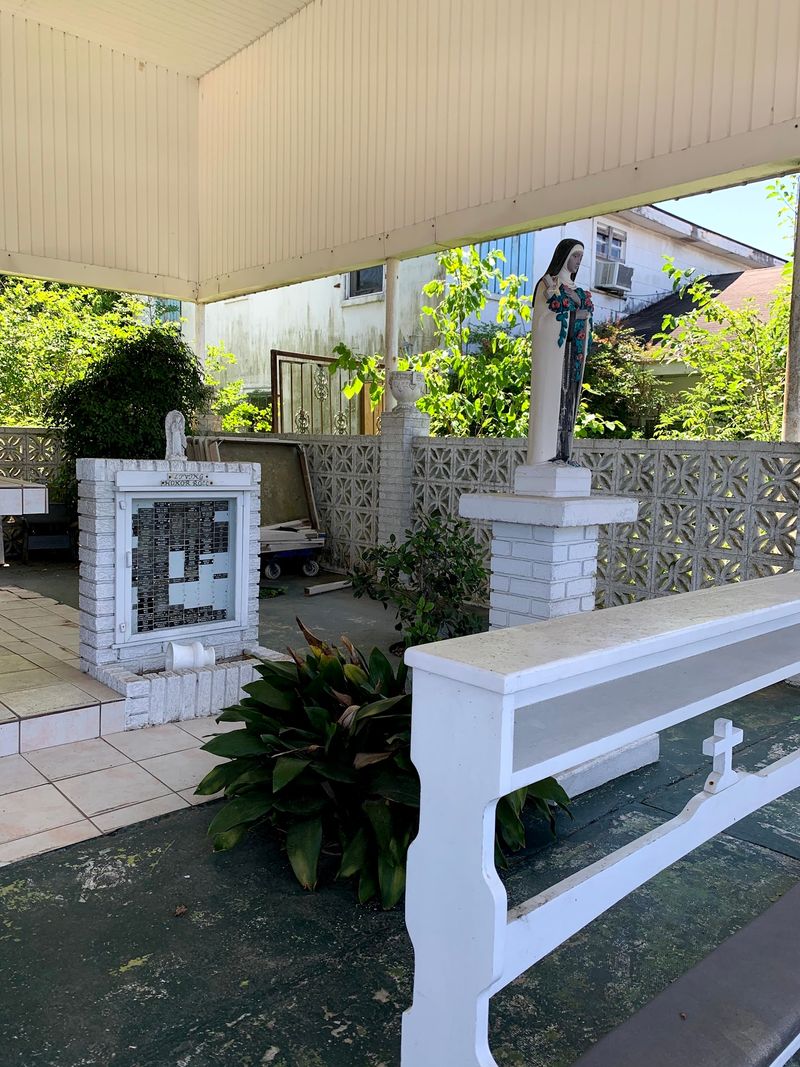
Hand-built places often carry time on their surfaces, and that can stir mixed feelings. Holy Mary Shrine is meaningful partly because it was made by one person with conviction, not by a large institution with endless maintenance.
Visitors should bring a respectful eye, noticing both the devotion that created it and the care such places need.
That does not mean turning the site into a before-and-after project in your mind. It means paying attention to materials, weathering, and fragility as part of the story of a roadside shrine in south Louisiana.
Take photos gently, move carefully, and leave nothing behind. Sites like this survive through consideration as much as construction.
Preservation starts with visitor behavior, especially where sacred purpose and folk craftsmanship meet in a setting exposed to time, climate, and changing community use.
Leave Space For Mystery
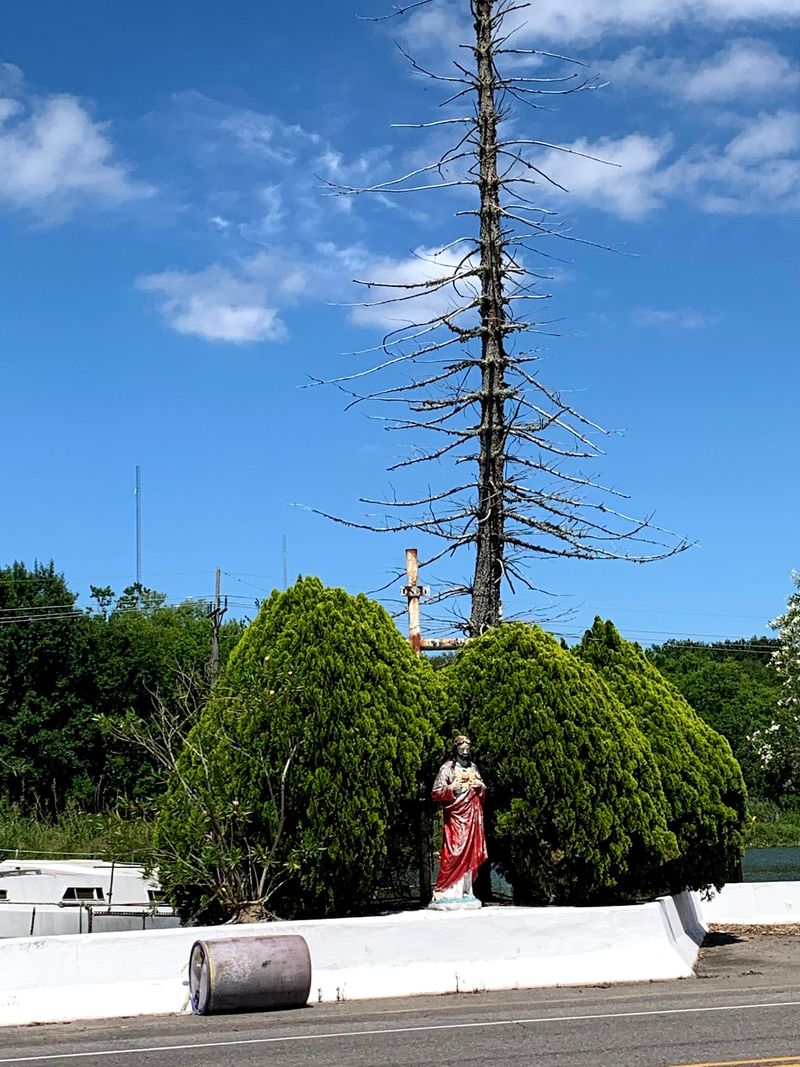
Not every destination needs to be fully explained before it can matter. Holy Mary Shrine rests on a miracle claim, and that alone gives the place an edge of mystery that practical facts cannot erase.
The exact power of the site depends on what each visitor brings to it.
Some people will focus on history, some on folk art, and others on faith. All three approaches fit.
What makes the shrine memorable is how openly it holds them together without forcing a single response from everyone who steps inside.
That is why the stop lingers in the mind after the drive continues. A small building in Golden Meadow becomes a larger meditation on belief, memory, and local identity.
The best final tip is simple: do not rush to solve the place. Let it remain intriguingly unfinished for a while.