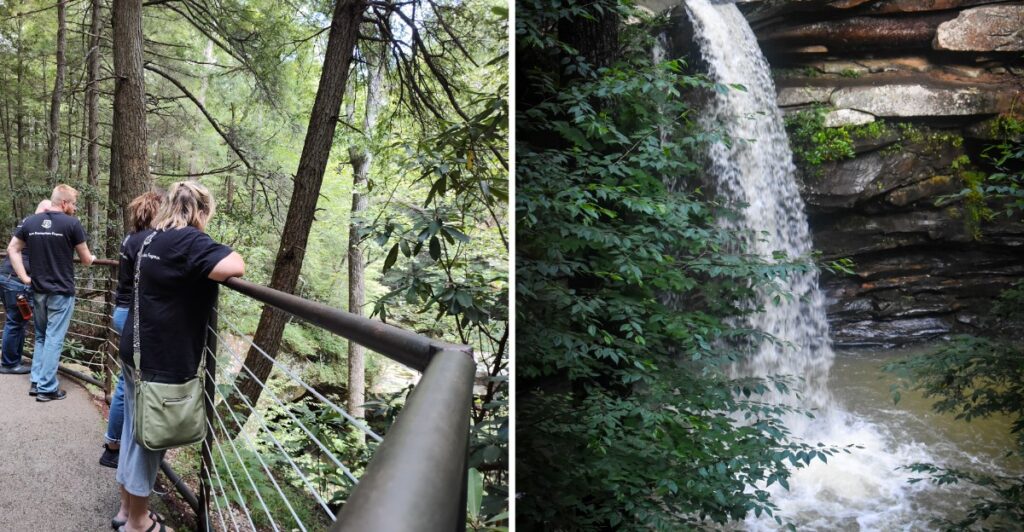
Twenty-eight feet of waterfall sounds like it should require more effort than this.
Instead, one Kentucky stop lets you get surprisingly close to the payoff before your legs have much to complain about.
A paved path leads to the main overlook, where the water drops into a broad pool framed by woods that start changing dramatically once fall settles in.
You can call it there and still feel like the trip delivered.
Or you can keep moving, take the lower trail, and see the falls from a completely different angle.
That is what I like about this place.
It does not make you earn every good view with an exhausting hike.
Sometimes the camera gets the workout instead.
A 28-Foot Drop Anchors The Recreation Area
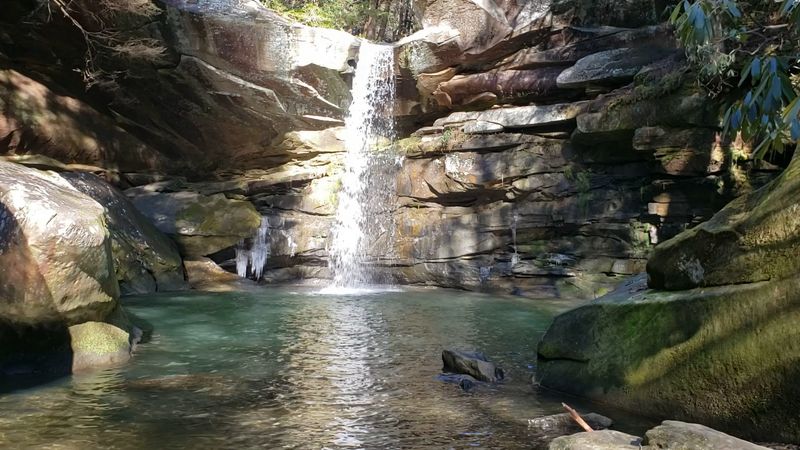
Flat Lick Falls is the centerpiece of an 86.09-acre county-owned recreation area in southern Jackson County. Flat Lick Creek runs through the property before dropping about 28 feet into a large pool and continuing toward Laurel Fork Creek.
The waterfall is compact enough to take in quickly, but the surrounding rock and forest keep the view from looking one-dimensional. Cliffs, boulders, wooded slopes, and the pool below give you several layers to work with if a camera is part of the day.
That also means the waterfall does not have to fill every frame. A wider composition can use the trees and rock around the water, while a closer view can focus on the drop itself, the pool, or the textures along the cliff line.
Jackson County developed the area for recreation that includes hiking and photography, so the trail network gives you more than one way to approach the scenery.
If you are visiting only for the falls, the main overlook is enough for a satisfying stop. If the weather is comfortable and you want more time outside, the rest of the property gives you room to keep moving without turning the visit into an all-day trek.
The Paved Overlook Keeps The Main View Easy
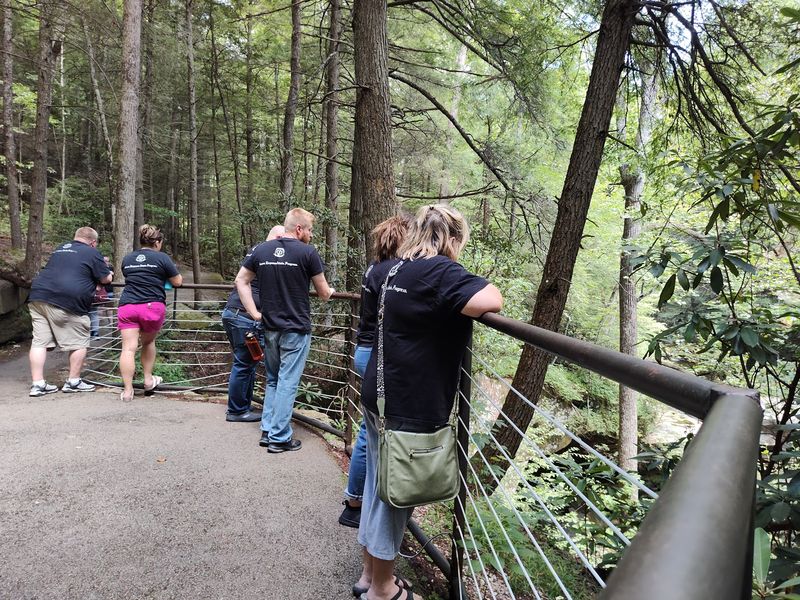
The simplest route to Flat Lick Falls follows a paved path to a wheelchair-accessible viewing platform. The path is about 400 yards long, making the main view reachable without a rugged approach.
That matters when the goal is photography rather than a strenuous hike. You can carry a camera, wait for softer light, or make several trips between the parking area and overlook without spending most of your energy on the trail.
The platform gives you an elevated view of the waterfall and the pool below. It also provides a useful first look at conditions before you decide whether to explore farther.
Water level is one of the first things to notice. A stronger flow changes the shape and movement of the falls, while a drier period can reveal more rock around the drop. Neither version requires a complicated plan, but they produce very different photographs.
The paved route also makes Flat Lick Falls a practical stop for mixed groups. One person can stay with the easier overlook while another takes a longer walk afterward.
If time is limited, linger here rather than rushing. A short trail does not mean the view needs only a short visit.
The Base Trail Changes The Angle Completely
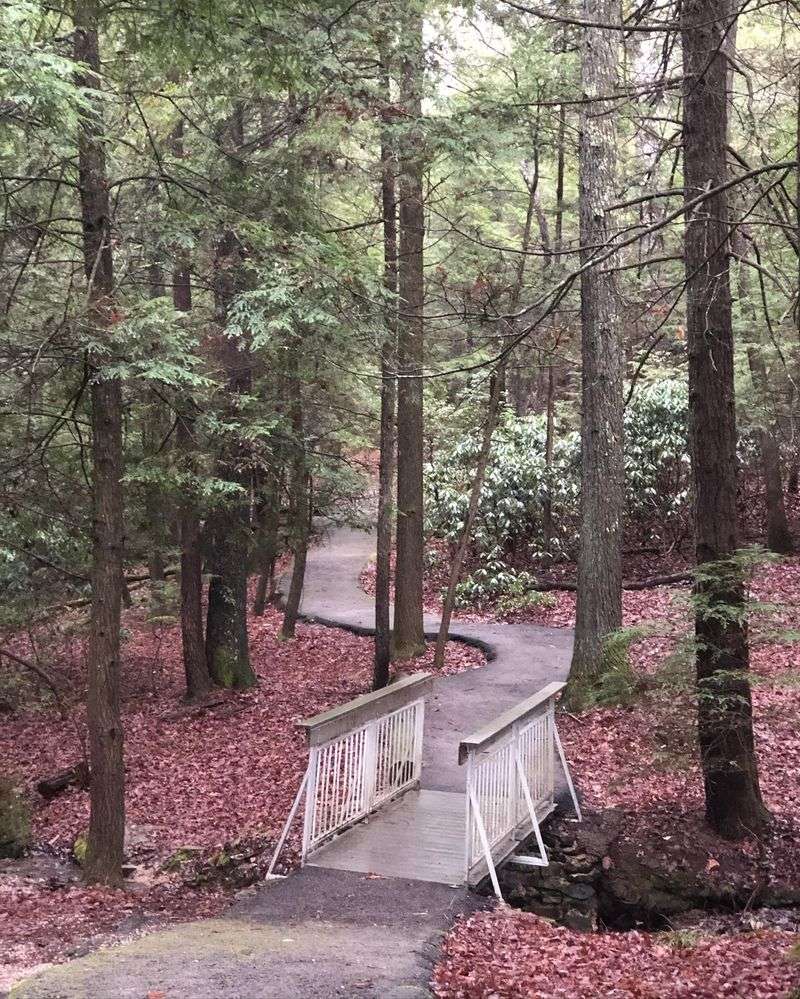
A separate route leads toward the bottom of the falls, giving you a lower perspective on the same 28-foot drop. The route to the base is a short half-mile hike that includes a bridge crossing the creek.
From below, the pool and surrounding rock become much more prominent. The waterfall rises above the foreground instead of dropping away beneath you, which changes the scale of the scene immediately.
This is where good footwear becomes more important. Natural surfaces, roots, rock, and wet ground can make the lower trail less predictable than the paved overlook, especially after rain.
There is no need to improvise a shortcut across the top of the falls. Use the established route and bridge rather than treating slick creek edges as part of the challenge.
The lower angle can also reward a slower pace. Reflections in the pool, moss on the rock, fallen leaves, and smaller details around the water can be just as useful as a full view of the falls.
If the trail conditions are not appealing that day, turn back without losing much. The accessible overlook already gives you the main scene, so the base is an extra perspective rather than a requirement.
Fall Color Adds A Second Layer To The Scene
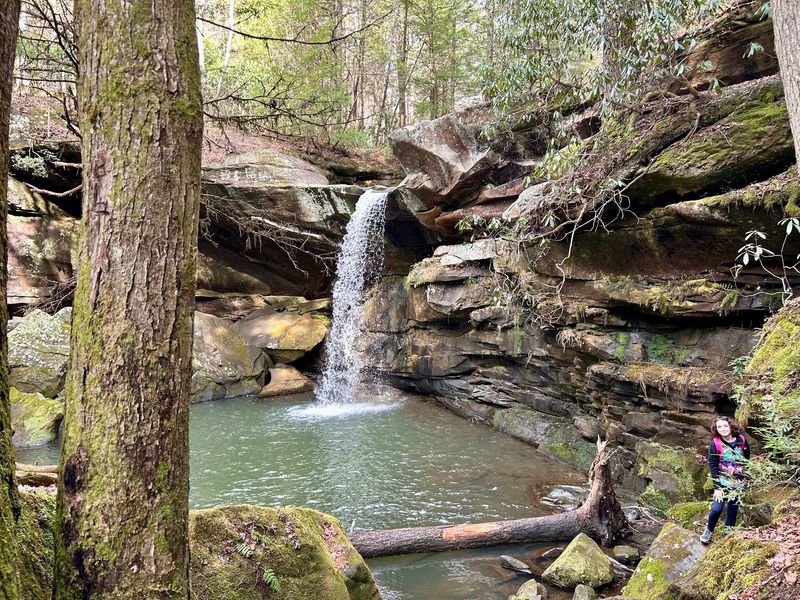
Flat Lick Falls sits inside a wooded landscape, which means the waterfall changes visually as the canopy moves through the seasons. In fall, the greens around the pool begin giving way to warmer shades, adding color around the water and rock.
The exact timing is never fixed. Eastern Kentucky color can begin developing in late September and continue through October, with weather influencing how quickly the change arrives and how long it lasts.
That uncertainty is part of the reason a flexible visit works better than chasing one exact day. Early fall may give you mostly green with scattered color, while later weeks can bring a stronger mix across the hillside.
For photography, overcast conditions can be useful because softer light reduces harsh glare on water and wet rock. Bright sun creates a different problem, especially when the pool sits in shade while the canopy catches stronger light.
Try the wide view first, then look for smaller fall details along the trail. Leaves against dark rock, color reflected in the pool, and patches of moss can give you something interesting even when the whole canopy has not changed.
The waterfall is still the anchor, but autumn gives the frame more to work with around it.
The Gray Hawk Location Has More Than One Trail
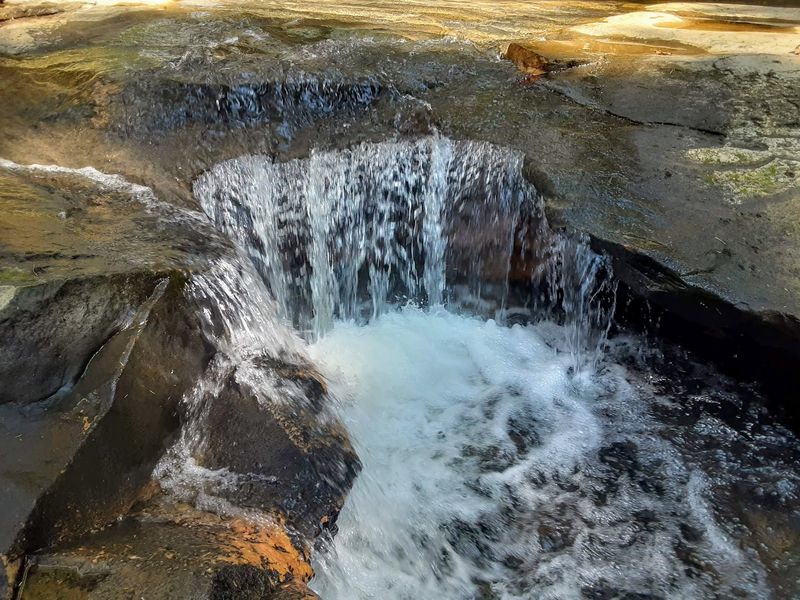
Flat Lick Falls Recreational and Scenic Area is reached via Hays Road off U.S. 421 in Gray Hawk, Kentucky. From U.S. 421 in Gray Hawk, turn west onto Hays Road and follow the local route toward the recreation area.
Once there, the waterfall is only part of the walking available. About five miles of easy-to-medium trails spread across the property, with some routes involving creek crossings and more natural terrain than the paved overlook.
That lets you decide how large the outing should become. A quick visit can stay focused on the overlook and base trail, while a longer afternoon can include more of the wooded network.
A picnic shelter and scattered picnic tables give you a place to stop between walks. Primitive camping is also part of the recreation area, and restrooms are available on site.
The county maintains Flat Lick Falls as a public park, and the grounds are open from sunup to sunset daily throughout the year.
For a first visit, keep the plan modest. See the waterfall, walk one additional trail if conditions are good, and leave enough daylight to return without hurrying through unfamiliar terrain.
Rain Changes The Waterfall More Than The Calendar
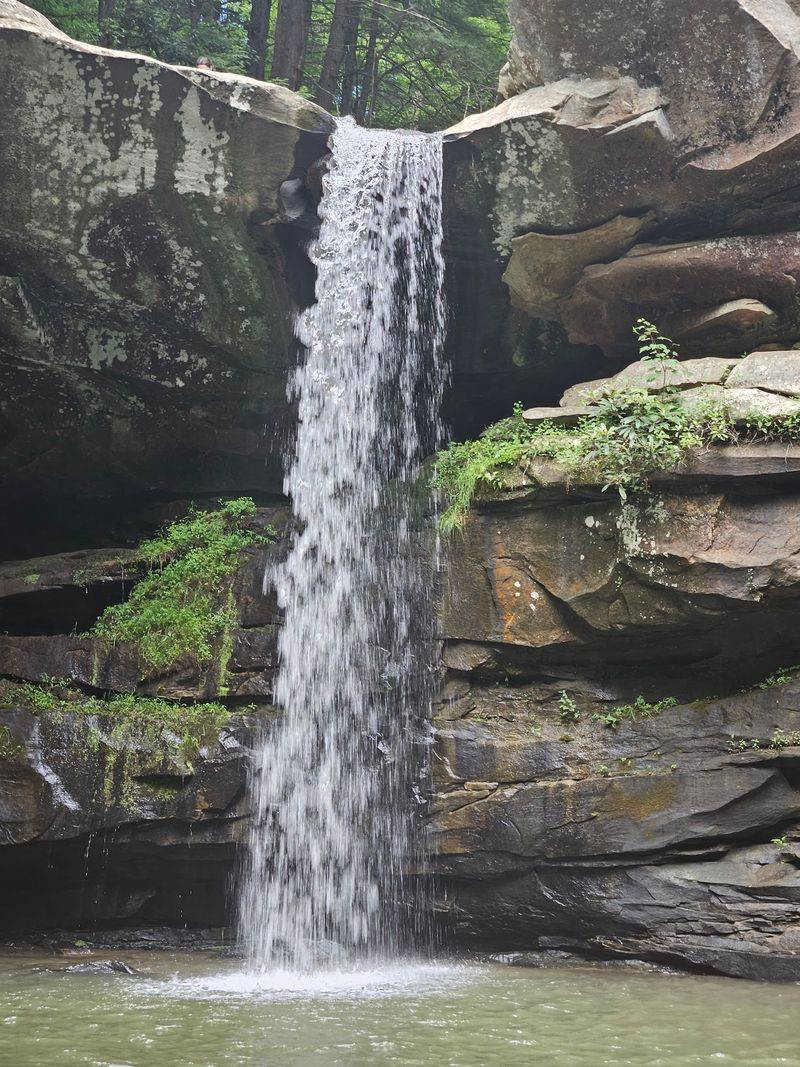
Fall color gets plenty of attention, but recent rainfall can change Flat Lick Falls even more dramatically. Like many smaller waterfalls, its flow responds to weather, so the same viewpoint can look noticeably different from one visit to the next.
After a wet stretch, more water can fill the drop and create stronger movement through the pool below. During a dry spell, the flow may thin and expose more of the rock face.
That difference matters for both photographs and footing. More water can create a bolder scene, but it can also leave creek edges, rocks, and natural trails wetter and less forgiving.
A lighter flow gives you another kind of composition. Rock texture becomes easier to see, and the shape of the ledge can play a larger role in the picture.
Checking recent weather before leaving home is more useful than assuming the waterfall will look exactly like a photograph from another day.
Rain also affects the longer trail network, particularly where creek crossings are involved. If water is high or surfaces are slick, the paved overlook can become the better choice.
Let the conditions decide the route. The waterfall does not need to be at maximum flow for the visit to work.
A Simple Plan Keeps The Visit Flexible
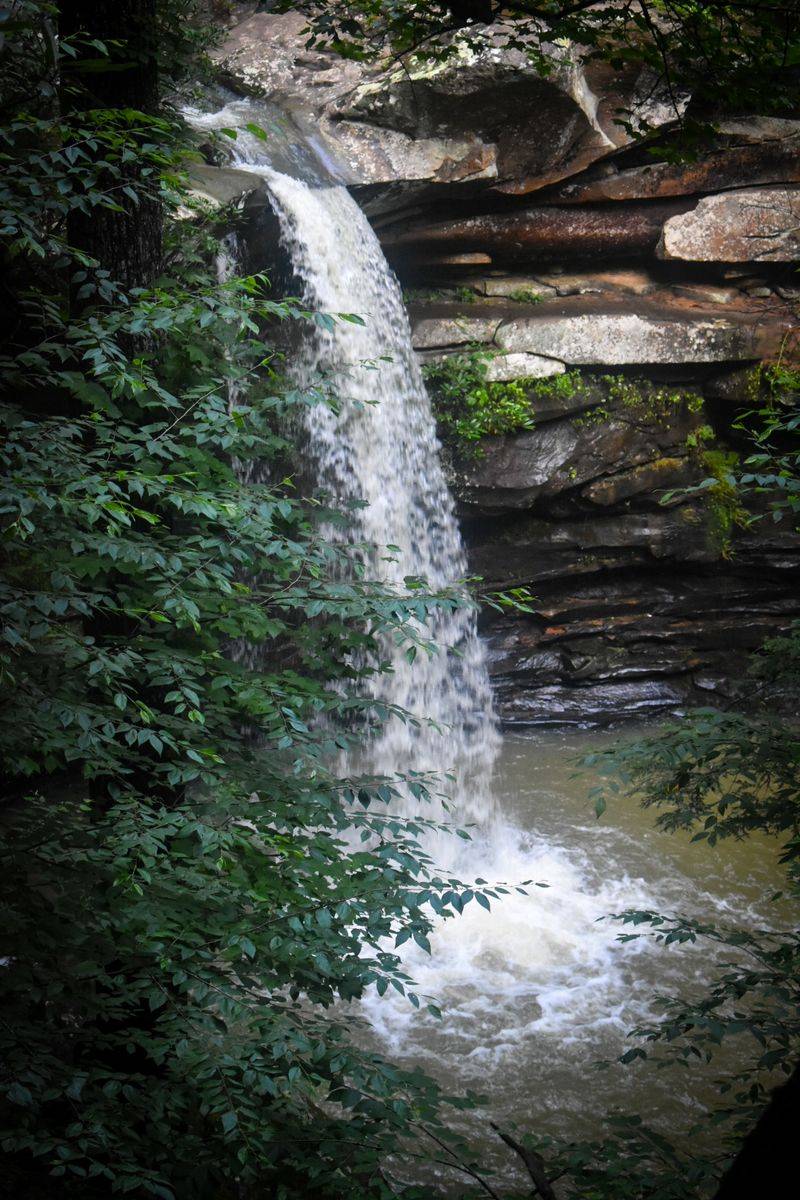
Flat Lick Falls works best when you arrive with a loose plan instead of a checklist. Start with the paved overlook because it gives you the easiest look at the waterfall, the pool, and the surrounding forest.
From there, decide whether the base trail makes sense. Dry footing and comfortable weather may invite the extra walk. Wet surfaces or fading daylight may make the overlook and a short picnic the better version of the day.
If you continue onto the longer trails, bring water and shoes suited to natural terrain. Creek crossings and uneven surfaces make those routes different from the paved approach.
The recreation area also allows primitive camping, but a daytime visit already gives you plenty to work with. The picnic shelter and tables make it easy to pause without committing to an overnight stay.
Jumping from the falls is prohibited, so enjoy the water from the established trails and viewing areas rather than turning the cliff edge into part of the route.
For photographers, patience can be more useful than mileage. Watch how light moves across the water, give the overlook a second look before leaving, and let fall color fill in the edges without forcing the day into a race.