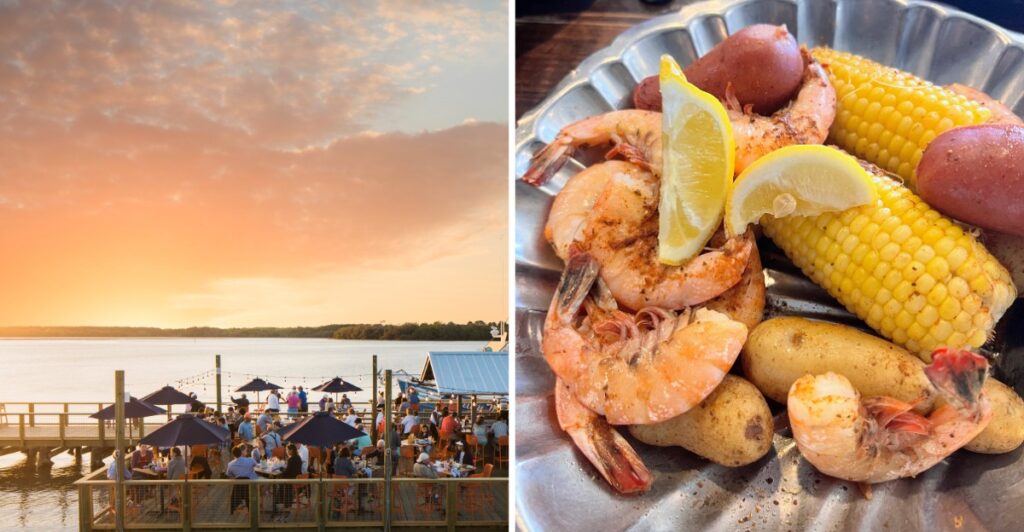
Shrimp tastes a little more interesting when the season is actually on your side.
As South Carolina’s white shrimp harvest picks up, the Lowcountry gives seafood lovers a very good reason to pay attention to what is coming off the boats.
Here, the docks are not just scenery.
They are part of how the meal gets to the table.
That means what shows up can shift with weather, tides, and whatever the catch looks like that day, which I honestly like more than a perfectly predictable menu.
You can keep things simple with shrimp or see what else looks good once you sit down.
Either way, this is the kind of meal that makes seasonal timing matter without turning dinner into a science project.
Sometimes the best clue is simply what just came ashore.
Fall White Shrimp Season Brings Some Of The Year’s Biggest Catches
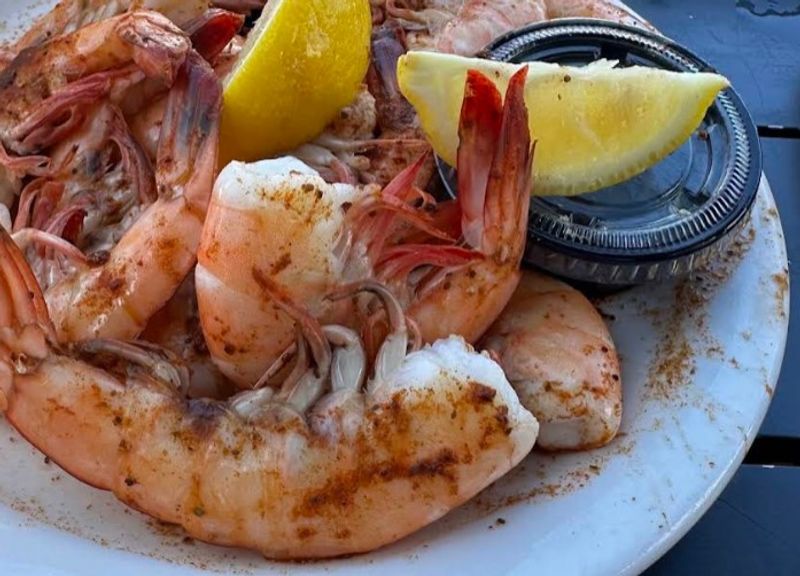
South Carolina’s commercial shrimp fishery moves through several periods each year. Roe shrimp arrive first in May or June, followed by brown shrimp during summer. The fall white shrimp season begins later and usually produces the largest catch of the year.
Young white shrimp begin showing up in commercial landings during August, with catches typically peaking in September and October. The season generally continues through December and can sometimes stretch into January.
That timing makes early fall especially useful if local shrimp is the main reason for the meal. September sits well inside the active harvest rather than at the very beginning or end of it.
Weather still gets a vote. Heavy rainfall and low salinity can push white shrimp toward the ocean earlier than normal, while drier conditions can keep them in estuaries longer. Water temperature and tidal cycles also influence migration.
That means no restaurant can promise that every fall week will look identical. The season provides the broad window, while the actual catch changes with conditions on the water.
If shrimp is your priority, let the season guide the timing but keep expectations flexible. The Lowcountry works on a natural schedule.
Working Shrimp Boats Keep The Dock Connected To The Catch
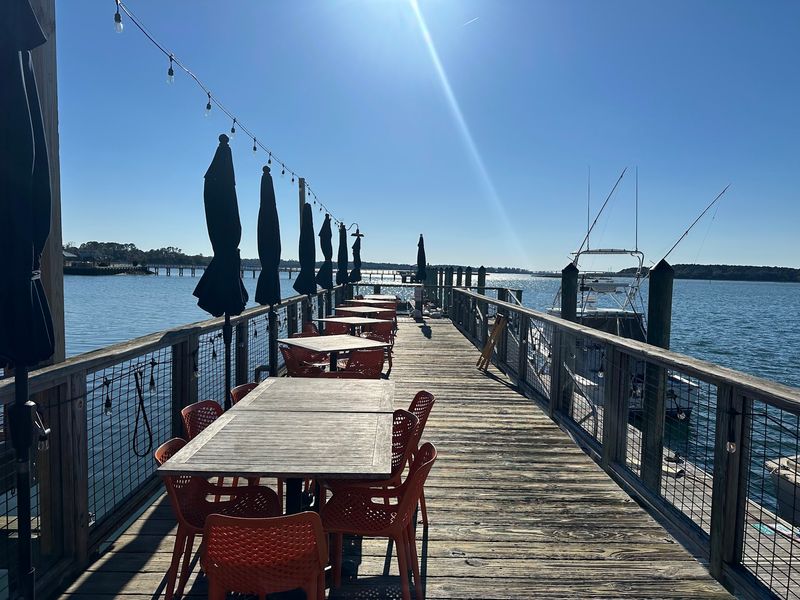
Hudson’s has a direct connection to the local shrimp industry. Working shrimp boats dock at the restaurant, including boats operated by third-generation shrimpers Jeff and Skip Toomer.
That relationship shortens the distance between harvest and kitchen. A productive trip can bring a large load of shrimp back to the docks, where the catch moves into the restaurant’s seafood program.
More than ninety percent of the seafood served at Hudson’s comes from local boats fishing nearby waters. The restaurant also works with fishermen based on Hilton Head Island and in surrounding coastal areas for seasonal fish and shellfish.
For you, the docks make that sourcing easier to understand. Fishing boats, unloading activity, and the restaurant’s seafood operation share the same setting.
That does not mean a boat will arrive every time you sit down. Fishing schedules depend on weather, catch, tides, and season.
Look toward the docks before settling into the menu. On the right day, the water outside explains a large part of what is happening in the kitchen.
The Lowcountry Boil Keeps Local Shrimp At The Center
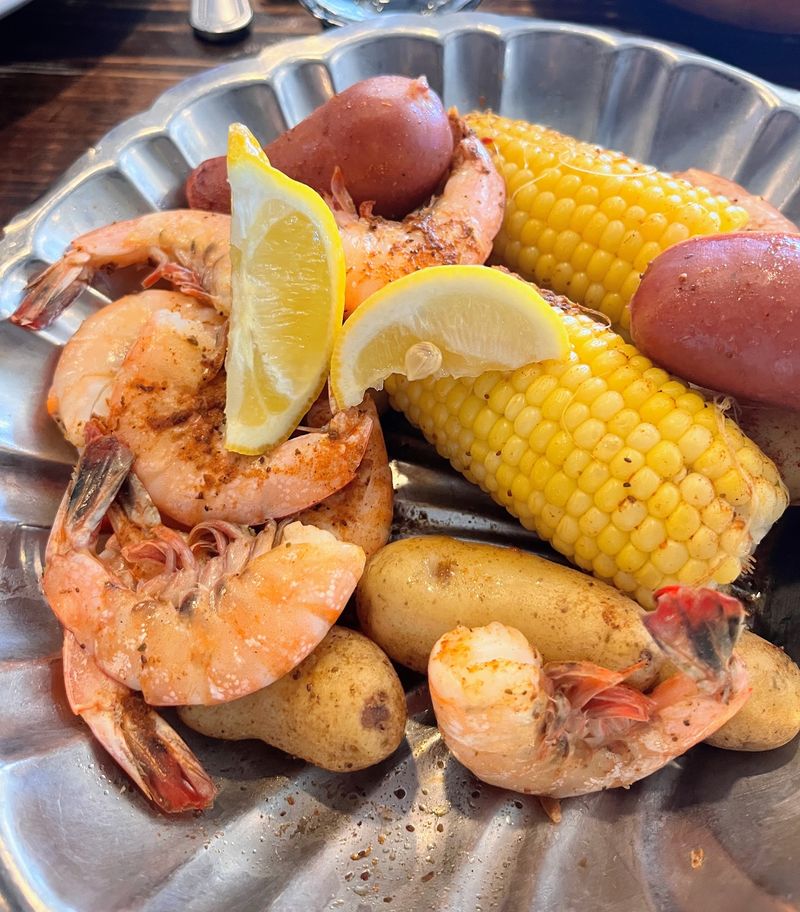
One of the clearest ways to keep the meal focused on shrimp is the Lowcountry boil. The current lunch and dinner versions combine steamed local shell-on shrimp with smoked sausage, corn, potatoes, and seasoning.
There is very little mystery in that plate. The shrimp stays in the shell, the vegetables and sausage share the same straightforward preparation, and the meal asks you to slow down enough to peel as you eat.
If you want an even simpler route, steamed local shrimp in the shell is available on its own. That works well when you want the shrimp to carry most of the meal.
The steamed combo widens the table with local shrimp, local littleneck clams, corn, and local cluster oysters when those oysters are in season. When cluster oysters are unavailable, the combination shifts.
That seasonal adjustment matters. The menu is built around products that do not all peak at once, so fall shrimp season can overlap with other coastal ingredients without making every item equally predictable.
A first visit does not need three different shrimp dishes. Pick the preparation that matches your appetite, then use the next course for something different.
Shrimp Is Only One Part Of The Local Seafood Picture
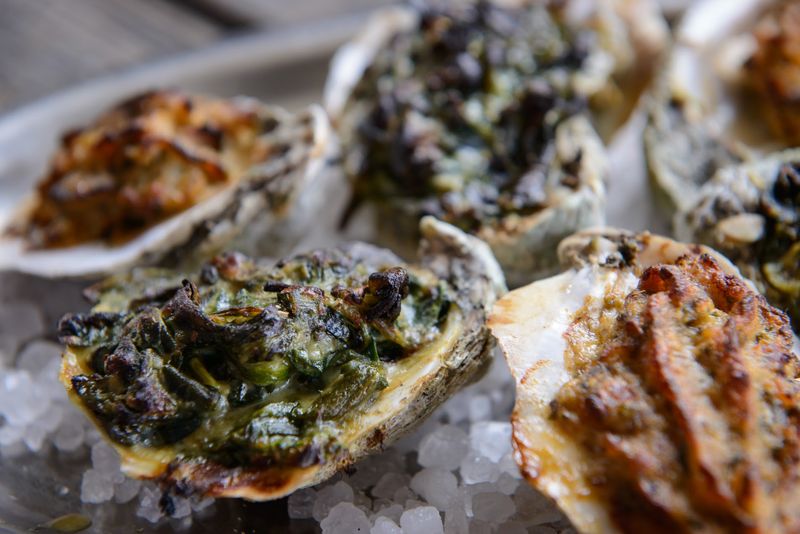
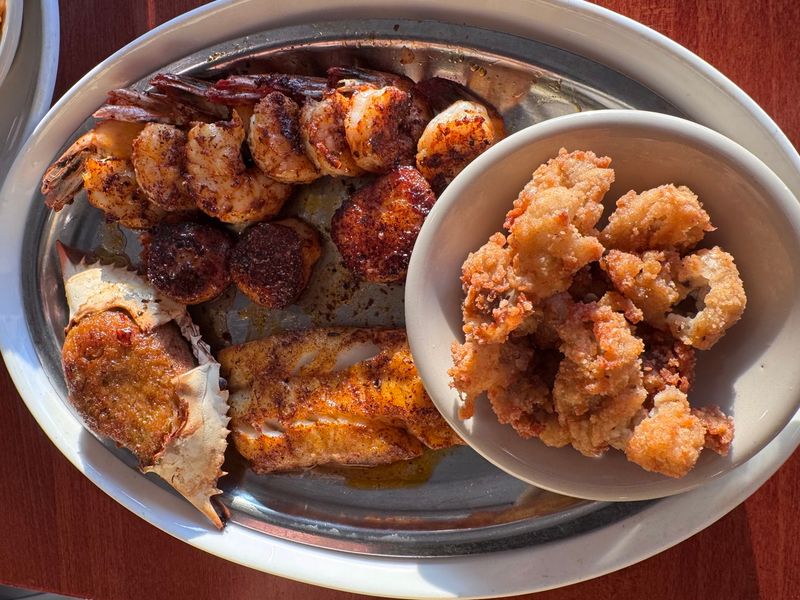
Hudson’s menu goes well beyond the Lowcountry boil. Local littleneck clams, seasonal cluster oysters, local fish, crab dishes, she-crab soup, and other seafood give the table several directions once shrimp has had its turn.
Local fish changes with seasonal availability. Whole fish brought in through the restaurant’s fishing network are filleted in-house and can appear among daily lunch and dinner specials.
Shrimp itself appears in multiple forms. Beyond shell-on servings and the boil, shrimp also comes chilled, fried, pan-sautéed, broiled, or blackened in several parts of the menu.
The oyster side has its own timing. Local cluster oysters are offered in months containing the letter “R,” so fall can bring an overlap between shrimp season and oyster season.
You do not need to order across every category. One local shrimp preparation plus a fish or shellfish dish can give the meal enough range without turning the table into a tasting marathon.
Ask yourself what you want the meal to emphasize: shrimp, mixed shellfish, or the day’s fish. That small decision keeps the menu easy to manage.
Port Royal Sound Sits Just Beyond The Tables
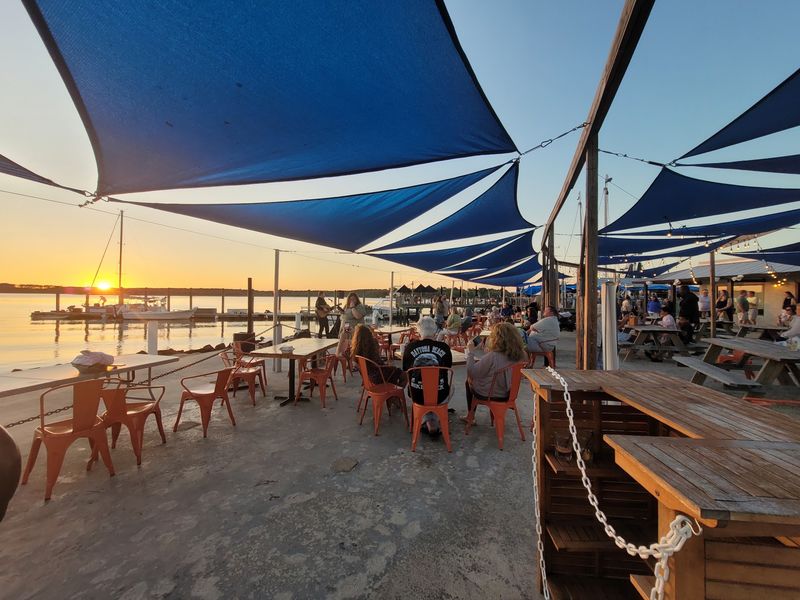
Indoor and outdoor seating both keep the water in view, while the docks remain tied to the restaurant’s working seafood operation.
Hudson’s Seafood House on the Docks is at 1 Hudson Road, Hilton Head Island, SC 29926, directly beside Port Royal Sound.
The location has a much longer history than the current dining room. J. B.
Hudson Sr. built an oyster factory here in 1912, when oysters arrived by small boats, were shucked on the docks, and were shipped north by barge.
Fresh locally caught shrimp became part of the operation in 1953 under J. B. Hudson Jr. The business expanded into a larger restaurant operation in 1967, and Brian and Gloria Carmines purchased Hudson’s in 1975.
That timeline explains why the docks matter so much to the place. Seafood processing and fishing activity were here before the modern restaurant experience took shape.
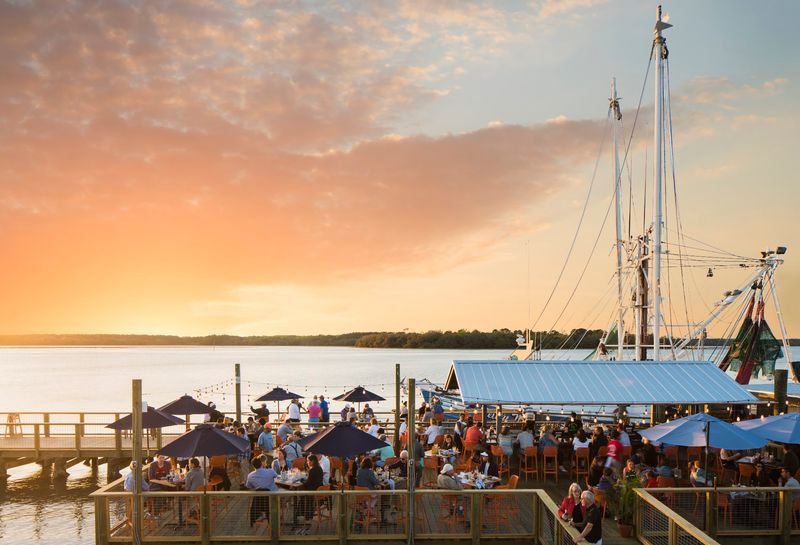
Today, the waterfront lets you combine the meal with a clear look across Port Royal Sound. The view changes with light, weather, tide, and boat traffic, so lunch and dinner can present different versions of the same shoreline.
If scenery matters, leave enough time to look up from the plate. The water is part of the history that shaped the restaurant in the first place.
First-Come Seating Makes Timing Part Of The Plan
Hudson’s seats guests on a first-come, first-served basis and does not accept reservations or call-ahead seating. That makes timing one of the practical decisions to make before you arrive.
Current hours run Monday through Saturday from 11 a.m. to 9:30 p.m. Sunday starts earlier at 10 a.m. and also runs until 9:30 p.m. Lunch is served from 11 a.m. to 4 p.m., dinner from 4 p.m. to 9:30 p.m., and Sunday brunch runs from 10 a.m. to 2 p.m.
If your main goal is shrimp rather than sunset, lunch gives you a broad window without requiring an evening visit. Dinner works better when the water view and a slower meal are part of the plan.
Peak periods can bring a wait, so flexibility helps. Arriving with one exact table in mind makes the visit harder than it needs to be. Indoor and outdoor seating both keep the waterfront close.
The restaurant closes on Thanksgiving, Christmas Eve, Christmas Day, and Super Bowl Sunday, so those dates require a different plan.
Give yourself room for a possible wait during peak periods, and let the waterfront view make the extra time easier to handle.
What To Know Before Visiting Hudson’s Seafood House On The Docks
September and October sit at the heart of South Carolina’s fall white shrimp harvest, but the season is not a factory schedule. Rain, salinity, temperature, tides, and migration can all change how much shrimp is available from week to week.
That variability matters at Hudson’s because the restaurant’s local-seafood identity depends on what fishermen can actually bring in.
You can still arrive with a clear plan. Start with local shrimp if that is the reason for the trip, then look at the day’s fish and seasonal shellfish before filling out the rest of the meal.
If local cluster oysters are in season, they can share the table with shrimp. If a particular fish has come in through the local fleet, the specials may give you a better second choice than something you had in mind before arriving.
The point is not to chase scarcity or treat dinner like a race against the calendar. Fall simply gives local white shrimp a stronger role than it has at other times of year.
Let September or October set the broad timing, then let the catch make the smaller decisions. On a working waterfront, that is a practical way to eat with the season.