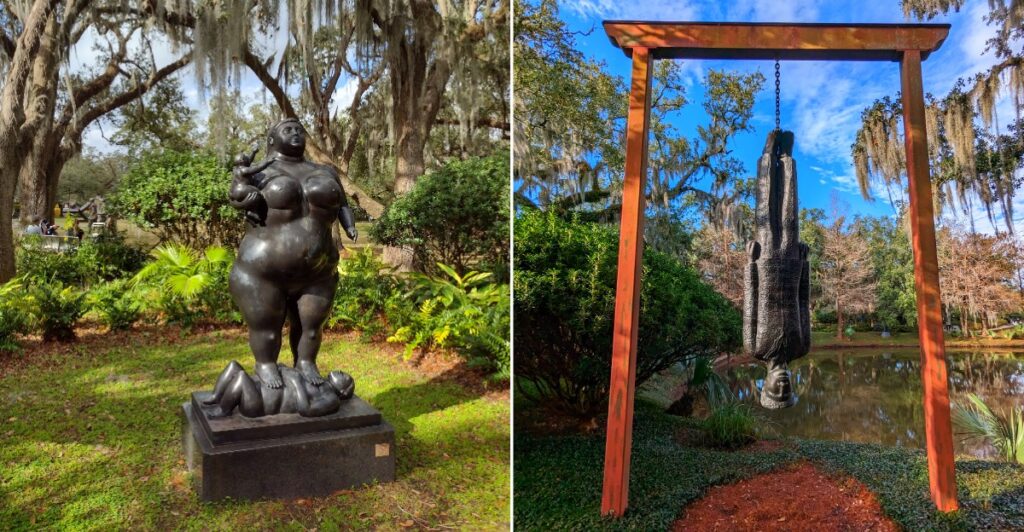
Two-hundred-year-old live oaks hold the sky open while bronze sculptures fill the space below. The Sydney and Walda Besthoff Sculpture Garden sits beside the New Orleans Museum of Art with free admission and no closing gate between the street and the art.
Ninety sculptures occupy eleven acres of pine, magnolia, and camellia. Two lagoons connected by a pedestrian bridge reflect the work back at itself.
A twenty-foot obelisk built from welded bronze cellos stands at the center, and a winding path connects every installation. Spanish moss drapes every branch within reach of the light.
The garden doubled in size in twenty-nineteen, adding works that range from realistic to completely unrecognizable. Visitors walk the paths without paying, without scheduling, and without the pressure that indoor museums create.
Nearly one hundred sculptures rest beneath a canopy that no gallery could replicate, and Louisiana gives them away for free.
Start With The Lay Of The Land
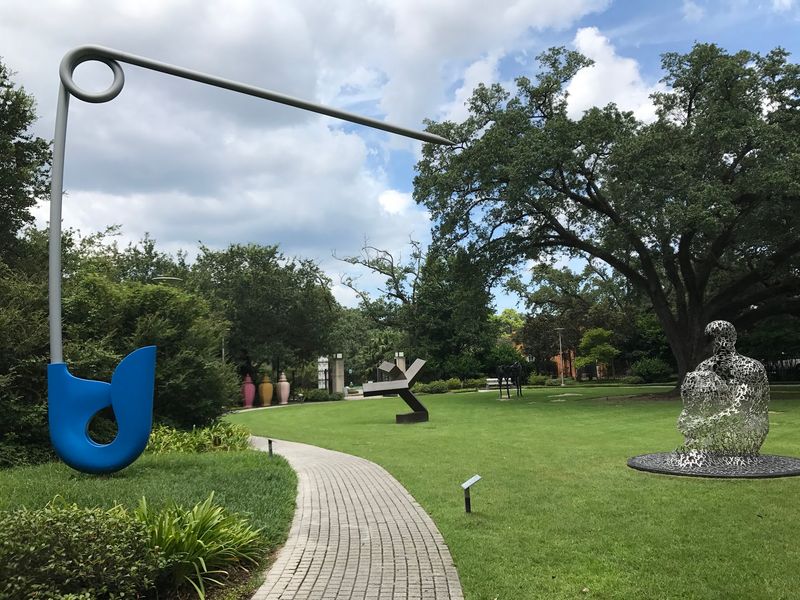
At first, the paths seem happy to ignore straight lines. That is part of the pleasure, but it also means a quick walk can leave whole corners unseen.
The garden covers eleven acres beside the New Orleans Museum of Art, with works set among lawns, trees, and water. Give yourself about 90 minutes to two and a half hours if you want to explore without watching the clock.
Before you set off, take a moment to notice where paths split and which bridges lead across the lagoons. You need not follow a strict route.
A loose plan simply helps you return for anything that caught your eye from a distance. With more than 90 sculptures here, missing a few is easy; seeing one twice from a different angle can be a reward of its own.
Park By NOMA, Then Follow The Oaks
Sydney and Walda Besthoff Sculpture Garden sits at 1 Collins Diboll Circle in New Orleans, Louisiana, inside City Park beside the New Orleans Museum of Art. Esplanade Avenue is the useful final approach, with Lelong Drive carrying you into the museum and garden area.
The last stretch opens into one of the greenest parts of the city, with old live oaks, lagoons, and the museum grounds replacing the tighter neighborhood streets. Once NOMA comes into view, the sculpture garden is right beside it, tucked into the same City Park complex.
Use the free parking along Lelong Drive, on the surrounding City Park streets, or behind the sculpture garden, then continue on foot toward the garden entrance. From there, the route immediately turns into a network of walking paths beneath the trees.
Give The Oaks Their Own Time
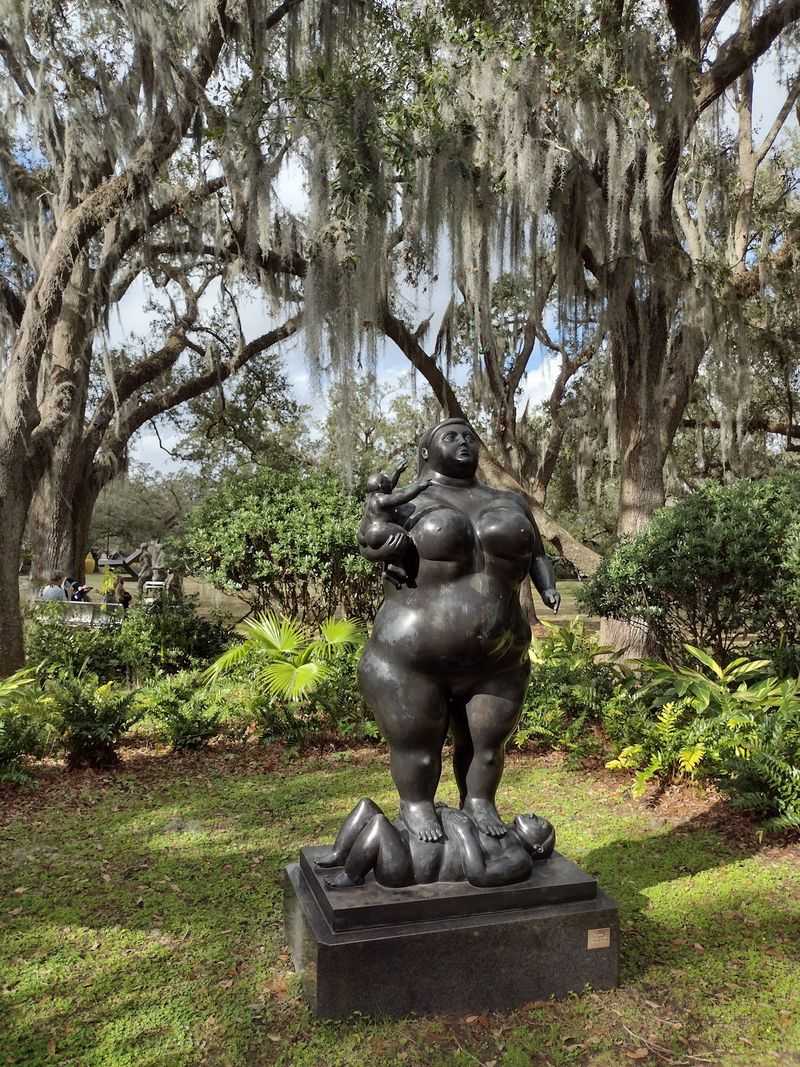
Some of the most striking shapes here grew rather than arrived on a truck. Live oaks, including trees roughly 200 years old, stretch over parts of the garden, their branches carrying Spanish moss.
Magnolias and pines add different forms nearby. Look up between sculptures, then look back at the art: a work can feel surprisingly different when a heavy branch frames it.
The garden was built into City Park’s mature landscape instead of replacing that landscape with a blank setting. That choice makes the trees feel like part of each encounter, not just a shady backdrop.
Pause beneath a canopy when you need a break, but remember that open lawns offer less cover. On a bright day, the shift from shadow to sunlight can be as interesting as the next bend in the path.
Follow The Lagoons Slowly
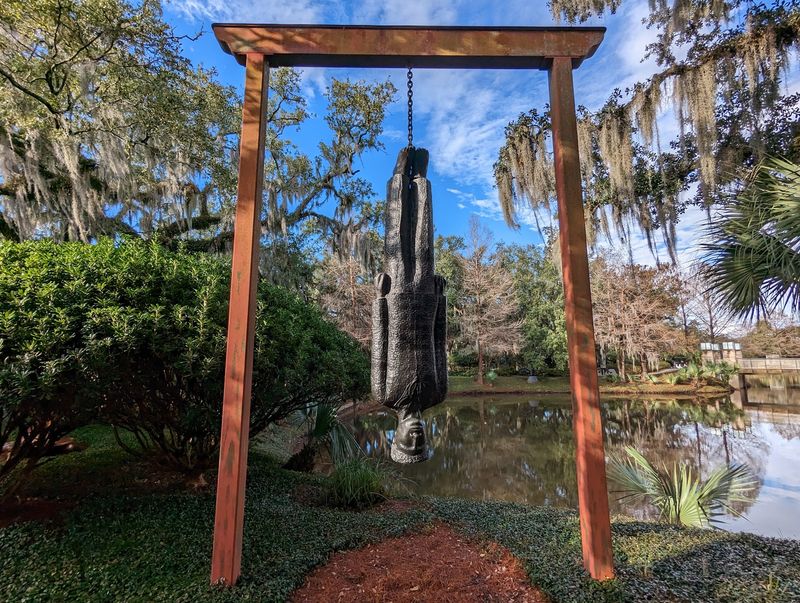
Water has a way of making a busy mind walk more slowly. Two interconnected lagoons shape this garden, drawing the paths toward bridges, planted banks, and views across the water.
Some sculptures sit in open areas; others appear across a lagoon or among the plants. Stop before each crossing and look ahead.
The view from the bank may be quite different from the one halfway over.
The 2019 expansion put water at the heart of the design, with features such as bioswales and a weir that help manage and clean it. You do not need to understand every detail to notice that the lagoons do real work as well as look beautiful.
Stay on the paths near the banks, leave the plants undisturbed, and give yourself time to notice how reflections change what you see.
Cross The Canal Link Bridge
A bridge can be more than a way to get to the other side. The Canal Link Bridge, added with the garden’s 2019 expansion, runs for roughly 280 to 300 feet and creates an unusual sense of walking through water.
Pay attention to what falls within your view as you cross. The long passage gives your eyes time to adjust to the low, watery landscape around it.
Bridges also make useful points for finding your bearings. When the paths begin to curl around lawns and plantings, remember which side of the canal you came from.
Walk at an easy pace so others can pass and you can enjoy the changing view. Resist treating the crossing as a shortcut: its design is part of the visit, just as surely as the sculptures waiting beyond it.
Look For The River In Glass
Not every sculpture asks you to stand back and look up. Elyn Zimmerman’s Mississippi Meanders is a 70-foot glass bridge that traces historical paths of the Mississippi River.
Its subject is a familiar name with a less familiar shape: the river has changed course over time. Spend a moment reading the lines as a map rather than rushing across to the next work.
That small shift in attention makes the piece especially fitting for New Orleans. The garden’s paths already encourage you to think about movement, while its lagoons keep water close by.
Look at the bridge from more than one point if the path allows it, and let the river pattern guide your eye. A photograph may catch the design, but taking a quiet minute with it reveals why its location matters.
Meet The Spider Without Rushing
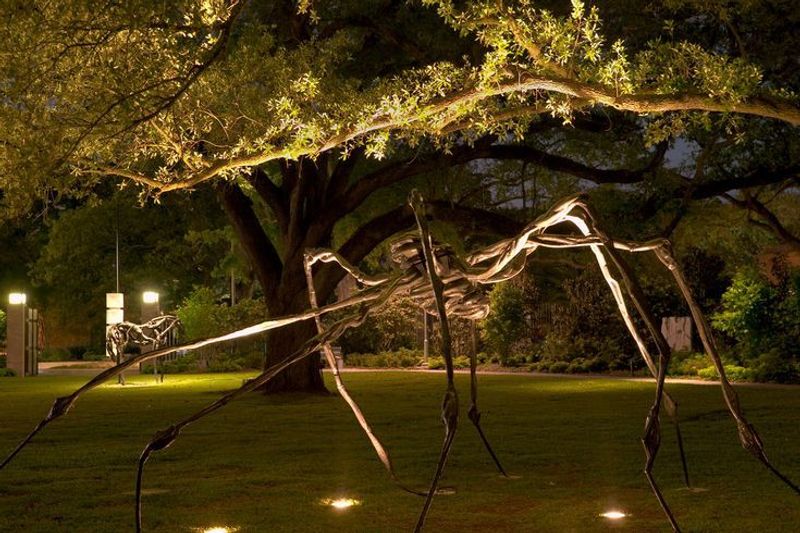
Louise Bourgeois’s spider is not the sort of garden creature you overlook. Its long legs make you aware of the space around it, and a familiar animal suddenly feels strange at a much larger scale.
Walk around the work where the path permits. From one side it may seem delicate; from another, its shape takes command of the scene.
That change of view is a useful habit throughout the garden. Sculptures are placed beneath tree canopies, on lawns, and near water, so the setting can alter your first impression.
If you are visiting with children, ask what shapes they notice before sharing the artist’s name. There is no need to settle on one correct feeling about the spider.
Keep a respectful distance, and let its form do the talking.
Step Back From The Mosaic Wall
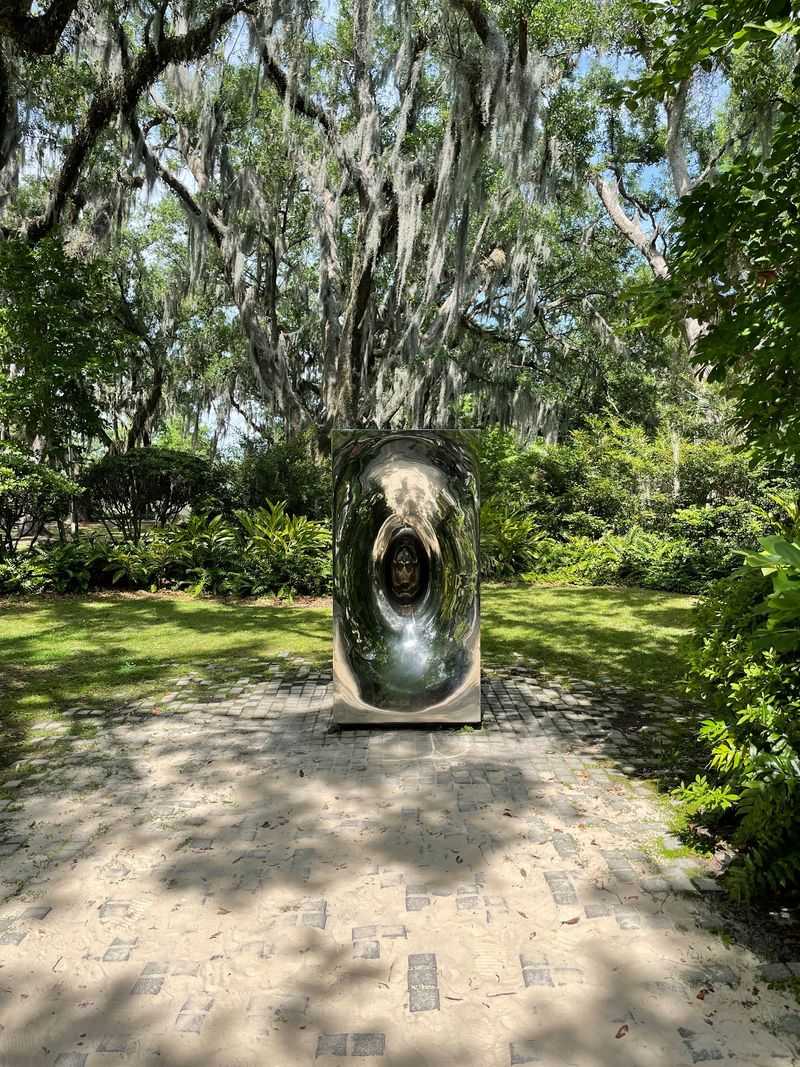
A long wall can hold your attention in a different way from a statue. Teresita Fernández’s Viñales (Mayombe Mississippi) stretches about 60 feet, making it worth seeing first from a distance and then up close.
Give your eyes room to take in the whole surface before studying its smaller details. The change in scale is part of the fun.
The work’s name links places and histories that may not be obvious at a glance. You do not have to solve it on the spot to have a meaningful encounter with it.
Notice how its surface responds to the light, and then turn around to see the plants and paths that surround it. In a garden full of objects you can circle, a wall asks for another kind of attention: step back, move along, and look again.
Leave Room For A Surprise
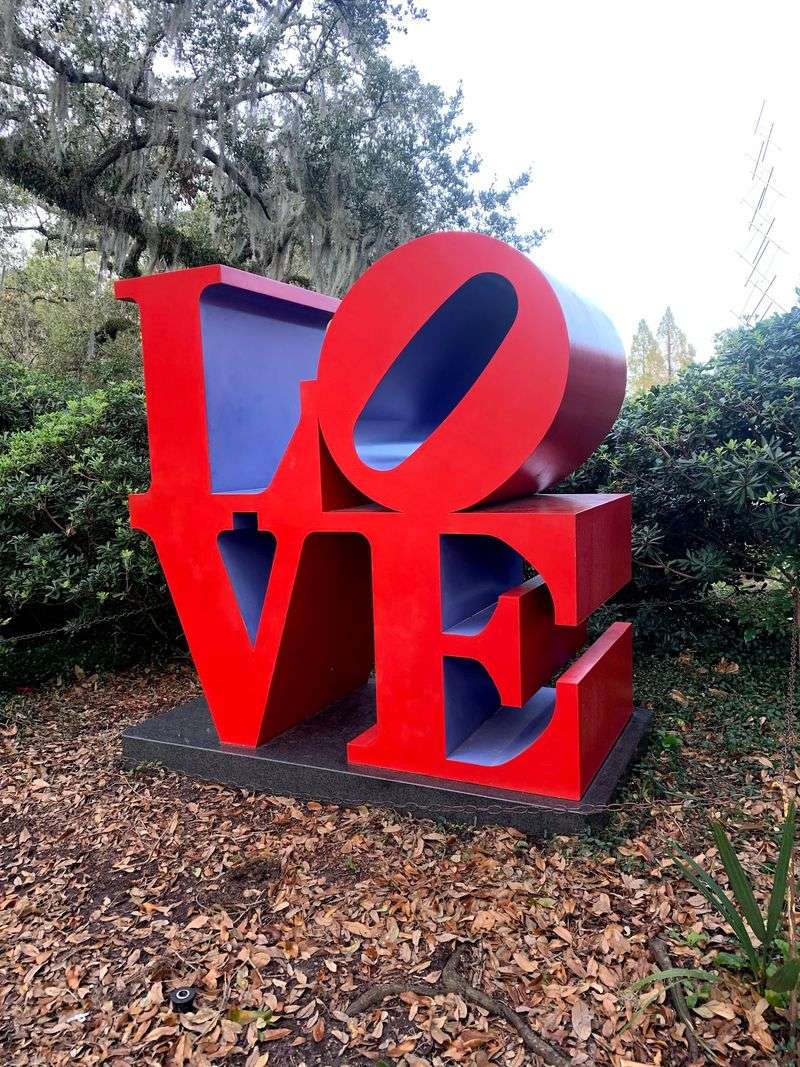
A bear by Frank Gehry is a good reminder not to make your walk too serious. Bear with Us brings a playful note to a collection that also includes abstract forms and works that invite quiet thought.
Rather than racing from famous name to famous name, let the paths introduce pieces in their own order. A work spotted through leaves may give you a better first meeting than one found on a list.
The Besthoffs began collecting sculpture in 1973 and later formed a foundation to encourage public interest in art. Their support helped build a garden where visitors can meet many kinds of work without buying a museum ticket.
Try choosing one sculpture simply because it makes you smile, then read its name. Curiosity is a fine guide here, and nobody grades your answer.
Notice Where The Garden Grew
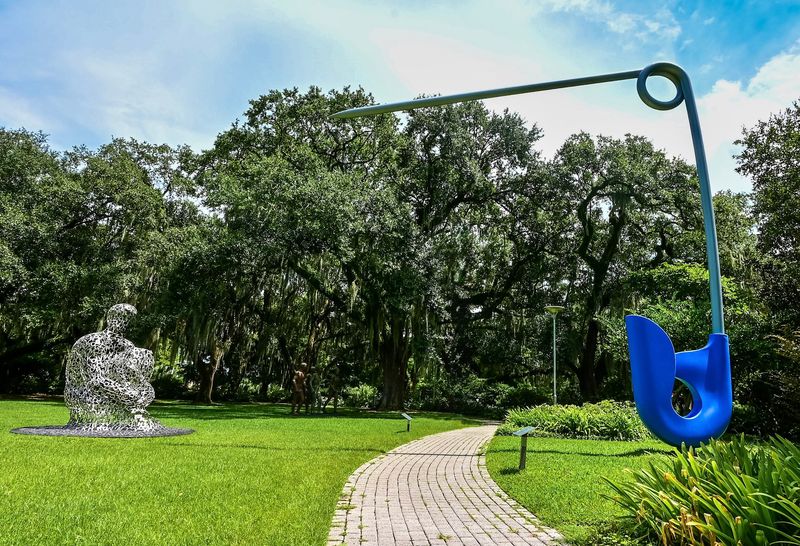
Eleven acres can feel surprisingly varied once you start walking. The garden opened in 2003 on about five acres, then expanded in 2019 with another 6.5 acres and new works.
Its newer spaces include an amphitheater, a sculpture pavilion, and an outdoor learning area. If you have visited before, allow extra time rather than assuming you already know the route.
The growth did not turn the place into a plain outdoor gallery. Its designers worked with the existing landscape, and the art still meets you among trees, plantings, and water.
Look for changes in how open or sheltered each area feels as you move through it. That contrast can help you remember where a favorite work stands.
It also makes returning another day appealing: there is more here than a single lap suggests.
Choose Your Hour With Care
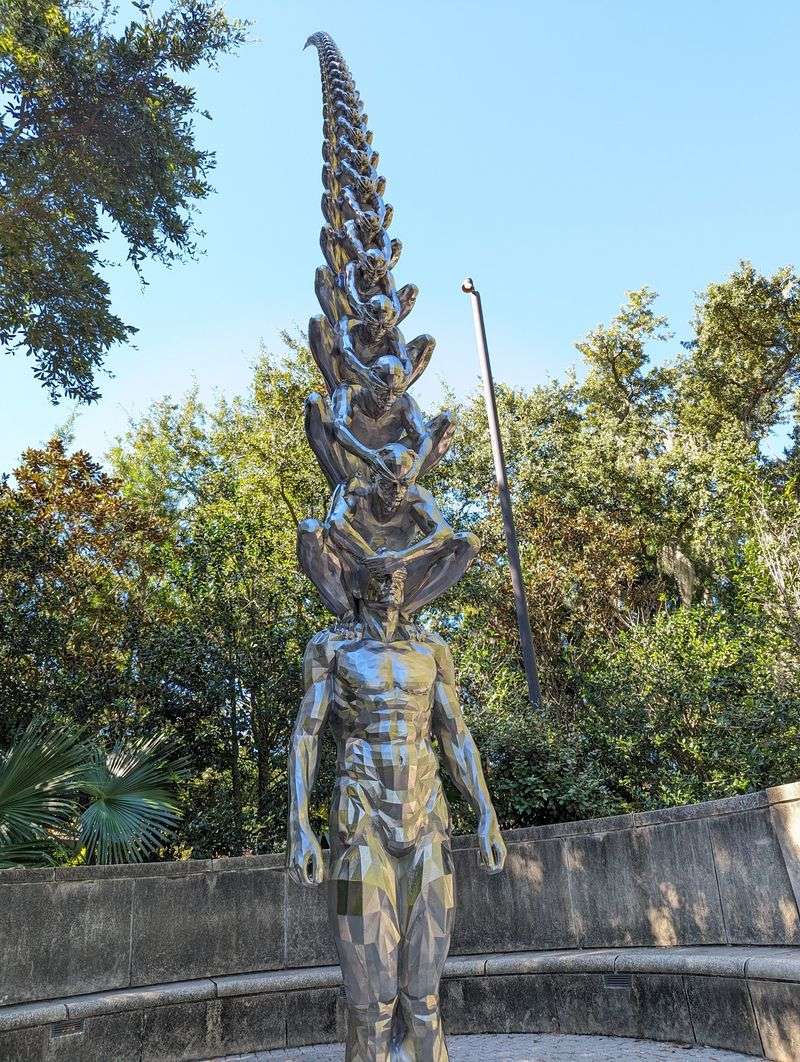
New Orleans warmth can turn an open lawn into a reason to seek the next tree. Although the live oaks provide welcome shade, not every part of the garden sits beneath them.
During summer, an afternoon visit from around 4 p.m. gives you softer light and avoids some of the day’s strongest sun. Bring water and wear comfortable walking shoes, since a thorough look involves plenty of ground.
Admission is free, and the garden is open seven days a week, but check its current hours before leaving. Posted seasonal schedules have listed a 6 p.m. closing in warmer months and a 5 p.m. closing in cooler months.
If photographs matter to you, late light can make forms easier to see without harsh glare. Leave enough time to finish your walk before closing rather than hurrying through the final paths.
Use The Help That Is There
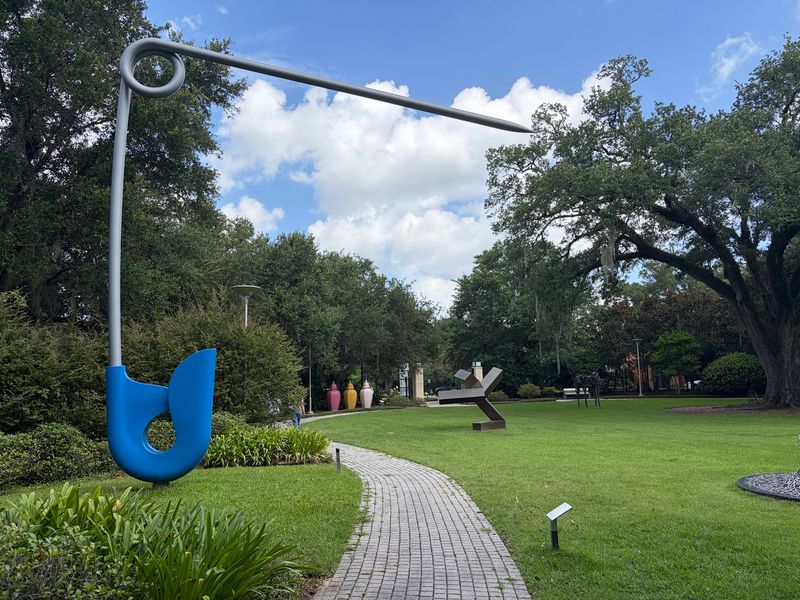
A little help at the entrance can make the rest of the walk feel wonderfully unplanned. The garden offers a free audio guide on mobile phones, with QR codes at the entrance.
Scan one before wandering off if you want background on the works, and bring headphones so you can listen without adding sound to someone else’s quiet visit. You can always put the phone away when a piece calls for your full attention.
The paths are wheelchair accessible, and wheelchairs are available upon request. If distance or heat is a concern, use the garden’s entrances to shape a shorter visit instead of pushing through every section.
Even a brief walk gives you art, trees, and water in close company. The point is not to count every sculpture; it is to leave having truly noticed a few.