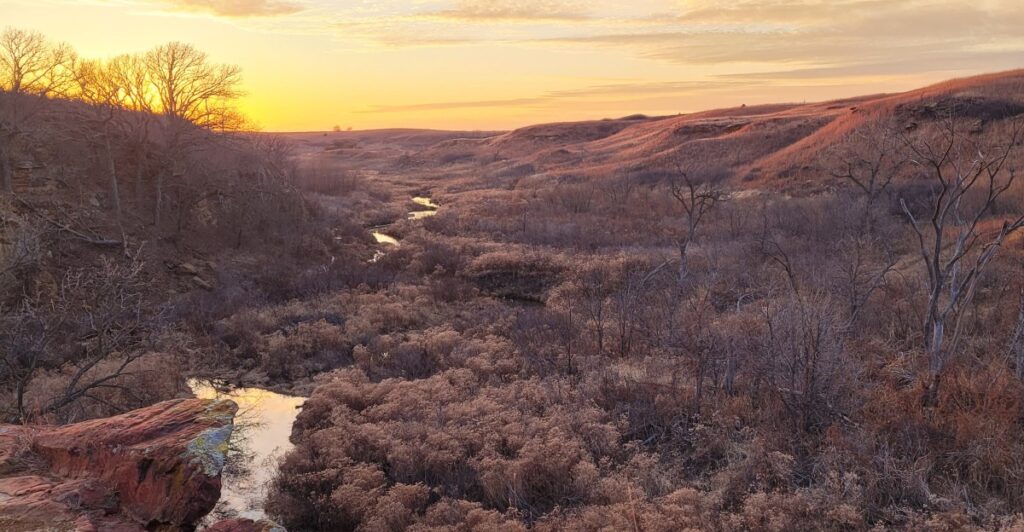
The trail narrows, the rock walls rise, and suddenly every warm ledge looks like it deserves a second glance.
This quiet canyon in Kansas is the kind of place where scenery and caution naturally travel together.
Rattlesnakes are part of the wider landscape, especially around rocky ground and sunny hiding spots, so hikers have good reason to watch their footing and give wildlife plenty of space.
That does not make the canyon any less beautiful. It simply adds a little edge to the adventure and rewards anyone who pays attention.
I had a moment like that on a rocky trail once when a faint rustle stopped me mid-step.
I never saw what caused it, but I spent the next stretch looking down more often than up.
Funny enough, that made the hike more memorable, not less.
I noticed details I would have missed otherwise and came away with a much healthier respect for quiet places that clearly have more going on than they first let on.
A Name Borrowed From Outlaw Legend
Every good canyon deserves a story, and this one comes with a tale of horse thieves and frontier justice.
The true origin of the name is uncertain. One local legend says an inn owner was deputized to track horse thieves, shot them, and returned with their bodies before they were buried in the canyon.
Nobody has proven every detail of the story, and that is part of the fun. Kansas sources describe the tale as unsubstantiated, with the canyon’s exact naming history still unknown.
I think the old story fits the setting well. Even today, the canyon feels hidden, with bends that block the view and cliffs that swallow sound.
The name now shows up all over the park, including Horsethief Road, which leads to the park office at 200 Horsethief Rd, Marquette, KS 67464.
It is a fun reminder that this corner of Kansas carries plenty of frontier lore.
My tip is to read up on Old West history before your hike. Knowing the legend makes each turn in the trail feel like a scene from a cowboy movie, minus the getaway.
Rock That Is Older Than You Think
Around 100 million years ago, this part of Kansas sat at the edge of a huge inland sea.
Rivers carried sand toward that shoreline, and over time the sand pressed into layers of rock called Dakota Sandstone.
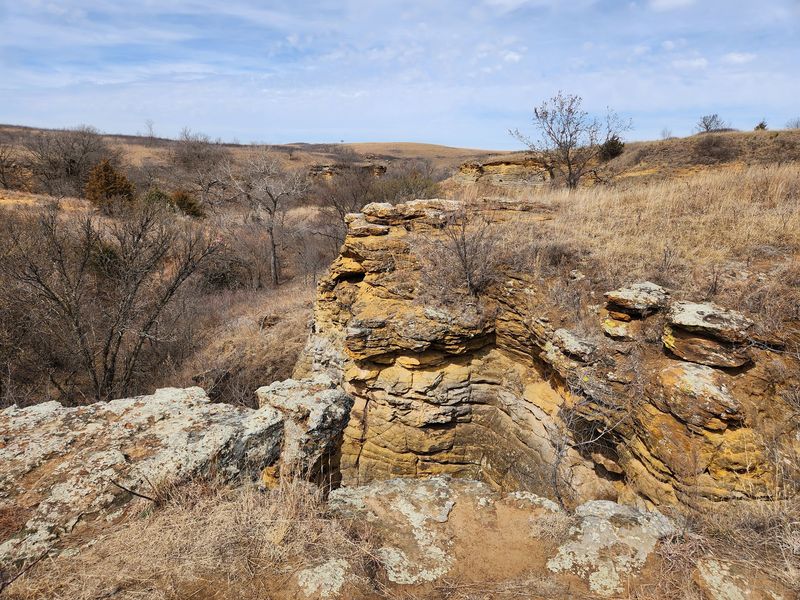
That same stone forms the tall, rusty-colored walls of Horsethief Canyon today.
The reddish and orange streaks come from iron minerals mixed into the rock. When the sun hits the cliffs late in the day, they almost glow.
Look closely, and you may spot swirls, ripples, and slanted lines that show how the sand was laid down long ago.
Geologists call these patterns cross-bedding, and they record the direction of old water currents.
The region is known as the Smoky Hills, one of the most scenic landscapes in the state. Wind and water keep carving the soft stone, so the canyon is slowly changing even now.
Please admire the rock without scratching names into it. Sandstone wears away easily, and carvings can last for generations.
Leave the cliffs as smooth and wild as you found them, so the next hiker gets the same view.
Rattlesnakes Really Do Live Here
Here is the fact that gives the canyon its spicy reputation: rattlesnakes call it home.
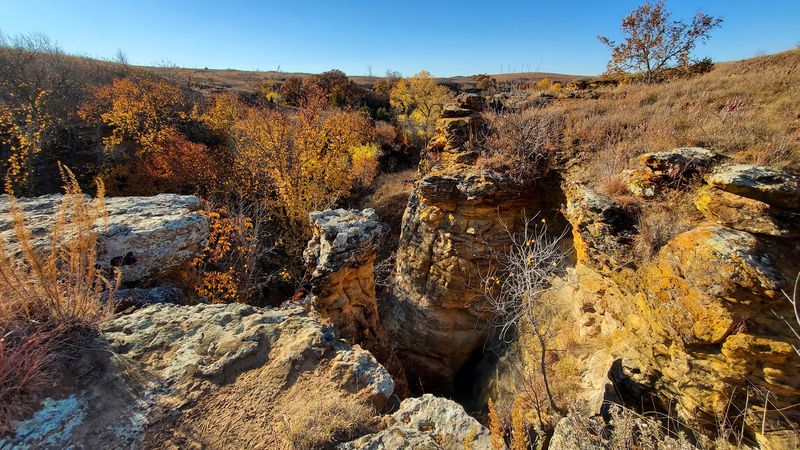
The rocky ledges, sunny sandstone, and crevices make perfect habitat for snakes that like to warm up in the day and hide when it gets hot. Rodents are plentiful too, which keeps the snakes well fed.
Kanopolis is notable for an unusual population of Western diamondback rattlesnakes, documented repeatedly around the Horsethief and Buffalo Tracks Canyon area since 1991.
Researchers consider this unusual Kansas population almost certainly introduced.
Here is the good news. Rattlesnakes are shy and would much rather slip away than face a big, noisy human.
That famous buzzing tail is a warning, not a threat. If you hear it, stop, find the snake, and slowly back away.
Never try to move, poke, or photograph a snake up close. Give it plenty of room, and it will usually go on with its day.
I find it exciting to know these reptiles are part of the landscape. They help control mice and rats, and they remind us that the canyon is truly wild.
Smart Moves For Snake Season
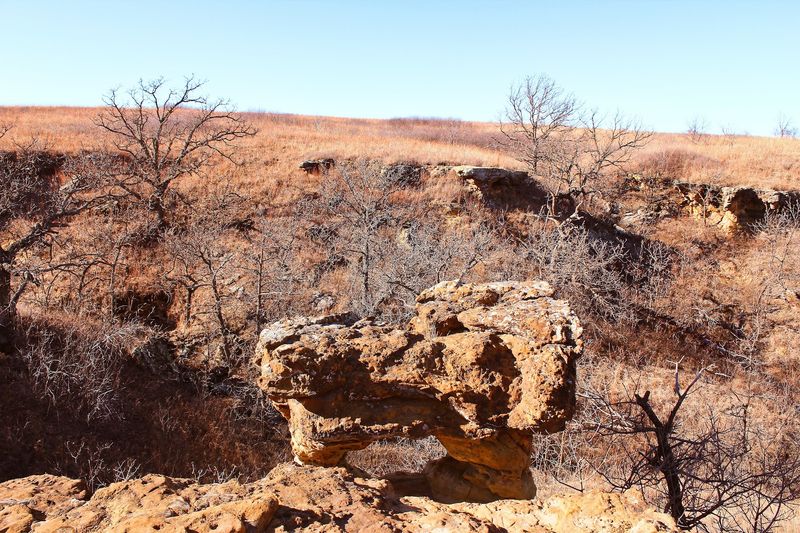
Staying safe around rattlesnakes is mostly about paying attention and dressing for the trail.
Wear sturdy hiking boots and long pants instead of sandals and shorts. That simple choice protects your ankles and lower legs, where most snake bites happen.
Stick to the marked path and avoid tall grass when you can. Always look before you step over a log or put your hand on a rock ledge.
Scrambling up to the caves and overhangs is tempting, but those shady cracks are prime snake hideouts. Use a hiking stick to test unclear spots ahead of you.
Keep dogs on a short leash, since curious pups love to sniff around rocks. Kids should walk where you can see them, not run ahead.
If someone is bitten, stay calm, keep the person still, and call for help right away. Do not cut the wound, try to suck out venom, or use ice.
Cell service can be spotty in some low areas, so tell someone your hiking plan before you start. A little planning turns a risky situation into a manageable one.
Trails Built For Boots And Hooves
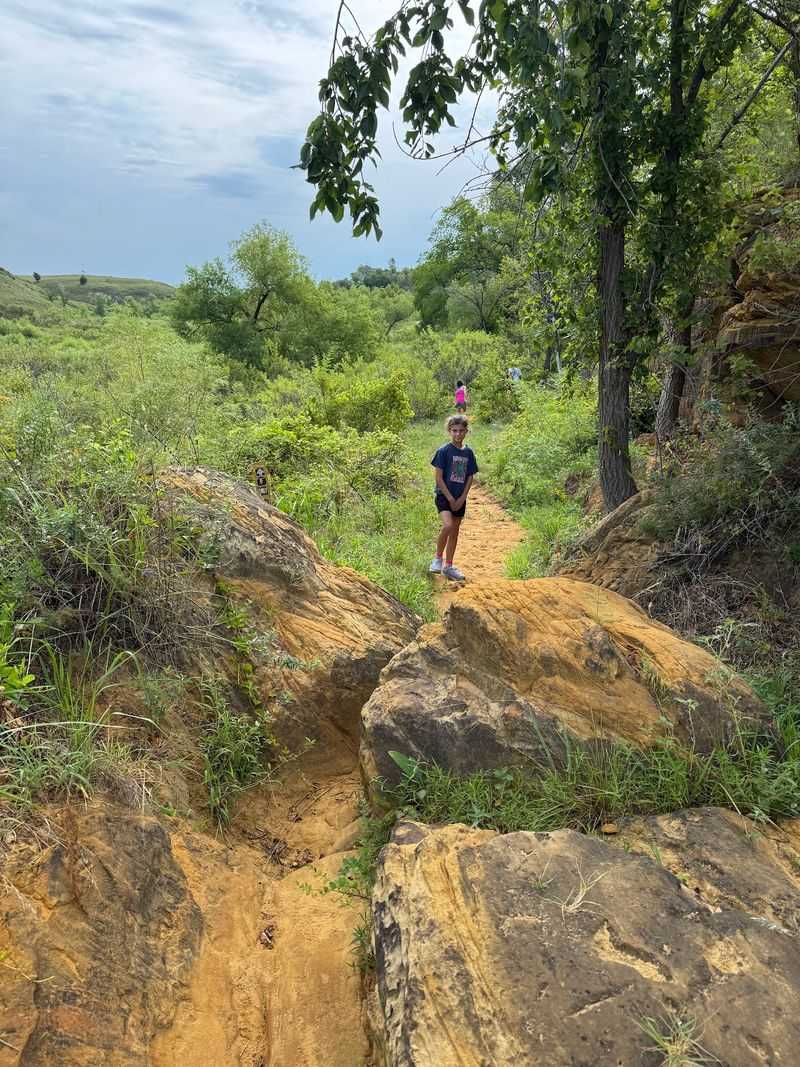
More than 30 miles of trails wind through the park, and many of them lead into the canyon.
The trail system is color-coded, which makes it easier to plan a loop that fits your energy level. Some routes are short strolls, while others can fill most of a day.
One favorite is the Buffalo Track Canyon Nature Trail, a shorter path that shows off the sandstone walls and creek views. It is a great pick for families or first-time visitors.
Longer routes climb over bluffs and dip down into the valley, so expect real elevation changes. For Kansas, the ups and downs can come as a surprise.
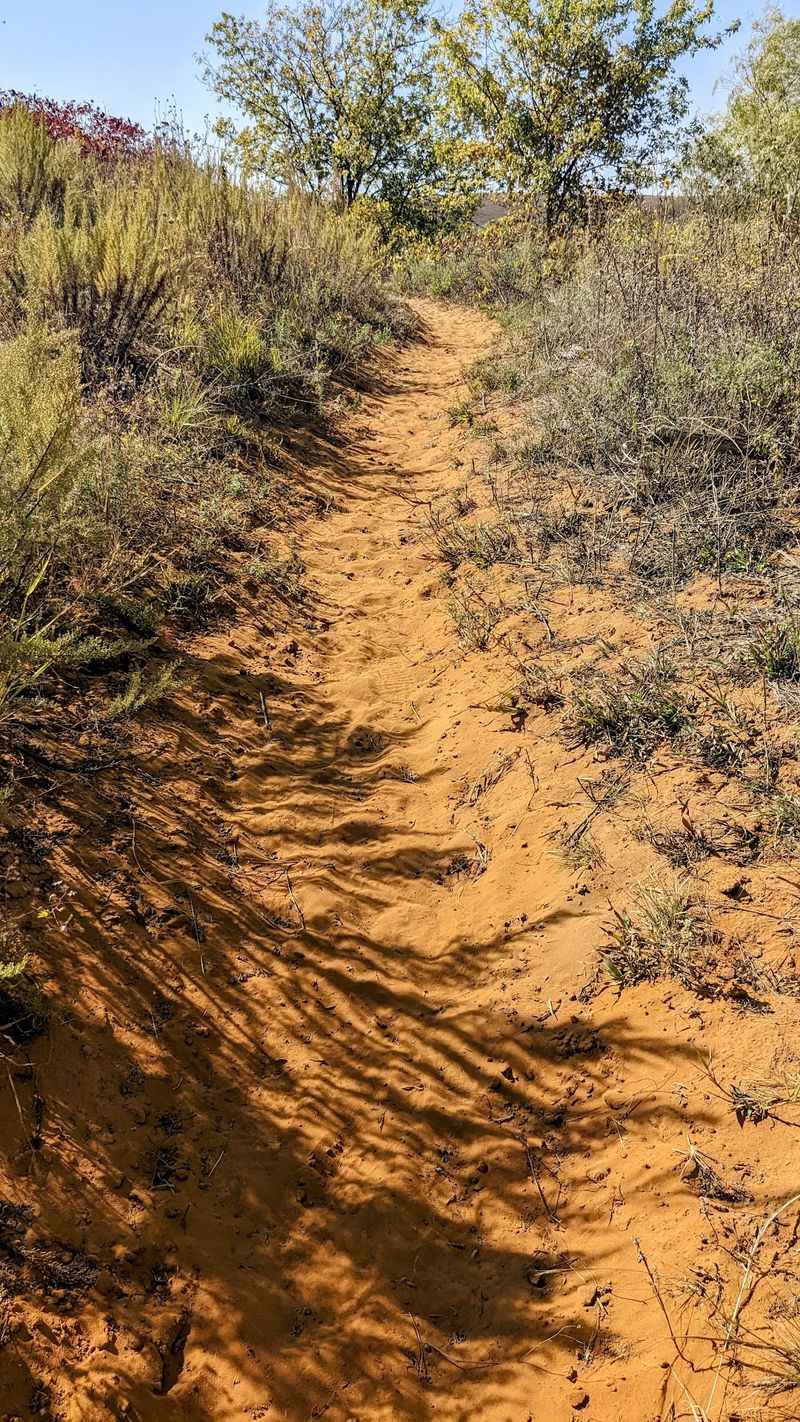
Many trails are shared by hikers, mountain bikers, and horseback riders. Some sections have deep, loose sand, which can make biking tough and walking slow.
Grab a trail map at the park office before heading out, since signs can be spread apart. Office hours usually run from 8 AM to 4 PM on weekdays.
Pack more water than you think you need, because there is none along the trails. Salty snacks are a smart idea too.
Caves, Overhangs, And Split Rocks
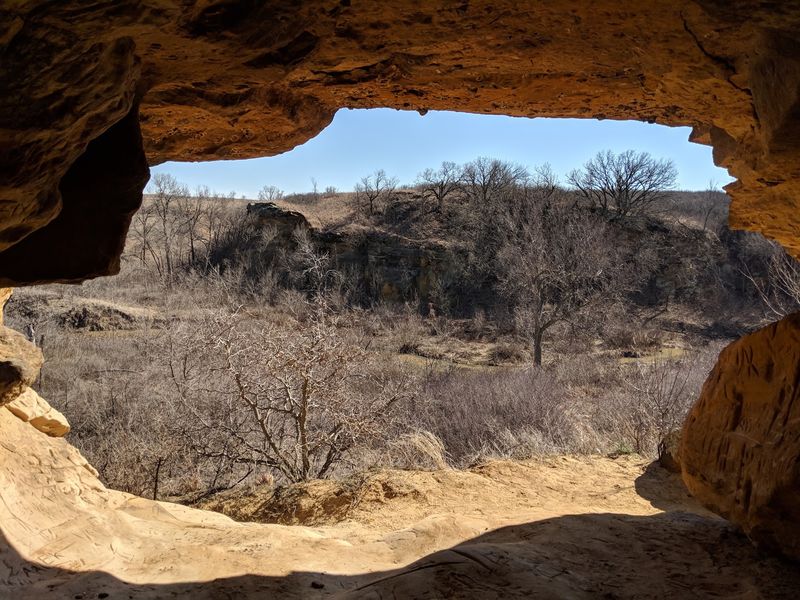
Few people expect to find small caves in the middle of the prairie, yet here they are.
Wind and water have hollowed out pockets and overhangs in the soft Dakota Sandstone. Some are shallow alcoves, while others are deep enough to duck inside and escape the sun.
The caves are some of the most popular spots in the park, and it is easy to see why. They make for great photos, with light spilling across the curved rock.
Nearby, you can also find rock formations with fun names, such as Split Boulder. A deep crack runs right through the middle of the massive stone.
Here is where caution really matters. Cool, shaded cracks attract rattlesnakes, spiders, and other critters, so never reach into a dark hole without looking first.
Climbing can also be risky because sandstone crumbles under pressure. Loose grains on the surface can make your shoes slip.
I suggest enjoying the caves from the ground and using a flashlight to check shadows. You get the same great views without any unwanted surprises.
Creek Crossings And Muddy Surprises
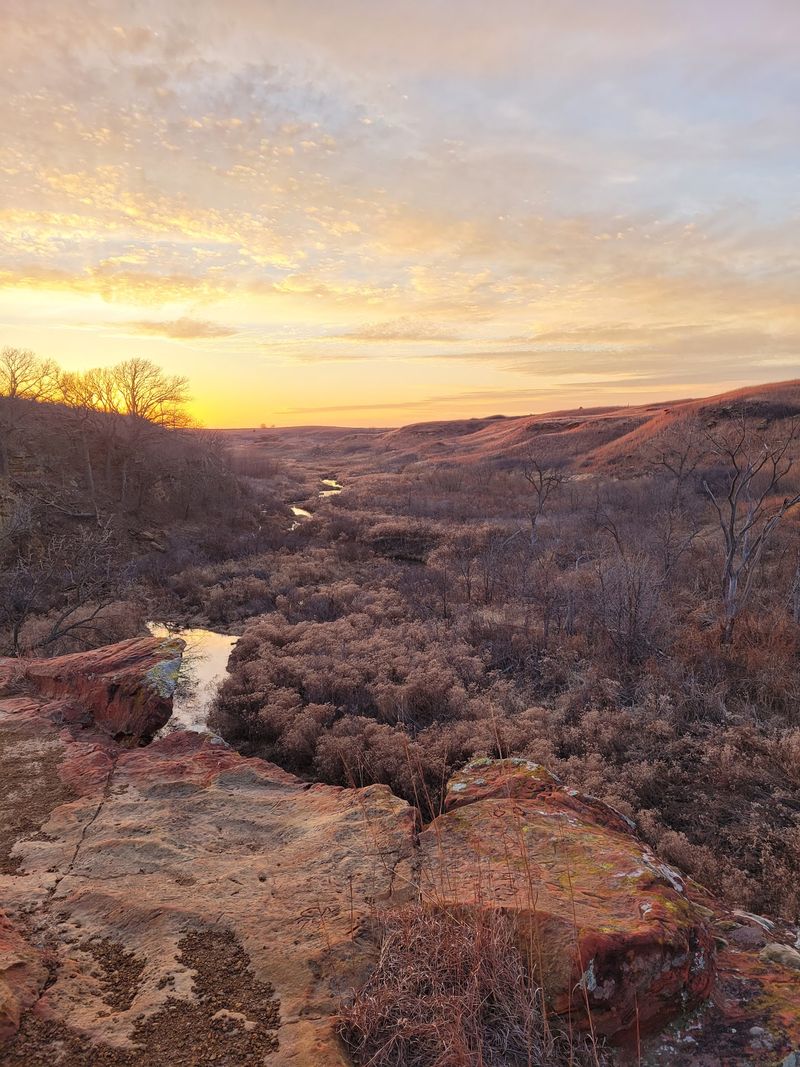
A small creek winds along the canyon floor, and it has a habit of getting boots very wet.
Several trails cross the stream, and most crossings do not have bridges. After a heavy rain, water can rise quickly and turn an easy hop into a deep wade.
Some low sections of trail stay soggy for days, especially in spring. Horses churn up the mud too, so parts of the path can get messy.
Wear shoes that can handle water, or pack an extra pair of socks in a plastic bag. Trekking poles help with balance on slick rocks.
Never cross fast-moving water. If the creek looks swift or muddy brown, it is smarter to turn around and try another route.
On calm days, though, the creek is one of the prettiest parts of the canyon. Clear pools reflect the cliffs, and you might spot fish darting below the surface.
Watch the forecast before you head out, since Kansas storms can roll in fast. A dry trail and a gentle creek make for the happiest hike.
Wildlife Beyond The Rattlers
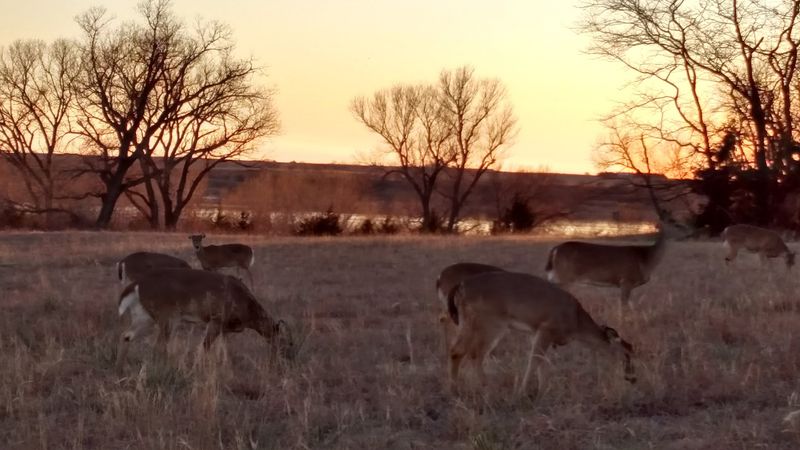
Snakes get all the attention, but the canyon is packed with plenty of friendlier faces.
White-tailed deer often step out of the trees near dawn and dusk. Wild turkeys wander the grassy edges in groups, gobbling as they go.
Turkey vultures circle above the bluffs, riding warm air currents without flapping. Kanopolis Lake also sits on a migration route, so waterfowl pass through in big numbers each spring and fall.
In winter, bald eagles are sometimes seen near the lake, a real treat in central Kansas. Bring binoculars, because they tend to perch high in tall cottonwood trees.
The creek holds fish, and sharp eyes might catch a bass or two in the clearer pools. Lizards, frogs, and colorful butterflies add even more life to the trail.
For the best viewing, hike early and walk quietly. Animals are far more active before the midday heat sets in, and a quiet morning often brings the best sightings.
Always keep your distance and never feed wildlife. Food scraps can make animals sick, and a respectful hiker helps keep the canyon wild for years to come.
Ticks, Poison Ivy, And Other Trail Pests
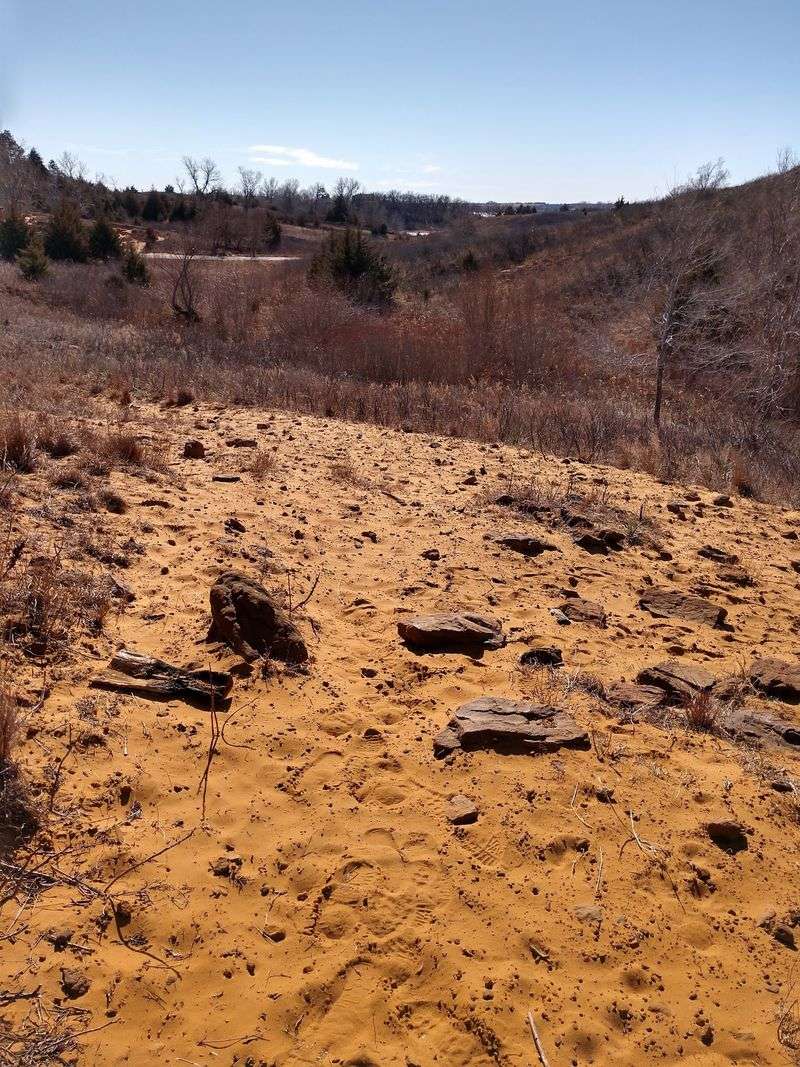
Rattlesnakes may win the headlines, but smaller pests cause far more trouble on these trails.
Ticks can be thick in warm months, especially in tall grass and brushy areas. Spray insect repellent on your shoes, socks, and pants before you start.
Check yourself, your kids, and your pets after every hike. Pay extra attention to the scalp, behind the ears, and around the waistband.
Poison ivy also grows along many trails and near the caves. Remember the old saying, leaves of three, let it be.
The plant can climb trees as a hairy vine or grow as a low shrub. Long sleeves and pants are your best defense.
Summer brings chiggers, mosquitoes, and spiders too. Some parts of the trail can become overgrown in the hottest months, which makes it harder to see what you brush against.
For fewer bugs and cooler air, I recommend hiking in early spring, or in fall after the first frost. The canyon looks gorgeous in both seasons, and you will spend more time enjoying views instead of scratching bites.
Camping, Horses, And A Lake Next Door
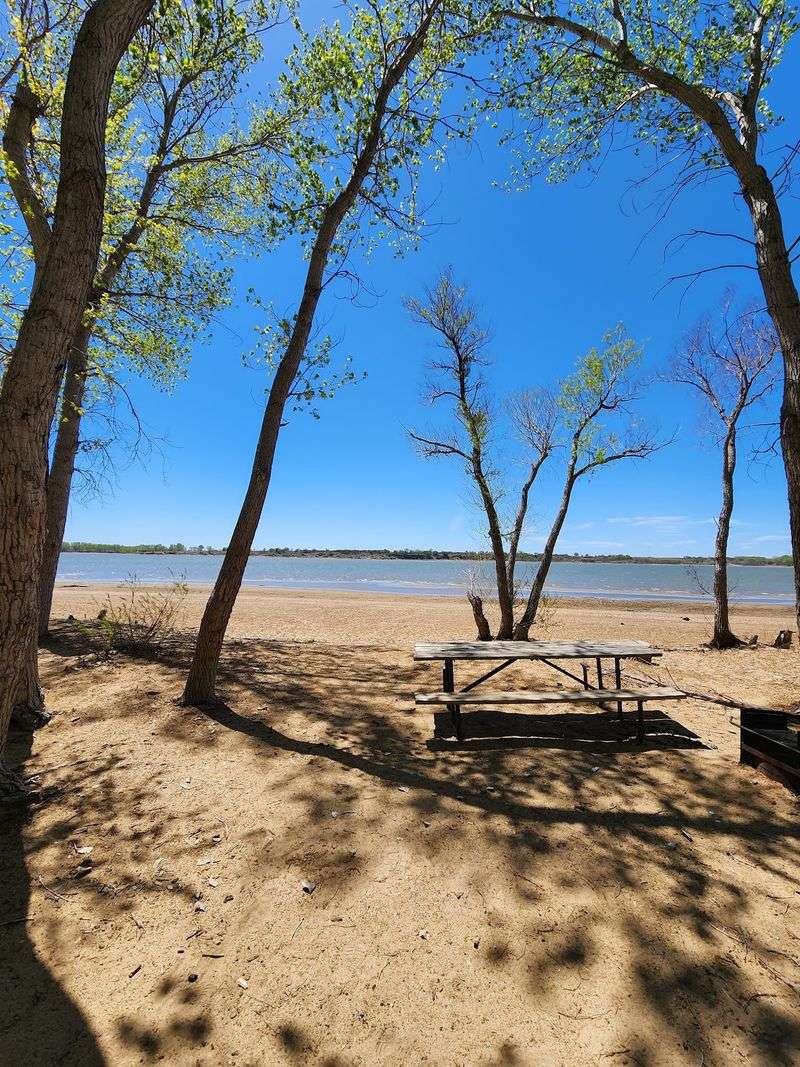
Kanopolis became the very first state park in Kansas in 1955, and it still feels special.
The park sits beside Kanopolis Lake, a reservoir created when the U.S. Army Corps of Engineers finished a dam on the Smoky Hill River in 1948.
That makes weekend planning simple.
Campgrounds range from simple tent spots to sites with electric hookups, plus a few cabins. There is even an equestrian campground for people who bring their own horses.
After a dusty canyon hike, the lake offers swimming beaches, boating, and a marina. Anglers try for crappie, walleye, and catfish.
Park permits and camping fees are required, and prices can change by season, so check before you arrive. Weekday visits are quieter, and the trails feel even more peaceful.
My favorite plan is a morning hike in the canyon, a lazy afternoon by the water, and a campfire at sunset. It shows off the best of this surprising corner of Kansas.
Just remember to respect the rattlers, pack your bug spray, and leave only footprints behind.