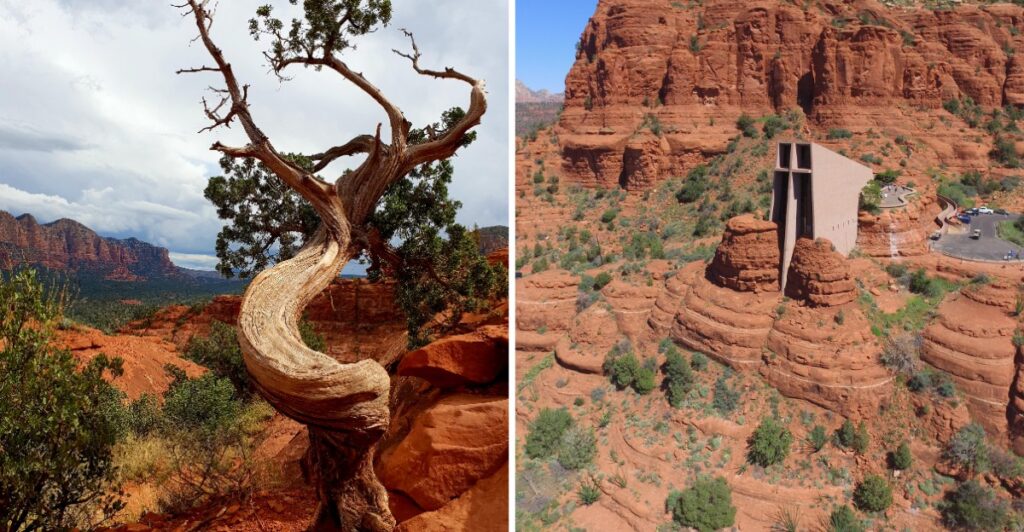
The rocks are not changing color. Your eyes are just getting new evidence every hour.
Morning can pull out warm orange. A passing cloud suddenly tones everything down. Then late light arrives, and the same cliff starts looking almost copper.
Arizona gets very good mileage out of sunlight here.
The red sandstone already has iron-rich color built in, but shadow and angle keep rewriting what you see. That means the view at breakfast may not look anything like the one waiting before sunset.
Honestly, I would resist trying to photograph everything at once.
Pick a few places and let the light do some of the editing for you.
The landscape stays put.
The color clearly did not get that memo.
Airport Mesa Makes An Easy First Look At The Red Rocks
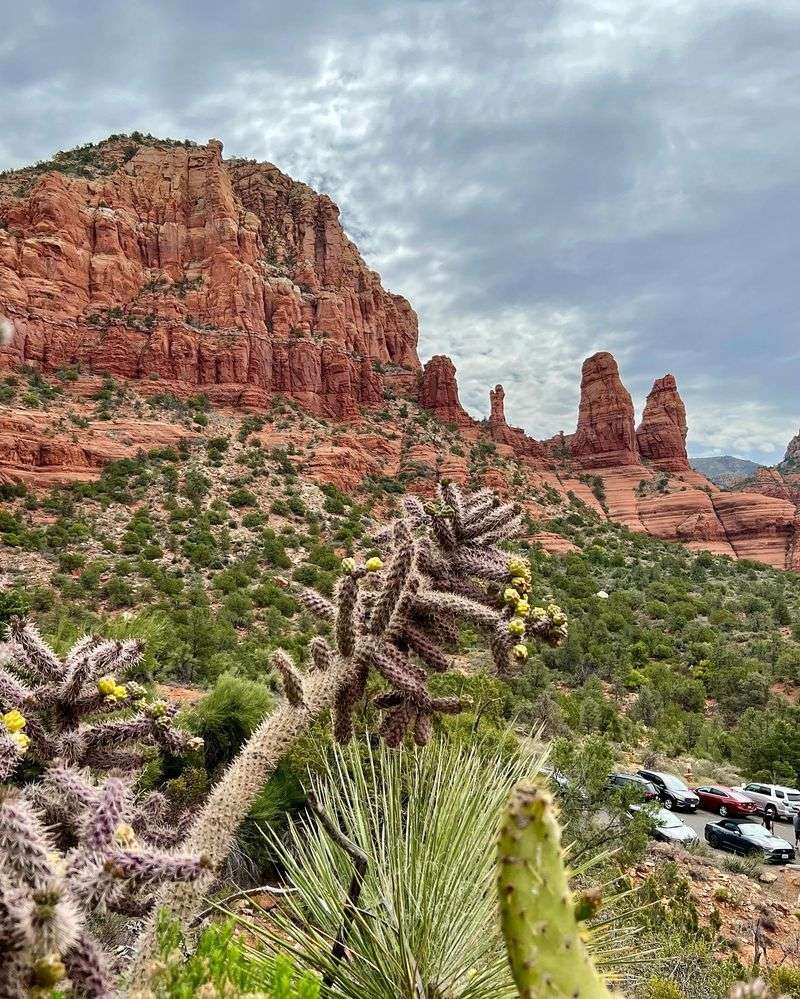
Airport Mesa is useful early in the day because the overlook sits above West Sedona with wide views in several directions.
Thunder Mountain, Chimney Rock, Coffee Pot Rock, and other formations are visible from this part of the mesa, so you can get oriented before committing to a longer hike.
Morning light arrives gradually. Ridges that look muted before sunrise begin showing warmer orange and red tones as the sun reaches their faces.
The nearby Airport Loop Trail adds a longer option if you want movement with the view. The loop is rocky in places, largely unshaded, and roughly 3.3 miles from the Airport Road parking area. Early morning is especially practical when temperatures are lower.
Sturdy shoes help on the uneven ground, and a light layer can be useful outside the hottest months.
Either way, this is a good place to learn Sedona’s basic trick: the same formation can look different as soon as the light shifts.
The Airport Vista parking area is small, so a quick overlook stop can require patience at busier times. If parking is full, do not improvise along Airport Road.
Use a legal space and keep the shoulder clear.
Cathedral Rock Rewards Careful Timing
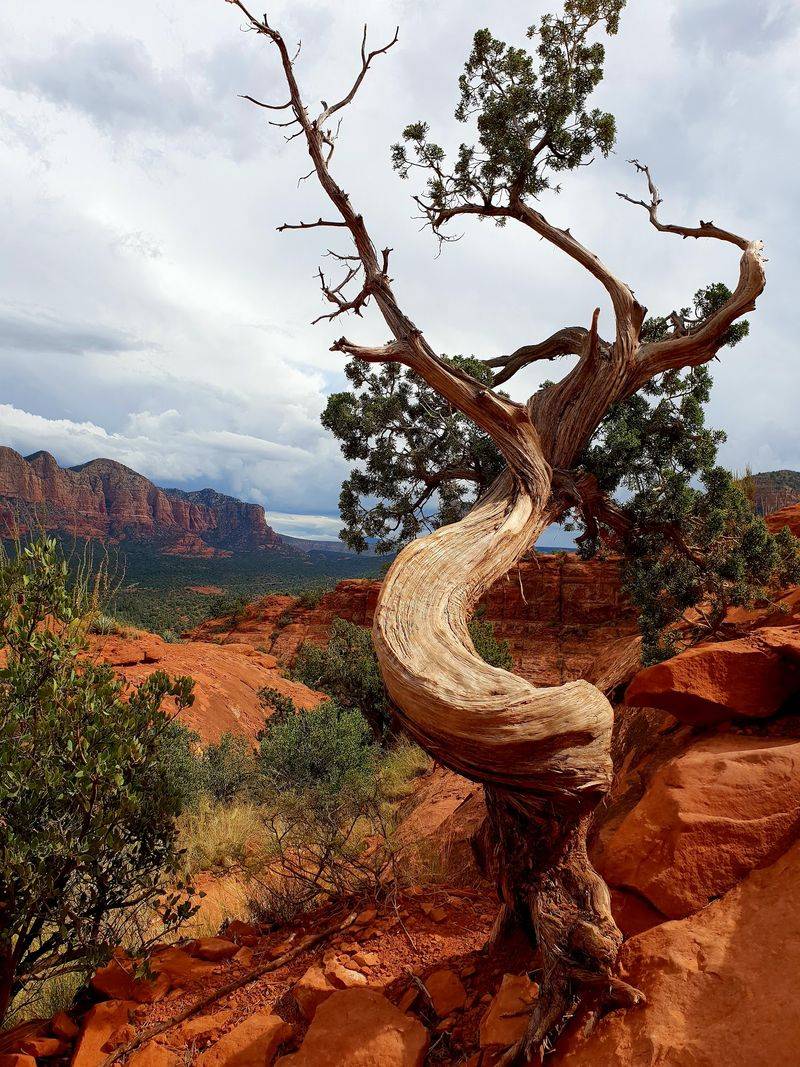
Cathedral Rock rises in sharp red spires, and its shape changes almost as much as its color depending on where you stand. From some angles, the formation feels compact and vertical. From others, the gaps between the spires open up and make the whole ridge look wider.
The trail itself is short but steep, with slickrock sections that require hands as well as feet. Give yourself enough daylight for the return, especially if you are not used to scrambling on exposed rock.
Access also requires a little planning. The Sedona Shuttle currently serves Cathedral Rock year-round from Thursday through Sunday, with additional daily service during some peak periods and holidays.
When the shuttle is operating, the Cathedral Rock trailhead parking lot is closed to the general public.
Check the current shuttle schedule before driving toward the trailhead and use the park-and-ride system when service is running.
You do not have to climb all the way to appreciate the formation.
Let daylight, footing, and your comfort level decide how far the hike goes. The shuttle route begins at the North State Route 179 Park and Ride, and no reservation is required for the fixed-route service.
That makes it easy to build Cathedral Rock into a day without gambling on a trailhead space.
Bell Rock Offers A Gentler Way Into The Landscape
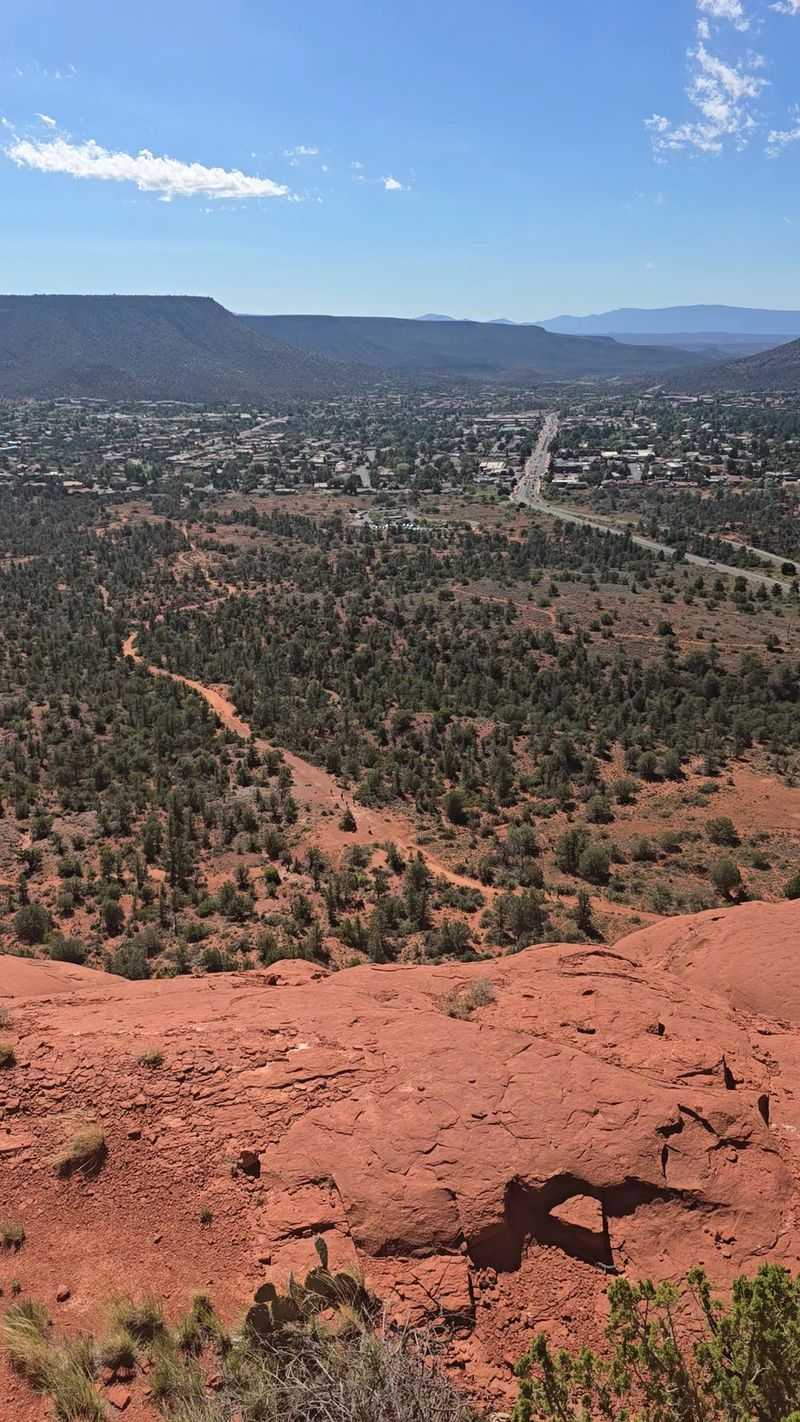
South of central Sedona, Bell Rock rises beside State Route 179 with Courthouse Butte nearby. The Bell Rock Pathway gives you a broad route through this part of Red Rock Country without requiring a steep summit attempt.
The pathway runs about 3.7 miles and has relatively little cumulative elevation gain, so it can work well when you want a longer walk without turning the outing into a major climb.
The route also gives you several chances to turn around early, which is useful when heat, daylight, or tired legs start making the decision for you.
Bell Rock changes character as you move around it. Its rounded profile looks obvious from the highway, but side views reveal ledges, slopes, and smaller rock shapes that disappear in the classic front-facing view.
A Red Rock Pass or an accepted federal recreation pass is required for parking at several Forest Service sites in the area, so check the current rules before leaving the car.
Some lower areas invite scrambling, but there is no requirement to keep climbing simply because the rock is there.
If you want an easier day, stay on the pathway and keep Bell Rock in view. If you have more energy, connect into nearby trails and make the outing longer.
Courthouse Butte Shows Off Sedona’s Layered Geology
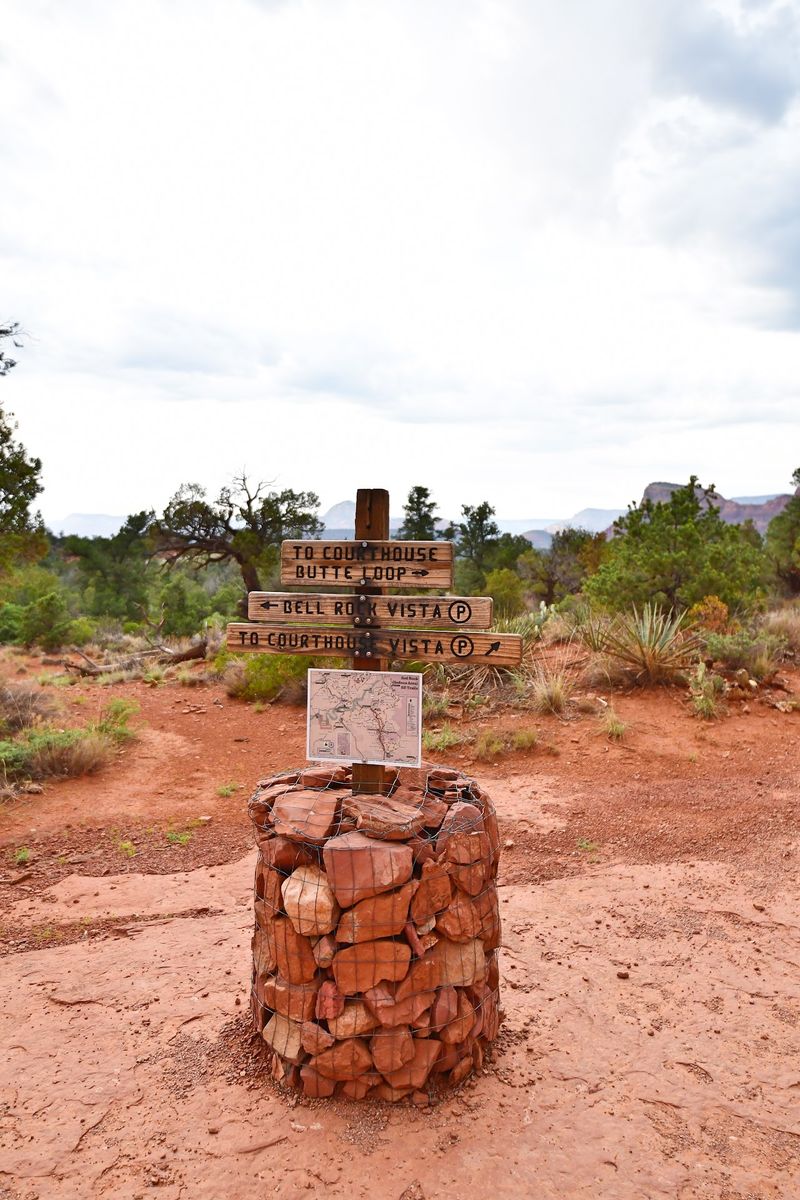
Courthouse Butte sits beside Bell Rock but feels broader and heavier, with long walls of exposed rock that make the surrounding terrain look small by comparison.
Much of Sedona’s red-rock landscape includes the Schnebly Hill Formation, an Early Permian geologic unit made of sandstone, siltstone, mudstone, and other sedimentary rock. Its reddish tones are part of the layered geology that gives this region its familiar color.
The Courthouse Butte Loop is about 4.3 miles and is rated easy by the Forest Service. It uses part of the Bell Rock Pathway before circling the formation, with roughly 350 feet of cumulative elevation change.
Most of the route is exposed, so summer heat deserves more attention than the mileage. The Forest Service lists the loop as a year-round hiking route, but season does not erase desert conditions.
Cooler months make the open terrain easier, while warm-weather starts reward an earlier alarm.
Start earlier on hot days, carry plenty of water, and keep sun protection within reach rather than buried at the bottom of a pack.
Cloud cover can change the view almost immediately. Bright red can soften toward dusty orange when the sun disappears, then sharpen again when direct light returns.
Oak Creek Adds Water And Shade To The Red-Rock View
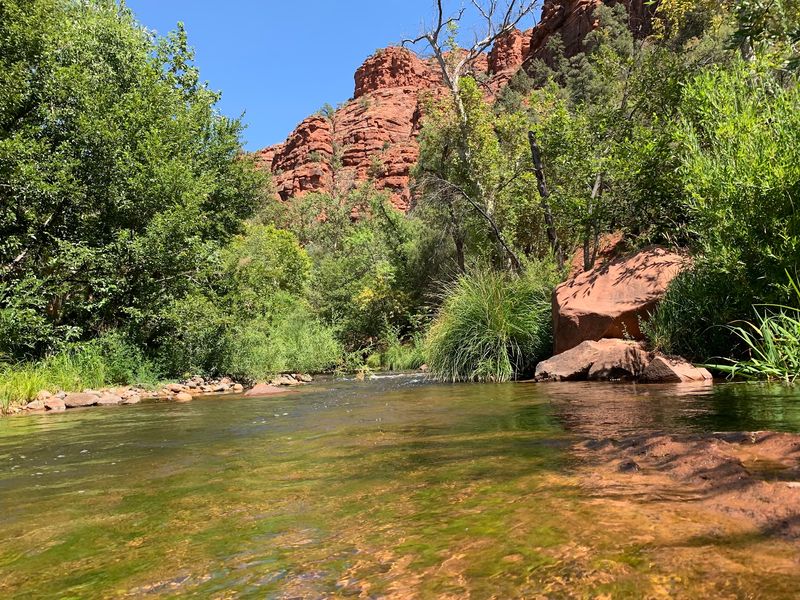
After several exposed viewpoints, Oak Creek changes the mood. At Red Rock Crossing, Cathedral Rock rises beyond the water while cottonwoods and other creekside vegetation soften the edges of the scene.
Crescent Moon Picnic Site provides day-use access on this side of the creek. The area includes picnic tables and access for fishing, wading, and photography, with the red cliffs reflected in Oak Creek when conditions are calm.
Water levels vary, so treat wading as a conditions-based choice rather than part of a fixed plan. Posted information and current creek conditions matter more than what the water looked like in someone else’s photo.
Pack lunch, take a creekside walk, or simply sit where Cathedral Rock stays in view without adding another steep climb.
Red sandstone, green vegetation, moving water, and open sky all sit in the same frame.
Crescent Moon operates on seasonal hours and closes at dusk, so check the current schedule before building the evening around it.
Picnic tables and vault toilets make it one of the easier places in this itinerary to stop for a longer break. There is no need to turn every scenic stop into another hike.
Save this stop for the point when another exposed trail sounds less appealing than shade and a place to sit.
The Chapel Of The Holy Cross Brings Architecture Into The View
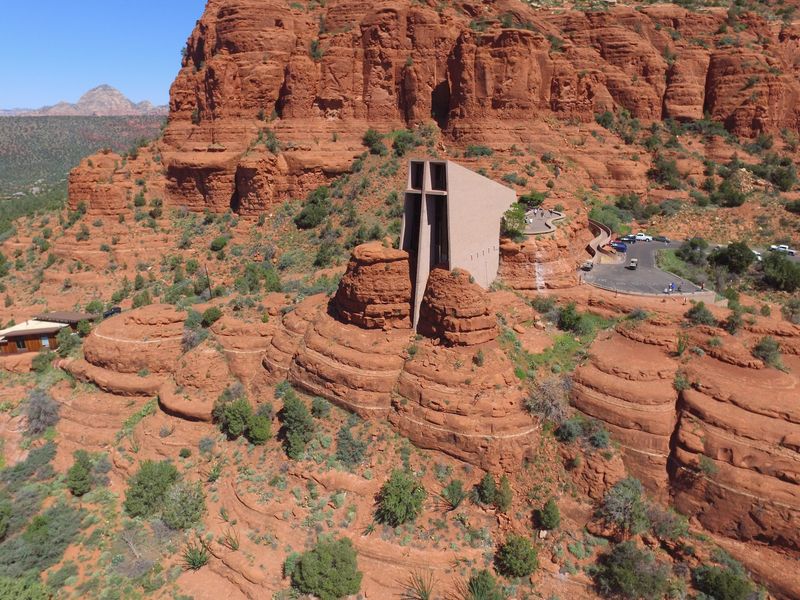
The Chapel of the Holy Cross gives Sedona’s red-rock scenery a completely different foreground. Completed in 1956, the building rises from the rock with a large cross forming the central visual element of its facade.
The chapel was inspired and commissioned by Marguerite Brunswig Staude, with architects Richard Hein and August K. Strotz involved in the final design.
The chapel sits on a twin-pinnacled rock spur about 250 feet high, placing its windows and terraces high over the valley.
It remains an active Catholic chapel rather than a scenic structure only, so keep voices low inside and respect areas used for prayer. A gift shop operates on the lower level.
The paved approach still climbs, but visitors who do not want another trail can get broad views without heading onto rough desert terrain.
You can find the chapel at 780 Chapel Road, Sedona, AZ 86336. The chapel is currently open daily from 9 a.m. to 5 p.m., with last entry shortly before closing, so check the day’s schedule before arriving late.
Look out toward Bell Rock and Courthouse Butte, then turn back toward the chapel itself. The landscape changes again simply because something human-made has entered the frame.
Sunset Deepens The Color Before Sedona Turns Dark
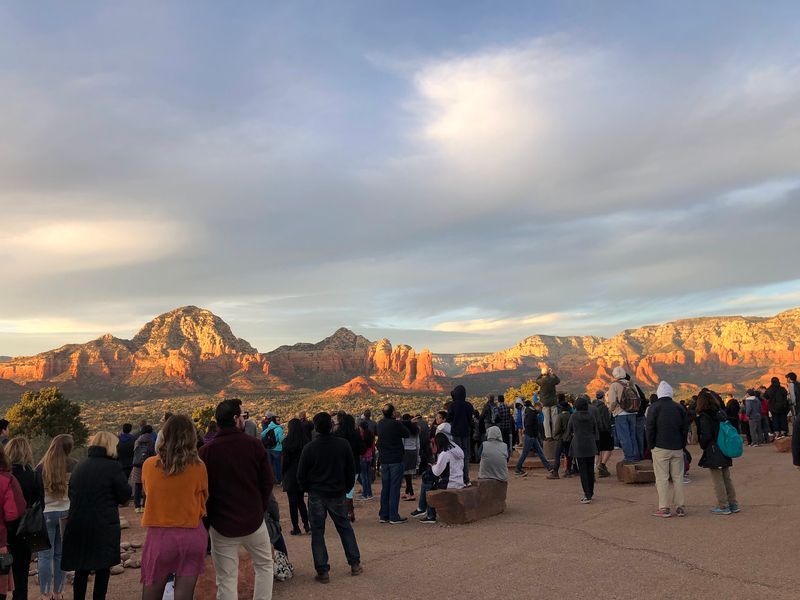
Late afternoon brings the strongest version of Sedona’s color shift. As the sun drops, direct light reaches some faces while other sections move into shadow, making orange, rust, copper, and deeper red appear across the same group of formations.
Airport Mesa is one option for watching that change, but it is not the only one.
If you return to the mesa, remember that the Airport Vista parking area is small.
Stay long enough to notice what happens after direct sunlight leaves the rock. The formations lose detail first, then become darker silhouettes against the remaining sky.
Sedona’s evening does not end there. The city has held International Dark Sky Community status since 2014, and local lighting rules are designed to reduce unnecessary nighttime glare.
A jacket and a small flashlight or headlamp are useful once daylight fades, especially around uneven viewpoints. If you have already spent the day on exposed trails, sunset is a good time to stop adding mileage. Find a legal viewpoint, settle in, and let the last light do the moving.
You do not need a grand finale to finish the day. Watching the same rocks you saw earlier take on one last set of colors before the desert goes dark is enough.