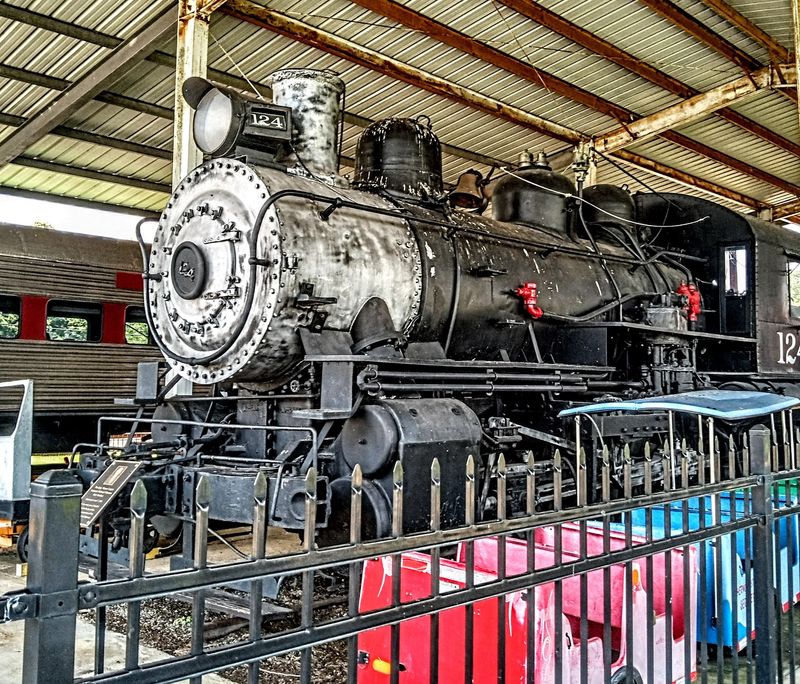
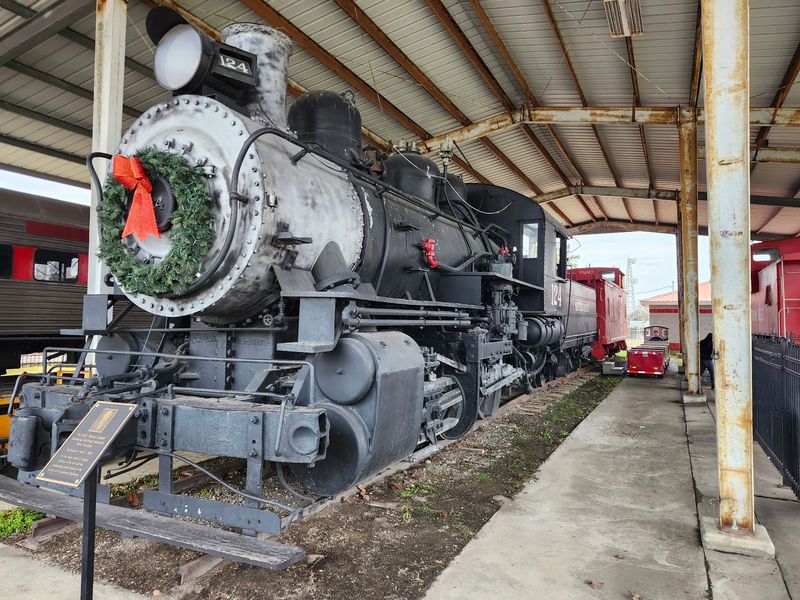
A 1913 steam engine sits under a pavilion on Lake Charles Avenue in DeQuincy, a short walk from a stucco depot with a red-tile roof. The building went up in 1923, and today it holds the DeQuincy Railroad Museum, packed with telegraph keys, conductor caps, and a running model of the town in the 1940s.
Admission is free, and freight trains still roll past outside. It tells the story of a Calcasieu Parish town that only exists because the railroad put it there.
A Railroad Museum At 400 Lake Charles Avenue
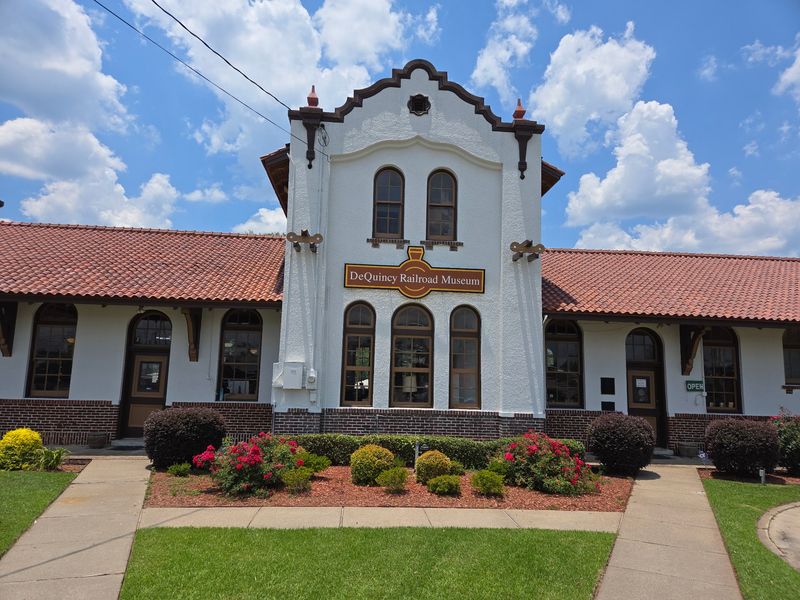
Drive about 30 miles north of Lake Charles and you reach DeQuincy, a small Calcasieu Parish town with a big railroad story. The museum sits at 400 Lake Charles Ave, inside the old Kansas City Southern depot, with its train cars parked in a park beside it.
The setup is simple to picture. There is the depot itself, full of railroad artifacts, a small gift shop, and model trains.
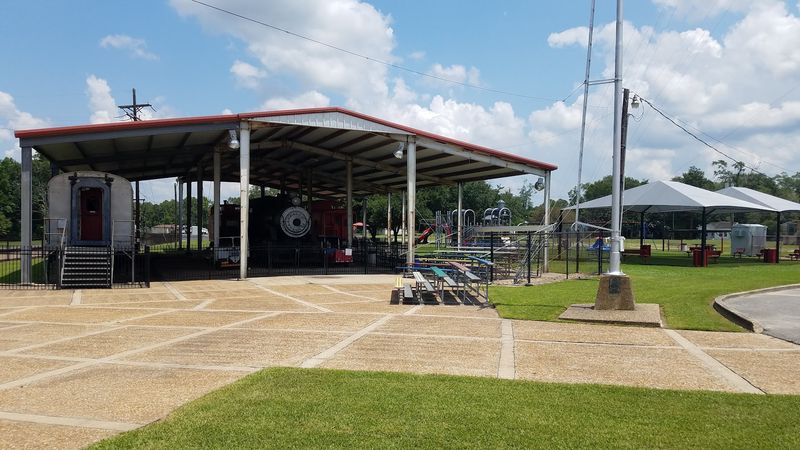
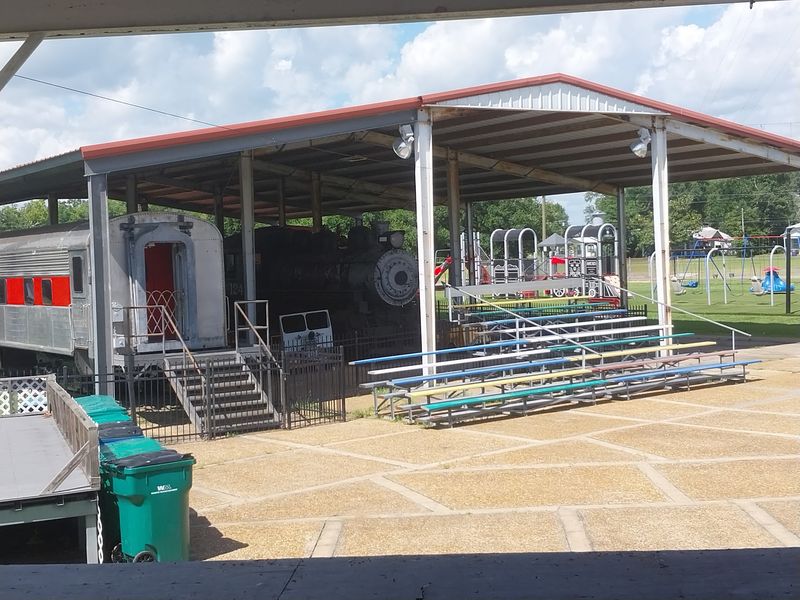
Outside stands a steam locomotive, a Pullman passenger coach, and a pair of cabooses under a covered pavilion, plus a playground and picnic area next door.
Visitors often describe it as a little museum, and that fits. It is not a sprawling complex that takes a whole day.
It is a focused, well-kept stop where most people spend about an hour, longer if they get to talking with the staff.
What gives it weight is location. The depot stands in the middle of a big Y formed by two separate railroad lines that cut through town, and City Hall sits inside that Y too.
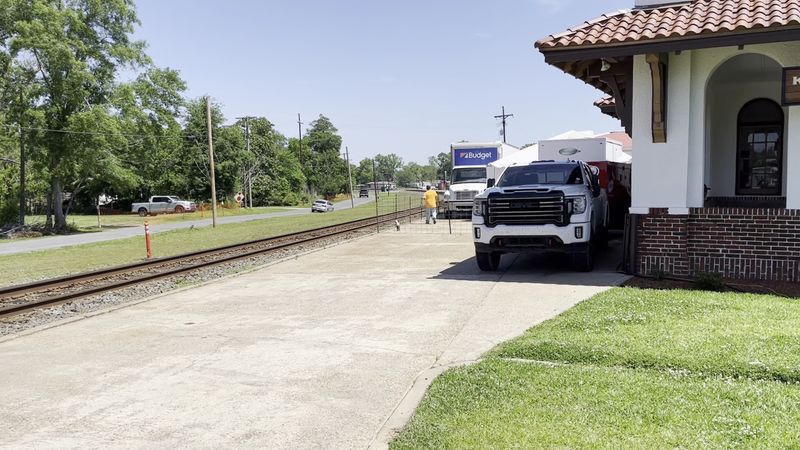
The museum does not just describe DeQuincy’s rail history. It sits right on top of it, with live tracks close enough to hear.
How The Kansas City Southern Built A Town
Plenty of Louisiana towns grew up along a river or a bayou. DeQuincy grew up along steel rails instead.
The Kansas City Southern Railroad established the community in 1897, and jobs on the line drew people in quickly.
The town was laid out where the Kansas City Southern’s north-south route met the Missouri Pacific’s east-west tracks. That crossing made DeQuincy a transportation hub, and some longtime residents still call the junction “The Crossroads of Contentment.” Staff at the museum often explain this two-railroad setup, and visitors mention learning about it from the start of their tour.
The railroad shaped more than the economy. Many of the town’s mayors over the years have worked for the railroad, a sign of how closely civic life and the rails were tied together.
Families here often had a father or grandfather who worked on the lines.
DeQuincy’s connection is recognized by its place in the Train Town USA registry, an honor shared with only a few other Louisiana communities. Knowing that background changes how the museum reads.
The artifacts inside are not collected from far away. They are the working tools of the town’s own history, gathered in the building where much of it happened.
From A Boxcar Stop To A 1923 Depot
Picture a boxcar sitting beside the tracks in 1897. That was DeQuincy’s first railroad station, about as bare-bones as a depot could get.
Passengers and freight agents made do with what the new line could spare.
Around 1905, a wooden depot replaced the boxcar on the same spot. It served the growing town for nearly two decades, through the years when DeQuincy settled into its role as a rail crossroads.
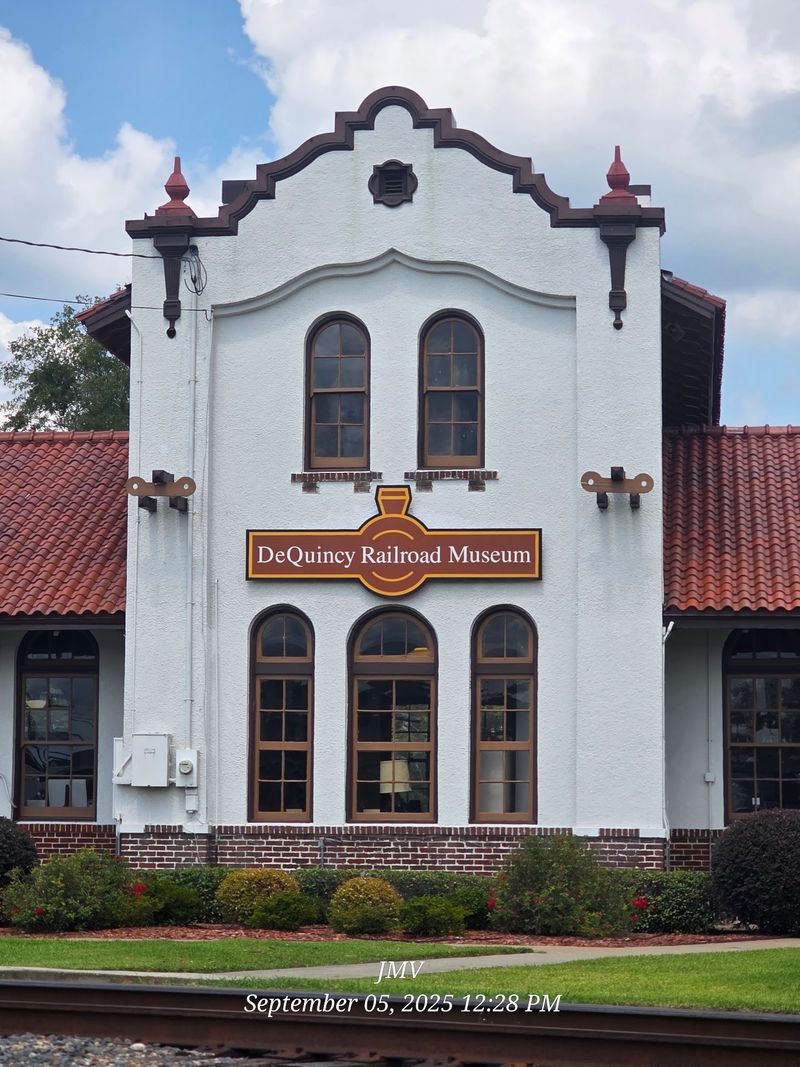
Then the Kansas City Southern decided to modernize its Louisiana depots. The result, finished in 1923, is the building that stands today.
Railroads at the time treated stations as statements, and this one was designed to look like it belonged in a much older and sunnier place than a young pine-country town.
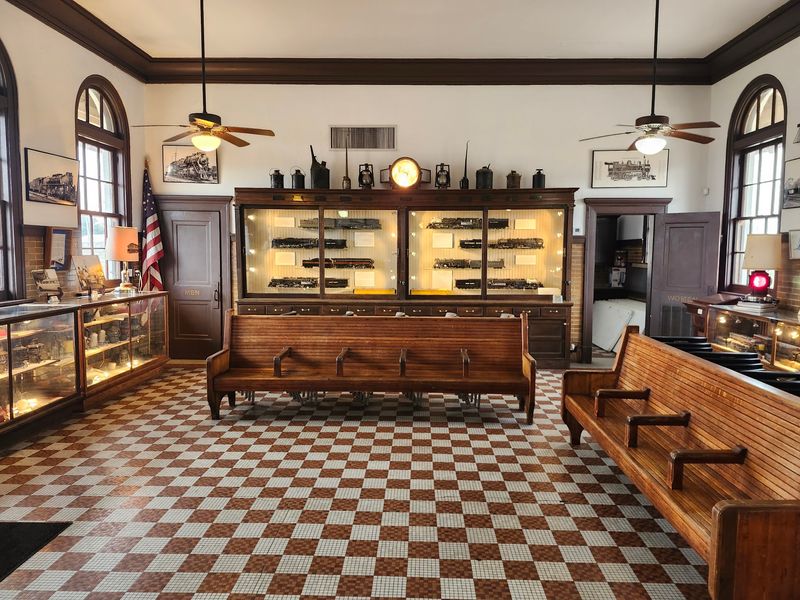
The depot is now listed on the National Register of Historic Places. During a visit, staff have pointed out to guests that the building passed its 100th birthday and still has its original flooring, which has held up well under a century of foot traffic.
That floor is worth a glance on the way in. Railroad workers, travelers, and baggage handlers crossed those same boards long before anyone thought of the building as a museum.
Mission Revival Style In Southwest Louisiana
Red tile, stucco, and rounded arches are not what most people expect in the piney woods near the Texas line. Yet the architects behind the DeQuincy depot looked to the American Southwest rather than the Queen Anne or Colonial Revival styles common for depots of the era.
The building is an outstanding example of Mission Revival architecture in the South. Look for the smooth stucco walls, the red-tile roof, and the graceful arched windows.
Wide overhanging eaves show off exposed rafters and heavy brackets, details that give the station its California feel.
It is one of only three Mission Revival railroad stations still standing in Louisiana. That alone makes it a good stop for anyone who enjoys old buildings, whether or not they care much about trains.
The restoration carries the 1923 look inside as well, with tiled and timbered waiting rooms. The style also made practical sense in a hot climate.
Deep eaves shaded the walls and gave waiting passengers some relief from the sun. Walk the platform side of the building and notice how much shade those overhangs still throw, especially in the afternoon when the Louisiana heat settles in hard.
The 1913 Baldwin Steam Switch Engine
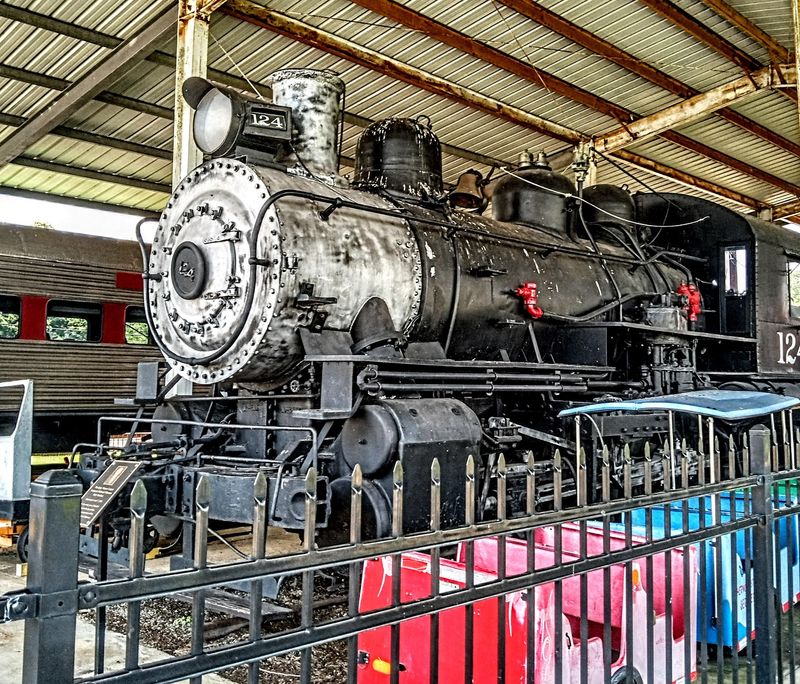
Steam engines have a way of stopping people mid-step, and this one is no exception. The star of the outdoor display is a 1913 steam switch engine, Baldwin #39695, parked under the covered pavilion beside the depot.
Switch engines had a less glamorous job than the big passenger locomotives. They shuffled cars around rail yards, building and breaking up trains so the long-haul engines could keep moving.
In a two-railroad junction town like DeQuincy, that kind of work was part of the daily rhythm.
The Baldwin Locomotive Works of Philadelphia was one of the largest locomotive builders in the country, and its engines worked lines across the nation. Seeing one up close shows just how much iron and machinery it took to move freight a century ago.
Some visitors have gotten the chance to tour the locomotive along with a passenger car, especially when a staff member or volunteer is available with a key. It is worth asking at the front desk before heading outside.
Kids tend to gravitate toward the engine first, and adults usually are not far behind, reading the details and craning to see the cab.
Inside The 1947 Pullman Coach
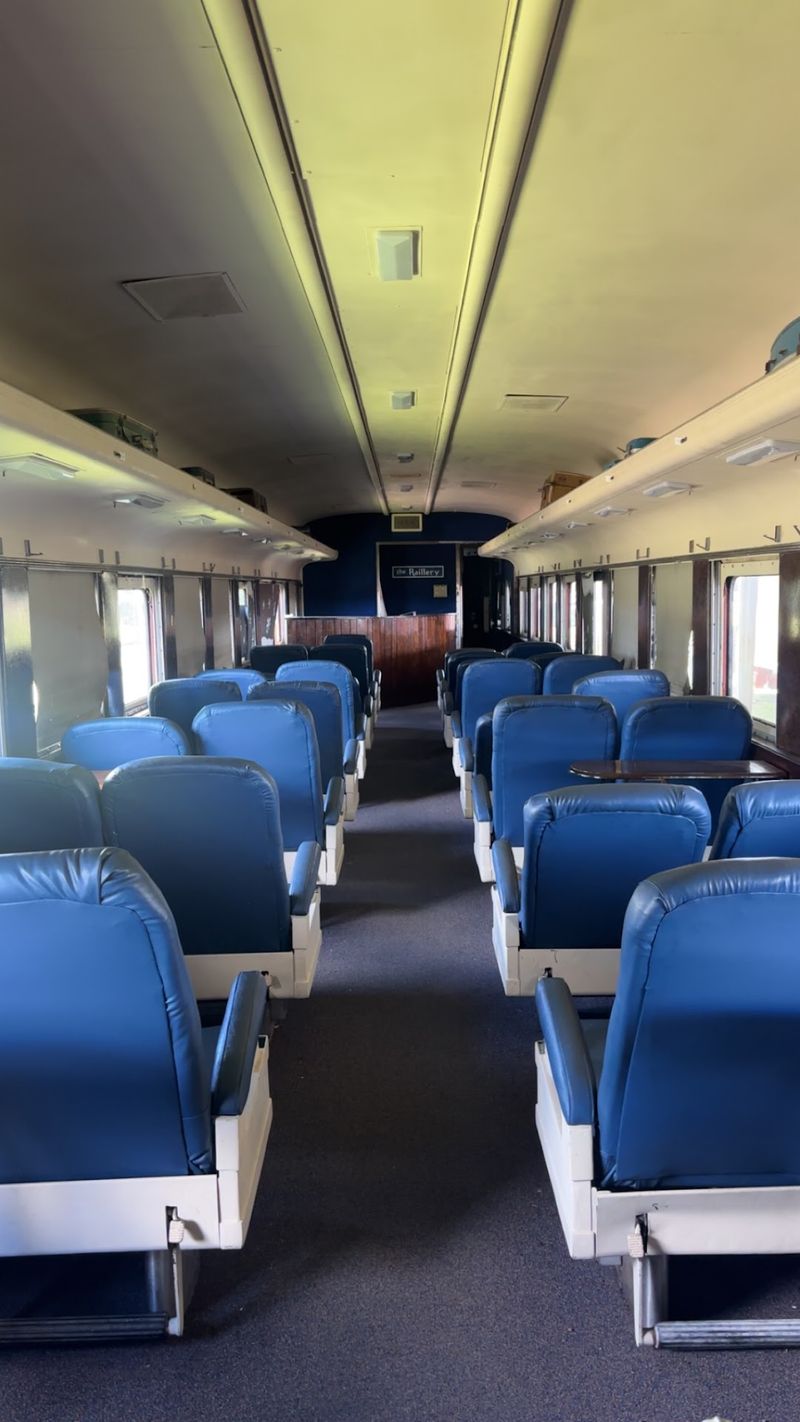
One visitor remembered riding a train to DeQuincy at age six, back in 1957, and said stepping into the museum’s passenger car felt like going right back to that day. That kind of memory is exactly what the 1947 Pullman coach can stir up.
The car shows how people traveled in the middle of the 20th century, before interstates and cheap flights pulled most riders away from passenger rail. Rows of seats and big windows hint at long rides through farmland and forest, with the countryside rolling past at an easy pace.
The coach has also served a creative purpose. During special events, it has been set up for silent film screenings, complete with ticket takers in period costumes.
It is a clever way to put an old car back to work entertaining passengers.
Access depends on staffing, so a quick question inside the depot is the best way to find out whether the coach is open during a visit. For older guests, the car can spark stories about their own train trips.
For younger ones, it answers a simple question they may never have considered: what did riding a train actually feel like?
Two Red Cabooses At The End Of The Line
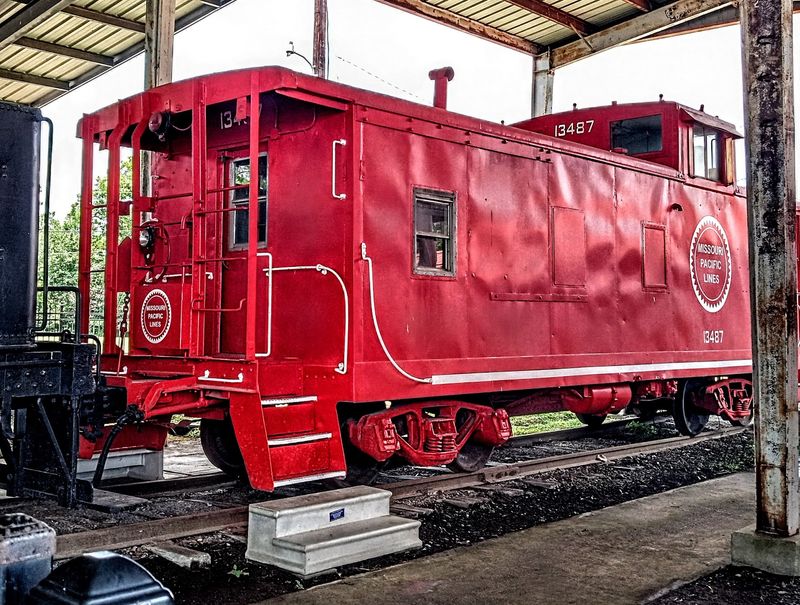
Ask a room full of kids to draw a train, and chances are the last car will be a red caboose. The museum has two of them, rounding out the outdoor collection alongside the steam engine and Pullman coach.
Cabooses once brought up the rear of freight trains. They were rolling offices and living quarters for the crew, with space to do paperwork, rest, and keep an eye on the long line of cars ahead.
Crews could spot problems like overheated wheels or shifting loads from the cupola perched on top.
Modern technology has mostly retired the caboose from everyday freight service. That makes these two cars a nice teaching moment, since many younger visitors only know them from picture books and cartoons.
A homeschool group that visited described the historic train cars and caboose outside as a highlight for the children, a chance to see what they had learned about indoors. Seeing the full line of equipment together helps connect the dots, from the engine pulling at the front to the crew car riding at the back.
Bring a camera, because the bright red paint against a blue Louisiana sky makes for easy, cheerful family photos.
Telegraphs, Switch Keys And The Agent’s Office
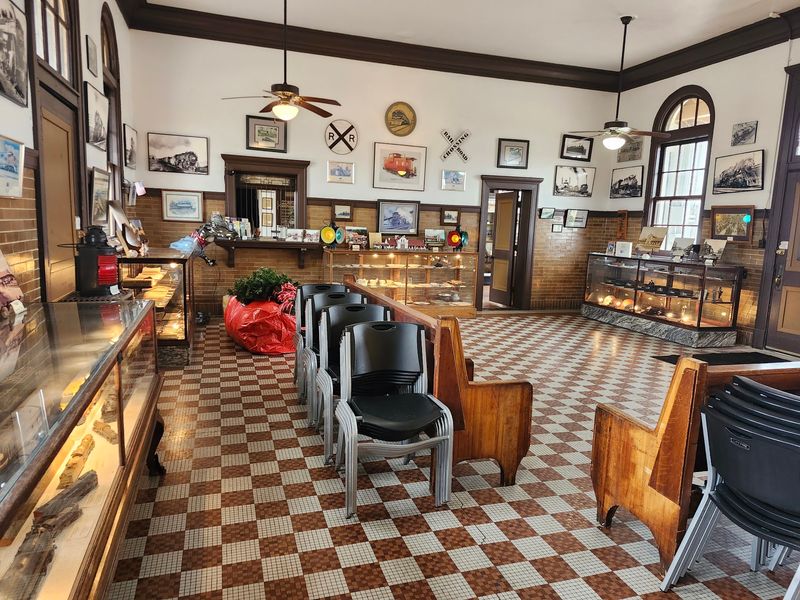
Before cell phones, a train’s safe passage could hinge on a clicking telegraph key. Inside the depot, the museum recreates a station agent’s office with antique typewriters, early calculators, and a Morse code device set up as if the agent just stepped out.
Thousands of artifacts fill the rooms. Historic tools, switch keys, and telegraph equipment explain how the railroad actually ran day to day.
Displays of conductor’s hats and old train lights bring the crew members into focus, not just the machines.
The collection has touches of elegance too. Dining-car silverware hints at the finer side of long-distance passenger travel, when a meal on board meant linen and polished utensils.
Some objects carry heavier history. A train order from the day after Pearl Harbor instructed operators not to allow Japanese people to travel on trains, a sobering example of how national events reached right down to a small-town depot.
Photographic panels and donated family items round out the displays, tying the bigger story to local households. Visitors often say the rooms hold more than expected for a building this size, so it pays to slow down and read the labels.
Pocket Watches And A Wax Jeweler
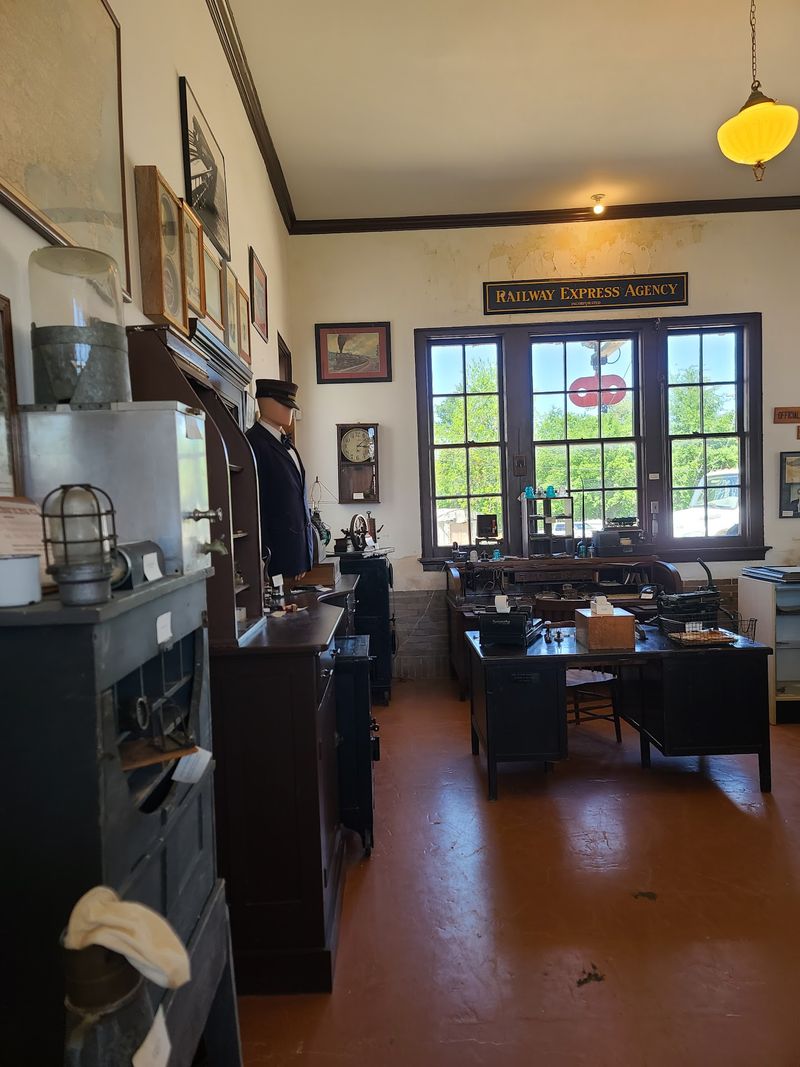
Here is a detail that surprises people: one of the more memorable figures in the museum is a wax model of a jeweler. It sounds odd in a railroad museum until you learn why watches mattered so much.
Railroads ran on precise timing. Crews relied on pocket watches as essential tools, and a watch running a few minutes off could put two trains on the same track at the wrong moment.
Keeping those watches accurate made watch repair an important trade in railroad towns.
One visitor noted learning about the importance of watch repair during an unhurried hour in the museum. It is one of those side stories that makes the whole operation feel more human, showing that the railroad depended on skilled people well beyond the engineers and conductors.
The jeweler display is a good spot to pause with kids and ask a simple question about how people knew what time it was before phones. The answer leads naturally into standard time zones, schedules, and why a town clock or a trusted watch once mattered so much.
Small exhibits like this give the museum its texture, turning a list of objects into a picture of working life.
Model Trains And A Miniature 1940s DeQuincy
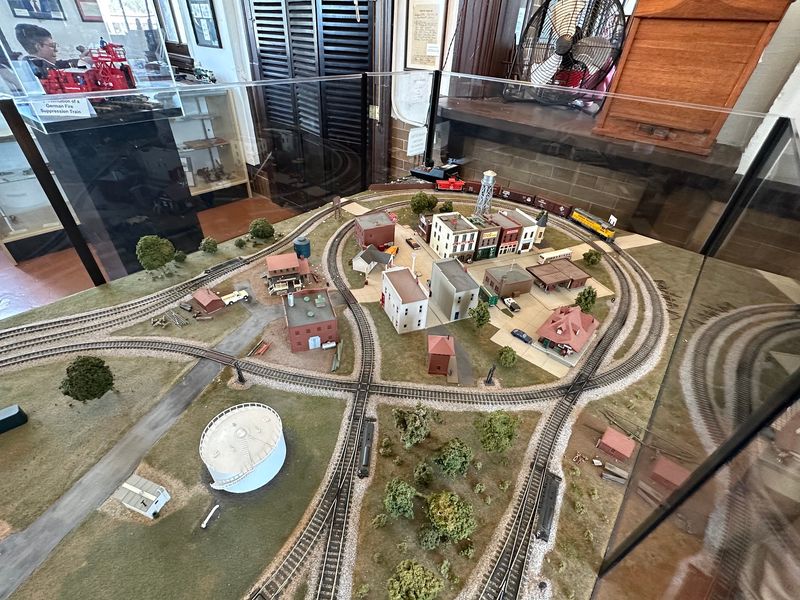
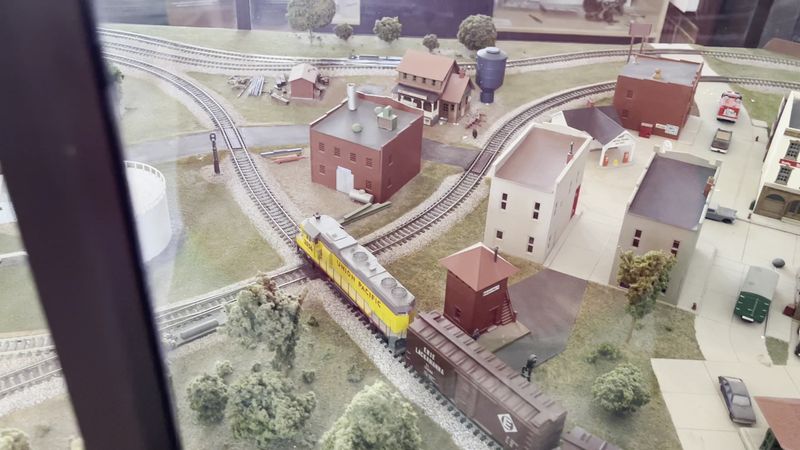
Small trains draw a crowd. The museum keeps both static and working model train collections, and the running layout of 1940s DeQuincy is the centerpiece.
The layout was researched to show the town during its busy railroad years. Miniature trains circle through a scaled-down version of DeQuincy, which helps visitors understand how the two rail lines crossed and how the town grew up around them.
After seeing the Y from above, the real tracks outside make much more sense.
On the static side, G scale locomotives are on display. One visitor found them interesting to read about, since they are detailed models of real engines.
G scale is large for model railroading, big enough to show off fine details on the cabs and wheels.
Kids gravitate to the moving trains, and plenty of adults linger just as long. Rail fans who come for the festival also enjoy the model displays, which add to the energy on busy weekends.
If you have a young railroad fan in the family, plan for extra time here. Watching the little train loop the little town can hold attention far longer than you might expect.
Staff Who Know The Depot’s Story
Many museums have good labels. This one has people.
Visitors mention a staff member named Mary again and again, describing her as friendly, generous with her time, and full of knowledge about the building and the town.
One family arrived as the first visitors of the day and found her ready to teach the kids plenty about the exhibits. Others say she explained DeQuincy’s history as a two-railroad town and shared details about the depot itself, like its age and original flooring.
Some guests have toured with longtime residents who lived through the railroad era, including a lifelong local who grew up as the child of a railroad worker. That first-hand connection gives the tour a personal edge that no plaque can match.
Guided tours can be requested on arrival, and volunteers often tailor them to what visitors want to know. Asking questions pays off here.
It is also fair to mention that experiences can vary; one visitor arrived to find the gift shop open but the museum not ready, with no one sure who had the key to the outdoor cars. Calling ahead at 337-786-2823 helps avoid that kind of mix-up.
Louisiana Railroad Days Every April
Every April, the quiet depot grounds fill up. The Louisiana Railroad Days Festival takes over the second weekend of the month, a three-day celebration that dates back to 1984.
Expect live music, carnival rides, and a parade through town. Model train displays, craft booths, contests, and pageants add to the lineup.
One of the more meaningful events is the Old Timers Reunion, which brings together retired railroad workers who can share what the job was really like.
Food vendors set up across the grounds. During one recent festival, a visitor noted a BBQ brisket sandwich for $13 and shrimp fettuccine over smoked turkey leg for $17, though vendors and prices change year to year.
There were also free bottles of water available at a nearby tent.
Rail fans use the weekend to catch up with friends, and the excitement of spotting a real train passing through adds to the fun. The festival is family-friendly and keeps things wholesome, which makes it easy to bring the whole crew.
If you want the museum at its busiest and most festive, this is the weekend. If you prefer a calm look at the exhibits, pick another date.
Playground, Picnic Tables And An Accessible Park
Kids who have spent an hour looking at artifacts usually need to run, and the park next door handles that nicely. The landscaped grounds include playground equipment, picnic tables, and a covered pavilion.
Visitors point out the artificial grass and play features that work for both kids and adults. A standout piece is a handicap merry-go-round built to hold two wheelchairs, so children using chairs can join in rather than watch from the side.
Level paths make it easier for guests with mobility needs to move between the indoor exhibits and the outdoor train cars. That kind of thought is not always found at smaller museums, and families notice it.
Packing a lunch turns the stop into a longer outing. Grab a picnic table, let the kids burn off energy, and keep an ear out for a passing freight train.
The space around the depot also works as an event area, and the museum can be rented for gatherings. One visitor appreciated how the parking out front, the open event space, and the trains off to the side all fit together.
It makes the property feel like a small town park with a railroad museum in the middle.
Hours, Free Admission And Timing A Visit
Good news for budgets first: admission is free. Donations are welcome and help support preservation of the depot and its collection.
The museum is open Tuesday through Saturday, 10 a.m. to 5 p.m., and closed Sunday and Monday. It is smart to call 337-786-2823 before driving over, especially around holidays.
Parking is plentiful right in front of the depot.
Plan on at least an hour to see everything at a relaxed pace. Add time for the park, a guided tour, or a peek inside the train cars.
There is also a small gift shop inside.
Timing can add a bonus. Active trains still roll past on nearby tracks, and the platform is a good place to watch, particularly from late morning to mid-afternoon.
That rumble of a working freight train is a fitting footnote to everything inside.
DeQuincy sits north of Lake Charles, so the museum pairs well with a day in Southwest Louisiana. Some visitors simply stop to stretch their legs on a drive and leave glad they did.
Before heading out, take one last look at that 1923 floor, still carrying footsteps a century after the first travelers crossed it.