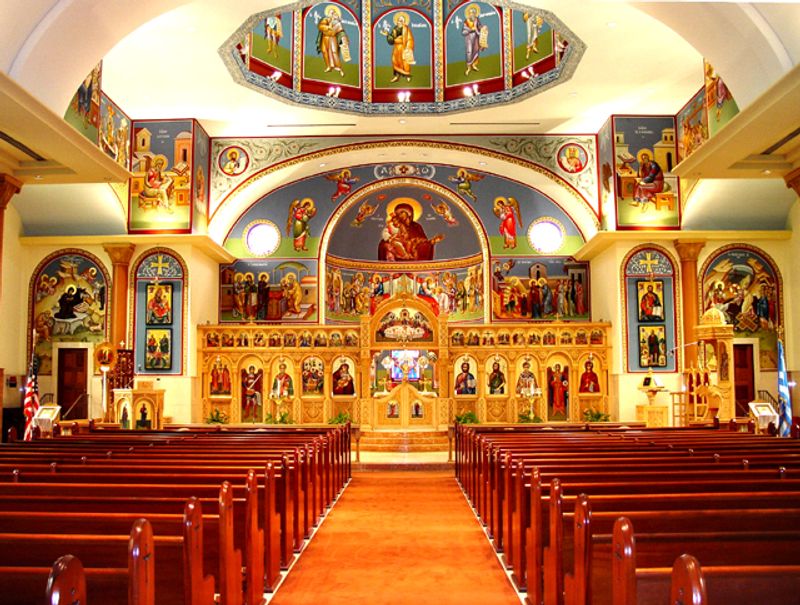
Near Bayou St. John in New Orleans, a Greek Orthodox cathedral fills its Sunday mornings with unaccompanied voices, drifting incense and the soft flicker of candles. Holy Trinity Greek Orthodox Cathedral traces its roots to 1864, and its first church was the first Greek Orthodox church in the Americas.
In a city shaped by Catholic tradition, this parish has kept an ancient form of worship going for more than 150 years. Here is what to know about its story, its services and how to visit.
A Byzantine Sanctuary On Allen Toussaint Boulevard
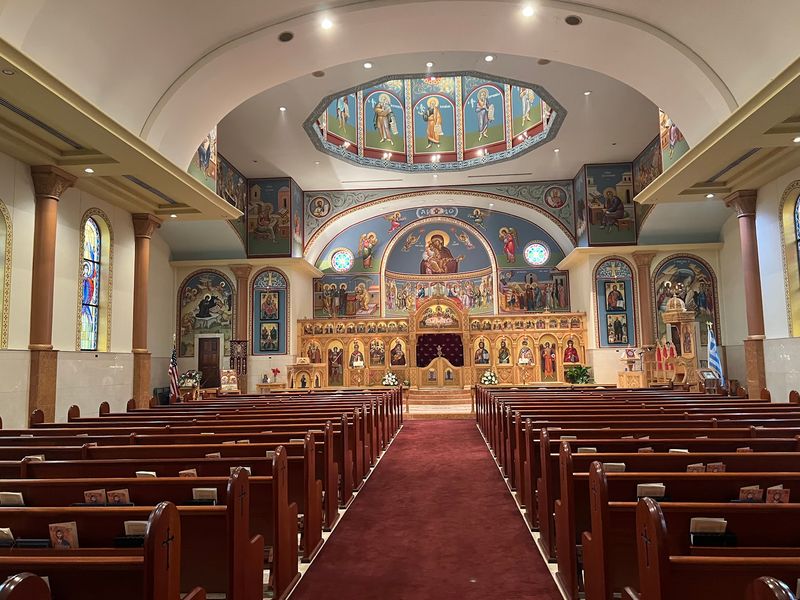
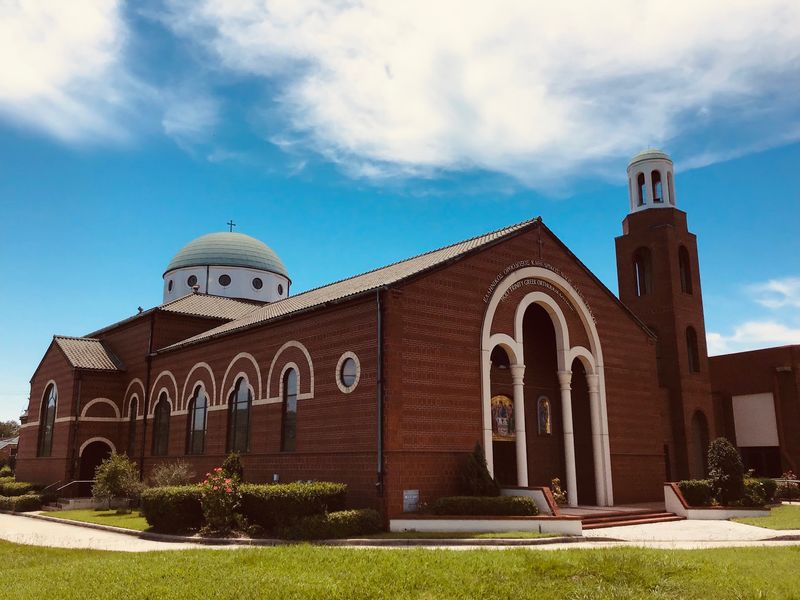
Drive up Allen Toussaint Boulevard near Bayou St. John and you will find Holy Trinity Greek Orthodox Cathedral at number 1200. The address sits in the 70122 zip code, a short hop from the green stretch of water that has shaped this corner of New Orleans for centuries.
The cathedral serves as the seat of a Greek Orthodox parish within the Metropolis of Atlanta, part of the Greek Orthodox Archdiocese of America. That connection ties a New Orleans congregation to a network of churches stretching across the South and beyond.
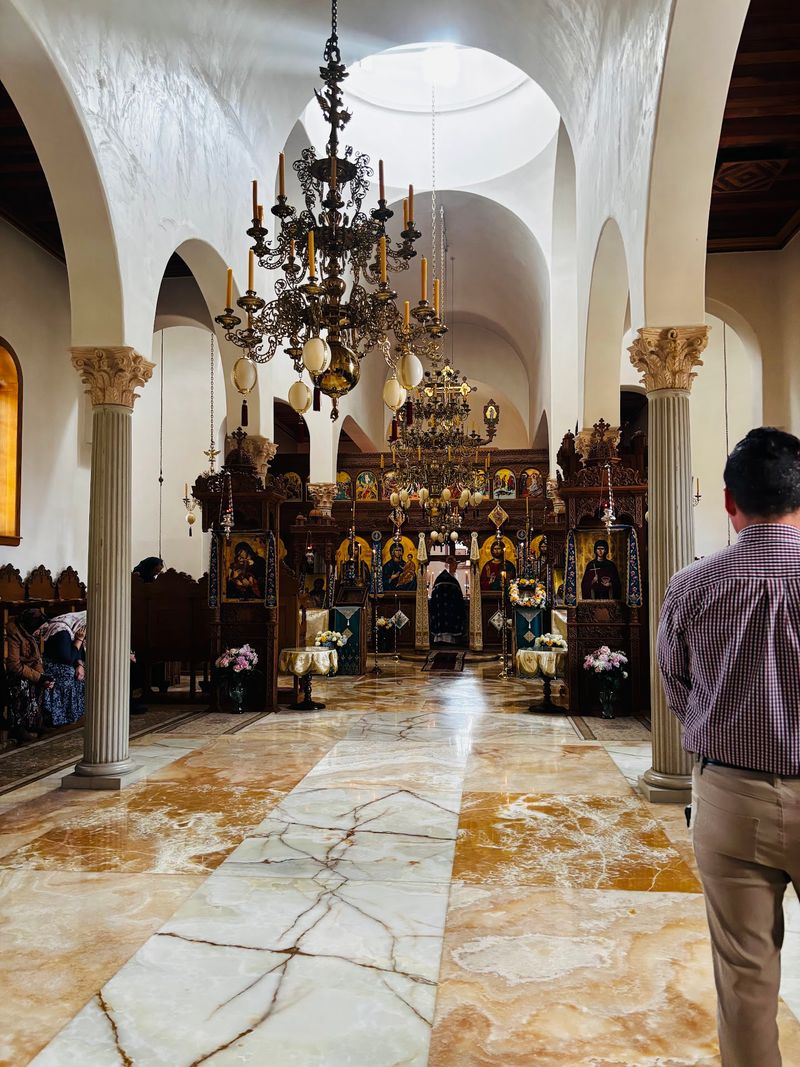
Inside, the building looks east in more ways than one. Byzantine iconography covers the walls, candles burn near the icons, and services move between Greek and English.
For a city where most church bells belong to Catholic parishes, the contrast is striking.
The congregation is the living center of the place, though. Visitors describe a warm, welcoming group of parishioners and clergy who are easy to talk to after services.
Some arrive for Sunday worship, while others first come through the gates during the parish’s well-known Greek Festival.
Either way, the cathedral offers New Orleanians a glimpse of a tradition that feels far from the city’s usual rhythms, without ever leaving town.
Worship In A Cotton Merchant’s Home
Back in 1864, the Orthodox Christians of New Orleans had no church to call their own. Greek seamen and merchants had already settled into the busy port, joined by Balkan, Slavic and Middle Eastern Orthodox believers who shared the same faith.
Before then, many families of Orthodox background marked baptisms and weddings inside St. Louis Cathedral, the Catholic landmark on Jackson Square. Religious freedom that followed the Louisiana Purchase eventually made room for a separate Orthodox community.
The first services happened in a private home. Nicholas Benachi, a cotton merchant from the Greek island of Chios, opened his residence to the faithful, turning a living room into a place of prayer.
Two years later, in 1866, the community built its own church at 1222 North Dorgenois Street in the Treme neighborhood. It is recognized as the first Greek Orthodox church in North and South America, a remarkable claim for a city better known for Mardi Gras and gumbo.
In December 1867, Archimandrite Stefanos Andreadis arrived from Syros, Greece, to serve as its first priest. His arrival gave the young parish steady leadership and set a course that would carry the congregation through the next century and a half.
From Treme Clapboard To A Consecrated Cathedral
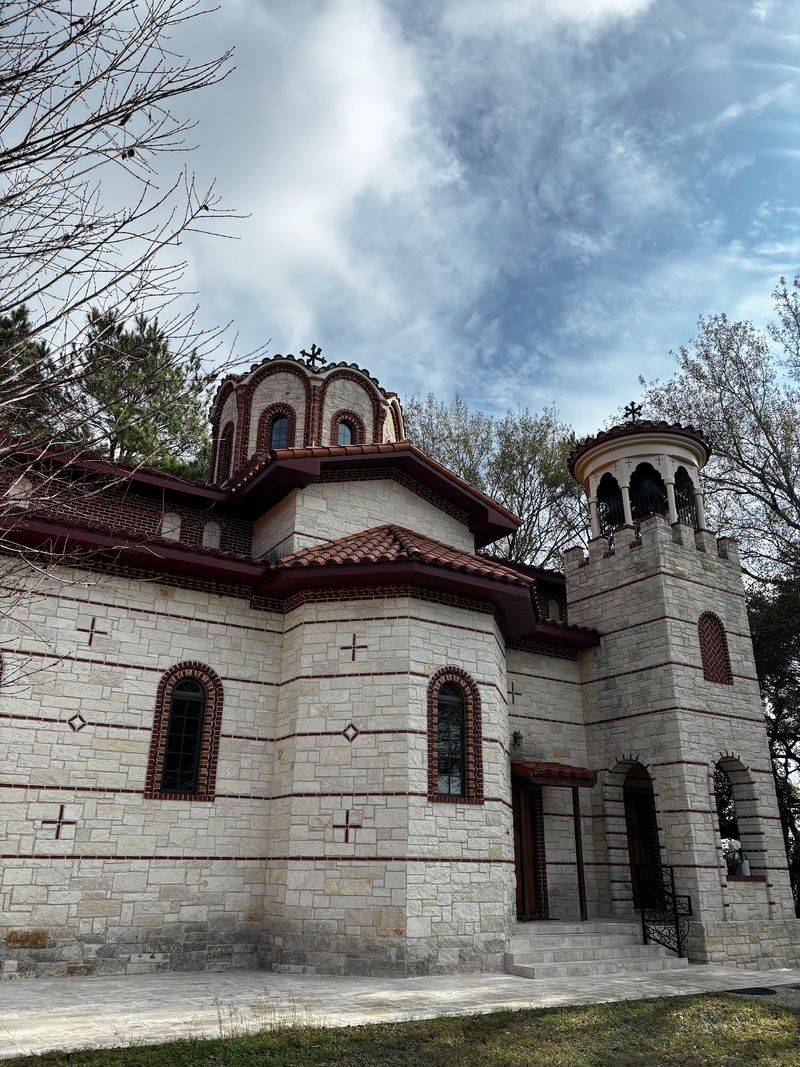
Wood came first. The 1866 church on North Dorgenois Street was a clapboard building with a Classical Greek facade, a style many Southern congregations of different faiths favored in that era.
Over the decades, the property grew into a small campus. A parish house, a school, a library and a cemetery joined the church, giving the Orthodox community a full neighborhood base in Treme.
By 1950, a brick cathedral had replaced the original wooden structure. The change came as the church became headquarters of a diocese under Bishop Silas, raising its standing within the wider Greek Orthodox world.
Growth kept pushing the parish forward. As the congregation expanded and the city’s neighborhoods shifted, leaders decided a new home made sense.
In 1976 the North Dorgenois property was sold, and the community moved to its current location near Bayou St. John.
The present cathedral was consecrated in December 1985. Consecration is a solemn rite in Orthodox practice, marking a building as permanently set apart for worship.
Each move tells part of the story. A congregation that began in a merchant’s parlor now gathers in a full Byzantine cathedral, carrying more than a century of memory along with it.
Gold-Leaf Icons By Lawrence Manos
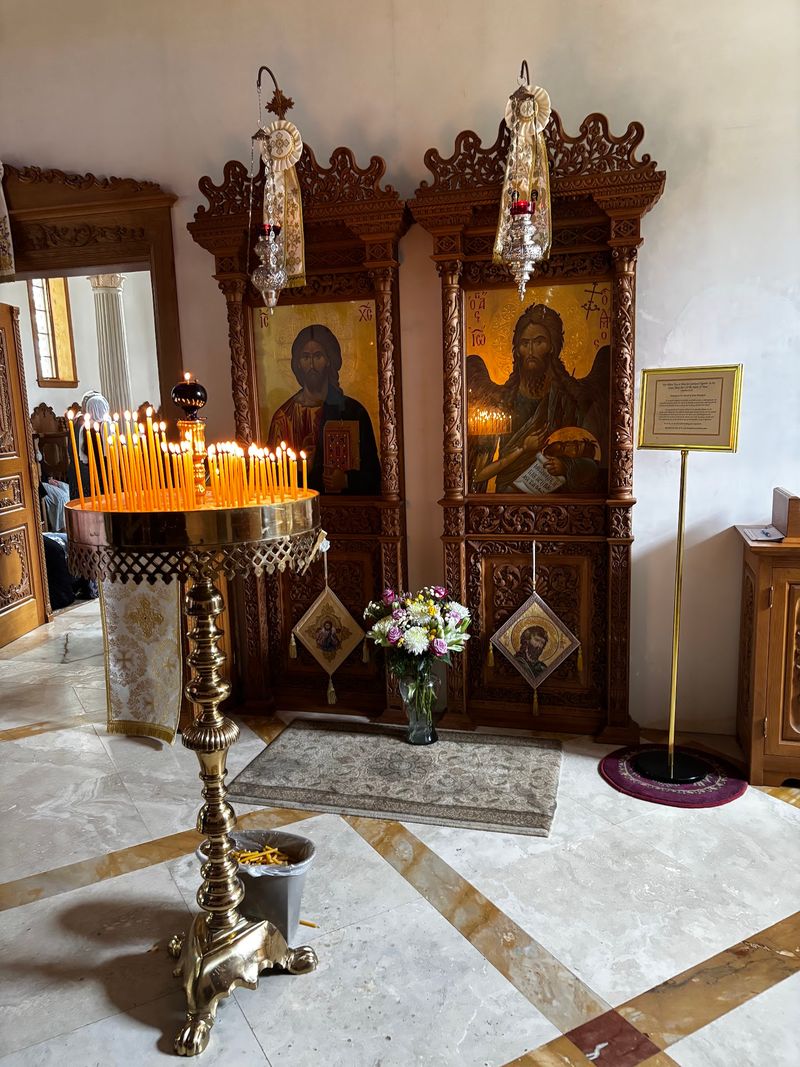
Gold catches the eye almost immediately. The interior walls carry Byzantine iconography completed by artist Lawrence Manos, with painted figures framed in glowing gold leaf.
Icons are not decoration in the Orthodox tradition. They are considered windows into the sacred, and worshippers often light candles and pause before them in prayer.
The saints, scenes and holy figures follow long-established rules of style handed down over centuries.
Visitors who have toured the building during the Greek Festival often single out the painted murals and gold leafing as a highlight. Even guests who describe themselves as not religious have said the artwork alone made the tour memorable.
The overall effect is calm and deliberate. Faces look outward with steady expressions, colors stay rich, and the arrangement guides the eye toward the altar area at the front of the church.
One treasured piece stands out for its history. The parish holds an icon of the Blessed Mother of God given by the Russian imperial family in 1872, a gift that speaks to the international ties of the early congregation.
Spending a few quiet minutes with these images helps explain why the cathedral feels so different from the streets outside.
Voices Without Instruments
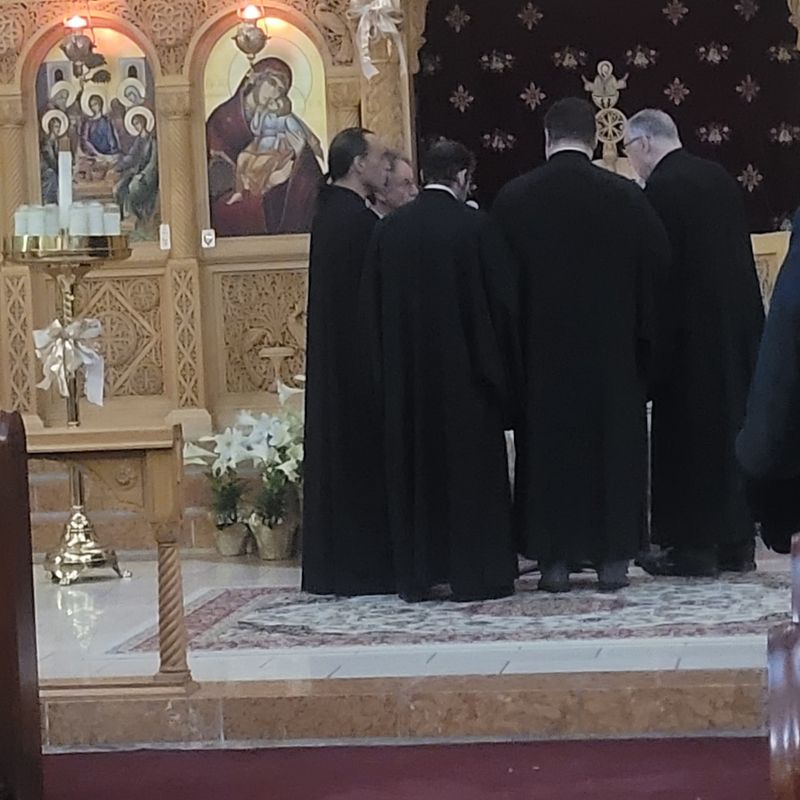
No organ. No guitar.
No piano tucked in a corner. At Holy Trinity, the music of worship comes entirely from human voices.
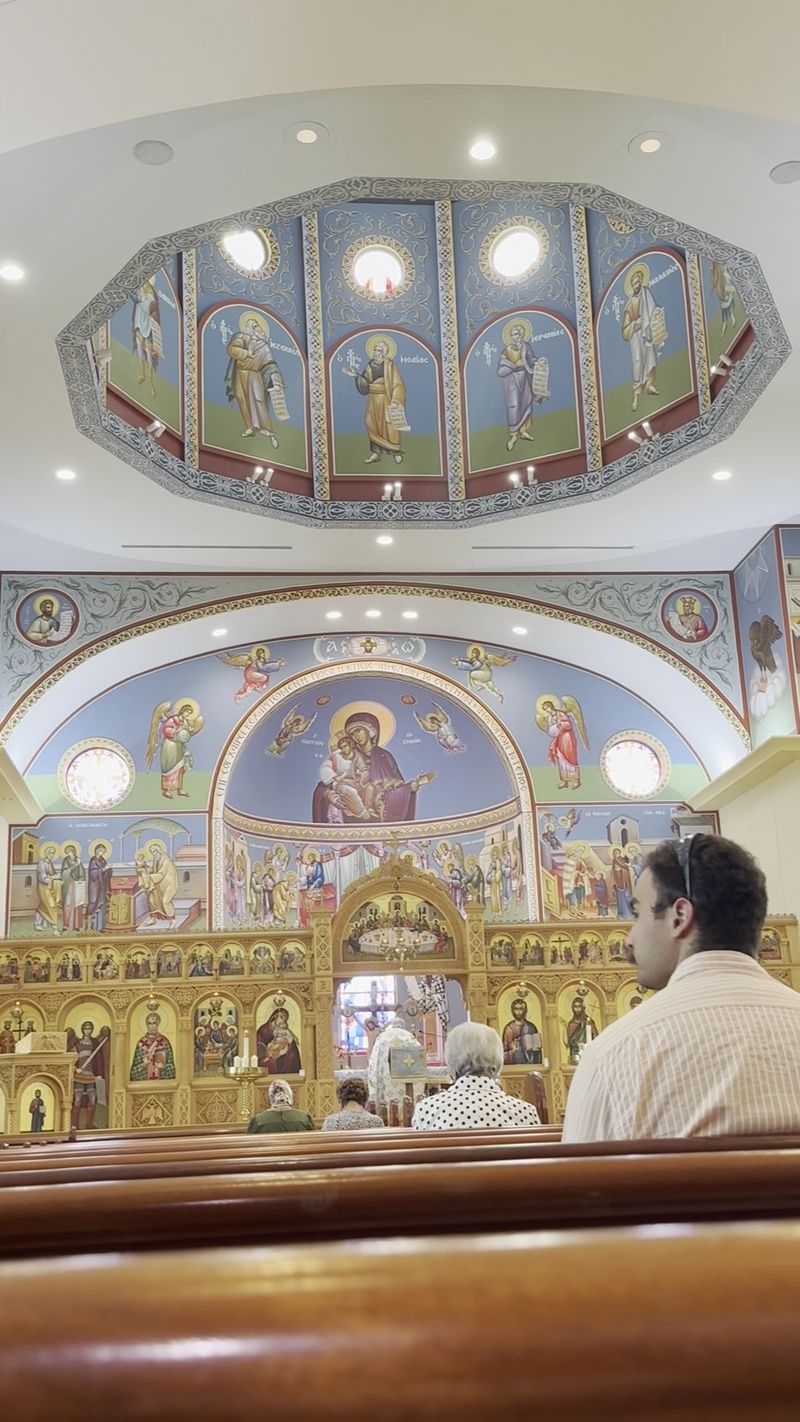
A cappella chanting is a defining part of Orthodox services, and visitors to this cathedral regularly mention its beauty. Hymns and prayers rise and fall in long, flowing lines, carrying texts that have been sung in similar ways for centuries.
Language plays a big role in the sound. Worshippers report that roughly half of the service is in Greek and half in English, so newcomers can follow along in parts while still hearing the ancient language of the liturgy.
Special occasions bring extra depth. During the Greek Festival, seminarian chanters from Hellenic College Holy Cross have performed hymns in both Greek and English, giving festival guests a direct encounter with Orthodox musical tradition.
Without instruments to fill the room, small details become noticeable. A single voice may lead, others answer, and the cathedral’s acoustics carry the sound up toward the icons.
Many people describe the chanting as the moment the outside world fades. One visitor summed up the effect as feeling transported in time and space, which captures how powerful simple voices can be inside these walls.
Incense, Candles And The Rhythm Of The Divine Liturgy
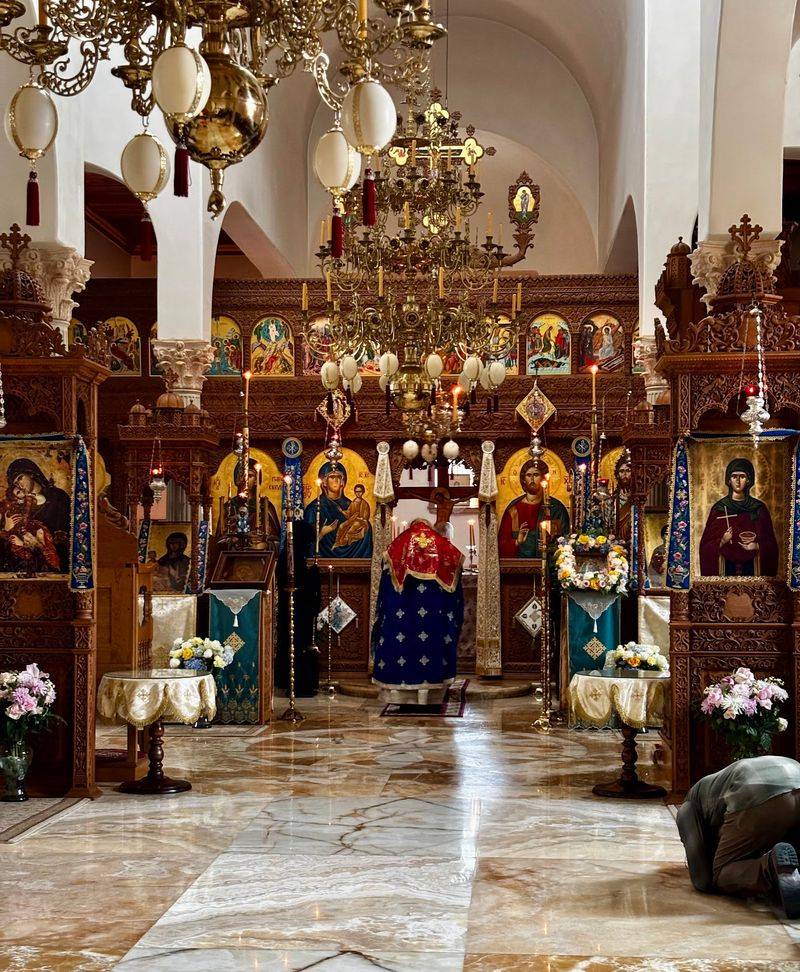
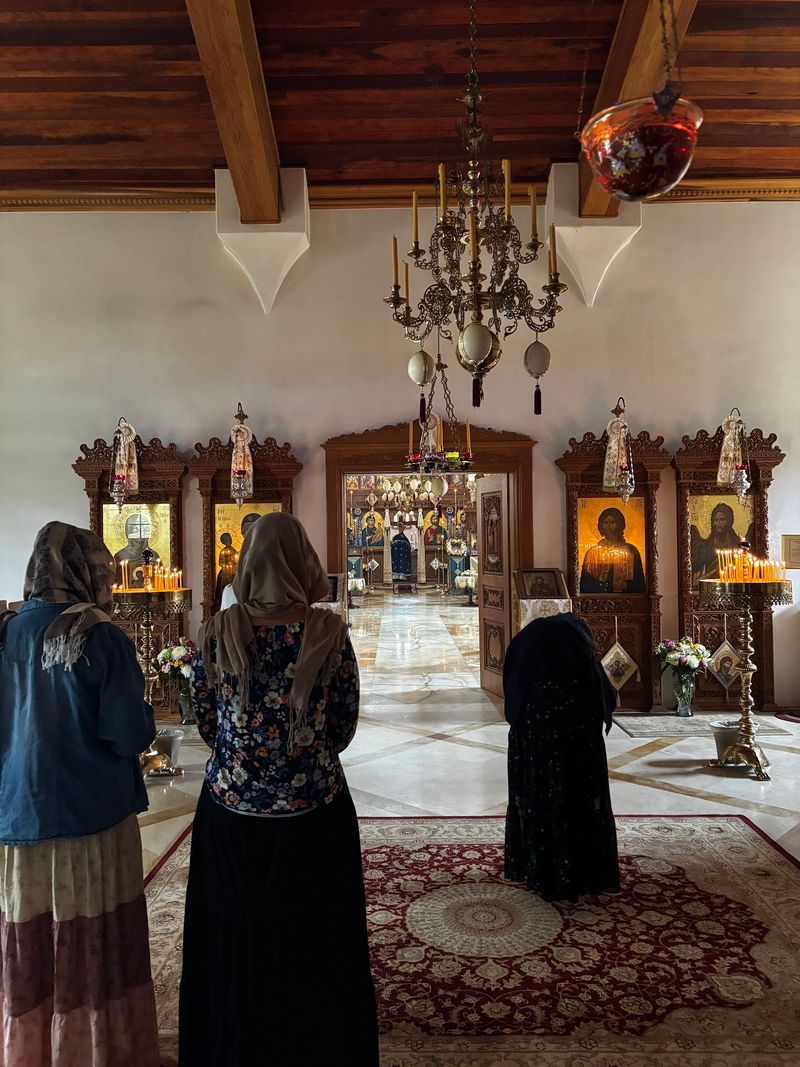
Smell often arrives before sight. Sweet incense drifts from swinging censers, mixing with the warm light of rows of candles during the Divine Liturgy at Holy Trinity.
The liturgy is the main Sunday service in the Orthodox Church, and it engages more than the ears. Processions move through the church, clergy make reverent gestures, and worshippers stand, bow and cross themselves at set moments.
That structure is intentional. A prescribed order keeps the service connected to the past, so the prayers heard in New Orleans closely follow those prayed in Orthodox churches around the world.
Visitors say the incense, candles and reverent music together create a strong sense of holiness. For first-timers, the flow can feel unfamiliar, even a little overwhelming, since much happens without explanation.
A helpful approach is simply to watch and listen. Nobody expects newcomers to know every motion, and following the congregation’s lead is perfectly acceptable.
The sermon offers a clear anchor. Attendees note that it is delivered in English, giving visitors a chance to hear the message directly even if the Greek portions pass by like music.
Combined with the chanting, the service becomes a full experience of sight, sound and scent.
Floodwaters That Stopped At The Solea
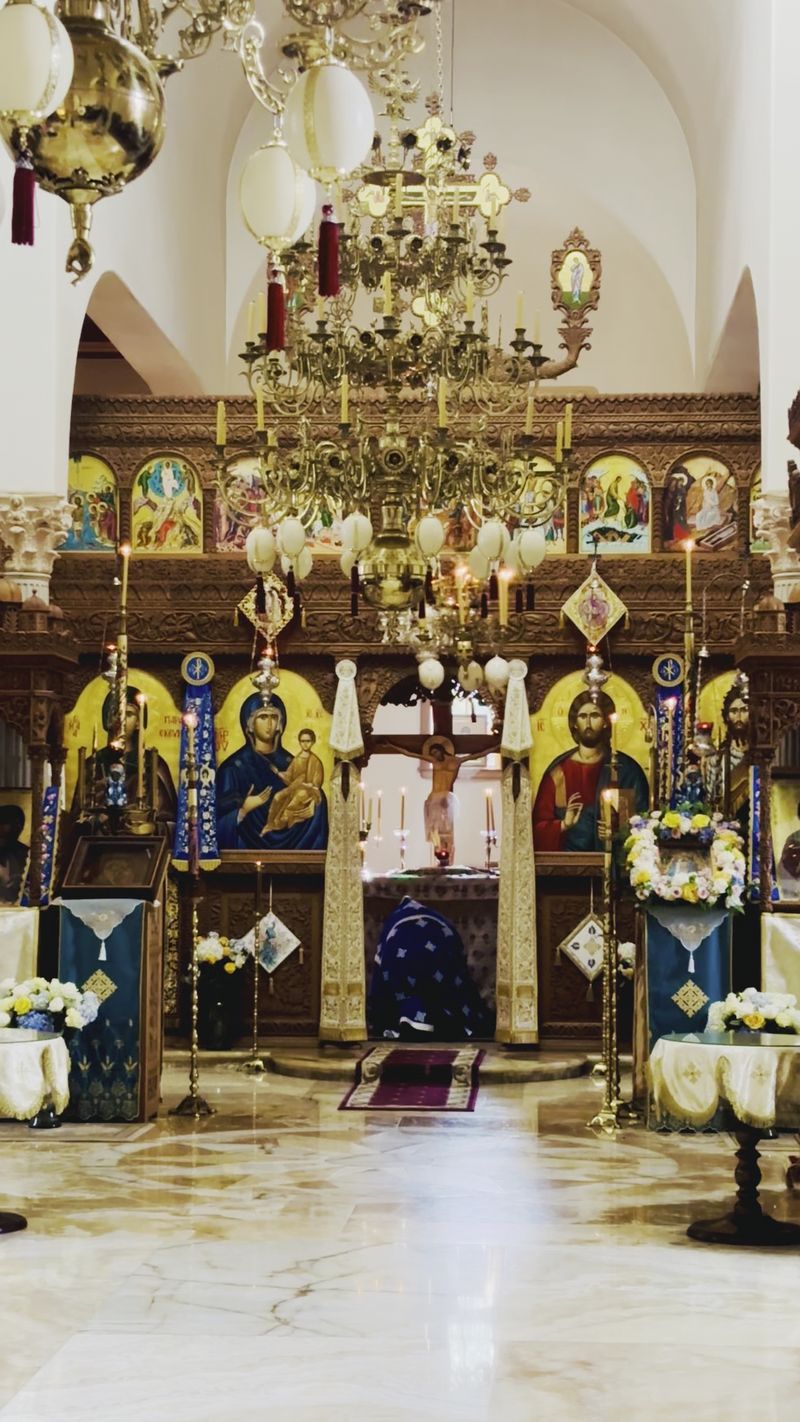
August 2005 tested every corner of New Orleans, and Holy Trinity was no exception. Hurricane Katrina sent floodwaters into the cathedral along with much of the surrounding city.
The parish tells a striking story from that time. According to church accounts, the water stopped at the solea, the raised area in front of the altar, while an icon of the Panagia, the Virgin Mary, was found floating as if keeping watch.
Recovery came quickly by local standards. The cathedral reopened within five months, a turnaround that made it a symbol of renewal for its members.
That rebuilding period also strengthened its ties to the broader city. The parish describes a deeper commitment to community engagement after the storm, reaching beyond its own congregation.
Visitors on festival tours have mentioned hearing about the post-Katrina rebuilding as part of the cathedral’s history. It adds a recent chapter to a story that already stretched back to the Civil War era.
For many New Orleanians, storm stories are personal. At Holy Trinity, this one has become part of the parish identity, told alongside accounts of Nicholas Benachi’s home and the original church in Treme.
A Parish Built By Many Orthodox Peoples
Greek is in the name, but the early congregation was far broader. Serbians, Croatians, Dalmatians, Romanians and Russians worshipped alongside Greeks in the first decades of the parish.
That mix reflected the port city itself. Sailors and merchants from across the Orthodox world passed through New Orleans, and the church gave them a shared place to pray and keep their customs alive.
Later waves of immigration expanded the church family further. Through it all, the parish has held onto its Greek language and cultural ties while staying open to people of many backgrounds.
The cathedral’s archive works to protect that heritage. Its collection documents the parish story along with historic artifacts, including the 1872 icon from the Russian imperial family.
Today, worshippers describe a community church with programs ranging from small children to adults. Visitors frequently mention kind parishioners and a knowledgeable priest who make guests feel at home, with several out-of-town attendees saying they felt welcomed almost like members.
The parish marked its 150th anniversary in 2014, a milestone few Orthodox congregations in the country can claim. Those long roots show in the easy, settled way the community gathers each week.
Greek Festival Weekend By Bayou St. John
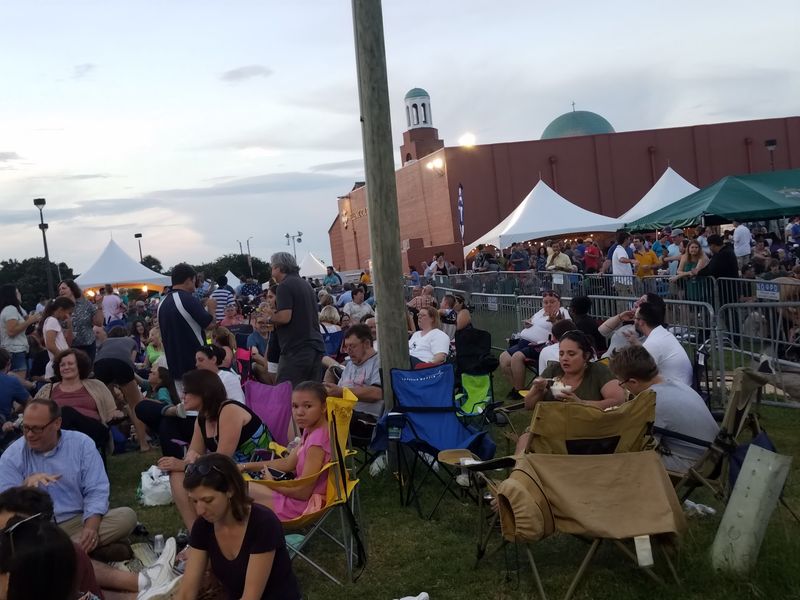
Opa season arrives every spring. Holy Trinity hosts its annual Greek Festival over Memorial Day weekend, turning the grounds beside Bayou St. John into a lively celebration of Hellenic culture.
Food takes center stage. Booths sell traditional dishes, with past guests praising lamb, olives, cheeses and Greek desserts.
Cooking demonstrations have been part of the program, and food trucks and kid-friendly options have joined the lineup too.
Music and dance fill the rest of the weekend. Live Greek music plays while dance groups in traditional dress perform folk dances that draw crowds to the stage.
Many visitors take advantage of guided cathedral tours offered during the festival. It is a relaxed way to see the icons up close and hear the parish history without attending a service.
The event draws people from across the Gulf Coast. Past attendees warn that it can get crowded and parking nearby can be difficult, so arriving early or planning a ride makes sense.
The bayou setting adds plenty to the experience. Sitting near the water with a plate of Greek food is a classic New Orleans pairing of local scenery and imported tradition, and many guests return year after year.
Hours, Dress And What Visitors Should Know
Planning ahead helps. The cathedral office keeps hours of 9 a.m. to 3:30 p.m.
Monday through Friday, closes on Saturday, and is open from 9 a.m. to noon on Sunday, when the Divine Liturgy takes place.
Questions about services or tours can go to the parish at 504-282-0259. The website, holytrinitycathedral.org, is the best place to check service times and festival dates before making the trip.
Dress is simpler than some expect. The parish suggests business casual, and visitors report that most people dress that way, though some attend in casual clothes.
One guest wearing jeans and a short-sleeve button-down said he never felt out of place.
Everyone is welcome to pray with the congregation and receive the blessed bread offered at the end of the service. Holy Communion is reserved for baptized or confirmed Orthodox Christians, so non-Orthodox guests simply remain in their places during that part.
The cathedral sits at 1200 Allen Toussaint Blvd, close to Bayou St. John and City Park. Driving is the easiest option for most, though festival weekends bring heavy traffic.
Arriving a few minutes early gives time to settle in and take in the icons before the chanting begins.
Candlelight Worth Seeking Out
Some places reveal themselves slowly. Holy Trinity rewards anyone willing to sit through a full liturgy, listen to the chanting and let the unfamiliar rhythm settle in.
History lovers will find a parish that began in 1864 and claims the first Greek Orthodox church in the Americas. Art fans get gold-leaf icons by Lawrence Manos.
Music fans get pure a cappella voices in Greek and English.
Curious travelers fit in too. Out-of-town visitors, including one in town from Chicago for work, have written about feeling grateful to attend and warmly received by both priest and parishioners.
Not every encounter suits every person, and the Orthodox tradition has its own expectations around sacraments and membership. Approaching with respect and openness tends to make the visit meaningful.
The Greek Festival offers an easier first step for some. Tours, food and dancing provide a friendly introduction before trying a Sunday morning service.
Still, the quietest moments may leave the deepest mark. Long after the final hymn, it is the image of small candles flickering beneath the icons that lingers, proof that a different world can sit just a few blocks from Bayou St. John.