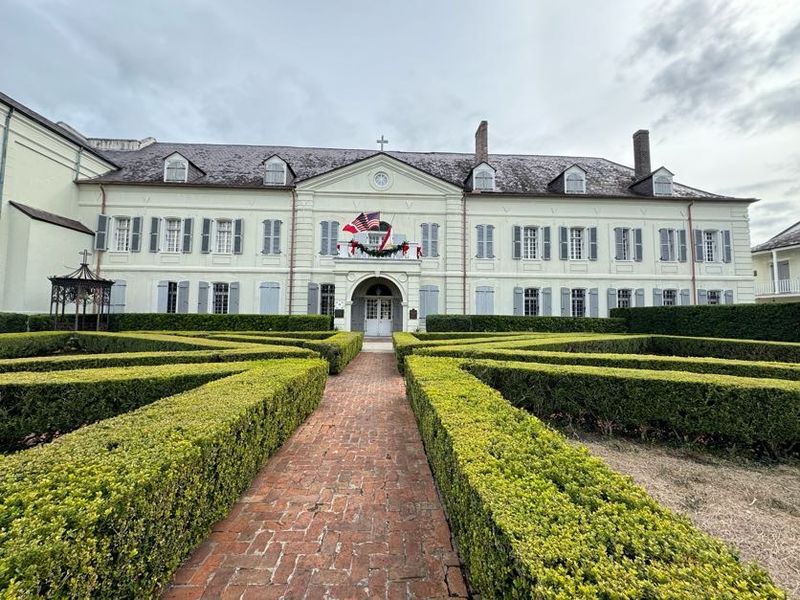
Two great fires swept through New Orleans in the 1700s, and one French colonial building on Chartres Street came through both. That building is the Old Ursuline Convent, finished around 1752 and now the oldest surviving structure in the Mississippi River Valley.
The nuns who lived there opened the first school for girls and the first orphanage in what became the United States. Somewhere along the way, the place also picked up a strange tale about young women, small trunks, and a sealed attic that people still whisper about today.
A French Colonial Survivor On Chartres Street
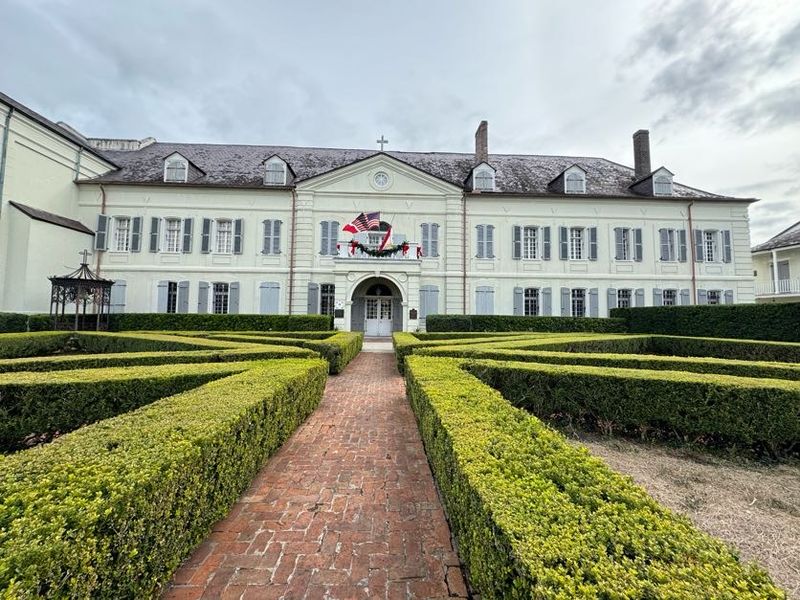
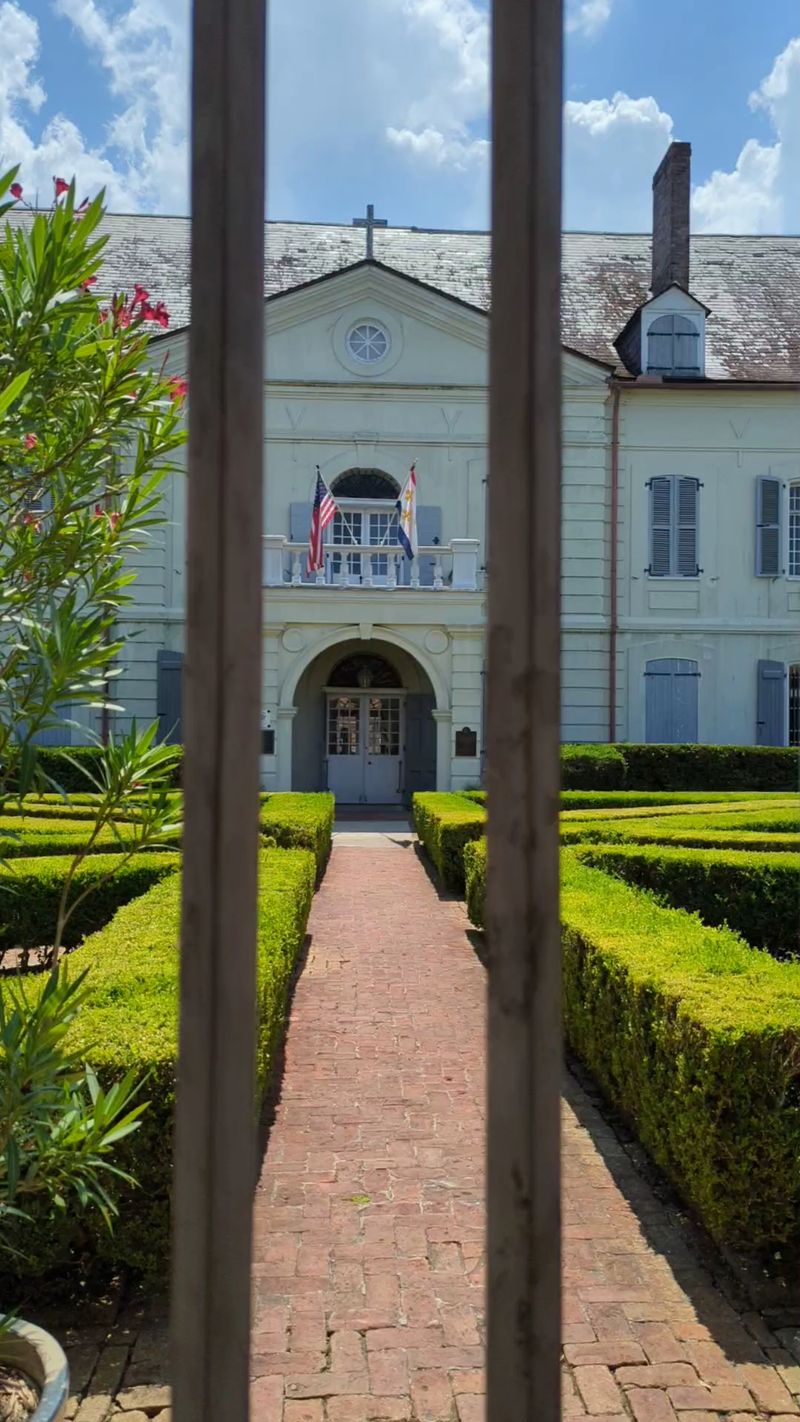
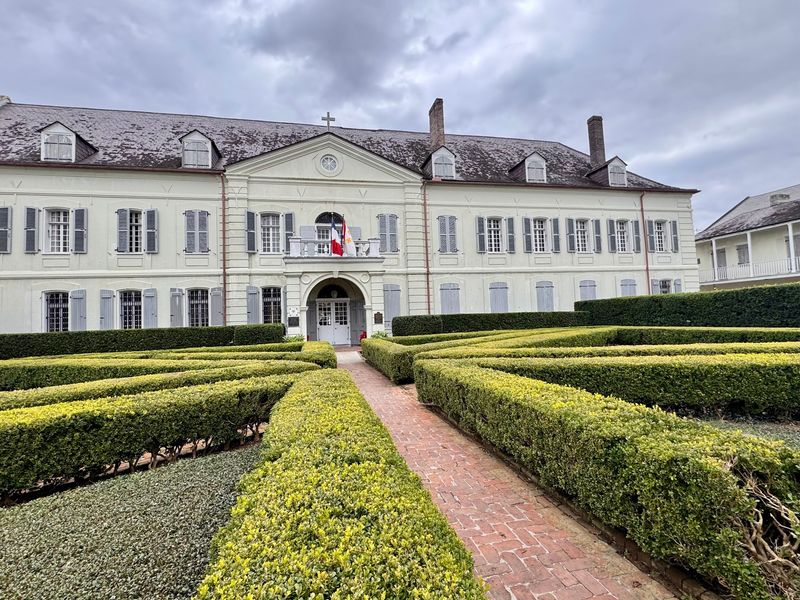
Walk down Chartres Street toward Esplanade and the noise of the French Quarter starts to thin out. Behind a formal gate at the 1100 block sits a pale, symmetrical building that looks calmer than almost anything around it.
The Old Ursuline Convent Museum, listed at 1112 Chartres St., is the oldest building in New Orleans.
Construction wrapped up between 1748 and 1752, replacing an earlier convent on the site that dated to 1734. The walls are stucco-covered brick, and the design follows French Neoclassical lines, with balanced windows and very little decoration.
It is recognized as the oldest American example of French Colonial public architecture.
Most French Quarter buildings people photograph today actually reflect Spanish rule and later rebuilding. The convent predates much of that, which makes it a rare look at what the colonial French city attempted to build for itself.
Today the site operates as a museum and forms part of the Catholic Cultural Heritage Center. Visitors move through exhibit rooms, a church, and gardens.
It is small enough to cover in a morning, yet dense enough that history fans tend to linger well past their plans.
Twelve Nuns Sailing From Rouen
In 1727, twelve Ursuline sisters left Rouen, France, for a muddy colonial outpost on the Mississippi River. They came at the request of the colonial governor, and their to-do list was enormous by any standard.
The sisters were expected to run a hospital, care for orphaned children, and educate girls. That last task turned out to be their lasting mark.
They founded the first school for girls and the first orphanage in territory that would later become the United States.
Their medical work mattered just as much in a town that struggled with malaria and yellow fever. Nursing in that setting required patience, stamina, and a willingness to keep going when conditions were rough.
Guides at the museum lean into this chapter, and visitors frequently mention how much they learned about the nuns’ role in shaping the city. One guest noted being struck by the ocean crossing itself, a journey sanctioned under King Louis.
Knowing this backstory changes how the building reads. The quiet hallways were once a busy workplace, full of students, patients, and children who had nowhere else to go.
The convent was the working center of that mission from its completion until 1824.
How The Building Outlasted Two Great Fires
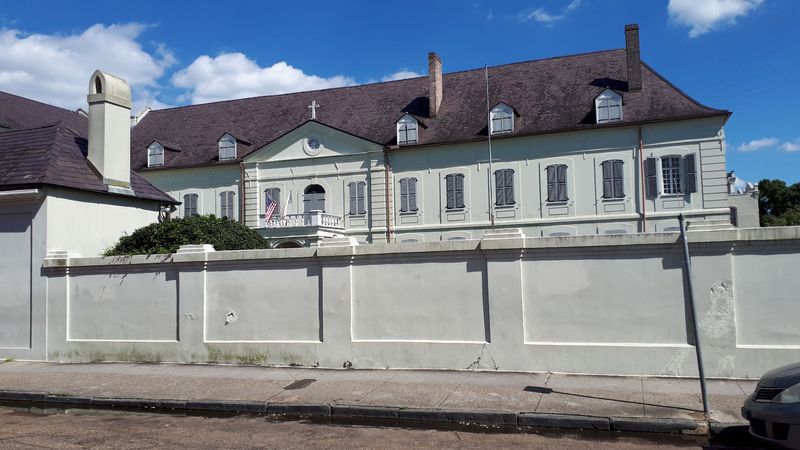
New Orleans burned badly in 1788 and again in 1794. Much of the early city was built of wood, and those fires wiped out block after block.
The convent is the only French colonial structure in the French Quarter that came through both.
Brick and stucco construction surely helped, but the story people prefer involves faith. According to legend, a statue of Our Lady of Prompt Succor was placed in a window during one blaze, and the winds shifted away from the building.
Tour guides still raise that moment as a question. One visitor recalled hearing a version involving a nun placing a holy candle in the window, then being invited to decide for themselves whether it was a miracle.
Either way, survival gave the building an unusual view of history. It stood through French rule, the Spanish period, and the arrival of American control, watching the city change flags around it.
During the War of 1812, the nuns turned classrooms into infirmaries and treated wounded soldiers from both sides. That detail says a lot about how the sisters saw their duty, and it adds another layer to walls that had already weathered plenty.
The Coffin Girls And Their Little Trunks
Here is the tale that gives the convent its spooky reputation. In the early colonial years, France sent young women across the Atlantic to marry settlers in a colony short on wives.
They became known as the filles a la cassette, or girls with little suitcases.
Those cassettes were small wooden trunks holding a few dresses and personal items. Over years of retelling, cassette drifted toward casquette and eventually casket.
With that one word change, a practical piece of luggage became something much eerier.
The Ursulines did take in some of these young women, offering shelter and instruction until marriages were arranged. That part of the story is grounded in real history.
Folklore took the rest much further. The girls supposedly arrived pale and sickly, likely from long voyages and poor nutrition such as scurvy.
Rumor turned that pallor into something supernatural, and whispers spread that their trunks held something unholy or sat strangely empty.
The Coffin Girls, also called Casket Girls, now sit at the heart of countless French Quarter ghost walks. Plenty of people first hear the convent’s name through this legend, long before learning about its schools and hospital.
Shuttered Attic Windows And A Vampire Myth
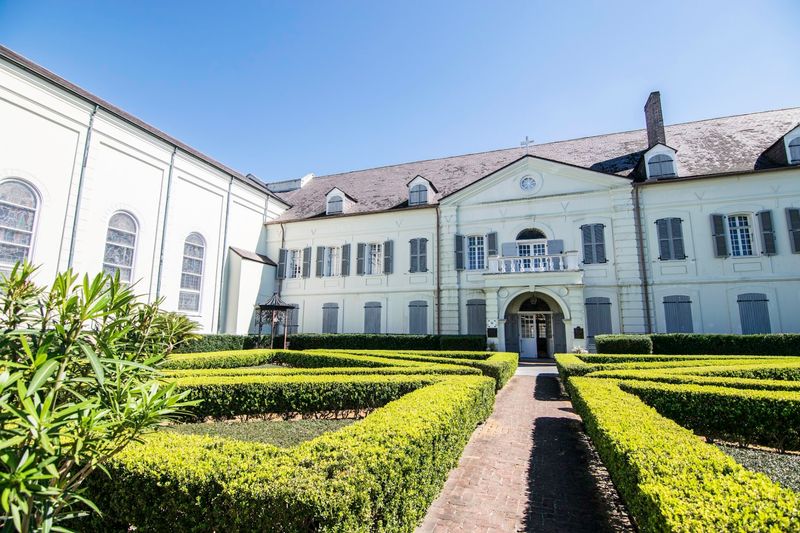
Look up at the roofline and you’ll notice the attic windows stay shut. Evening tour groups gather outside to hear why, and the answer they get usually involves vampires.
As the story goes, the nuns sealed the attic where the Casket Girls were housed, using nails blessed by priests to keep something inside. Tours often point to those closed windows as proof.
Historians see it differently. The vampire angle appears to be a fairly recent addition, likely gaining steam in the late twentieth century as supernatural fiction set in New Orleans grew popular.
The Ursulines never promoted any of it.
Timing also undercuts the tale. The building standing today was completed years after the historical Casket Girls would have arrived, so they could not have been locked in this particular attic.
The staff are good-humored about it. One visitor recalled a guide cheerfully declaring there are no vampires in the attic.
That light touch fits the museum, which leaves room for the legend while steering attention toward the documented story.
Honestly, the real history holds up fine on its own. The myth mostly works as a doorway that brings curious people through the gate.
The Cypress Staircase Built Without Nails
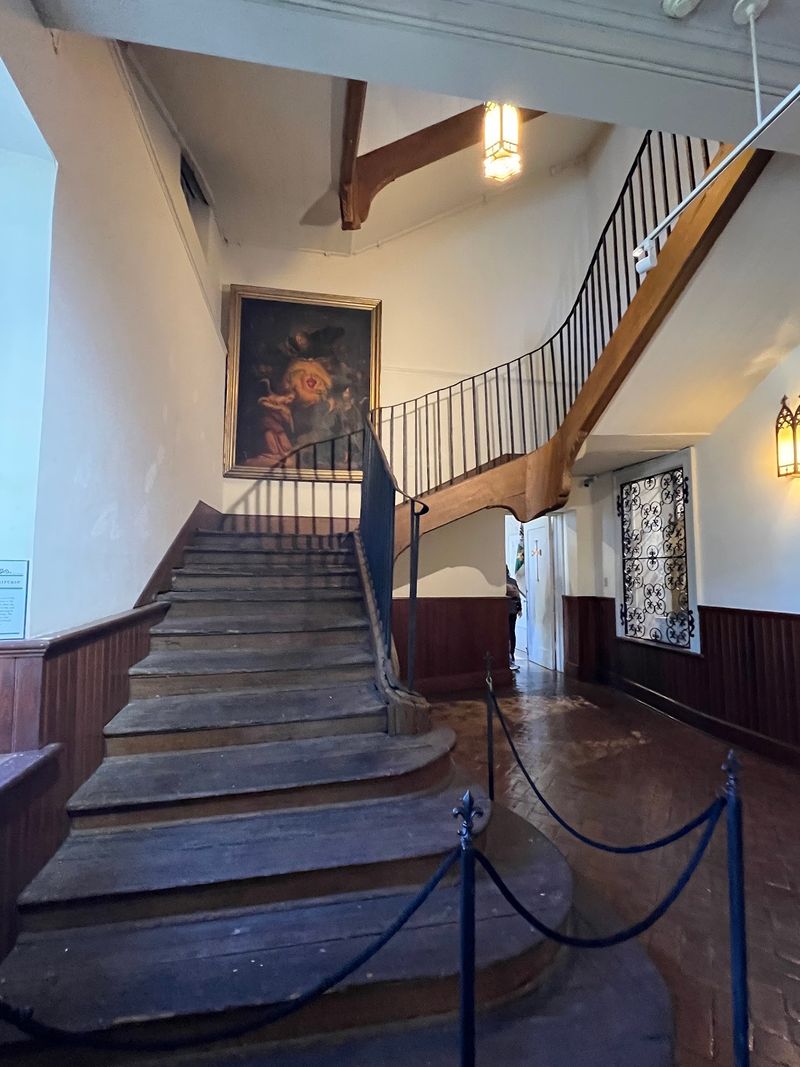
Old wood tells a story if you let it. Inside the convent, a cypress staircase serves as the centerpiece, and it is believed to have been salvaged from the first convent building on the site.
Craftsmen reportedly built it without nails, fitting the pieces together through joinery. For a structure that has handled centuries of footsteps in a humid river city, that is an impressive piece of workmanship.
Cypress was a natural choice in south Louisiana, prized for resisting rot and insects. Seeing it used this way offers a glimpse of how early builders worked with materials close at hand.
Architecture comes up often among visitors, and the staircase is a big reason. It connects the present building to the earlier 1734 convent, stretching the site’s physical history back even further than the walls around it.
Take a moment to notice the proportions and wear on the steps. The formal, restrained style of the convent carries into its interior, and the staircase shows that simple design can still feel grand.
Photography has been permitted, according to past visitors, so bring a camera. The play of light on the old wood rewards a patient eye.
Archbishops, Lawmakers And Schoolboys
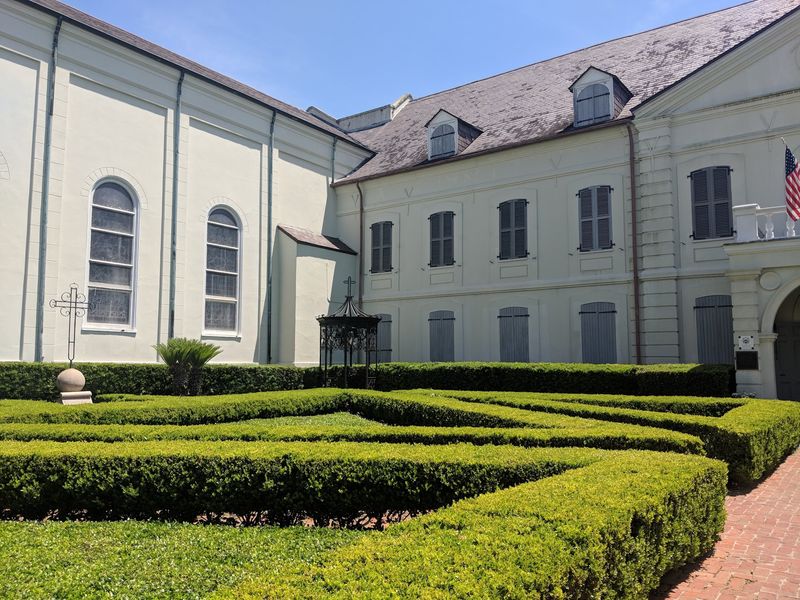
After 1824, the nuns moved to a new home downriver, and the building started a long second career. It became the residence of the archbishops of New Orleans, which earned it the nickname Archbishop’s Palace.
From 1831 to 1834, the Louisiana Legislature met here. It is odd to picture lawmakers debating in rooms built for novices and schoolgirls, but that is exactly what happened.
The building also served as a Catholic school for boys and as the city’s first public school. Education kept returning to these walls, almost as if the Ursulines’ original purpose refused to leave.
Visitors sometimes pick up small details tied to this era. One guest learned that a window visible from inside the church belonged to the Archbishop’s library.
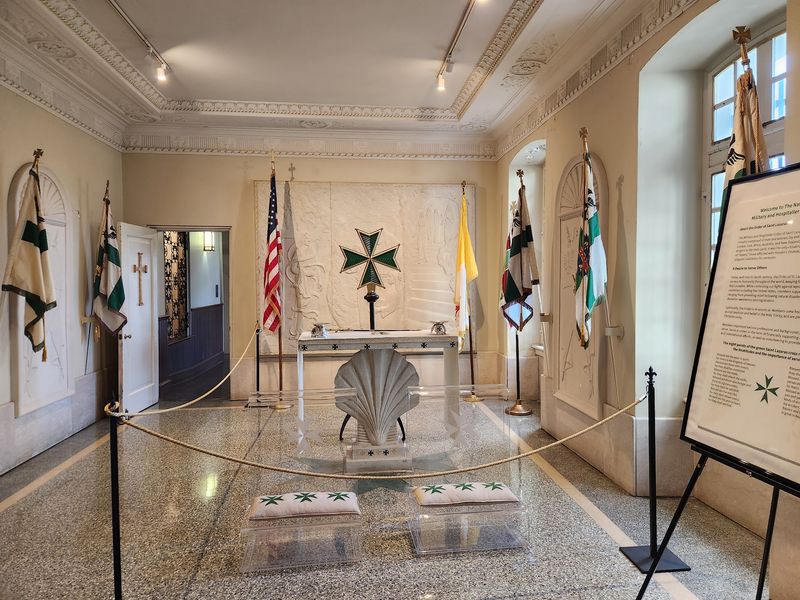
The museum today reflects that long Catholic presence, with permanent and rotating exhibits exploring the church’s connection to New Orleans. Exhibits have included relics, saints tied to the city, and even a board tracing the genealogy of Pope Leo’s family.
Opinions on the exhibits vary. Most visitors find them well labeled and meaningful, while at least one found parts thin and wished for more historical context.
Guided tours tend to fill those gaps.
St. Mary’s Church And The Formal Gardens
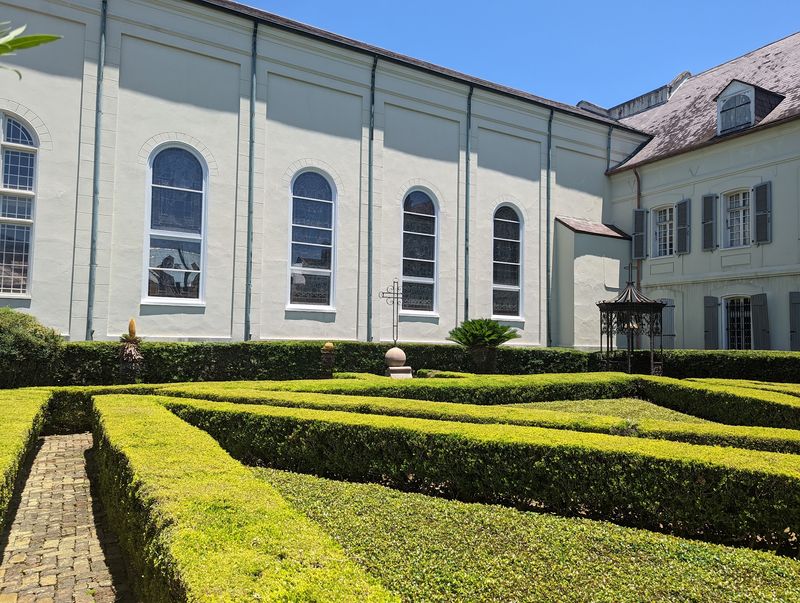
Step outside the exhibit rooms and the grounds open into green geometry. The Bishop’s Garden uses clipped hedges in formal patterns that echo the convent’s French roots.
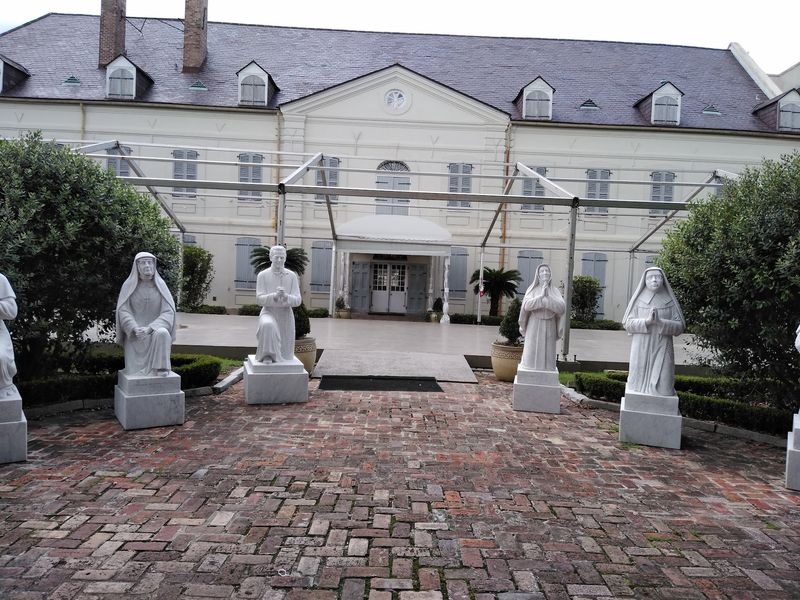
A second garden honors the influential women of the Ursuline legacy.
Next door stands St. Mary’s Church, built in 1845 and part of the same complex. Visitors regularly describe it as stunning, and it earns more praise than almost anything else on site.
One guest said they could happily sit in the church forever. Others mention relics, including a piece of bone from a saint, which one visitor argued was more unusual than anything on the city’s ghost tours.
Peaceful atmosphere shows up again and again in visitor comments. With the French Quarter buzzing a few blocks away, the calm here feels almost surprising.
The church’s setting also appeals to couples. At least one visitor described it as a beautiful spot for a formal, sacred-feeling ceremony, fitting those who love New Orleans and want something grand.
Plan to leave time for the gardens after the museum. They offer a breather before heading back into busier streets, and the view back toward the old convent facade is worth savoring.
Volunteer Docents And Self-Guided Wandering
Ask what people remember most, and the answer is usually a guide. Knowledgeable tour guides are the single most mentioned highlight among visitors, far ahead of any single artifact.
Several docents get named repeatedly, including a volunteer named Phillip Martin, along with guides named Tom and Sara. Guests describe stories that were entertaining, questions answered patiently, and plenty of free time afterward to look closer.
Tours cover more than the building. Visitors mention learning about tombstone iconography, a swimming pool once built over one of the city’s oldest graveyards, and a clock that survived the 1900 Galveston hurricane and still keeps time.
Guided tours have been offered at no extra charge beyond admission, based on visitor accounts. Some mention them with surprise, having simply arrived and found a volunteer ready to lead.
Prefer your own pace? Self-guided visits work well too.
One visitor received a paper map listing highlights of each room, with interpretive signs throughout, and spent about an hour exploring.
Longtime area residents have also toured it for the first time and found it better than expected. It suits history buffs, families, and even travelers who aren’t religious, though those uneasy at religious sites may prefer skipping.
Hours, Admission And A Quiet Final Word
Timing matters here because the window is short. The museum opens Tuesday through Saturday from 10 a.m. to 2 p.m., and it is closed Sunday and Monday.
Mornings are the safe bet.
One visitor reported arriving on a Saturday to find an unexpected closure, so calling ahead at 504-529-3040 or checking oldursulineconventmuseum.com before you go is a smart move.
Admission is modest. Recent visitors mention an $11 entry fee, with senior pricing noted in the past and discounts for students and military.
Tickets can be bought on site, and there are clean restrooms plus a small gift shop.
Parking takes a little planning. There is no convenient dedicated lot, so street parking is common.
One visitor pointed to an affordable garage at 420 N. Rampart St., a few minutes’ walk away.
For anyone staying in the Quarter, walking is easiest. The convent sits toward the quieter lower end, near Esplanade Avenue.
Come for the Coffin Girls if that is what pulls you in. Chances are you will leave thinking more about twelve nuns, a nail-free cypress staircase, and a building that watched a city burn twice and kept standing.