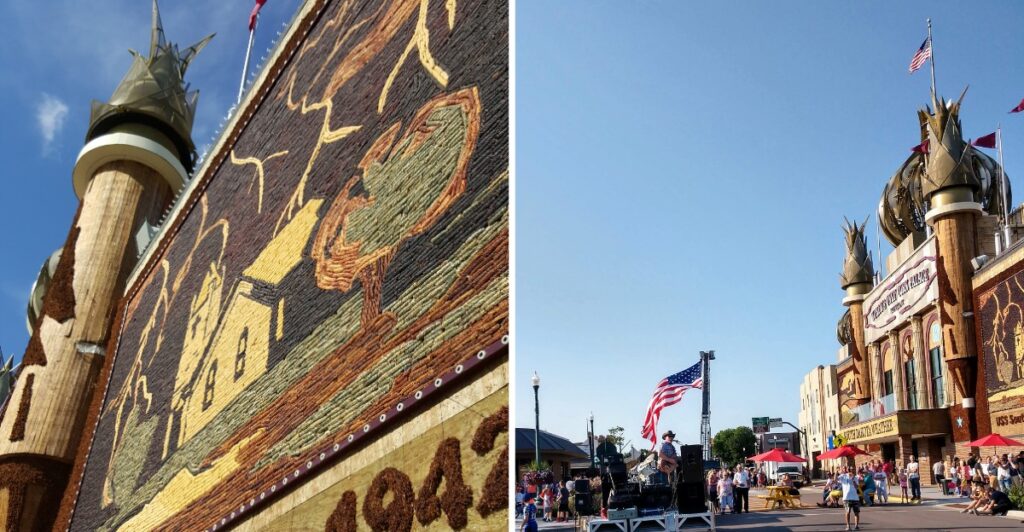
Most buildings get a fresh coat of paint.
This one gets fresh corn.
Every year, the old look comes down, and a new one takes over.
Yes, actual corn.
The tradition started back in 1892, and South Dakota has been leaning into the idea ever since. The building has changed over time, but the annual makeover stuck.
Naturally colored corn, grains, and grasses still do most of the decorating.
And somehow, it works.
For 2026, a new theme gives the exterior another reason to look completely different from the year before.
That is enough of a hint.
Walk around first. Take in the details. Then head inside and see how deep this corn-covered story actually goes.
A building this committed to changing outfits deserves more than a drive-by.
A Fresh Face Arrives Every Single Year
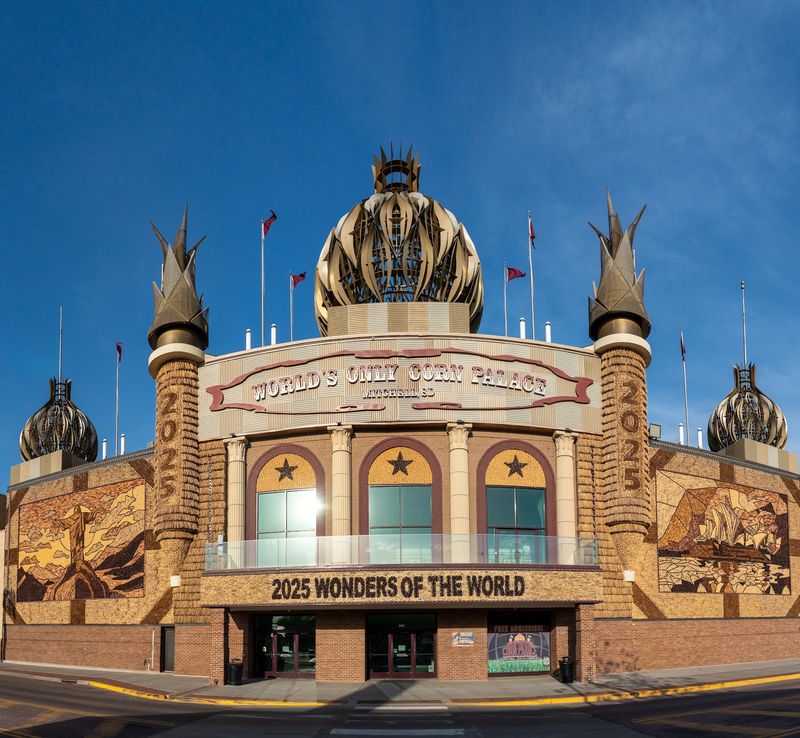
Most buildings keep the same look for decades, but this one refuses to sit still. Each year, the Corn Palace trades its old outfit for a new set of murals.
The Corn Palace tradition began in downtown Mitchell in 1892. The current building was completed in 1921, and Moorish-style minarets and kiosks were added in the 1930s.
Workers use naturally colored corn, grains, and native grasses to cover the exterior. A different theme is chosen each year, and the murals are designed around that theme.
A return trip can show you a different set of images from the ones you saw before. The annual redesign keeps the outside of the building from becoming a fixed display.
Inside, photos from many earlier years let you compare past designs with the current ones. Start there if you want a little context, then head back outside and look for the details that change from panel to panel.
Bring a camera and take your time. The next year’s version will not look exactly the same.
Counting Kernels By The Hundreds Of Thousands
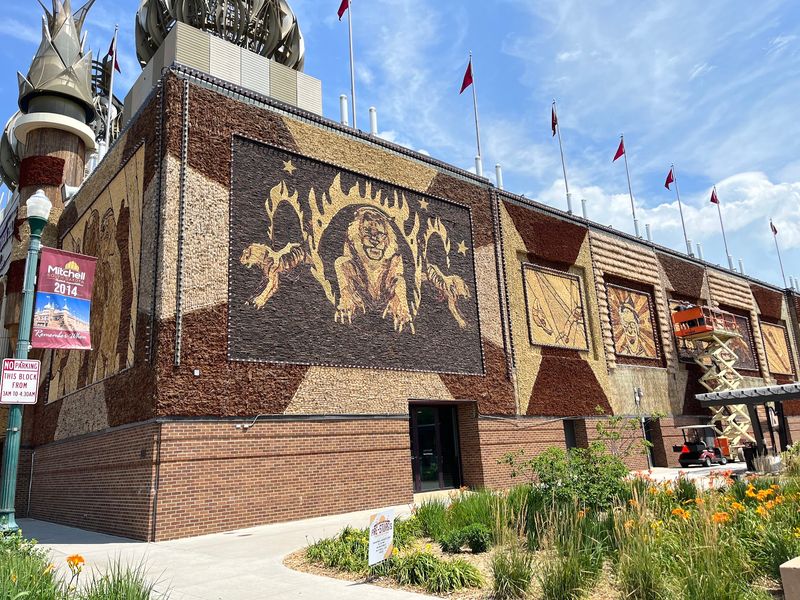
More than 275,000 ears of corn. Let that number sink in for a moment.
That is how much corn goes into redecorating the Corn Palace. Ear by ear, the crop becomes part of the mural surface, joined by grains and native grasses that fill out borders, shapes, and other details.
Stand close to a mural and the construction becomes easier to see. Rows of corn create lines, blocks of color, and larger shapes. Step back, and those smaller pieces resolve into the full image.
The color does not come from paint. The Corn Palace uses naturally grown corn in multiple colors and shades, with special seed raised for the decorating process. Each color is planted separately so the crop keeps its distinct hue.
Look for the transitions between one shade and the next. Red, brown, black, blue, white, orange, calico, yellow, and green are among the colors used in the decorations.
The scale is easy to miss from across the street. Move closer first, then step back again. Seeing both distances makes the mural process much easier to understand.
Themes That Change The Whole Story
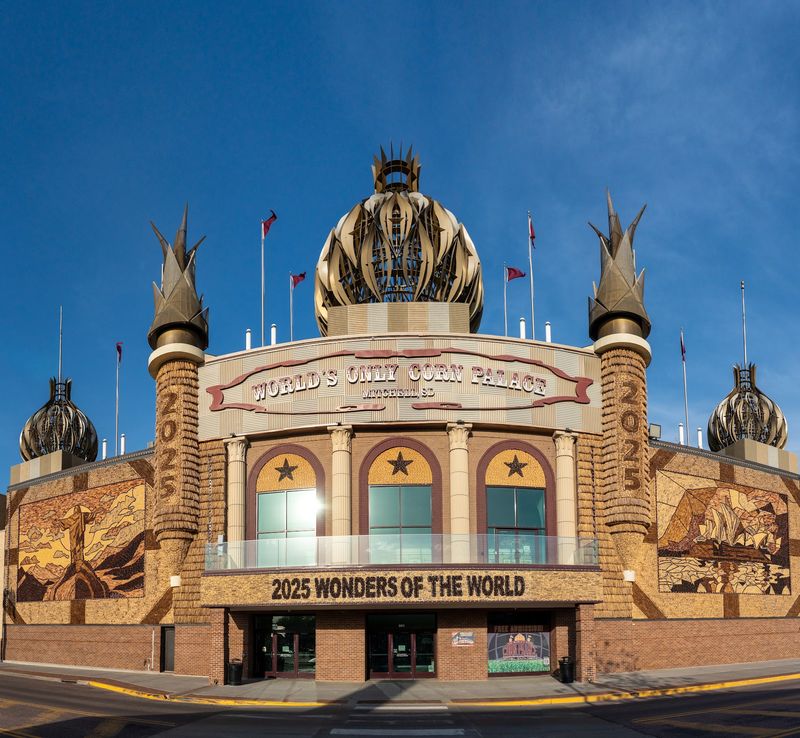
Every year, a new theme shapes the murals, giving the exterior a different story to tell.
Past themes have ranged from South Dakota scenes and patriotic subjects to circus imagery, weather, wildlife, and historical topics. The theme changes the imagery without changing the basic method of building the murals from agricultural materials.
The 2026 theme is 250 Years of America. The murals mark the 250th anniversary of the signing of the Declaration of Independence and highlight selected events and people from American history.
That gives you something specific to look for as you walk around the building. Instead of treating the murals as one giant picture, move from panel to panel and notice how each scene connects to the larger theme.
Try picking a favorite before you leave. It turns the exterior into more than a quick photo stop and gives you a reason to circle the building rather than glance at one side and move on.
The theme archive also reaches back to the earliest years of the Corn Palace. If you enjoy comparing styles, the older designs make a useful counterpoint to the current set.
Nature Supplies The Color Palette
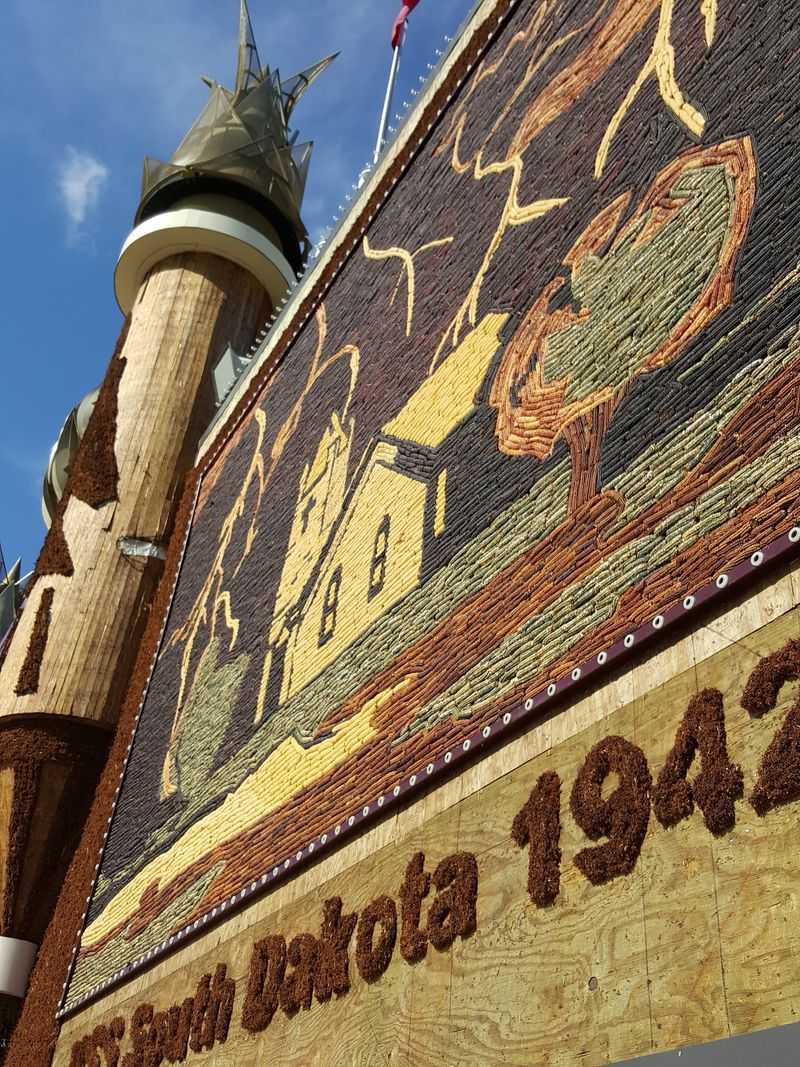
No paintbrushes needed here. The colors you see on the murals come from the corn itself.
The Corn Palace uses naturally grown colors and shades of corn rather than painting the kernels. Different colors are planted in separate fields, then selected and attached to the building during the decorating process.
Grains and native grasses add another layer of texture. Together, those materials let the murals use agricultural products as both color and surface.
The crop can also influence the timing of the work. Growing conditions affect the supply of decorating materials, so the schedule can shift when the harvest does not cooperate.
Here is a simple way to look at one panel: start with the largest shape, then move closer and find the individual ears, grains, and grasses that make it up. The mural changes depending on how far away you stand.
Morning and late afternoon can give the exterior different shadows, but there is no wrong time to study the material itself. The details are there whether the sky is bright, cloudy, or somewhere in between.
From Student Sketches To Giant Walls
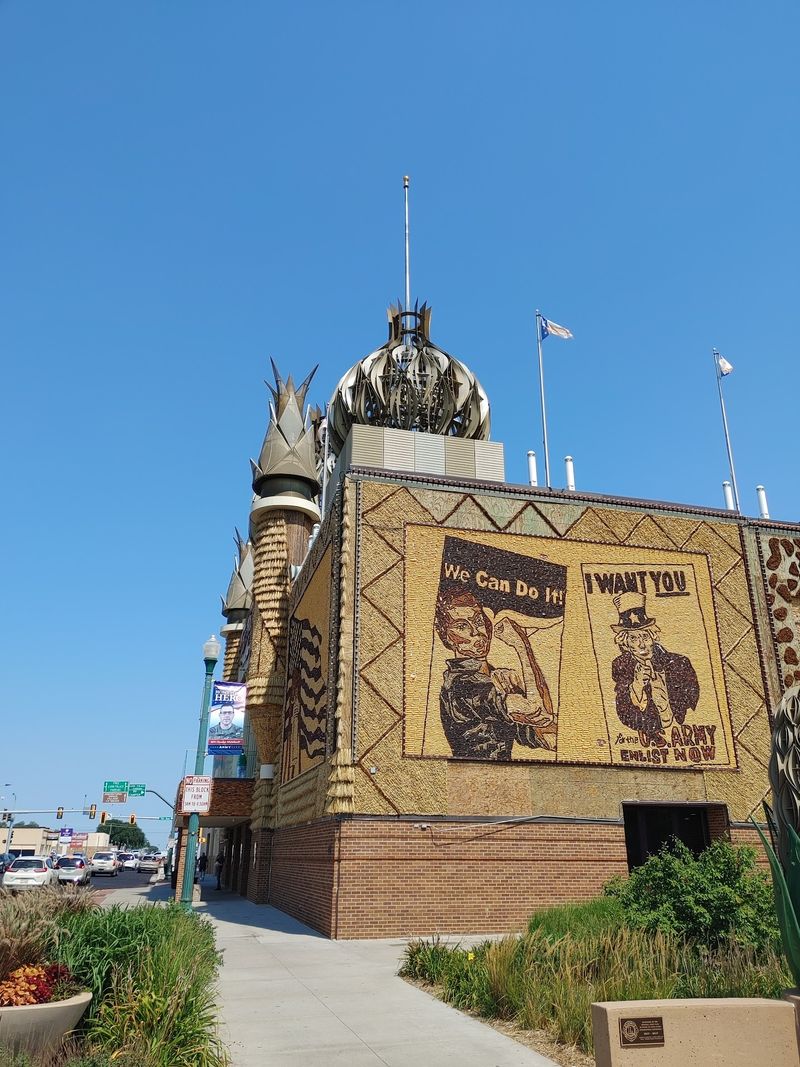
Big art takes big patience. Turning an idea into a wall of corn is a project that stretches across several months.
Recent mural designs come through a partnership with Dakota Wesleyan University students in Digital Media and Design.
That collaboration began with murals designed in 2019, and the 2026 artwork also involved Dakota Wesleyan students and the Corn Palace Entertainment Board.
Once the designs are ready, the hands-on transformation unfolds in stages. The decorating process generally begins in late May with the removal of rye and dock materials.
The corn murals are stripped near the end of August, and the new ones are usually completed by October 1.
Growing conditions can affect that schedule, so an early-fall visit may catch the building in transition. Some parts can be farther along than others while the new corn is being installed.
If you want to see the process rather than only the finished result, that timing can be useful. If completed murals matter more, later fall gives the work more time to reach its final form.
Either way, look closely at how the design moves from a student-created image to rows of real agricultural material attached to a building.
Carnival Rides, Music, And A Harvest Party
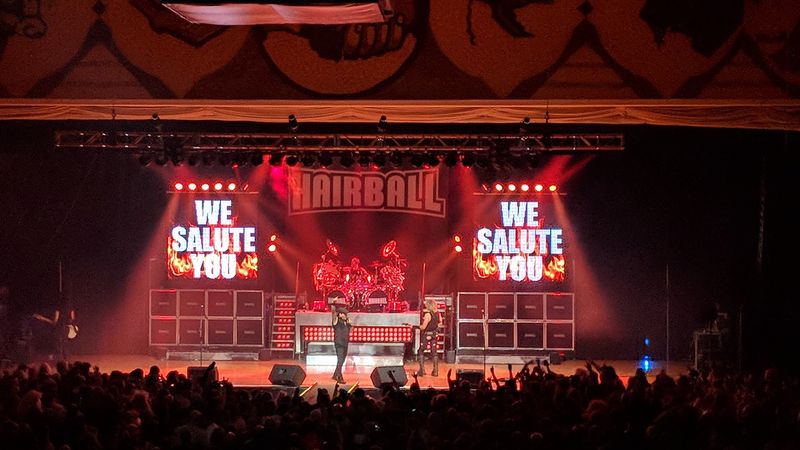
Late summer in Mitchell brings the annual Corn Palace Festival back to downtown.
The 2026 festival is scheduled for August 26 through 30. The event celebrates the yearly redecoration of the Corn Palace and brings entertainment, carnival rides, food vendors, specialty vendors, and produce judging to the area around the building.
That makes festival week a very different visit from a quieter stop later in the season. If you want rides, food stands, and scheduled entertainment along with the Corn Palace itself, late August is the time to consider.
The festival setup stretches along Main Street, so comfortable shoes make sense if you plan to spend time moving between the building, rides, vendors, and other activities.
The mural work is also entering an important stage around this time, since the old corn murals are typically stripped near the end of August. That means the festival and the annual transformation overlap on the calendar.
Check the daily schedule before you go, then decide whether the Corn Palace itself or the festival activities get the first part of your visit. A little planning keeps you from crisscrossing downtown more than necessary.
Smart Tips For A Smooth Visit
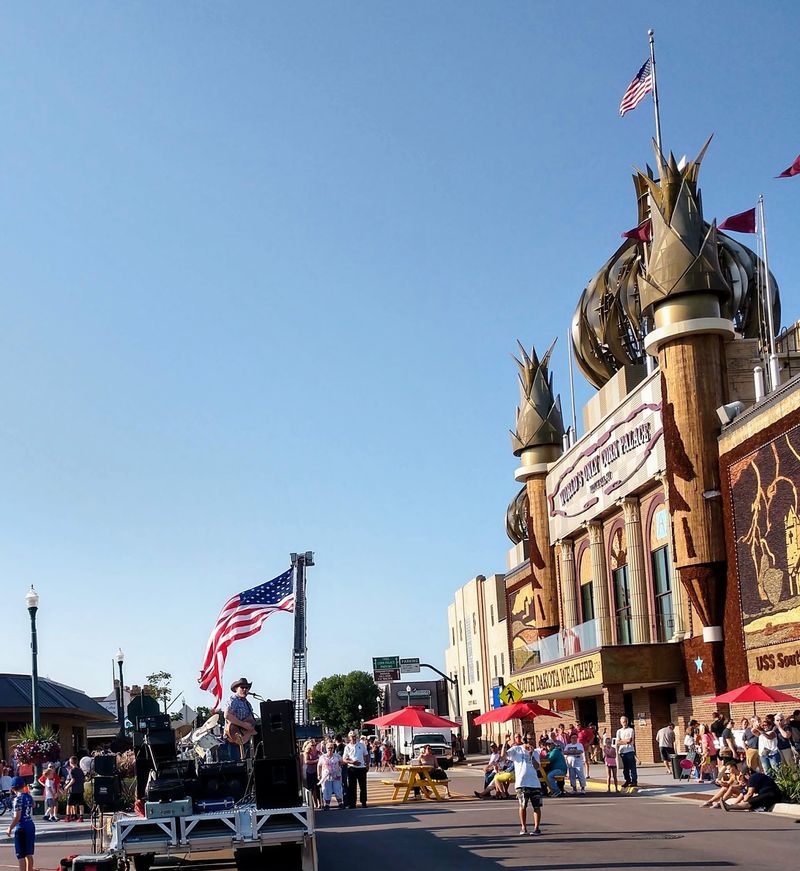
Good news for your wallet first. Admission to the Corn Palace is free, and parking is free as well.
Inside, the building serves as an arena and event venue in addition to being a visitor attraction. Displays cover the Corn Palace story, earlier mural designs, how the decorations are created, and how the corn is grown.
During the summer, free guided tours also add another way to understand the building, with information about its history and decoration process.
The current structure is still used for basketball, stage events, meetings, and other community functions, so what looks unusual from the street is also an active civic venue.
Free public tours are offered from Memorial Day through August. Outside that period, you can still explore the building during regular visiting hours when it is open.
Hours change by season. From Memorial Day through Labor Day, the Corn Palace is generally open daily from 8 a.m. to 9 p.m. From the Tuesday after Labor Day through October 31, daily hours are 8 a.m. to 5 p.m.
Winter and spring schedules are shorter, and holiday closures apply.
The gift shop sits across Main Street from the front door, so save that stop for before or after the building rather than carrying purchases through your visit.
You’ll find the Corn Palace at 604 N Main Street, Mitchell, SD 57301.
If the murals are your priority, give yourself time to see them from both near and far. If history interests you more, spend longer with the displays inside. Either way, the easiest visit is one that leaves room to look closely rather than rushing through a single photo.