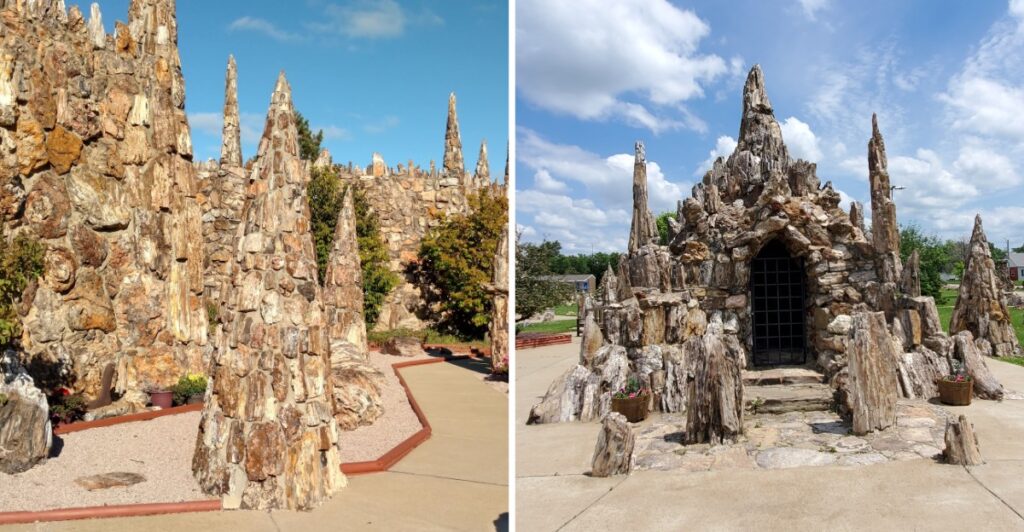
What do you build when your wood has already turned to stone?
Apparently, quite a lot.
This downtown park is packed with structures made from petrified wood and fossil material, turning an ordinary walk into something that feels a little prehistoric and a little homemade at the same time.
The story goes back to the Great Depression, when local workers shaped tons of unusual material into a collection that kept growing.
South Dakota ended up with one very strange city block.
You can wander past towers and walls, then slow down and look at what they are actually made from. That is when the details start getting interesting.
No hiking boots required. No long detour either.
Just pull over, stretch your legs, and try not to ask the obvious question too many times:
How is that wood?
More Than One Hundred Structures Fill The Park
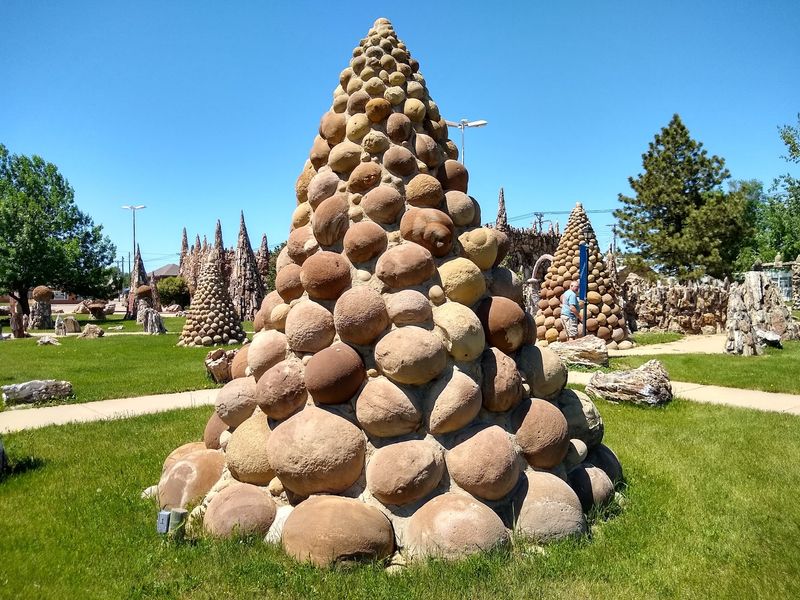
More than hundred structures stand across the grounds, giving the park the feel of an outdoor collection rather than a single monument.
The shapes vary from towers and walls to pyramids, columns, and castle-like forms. Many are built from petrified wood, while other displays incorporate fossil material and rounded stones known as cannonball concretions.
Walk the paths slowly enough to notice how different the pieces look up close.
Some petrified wood still shows patterns that resemble grain, bark, knots, or growth rings, even though the original organic material has been replaced by minerals over immense spans of time.
The structures also vary in scale. A low wall may sit close to a much taller tower, while smaller arrangements of fossil material fill the spaces between the larger features.
If you are visiting with a camera, circle the grounds once before deciding which structures you want to photograph more closely. That keeps the first pass focused on orientation instead of stopping every few steps.
The park is compact enough to explore on foot without committing to a long trail, but the number of structures gives you plenty to look at before moving on.
On a shorter visit, focus first on the taller towers, the castle, and the museum area, then use any remaining time for the smaller walls and fossil details. A longer stop gives you more time to circle the block and compare the petrified grass, wood, and concretions up close.
Thousands Of Tons Of Petrified Wood Fill The Grounds
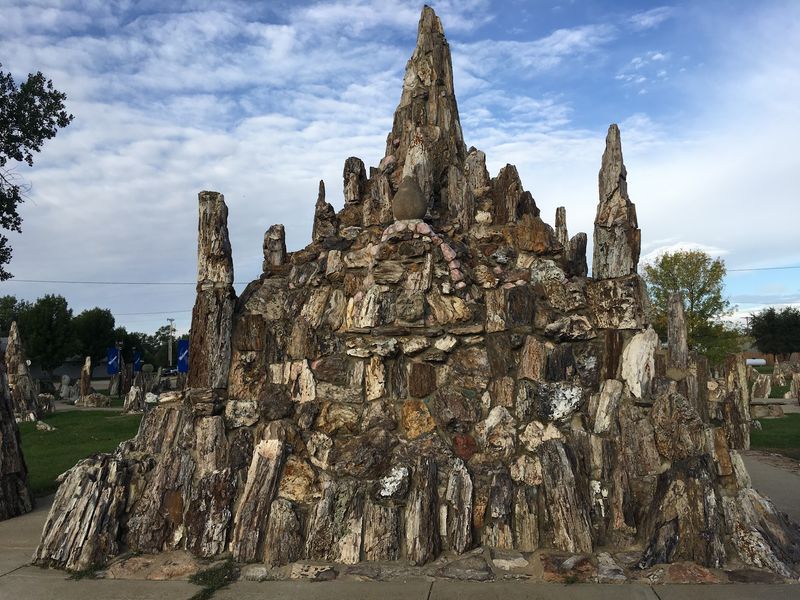
About 3,200 tons of petrified wood were used in the park, along with roughly 100 tons of petrified grass and additional stone material.
That scale becomes easier to understand once you stand beside the walls and towers and see how densely the fossil pieces are packed together.
Petrified wood forms when buried plant material is gradually replaced by minerals while much of the original structure remains visible. The result is stone that can still preserve details associated with wood, including grain-like patterns and ring structures.
At Lemmon, those pieces were gathered and incorporated into walls, columns, towers, and other forms across the park.
Look closely at the surfaces rather than treating each structure as one solid block. The individual pieces vary in size, shape, and color, and the differences become more obvious from a few feet away.
Some sections also include rounded cannonball concretions, which add another texture and shape to the displays.
Instead of focusing only on the total tonnage, compare the individual pieces worked into nearby walls and towers. The differences in shape, texture, and fossil detail are often easiest to see at close range.
Towers Rise Up To Twenty Feet
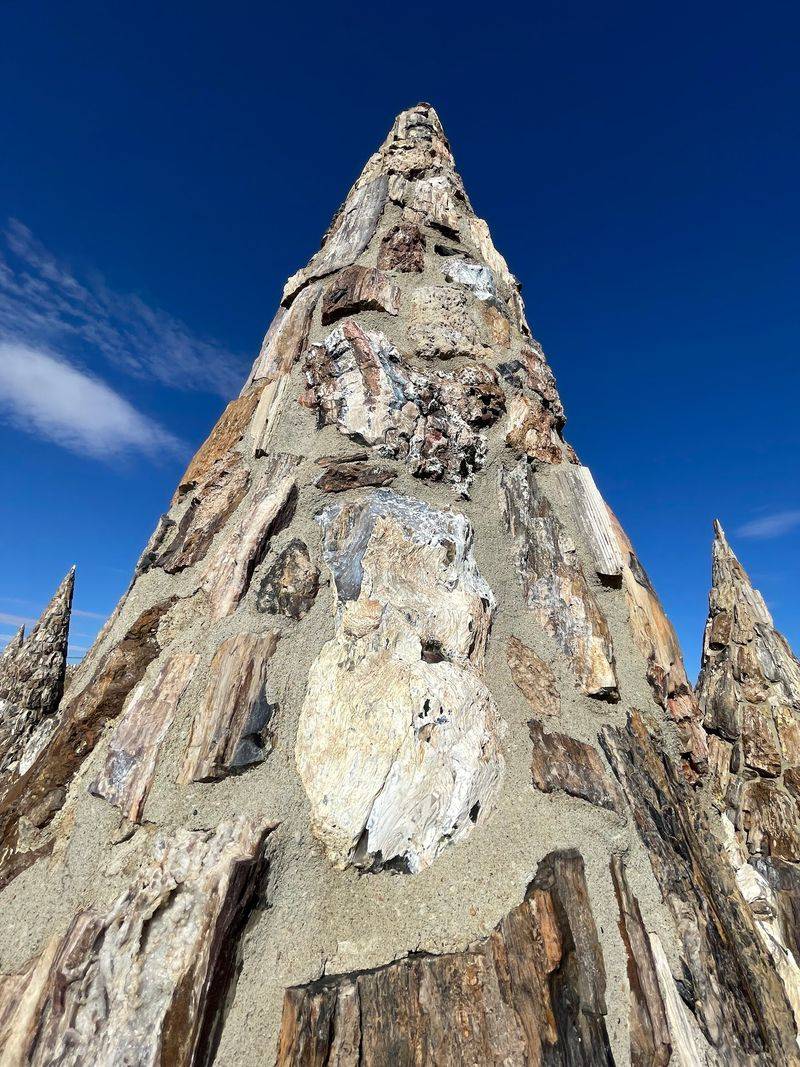
The tallest towers in the park rise up to about 20 feet.
Their height makes them easy to spot from across the grounds, especially where the structures stand against the open South Dakota sky.
From closer range, you can see how the petrified wood and stone pieces are layered and fitted into the larger forms. The towers narrow and widen in different places, so each has a slightly different silhouette.
Use the open paths to step back before taking a photo. A little distance makes it easier to fit the full height into the frame without having to tilt the camera sharply upward.
Pick one of the taller structures as a visual marker, then continue toward the smaller walls, pyramids, and fossil displays nearby.
Because the park is compact, you can compare several large structures without covering much distance. That makes it easy to notice differences in shape, material, and construction from one section to the next.
The towers, walls, pyramids, and smaller fossil displays all share the same compact outdoor grounds, so you can move between them without following separate routes.
The Park Took Shape During The Great Depression
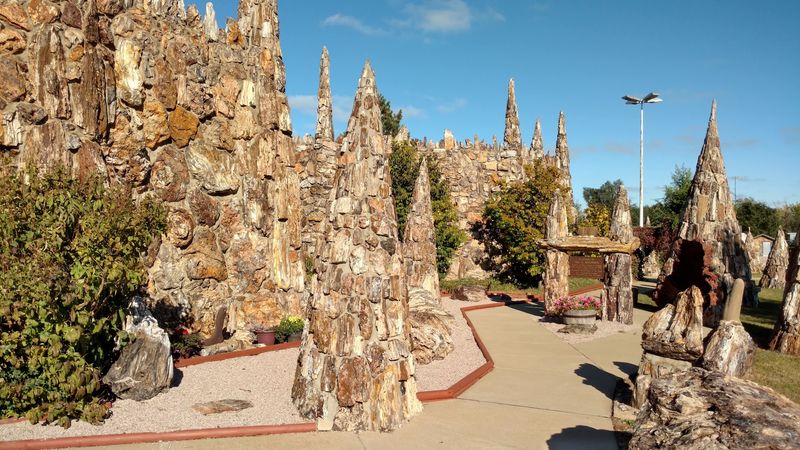
Construction began around 1930, during the early years of the Great Depression.
Ole S. Quammen had gathered petrified wood before the building project began, and local workers were employed as the park expanded through the early 1930s.
By the time the main work was completed around 1932 to 1933, the site contained a large collection of towers, walls, pyramids, the miniature castle, and other structures built from fossil material.
The park later became part of Lemmon’s local identity and was added to the National Register of Historic Places in 1977.
Quammen deliberately hired unemployed local people during the Depression, giving workers paid jobs while the park was being built.
As you walk, look for the different building forms created during that period, from tall towers and walls to the castle and smaller fossil arrangements.
At Lemmon, the Depression-era construction left behind a concentrated collection of petrified wood structures that still occupies the same downtown block.
A Petrified Wood Castle Sits Beside The Museum
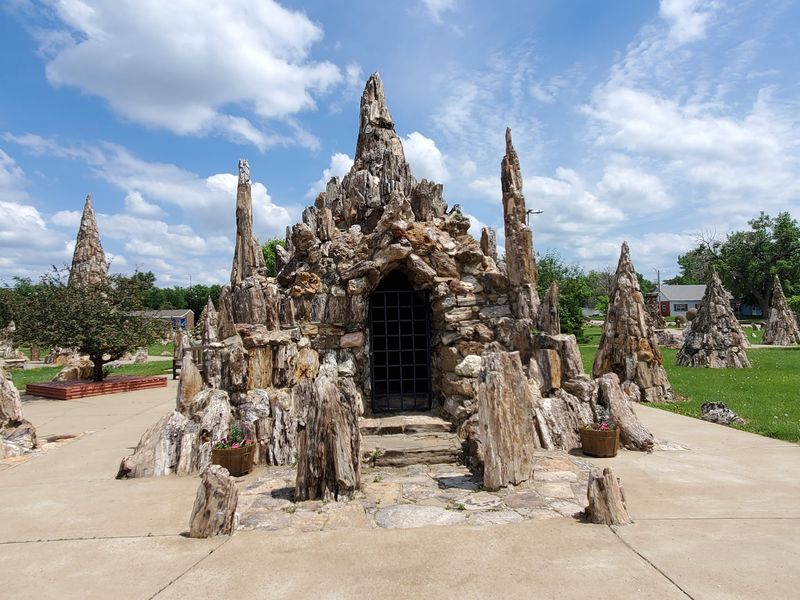
One of the park’s most distinctive structures is a miniature castle built from petrified material.
The castle uses more than 300 tons of petrified wood, giving it enough mass to stand apart from the smaller walls and displays nearby.
The museum continues the story indoors with exhibits tied to local history, geology, pioneer life, fossils, and the material used throughout the park.
Historic photographs and artifacts add context to the outdoor structures, while the fossil and mineral displays give you a closer look at the kinds of material used across the grounds.
The museum is open seasonally rather than year-round. Current city information lists daily museum hours from 9 a.m. to 5 p.m. between Memorial Day and Labor Day, with free admission.
If you are visiting outside that window, plan primarily for the outdoor park and confirm whether indoor spaces are open before setting out.
The seasonal gift shop follows the same general summer pattern, so summer visits offer the broadest access to both indoor and outdoor parts of the attraction.
Petrified Grass Adds Another Fossil Material
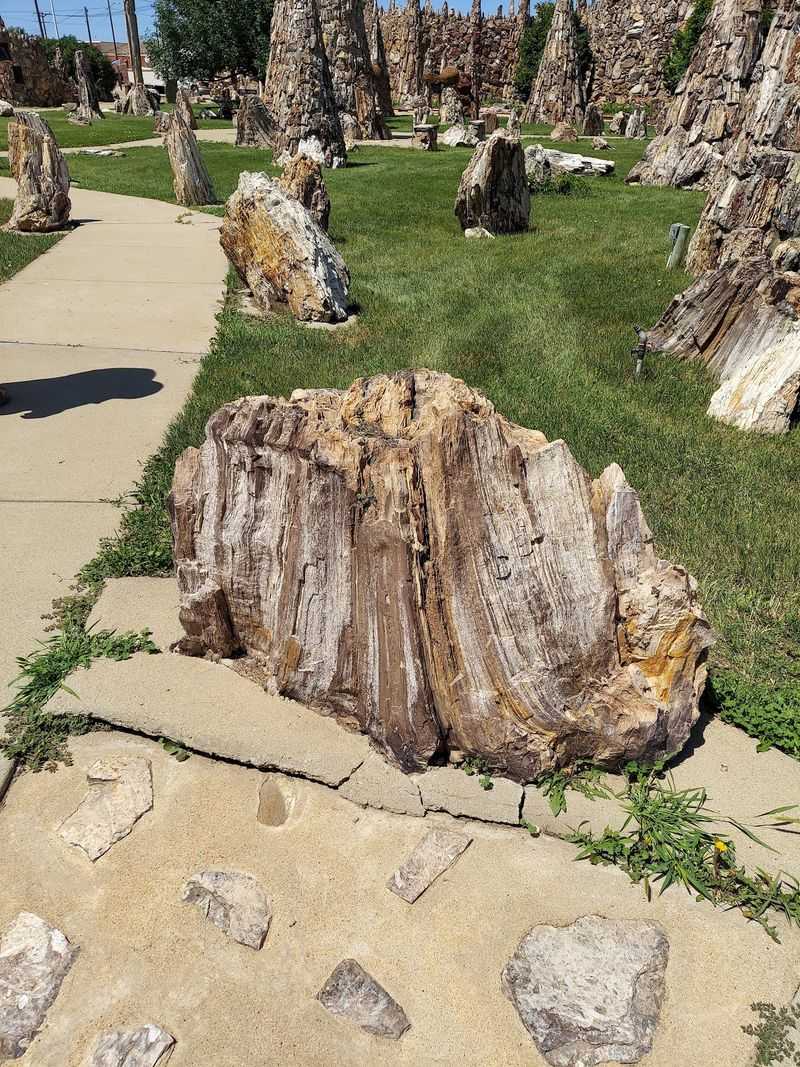
The park contains about 100 tons of petrified grass in addition to its much larger quantity of petrified wood.
That material appears alongside fossil wood and other stone features throughout the grounds.
Petrified grass is easy to overlook if you focus only on the biggest towers, so take time to inspect the smaller textures worked into walls and displays.
Unlike the large log-like pieces of petrified wood, the grass material can appear finer and more compact. Compare those textures directly with the larger wood pieces nearby.
The park also includes cannonball concretions, rounded stone formations that add another visual contrast to the sharper pieces of fossil wood.
You do not need a geology background to follow the differences. Start with shape and texture, then compare the finer grass material with the larger wood pieces around it.
The park is at 500 Main Ave, Lemmon, SD 57638. Use that address for the grounds and museum, and check seasonal museum hours before making a special trip for the indoor exhibits.
The Park Sits In Downtown Lemmon
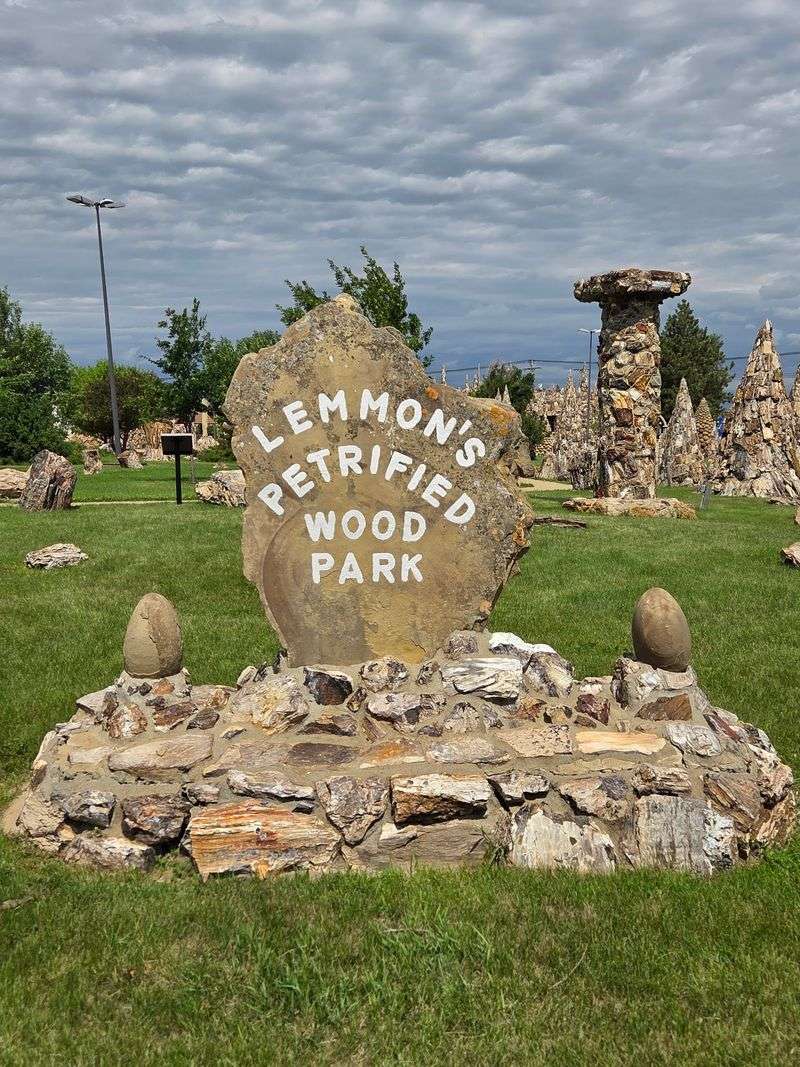
The Petrified Wood Park & Museum occupies nearly a full city block in downtown Lemmon.
Its Main Avenue location places it close to U.S. Highway 12, so you can reach the grounds without leaving town for a remote trailhead or rural site.
The outdoor park can be explored on foot, while the museum and gift shop operate seasonally. That makes summer the simplest time to combine the full outdoor collection with the indoor exhibits.
Outside the summer museum season, the grounds still give you the main visual experience: towers, walls, the castle, pyramids, fossil displays, and the larger petrified wood structures remain outside.
Dress for the weather rather than for a long hike. The park is compact, but western South Dakota conditions can change quickly, and an open downtown setting offers less shelter than a wooded trail.
If you are passing through on Highway 12, the park can fit into a shorter stop. With more time, slow the walk down and compare the large towers with the smaller fossil details you may have missed on the first pass.
Before leaving, make one final pass around the perimeter rather than heading straight back to the car.
The larger structures read differently from across the street than they do from the paths, and the smaller walls are easier to notice once you already know where the tallest towers stand.
A final circuit can take you past the tallest structures, the miniature castle, smaller fossil displays, and the seasonal museum entrance before you return to Main Avenue.