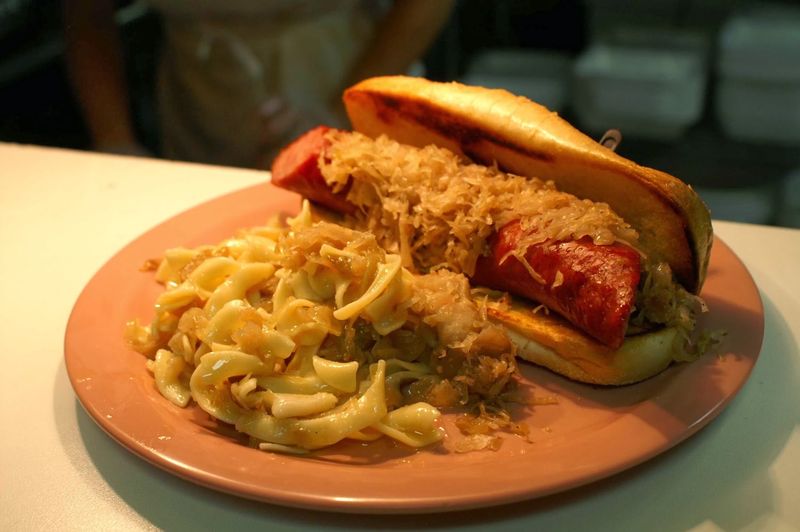
A pork roast plate called The Gatherer once came with potato pancakes, sauerkraut, dumplings, gravy, and a dollop of sour cream. That was one menu item.
It was not even the biggest one.
A Hunter’s Platter there was large enough to send hungry diners home with leftovers. Czarnina, a rare Polish soup, also sat on the menu.
In my view, that alone tells you how serious this little Ohio kitchen was about old-country cooking.
Here is the honest part, though. The restaurant served its last plates in 2014, when its owner announced his retirement.
I still think its story deserves telling.
I appreciate how a humble strip-mall spot became a stand-in for Grandma’s table. So what made it special, and what can Ohio comfort-food fans learn from it today?
A Grandma-Style Polish Kitchen in a Suburban Plaza
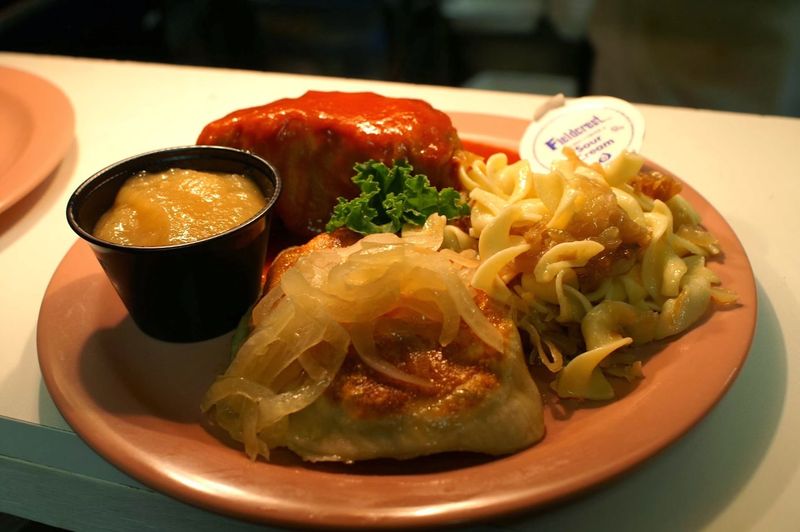
Babushka’s Kitchen was a Polish restaurant in Independence, a suburb just south of Cleveland. Its name borrows the Slavic word for grandmother, which set expectations nicely.
The restaurant sat inside a shopping plaza along Brecksville Road. Nothing about that setting screamed destination dining, and that was part of the charm.
The menu leaned hard into Eastern European comfort food. Stuffed cabbage, chicken paprikash, pierogies, kielbasa, and dumplings all had a place there.
Before we go further, one important update matters. Babushka’s Kitchen is no longer open, so this is a look back rather than a dinner plan.
Owner Dave S. Abramowski announced his retirement and the closing of the restaurant.
The final day was May 31, 2014.
So why write about it now? Because places like this shaped how northeast Ohio eats, and their dishes still matter.
The cabbage-and-noodle comfort of haluski belongs to that same family of cooking. It’s simple food built from butter, cabbage, and noodles, the kind of thing grandmothers made without a recipe card.
Babushka’s Kitchen represented that whole tradition under one roof. It served the hearty, rib-sticking plates that many Cleveland-area families grew up on.
In my view, the best tribute to a closed favorite is understanding what it did well. That way, you know exactly what to look for at the next pierogi counter you find.
Let’s walk through the plates, the mood, and the legacy. Fair warning, this may make you hungry.
Butter, Cabbage, and Noodles: Why Haluski Fits This Story
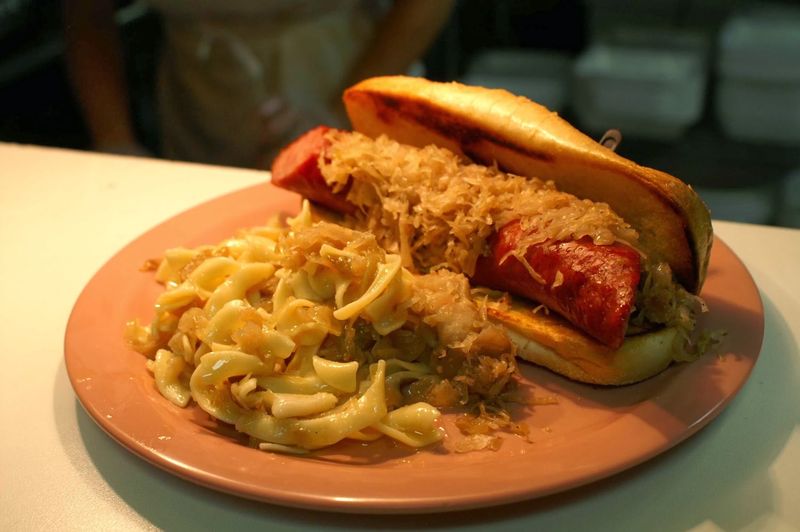
Three ingredients can carry a whole culture. Haluski proves it with cabbage, noodles, and a generous amount of butter.
The dish has deep roots in Polish and Slovak home cooking. In Ohio, it shows up at church festivals, family reunions, and ethnic restaurants all over the Cleveland area.
Babushka’s Kitchen worked squarely in that tradition. Its menu centered on the same cabbage-forward cooking that gives haluski its soul.
Stuffed cabbage was a known staple there. Sauerkraut came alongside pork roast, and dumplings appeared on more than one platter.
That’s the comfort-food family haluski belongs to. Humble ingredients, slow attention, and portions meant to fill you up.
Why does it feel so comforting? Partly it’s the butter, of course.
Partly it’s the memory of someone feeding you without asking whether you were hungry.
Haluski also travels well across generations. Kids like the noodles, and adults like the sweet, browned cabbage.
I find it interesting that such a plain dish earns so much loyalty in Ohio. It never tries to impress anyone, and maybe that’s exactly the secret.
When a restaurant names itself after Grandma, a plate like this is the promise. Babushka’s Kitchen built its identity around that same promise of easy, filling, homemade food.
Today, you’ll still find haluski at Polish and Slovak spots around greater Cleveland. Knowing its background makes each forkful taste a little richer.
The Gatherer Was Basically a Sunday Dinner on One Plate

Potato pancakes, pork roast, sauerkraut, and dumplings walked onto a plate together. That combination had a name at Babushka’s Kitchen: The Gatherer.
The plate came finished with gravy and a dollop of sour cream. It covered nearly every corner of a classic Polish family table.
The pork roast was described as fork tender. That detail matters, because a dry roast would have sunk the whole idea.
The portion was big enough for leftovers. Even better, it held up well when reheated the next day.
Think about what that means for a weeknight. One dinner out, and tomorrow’s lunch is already handled.
The Gatherer also shows how Babushka’s Kitchen thought about food. It wasn’t about tiny portions or fancy plating, it was about abundance.
Each element played a role. The pancakes brought crisp edges, the sauerkraut brought tang, and the dumplings soaked up gravy like they were born for it.
Sour cream tied everything together. In Polish cooking, it’s less a topping and more a peacekeeper between flavors.
In my view, a plate like this tells you a restaurant’s priorities. Babushka’s Kitchen clearly wanted nobody leaving hungry.
The name itself is clever, too. A gatherer collects a little of everything, which is exactly what this plate did for anyone who couldn’t choose just one favorite.
Good luck finding a more complete comfort meal on a single plate.
The Hunter’s Platter Asked for a Serious Appetite
Some menu names are a little dramatic. The Hunter’s Platter at Babushka’s Kitchen earned its bold title by sheer size.
It was described as enormous. One hungry diner managed only about two-thirds of it, which says plenty.
That kind of portion fit the restaurant’s personality. Babushka’s Kitchen treated generosity as a basic house rule.
The platter also came at a reasonable price for the amount of food. Good Polish cooking without a fancy bill was part of the appeal.
Why do Polish restaurants love a big combo plate? Because the cuisine is full of dishes that taste better together than apart.
Kielbasa, pierogies, and cabbage dishes naturally share space. Each one makes the others more interesting.
A platter like this also suits indecisive eaters. Instead of picking one comfort dish, you got a whole sampler of them.
It also made a strong case for sharing. Two people with average appetites could probably have split it and still felt satisfied.
I appreciate how a single menu item can capture a kitchen’s attitude. The Hunter’s Platter said, plainly, that you were among family here.
Families in northeast Ohio know this feeling well. Holiday tables at Grandma’s house rarely ended with anyone asking for more.
Babushka’s Kitchen brought that holiday table to an ordinary day of the week. Honestly, that’s a pretty great service to offer a hungry suburb.
Czarnina, the Rare Soup That Kept People Talking
Few Ohio menus list czarnina. Babushka’s Kitchen did, which made it a small magnet for fans of old-world Polish cooking.
Czarnina is a traditional Polish duck soup with a sweet-and-sour flavor. Many families serve it only for special occasions, so finding it in a restaurant feels like a lucky break.
At Babushka’s Kitchen, the soup wasn’t always ready every day for a stretch. It was made when the owner came in to prepare it, so supply ran short at times.
That frustrated people who traveled specifically for a bowl. Some came from a long distance hoping to find it.
The restaurant responded by fixing the problem. It announced that czarnina would be available every day going forward.
Here’s what I find interesting about that episode. A soup this specific inspired real passion, the kind most restaurants only dream about.
Czarnina also says something about the kitchen’s ambitions. Offering it meant the menu went beyond the easy favorites everyone recognizes.
Pierogies bring people through the door. A dish like czarnina earns loyalty from folks who grew up with it at Grandma’s table.
For curious eaters, it was a chance to try something truly traditional. For longtime fans, it was a taste of home.
Today, czarnina remains a treasure worth hunting for around Cleveland’s Polish communities. If you spot it on a menu, consider it a sign the cooks take heritage seriously.
Sides Like Cucumber Salad Deserved Their Own Fan Club
Paper-thin cucumbers soaking in a sweet-and-sour dressing. That’s the kind of side dish that quietly steals attention at a Polish table.
Babushka’s Kitchen served cucumber salad made exactly that way. It offered a cool, bright break from all the gravy and dumplings.
Balance matters on a heavy plate. A tangy salad resets your taste buds so the next bite of pork roast tastes new again.
Green beans also earned praise as a strong side choice. Even simple vegetables got real attention in this kitchen.
Polish cooking often gets reduced to starch and meat. The sides at Babushka’s Kitchen showed there was more nuance than that.
Cucumber salad, known as mizeria in Poland, is a summer classic in many homes. Some versions use sour cream, while others lean on vinegar and sugar.
The sweet-and-sour style served here fit perfectly beside rich mains. Think of it as a refreshing guest who keeps the party balanced.
I appreciate restaurants that treat sides like more than an afterthought. It usually signals a kitchen that cares about the whole meal.
These small dishes also tell a family story. Grandmothers rarely served a main course alone, and the extras often became everyone’s favorite part.
So if you ever find a good Polish cucumber salad in Ohio, order it. Babushka’s Kitchen proved that a humble side can earn its own loyal following.
Decor That Felt Like Grandma’s Everyday Kitchen
Forget the fancy dining room reserved for company. Babushka’s Kitchen felt more like the everyday kitchen where family actually ate.
The decor was simple and unpretentious. Nobody came here for chandeliers, and nobody seemed to mind.
One comparison stands out. The look recalled a bar mleczny, the classic Polish milk bar known for cheap, filling home cooking.
Milk bars in Poland are casual cafeterias with a no-frills style. Matching that spirit in suburban Ohio was a fun, fitting touch.
The setting suited the food perfectly. Big plates of stuffed cabbage and paprikash don’t need white tablecloths to shine.
Families, coworkers on lunch break, and solo diners could all feel comfortable. The relaxed room asked nothing of anyone except an appetite.
I find it interesting how much a simple room can add. Plain surroundings let the cooking take center stage.
The kitchen-table vibe also matched the name. A restaurant called Grandma’s Kitchen would feel strange dressed up like a steakhouse.
Some people would bring friends with no Eastern European background. They left feeling like honorary members of the family, which is a lovely kind of hospitality.
In my view, that’s the mark of a good neighborhood spot. It made everyday comfort feel special without pretending to be anything grand.
Honestly, more Ohio restaurants could learn from that confidence.
Friendly Service and a Frequent Diner Perk
Staff who make you feel like family can turn a meal into a habit. Babushka’s Kitchen built its reputation partly on that warm, accommodating service.
The team was described as friendly and welcoming. Great food paired with great service shows up again and again in its story.
The restaurant even added a frequent diner program. It gave regular guests one more reason to return, as if the pierogies weren’t enough.
Rewards programs feel common now. Back then, at a small family-style Polish spot, it was a thoughtful extra.
The owner’s direct involvement also stands out. Dave S.
Abramowski was connected to the kitchen in a personal way, including making the czarnina himself.
That hands-on approach shaped the whole experience. Small restaurants often reflect the personality of the people running them.
Babushka’s Kitchen also once had a second location at Northfield Center. The business later consolidated everything at the Independence restaurant.
Focusing on one spot likely helped keep quality steady. Fewer kitchens meant more attention on each plate.
I appreciate how responsive the restaurant seemed to its guests. When the czarnina supply became a problem, it worked to fix it.
That kind of listening builds loyalty over time. It’s a big reason the restaurant’s closing still feels like a loss to Ohio comfort-food lovers.
Finding the Old Spot Off Brecksville Road Today
Independence sits just off Interstate 77, a quick drive south of downtown Cleveland. It’s an easy suburb to reach from almost anywhere in northeast Ohio.
Babushka’s Kitchen operated at Independence Square Plaza, 6531 Brecksville Rd, Independence, OH 44131. The plaza location made it convenient for lunch crowds and families alike.
Now for the practical part. The restaurant closed on May 31, 2014, so there are no hours to check or tables to reserve.
Please don’t plan a trip expecting to order The Gatherer there. The business is not operating today.
That doesn’t mean the area lacks Polish flavor. Greater Cleveland remains one of the best places in Ohio for pierogies, kielbasa, and stuffed cabbage.
Neighborhoods like Slavic Village and Parma have long ties to Polish and Eastern European communities. Exploring them makes a fine comfort-food day trip.
Church festivals and ethnic fairs around the region also serve haluski and paprikash. Summer and early fall calendars usually fill up with them.
A quick tip helps here. Always check a restaurant’s current status before driving, since small family spots can change quickly.
Babushka’s Kitchen is a good reminder of that. Favorite places don’t last forever, so enjoy them while they’re around.
And when you find a new one, tell your friends. Small kitchens thrive on loyal neighbors.
A Comfort Plate Worth Remembering, and Recreating
Retirement closed the doors, but the recipes still live on in Ohio kitchens. That might be the sweetest part of the Babushka’s Kitchen story.
The restaurant gave Independence a true taste of Polish home cooking. Stuffed cabbage, paprikash, pierogies, kielbasa, and dumplings all found a happy home there.
It also offered rare treats like czarnina. Few restaurants were willing to make something so traditional and specific.
Big platters, friendly staff, and a no-frills room rounded out the experience. It felt like eating at Grandma’s on a regular Tuesday.
Haluski fits right into that memory. Butter, cabbage, and noodles make an easy weeknight dish anyone can try at home.
Start by browning sliced cabbage and onion slowly in plenty of butter. Then toss in cooked egg noodles with salt and pepper, and you’re basically there.
In my view, cooking it yourself is a fine tribute. Every skillet of haluski carries a little of that babushka spirit.
You can also support the Polish restaurants still serving greater Cleveland today. They keep the same traditions alive, one plate at a time.
So, would Babushka’s Kitchen have earned a spot on your weekend list? Judging by its hearty menu and loyal following, the answer seems obvious.
It may be gone, but its comfort plates remain a delicious part of Ohio food history.