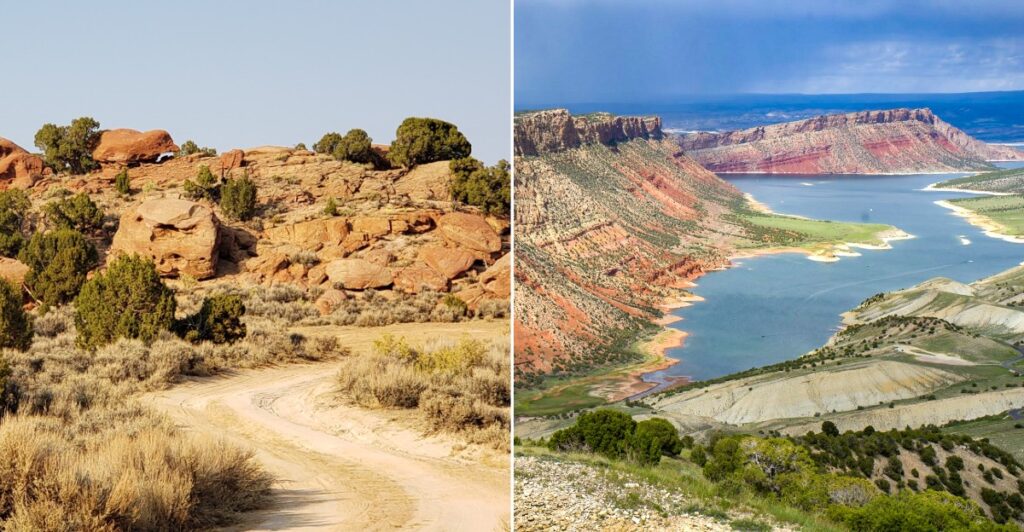
A county seat with only a few hundred residents sits minutes from a reservoir that stretches about 91 miles. That math alone made me sit up.
Fewer people, more water, and a whole lot of red rock in between.
The town shares its name with the capital of the Philippines. The story goes that it was named in 1898, the year of Admiral Dewey’s famous victory at Manila Bay.
I like how a tiny desert outpost carries such a big name so casually.
Northeastern Utah holds one of the most dramatic reservoirs in the American West. Canyon walls glow red, bighorn sheep roam the cliffs, and the nearest traffic jam feels like a rumor.
I believe Utah has plenty of famous spots that get packed every summer. So where do you go when you just want room to breathe?
A Town Small Enough To Learn By Lunchtime
Manila, Utah is the county seat of Daggett County, which ranks among the least populated counties in the state. The town counted only a few hundred residents in the 2020 census.
That small size is the whole appeal. You won’t spend your morning hunting for parking or waiting behind tour buses at a stoplight.
Manila sits just south of the Wyoming border at the junction of State Route 43 and State Route 44. That crossroads location makes it a natural base camp for exploring the Flaming Gorge area.
The town grew up as a ranching community, and that easygoing character still shows. Wide streets, open skies, and sagebrush hills set the mood right away.
Here’s a practical tip worth remembering before you go. Services are limited compared to bigger towns, so fill your gas tank and stock up on snacks and supplies.
Cell coverage can also get spotty once you head into the canyons. Downloading offline maps before you leave is a smart move.
Think of Manila as the front porch to a much bigger backyard. The town stays modest, while the scenery around it does the showing off.
You Will Want Extra Memory On Your Phone For This Reservoir
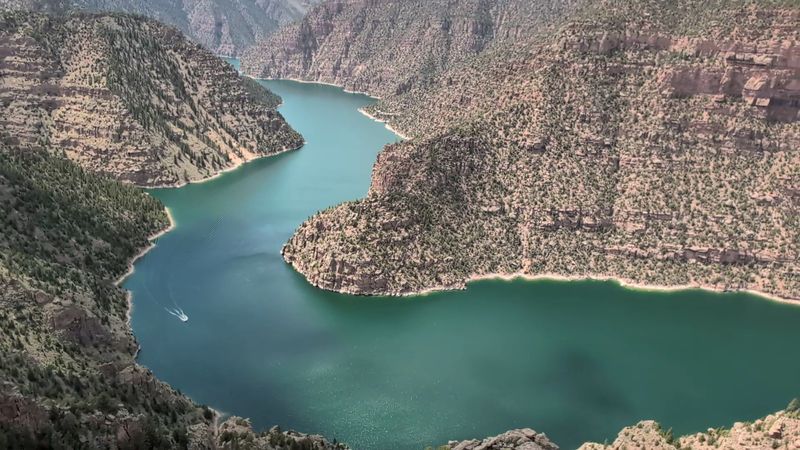
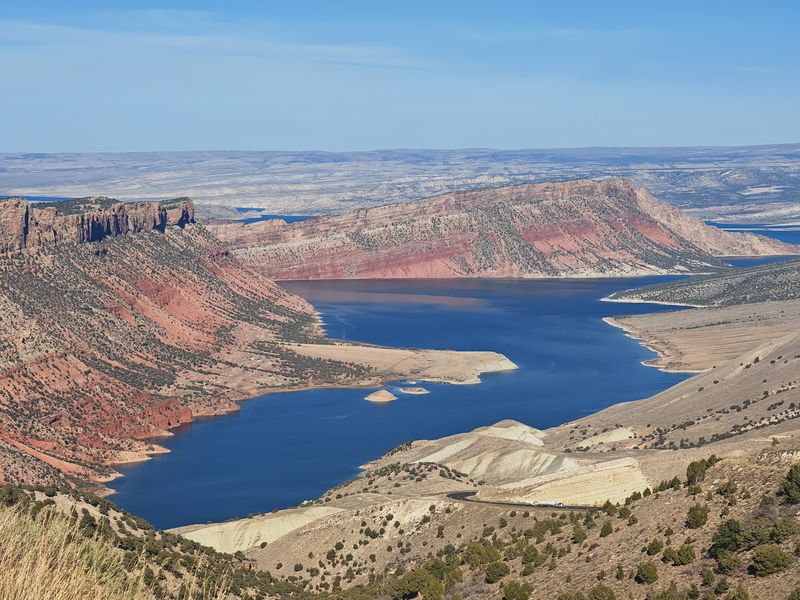
Ninety-one miles of water is a lot of room to spread out. Flaming Gorge Reservoir stretches from Wyoming down into Utah, and Manila sits right near its western shore.
Flaming Gorge Reservoir began filling in December 1962, after the dam’s main concrete structure was completed on the Green River; the dam was officially dedicated in 1964. Today it’s part of Flaming Gorge National Recreation Area, managed by the U.S.
Forest Service.
John Wesley Powell’s 1869 expedition gave the gorge its name. The crew noticed how the red rock cliffs seemed to blaze in the sunlight.
That color still steals the show today. Deep blue water against glowing red walls makes even a quick phone photo look professional.
Because the reservoir is so long, crowds thin out fast. Boaters can find quiet coves, and shoreline visitors can usually claim a peaceful patch of water.
Summer brings the warmest weather and the busiest boat ramps. Late spring and early fall often feel calmer, though temperatures swing more at this elevation.
Pack layers no matter when you visit. Mornings can start chilly, even when afternoons turn warm and sunny over the canyon.
Anglers Chase Record-Sized Fish Here
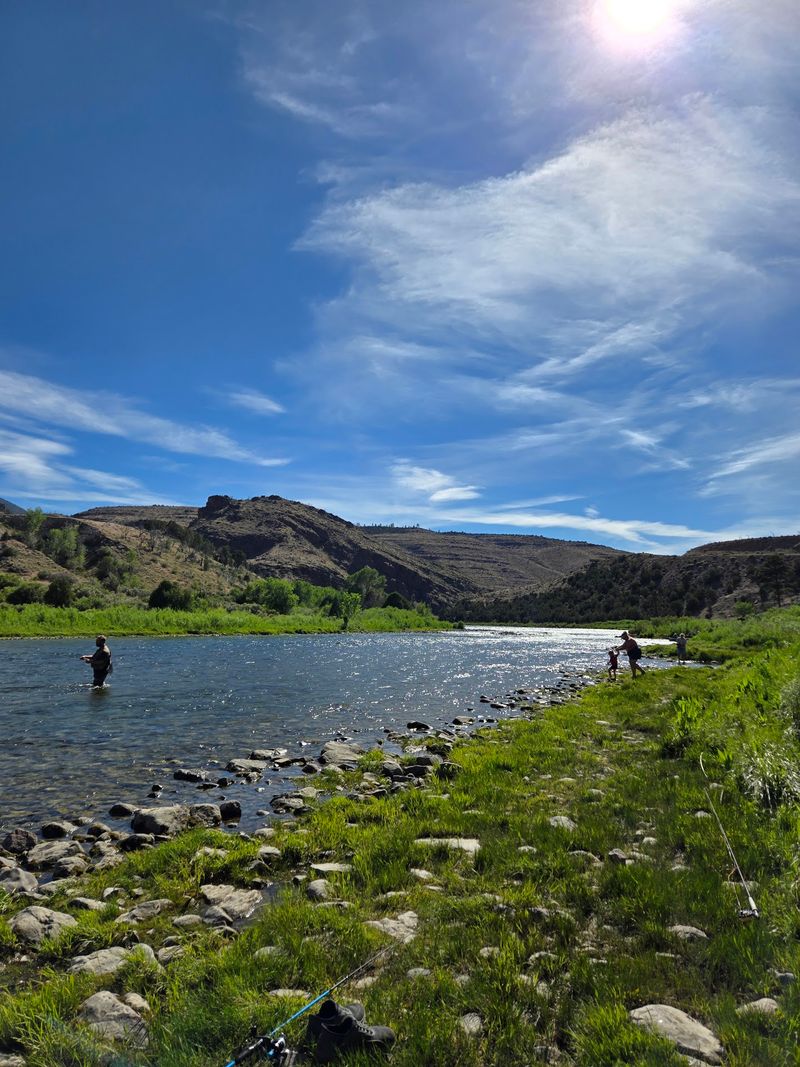
Big fish stories actually check out at Flaming Gorge. A lake trout weighing 51 pounds, 8 ounces was pulled from the reservoir in 1988 and set a Utah state record.
Lake trout aren’t the only draw, either. The reservoir also holds kokanee salmon, rainbow trout, and smallmouth bass.
Kokanee salmon put on a colorful show in the fall. Their bodies turn bright red as they move toward spawning areas.
Fishing works year-round for the dedicated crowd. Ice fishing becomes popular in winter when parts of the reservoir freeze over.
Before casting a line, grab the right license for where you fish. The reservoir crosses into Wyoming, and a special reciprocal stamp may be required to fish both states.
Check current regulations with Utah Division of Wildlife Resources before your trip. Limits and rules can change, and nobody wants a surprise conversation with a game warden.
Manila makes an easy launch point for a fishing day. Lucerne Valley Marina sits just a few miles east of town on the Utah side.
Boats, Paddles, And A Marina Close To Town
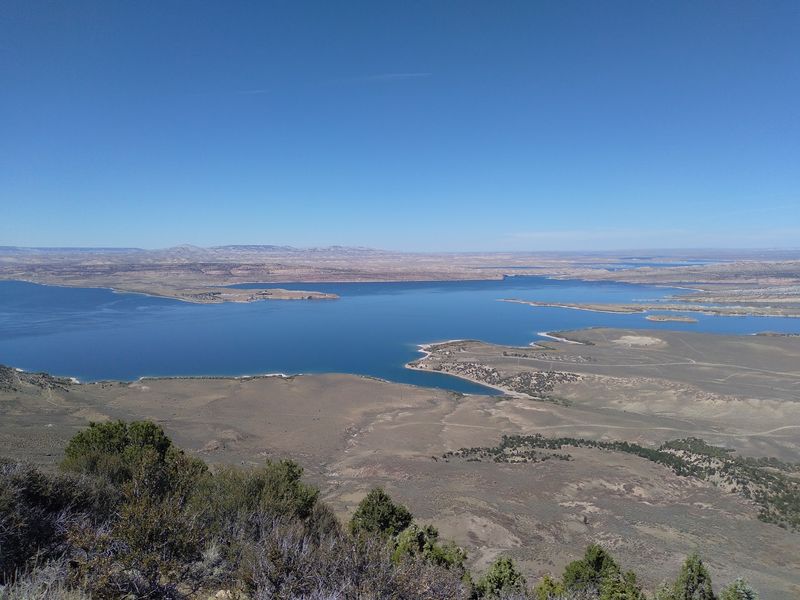
Lucerne Valley Marina sits roughly seven miles east of Manila, which barely counts as a commute. It’s one of the main access points on the Utah side of the reservoir.
The marina offers boat rentals, slips, and supplies for a day on the water. Pontoon boats work great for families who want to cruise without rushing.
Nearby Lucerne Valley Campground puts tents and RVs close to the shoreline. Waking up steps from the water feels like cheating, in the best way.
Kayaks and paddleboards also suit this reservoir well. Calm mornings often bring the smoothest water for paddling.
Wind can pick up in the afternoon across open stretches of the lake. Keep an eye on the weather and stay closer to shore if you’re paddling.
Always wear a life jacket, even if you’re a strong swimmer. The water stays cold for much of the year, especially in deeper areas.
Plan ahead during summer weekends and holidays. Campsites and rentals can fill up, so reservations save a lot of stress.
Keep Your Eyes On The Cliffs For Bighorn Sheep
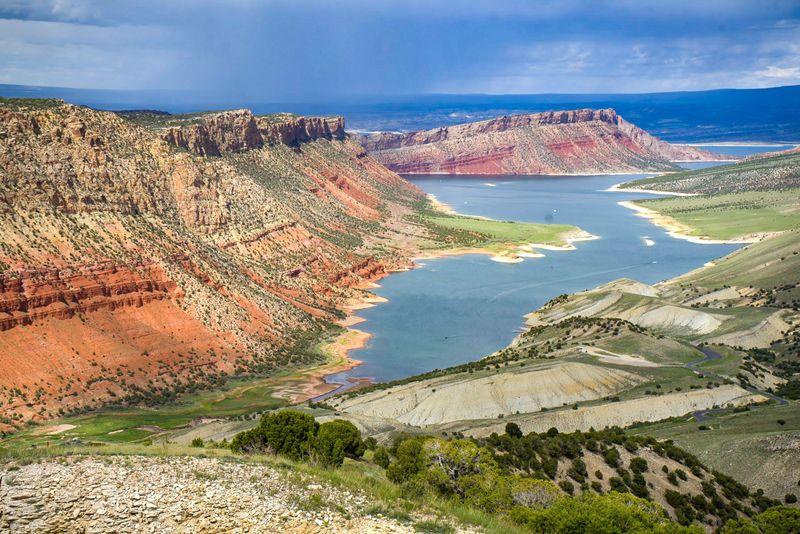
Wildlife watching here requires zero tickets and very little effort. Sheep Creek Canyon, just south of Manila, is known for its Rocky Mountain bighorn sheep.
The Sheep Creek Canyon Geological Area features a scenic loop road through dramatic tilted rock layers. Those layers expose millions of years of Earth’s history in plain view.
Geology fans will want to pull over often. The steep, twisted formations come from the Uinta Crest Fault that shaped this region.
Bighorn sheep blend into the rocks surprisingly well. Slow down, scan the ledges, and you might spot a few grazing high above the road.
Mule deer, pronghorn, and birds of prey also live around the Flaming Gorge area. Early morning and evening usually bring the best chances for sightings.
Give animals plenty of space and never feed them. Binoculars make the experience better for you and safer for the wildlife.
The loop road can close seasonally or after storms. Check road conditions with the Ashley National Forest before heading out.
The Overlook That Earns A Long Pause
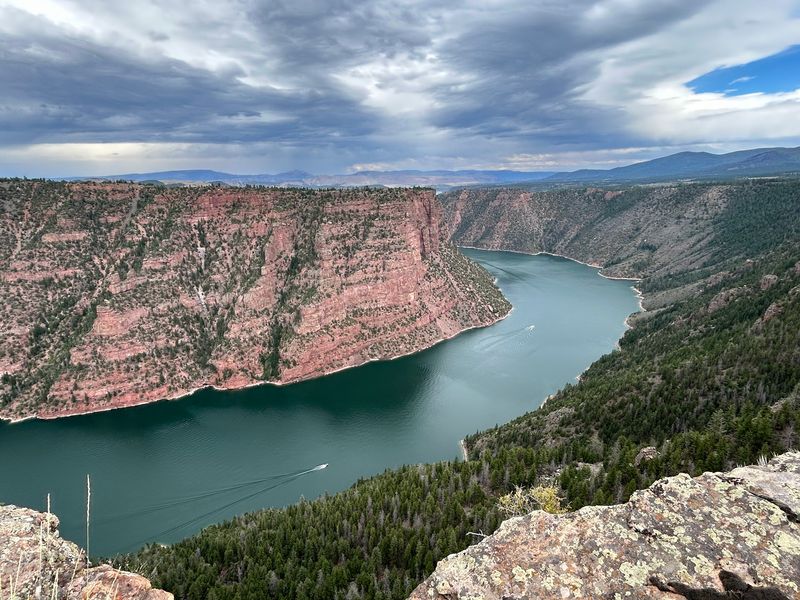
Some viewpoints deserve a whole snack break. Red Canyon Visitor Center and Overlook sits about 1,400 feet above the water, perched on a cliff edge.
The overlook lies southeast of Manila along the Flaming Gorge-Uintas National Scenic Byway. The drive itself winds through forests and open country, so the journey counts too.
From the rim, the reservoir looks like a blue ribbon snaking through red rock. Ponderosa pines frame the view, adding a cool green contrast.
An easy rim trail follows the canyon edge. It’s a great option for families and anyone who wants big views without a tough climb.
Keep kids and pets close near the cliff edges. Railings don’t cover every stretch, and the drop is serious.
The visitor center typically operates seasonally, so check hours before your trip. Rangers and exhibits there can help you plan the rest of your time.
Sunset brings warm light that makes the canyon glow. Bring a jacket, since evenings cool off quickly up high.
Skies So Dark The Stars Look Crowded
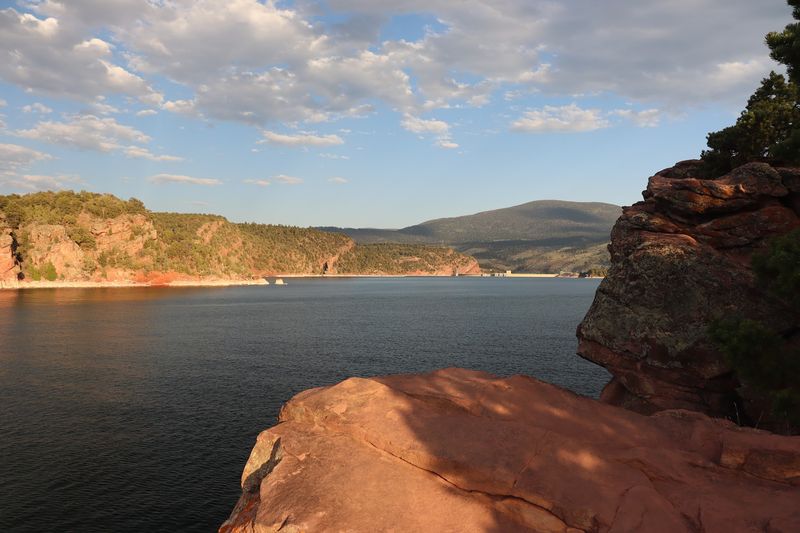
Here’s the one place you’ll actually welcome a crowd. On clear nights, the sky above Manila can fill with more stars than most city folks ever see.
Daggett County’s tiny population means very little light pollution. That remote setting gives stargazers a real advantage.
Bring a blanket and find a safe pullout or campsite away from lights. Give your eyes about 20 minutes to adjust to the darkness.
Summer nights often reveal the Milky Way stretching across the sky. A free stargazing app can help you name planets and constellations.
Moon phases matter a lot for star viewing. Plan around a new moon for the darkest skies and the best show.
Nights get cold even in summer at this elevation. Pack warm layers, a hat, and maybe a thermos of hot cocoa.
Use a red flashlight to protect your night vision. It also keeps you from blinding fellow campers nearby.
Honestly, this might be the best free entertainment in the whole state of Utah. No screen required.
Trails Built For Quiet Wandering
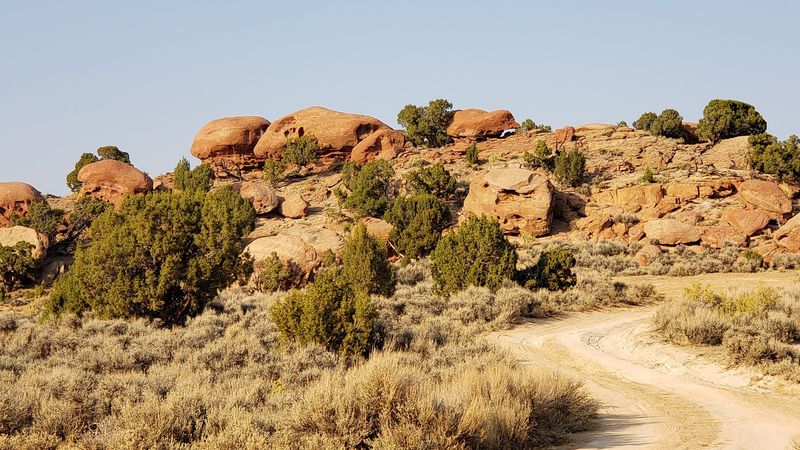
Solitude comes easy on the trails near Manila. The Flaming Gorge National Recreation Area offers paths for walkers, hikers, and mountain bikers.
The Canyon Rim Trail ranks among the most popular routes. It follows the edge of Red Canyon with views that keep changing as you go.
Mountain bikers can ride sections of the rim trail too. The terrain suits riders who want scenery more than extreme challenge.
Bear Canyon and Bootleg trails also connect through the area. Pick up a map at a visitor center to plan the right distance for your group.
Elevation here runs above 6,000 feet in many spots. Take breaks, drink plenty of water, and don’t rush the climbs.
Sun protection matters more than many visitors expect. Wear a hat and sunscreen, even when the air feels cool.
Trails stay quiet compared to busy national parks. You might hike for a while without passing anyone, which is exactly the point.
Always tell someone your plans before heading out. Remote beauty works best with a little preparation.
Getting Here Is Half The Adventure
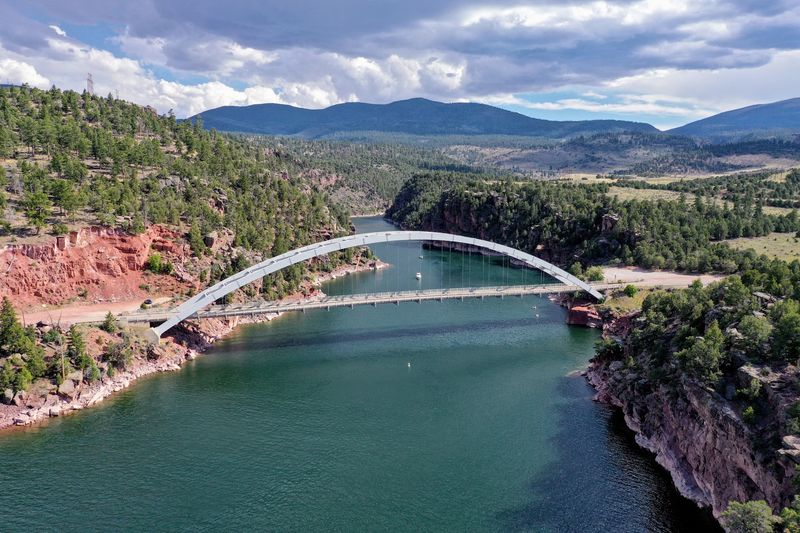
Nobody stumbles into Manila by accident, and that’s part of the charm. The town’s address is simply Manila, UT 84046, in Daggett County.
From the Wyoming side, travelers often come down from Interstate 80 near Green River. Utah State Route 43 and Wyoming Highway 530 lead toward town.
Coming from the south, Vernal is a common starting point. The Flaming Gorge-Uintas National Scenic Byway, U.S. 191 and State Route 44, delivers mountain and canyon views along the way.
Salt Lake City sits roughly three hours or more away by car. That distance keeps casual crowds away and rewards those who make the drive.
Winter can bring snow and icy roads across this high country. Check road conditions and carry emergency supplies during colder months.
Lodging options stay limited, so book early for summer visits. Campgrounds, cabins, and small motels fill quickly on holiday weekends.
Once you arrive, slow down and settle into the rhythm. This corner of northeastern Utah proves that the best escapes often take a little extra effort to reach.