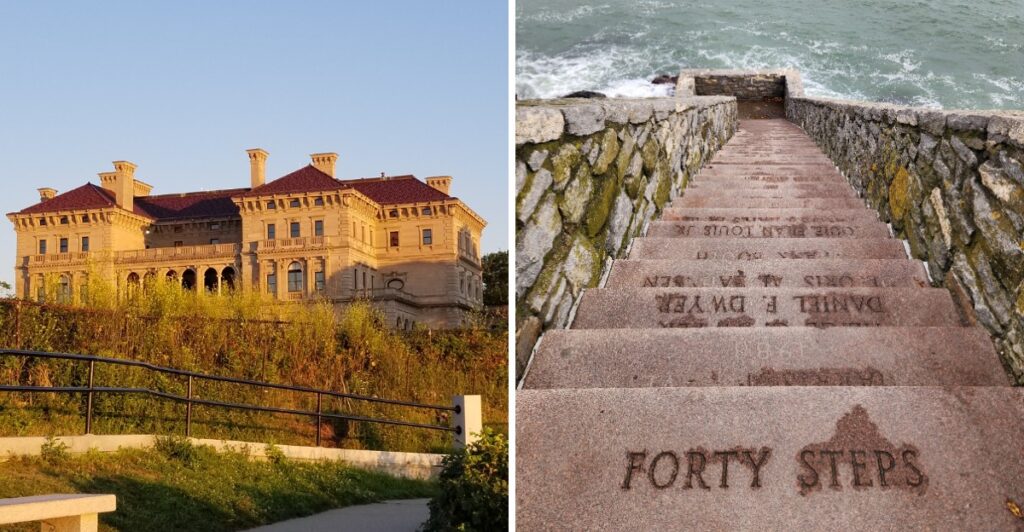
The Vanderbilts built themselves a 70-room summer cottage in Rhode Island. Seventy rooms. For summer.
And today, you can stroll right past their enormous backyard without paying a cent.
No ticket, no invitation, no pretending you belong to the family.
The reason goes all the way back to 1663, when a royal charter helped establish the public’s shoreline rights. Centuries later, those rights still matter, even when the neighbors happen to own Gilded Age mansions.
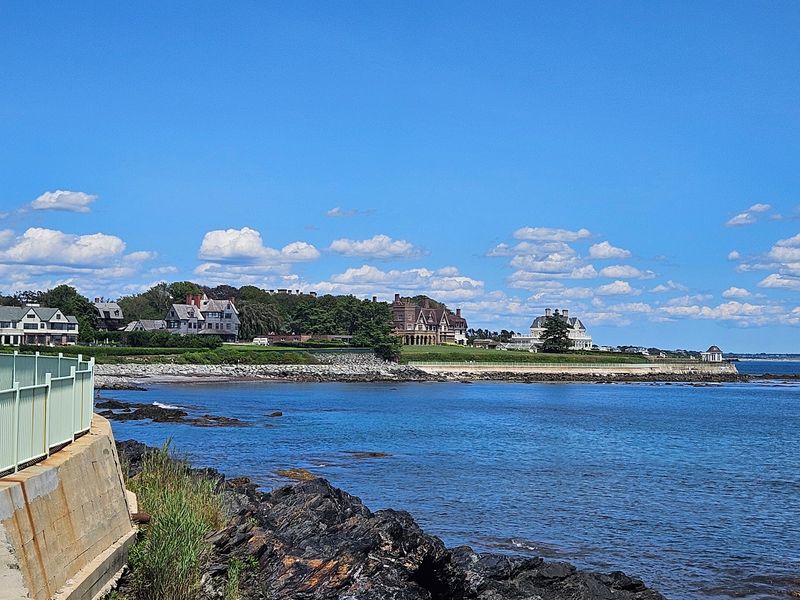
And what a neighborhood. The Atlantic rolls against rocky cliffs on one side, while enormous estates show off their manicured lawns on the other. It’s like getting a tour of America’s old-money playground without the membership fee.
The path stretches for miles, starting with easy pavement before getting rocky enough to make you watch your step.
The Vanderbilts may have owned the mansion, but they never got exclusive rights to the scenery.
A Free Seat In The Gilded Age Front Row
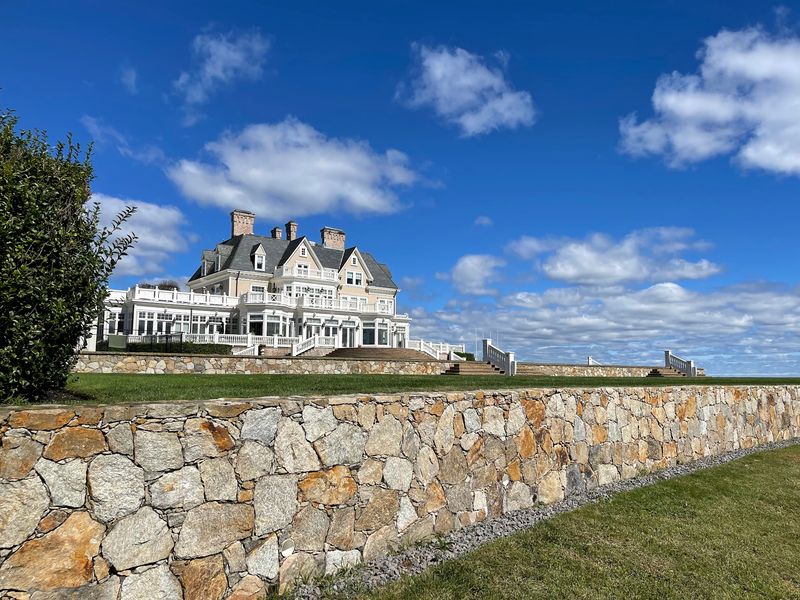
Free is a beautiful word, especially next to mansions this fancy. The Newport Cliff Walk costs nothing and stays open daily from sunrise to sunset, all year long.
It stretches about 3.5 miles one way along the southeastern shoreline of Aquidneck Island. The view never stops trading places between crashing surf and enormous estates.
Rhode Island has plenty of pretty coastline. Few spots pair it with this much history packed into one walk.
The trail even carries two big titles at once. It’s a National Recreation Trail within a National Historic District, which makes it quite the overachiever.
The recreation trail designation came in 1975. It was the 65th in the nation and the first in New England.
That’s a lot of bragging rights for a footpath. Still, every bit of it is earned once the ocean comes into view.
Start at the northern end on Memorial Boulevard near Easton’s Beach. It’s the classic trailhead, and it gives you the easiest warm-up.
Plan for a long outing if you want the whole stretch. A shorter loop works too, since the scenery starts right away.
Your Easy First Mile Starts Right Beside The Beach
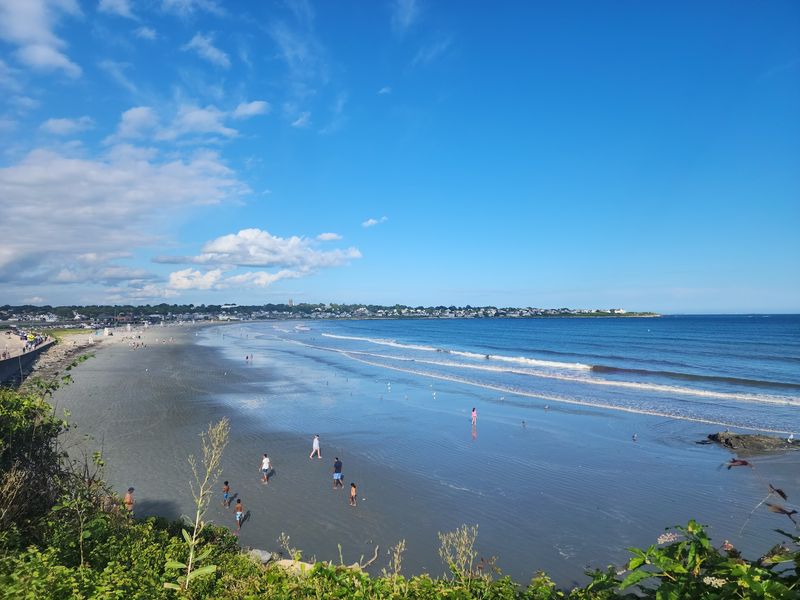
Smooth pavement greets you at the start, and your ankles will appreciate it. The northern entrance sits at 117 Memorial Blvd, Newport, RI 02840, close to Easton’s Beach.
From here, the path is paved and fairly flat for roughly half a mile to a mile. That stretch reaches the Narragansett Avenue entrance near the Forty Steps.
The paved northern section is generally suitable for strollers and wheelchairs, although gradients vary and the trail is not fully ADA-compliant.
It’s a friendly way to bring along family members who prefer level ground.
Leashed dogs are welcome too. Just bring bags, because cleanup is required and nobody wants a mystery souvenir.
Parking near Easton’s Beach is metered, and summer fees typically apply. Some nearby streets may offer limited free parking, so scout a little before you settle.
Arriving early can make the hunt easier during busy months. Summer in Newport draws a lot of fellow walkers.
Easton’s Beach also has seasonal restrooms. That’s handy news before you commit to miles of shoreline.
Benches appear along the trail as well. They’re perfect for pretending you’re resting while you really just stare at the waves.
Forty Stone Steps Lead You Closer To The Waves
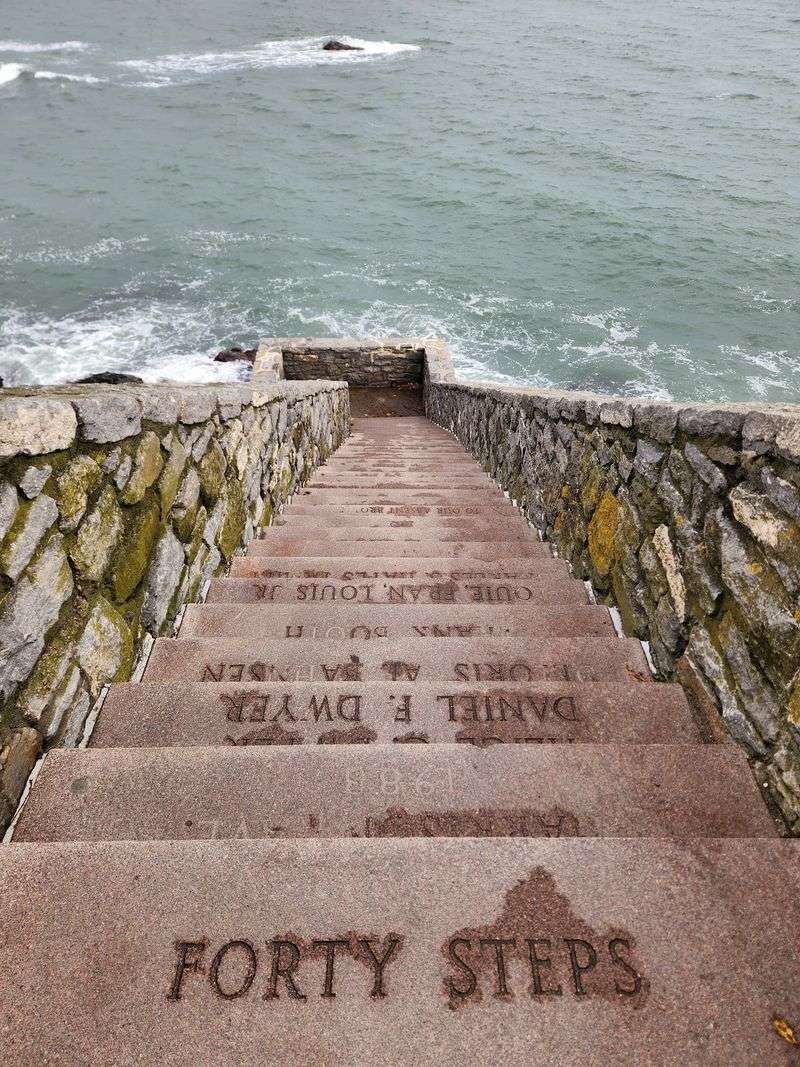
Count them if you like, but the real reward waits at the bottom. The Forty Steps form a historic stone staircase that drops toward the water near Narragansett Avenue.
It’s one of the best-known landmarks on the Newport Cliff Walk. The stairs bring you much closer to the ocean than the main path does.
Down there, the Atlantic feels a lot less like scenery. It turns into a loud, splashy neighbor with strong opinions.
Take the steps slowly, especially when they’re wet. Stone surfaces can get slippery, and the sea doesn’t hand out refunds.
This area also works as a practical pit stop. Public restrooms near Narragansett Avenue open seasonally during daylight hours.
Seasonal water stations here serve both people and pets. Your dog may consider this the highlight of the entire trip.
Metered parking sits near this entrance too. That makes it a smart starting point if you’d rather skip the first stretch.
Either way, pause at the top before heading on. The view back along the coastline is worth a long, happy look.
The Vanderbilt Backyard Is Shockingly Easy To Admire

Calling it a cottage was the Vanderbilts’ idea of a joke. The Breakers served as the family’s summer home, and it rises grandly beside the Cliff Walk.
From the trail, you see its impressive rear facade and wide grounds. It’s the side most visitors never notice from the street.
That’s the magic of this path. You get the back-porch view of America’s wealthiest families during the Gilded Age.
The modern Cliff Walk began taking shape around 1880. Mansion owners started building simple paths along the coast, often one section at a time.
Public access wasn’t always smooth. Landowners and the public disagreed over the years, but the old shoreline rights held strong.
Keep in mind that the trail crosses private property as a public right-of-way. Stay on the path and enjoy the view without wandering onto the lawns.
Many mansions offer tours through separate visits. The walk itself simply lets you admire the architecture from the outside.
Honestly, that might be the best seat anyway. The ocean breeze comes free, and nobody asks you to dust a chandelier.
Count The Mansions Like Some Very Fancy Bird-Watching
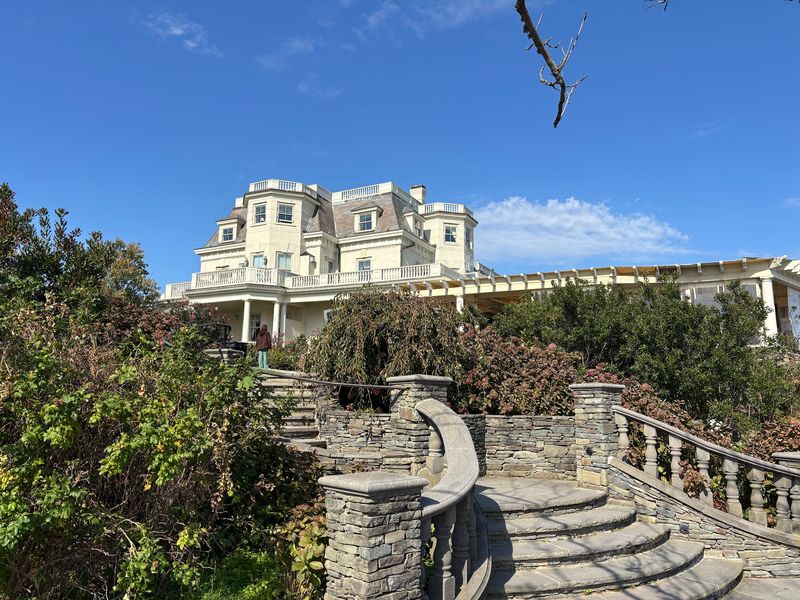
Rosecliff, Marble House, Beechwood, and Chepstow sound like a royal guest list. They’re all part of the lineup visible from the Newport Cliff Walk.
Ochre Court also stands along the route. Today it’s part of Salve Regina University, so students get some seriously dramatic scenery.
Rough Point appears farther along the trail. It was once home to Doris Duke, a famously wealthy heiress.
Land’s End rounds out the impressive cast. Each estate shows off a different style, so the walk never feels repetitive.
Here’s a fun game for the trip. Try picking a favorite mansion before you reach the end, then change your mind three times.
Bring a phone to snap photos of the facades. The ocean side makes for great shots too, so you’ll be turning constantly.
Sixteen QR code trail markers were installed in 2015 at key spots. They share details about the mansions plus local geography and geology.
Scan a few as you go. Suddenly a simple stroll turns into a history lesson you actually enjoy.
Good Shoes Matter Once The Pavement Gives Up
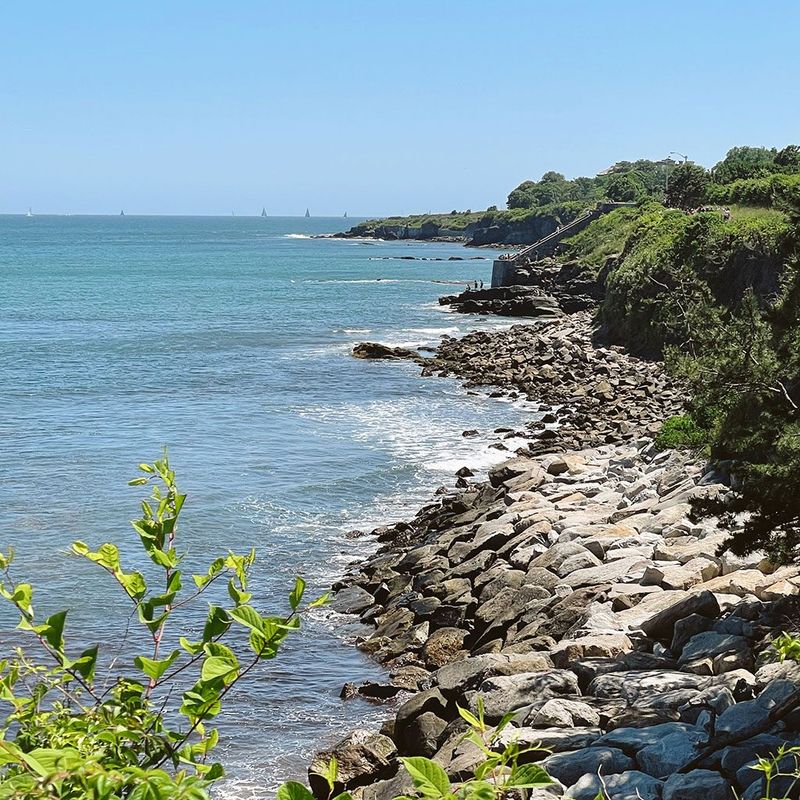
Somewhere south of the polished start, the trail decides to get wild. Pavement gives way to uneven rocks and sections that may require light scrambling.
The southern stretch beyond Ruggles Avenue turns noticeably tougher. It feels more rugged and dramatic, with the coast showing its rough edges.
This part rewards careful feet. Sturdy sneakers or hiking shoes make far more sense than sandals.
Steep drops line the ocean side, and foliage can hide them. Stay on the path and watch each step closely.
Wet or cold weather makes surfaces slippery. Poison ivy also grows along parts of the path in summer, so keep your hands to yourself.
Walkers use the trail at their own risk. That’s a fair reminder that this is real coastline, not a theme park.
Still, the effort pays off with big, untamed ocean views. The crowds often thin out as the terrain gets trickier.
Take breaks when needed and pace yourself. The rocks aren’t going anywhere, and neither is that gorgeous horizon.
Storms Keep Testing This Trail And It Keeps Bouncing Back
Hurricanes have treated this path like a punching bag for decades. The 1938 and 1954 storms did serious damage, and so did Hurricane Bob in 1991.
Hurricane Sandy struck in 2012 and left its own mark. Each time, major repair and restoration work followed.
Some projects involved the U.S. Army Corps of Engineers. That’s a lot of muscle for one beloved footpath.
In March 2022, a section between Narragansett Avenue and Webster Street collapsed. A detour remains in place for that stretch for the foreseeable future.
Don’t let that scare you off. The rest of the walk stays open, and signs point you around the closed piece.
Following the detour adds a little variety to the route. Think of it as a scenic side quest rather than a setback.
The repairs show how much Rhode Island values this trail. Few walks get this much care after every rough season.
Plan with the detour in mind if you’re tackling the full route. Then enjoy the comeback story beneath your feet.
Royal Paperwork Is The Reason You Can Walk Here
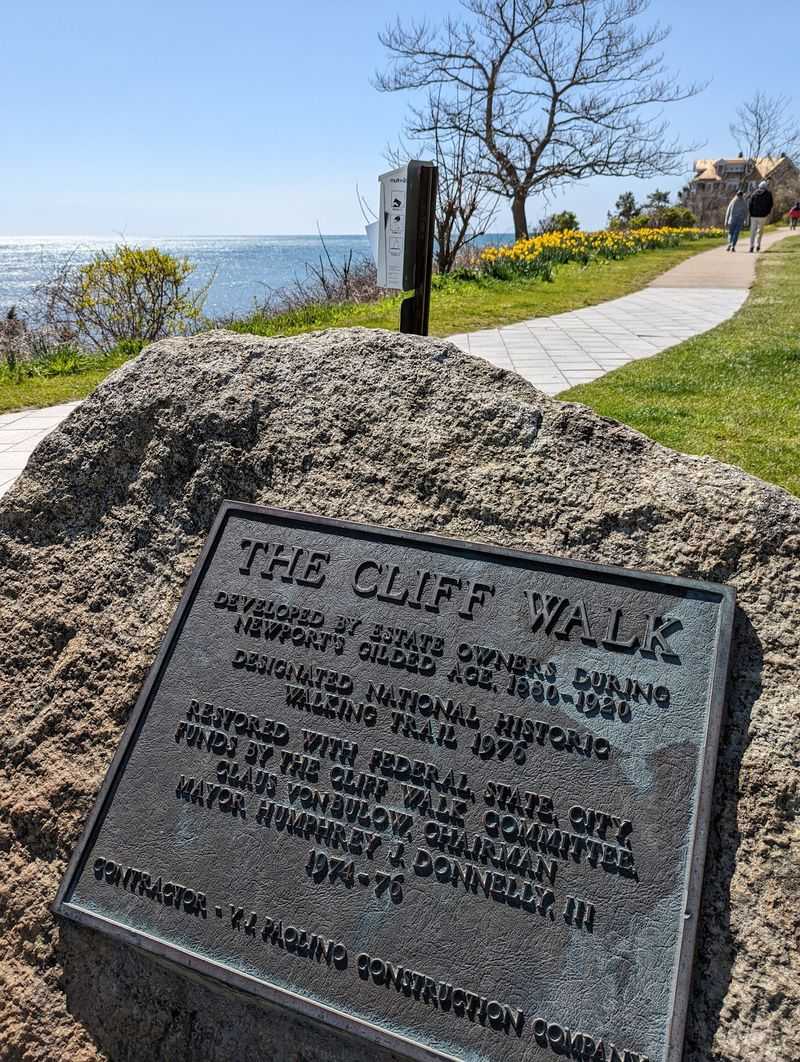
Long before mansions appeared, deer probably made the first trails along this shore. Narragansett Native Americans followed, then colonial settlers who used the coast for salvage.
That layered history gives the Newport Cliff Walk real depth. Every step follows people who came long before tourists.
The legal backbone arrived in 1663. King Charles II’s charter protected coastal fishing rights, laying the foundation for Rhode Island’s later shoreline access protections.
Later, Rhode Island wrote that right into its state constitution. It’s one reason ordinary walkers still share this coast with millionaires.
Disputes between landowners and the public popped up over the years. The path survived them, which is quite a win for regular folks.
Keep that story in mind as you pass the grand estates. Those lawns are private, but the shoreline view belongs to everyone.
It’s a neat bit of trivia for your walking group. Drop it casually near The Breakers and enjoy looking very smart.
History rarely feels this breezy. Here, it comes with salt air and a sweeping ocean horizon.