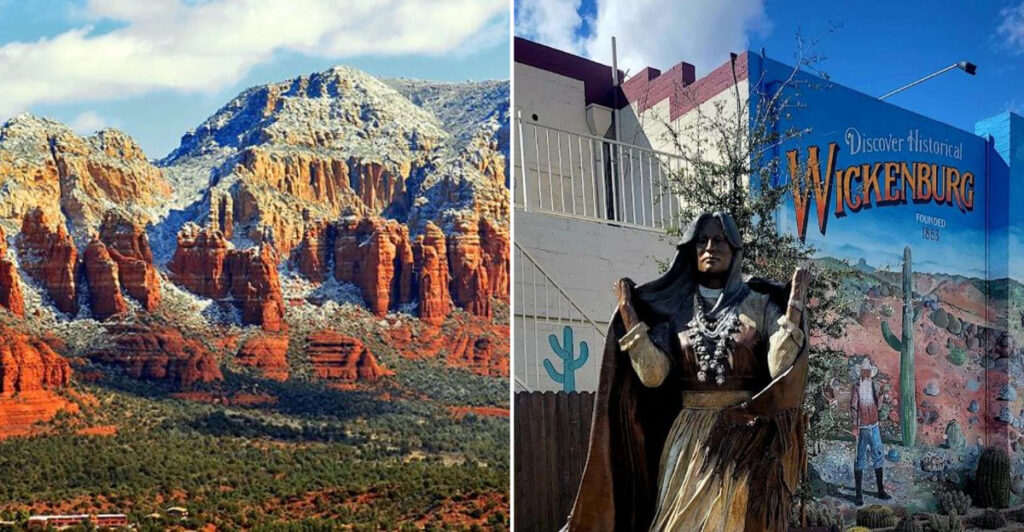
“Go ahead, make my day,” Clint Eastwood would say in a movie, right right before a tense standoff. When someone mentions Arizona, my mind instantly drifts to Western films, the Grand Canyon, and wide-open desert skies.
I’ve put together a list of towns that truly feel like walking onto a movie set. Dusty streets wind past old saloons and historic buildings that tell stories of the past.
Some of these towns have roots stretching back over a century, and wandering their streets feels like traveling through time. If you’re looking for adventure, history, and a touch of cinematic magic, this road trip through Arizona’s Western towns is perfect.
It promises an unforgettable journey.
1. Tombstone
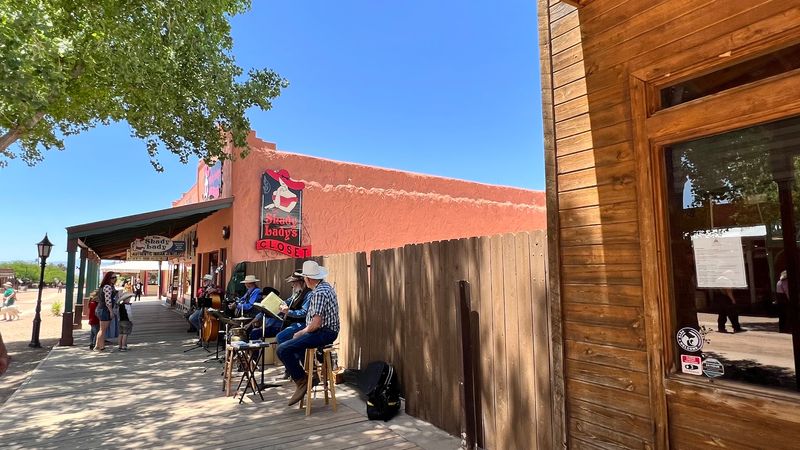
Tombstone is a legendary desert town full of history and old-West charm. Walking its streets, you can feel the spirit of the past in its historic buildings, lively saloons, and classic storefronts.
This charm makes it one of the most iconic destinations for anyone curious about the American West. The O.K.
Corral showdown happened in 1881. Walking down Allen Street feels like being dragged straight into a Western film.
The tumbleweeds are real, and so is the heat.
The Bird Cage Theatre alone is worth the drive. Built in 1881, it operated nonstop for eight wild years.
Locals say the bullet holes in the walls are still there to prove it. The Tombstone Courthouse State Historic Park tells the full story of the region’s legal history.
It also showcases the fascinating outlaw history all in one building.
Reenactments happen regularly on the streets. The performers are seriously committed to the drama.
You can grab a meal, browse old-school shops, and soak up stories that feel almost too crazy to be true.
2. Jerome
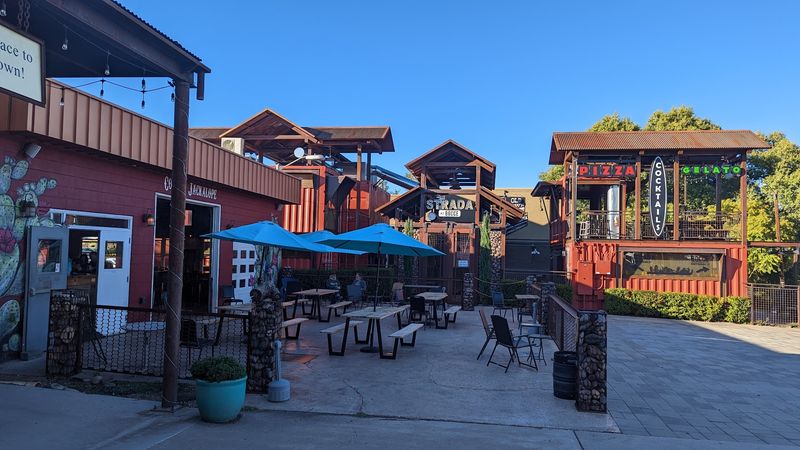
Jerome sits roughly 5,000 feet up on Cleopatra Hill. The views alone would justify the drive, but the history makes it unforgettable.
This former copper mining boomtown once had a population of 15,000 people. It was one of Arizona’s largest cities at the time.
Then the mines dried up, almost everyone left, and Jerome became a ghost town. Later, artists and rebels moved in and brought it roaring back to life.
Today, Jerome is one of the coolest small towns in the entire Southwest. The Jerome State Historic Park is housed inside the old Douglas Mansion.
It tells the mining story with real artifacts and photographs that pull you right into that era. You can almost hear the drills and dynamite blasts echoing through the hillside.
The streets are steep and slightly chaotic. This honestly adds to the charm.
Galleries, quirky boutiques, and historic buildings line every corner. If you are into art, history, and spectacular mountain scenery all in one place, Jerome absolutely delivers.
3. Bisbee
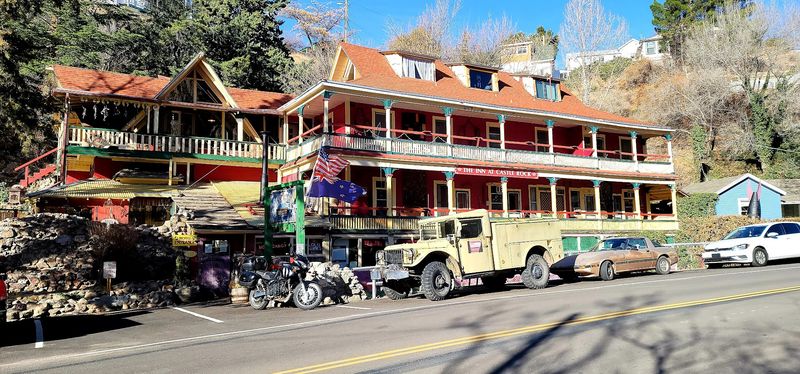
Bisbee is the town that makes you question why you do not just pack up and move there immediately. Perched in the Mule Mountains near the Mexican border, this former copper mining hub has reinvented itself.
It is now one of Arizona’s most vibrant arts communities. The Victorian-era architecture climbing up the canyon walls looks like something out of a European postcard.
The weather is better, and the history is wilder.
The Queen Mine Tour is an absolute must. You actually ride a mine cart underground.
Along the way, you hear the stories of the thousands of miners who worked these tunnels in the late 1800s and early 1900s. It is equal parts fascinating and slightly claustrophobic.
Somehow, that makes it even more memorable.
Bisbee’s downtown Brewery Gulch district is packed with galleries, vintage shops, and live music venues. They keep the creative energy buzzing year-round.
The whole town has a wonderfully offbeat personality. It is part history museum, part artist colony, and part mountain hideaway.
Bisbee is genuinely one of the most unique places in Arizona.
4. Florence
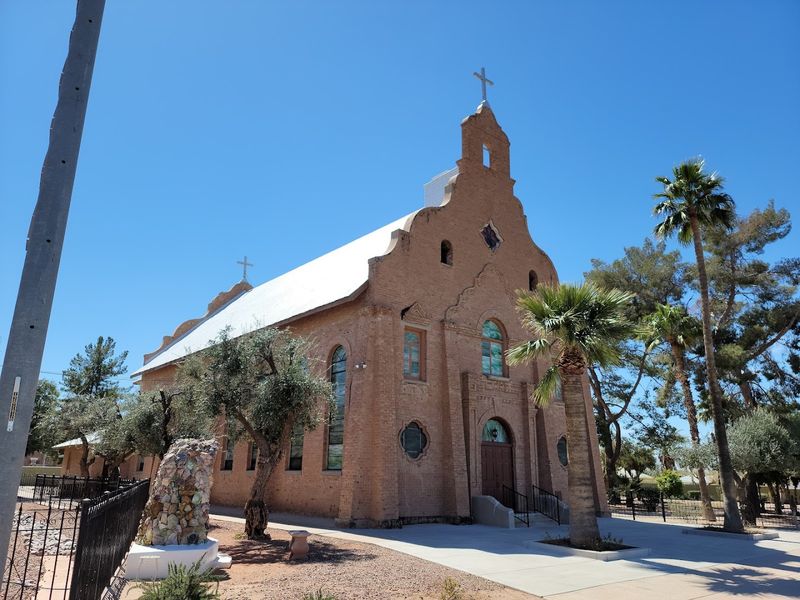
Florence might be one of Arizona’s best-kept secrets, which baffles me. Established in 1866, this town is practically a living outdoor museum of the Old West.
The downtown area preserves an incredible collection of adobe and Victorian-era buildings. They have survived well over a century of desert heat and political drama.
Arizona’s famously unpredictable weather has also tested them over the years.
McFarland State Historic Park is the crown jewel here. It sits inside the original 1878 Pinal County Courthouse.
The park tells the story of Arizona’s territorial days with remarkable depth. There is also the fascinating story of Ernest McFarland himself.
He served as Arizona governor, senator, and state Supreme Court chief justice. That is basically the political hat trick of all time.
Florence hosts one of Arizona’s oldest and most beloved heritage festivals each year. It draws history lovers from across the state.
The town’s quiet, unhurried pace gives you the rare chance to really absorb the surroundings. Walking these streets feels personal in a way that bigger tourist towns rarely manage to pull off.
5. Tubac
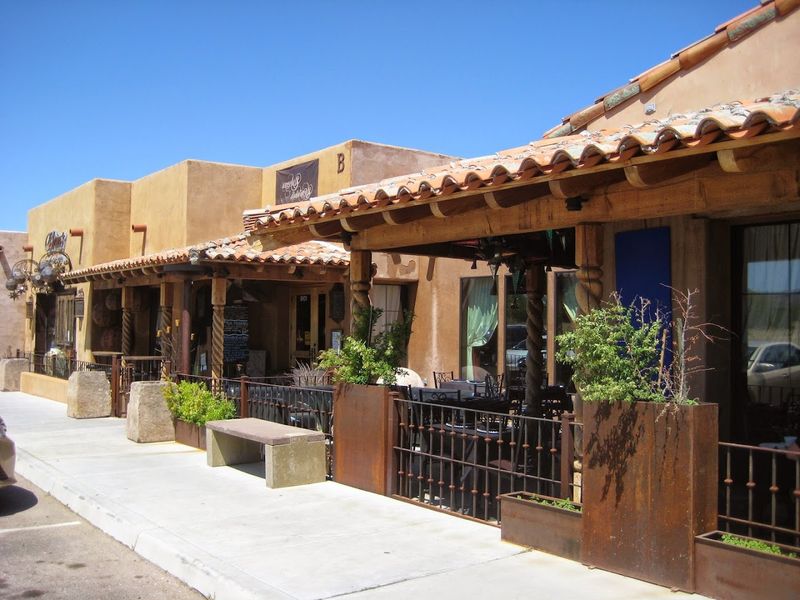
Tubac holds a title that most Arizona towns can only dream about. It is the oldest European settlement in the entire state, founded way back in 1752.
The Spanish built a presidio here to protect settlers and missionaries. You can still visit those original ruins at Tubac Presidio State Historic Park.
Standing next to walls that are nearly 275 years old feels different. You realize how much history happened right on that spot.
Fast-forward to today, and Tubac has transformed into one of the Southwest’s most beloved art villages. With over 100 galleries, studios, and artisan shops lining its adobe-style streets, it attracts artists and collectors from across the country.
The work on display ranges from traditional Native American crafts to bold contemporary paintings. The quality is impressive.
The Santa Cruz River runs nearby. The surrounding landscape of rolling hills and mesquite grasslands adds a peaceful, almost dreamlike quality to the whole experience.
Tubac is a rare place where deep history exists alongside living creativity. Neither aspect feels forced.
6. Wickenburg
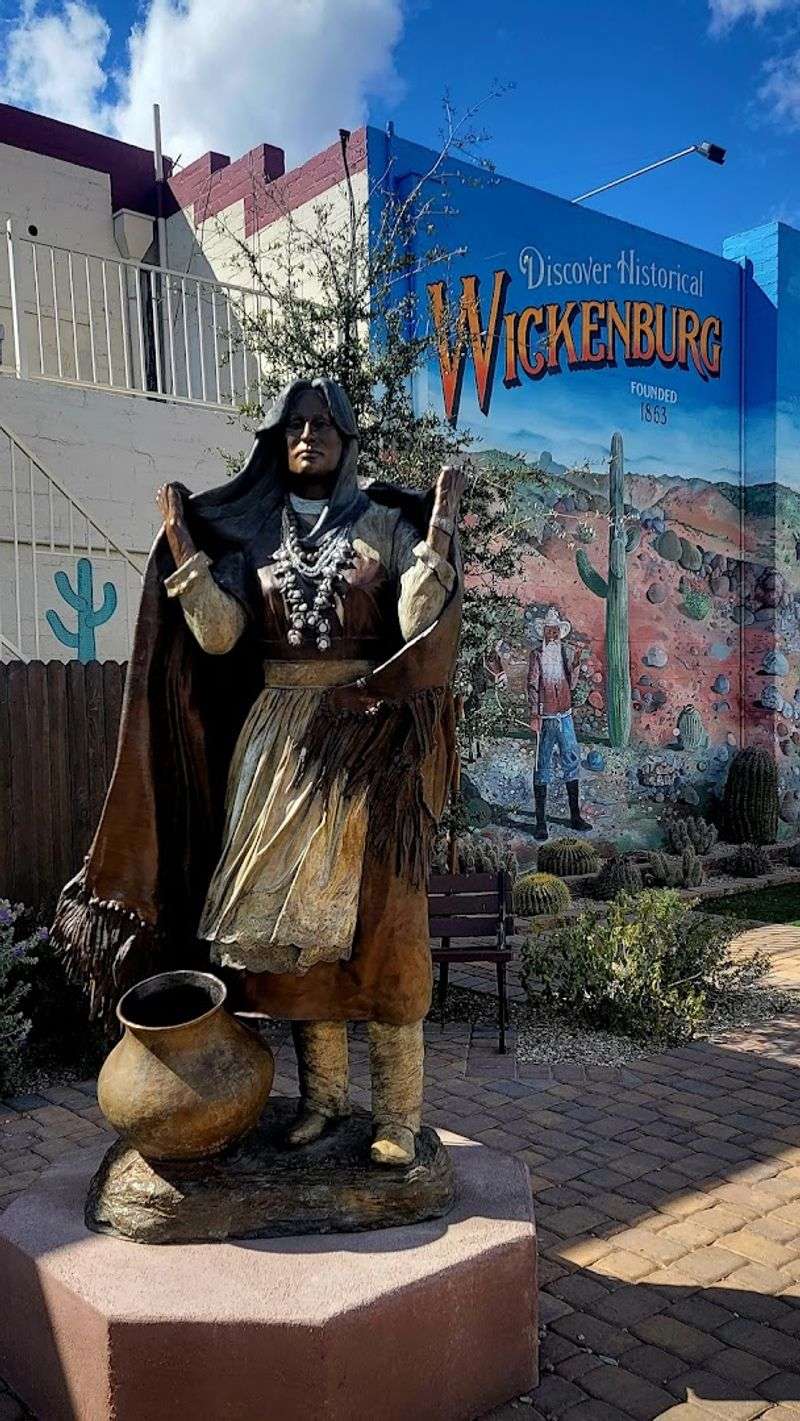
Wickenburg calls itself the “Dude Ranch Capital of the World.” Before you laugh, know that this town has been welcoming visitors to authentic Western ranch experiences since the 1930s. This place was founded in 1863 during Arizona’s gold rush era.
The town built its identity around mining, ranching, and the rugged cowboy culture that still defines it today. The Hassayampa River runs through the area.
Early settlers believed its waters made people permanently forgetful. Locals say anyone who drinks from it will never tell the truth again.
The Desert Caballeros Western Museum is one of the finest Western art and history museums in the entire country. It houses an extraordinary collection of cowboy art and Native American artifacts.
The exhibits trace Arizona’s ranching heritage with real passion and depth.
Downtown Wickenburg preserves its frontier character beautifully. Historic storefronts and a genuine jail tree, where outlaws were once chained, catch your attention.
A friendly small-town atmosphere makes you want to slow down and stay awhile. This town rewards curious visitors who take their time.
7. Prescott
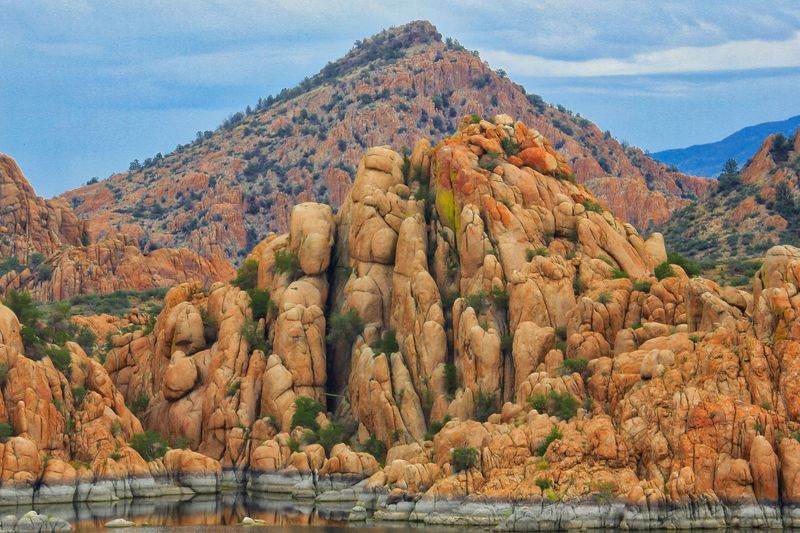
Prescott is a town where history practically trips you on the sidewalk. Founded in 1864 as Arizona’s first territorial capital, this mountain city sits at nearly 5,400 feet elevation.
That means you get a rare Arizona combination of four-season weather and gorgeous ponderosa pine forests surrounding the whole town. The air smells like pine needles and old stories.
Whiskey Row on Montezuma Street is legendary. Not for the reason you might expect, but because in 1900, a massive fire burned down the entire block.
The saloon owners reportedly carried their bars out into the street and kept right on serving customers. That is the stubborn frontier spirit that built this state.
The Sharlot Hall Museum is a fantastic collection of historic buildings and artifacts spread across several acres in the heart of downtown. Courthouse Plaza anchors the city center with Victorian architecture, giant trees, and a lively community atmosphere.
Prescott has that rare quality of feeling both historic and alive at the same time.
8. Williams
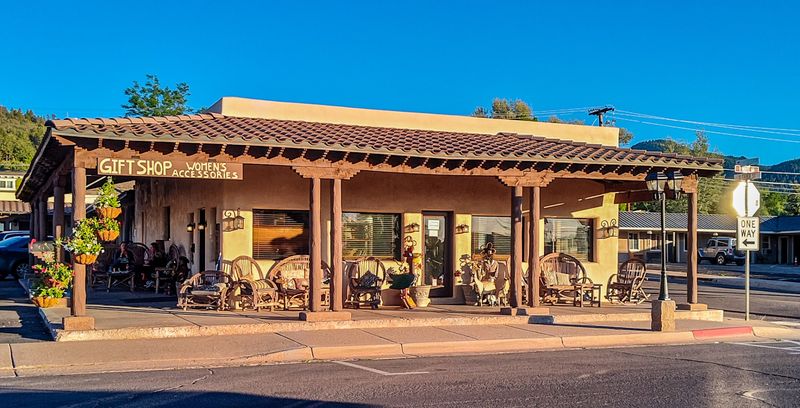
Williams earned its fame as the last town on historic Route 66 to be bypassed by Interstate 40. It held that distinction until 1984.
The town has leaned hard into that Mother Road identity ever since. But there is so much more to this mountain town than nostalgia.
Sitting at an elevation of 6,700 feet in the Kaibab National Forest, Williams is surrounded by stunning ponderosa pine forests. They feel worlds away from the desert landscape most people associate with Arizona.
The Grand Canyon Railway departs from Williams. Riding that vintage steam train north to the South Rim is one of those experiences that lives up to the hype.
The journey takes about two hours each way. It passes through open grasslands and pine forests and arrives at one of the greatest natural wonders on Earth.
Hard to top that itinerary.
Downtown Williams is packed with Route 66 characters. Vintage diners, retro motels, old-school gift shops, and a relaxed pace create a welcome reset from modern life.
The historic district is walkable, charming, and fun to explore at any time of year.
9. Seligman
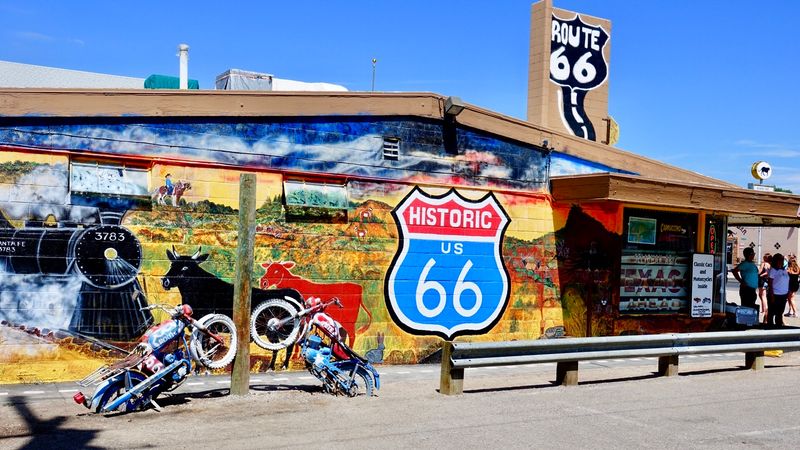
Seligman is the town that literally saved Route 66. In the 1980s, the Interstate highway system threatened to erase the Mother Road from the map.
A Seligman barber named Angel Delgadillo rallied the locals in response. He created the Historic Route 66 Association of Arizona.
Thanks largely to his passion and persistence, Route 66 was officially designated a historic highway. Seligman became known as its birthplace.
Angel is still around, and if you are lucky, you might actually meet him.
The Seligman Commercial Historic District is listed on the National Register of Historic Places. The main street looks like a time capsule from 1955.
Classic cars, hand-painted signs, vintage gas stations, and cheerful roadside diners line every block with unapologetic retro energy.
Fun fact: Seligman is widely believed to be one of the inspirations for the fictional town of Radiator Springs in the Pixar film Cars. That honestly makes perfect sense the moment you roll into town.
The whole place has that warm, forgotten-but-not-gone spirit that the movie captured so well.
10. Chloride
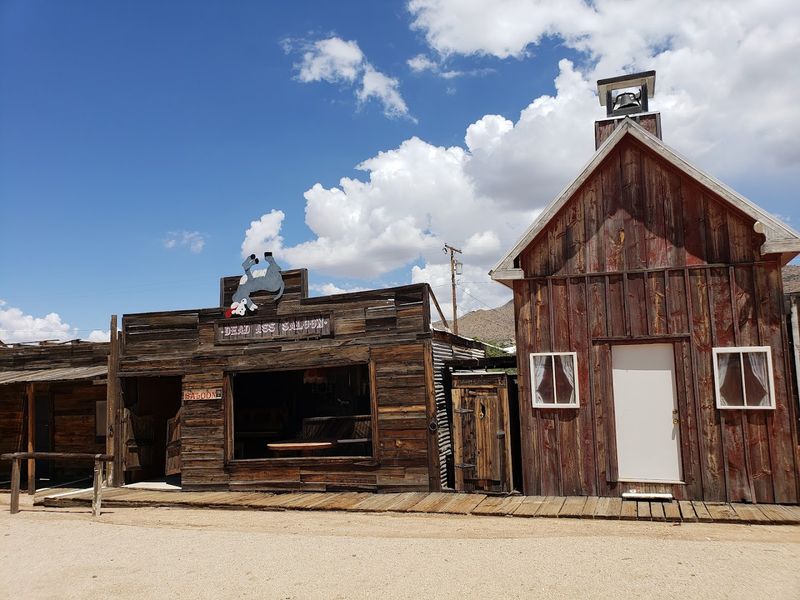
Chloride has one of the best origin stories of any town on this road trip. Founded in the 1860s after silver chloride ore was discovered in the nearby Cerbat Mountains.
This tiny community became Arizona’s oldest continuously inhabited mining town. At its peak, Chloride had over 5,000 residents, 75 mines operating simultaneously, and more saloons than anyone probably needed!
Today, fewer than 300 people call it home, which makes it feel even more special.
The town is famous for its giant outdoor murals painted directly onto the desert rocks by artist Roy Purcell in 1975. These massive, psychedelic paintings stretch across boulders in the hills outside of town.
They are completely free to visit. They are bizarre, beautiful, and absolutely worth the short hike to see up close.
Every third Saturday from October through May, Chloride stages an Old West shootout in the middle of town. It draws visitors from across the region.
The whole place has a wonderfully stubborn, sun-baked personality. It is small in size but enormous in character.
Do not skip it just because it is off the beaten path.
11. Kingman
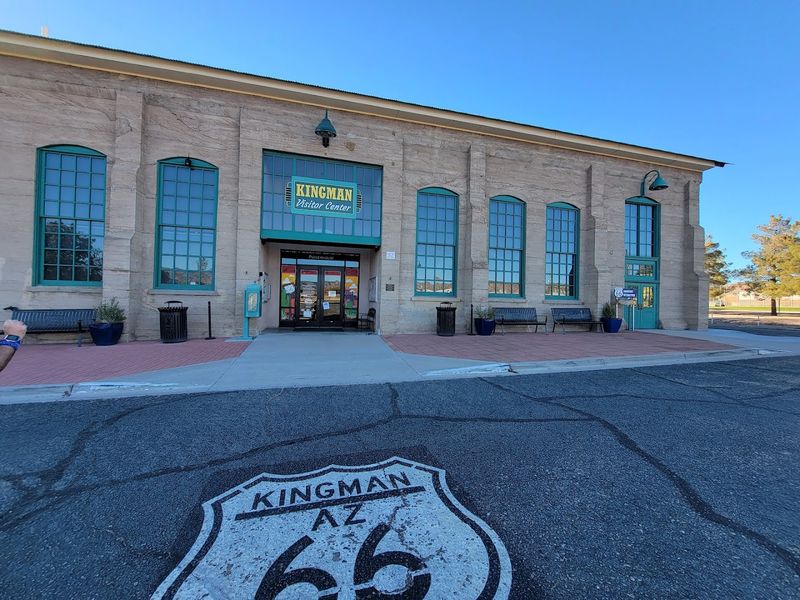
Kingman sits at the crossroads of Route 66 history and genuine Mojave Desert drama. It pulls both roles off with confidence.
Founded in 1882 as a railroad town, Kingman grew into a vital hub for travelers crossing the Southwest. Its historic downtown still carries that way-point energy.
The restored 1907 Powerhouse building now serves as the Route 66 Museum and visitor center. It is one of the best free attractions in northwestern Arizona.
The Bonelli House, built in 1915 from volcanic tuff stone, is a beautifully preserved example of early Arizona domestic architecture. The Mohave Museum of History and Arts covers local Native American culture in depth.
It also highlights the surprisingly rich Hollywood connections of the region. Actor Andy Devine was born here, and the town celebrates him with genuine hometown pride.
Kingman serves as the perfect launching point for exploring the surrounding Hualapai Mountains and the ghost town of Oatman. It is also a great base for visiting the Colorado River recreation areas just to the west.
As a road trip base camp, it offers solid history, real character, and easy access to some of Arizona’s most dramatic landscapes.
12. Sedona
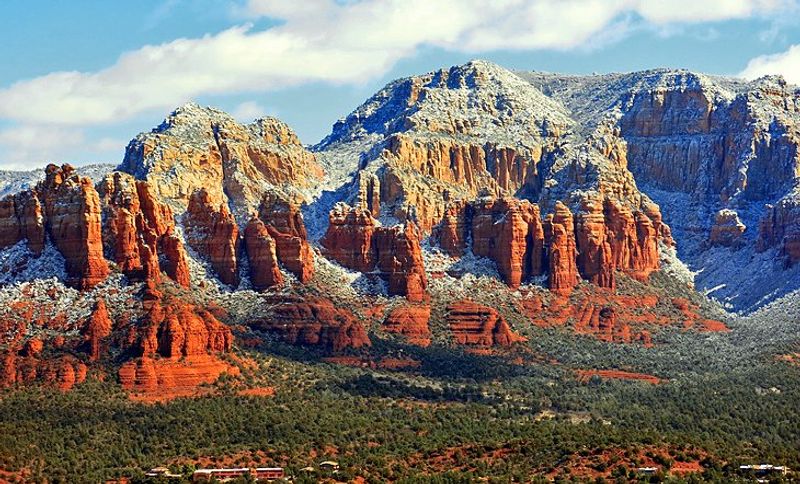
Sedona might be the most visually dramatic place on this entire road trip. That is saying something, given the competition.
The towering red sandstone formations Cathedral Rock, Bell Rock, and Courthouse Butte glow orange and crimson in the afternoon light. It makes you stop the car and just stare for a long time.
But beyond the jaw-dropping scenery, Sedona has historical depth that often gets overshadowed by its natural beauty.
The Sinagua people lived in this canyon country for centuries. The nearby Palatki Heritage Site preserves ancient cliff dwellings and rock art that are remarkably well-maintained.
Tlaquepaque Arts and Shopping Village is built on the site of an early 20th-century ranch. It is designed to replicate a traditional Mexican village, with handcrafted architecture and serious artistic talent on display throughout.
Sedona’s reputation as a spiritual destination draws visitors seeking what locals call vortex energy. These are powerful natural sites where the earth’s energy supposedly concentrates.
Whether you believe in vortexes or not, standing on Airport Mesa at sunset is unforgettable. Watching the red rocks light up is a moving experience.
It stays with you long after you drive away.