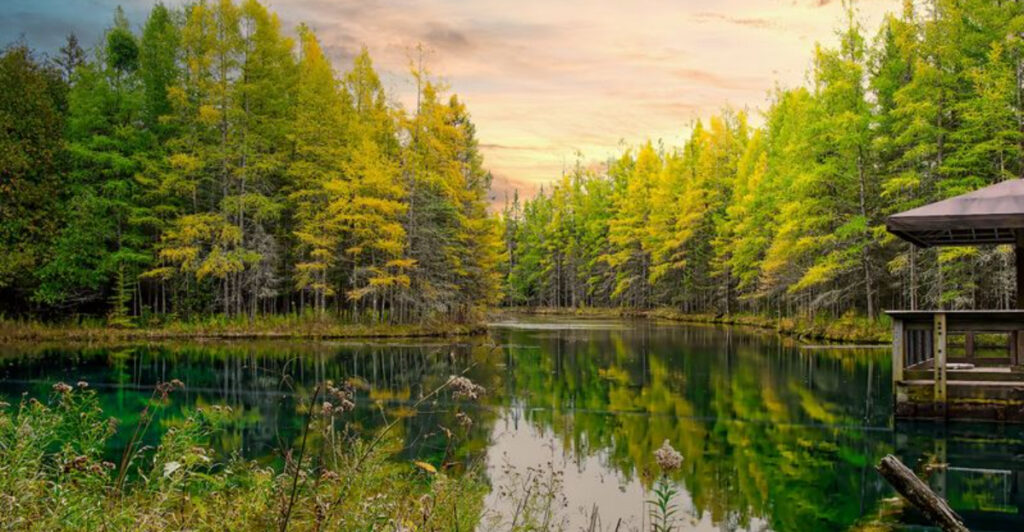
Some places do not look real until you see them with your own eyes. The color catches you first, then the stillness.
Then that moment when you realize nature really made something this clear, this bright, and this beautiful. Michigan has a spot like that waiting.
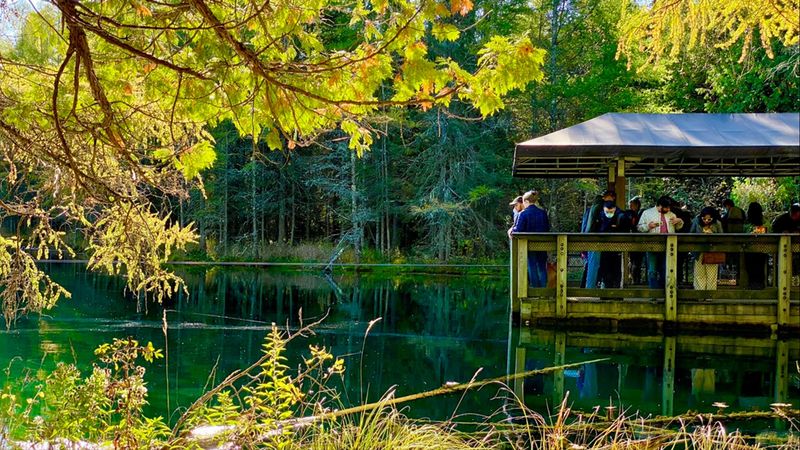
It feels calm at first glance, but the view leaves a huge impression. The water is unbelievably clear.
The shades of blue and green look almost impossible in person. You find yourself staring longer than expected, just trying to take it all in.
This is the kind of stop that makes a trip feel special. It is peaceful, easy to enjoy, and memorable from the second you arrive.
You do not need a big plan or an all-day schedule. You just need a little curiosity and a camera ready to work overtime.
The Spring That Never Stops Flowing
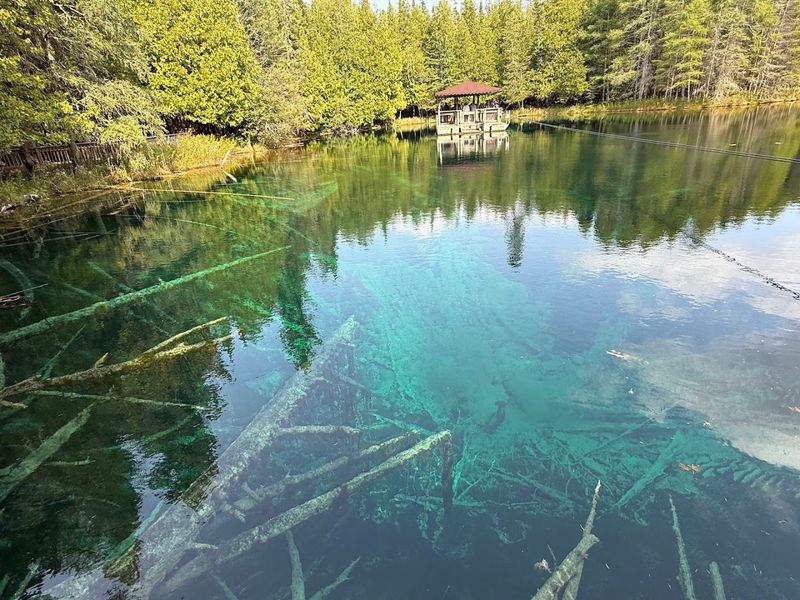
Kitch-iti-kipi, also known as The Big Spring, has been flowing without pause for thousands of years.
Located in Palms Book State Park near Manistique, Michigan, this spring never freezes, never dries up, and never slows down.
The water comes up from limestone cracks deep underground, carrying minerals that give it that jaw-dropping turquoise color.
It sits at a constant 45 degrees Fahrenheit no matter what the season is outside.
In winter, when snow covers everything around it, the spring still glows like a blue-green jewel in the ground.
In summer, the contrast between the lush green trees and the glassy water is almost surreal.
The spring measures about 200 feet long and 40 feet wide, with depths reaching around 40 feet in some spots.
Every minute, roughly 10,000 gallons of fresh water push up from below.
That is not a trickle. That is a full-on underground river making its grand entrance.
What makes this place so special is that it feels completely untouched.
There are no loud crowds, no flashy attractions nearby, just pure, raw Michigan nature doing its thing.
Have you ever stood somewhere and felt like the earth was showing off just for you? Kitch-iti-kipi is that place, and it earns every bit of that feeling.
Finding The Spring Is Part Of The Fun
Finding Kitch-iti-kipi is part of the adventure.
You will follow Sawmill Rd in Manistique, MI 49854, which winds through Thompson Township and leads you straight into Palms Book State Park.
The drive itself sets the mood perfectly.
Tall trees close in on both sides of the road, the pavement gets quieter, and the outside world starts to feel very far away.
It is the kind of road that makes you slow down without even thinking about it.
From Manistique, the park is only about 12 miles north.
The route is easy to follow with a GPS, but the journey feels like something out of a road trip movie.
Pack some snacks, roll the windows down, and enjoy the pine-scented air.
The park entrance requires a Michigan Recreation Passport, which you can purchase when you arrive.
It is an affordable and simple process, and it covers your vehicle for the entire calendar year at any Michigan state park.
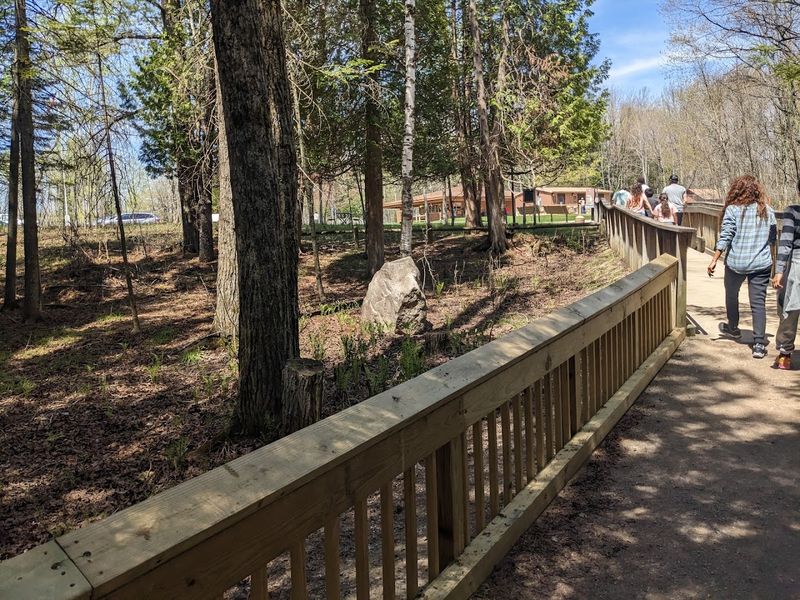
Parking is available right at the trailhead, and from there, the spring is just a short walk.
The path is flat and accessible, which means families, older visitors, and anyone in between can make it without any trouble.
The Raft Ride You Will Never Forget
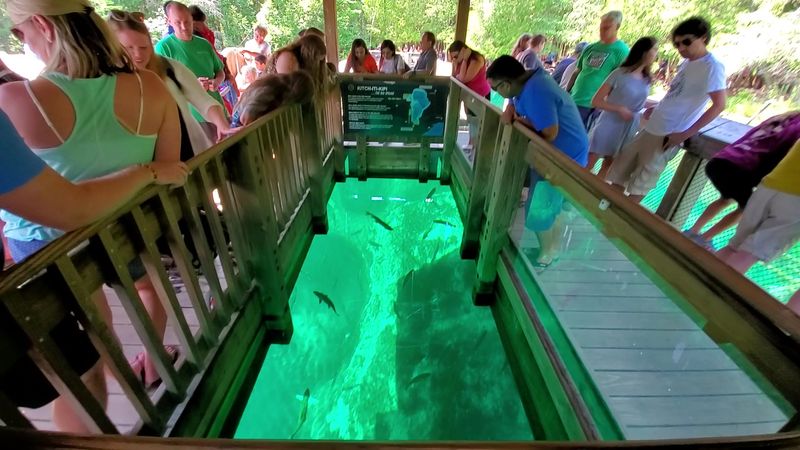
Here is something you will not find at most natural attractions: a self-operated observation raft that you pull yourself across the spring using a cable.
No motor. No guide.
Just you, your travel companions, and a rope.
The raft sits right on the surface of the spring and has a large viewing window built into its floor.
You pull the cable hand over hand, and as you glide across the water, you look straight down into the clearest water you have ever seen in your life.
Through that window, you can see massive brown trout swimming slowly below, completely unbothered by your presence.
You can also see the sandy bottom shifting and bubbling where the water pushes up from underground. It looks like the earth is breathing.
Kids absolutely love the raft, and honestly, so do adults who forget to pretend they are too cool for it.
The whole experience takes about 10 to 15 minutes round trip.
What Lives Beneath The Surface
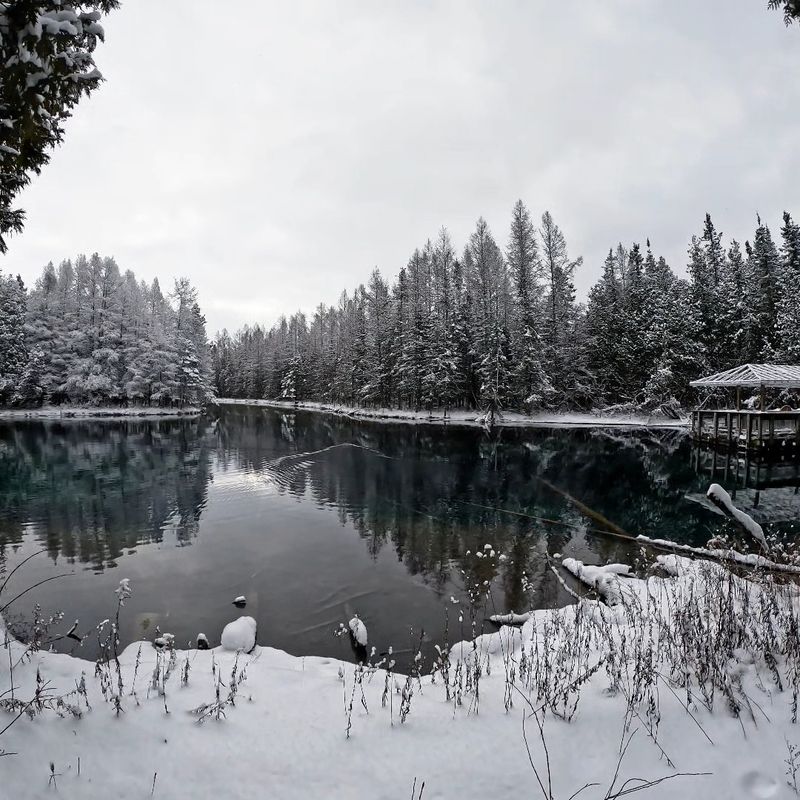
The water at Kitch-iti-kipi is so clear that you can spot wildlife below the surface without any effort at all.
Large brown trout cruise through the spring like they own the place, which, honestly, they kind of do.
These fish are not shy. They swim slowly and deliberately, often coming close to the surface where visitors can see every detail of their spotted sides.
Watching them move through the turquoise water feels almost meditative.
The spring is a protected area, so fishing is not permitted inside Palms Book State Park.
That protection is a big reason why the fish here are so relaxed and so plentiful. They have never been chased or bothered, and it shows in how calmly they behave.
Beyond the trout, the spring supports a rich underwater ecosystem.
Algae and aquatic plants sway gently in the current, and small invertebrates live in the sandy substrate.
The entire underwater environment is alive, active, and visible from above without any special equipment.
The constant 45-degree water temperature creates a stable habitat that wildlife depends on year-round.
In winter months, animals like deer and birds sometimes gather near the spring because the water never freezes.
It becomes a kind of natural gathering point in the cold Upper Peninsula landscape.
Best Times To Visit And What To Expect Each Season
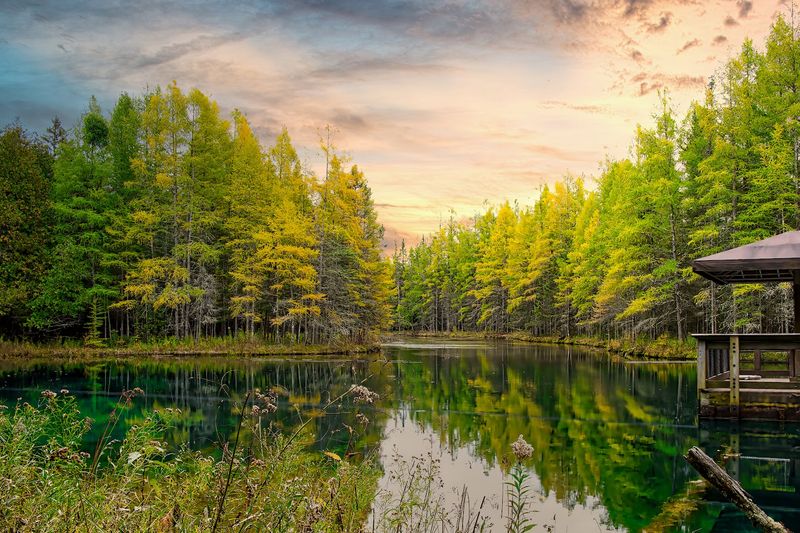
One of the most remarkable things about this spring is that it rewards visitors no matter what time of year they show up.
Each season brings a completely different version of the same magical place.
Summer is the most popular time to visit, and for good reason.
The surrounding forest is lush and full, the days are long, and the contrast between the cool spring water and warm air makes the colors pop even more.
Expect more visitors on weekends in July and August, so arriving early in the morning gives you a quieter, more personal experience.
Fall might actually be the best-kept seasonal secret here.
When the trees around the spring turn orange, red, and gold, the turquoise water below them looks almost electric by comparison.
Winter visits are for the truly adventurous.
The spring stays open year-round, and seeing it surrounded by snow while steam rises off the water is something most people never even know is possible.
The raft still operates in winter, though hours may be reduced.
Spring brings melting snow and fresh green growth all around the water, making the colors feel brand new again.
The History Behind The Name
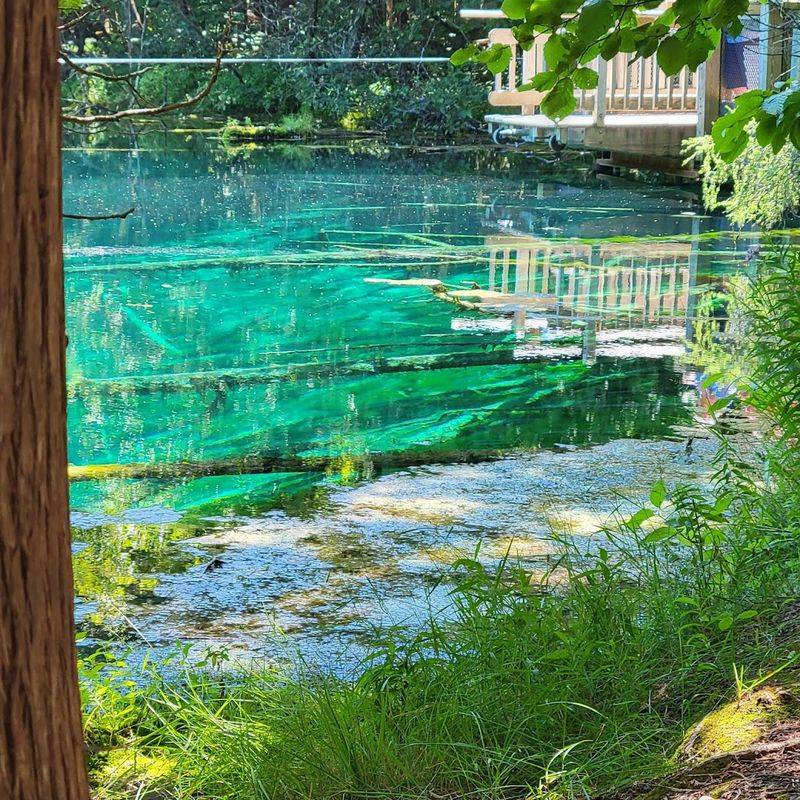
The name Kitch-iti-kipi comes from the Ojibwe language and is often translated to mean “big cold water” or “mirror of heaven.”
Both translations feel completely accurate when you are standing at the edge looking in.
The Ojibwe people of the region held this spring in deep respect for generations before European settlers arrived.
It was considered a sacred and significant place, and that sense of reverence still lingers in the air around it today.
In the early 20th century, a businessman named John Bellaire fell in love with the spring and campaigned to protect it.
He worked for years to convince the state of Michigan to preserve it as a public park.
Thanks to his efforts, Palms Book State Park was established in 1926, and the spring has been protected ever since.
Today, informational signs near the spring share pieces of this history, including details about the Ojibwe connection and the conservation story.
Taking a few minutes to read them adds a whole new layer to the visit.
What to Bring And How To Prepare
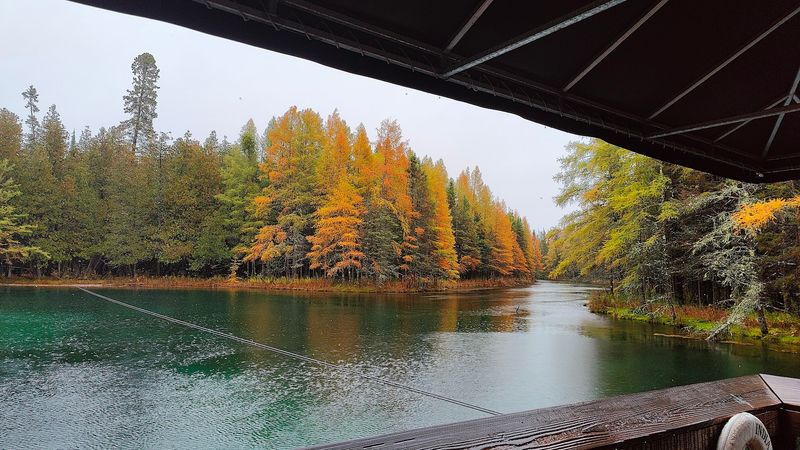
A little preparation goes a long way when visiting Kitch-iti-kipi, even though the actual visit is pretty low-key in terms of physical effort.
The trail to the spring is flat and short, but the surrounding park has more to explore if you want to stretch your legs.
Wear comfortable walking shoes. The path is well-maintained, but the ground near the spring can be damp and uneven in spots.
Good footwear makes the whole experience more enjoyable and keeps you steady near the water’s edge.
This is not a place where you will regret taking too many photos.
The color of the water photographs beautifully in natural light, especially on overcast days when the turquoise really pops without harsh shadows.
Pack a light jacket even in summer.
There is a small picnic area in the park, so bringing lunch is a great idea.
Eating outside surrounded by Upper Peninsula forest after seeing the spring makes for a pretty memorable afternoon.
There are restroom facilities available near the parking area as well.
Why This Place Deserves A Spot On Your Bucket List
Michigan is full of beautiful places, but this one stands out for offering rare natural beauty at almost no cost.
Families with kids find it endlessly entertaining because the raft ride, the fish, and the bubbling sandy bottom give children something active and visual to engage with.
There is no screen in the world that competes with watching a giant trout swim three feet below your feet through a glass-bottomed raft.
Solo travelers and couples find it peaceful and romantic in a way that feels completely natural rather than manufactured.
There are no gift shops crowding the entrance, no loud speakers, and no lines for overpriced food. Just water, forest, and quiet.
Photographers, nature lovers, history fans, and curious road-trippers all find something here that speaks directly to them.
It is one of those rare places that somehow works for everyone without feeling like it was designed for anyone in particular.
Kitch-iti-kipi sits off Sawmill Rd in Manistique, MI 49854, and it is waiting for you with the same calm energy it has held for thousands of years.
So what is stopping you from making the trip and seeing it for yourself?