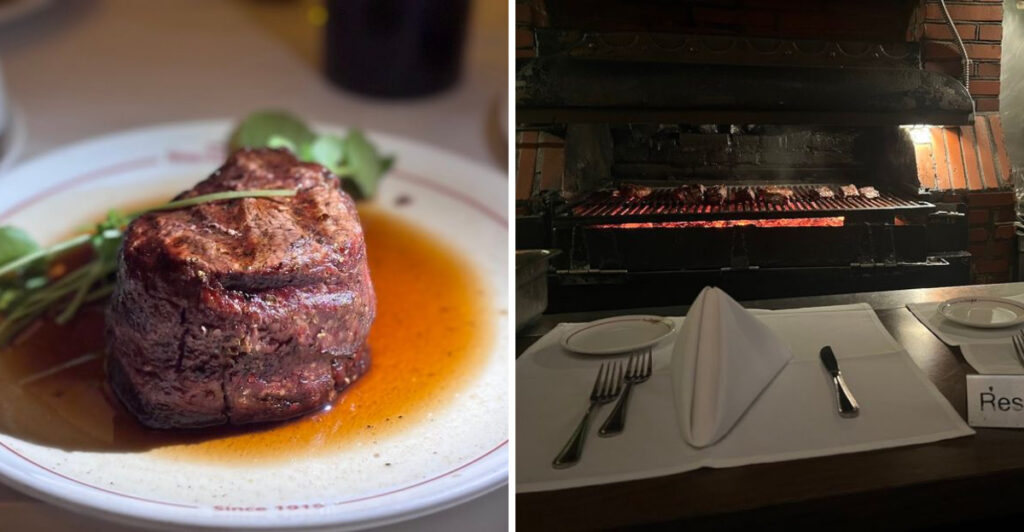
Retro California steakhouses come and go, but one has been quietly serving the same filet for over a century, and the food critics still keep showing up.
Red booths, dark wood paneling, and waiters in red coats who have been working the same room for decades.
The menu reads like a culinary archive: chicken pot pie available one day a week, fettuccine Alfredo with a genuinely cinematic origin story, and a charcoal-grilled filet that regulars plan return trips around. F.
Scott Fitzgerald worked from these booths. So did Hemingway.
California has produced iconic restaurants across every era, but a place that landed its own star on one of the most iconic stretches of sidewalk in America while still cooking over charcoal? That one deserves a reservation.
Over A Century Of Hollywood History On One Block
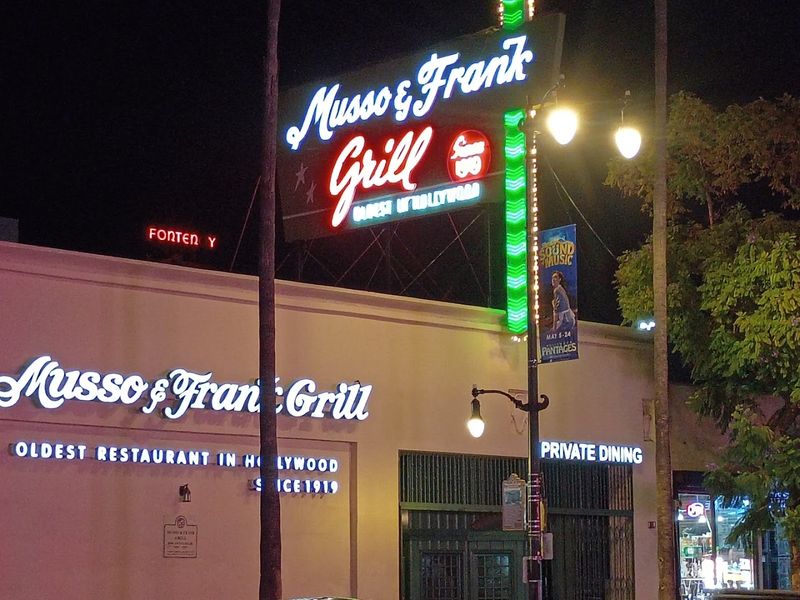
Hollywood has always reinvented itself, but one address has stayed exactly the same since 1919. Musso & Frank Grill is the oldest restaurant in Hollywood, and that milestone is not just a fun fact, it shapes every single thing about the experience inside.
The building itself is recognized as a contributing property to the Hollywood Boulevard Commercial and Entertainment District on the National Register of Historic Places.
Its glass brick windows and original neon sign are landmarks in their own right, visible from the sidewalk as a quiet reminder that some things are worth preserving.
In 2019, the restaurant celebrated its centennial anniversary and received the first restaurant star ever placed on the Hollywood Walk of Fame.
That honor reflects how deeply woven into the cultural fabric of this city the grill has become. Visiting is less like going out to dinner and more like stepping into a living piece of California history that still happens to serve an extraordinary meal.
The restaurant is located at 6667 Hollywood Blvd, Hollywood, CA 90028.
The Filet Mignon That Keeps People Coming Back
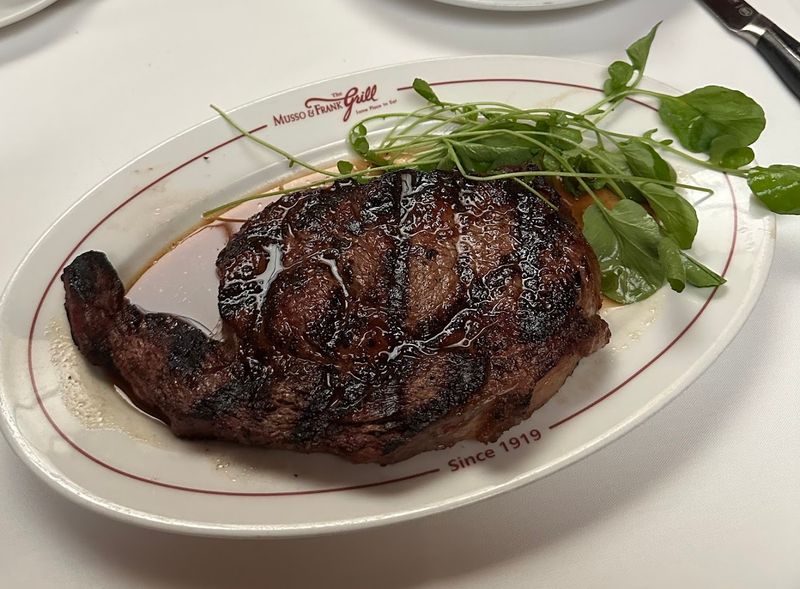
Forget the hype around newer steakhouses; the filet mignon at Musso & Frank Grill has been described as foolproof for good reason. Cooked over a charcoal grill, it arrives with a deep sear on the outside and a tender, juicy interior that is genuinely hard to argue with.
The menu offers both an 8 oz. and a 12 oz. portion, giving diners some flexibility depending on appetite. What stays consistent is the quality and the technique, both of which have remained largely unchanged for decades.
One standout option worth knowing about is the Grenadine of Beef, a distinctive filet preparation served with a tarragon-based Béarnaise sauce that traces back to an original recipe from the restaurant’s early French chef.
It is not something found anywhere else in California, and that exclusivity alone makes it worth ordering.
For anyone visiting Hollywood and wanting a steak experience that is rooted in real culinary tradition rather than modern flash, this is the plate to order.
Red Booths, Dark Wood, And A Room That Feels Timeless
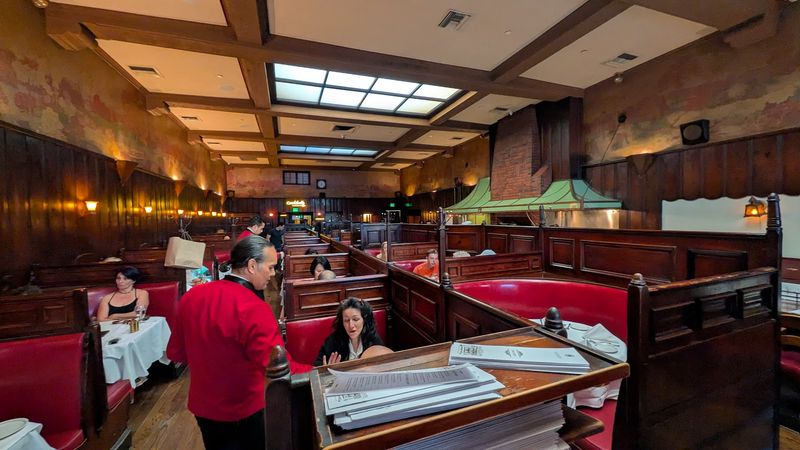
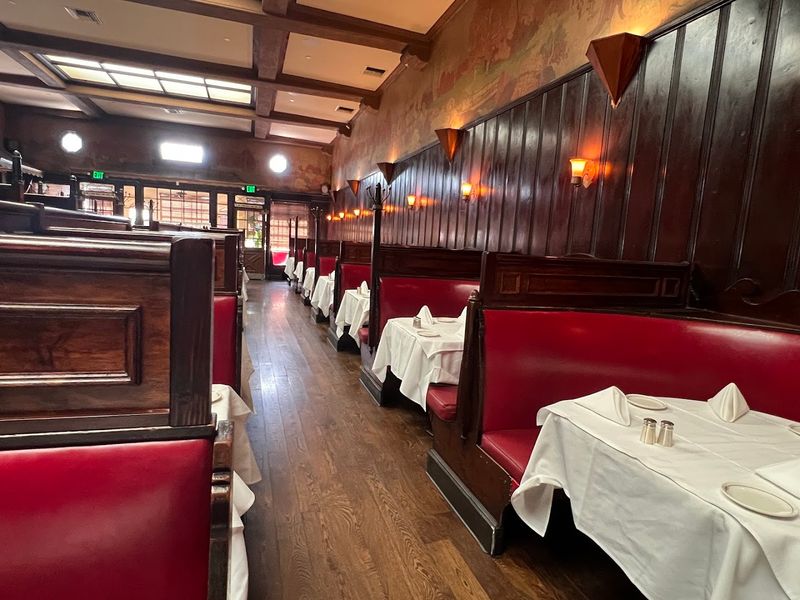
The moment the door opens, the atmosphere does something that modern restaurants rarely manage. High ceilings stretch above dark wood paneling, and the signature red booths line the room in a way that feels both intimate and grand at the same time.
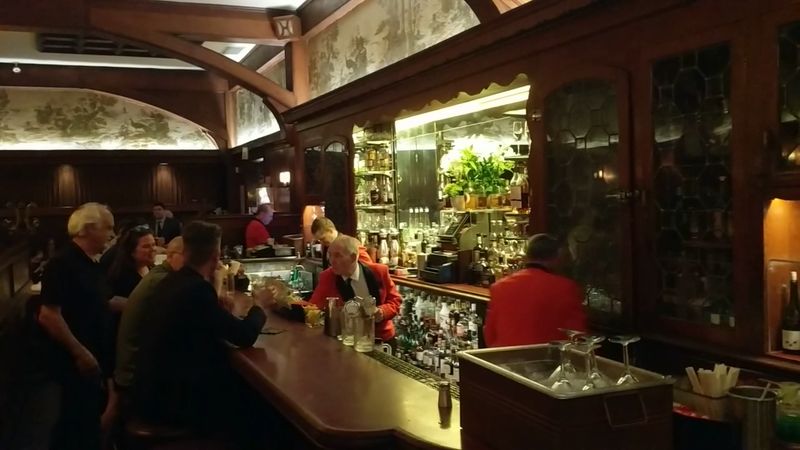
Waiters in traditional red coats move through the space with the kind of unhurried confidence that only comes from years of experience.
White tablecloths, proper glassware, and measured pacing set a tone that is formal without being stiff. The noise level stays at a comfortable hum, making conversation feel easy rather than strained.
What makes the atmosphere particularly interesting is that it has not been updated to feel retro, it simply never stopped being what it always was.
The lighting is warm and low, the seating is genuinely comfortable, and the overall sensory experience leans toward comfort and familiarity rather than performance. It is the kind of room that makes an ordinary Tuesday evening feel like a proper occasion worth dressing up for.
The Menu That Has Barely Changed In A Hundred Years
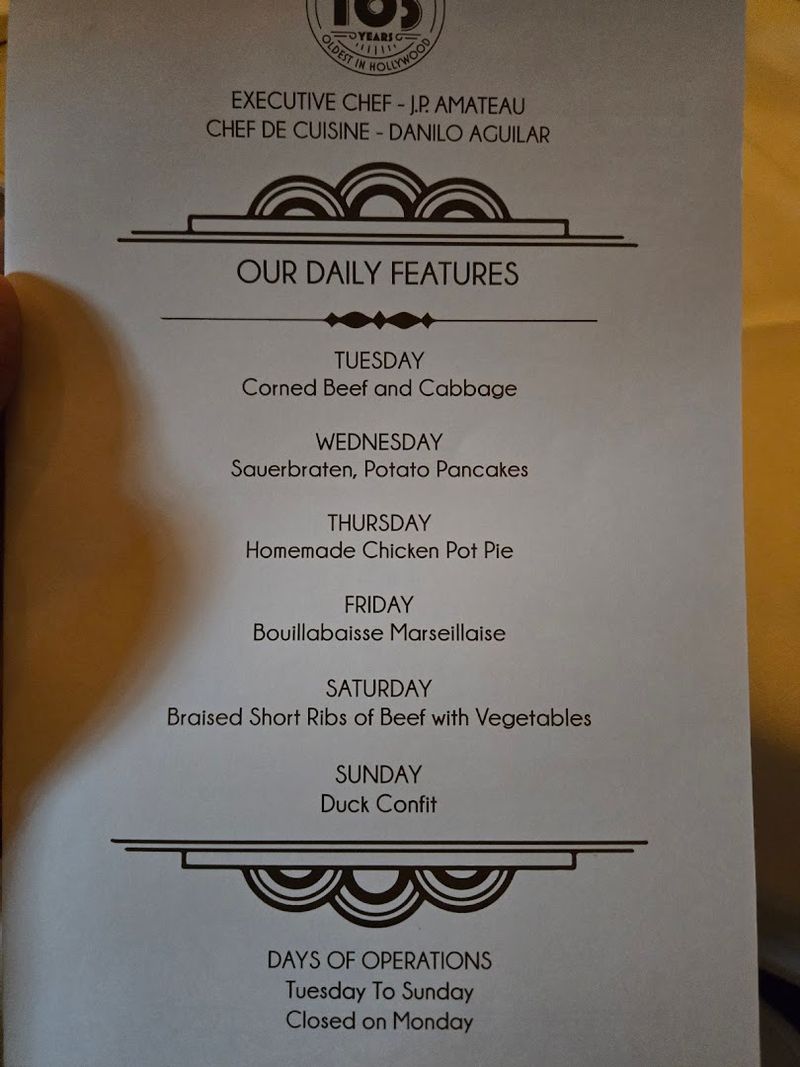
Most restaurants refresh their menus every season, chasing trends and rotating specials. Musso & Frank Grill took a different approach, and held onto it for nearly a century.
Much of the menu remains essentially unchanged from its earliest decades, which sounds limiting until the food actually arrives.
Grilled meats anchor the selection, but the range extends well beyond steaks. Lobster Thermidor, a preparation that feels genuinely luxurious, has remained a fixture for generations.
The chicken pot pie, available on Thursdays, has developed its own devoted following among regulars who plan their visits around it.
Other enduring items include grilled lamb kidneys with bacon and flannel cakes, both of which reflect the restaurant’s roots in classic American and French-influenced cooking.
The menu reads less like a current food trend and more like a culinary archive that still happens to be fully operational.
For diners who appreciate dishes with real provenance and preparation methods that have been refined over decades rather than seasons, this menu is genuinely one of a kind.
Fettuccine Alfredo’s Surprising American Debut
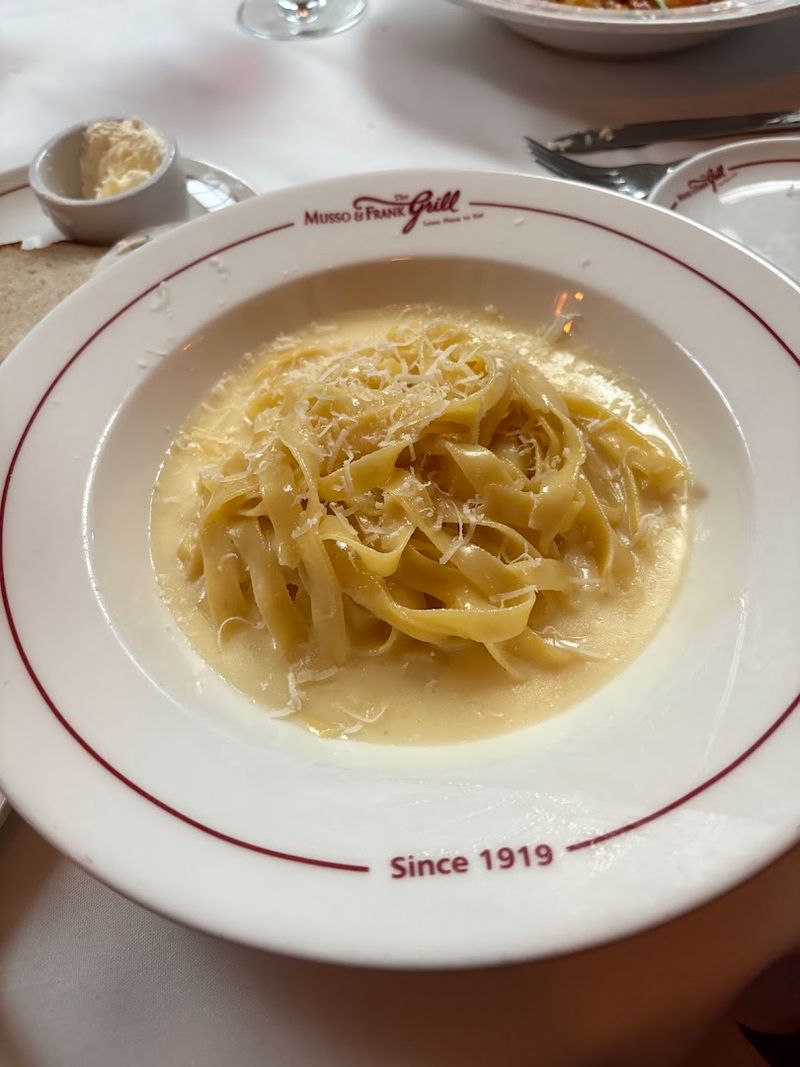
Most people assume fettuccine Alfredo is an Italian-American staple found on every casual dining menu across the country. What fewer people know is that Musso & Frank Grill was the first restaurant in the United States to serve it.
The dish arrived through a cinematic backstory. Silent film stars brought the recipe back from Rome after discovering it there, and the grill added it to the menu not long after.
That origin story gives what might otherwise seem like a simple pasta dish an entirely different weight when it arrives at the table.
The preparation stays true to the original style, which relies on quality butter and aged Parmesan rather than the heavy cream versions that became common elsewhere. It is rich, satisfying, and far more nuanced than most diners expect from a pasta course.
Ordering it at Musso & Frank feels less like choosing from a menu and more like participating in a small but genuine piece of American culinary history that has been quietly preserved on Hollywood Boulevard for decades.
A Literary Haunt Hidden Inside A Steakhouse
Not every great restaurant doubles as a workspace for literary legends, but Musso & Frank Grill managed exactly that.
During the mid-20th century, when the Screen Writers Guild was located nearby on Hollywood Boulevard, the grill became a regular gathering spot for some of the most celebrated writers in American literature.
Names like F. Scott Fitzgerald, William Faulkner, Raymond Chandler, and Ernest Hemingway all frequented the restaurant during their time in Hollywood.
The booths offered privacy, the service was discreet, and the food was dependable.
Orson Welles reportedly wrote portions of Citizen Kane from one of those very booths. That detail is the kind of thing that changes how a room feels once it is known.
Sitting in a red booth at Musso & Frank today, surrounded by the same dark wood and the same unhurried service those writers experienced, carries a quiet weight that no amount of modern design could replicate.
History tends to linger in rooms that have never tried to erase it.
The Star-Studded Past That Still Echoes Today
From the earliest days of silent film to the present, Musso & Frank Grill has attracted a remarkable and consistent stream of famous faces.
Charlie Chaplin, Rudolph Valentino, Humphrey Bogart, Frank Sinatra, Marilyn Monroe, and Elizabeth Taylor all dined here during their respective eras in Hollywood.
What is genuinely interesting is that this pattern has continued rather than faded. More recent generations of actors and public figures have carried on the tradition, making the restaurant a rare place where Hollywood’s past and present occupy the same room.
The staff, many of whom have worked there for decades, tend to handle celebrity sightings with the same composure they bring to everything else, professionally and without fanfare.
That discretion is part of what has made the grill a trusted gathering place across generations of public figures.
For regular diners, there is always the quiet possibility that someone recognizable might be seated at the next booth, adding a low-key thrill to what is already a memorable evening out on Hollywood Boulevard.
Service That Runs On Decades Of Quiet Expertise
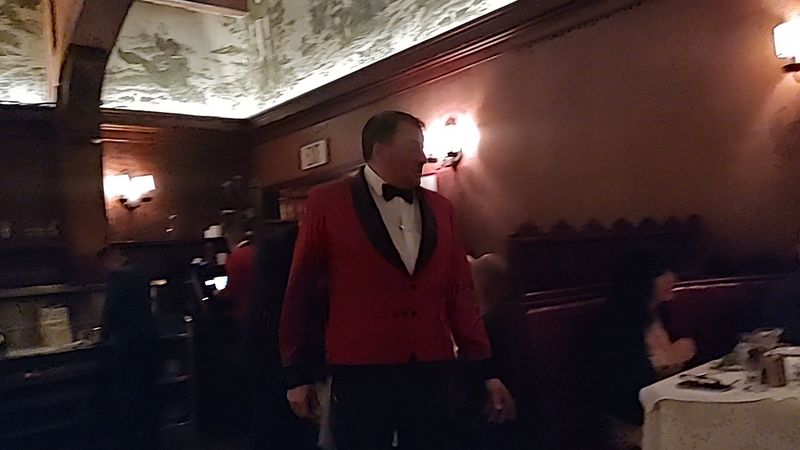
Good service is hard to fake, and at Musso & Frank Grill, the real thing has been on display for generations. Many of the waiters and servers working the floor have been doing so for years.
Orders are taken with calm attentiveness.
Timing between courses tends to feel natural rather than rushed. Questions about the menu are answered with genuine knowledge rather than rehearsed descriptions, which makes a real difference when navigating a menu as specific and storied as this one.
The overall pace of service leans toward the unhurried end of the spectrum, which suits the atmosphere well.
Diners who prefer a quick turnaround might find it slower than expected, but for those who want an evening that actually allows for conversation and enjoyment of the food, the rhythm feels just right.
Reservations are strongly recommended, particularly on weekends, as walk-ins can be difficult to accommodate during busy periods.
What The Charcoal Grill Actually Does To A Steak
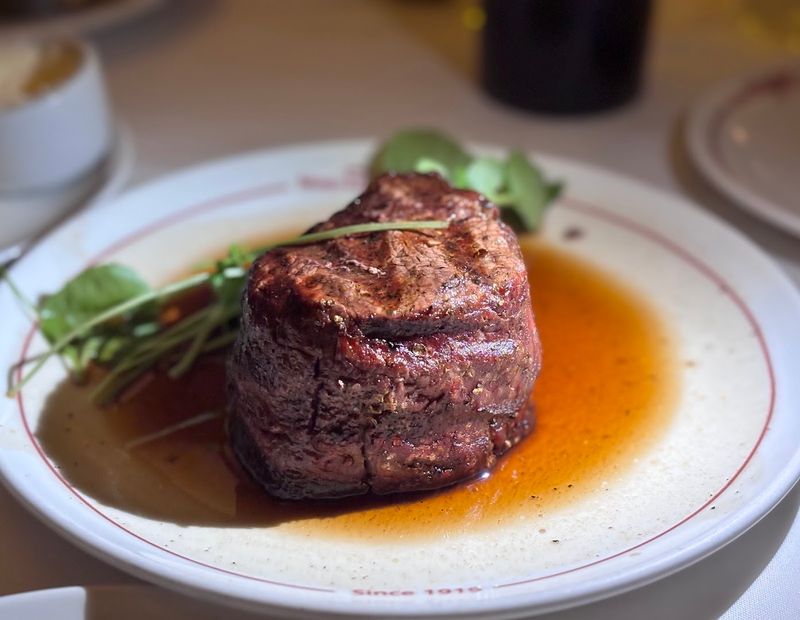
Gas grills are faster and easier to control, which is exactly why so many steakhouses use them. Musso & Frank Grill still uses charcoal, and the difference ends up on the plate in a genuinely noticeable way.
Charcoal cooking produces a distinct kind of crust, slightly smokier, with a caramelized exterior that holds its texture even as the interior stays tender.
The heat distribution is less predictable than gas, which means the kitchen has to rely on skill and experience rather than settings and timers. That dependency on human judgment, built up over decades, is part of what makes the steaks here consistently well-executed.
The ribeye and New York strip also benefit from this method, though the filet tends to be the most frequently praised cut among first-time visitors.
Sides like lyonnaise potatoes or creamed spinach pair naturally with the richness of the grilled meat, and the overall plate feels balanced rather than excessive. It is straightforward cooking done with a level of care that is increasingly rare to find.
A National Historic Landmark Hiding In Plain Sight
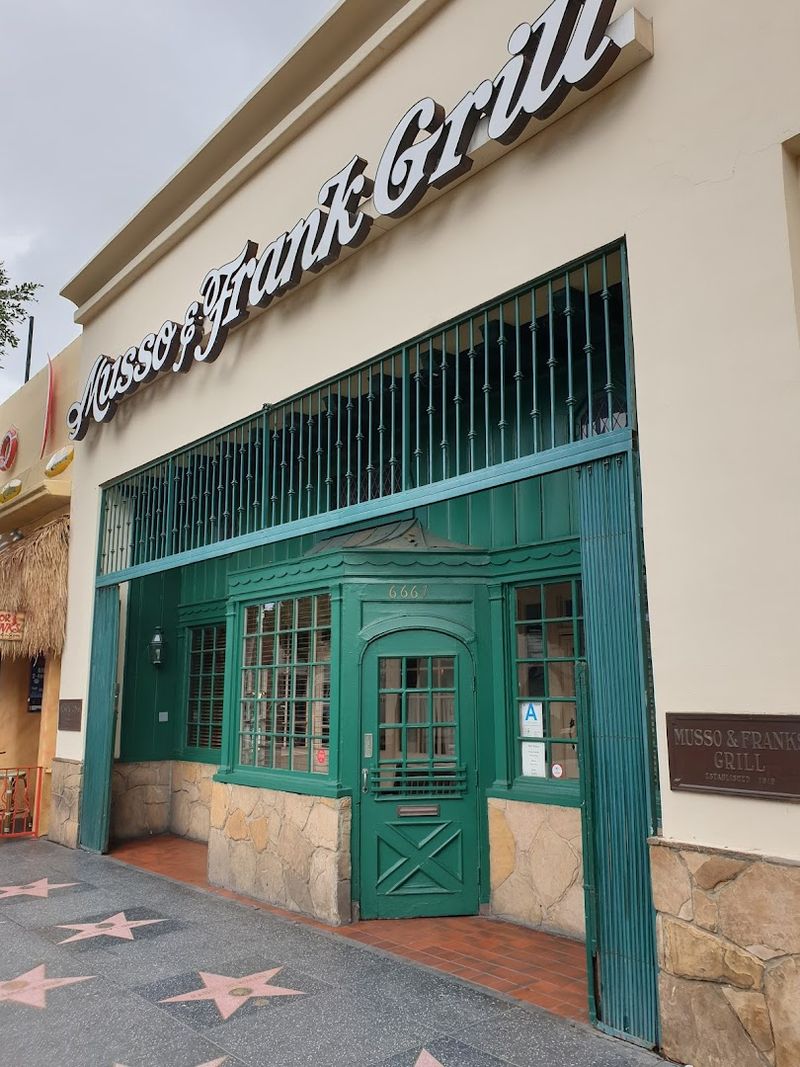
Most diners walking through the door are thinking about dinner, not architecture. But the building housing Musso & Frank Grill carries a designation that sets it apart from almost every other restaurant in the state.
The structure is recognized as a contributing property to the Hollywood Boulevard Commercial and
Entertainment District, which is listed on the National Register of Historic Places. That recognition is tied specifically to the building’s intact interior, its glass brick windows, and its original neon sign, all of which remain in place and in use today.
Preservation at this level is uncommon in a city that tends to favor demolition and redevelopment over maintenance and continuity.
The fact that the grill has retained its original character across nearly a century of Los Angeles history is not accidental. It reflects a deliberate commitment to keeping the space exactly as it was intended to be.
For anyone with an interest in architecture, historic preservation, or simply the physical texture of old California, the building itself is worth a careful look before the food even arrives at the table.
Thursday’s Chicken Pot Pie Is A Cult Classic
Cult menu items tend to develop organically, built up through years of loyal regulars who keep ordering the same thing every visit.
The Thursday chicken pot pie at Musso & Frank Grill is exactly that kind of dish.
Available only on Thursdays, it has developed a reputation that extends well beyond the usual steakhouse conversation.
The limited availability adds to its appeal. Diners who want it need to plan ahead, and that small amount of effort tends to make the experience feel more deliberate and satisfying when it finally arrives.
The pot pie fits the overall character of the menu: hearty, well-executed, and rooted in a style of cooking that does not require reinvention to remain appealing.
It is the kind of dish that rewards diners who appreciate simplicity done well over novelty done flashily. For anyone planning a visit and hoping to try it, checking availability in advance and booking a Thursday reservation is the most reliable approach.
Timing and planning make a real difference at a restaurant where specific items genuinely sell out.
Planning A Visit Without The Common Mistakes
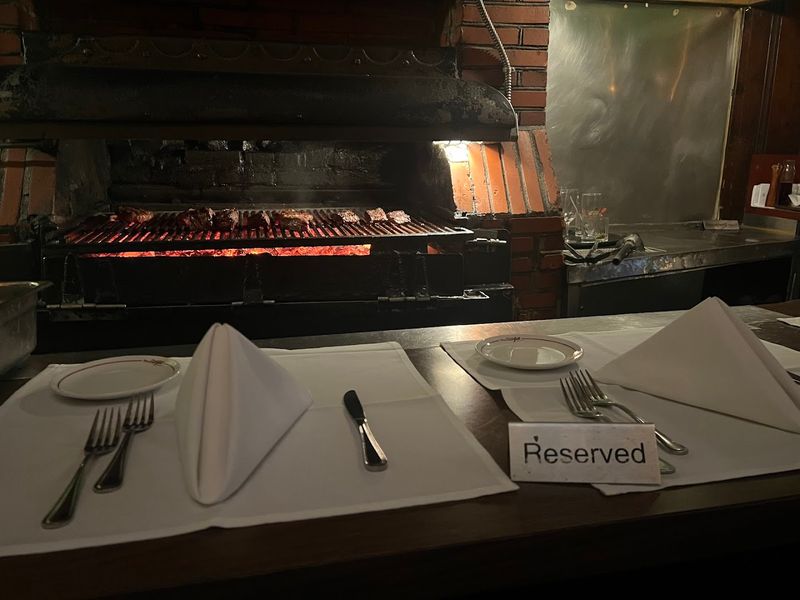
Getting the most out of a dinner at Musso & Frank Grill starts well before arriving at the door. Reservations are strongly recommended, particularly on weekends and Friday evenings, when walk-in availability tends to be very limited.
Booking ahead removes a significant amount of uncertainty from the evening. Valet parking is available behind the restaurant, which is worth knowing given that Hollywood Boulevard street parking can be unpredictable and sometimes frustrating.
For groups of three or more, a reservation becomes even more important, as larger tables fill quickly during peak hours.
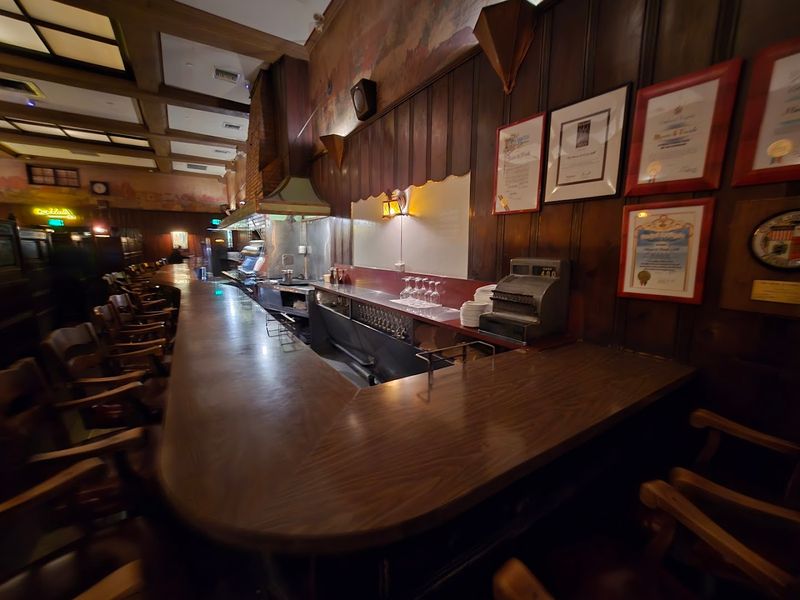
Diners who prefer a more relaxed entry point might consider the counter seating, which tends to accommodate walk-ins more readily than the main dining room. That experience offers the same menu and the same quality of service in a slightly more informal setting.
Weeknight visits generally offer a calmer pace than weekends, which suits those who want more attentive service and a quieter atmosphere.