Missouri just pulled off something nobody expected.
A waterfall pouring over billion-year-old volcanic rock, surrounded by moss-covered ledges and dense canopy so lush that first-time visitors genuinely stop and question which state they are standing in.
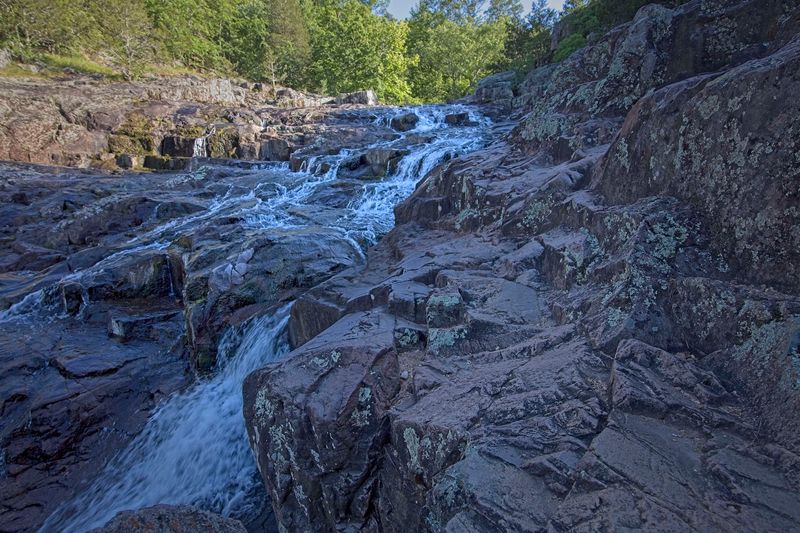
The geology here is unlike almost anything else in the Midwest. Ancient rhyolite forces the creek through narrow channels, building speed and drama before it drops into a wide, cold, crystal-clear pool below.
A natural water slide forms when conditions are right.
Missouri has been quietly sitting on one of its best-kept natural secrets deep in the Ozarks, and the Pacific Northwest comparison is not just poetic. It is the first thing most visitors say out loud when they arrive.
The Geology Behind The Magic
Billion-year-old lava flows are not something most people expect to find in Missouri, yet that is exactly what forms the foundation of Rocky Falls Shut-Ins.
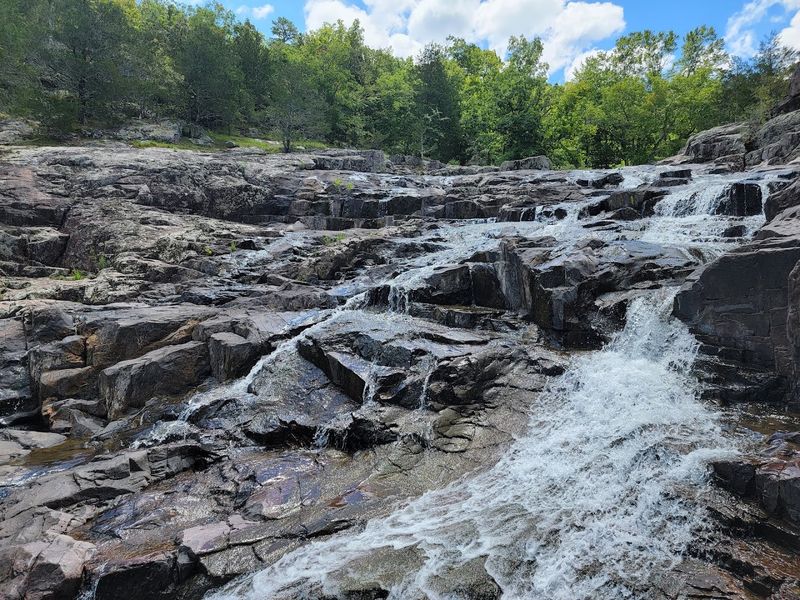
The rock here is rhyolite porphyry, a hard igneous material created when molten lava cooled and solidified roughly 1.5 billion years ago. That volcanic origin makes this site geologically rare in a state where most streams carve through softer dolomite and limestone.
Because rhyolite is so resistant to erosion, the creek cannot widen its path the way it normally would. Instead, it gets squeezed and forced through narrow channels, creating the dramatic chutes and plunge pools that define a “shut-ins” formation.
The reddish-brown color of the exposed rock adds a warm, earthy contrast to the surrounding green canopy. It gives the landscape a rugged, almost prehistoric quality that feels completely different from the rest of the Ozarks.
The geology here is not just a backdrop; it is the whole story.
What “Shut-Ins” Actually Means
The word “shut-ins” sounds like something out of a geology textbook, but the concept is surprisingly straightforward once you see it in person.
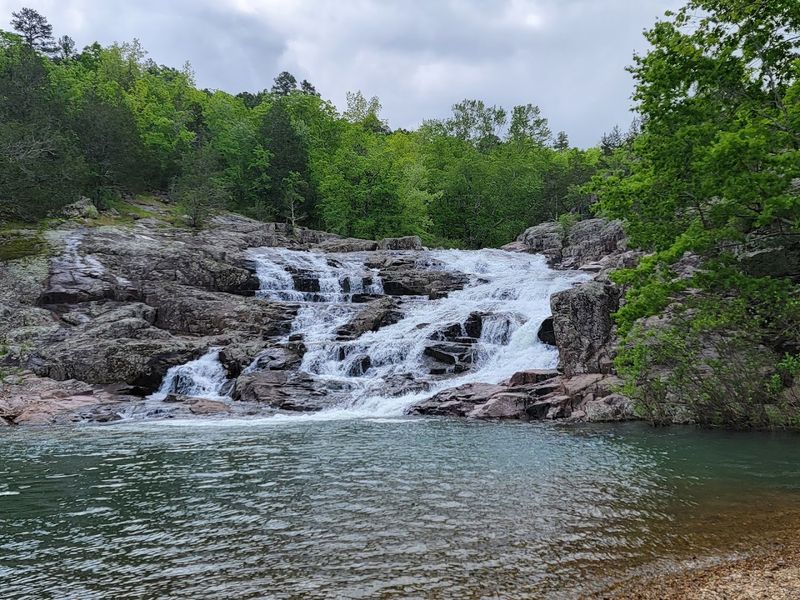
When a stream encounters rock that is too hard to erode easily, it gets “shut in” or confined, forced to squeeze through tight passages rather than spreading out into a wide valley. The result is a series of natural chutes, slides, and deep pools that form along the streambed.
At Rocky Falls, this process created one of the most visually striking water features in Missouri.
The creek funnels through grooves and crevices worn smooth over thousands of years, picking up speed as it goes.
Visitors often spend time just watching the water move, tracing its path from one channel to the next.
The constant motion and sound of rushing water through confined rock gives the site an energy that wider, calmer rivers simply cannot match. Understanding the term makes the experience even more rewarding.
The Waterfall That Earns Its Reputation
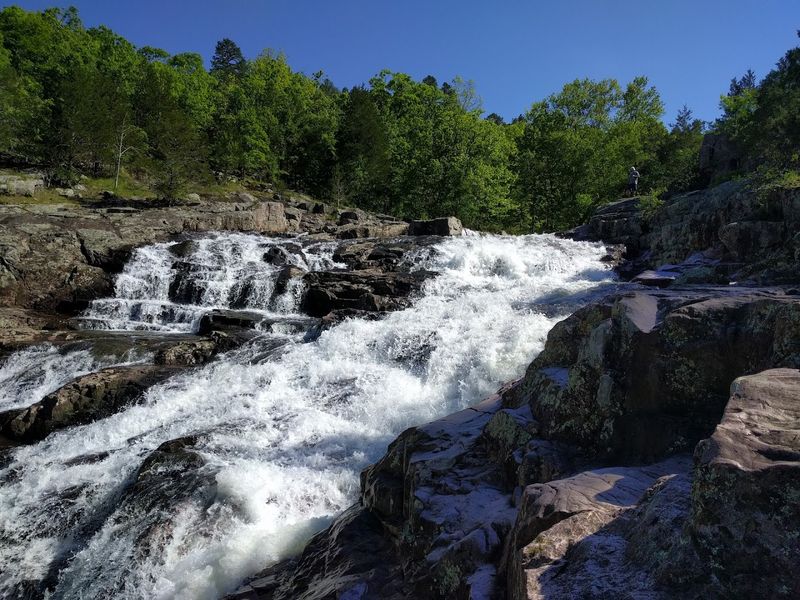
Forty feet of falling water hits differently when the rock it pours over is ancient, rust-colored, and shaped by forces that predate most life on Earth.
The main waterfall at Rocky Falls is not the tallest in Missouri, but its setting makes it one of the most photogenic.
Water rushes over the edge of the rhyolite ledge and drops into a wide, clear pool below, creating a mist that keeps the surrounding rock cool and damp even on warm days.
After a period of heavy rain, the falls swell considerably, and the roar of the water can be heard well before the site comes into view. During drier stretches, the flow slows, and the detailed texture of the rock becomes more visible.
Either way, the visual impact holds up. The combination of dark volcanic rock, white rushing water, and a lush green frame of Ozark forest genuinely does evoke the Pacific Northwest, a comparison that surprises many first-time visitors to the region.
Swimming In A Natural Wonder
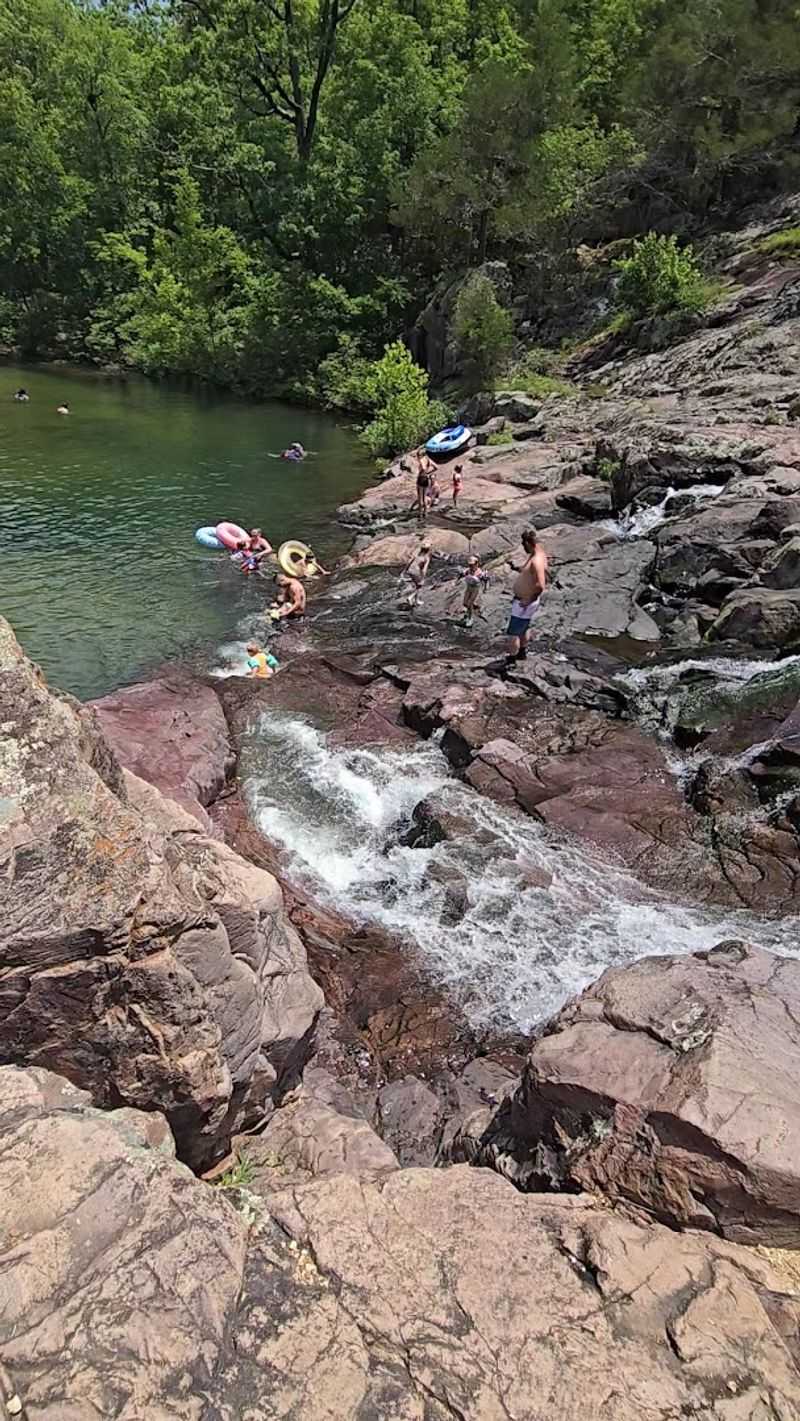
Cool, clear water pooling at the base of an ancient waterfall is a hard invitation to turn down, and most visitors do not even try.
The natural pool at the bottom of Rocky Falls is one of the most popular swimming spots in the Missouri Ozarks. It starts at wading depth near the rocky banks and deepens toward the center, making it accessible for younger kids and more experienced swimmers alike.
The water stays noticeably cold even during the hottest summer months, which is part of the appeal. Gravel and sand banks along the edges give visitors a place to set up chairs, spread out towels, and take breaks between swims.
Weekday mornings tend to be quieter, while weekend afternoons draw larger crowds.
Arriving early in the day rewards visitors with calmer conditions and sometimes a chance to spot wildlife along the creek before the activity picks up. Water shoes are strongly recommended given the slippery rock surfaces throughout the area.
The Natural Water Slide Nobody Talks About Enough
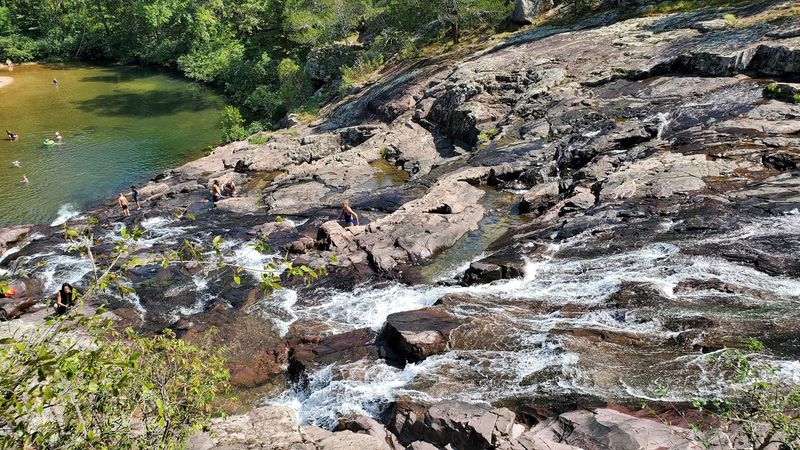
Most waterfall destinations offer scenery and maybe a good photo opportunity, but Rocky Falls adds something genuinely unexpected to the mix.
When water levels are high enough, a natural water slide forms along the rhyolite rock, created by the same geological forces that shaped the shut-ins.
Smooth, curved channels in the rock guide the water in a way that works surprisingly well as a slide, and visitors of various ages take full advantage of it.
It is not a manicured theme park attraction. The slide is formed entirely by the rock itself, shaped over thousands of years by moving water.
That raw, unpolished quality is exactly what makes it exciting.
Water levels vary depending on recent rainfall, so the slide experience changes from visit to visit. Some days the flow is strong and fast, while other times it is more of a gentle glide.
Checking conditions before visiting is a good habit, and water shoes remain essential for navigating the surrounding rock safely.
Hiking The Ozark Trail Connection
The waterfall is the main draw, but the trail system around Rocky Falls offers its own rewards for anyone willing to put in a few miles.
A roughly six-mile out-and-back route connects Rocky Falls to Klepzig Mill, running along a section of the Ozark Trail.
The path heading north toward the mill is considered relatively easy and passes through classic Missouri Ozark scenery, including creek crossings and dense forest cover.
The southern direction offers a harder climb that leads to a nearly 360-degree mountaintop view, rewarding hikers who push through the elevation gain with a sweeping panorama of the surrounding landscape.
Both options give visitors a reason to linger beyond the waterfall itself.
The trails are well-maintained and suitable for families with older children, though creek crossings can be slippery after rain. The trail corridor between Rocky Falls and Klepzig Mill offers quiet stretches where deer and other native wildlife appear with some regularity.
The Pacific Northwest Comparison That Actually Holds Up
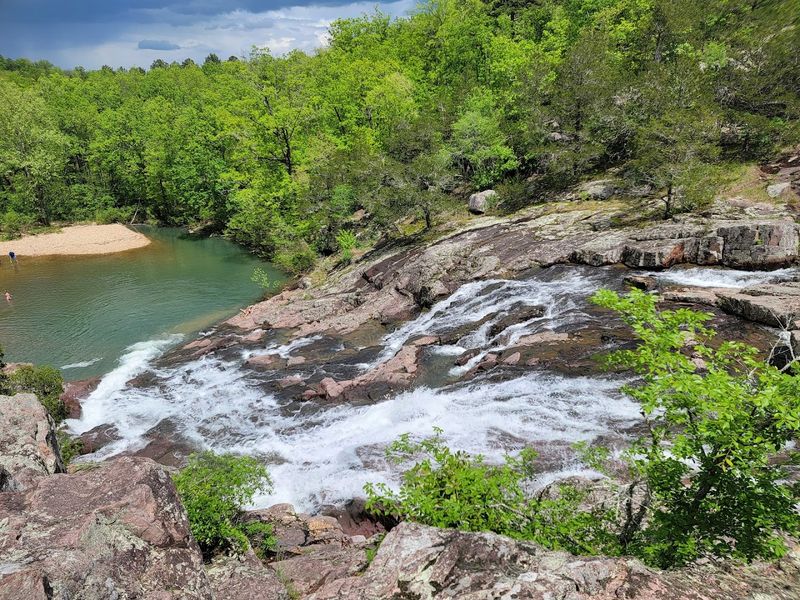
Comparing a Missouri waterfall to the Pacific Northwest might sound like a stretch, but spending time at Rocky Falls makes the comparison feel surprisingly earned.
The combination of factors here is unusual for the Midwest.
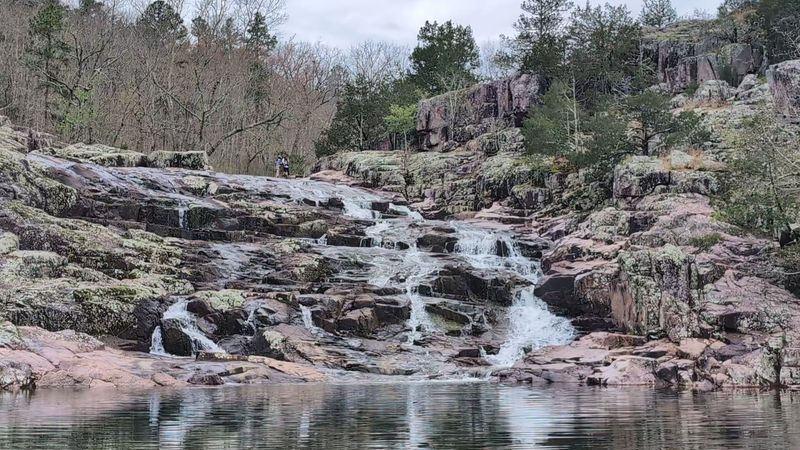
Moist, shaded conditions created by the waterfall and the surrounding forest encourage lichen and moss to grow across the surface of the volcanic rock, giving the landscape a lush, deep-green texture that mirrors what many people associate with Oregon or Washington.
The dark, wet rock, the towering green canopy overhead, and the constant sound of rushing water all contribute to an atmosphere that feels more coastal than landlocked.
It genuinely catches visitors off guard, especially those who have spent time in the Pacific Northwest and recognize the visual language of that environment.
Missouri does not often get credit for dramatic natural scenery, but Rocky Falls makes a compelling case. The state’s Ozark geology produced something here that stands apart from almost everything else in the region, and the resemblance is more than just poetic.
What To Expect When You Arrive
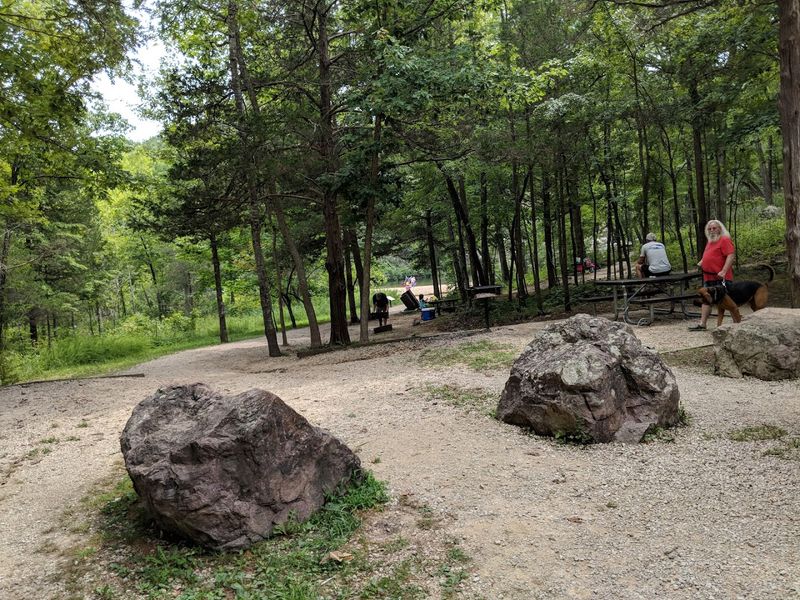
Getting to Rocky Falls requires a short drive on a gravel road, but the route is manageable for most vehicles and the parking situation is straightforward once you know what to expect.
The site sits within the Ozark National Scenic Riverways near Winona, MO 65588, and is managed as part of the national park system.
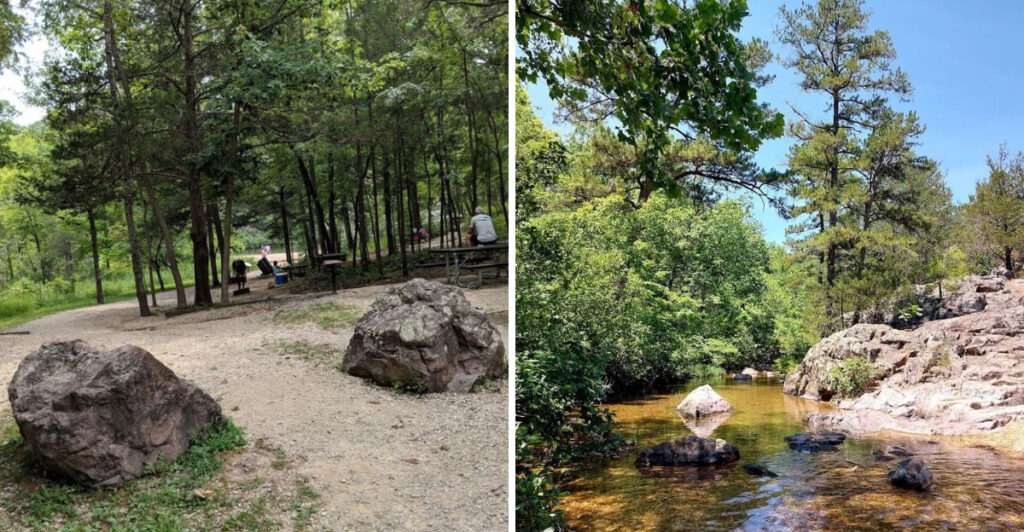
Picnic tables, grills, and restroom facilities are available near the parking area, making it a practical destination for families spending several hours outdoors.
Parking fills up quickly on warm weekends, and overflow parking along the roadside is common during peak season.
Arriving early in the morning dramatically improves the experience, both in terms of crowd size and the chance to observe wildlife before the day heats up.
The site is open year-round, which means off-season visits are entirely possible and often more peaceful.
Fall brings color to the surrounding forest, and spring runoff boosts the waterfall’s power considerably. Each season offers a different version of the same spectacular place.
Wildlife And The World Around The Falls
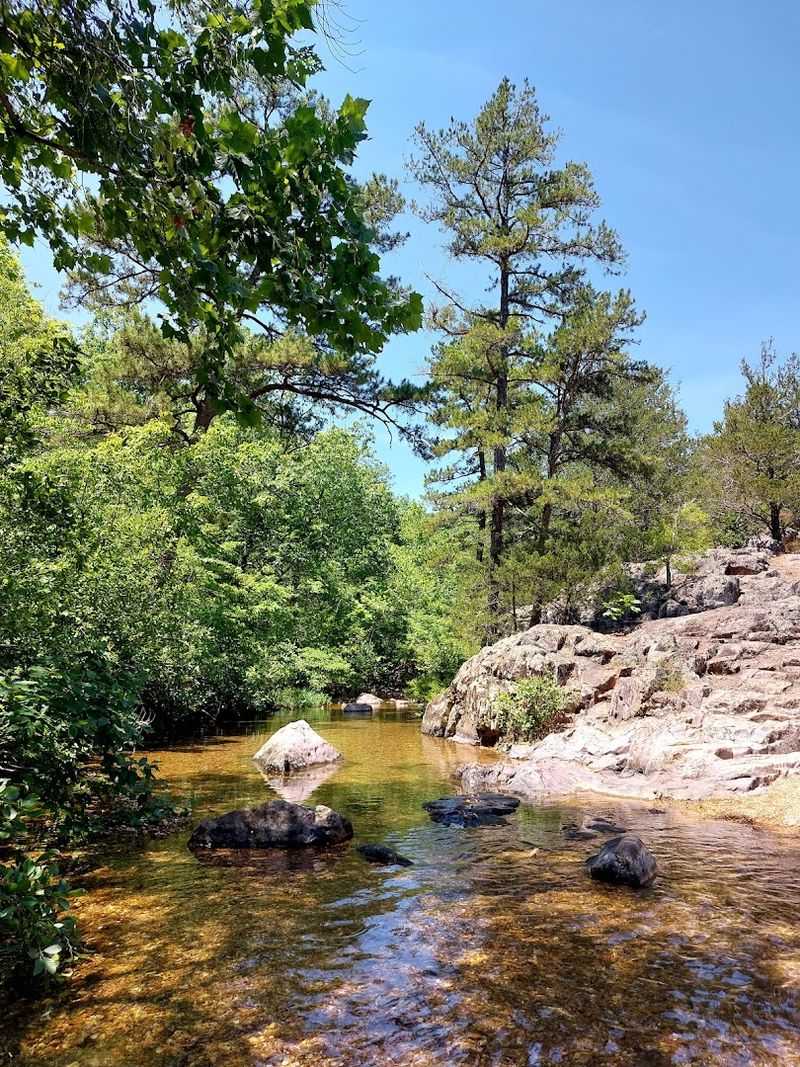
The waterfall gets most of the attention, but the ecosystem surrounding Rocky Falls is quietly impressive on its own terms.
Dense Ozark forest surrounds the site, supporting a wide range of plant and animal life. Lichen thriving on the damp volcanic rock is just one example of how the moist microclimate created by the falls supports organisms that would struggle in drier conditions nearby.
Early morning visitors have the best chance of spotting wildlife along the creek corridor.
The area within the Ozark National Scenic Riverways is known for diverse native species, and the undisturbed stretches of trail between Rocky Falls and Klepzig Mill offer quiet observation opportunities away from the swimming crowds.
Ticks are present in the warmer months, so appropriate clothing and a post-hike check are worth building into the routine.
Cicadas can be loud during peak summer weeks, adding to the sensory experience in a very Missouri kind of way. The natural world here is active, layered, and genuinely worth paying attention to.
Why This Place Deserves A Spot On Your Missouri List
Some places earn their reputation through marketing, and others earn it by simply being exactly what they appear to be. Rocky Falls falls firmly into the second category.
The combination of ancient geology, a genuinely dramatic waterfall, natural swimming, trail access, and that unexpected Pacific Northwest atmosphere makes this one of the more complete outdoor destinations in Missouri.
It delivers multiple experiences in a single visit without requiring extensive planning or equipment.
The site is free to visit and open year-round, which removes most of the usual barriers to getting out and exploring.
Families, solo hikers, photographers, and swimmers all find something worth their time here.
Missouri has a habit of surprising people who assume the state has little to offer in terms of wild, dramatic scenery.
Rocky Falls is one of the most persuasive arguments against that assumption. It is the kind of place that earns a return visit almost immediately, and that is a standard most destinations never manage to meet.