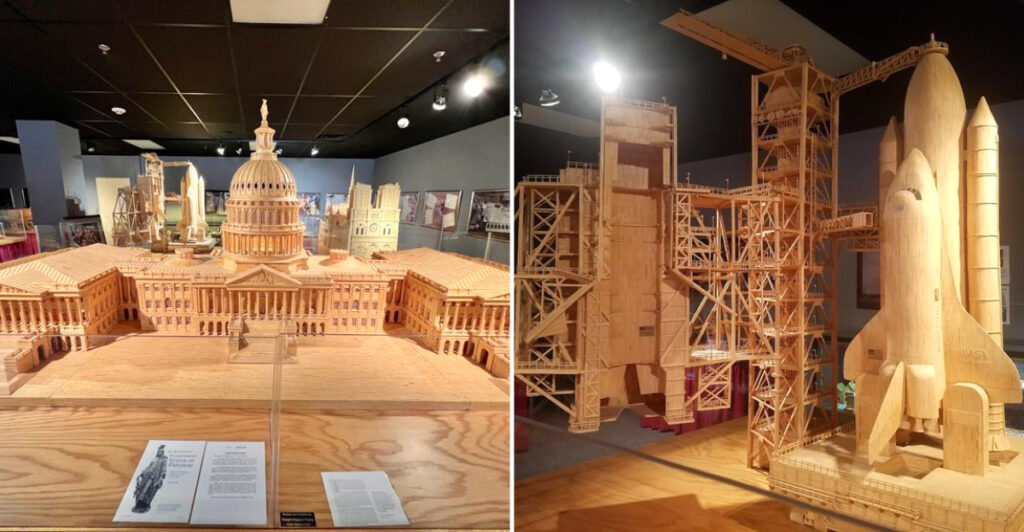
A quiet Iowa town is hiding the kind of roadside wonder that makes you blink twice, then lean in closer. Inside an unassuming little building, thousands upon thousands of tiny matchsticks have been turned into intricate works of art that feel far bigger than their humble materials.
I have seen plenty of quirky stops that promise something unusual, but this one actually delivers the goods, one tiny stick at a time.
The creations here have even earned national attention from Ripley’s Believe It or Not, which feels fitting once you realize just how much patience, precision, and creative stubbornness went into them.
This is the kind of place that turns a simple Iowa detour into a story you will probably retell later, mostly because “you have to see it to believe it” finally earns its keep.
The Story Behind the Matchstick Magic
Patrick Acton did not set out to become one of America’s most unusual artists, which somehow makes the whole story even better. He began building matchstick models as a personal hobby, probably not imagining that one tiny stick after another would eventually lead to an entire museum filled with his work.
What started quietly kept growing into something much bigger, stick by stick and project by project. Some pieces took months, while others required years of focused effort, careful planning, and the kind of patience that makes my unfinished weekend projects look deeply unserious.
The museum in Gladbrook, Iowa, exists because of Acton’s determination and the community support behind him. That gives the place a personal, homegrown feeling instead of making it feel overly polished or commercial.
Even visitors who do not usually care much about art tend to walk out impressed, especially after watching the short video that explains how the models came together over time. You can see the matchstick magic for yourself at Matchstick Marvels, 319 2nd St, Gladbrook, IA 50635.
What You Actually See When You Walk In
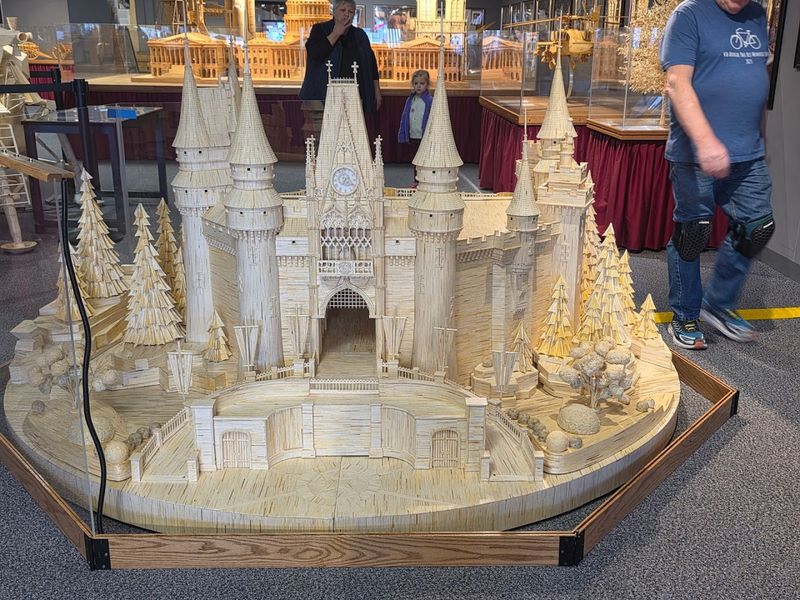
The first thing that hits you is the sheer scale of the pieces. These are not little tabletop trinkets.
Some of the matchstick sculptures are enormous, filling entire display cases and demanding your full attention from the moment you enter the room.
I spent a good few minutes just standing in front of the first major piece, trying to process how many individual sticks were involved. Reading the placard next to each display, with numbers often running into the hundreds of thousands, only deepens the sense of wonder.
The museum is compact but thoughtfully arranged, so you naturally move from one creation to the next without feeling rushed or lost. Every corner holds something new, and the detail in each piece rewards slow, careful looking rather than a quick glance.
Natural light and interior lighting both work together to highlight textures and shadows across the sculptures.
The overall effect is surprisingly intimate, more like visiting a private studio than walking through a formal gallery, and that relaxed atmosphere makes the whole experience feel approachable for visitors of every age.
The Capitol Building Replica That Will Make Your Jaw Drop
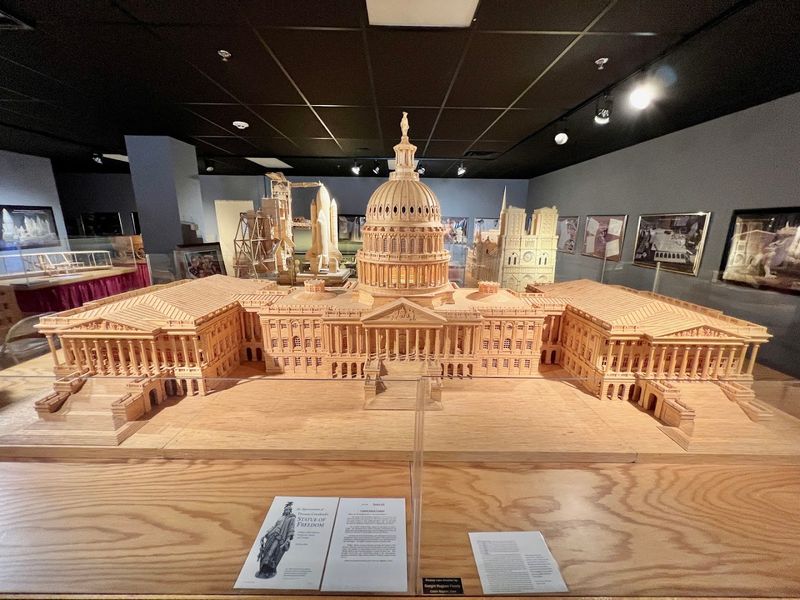
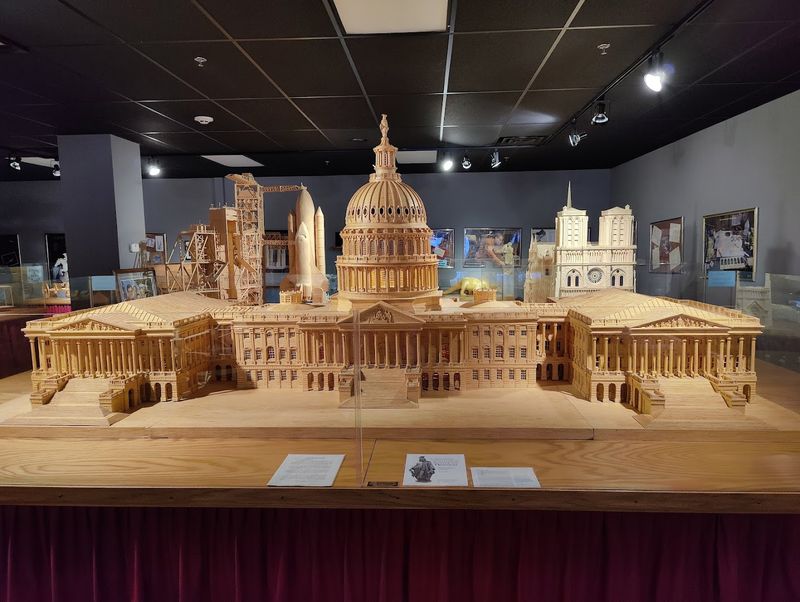
Among the standout pieces at the museum is a meticulously crafted replica of the United States Capitol building. Every column, every dome curve, and every tiny architectural detail has been recreated using nothing but matchsticks and adhesive.
The amount of patience this single piece represents is almost impossible to wrap your head around. Acton reportedly used hundreds of thousands of sticks on projects like this one, and you can see exactly why when you study the layered surfaces up close.
What makes this piece particularly striking is how structurally accurate it is. This is not a loose interpretation or a simplified version.
The proportions feel right, and the symmetry is precise in a way that suggests serious research and planning before a single stick was ever placed.
Standing in front of it, I kept thinking about how many evenings and weekends went into building something like this. The Capitol replica is the kind of display that turns skeptics into believers, and it has become one of the most photographed pieces in the entire collection.
Ripley’s Believe It or Not and National Recognition
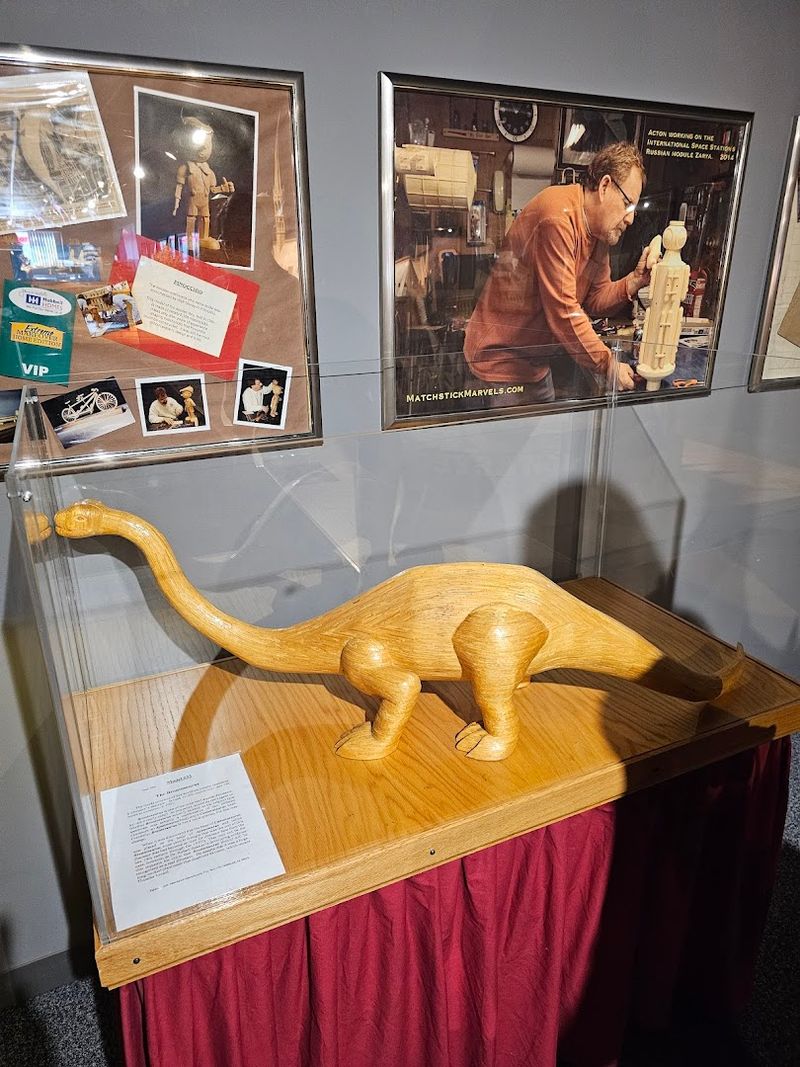
Not many small-town Iowa museums can claim a connection to Ripley’s Believe It or Not, but Matchstick Marvels is one of them. Patrick Acton’s work caught the attention of the famous organization, and several of his pieces have been acquired and shipped to Ripley’s locations around the country.
That kind of recognition is a big deal for any artist, but especially for someone working quietly in a small Midwestern town.
It also means that some of the most spectacular pieces Acton ever created are no longer in Gladbrook, which gives the museum an interesting ongoing energy as new works continue to be added.
The connection to Ripley’s has helped spread the word far beyond Iowa. Visitors now make deliberate detours to Gladbrook specifically because they heard about the museum through Ripley’s channels or related media coverage.
I noticed references to awards and press clippings displayed inside the museum, giving the whole place a proud, well-earned atmosphere. For a town this size, having a world-famous curiosity organization take notice is the kind of achievement that genuinely puts you on the map in a lasting way.
The Numbers That Make Your Brain Spin
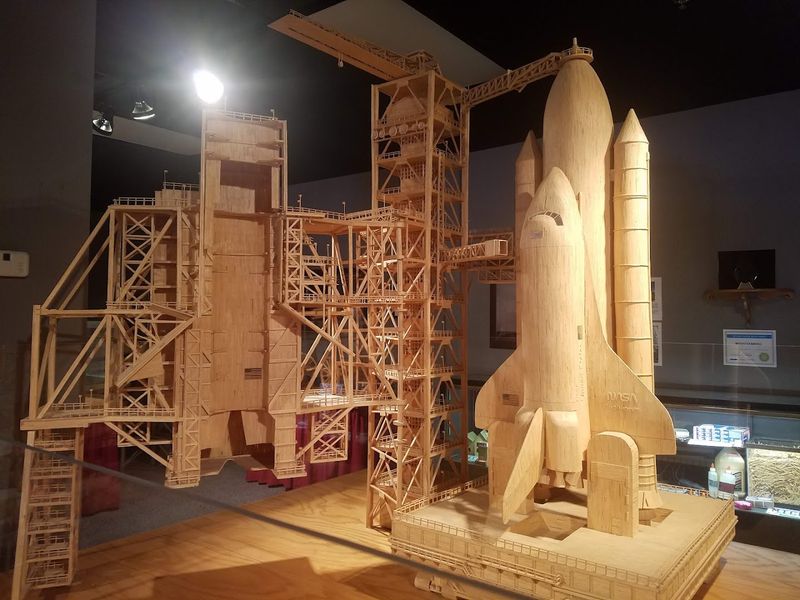
Numbers tell the real story at this museum. Reading that a single sculpture contains over 500,000 individual matchsticks is one thing.
Seeing that sculpture in person is something else entirely, because your eyes simply cannot process how many sticks are actually there.
Acton’s larger projects have used well over a million matchsticks in some cases. Each one is placed by hand, often trimmed or shaped to fit a specific spot in the overall structure.
The repetitive precision involved borders on meditative, and the results speak for themselves in the most visual way possible.
The placards next to each display give you the stick counts, the hours invested, and sometimes the years it took to complete a piece. Reading those numbers while looking at the finished sculpture creates a kind of double appreciation, one for the object itself and one for the human effort behind it.
I found myself doing rough mental math, trying to imagine handling even a fraction of those sticks. The numbers are genuinely staggering, and they add a layer of context that transforms each piece from a curiosity into a serious achievement worth deep respect.
A Sailing Ship That Looks Ready to Set Sail
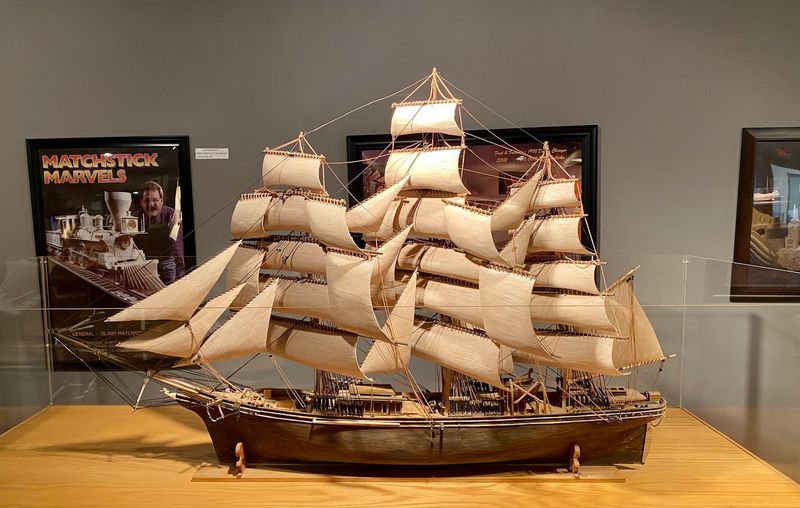
Few pieces in the museum generate as much conversation as the sailing ship. The sails alone are a technical marvel, built entirely from matchsticks in a way that somehow captures the billowing, wind-filled look of real canvas without using any fabric at all.
The rigging, the hull, the deck details, all of it is constructed from the same humble material. Up close, you can see how individual sticks were layered and angled to create the illusion of curves and movement in a medium that is fundamentally rigid and straight.
Sailing ships have always been symbols of ambition and long journeys, and there is something poetic about recreating one in matchsticks. The implied effort of the voyage mirrors the actual effort of the build, and that connection gives the piece an emotional weight that purely abstract art sometimes lacks.
I circled this display several times, looking at it from different angles. Each viewpoint revealed new details I had missed before, which is the mark of a truly well-crafted object.
The ship is easily one of the most photographed pieces in the entire museum collection.
Visiting Gladbrook: What to Expect from the Town

Gladbrook is a small, quiet town in Tama County, Iowa, and it wears that identity comfortably. The streets are calm, the pace is unhurried, and the kind of big-city noise that follows you everywhere else simply does not exist here.
Most visitors pass through Gladbrook specifically because of the museum, and the town seems to have embraced that role with warmth. The people I encountered were friendly and genuinely happy to chat about local life, which added a layer of charm to the overall experience.
The building that houses Matchstick Marvels also shares space with a community-run movie theater, which is a fun bonus if you want to extend your visit. It is the kind of detail that feels very specific to a small Iowa town, where multipurpose community spaces are a natural part of local culture.
Gladbrook is a far cry from Ohio or any other state known for big tourist attractions, but that is precisely its appeal.
The museum fits perfectly into a town that values creativity, community, and the satisfaction of doing something extraordinary with modest resources.
Practical Tips Before You Make the Trip
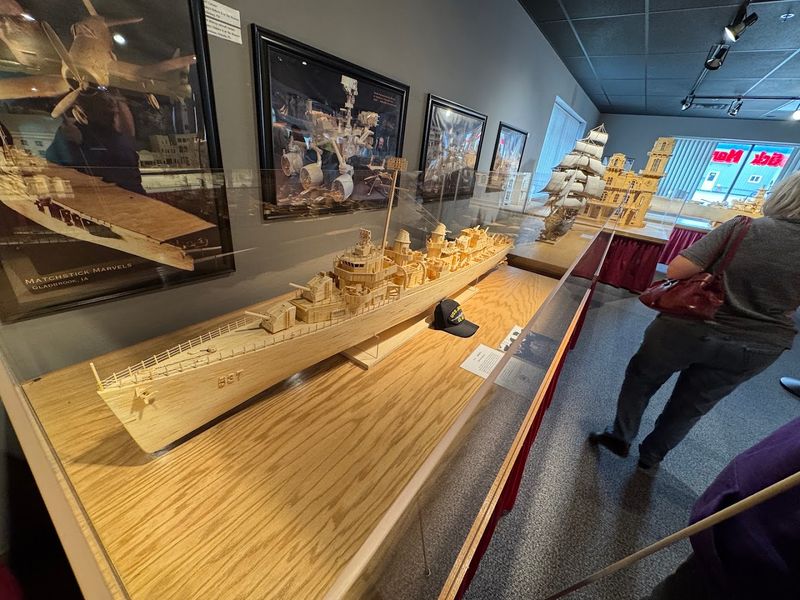
The museum is open seasonally from April 1 through November 30, seven days a week from 1 to 5 PM, which makes it a natural afternoon stop if you are passing through central Iowa on a road trip.
It is closed on Easter, Memorial Day, July 4th, Labor Day, and Thanksgiving Day, while winter visits from December 1 through March 31 are available by appointment.
Admission is very affordable, with adults paying $5, children ages 5 to 12 paying $3, and children under 5 admitted free. Just bring cash, because the museum does not accept credit cards, which is the kind of small-town detail that can turn a perfectly planned visit into a frantic pocket-checking performance.
Plan to spend around 30 to 45 minutes inside, though curious visitors who read every placard and watch the background videos may find themselves staying longer. The staff and volunteers are knowledgeable and happy to answer questions, so do not hesitate to ask about specific pieces or the artist’s process.
You can reach the museum by phone at 641-473-2410 or check out the website at matchstickmarvels.com for any updated hours. It is also smart to save the address, 319 2nd Street, Gladbrook, IA 50635, before you leave home.
The Eagle That Seems to Soar Right Off the Display
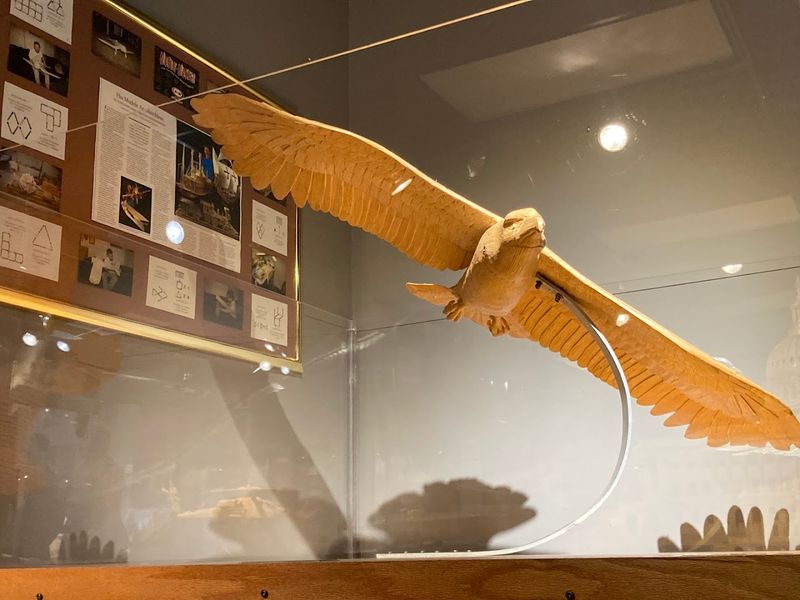
A flying eagle built entirely from matchsticks might sound impossible, but Acton has pulled it off with a result that genuinely stops people mid-step. The outstretched wings carry a sense of motion that feels almost impossible in such a rigid material.
The feather detail is where this piece really earns its place among the museum’s highlights. Individual matchsticks have been layered and shaped to suggest the overlapping, textured quality of real feathers, and the effect is convincing enough to make you do a double-take.
Eagles carry a lot of symbolic weight in American culture, representing freedom, strength, and pride. Seeing one recreated in such a painstaking and unexpected medium adds a layer of meaning that makes the piece feel more significant than a simple technical exercise.
I stood in front of this display for longer than I expected, partly because new details kept revealing themselves the longer I looked.
The way the wings angle slightly suggests a bird catching an updraft, and that sense of captured movement is one of the most impressive things Acton has achieved across his entire body of work.
Why This Place Stays With You Long After You Leave
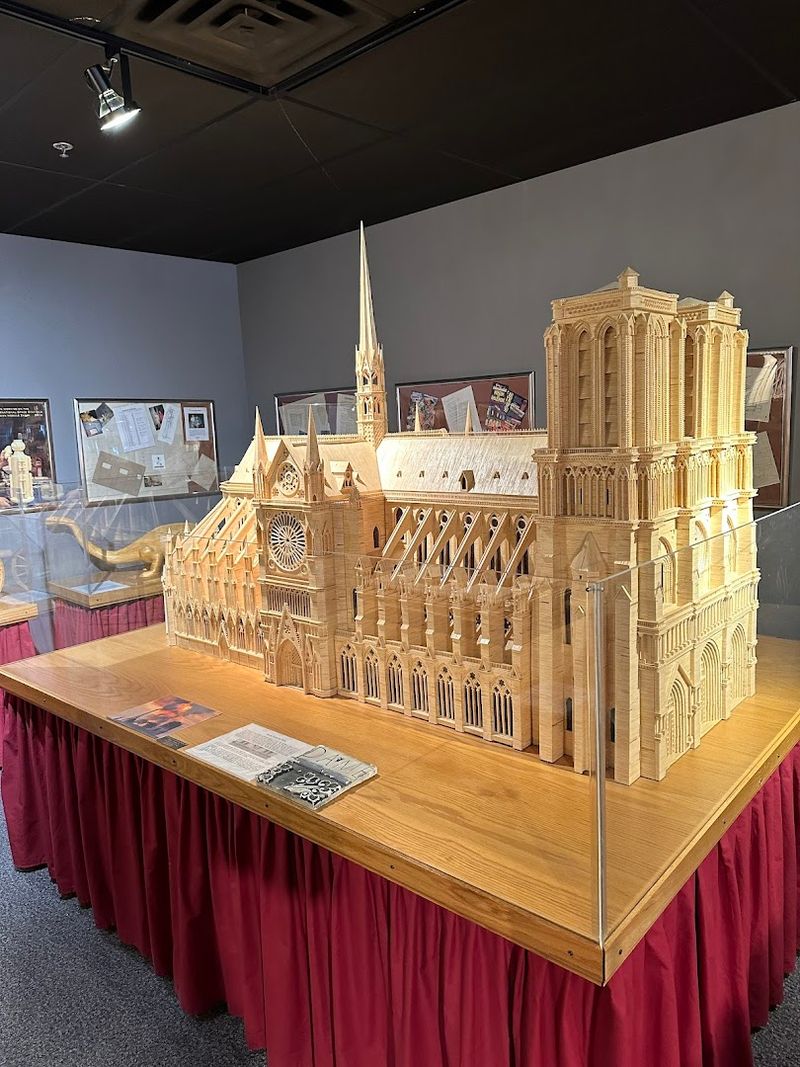
Some places are fun in the moment and forgotten by the next morning. Matchstick Marvels is not one of those places.
The combination of extraordinary craftsmanship, genuine human story, and unexpected location creates a memory that tends to stick around.
Part of what makes it linger is how personal the whole experience feels. This is not a corporate attraction or a manufactured tourist trap.
It is one person’s life work displayed in a small Iowa town, and that authenticity comes through in every corner of the museum.
Visitors from places far beyond Iowa, including states like Ohio and beyond, have made special trips here and left with the same reaction: disbelief, admiration, and a renewed appreciation for what patient human hands can accomplish. That shared reaction creates a kind of community among everyone who has ever visited.
The museum earns strong visitor praise not through flashy gimmicks but through the simple power of showing people something they have never seen before. Long after you have driven home, you will still find yourself describing it to friends, and that is the truest measure of a worthwhile stop.