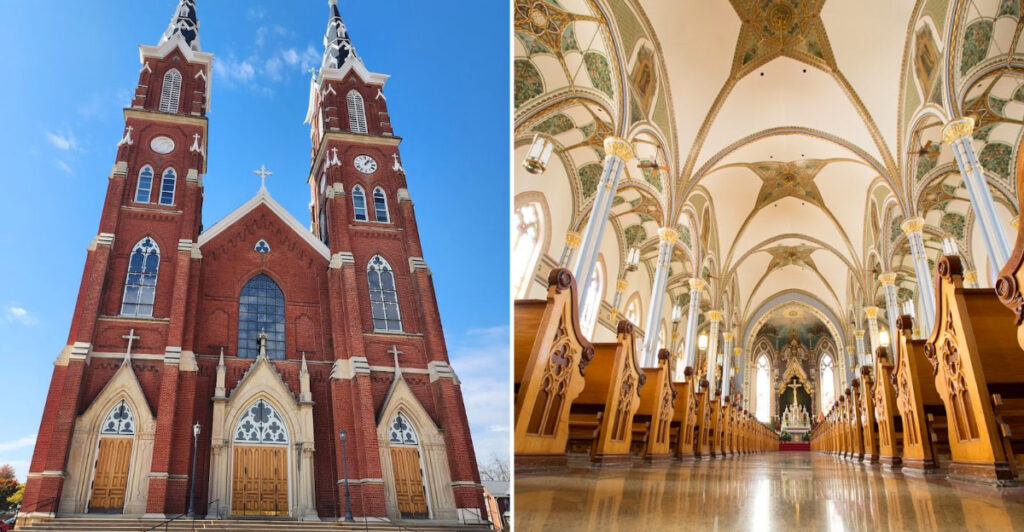
Iowa has a habit of saving its biggest surprises for the places you least expect. One minute you are driving through quiet farmland and small-town streets, and the next you spot twin spires that look like they wandered in from an old European postcard.
That was the moment this place caught me completely off guard. I expected a peaceful Iowa detour, not a soaring basilica with painted ceilings, stained glass, Gothic details, and the kind of presence that makes you forget what you were about to say.
It is the kind of stop that gently corrects your assumptions about Midwest travel. Beauty does not always need a big-city address, and this remarkable Iowa landmark proves that with every arch, window, and sky-high spire.
A Small Town With a Sky-High Surprise
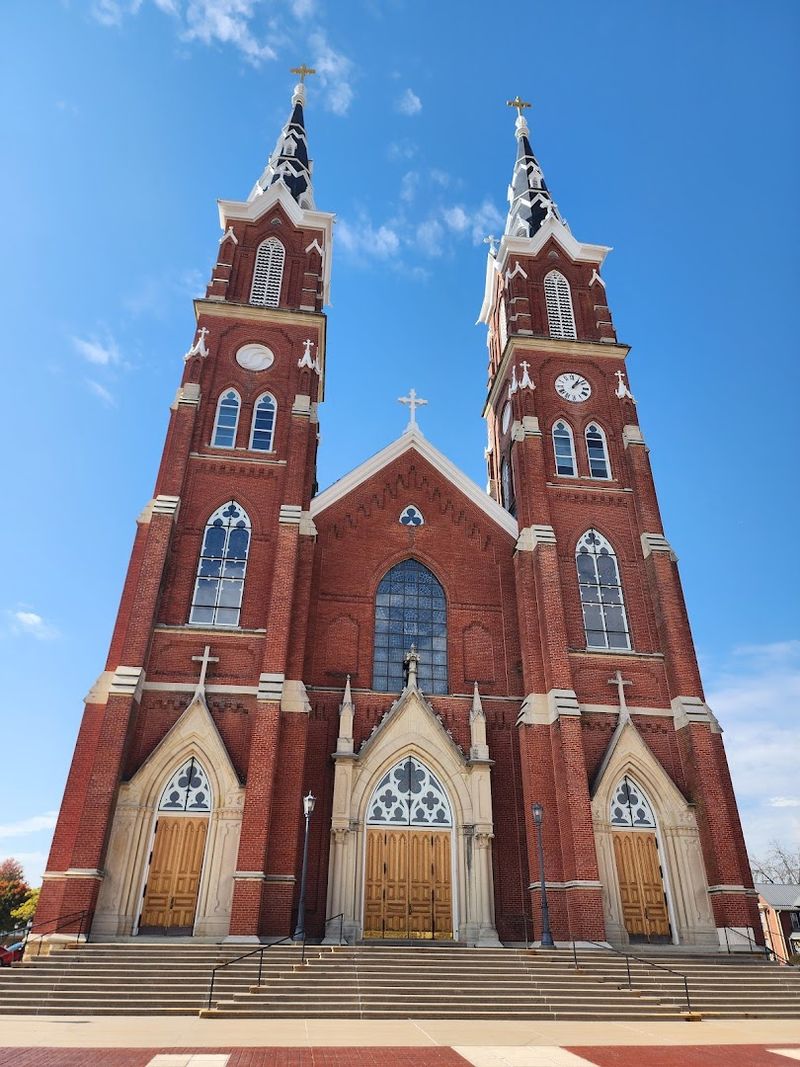
My first glimpse of those twin spires came from about a mile away, and I genuinely thought my eyes were playing tricks on me.
The Basilica of St. Francis Xavier rises from the quiet streets of Dyersville, Iowa, in a way that feels almost impossible to explain without sounding dramatic.
Dyersville is a small town tucked in the rolling farmland of northeastern Iowa, and yet it holds one of the most architecturally remarkable Catholic churches in the Midwest.
The full address is 104 3rd Street SW, Dyersville, IA 52040, and I can tell you from personal experience that the approach along those tree-lined streets builds anticipation with every block.
The church earned its designation as a minor basilica in 1956, a title granted by Pope Pius XII that reflects its spiritual and architectural significance.
For a town this size to be home to a structure this grand is the kind of local pride that deserves far more national attention than it gets.
The History Behind the Grandeur
The story of this basilica begins in the mid-1800s, when Catholic settlers helped shape the Dyersville area and built a growing parish community in northeastern Iowa.
The first Catholic church in Dyersville was completed in 1862, but the congregation soon outgrew it, and the current church structure was built between 1887 and 1889.
The design is tied to the Heer architectural partnership, especially Fridolin Heer Jr., whose work helped give the building its strong Gothic Revival character and Old World ambition.
What strikes me most about this history is the sheer determination it took for a rural Iowa community to fund and construct something of this scale using the resources of the time.
The parish community contributed enormous amounts of labor, fundraising, and faith to see the project through to completion.
Having visited cathedrals in major cities across the country, I can say that the craftsmanship here holds its own against far more famous houses of worship.
History has a way of feeling abstract until you stand inside a room built by people who cared enough to make every arch, altar, and window count.
Gothic Architecture That Genuinely Stuns
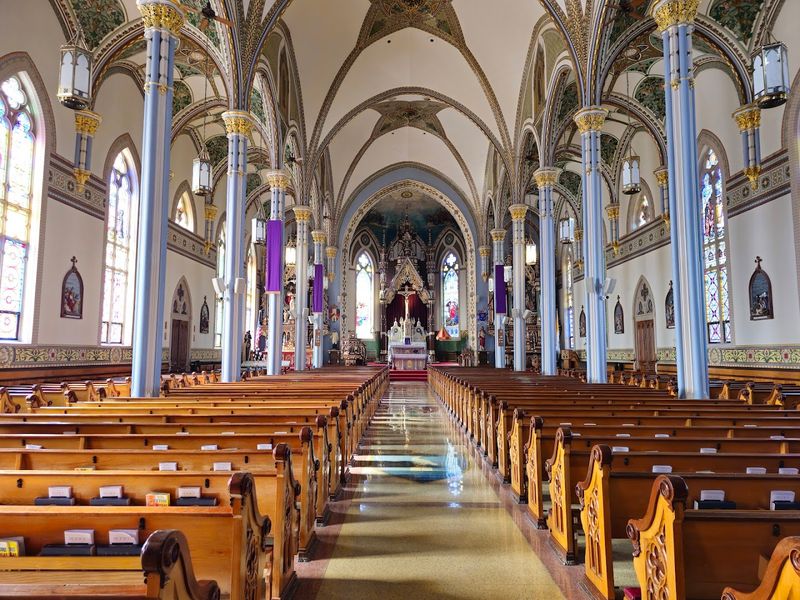
The moment you pass through the front doors, the scale of the interior hits you with a quiet force that is hard to prepare for.
Soaring Gothic arches frame the nave, and the ceiling rises to a height that makes the space feel both enormous and intimate at the same time.
The detailing throughout the building is precise and layered, with carved woodwork, patterned flooring, painted surfaces, and architectural features that reward a slow walk down the central aisle.
Every surface seems to carry intention, from the floor details to the painted vaulted ceilings that draw the eye upward at every turn.
The architectural language here is firmly rooted in the Gothic Revival tradition, complete with pointed arches, tall towers, and French High Gothic influence.
I have spent time in grand churches everywhere, and the interior proportions of this basilica rival many far more celebrated spaces.
Architecture this carefully considered does not happen by accident; it happens when a community refuses to settle for anything less than their best effort for a place they hold sacred.
Decorative Painted Ceilings That Belong in a Museum
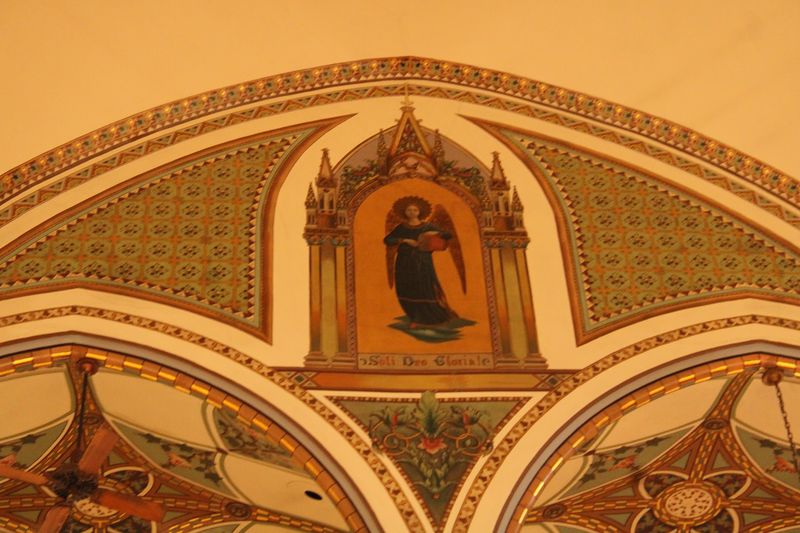
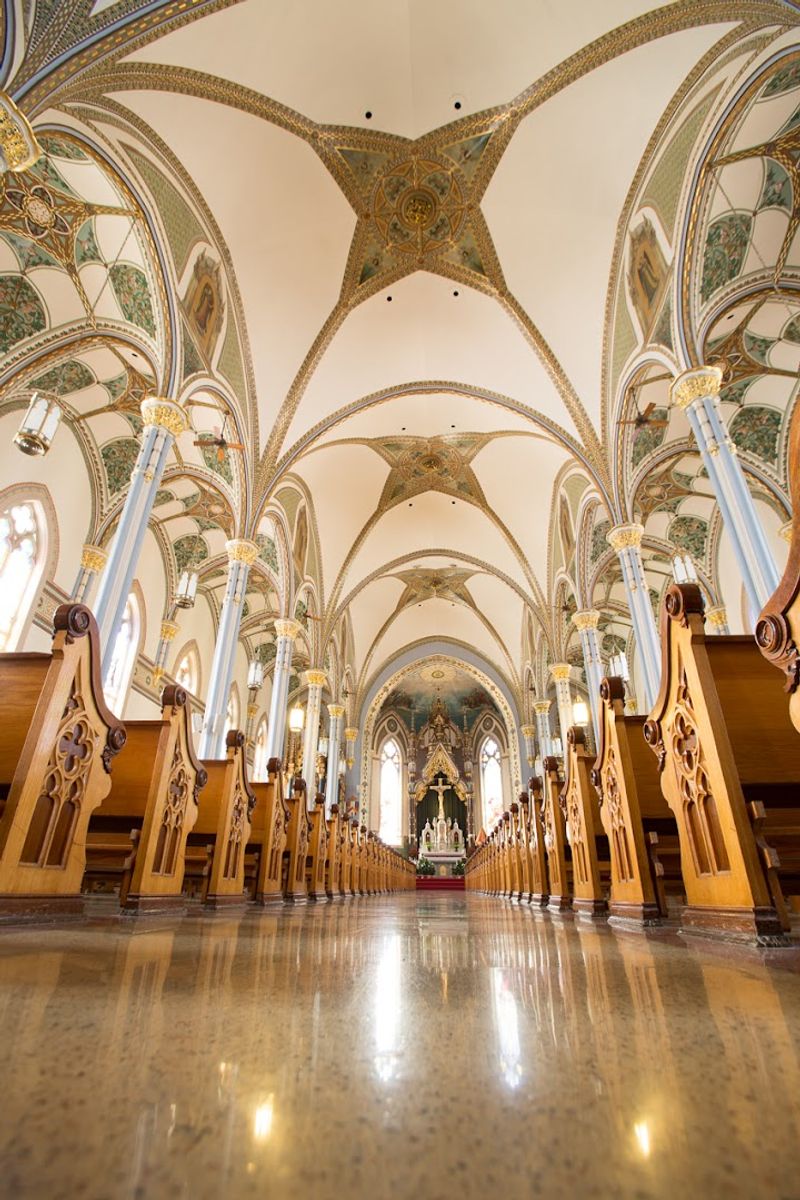
Look up the moment you walk in, and keep looking up, because the painted ceilings are among the most remarkable things I have ever seen inside any American church.
The decorative painting was completed in the early 1900s by Alphonse and Lottie Brielmaier, a brother-and-sister team of artists from Milwaukee.
The designs work beautifully against the Gothic bones of the building, filling the high surfaces with color, pattern, and religious imagery that give the entire interior a rich visual rhythm.
What impresses me most is how fresh the colors still look, thanks in part to restoration work that helped return the decorative painting to its present grandeur.
The ceiling and surrounding painted details feel carefully planned rather than simply ornamental, which makes the space feel both grand and deeply personal.
I have seen painted church ceilings everywhere, but few carry this level of sustained detail across such a large surface area.
Bring a comfortable pair of shoes, because you will spend a long time with your neck craned back and your jaw quietly dropped.
Stained Glass Windows That Tell Stories
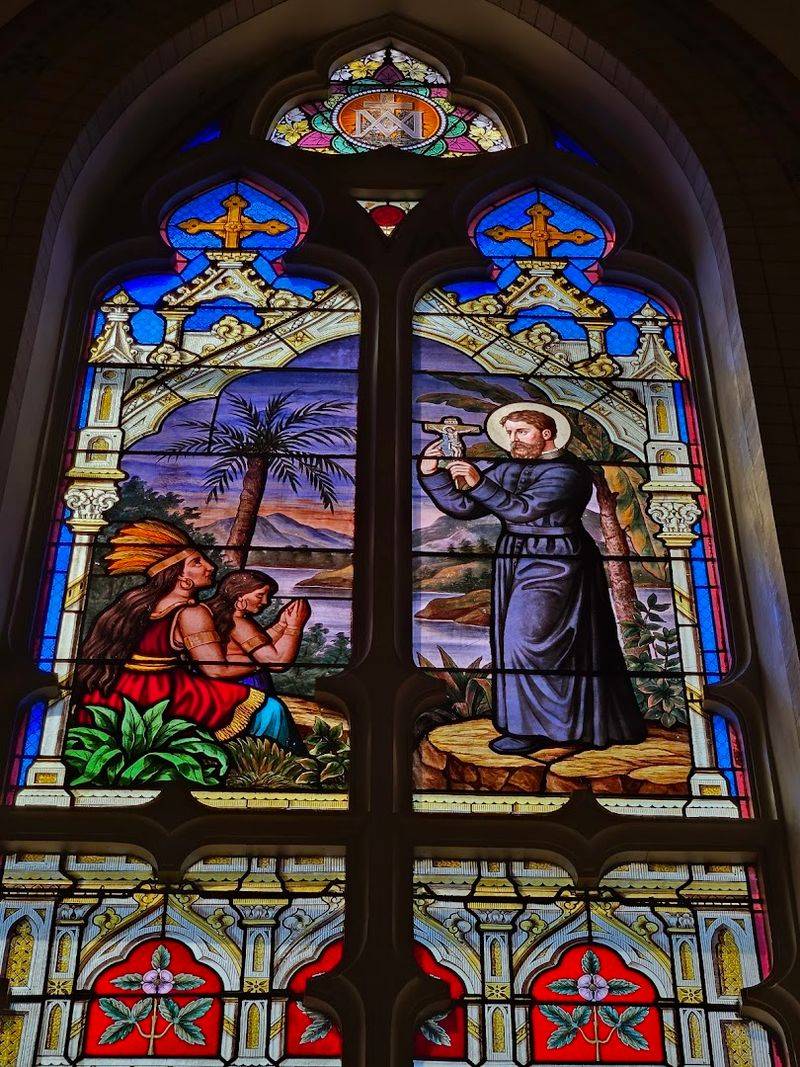
Many windows in this basilica tell a story, and together they form a visual narrative that moves around the walls of the church like pages in a sacred book.
The church contains 64 cathedral-glass windows and transoms, with ten larger pictorial windows showing scenes from the life of Christ and the saints, while many others feature geometric designs.
One particularly memorable window depicts St. Francis Xavier, the church’s patron saint, in a scene that carries an interesting historical footnote.
When the parish commissioned a window showing the saint among the people he served as a missionary, a wording mix-up led the artist to portray Indigenous figures rather than people from India.
That detail remains part of the window’s story, and it gives visitors a memorable reminder that even sacred art can carry a very human backstory.
The windows are beautiful both as works of craftsmanship and as pieces of local history, especially when sunlight brings out their colors across the interior.
Taking the free brochure available at the entrance and reading along as you move from window to window transforms the experience from sightseeing into something closer to storytelling.
The Pipe Organ and the Music That Fills the Space
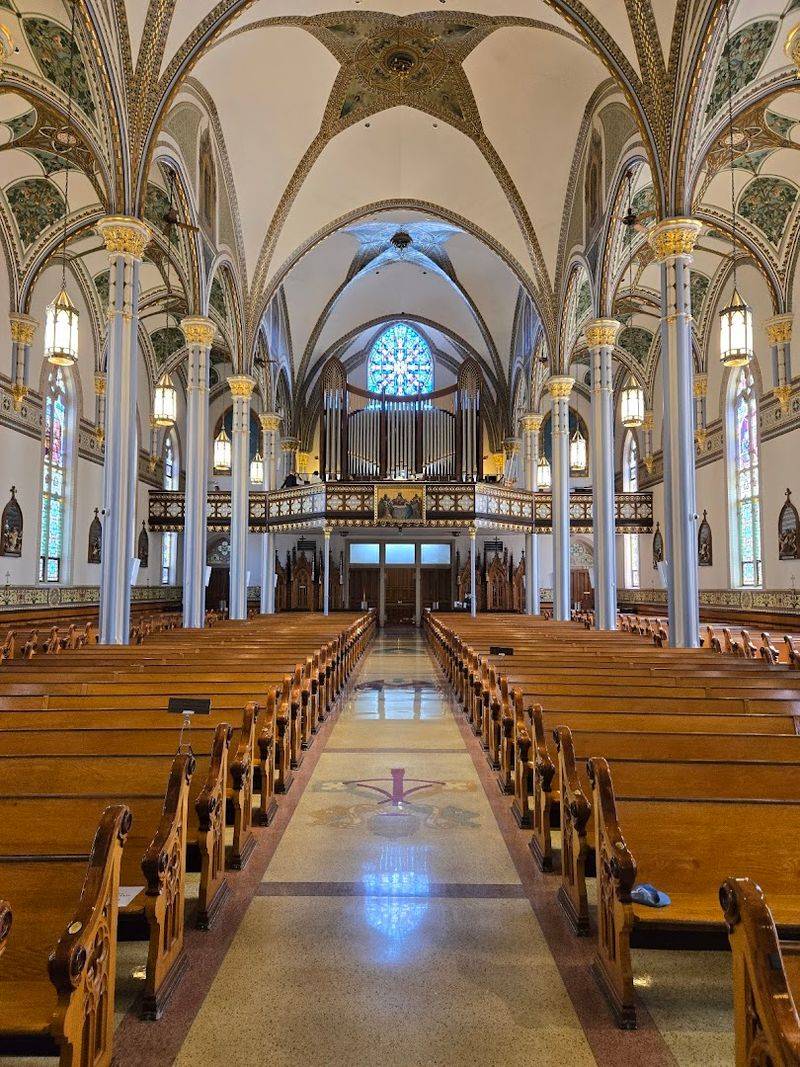
Sound behaves differently in a space like this, and the first time the pipe organ spoke during a service I attended, the vibration moved through the floor and up through my feet.
The basilica houses an incredible pipe organ that is well suited to the acoustic environment of the tall-ceilinged nave, and the music produced during Mass is genuinely moving.
Pipe organs of this caliber are more commonly associated with major urban cathedrals than with small-town Iowa churches, which makes hearing it here feel like a rare and unexpected gift.
The choir that accompanies the organ brings a warmth to the liturgy that I did not expect, with voices that fill the upper reaches of the church and seem to linger there long after the last note ends.
Several visitors I spoke with mentioned that they had come specifically to hear the music, having heard about it from friends or family who had attended Mass before them.
If you have the chance to time your visit with a scheduled service, I would encourage you to do exactly that rather than just stopping in during quiet hours.
Music has a way of revealing the soul of a building, and this organ reveals a very generous one.
Statues, Symbols, and Sacred Details Throughout
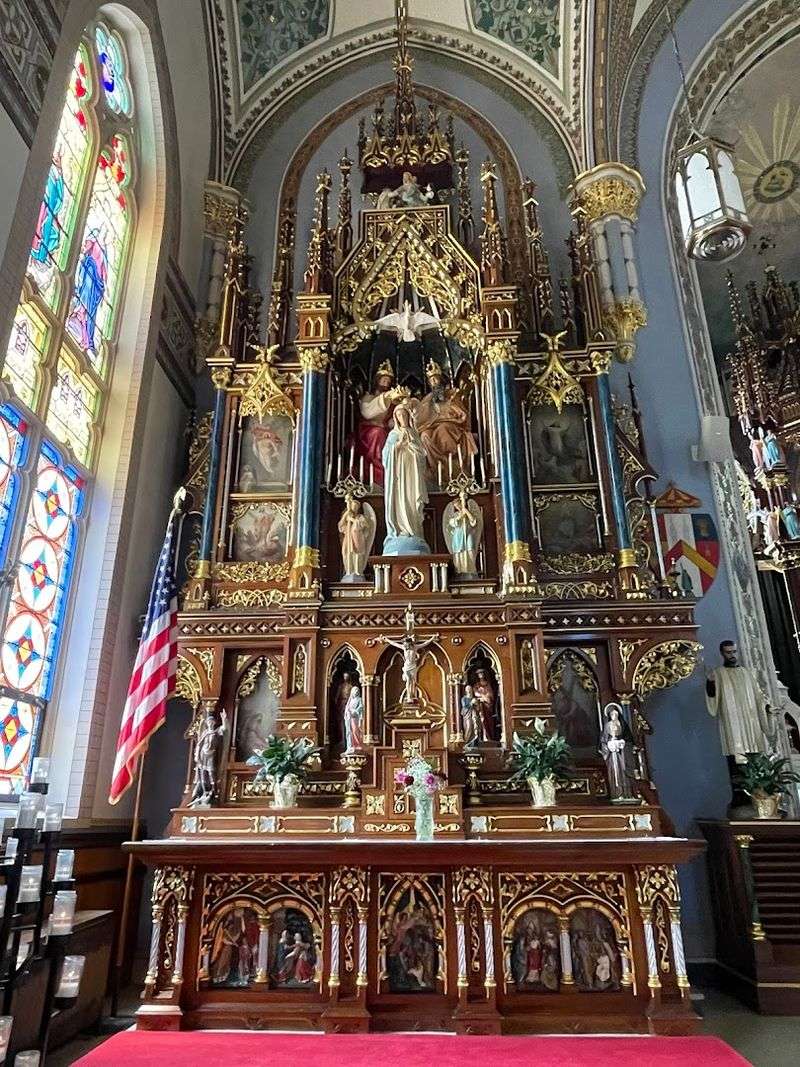
The interior of this basilica rewards slow exploration in a way that a quick walk-through simply cannot honor.
Statues are positioned throughout the nave and side altars with a care for composition that feels almost theatrical, each figure lit and framed to draw the eye and invite reflection.
The main altar is a centerpiece of carved detail that took me a solid ten minutes to take in fully, with layers of ornamentation built up in a way that feels generous rather than cluttered.
Symbols are embedded throughout the building in ways that are easy to miss if you move too quickly, from carved motifs in the wooden pews to painted medallions in the ceiling vaults above.
The free brochure available near the entrance identifies many of these symbols and explains their meaning in language that is accessible to visitors of any background or faith.
I picked one up on my way in and found myself stopping every few feet to cross-reference what I was reading with what I was seeing, which made the whole visit feel genuinely educational.
The attention to symbolic detail here is the kind of thing that art historians and casual visitors alike can appreciate on their own terms.
The Welcoming Atmosphere for All Visitors
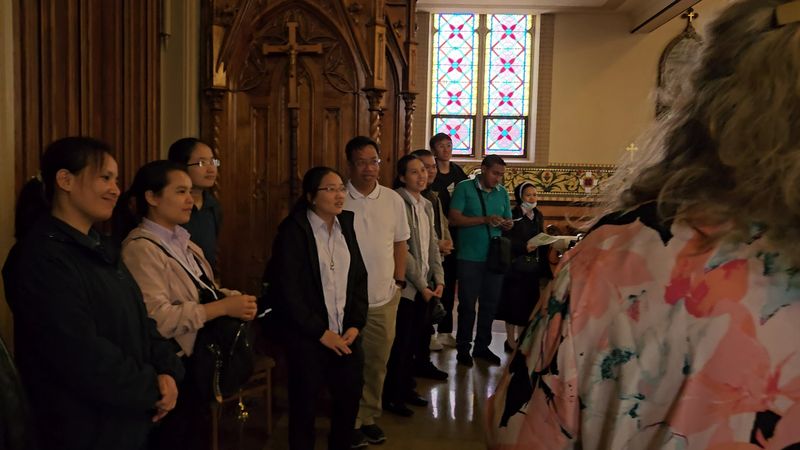
Not everyone who visits this basilica comes for a religious reason, and the church seems genuinely prepared for that, with a welcoming openness that never feels pressured or transactional.
There is a guest book near the entrance where visitors can leave their names and comments, but nobody makes the visit feel formal or fussy.
The people I encountered inside, both staff and fellow visitors, were friendly and happy to chat about the building without any agenda beyond sharing something they were clearly proud of.
On one of my visits, a woman was quietly cleaning the interior and paused to point out a few details I might have missed, which felt like a small act of hospitality that said a lot about the community here.
The side doors are open daily from 7 AM to 8 PM, giving visitors a generous window of time to stop in without feeling rushed.
Practicing Catholics, curious travelers, architecture fans, and casual road-trippers can all find something meaningful here without needing a perfect reason for walking through the doors.
That kind of unconditional welcome is rarer than it should be, and it stays with you long after you leave.
The Exterior View That Stops Traffic
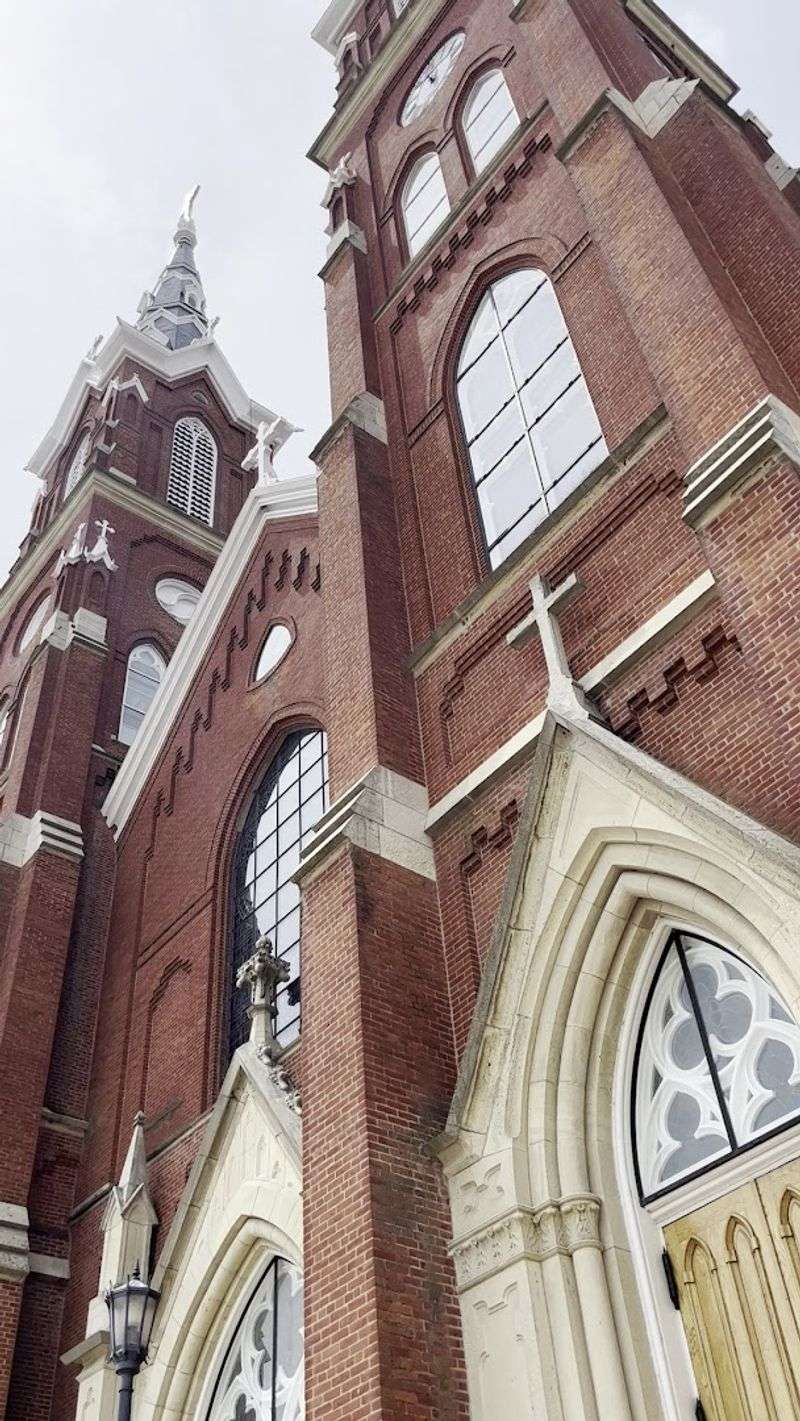
Before you even reach the front doors, the exterior of this building has already made its argument for why you stopped.
The twin spires climb to a height of roughly 212 feet, making them visible from a considerable distance and giving the church a presence that dominates the Dyersville skyline in the most dramatic way imaginable.
The exterior combines brick with strong stone detailing, and the Gothic pointed arches around the entrances give the whole building a confident, old-world presence.
The towers, pinnacles, decorative trim, and tall proportions all work together to create a view that feels far bigger than the town around it.
I spent a good twenty minutes just walking around the exterior before going inside, photographing details from different angles and watching the light change across the surface.
The best exterior view, in my opinion, comes from across the street where you can take in the full height of both spires in a single frame without craning your neck.
Few buildings in rural America command attention quite this effortlessly from the outside.
Planning Your Visit and What to Expect
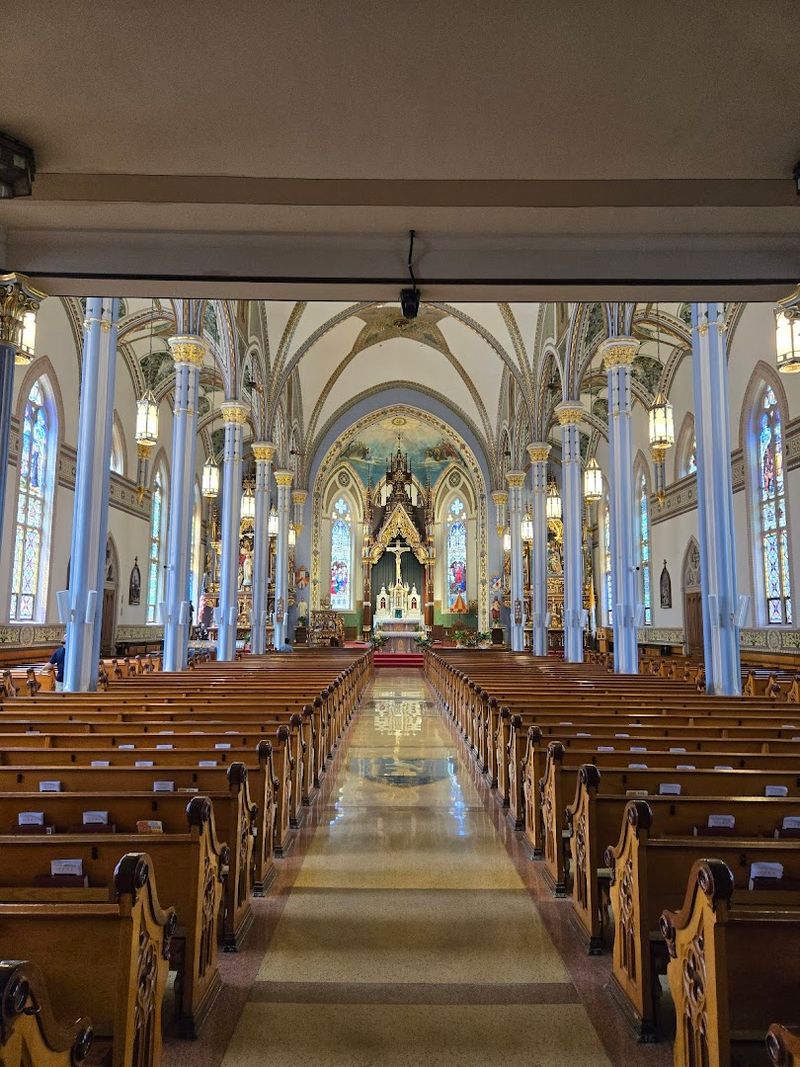
A little planning goes a long way when visiting the basilica, and the good news is that it requires very little effort to make the most of your time here.
The side doors are open daily from 7 AM to 8 PM, and the phone number is 563-875-7325 if you want to confirm group tour details or ask about upcoming Mass times before making the drive.
Dyersville is about 25 miles west of Dubuque, making it an easy and very worthwhile detour if you are traveling through northeastern Iowa.
The town itself is charming and compact, and the basilica sits right in the heart of it at 104 3rd Street SW, so parking is easy to find on the surrounding streets.
I recommend arriving with at least an hour to spare, because rushing through this space genuinely robs you of the experience.
Grab the free brochure, silence your phone, and let yourself settle into the pace that the building seems to ask of you.
For anyone road-tripping across the Midwest, this is the kind of stop that earns a permanent spot in your travel memories.