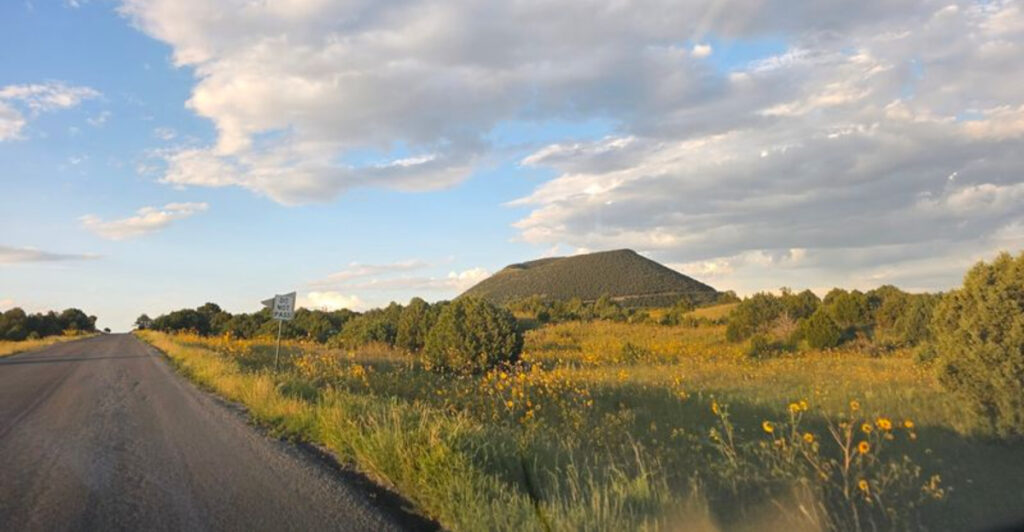
A tiny town on the northeastern plains of New Mexico changed American history without most people ever noticing. At first glance, it looks quiet.
Empty roads, weathered fences, open grasslands stretching toward the horizon. Then the stories start unfolding.
Archaeologists uncovered ancient spear points beside Ice Age bison bones here, proving humans lived in North America much earlier than many experts once believed. The discoveries reshaped archaeology forever.
A dormant volcano rises nearby above the prairie, giving the landscape a dramatic backdrop that feels almost unreal at sunset. Ranches still spread across the surrounding plains, and the local museum preserves artifacts tied to one of the continent’s most important discoveries.
Nothing about this place feels polished for tourism, which honestly makes it even more interesting. The scenery feels enormous, the silence feels rare, and every mile around town seems connected to a story buried deep beneath the windswept High Plains for modern visitors today.
Ice Age Hunters Beneath Endless Prairie Skies
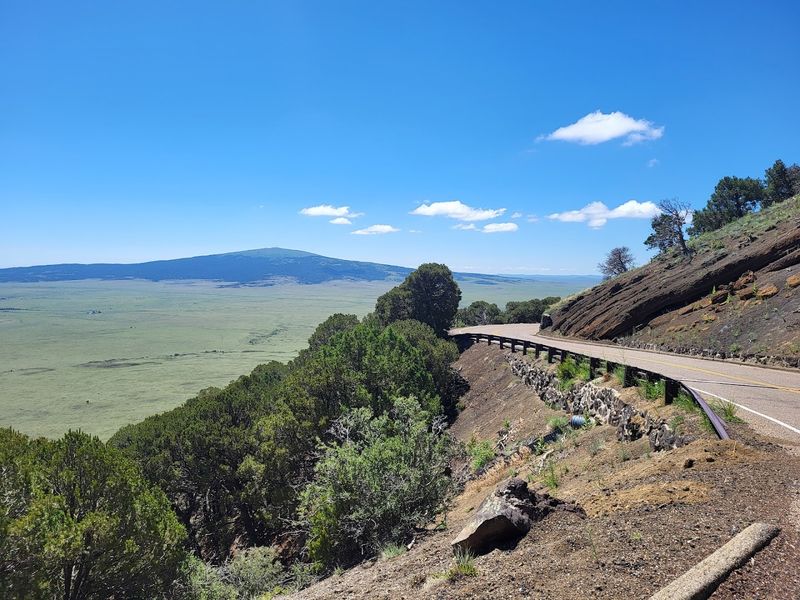
The open prairie outside this village has a way of making thousands of years feel surprisingly close beneath your boots.
Around 10,000 years ago, Paleoindian hunters pursued enormous bison across these same grasslands, using carefully crafted stone spear points that would eventually become one of the most significant archaeological discoveries in American history.
The landscape looks deceptively simple at first glance, just rolling high plains stretching toward a pale horizon, but that openness is exactly what makes it so powerful to stand in.
Folsom sits at roughly 6,400 feet in elevation, which means the sky above you feels enormous and the air carries a clean, sharp quality that heightens your senses.
Researchers believe these ancient hunters were highly skilled, capable of coordinating group hunts across terrain that required serious physical endurance and intimate knowledge of animal behavior.
The bison they chased, known as Bison antiquus, were considerably larger than modern bison, making the hunt even more impressive by any standard.
Time on this prairie makes history feel less like a textbook subject and more like something you can almost reach out and touch, right there in Folsom, New Mexico.
Volcanic Crater Trails Above Rugged Cattle Country
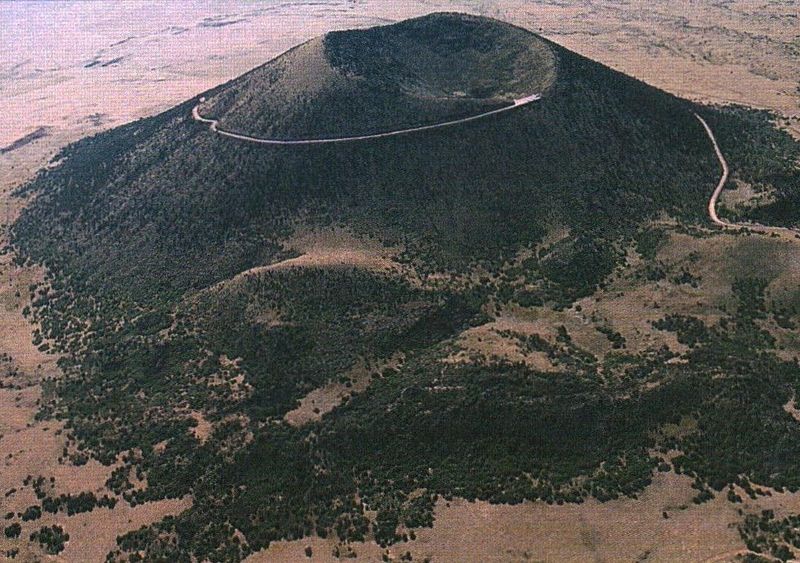
Capulin Volcano rises above the surrounding cattle ranches like a geological surprise for anyone who thought northeastern New Mexico was all flat land and endless fence posts.
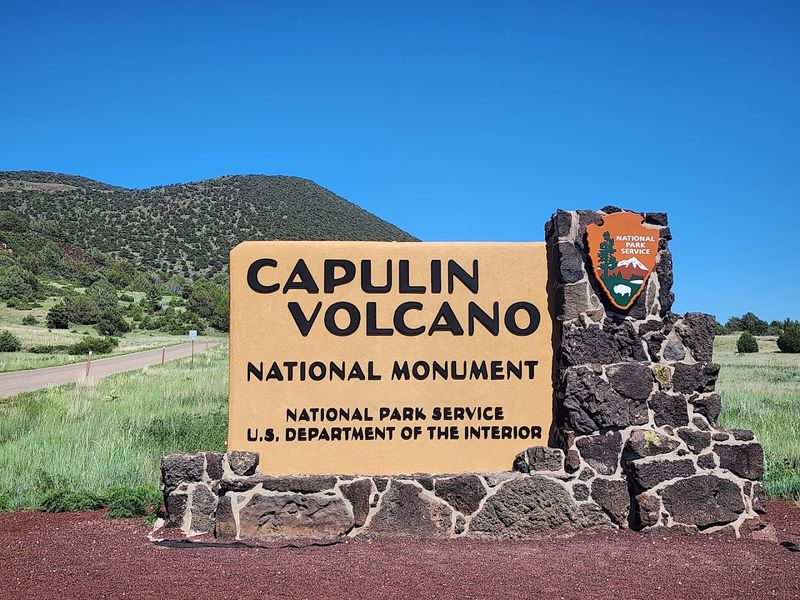
Capulin Volcano National Monument sits about seven miles from Folsom and draws hikers who want to walk the rim of an extinct cinder cone that last erupted roughly 56,000 years ago, which in geological terms is practically yesterday.
Visitors can drive partway up the volcano before reaching the Crater Rim Trail, a roughly one-mile loop winding through scrubby vegetation and loose volcanic rock that crunches satisfyingly underfoot with every step.
Cattle ranches spread out below the crater in every direction, and the contrast between the working agricultural land and the alien-looking volcanic cone creates a visual combination that is hard to forget.
Rangers at the monument share detailed information about the area’s volcanic history, and their enthusiasm for the subject becomes contagious even on a slow afternoon.
The trail itself is well-maintained and manageable for most fitness levels, though the altitude means you should bring more water than you think you need.
Few hiking experiences in the Southwest deliver this kind of geological drama wrapped inside such approachable, cattle-dotted countryside.
Four-State Views From A Cinder Cone Rim
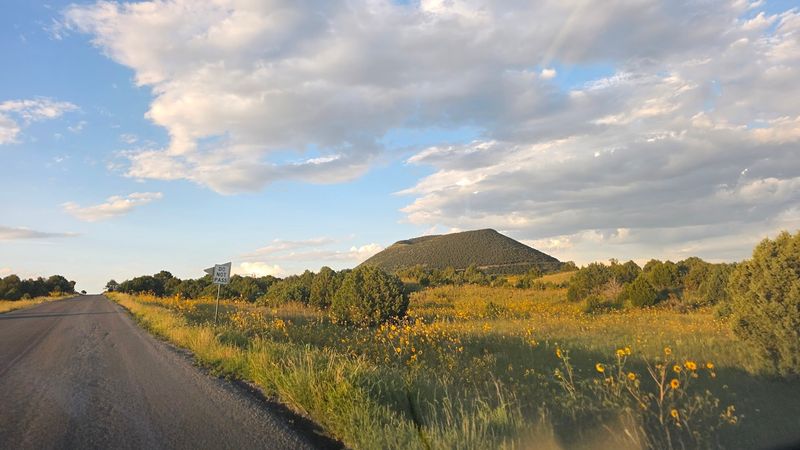
The climb to the rim of Capulin Volcano is one of those moments where your legs complain and your eyes immediately forgive them for the trouble.
On a clear day, you can see into four states from that rim: New Mexico, Colorado, Oklahoma, and Texas, all spread out below you like a geography lesson you actually want to attend.
The views stretch for what feels like an impossible distance, with distant mountain ranges floating at the edges of the visible world and the high plains rolling away in every direction.
I kept rotating slowly in place while trying to absorb the full 360-degree panorama, which is something I rarely do at overlooks because most overlooks only face one direction.
The interior of the crater drops about 415 feet below the rim, and a separate trail spirals down into that bowl for visitors who want the full volcanic experience.
Wind tends to pick up significantly at the rim, so a light jacket is worth tucking into your pack even on warm days.
This four-state view is one of those travel rewards that photographs can hint at but never fully capture, no matter how good your camera happens to be.
Quiet Streets Framed By Vast High Plains Horizons
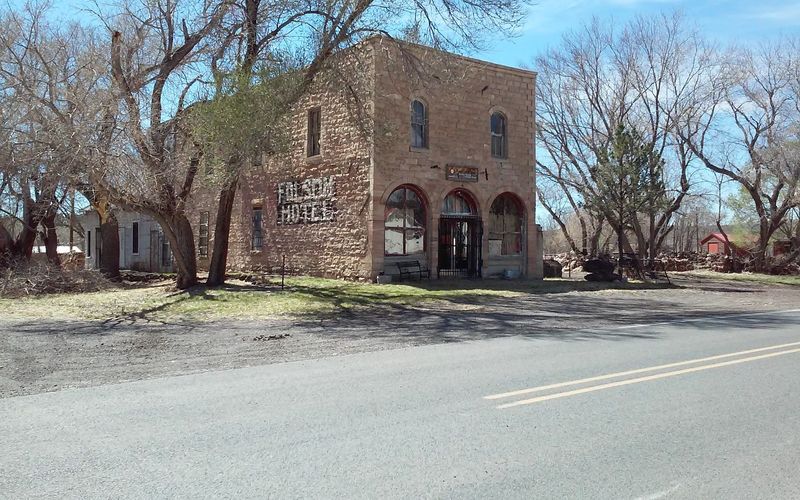
Folsom feels less like a tourist stop and more like a living snapshot of rural American life, where quiet streets sit beneath enormous High Plains skies.
The village sits in Union County, where the horizon wraps around you on every side and the nearest traffic light is a considerable drive away in any direction.
A different kind of quiet settles over this place, layered with wind moving through dry grass and the distant sound of cattle somewhere beyond the fence lines.
Historic buildings line the modest main area, their weathered facades carrying the visual record of a community that has persisted through drought, economic shifts, and the slow tide of rural depopulation.
Folsom was named after Frances Folsom, who was the fiancee of President Grover Cleveland, giving this tiny village a presidential connection that most visitors find surprising.
The surrounding landscape makes even a short walk feel expansive because the views extend so far that you become aware of your own small place within a very large piece of land.
Places this quiet tend to leave an impression that stays with you long after the drive home, and Folsom is no exception to that quiet rule.
Ranching Traditions Preserved Across Generations
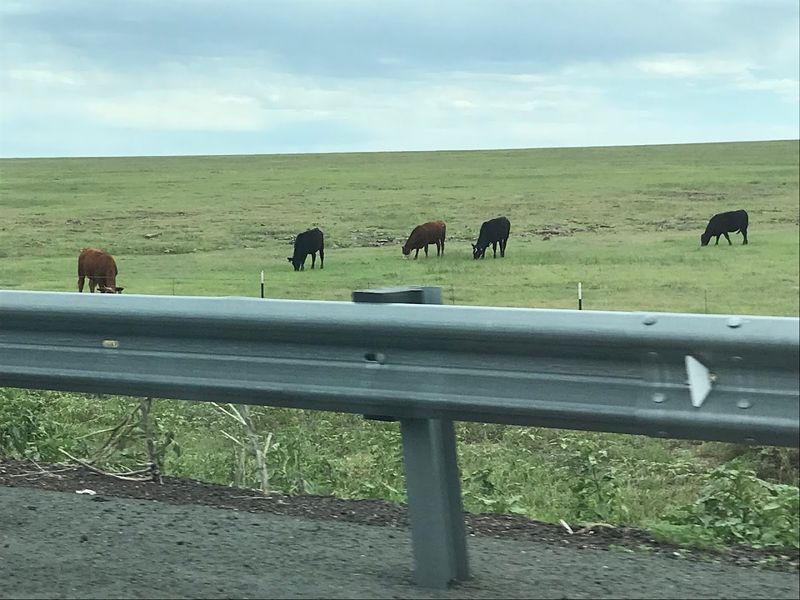
Cattle ranching has shaped this corner of New Mexico for well over a century, and the evidence of that heritage is visible in every direction you look from Folsom.
The surrounding Union County landscape is defined by working ranches, many of them family operations that have passed from one generation to the next through a combination of stubbornness, skill, and deep attachment to the land.
Driving the back roads near Folsom, you pass through gate after gate marking private ranch territory, with cattle grazing on shortgrass prairie that looks much the same today as it did a hundred years ago.
Local ranching culture carries its own vocabulary, calendar, and set of values that center on land stewardship, hard physical work, and a practical relationship with weather that city life rarely demands.
Spring branding and fall roundups still mark the rhythm of the year for many families in this area, traditions maintained not as nostalgia but as genuine working practice.
Visitors who take time to learn about this ranching heritage come away with a more grounded understanding of how this landscape has been lived in and cared for across generations.
The cattle and the open range together form a living museum that no building could ever fully replicate.
Paleoindian Points Buried In Wind-Carved Earth
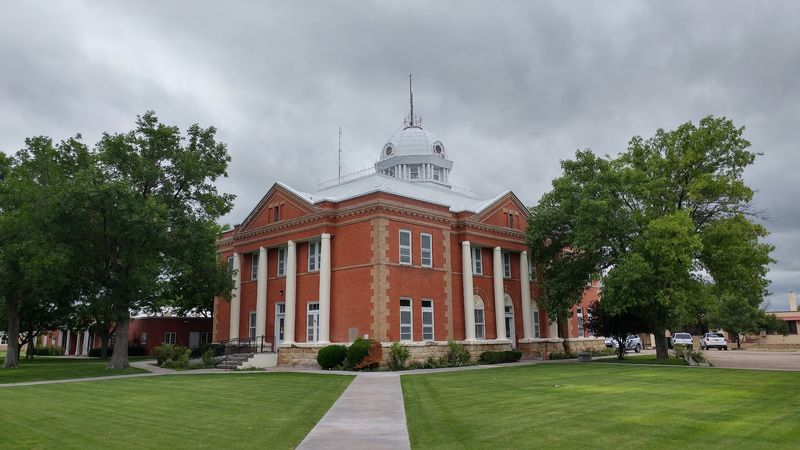
Back in 1908, a cowboy named George McJunkin noticed unusual bones eroding out of a dry arroyo near Folsom and kept thinking about what he had found long after most people would have moved on.
What McJunkin discovered eventually led archaeologists to uncover Folsom points, distinctively shaped stone spear tips found alongside the bones of extinct bison that proved humans had lived in North America far earlier than previously accepted.
The Folsom point is a remarkable artifact, thin and precisely fluted along its face, requiring exceptional skill to produce from flint or chert using only other stones as tools.
Those points buried in wind-carved arroyos rewrote the established timeline of human migration into the Americas, making this small New Mexico village one of the most scientifically significant places on the continent.
The arroyo where the original discovery was made still exists in the landscape near Folsom, an unremarkable-looking gully that quietly changed the course of American archaeology.
Researchers continue studying Paleoindian sites across this region, and new findings occasionally add fresh detail to the picture of how these early people lived and moved across the high plains.
Few places on earth can claim to have shifted scientific understanding so fundamentally with evidence pulled from the soil beneath ordinary cattle country.
Museum Relics Preserving A Landmark Discovery
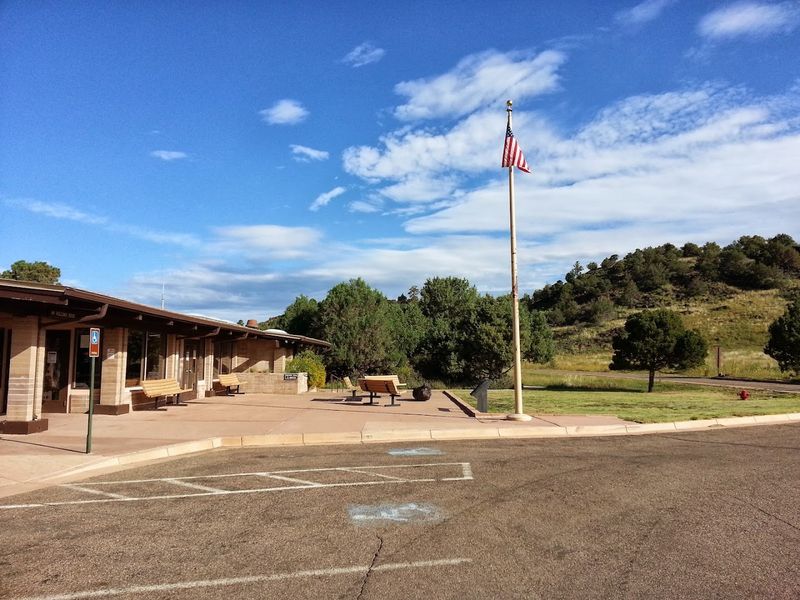
The Folsom Museum is the kind of small-town institution that punches considerably above its weight, housing exhibits that connect this quiet village to one of the most important archaeological finds in North American history.
Inside the museum, displays cover the discovery of Folsom points, the life of George McJunkin, and the broader story of Paleoindian culture across the high plains, all presented in a way that makes the material accessible.
Ranching artifacts share space with archaeological relics, creating an interesting layering effect where ancient history and 19th-century frontier life exist side by side in the same small building.
Historic photographs on the walls show Folsom in earlier decades, when its streets were busier and its population larger, offering a visual timeline of how the village has changed.
Admission is modest, and the experience rewards anyone willing to slow down long enough to read the interpretive panels carefully rather than just scanning them quickly.
Walking out afterward, it feels easier to understand Folsom on a level that no roadside sign could ever communicate on its own.
Vast Views Around A Sleeping Volcano
Nightfall changes everything in this part of northeastern New Mexico, especially once the last traces of daylight disappear behind the plains.
The absence of significant light pollution across Union County means the night sky above Folsom and nearby Capulin Volcano fills with stars so densely packed that the Milky Way becomes a physical presence rather than a faint suggestion.
Capulin Volcano National Monument is recognized as a dark-sky destination, and the volcanic rim provides an elevated platform that opens even wider views of the sky overhead.
One evening near the crater, stars appeared gradually as the sky deepened from blue to black, and the entire experience felt wonderfully unhurried.
Summer evenings are particularly rewarding for stargazing here, with the Milky Way core rising high and meteors occasionally streaking across the field of view without warning.
A red-light headlamp helps preserve your night vision and makes navigating the parking area much easier once the sky goes fully dark.
Few places in the American Southwest make the universe feel larger and more immediate than this quiet stretch of volcanic high plains.