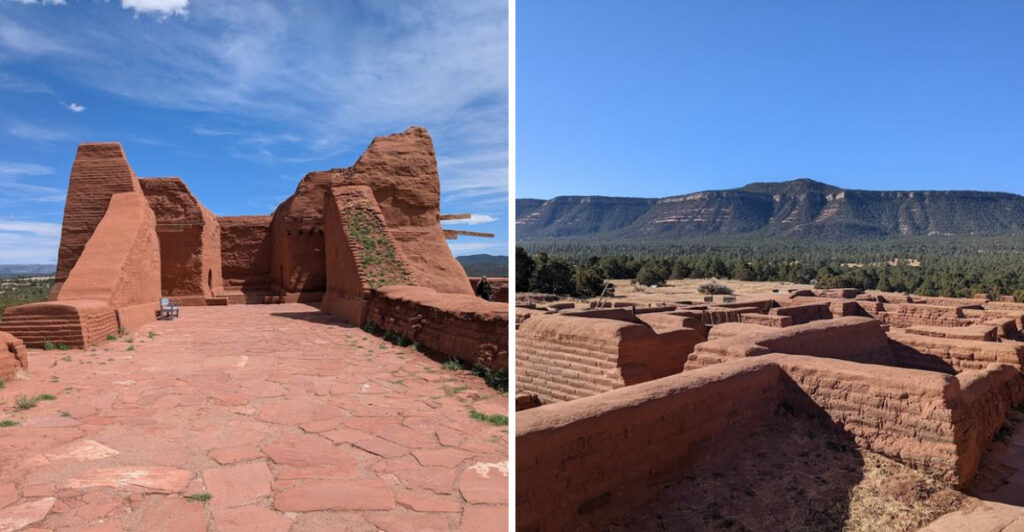
This is the kind of easy trail that makes people say, wait, that was only 1.25 miles? In New Mexico, the loop packs in ancient adobe walls, kivas, mission ruins, open land, and mountain views without asking much from your legs.
The path is simple to follow, which makes it great for families, first-time visitors, road trippers, and anyone who wants a meaningful stop between longer drives. Still, the walk has real pull.
One turn gives you old stone. Another brings a wide view.
A quiet corner makes you think about the people who lived, worked, prayed, and moved through this landscape long before the road trip crowds arrived. Bring water, take the signs seriously, and do not rush back to the car.
The best part is the slower rhythm. It lets the place feel less like a stop and more like a conversation with the past.
That feeling lasts.
Adobe Walls Beneath Wide Desert Skies
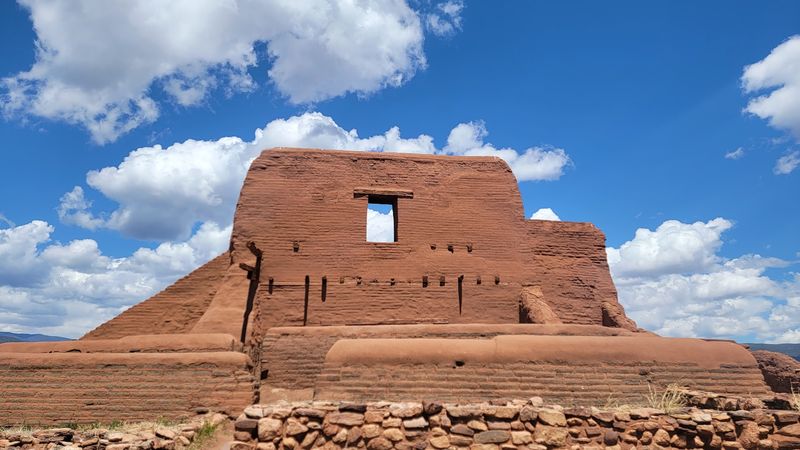
These walls have faced centuries of sun, wind, and rain, and standing beside them can make modern life feel surprisingly small.
The adobe construction at this park is a testament to the building instincts of Pueblo people who built a multi-story complex here as early as the 14th century, creating one of the most influential communities in the region.
These walls were not just shelter but the backbone of a civilization that controlled trade routes between the Rio Grande pueblos and the Great Plains tribes.
Look up at the remaining adobe sections against that enormous New Mexico sky, and you get a real sense of how commanding this place must have felt at its busy peak.
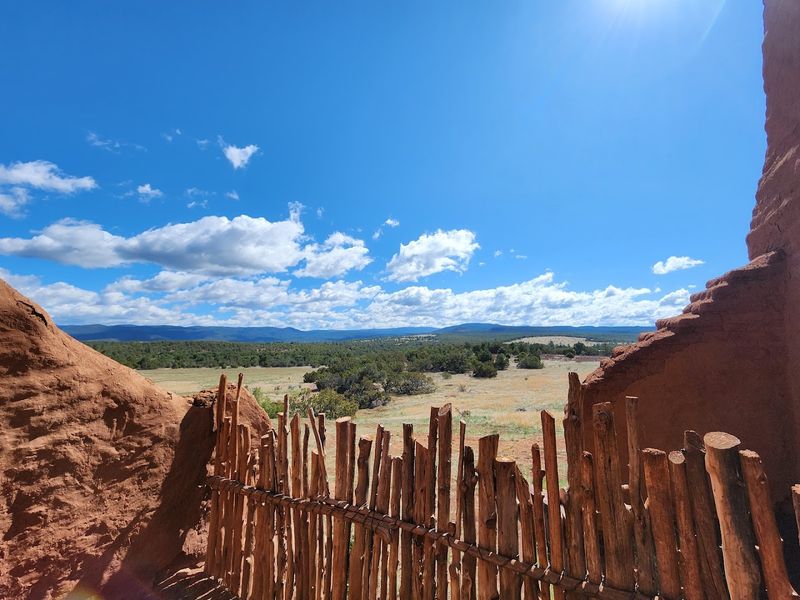
The earthen tones of the walls blend so naturally with the surrounding landscape that the ruins seem to rise right out of the ground itself.
You can find all of this waiting for you at Pecos National Historical Park at Pecos, NM 87552, where the adobe and the sky have been keeping each other company for a very long time.
Ancient Pathways Through Open Grasslands
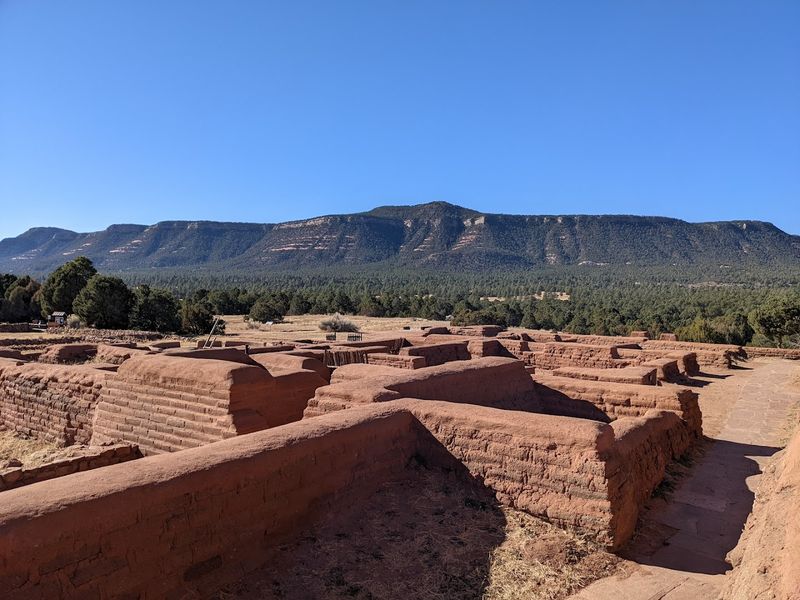
A path humans have traveled for hundreds of years brings its own quiet thrill, and the trail here delivers exactly that feeling.
The 1.25-mile loop at this park moves through open grasslands that feel both peaceful and alive, with the kind of wide-sky scenery that makes you want to slow your pace and actually look around.
Juniper and piñon trees dot the landscape, birds drift overhead, and the wind carries a freshness that only high-elevation New Mexico can produce.
The trail surface is well-maintained and easy to follow, making it a comfortable choice for families with young children or anyone who prefers a relaxed pace over a demanding climb.
Informational signs appear at regular intervals along the route, offering context about the Pueblo people who once farmed, traded, and thrived across these same open fields.
The optional two-dollar trail guide at the visitor center is well worth it before you start, since it adds a layer of storytelling to each stop that the signs alone cannot fully capture during the walk.
Weathered Mission Ruins In Soft Light
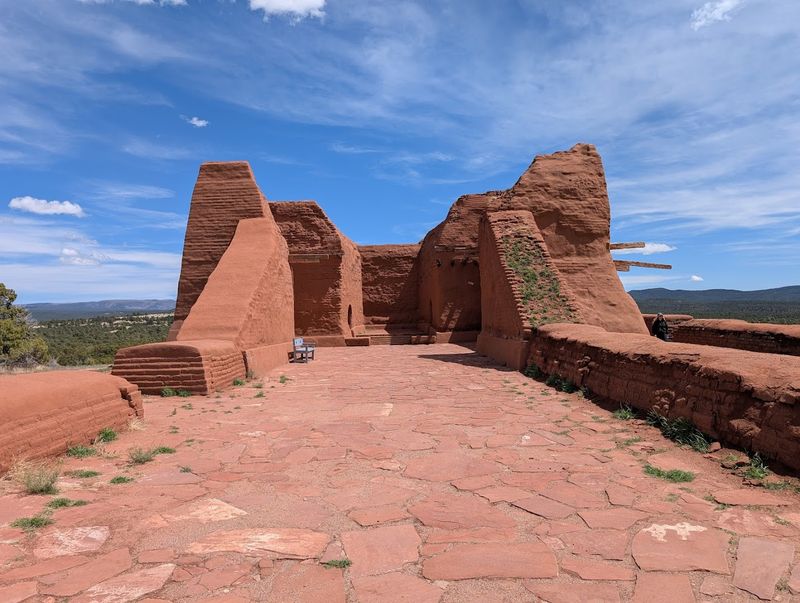
The first time I rounded a bend on the trail and the mission ruins came into full view, I stopped walking entirely for a moment.
The remains of the 1717 Spanish mission church rise from the landscape with a dramatic presence that photographs simply cannot prepare you for, all crumbling stone arches and roofless walls bathed in that particular soft light that New Mexico afternoons do so well.
Built by Franciscan missionaries using Pueblo labor, the earlier church was one of the largest in North America at the time of its construction, a fact that becomes easier to believe once you are standing inside its footprint.
The structure visitors see today is a smaller mission completed in 1717 after the earlier church was destroyed during the Pueblo Revolt of 1680, which gives the ruins an added layer of historical weight.
A slow walk through the roofless nave, with the mountain air moving around you and the sky wide open overhead, is one of those travel moments that stays with you.
The ruins reward patience, so resist the urge to rush and let the scale of the place slowly settle in around you.
Quiet Kivas And Sacred Stonework
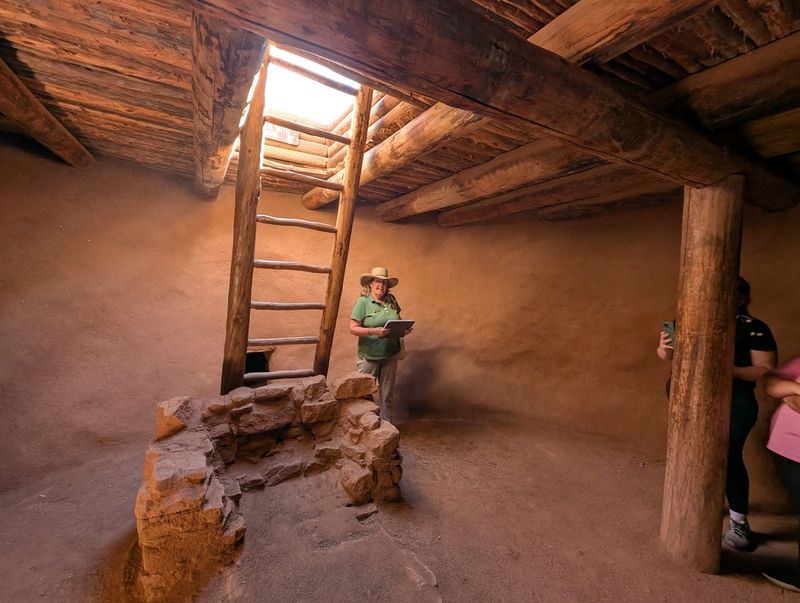
The climb down a wooden ladder into a reconstructed kiva is one of those hands-on history moments that sticks in your memory long after you drive home.
Kivas served as ceremonial and community gathering spaces for Pueblo people, and the restored kivas open to visitors at this park give you a chance to physically experience the scale and atmosphere of these sacred underground chambers.
The circular stonework walls, the low ceiling, and the central fire pit create an environment that feels intentional and deeply human, a space designed not just for function but for meaning.
Most visitors spend a few quiet minutes inside before climbing back out into the sunlight, and almost everyone emerges looking a little more thoughtful than when they went down.
Beyond the kivas, the stonework visible throughout the ruins shows real craftsmanship, with fitted stones and careful construction that held up through centuries of weather and time.
Rangers on site can explain the spiritual significance of kivas in Pueblo culture, and that conversation alone is worth seeking out before or after your walk along the trail.
Sunlit Trails Across Pueblo History
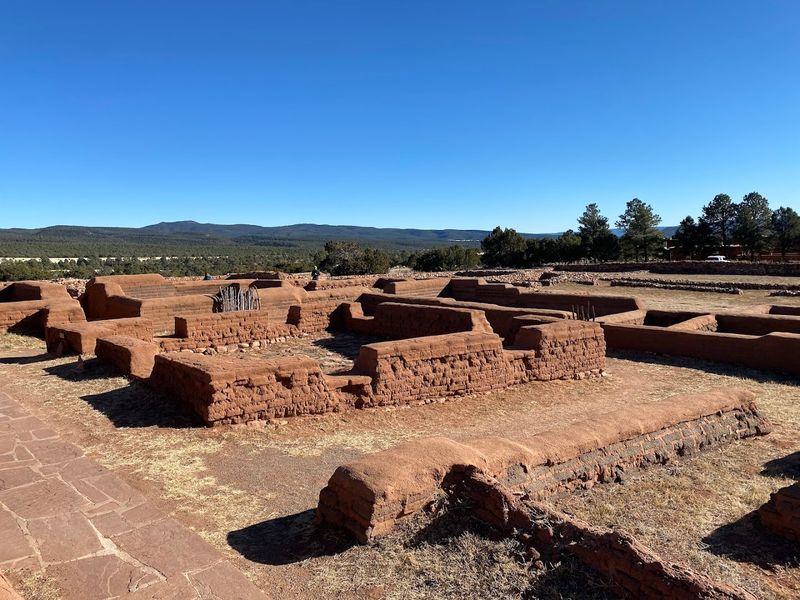
History has a way of feeling abstract until you are literally walking across it, and the trail here makes the past feel refreshingly concrete.
The loop route passes directly through the remains of a pueblo that once housed as many as 2,000 people, giving you a ground-level sense of just how large and organized this community was at its height in the 15th and 16th centuries.
Sunlight plays across the ruins in ways that shift throughout the day, so morning visitors see long shadows stretching between the walls, while afternoon walkers get that warm golden glow that makes every photo look like it was professionally planned.
The interpretive signs placed along the trail are some of the clearest and most thoughtfully written I have encountered at any national park site, striking the right balance between educational depth and readable length.
Families with curious kids will find plenty to talk about at each stop, and the trail pace is relaxed enough that nobody needs to feel rushed through any section.
Budget about 40 to 90 minutes depending on how thoroughly you want to explore, read, pause for photos, and absorb the surroundings.
Red Earth Views And Mountain Air
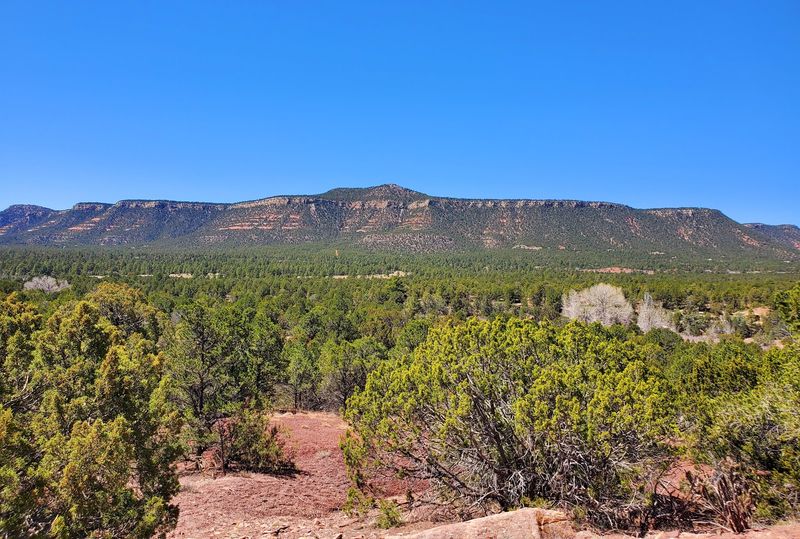
The mountain air at this park feels like something your lungs have been waiting for on arrival without even knowing it.
Situated at Glorieta Pass near the base of the Sangre de Cristo Mountains, the park sits at a geographic crossroads where the Great Plains, the Rocky Mountain chain, the Rio Grande Valley, and the arid Southwest all seem to meet at once, producing views that are hard to describe without sounding like you are exaggerating.
The red earth tones of the surrounding landscape contrast beautifully with the green valley floor and the blue-gray mountains in the distance, giving photographers a natural color palette that requires almost no artistic effort to capture well.
Even on a warm day, the elevation keeps things comfortable enough that the open sections of the trail feel pleasant rather than punishing, though a hat and water bottle are still smart choices.
Rattlesnakes are occasionally spotted in warmer months, so staying on the marked trail and watching where you step is a habit worth keeping throughout your visit.
The views alone make this park worth the roughly 30-minute drive from Santa Fe, and the history stacked on top of those views makes the trip feel almost unfairly rewarding.
Crumbled Walls With Timeless Texture
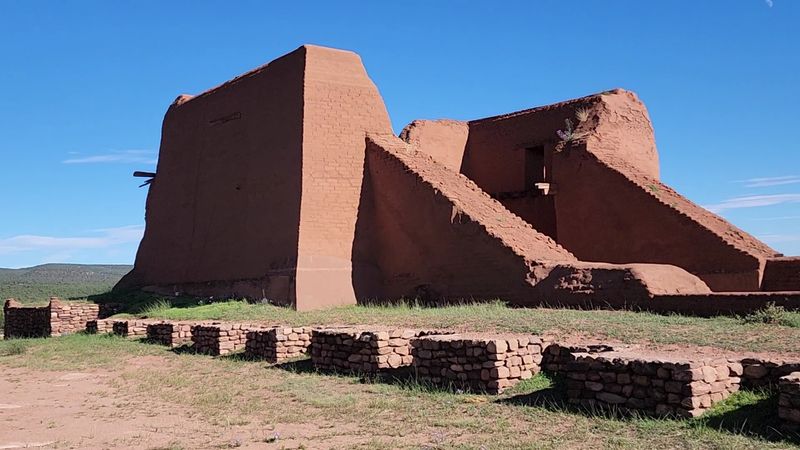
Up close, the ruins at this park reveal a texture that no photograph fully captures, layers of adobe and stone that tell a story through surface alone.
Let your eyes move along a crumbled wall, and you can pick out the different construction phases, the patched sections, the places where the material has worn away to reveal what lies beneath, and the spots where something structural once connected two parts of a larger whole.
The pueblo at its peak was a multi-story complex with hundreds of rooms, and the remaining wall fragments scattered across the site give you enough visual evidence to start imagining the full scale of what once stood here.
A particular kind of quiet often settles over these ruins, the sort that really encourages you to slow down and notice small things rather than rushing to the next landmark.
Photographers who take the time to work the light and angles here tend to come away with images that feel artistic rather than just documentary.
The weathered beauty of these walls has been drawing visitors for decades, and the park does an excellent job of preserving that texture without making the site feel sterile or over-restored.
A Peaceful Walk Through Ancestral Landscapes
Some walks leave you feeling tired, and some leave you feeling restored, not drained, and this one belongs firmly in the second category.
The overall atmosphere at this park is one of calm and reflection, the kind that comes from a place where the land itself carries a long memory and the crowds are sparse enough to let you hear the wind moving through the grass.
Families, solo travelers, and couples all seem to find their own rhythm here, moving from a slow meander with lots of stops to a steadier pace that covers the full loop in under an hour.
The visitor center is an excellent starting point, with knowledgeable rangers who enjoy sharing the history of the Pueblo people who called this landscape home for generations, as well as the Spanish colonial period and even the Civil War battle fought nearby.
Entry to the park is free, which makes it one of the most accessible and generous National Park Service sites in the entire Southwest.
By the time you complete the loop and find yourself back at the trailhead, there is a good chance you will already be thinking about when you can return again and spend even more time in this quietly extraordinary place.