You know a place has power when it can make a quiet room feel crowded. This adobe house is small, but the story inside it is not.
Here, history was not framed behind glass from the start. It cooked over a fire and slept behind thick walls.
In New Mexico, this home is linked to one of the most argued-over figures of the frontier, a man people still debate because his life refuses to fit into legend. The walls are more than two feet thick, and they seem built for secrets that never stopped echoing.
Step inside and the famous name becomes less distant. You start thinking about the hard choices made by people caught in those rooms.
That is what makes the place stick with you. It turns a frontier headline back into a human story.
Read on for facts that show why this house still holds attention today.
Weathered Adobe Walls With Western Soul
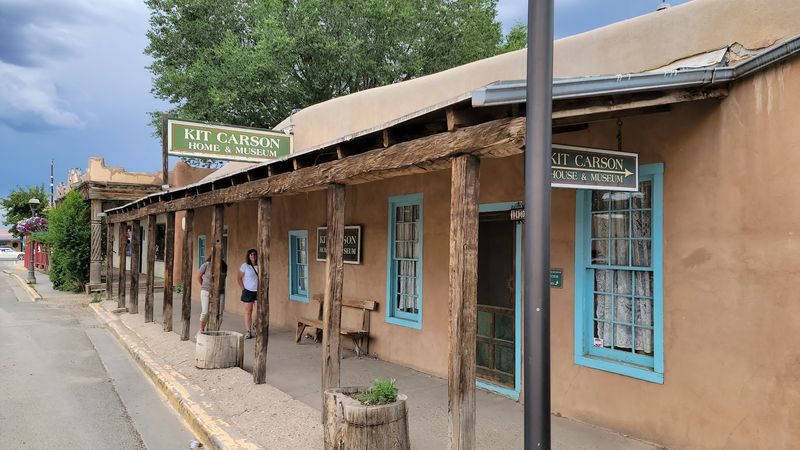
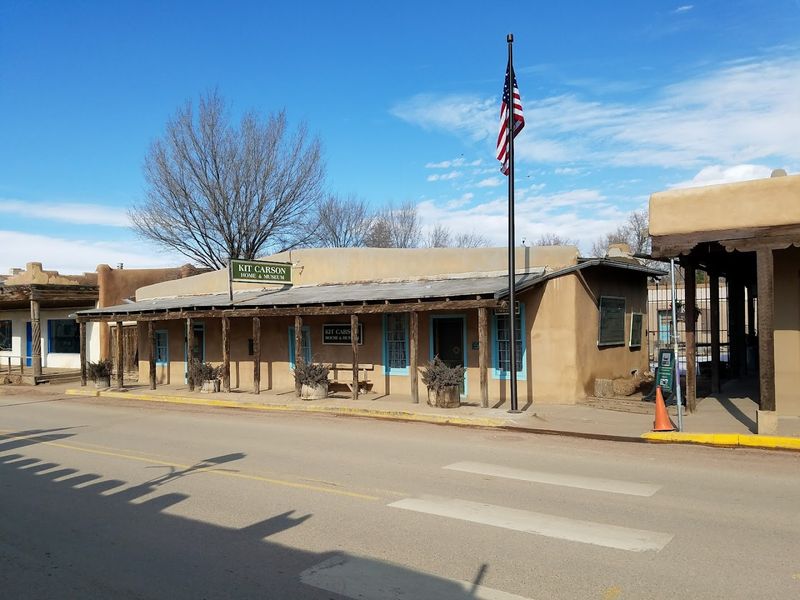
Before you even step through the door, the outside of this building tells you something important: this place was built to last.
The adobe walls stretch more than two feet thick, a construction technique rooted in Spanish Colonial tradition that kept interiors cool in summer and warm during high-desert winters.
That kind of practical wisdom was not decorative, it was survival architecture, shaped by the landscape around Taos, New Mexico.
The structure dates to around 1825 or earlier, making it nearly two centuries old, and it carries its age with a kind of dignified roughness that no modern building can fake.
Patches of earth-toned plaster, weathered wooden accents, and low rooflines give the exterior a grounded, no-nonsense look that matches the man who once called it home.
Morning light brings out the best in it. When the sun hits those pale walls at a low angle, the texture practically glows.
Every crack and curve in the facade feels like a sentence in a story that the Kit Carson House and Museum at 113 Kit Carson Rd, Taos, NM 87571 has carried since the mid-20th century.
A Quiet Courtyard Steeped In History
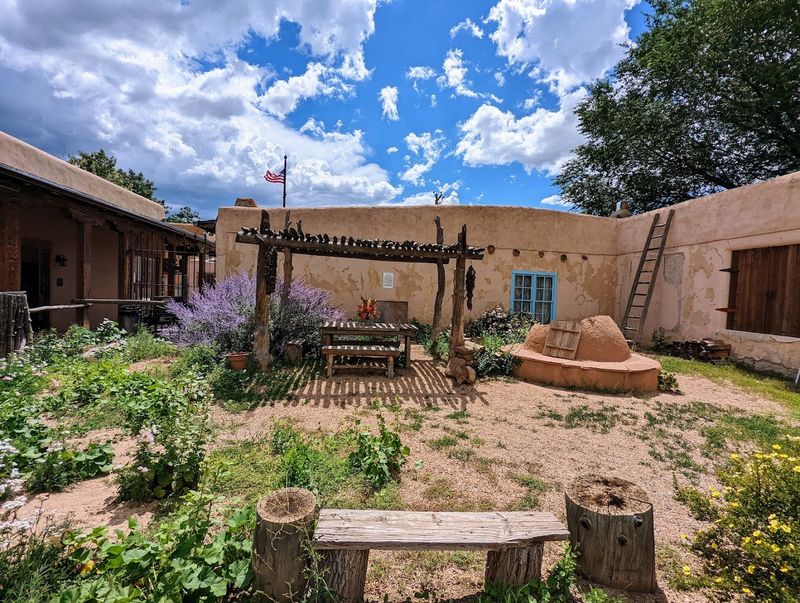
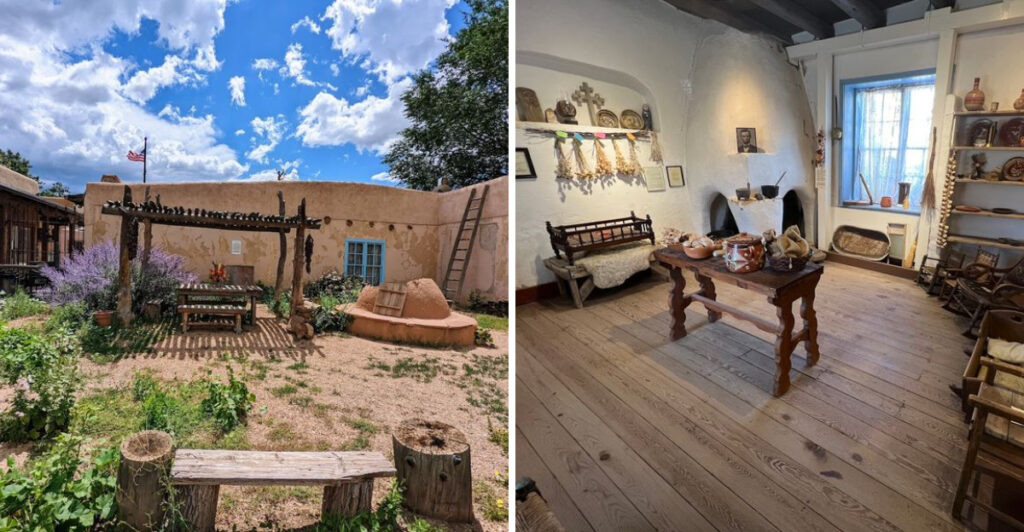
Step past the threshold and the courtyard opens up in a way that feels almost secret, like a private world that the street outside has no idea exists.
The U-shaped layout of the building wraps around this open space, and during the Carson family years, it served as a working corral and stable rather than a decorative garden.
That detail alone reframes everything: this was a functional, working household, not a showpiece.
Today, the courtyard holds a traditional Spanish mud oven called an horno, a domed earthen structure used for baking bread that was a staple feature of 19th-century Taos life.
A handful of period artifacts are also scattered around the space, giving visitors something tangible to connect with beyond the indoor displays.
I spent a good stretch of time out here just absorbing the atmosphere, because the open sky above and the thick walls on three sides create a stillness that is genuinely rare.
The courtyard is one of those spots where the gap between past and present feels thin, and where the everyday rhythms of a frontier family suddenly seem surprisingly relatable.
Four Rooms Filled With Frontier Echoes
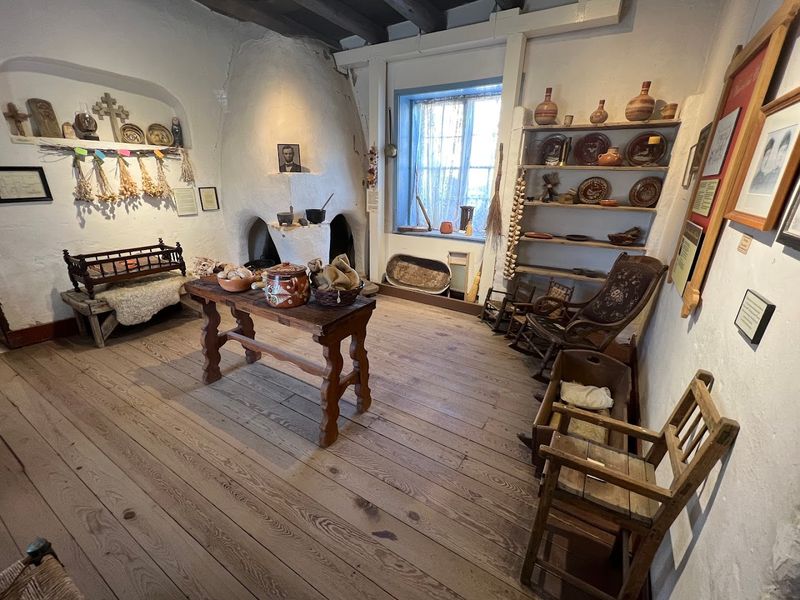
Four rooms do not sound like much until you realize how much life was packed into them for roughly 25 years.
Kit Carson purchased this adobe in 1843 as a wedding gift for his third wife, Josefa Jaramillo, whose family was well established in Taos society, and the couple raised their children within these walls.
They also welcomed several adopted Native American children into the household, which adds a layer of complexity to the family portrait that the museum does not shy away from.
The self-guided tour moves through each room at your own pace, and that freedom matters because there is a lot to read, observe, and sit with if you are the kind of visitor who likes to linger.
Display panels line the walls with historical context, photographs, and biographical details that help connect the artifacts to real moments in the Carson family timeline.
None of the furniture is original to the house, but the room arrangements reflect period-accurate setups that give you a solid sense of scale and daily life.
As I moved from room to room, I kept thinking about how much noise and energy four rooms full of children and frontier-era activity must have generated on an ordinary Tuesday.
Sunlit Doorways And Earthen Textures
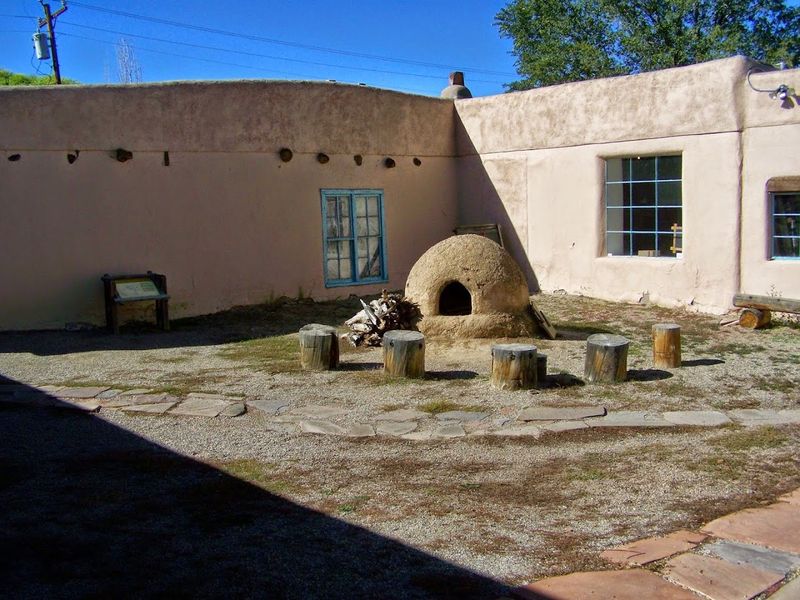
Old adobe buildings have a specific kind of light, and this place has it in abundance.
Sunlight filters through low doorways and small windows, landing on plastered walls in ways that highlight every bump, curve, and handmade irregularity in the surface.
The result is a visual warmth that photographs struggle to capture and that no replica building ever quite achieves.
Spanish Colonial construction techniques favored these thick, rounded wall edges and low-clearance openings, partly for structural reasons and partly because the style evolved in a region where materials were shaped by hand rather than machine.
Each doorway at the museum made me duck slightly and slow down, which felt oddly appropriate for a place that rewards careful attention.
The earthen textures throughout the interior carry their own quiet authority, reminding visitors that this building was made from the very ground beneath Taos.
Those textures are not decorative choices added later for atmosphere; they are part of the original construction style and have been carefully maintained through ongoing preservation work.
The interplay of shadow and sunlight across these surfaces makes even a slow, quiet afternoon visit feel unexpectedly cinematic.
Historic Interiors With A Lived-In Feel
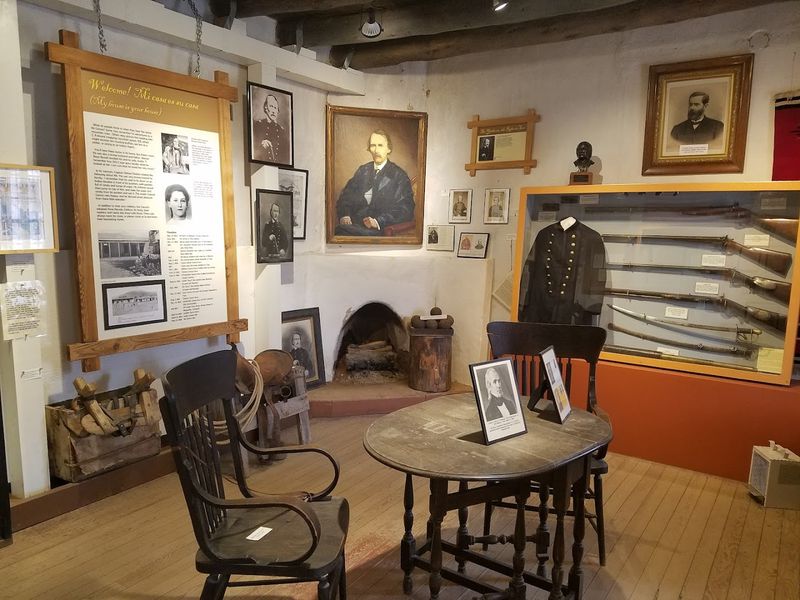
A military sabre and a sewing box might seem like a quiet pairing, but together they say a lot about the two people who shared this home.
Josefa Jaramillo Carson’s sewing box sits alongside Kit Carson’s U.S. Army sabre and scabbard, and the contrast between those two objects is quietly striking.
One speaks to the domestic rhythms of a woman managing a large household on the edge of the frontier; the other represents the military career that kept her husband away for long stretches at a time.
The house has operated as a museum since the mid-20th century and has been building its collection of Carson family artifacts and period pieces ever since.
The exhibits do not need extra noise to feel compelling, because the objects are arranged in ways that let small domestic details sit beside the larger pressures of frontier life.
The lived-in quality of the interiors comes not from clutter but from intentional curation, placing objects in contexts that feel human rather than clinical.
Time with these artifacts made the Carsons feel less like historical figures and more like actual people who had opinions about dinner and argued over who left the door open.
A One-Block Walk Into The Old West
One of the most underrated features of visiting this museum is what happens after you walk back out the front door.
Just a short walk away sits Kit Carson Park, and within it, the Kit Carson Memorial Cemetery, where Kit and Josefa Carson are buried alongside other members of their family.
The cemetery can be easy to miss from the street, so it is worth checking the route before you leave the museum area.
That short walk after the house tour creates a natural arc to the visit. You move from the domestic space where the Carsons lived to the place where their story is remembered today.
Both Kit and Josefa passed away that same year, just weeks apart, after spending roughly 25 years in the adobe home on what is now Kit Carson Road.
The park itself is a pleasant, tree-shaded space that offers a calm contrast to the more information-dense museum experience.
At the cemetery after touring the house, the whole visit clicks into place in a way that feels genuinely complete, like finishing the last page of a book you did not want to put down.
Spanish Colonial Details In Soft Desert Light
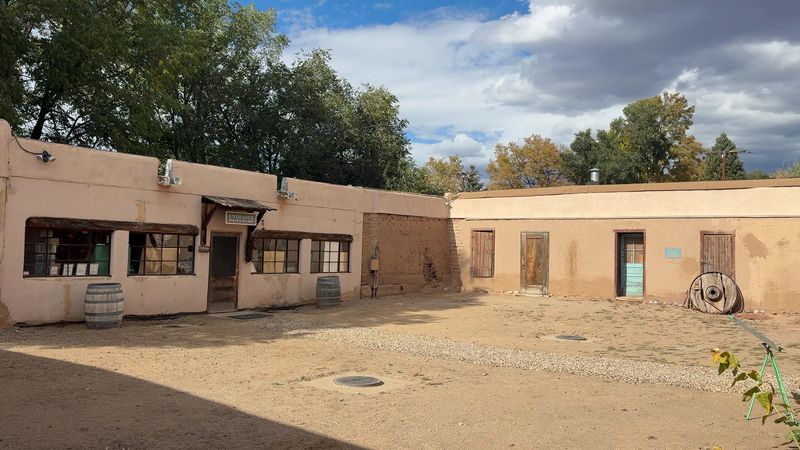
Architectural history fans will find a lot to appreciate here, even before reading a single exhibit label.
The building blends Spanish Colonial and Territorial styles, two distinct phases of New Mexico construction history that reflect the region’s layered cultural identity.
Spanish Colonial elements show up in the thick adobe walls, the rounded plaster corners, and the overall low-slung profile that hugs the earth rather than reaching upward.
Territorial style details, which became more common as American influence spread into New Mexico, appear in some of the window and door framing choices that give the structure a slightly more formal edge.
Together, these two styles create a building that reads as genuinely of its place and time, rather than a generic frontier structure that could belong anywhere.
The soft desert light of Taos enhances every detail, washing the exterior in a warm golden tone during late afternoon that makes the adobe surface look almost painted.
Inside, the same light quality softens the rooms and gives the period furnishings a glow that feels less like a museum and more like stepping into a photograph from another century.
The National Park Service clearly agreed with that assessment when it designated the property a National Historic Landmark in 1963.
Small Adobe Spaces, Big Frontier Presence
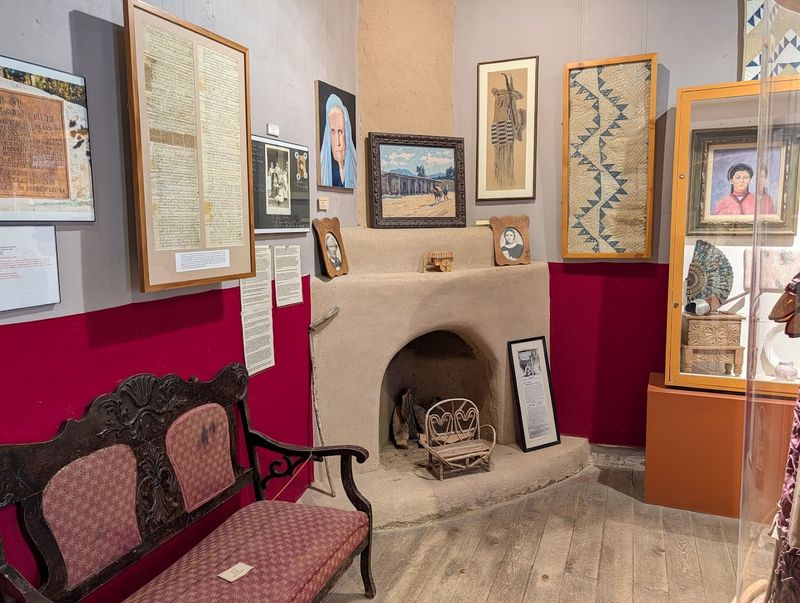
Compact spaces have a way of concentrating meaning, and this museum uses every square foot with purpose.
Visitors start with a short introductory film, narrated by Kit Carson’s great-grandson, that runs about 20 minutes and does a thoughtful job of separating the man from the mythology that grew up around him over the decades.
That film sets the tone for the rest of the visit, encouraging a more nuanced view of Carson that acknowledges both his achievements and the complicated historical context in which he operated.
The house is preserved through nonprofit and local heritage efforts dedicated to keeping the site open, interpreted, and protected for future visitors.
Admission runs around ten dollars for adults, which feels reasonable for an experience that includes the film, the self-guided house tour, and access to a gift shop stocked with quality art and keepsakes.
Public hours can vary by season and source, so it is worth checking the museum’s current schedule before planning your visit.
For anyone passing through northern New Mexico with even a passing interest in frontier history, the Kit Carson House and Museum rewards attention in ways that linger long after you leave Taos.