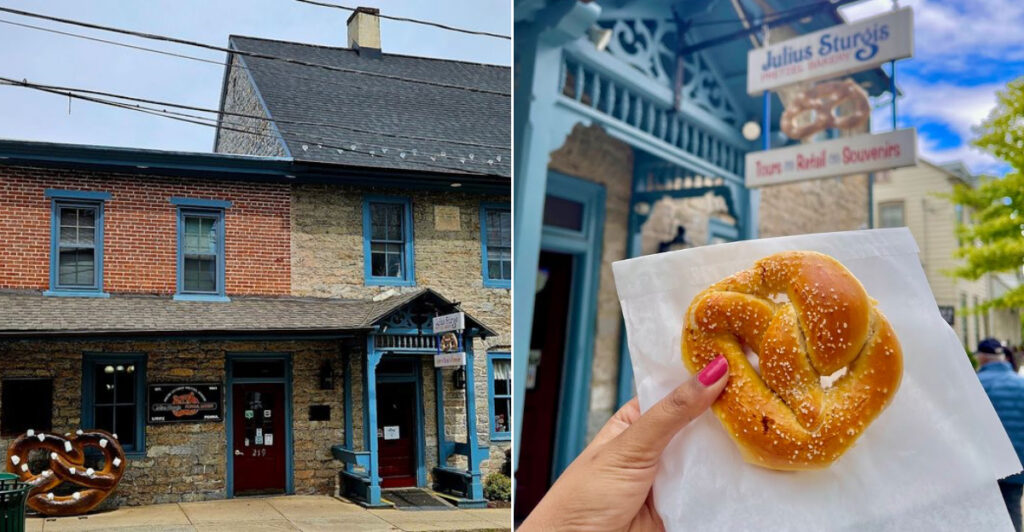
Most historic landmarks come with plaques, guided speeches, and stern reminders not to touch anything. This one comes with warm pretzels, a dusting of salt, and a very good chance you’ll leave carrying more snacks than you planned.
In the Lancaster County town of Lititz, a stone bakery that first opened its doors in 1861 is still drawing visitors with a recipe that has outlasted wars, inventions, and more diet trends than anyone can count.
What began as America’s first commercial pretzel bakery has become part museum, part bakery, and part delicious excuse to eat carbs in the name of history.
The experience goes well beyond buying a pretzel at the counter. You can learn how generations of bakers shaped Pennsylvania’s most famous snack, try twisting one yourself, and sample the kind of warm, chewy pretzels that make restraint feel completely unnecessary.
Before long, you’ll understand why a simple twist of dough became one of the state’s most enduring food traditions.
America’s First Commercial Pretzel Bakery Has A Story Worth Knowing
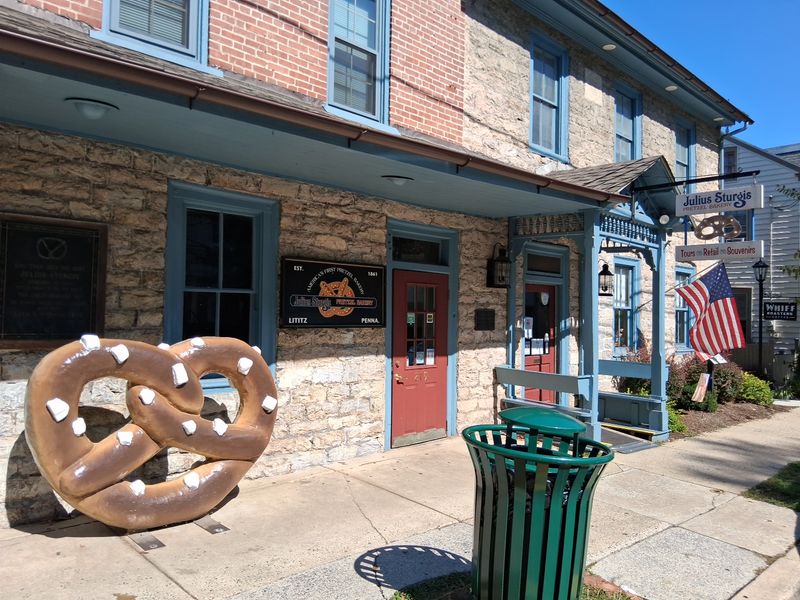
Not every snack has a founding date you can look up in a history book. Julius Sturgis opened his pretzel bakery in 1861, and that single fact puts this Lancaster County institution in a category all its own.
No other commercial pretzel bakery in the United States predates it.
He learned the pretzel-making trade from John Elias Sturgis, who passed along a recipe that would eventually define an entire regional food tradition. The bakery operated out of a stone home that still stands today, giving visitors a direct physical connection to that original operation.
Lancaster County had a strong Pennsylvania Dutch population in the 1800s, and pretzels were already part of that culinary culture long before commercial production began. Sturgis recognized an opportunity to scale what local families had been making by hand for generations.
He built a business around it.
Hard pretzels became a Sturgis specialty early on because the baking process preserved them longer than soft versions. A baker skilled in the craft could twist 50 pretzels per minute by hand, then send them into the oven for about ten minutes.
That pace defined the production rhythm of the original bakery.
The operation eventually expanded to Reading, Pennsylvania, where machines now produce large quantities daily. But the original Lititz location kept its identity rooted in history rather than volume.
The stone building on East Main Street tells that story better than any brochure could. Go ahead and look up 1861 on your own terms.
Finding The Bakery On East Main Street
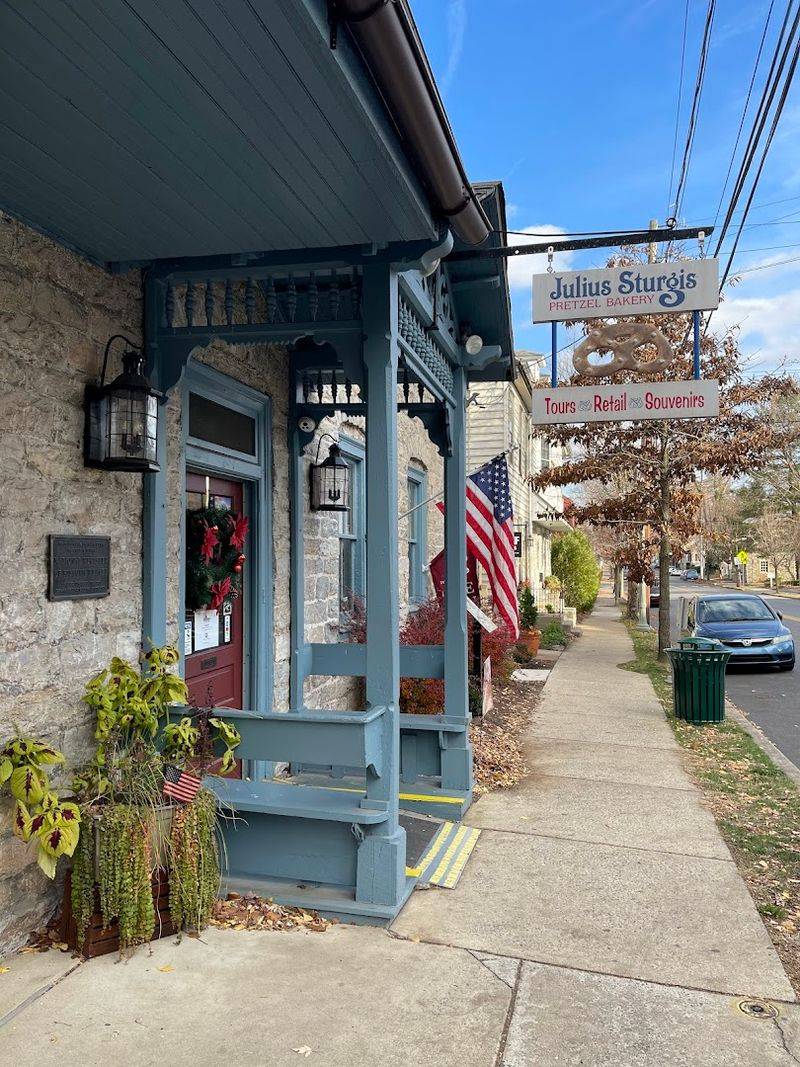
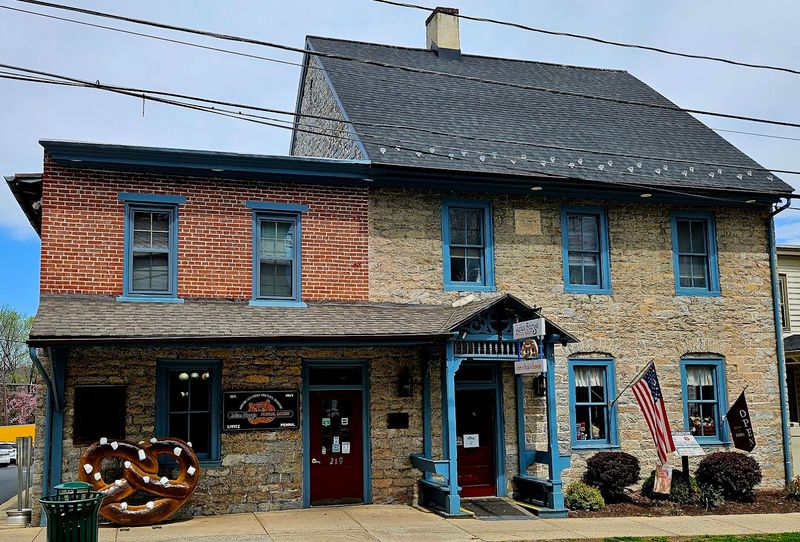
Main Street in Lititz moves at a pace that suits a borough with fewer than 10,000 residents. The Julius Sturgis Pretzel Bakery sits at 219 E Main St, Lititz, PA 17543, right along this walkable stretch of downtown that also includes boutique shops and a historic town square just a short distance away.
A giant pretzel sculpture out front makes the building easy to spot. Visitors frequently stop to photograph it before heading inside, and that oversized prop has become one of the most recognized landmarks in the borough.
It marks the entrance with zero ambiguity.
Lititz itself earned the title of Coolest Small Town in America from Budget Travel magazine back in 2011, which brought a wave of curious visitors to its streets. The bakery predates that recognition by about 150 years, but the increased foot traffic certainly introduced more people to what East Main Street had to offer.
Parking in the area can get tight, especially on weekends. Street spots along Main Street fill up fast, and the surrounding blocks require a short walk.
Arriving early in the day generally helps avoid that particular headache.
The building itself is a historic stone structure, the kind that Lancaster County has in abundance thanks to its German-heritage settlers who built with local limestone. That architectural detail is not just decorative.
It tells you something real about the age and origin of the place. Once you find the giant pretzel out front, you have already found the right address.
The next step is just going through the door.
The Hands-On Pretzel Twisting Tour Costs Just A Few Dollars
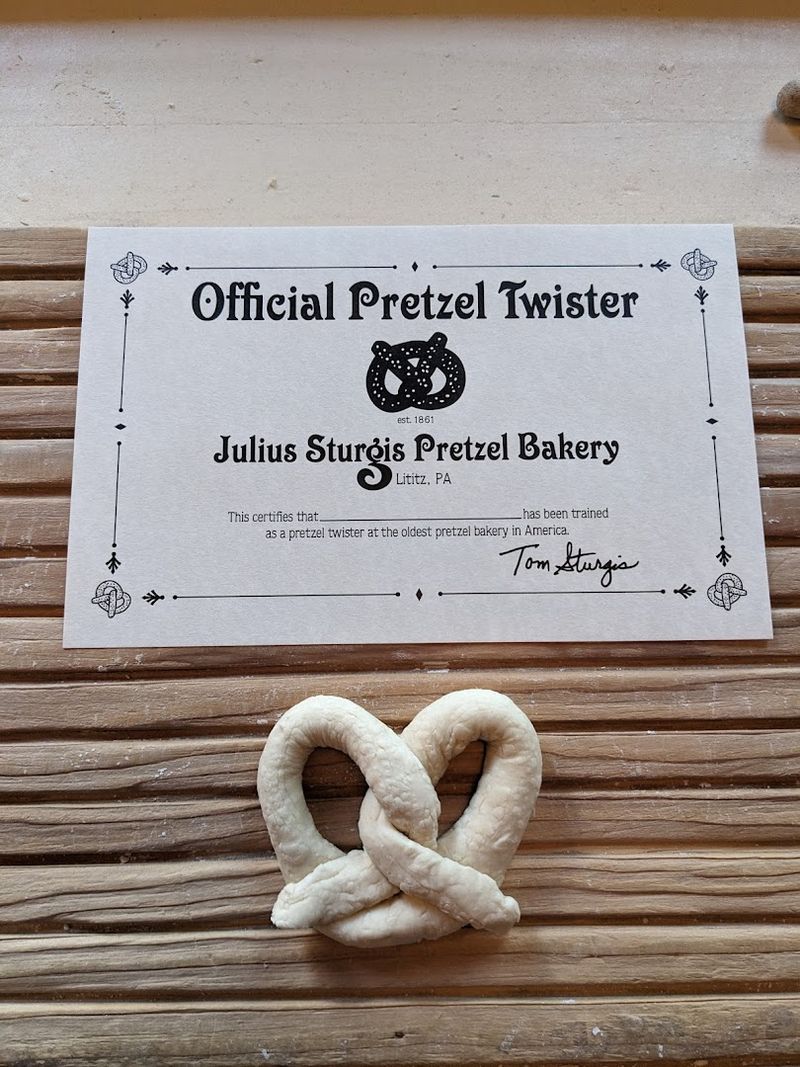
A few bucks gets you into a guided tour of a working 19th-century pretzel bakery, which by any measure of historical tourism is a serious bargain.
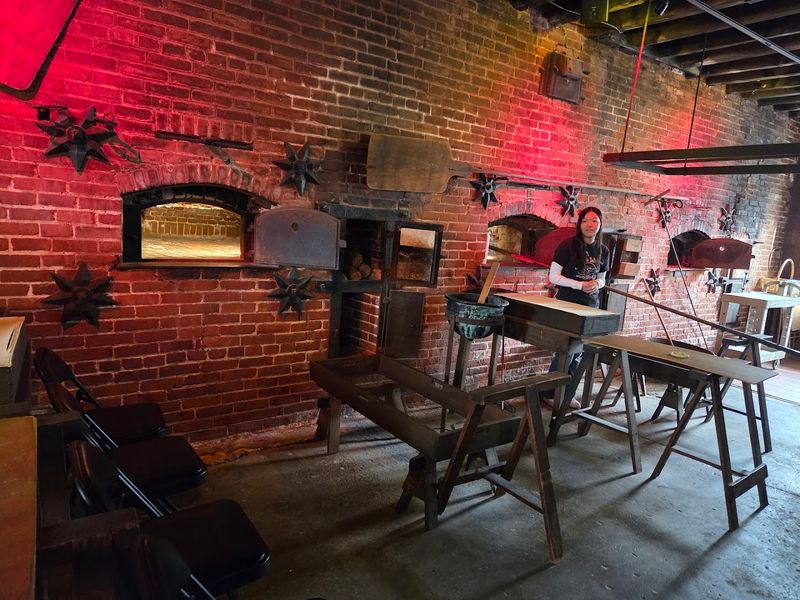
The tour runs about 30 minutes and takes place inside the original stone building where Julius Sturgis himself once produced pretzels by hand.
Tour participants get to twist their own pretzel from a slab of dough. The technique looks straightforward until you actually try it.
Twisting 50 pretzels per minute, the pace that experienced bakers once maintained, starts to sound genuinely impressive once your hands fumble through attempt number one. Health regulations and the age of the original ovens mean that the dough you shape does not go into the oven.
That detail surprises some visitors, but the tour still includes a bag of hard pretzels to take home at the end. You leave with something to snack on, regardless of how your twisting technique turned out.
Weekends fill up fast. Booking ahead matters if you want to guarantee a spot, especially during peak tourist season in Lancaster County.
The last tour of the day books out quickly, and late arrivals sometimes miss the gift shop window entirely.
The tour also covers the history of the Sturgis family and the pretzel-making industry in Pennsylvania, with historical photographs lining the walls of the building.
Kids here love to engage with the hands-on portion more than any exhibit, but adults consistently find the production history more interesting than they expected.
Grab that bag of pretzels on the way out and decide what you think.
Soft Pretzels Straight From The Oven For A Few Dollars Each
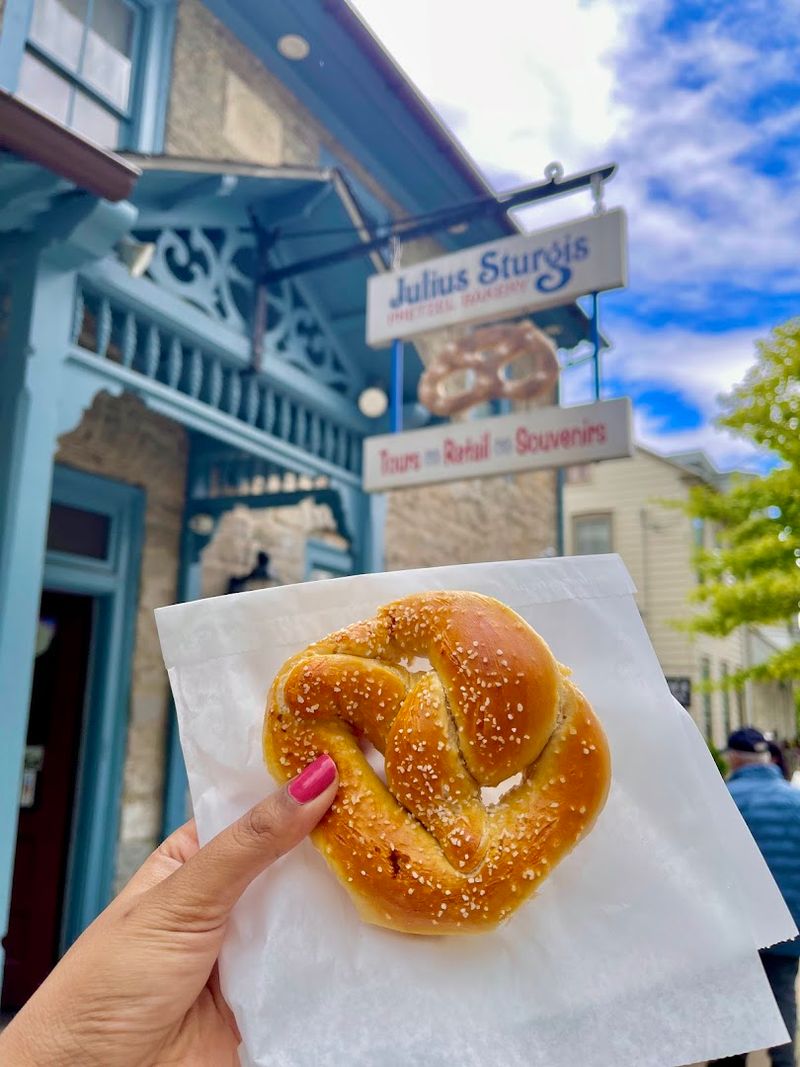
Just a couple of bucks. That is the price of a warm, freshly baked soft pretzel at the Julius Sturgis gift shop counter.
In an era when a gas station snack routinely costs more than that, the price point alone makes people do a double-take.
The soft pretzel here differs noticeably from the flat, thin style common to Philadelphia street carts. Visitors from the Philadelphia area frequently comment on the difference.
The Sturgis version is softer, doughier, and denser, with a texture that suggests a wheat-forward flour blend and a slower bake.
Coarse salt sits on top of each pretzel in the traditional Pennsylvania Dutch style. The salt-to-dough ratio is part of what makes this version distinctive.
Too little salt and you lose the contrast and too much and the pretzel turns one-dimensional. The balance here leans into the salty side, which is exactly what most people driving to a pretzel bakery are hoping for.
Buy one get one free coupons occasionally appear on local area maps distributed throughout Lancaster County, which drops the per-pretzel cost even further. That kind of deal makes buying a dozen feel like a reasonable life decision.
Chocolate-covered pretzels also show up at the counter, available with peanut butter or caramel fillings. They draw their own loyal following among visitors who return specifically for them.
The soft pretzel is the obvious starting point, but the chocolate-dipped options deserve a spot in your paper bag. Grab one of each and compare notes on the walk back to your car.
Horse And Buggy Pretzels And A Gift Shop Full Of Lancaster County Finds
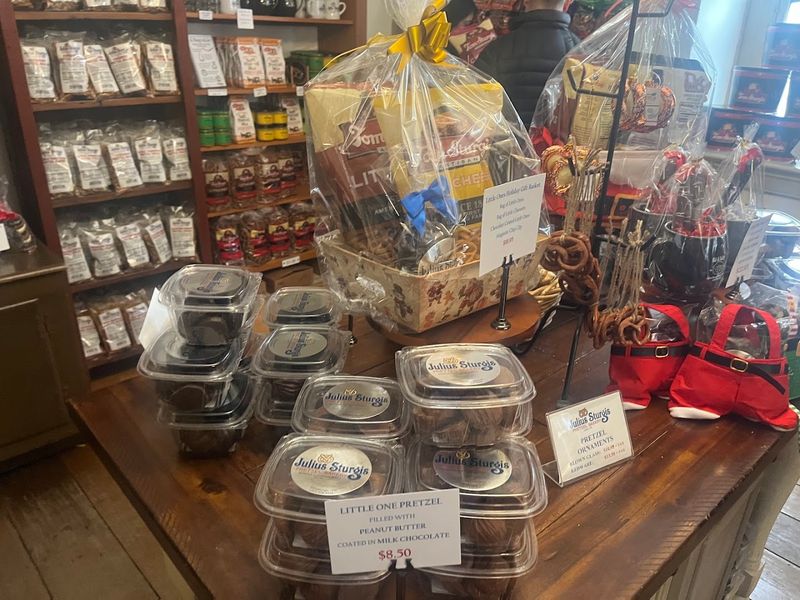
Horse and buggy-shaped pretzels are one of the most specific product decisions a bakery can make, and at Julius Sturgis, they sell consistently.
The shape pays direct homage to the Amish and Pennsylvania Dutch communities that define Lancaster County’s cultural identity, and they double as edible souvenirs.
The gift shop carries a range of pretzel varieties beyond the standard twist. Sizes and shapes extend well past what you would find at a typical bakery counter.
T-shirts, postcards, mugs, and pretzel-themed magnets round out the merchandise, giving visitors options for taking a piece of Lititz home without it going stale in the car.
A squished penny machine recently joined the gift shop lineup, offering four different image designs with a date stamp on the reverse. It requires four quarters and one penny, which makes it one of the more affordable novelty souvenirs in the region.
Coin collectors and casual visitors alike love to stop at it on the way out.
Chocolate-covered pretzels with peanut butter or caramel filling come packaged for travel, which makes them practical gifts for people back home who could not make the trip. The packaging holds up well enough to survive a car ride or a checked bag.
Prices throughout the shop stay reasonable, which matches the overall price point of the bakery itself. Nothing in the gift shop requires a second thought before buying.
That accessibility keeps the average visitor spending more than they planned without any feeling of pressure. Pick up the buggy pretzel.
You will explain it to everyone at home anyway.
The Pennsylvania Dutch Pretzel Tradition That Built A Region’s Identity
Pennsylvania Dutch food culture runs deep in Lancaster County, and pretzels sit near the center of that culinary identity.
German-speaking immigrants brought pretzel-making traditions to Pennsylvania in the 1700s, and by the time Julius Sturgis formalized the process commercially in 1861, the snack already had generational roots in the region.
Hard pretzels became the dominant product of early commercial pretzel operations because they lasted longer without refrigeration.
A soft pretzel goes stale within hours. A hard pretzel survives weeks in a tin.
That practical difference shaped the entire early industry and explains why Pennsylvania became the leading pretzel-producing state in the country.
Pennsylvania produces approximately 80 percent of the pretzels made in the United States each year. That figure is not a coincidence.
It traces directly back to the German immigrant communities that settled in counties like Lancaster, Berks, and York, bringing their baking knowledge with them across the Atlantic.
The Julius Sturgis operation expanded to Reading, Pennsylvania, where industrial machines now handle large-scale hard pretzel production. The Lititz location kept the handmade, historically grounded approach that connects visitors to the original craft.
Those two operations represent opposite ends of the same tradition.
Understanding that history changes how a pretzel tastes. Knowing that the same basic recipe traveled from Germany to Lancaster County, survived two centuries, and still produces something you can buy warm for a few dollars gives the snack a weight that goes beyond salt and dough.
Try explaining that to someone who has only ever eaten pretzels from a vending machine.
What To Expect When You Visit Lititz For A Pretzel Afternoon
A visit to Julius Sturgis Pretzel Bakery works best as part of a broader Lititz afternoon. The borough itself offers a compact, walkable downtown with independent shops and Lititz Springs Park, which sits just a few blocks from East Main Street and features one of the oldest municipal parks in Pennsylvania.
The bakery tour runs approximately 30 minutes, which leaves plenty of time to explore the surrounding blocks before or after. Lancaster County’s broader attractions, including Pennsylvania Dutch farm country, are accessible within a short drive, making Lititz a natural base for a day trip from Philadelphia, Harrisburg, or even Baltimore.
Arriving before noon on weekdays generally avoids the heaviest foot traffic. Weekend mornings move faster, and tour spots book out earlier than most first-time visitors expect.
Children engage strongly with the pretzel-twisting portion of the tour. Kids love the interactive experience.
The historical context lands differently for adults, especially those with an interest in American food production history.
The combination of the tour with soft pretzels and a gift shop with reasonable prices keeps the total cost of the visit low enough that it rarely requires advance budgeting.
That accessibility is part of why this bakery draws visitors from across the mid-Atlantic region year after year. Bring cash for the penny machine.
You will want the souvenir more than you expect.