On a spring morning in 1934, a stolen Ford rolled south out of Gibsland and never made it past a quiet stretch of Highway 154. The two people inside were Bonnie Parker and Clyde Barrow, and their story still pulls travelers into this small Bienville Parish town.
On Main Street, inside the old cafe where the pair bought their last sandwiches, a museum keeps photographs, newspapers, and handwritten letters from the people who knew them best. Those letters, some written by two heartbroken mothers, are the reason many visitors leave thinking about the outlaws in a whole new way.
A Cafe Building On Gibsland’s Main Street
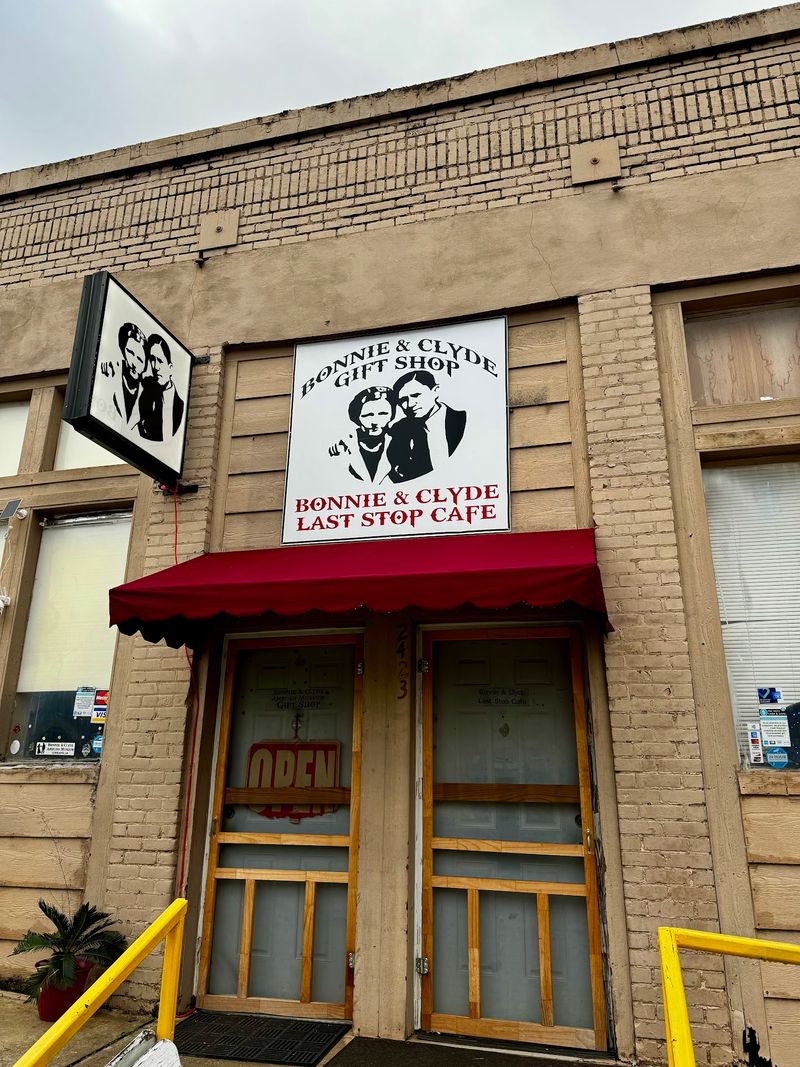
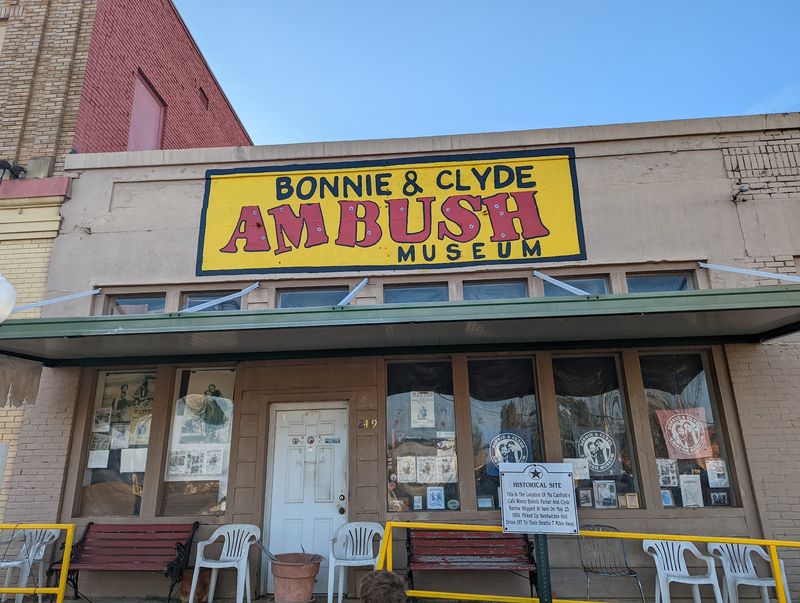
Gibsland is not a big place, and the museum does not pretend otherwise. It sits at 2419 Main St, in a modest older building that once housed Ma Canfield’s Cafe, the spot where Bonnie Parker and Clyde Barrow picked up sandwiches on the morning of May 23, 1934.
That link is what gives the Bonnie & Clyde Ambush Museum its pull. Plenty of places claim a brush with famous outlaws, but here the connection is direct: the pair walked through this building shortly before driving south toward the ambush.
Visitors step into a cafe up front and then pass through a door marked for paying customers into the exhibit space.
Inside, the collection covers the couple, the lawmen who chased them, and the rough years of the early 1930s. Expect photographs, newspaper pages, period clothing, mannequins, replicas, and a looping documentary about the final chase.
The building shows its age, and some guests describe it as a little run down. That rough edge fits the town around it, a north Louisiana railroad community where history is not staged for crowds.
Most people arrive because they are passing through on the way somewhere else, then end up staying longer than planned once the reading starts.
The Morning Of May 23, 1934
Around 9:15 a.m., six officers were already waiting in the brush along Highway 154, south of Gibsland. The group was led by former Texas Ranger Frank Hamer and included lawmen from Louisiana as well as Texas.
They had help. Accounts say the father of Henry Methvin, a member of the Barrow gang, parked his truck along the road as a diversion, a familiar sight meant to slow the approaching car.
When Bonnie and Clyde came down the road in a stolen 1934 Ford V8, they eased up beside it.
The officers stepped out, and what followed happened quickly. More than 130 rounds struck the car in less than 16 seconds, according to most retellings, and the long chase across several states was finished right there near the community of Sailes.
Knowing that timeline makes the museum easier to read. Much of what hangs on its walls, from the newspaper coverage to the lawmen’s portraits, points back to those few seconds on a back road in Bienville Parish.
The chase had covered years and thousands of miles, yet it closed on a stretch of pine woods most drivers today pass without slowing down.
The Granite Markers Along Highway 154
Drive south from town and the road gets quiet fast. Several miles down Highway 154, two granite monuments stand beside the pavement, marking the place where the ambush happened.
There is no visitor center out there, no gift shop, and not much traffic. Pine trees line both sides, and the setting still looks a lot like the secluded, tree-lined road the lawmen picked in 1934.
People sometimes leave flowers at the markers, a small gesture that says more about the site than any sign could.
Many travelers pair the two stops. Visit the museum first, soak up the background, then head out to the markers with the story fresh in mind.
One visitor noted the site is only a few miles away and easy to reach right after the museum, and others estimate it at roughly seven miles.
A block from the museum, back in town, is another small piece of the story: the spot where an investigator is said to have called his boss with the news. Put together, the town and the highway form a short, self-guided route through the last chapter.
Pull fully off the road at the markers, since the shoulder is narrow and local traffic still uses the highway.
Handwritten Letters From Two Worried Mothers
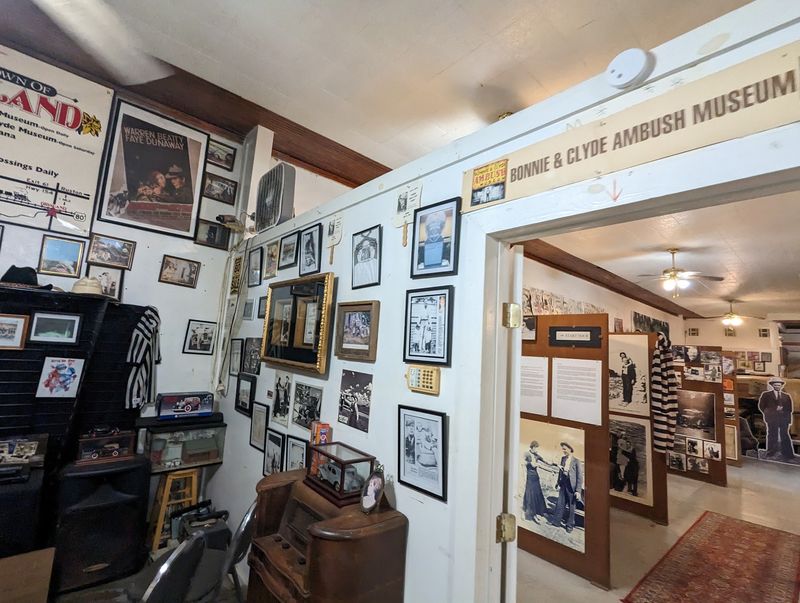
Paper and ink can hit harder than any replica car. Among the museum’s newspapers and photographs are handwritten letters, and some of the most affecting come from the mothers of Bonnie and Clyde.
In those notes, the women ask to be sent the personal effects of their children after the ambush. One visitor wrote about being genuinely touched by them, and it is easy to see why.
The requests are plain and practical, the kind of thing any parent might write, and they shift the story away from headlines toward two families left behind.
Visitors also mention personal correspondence between Clyde and his mother. Reading a son write home, knowing how his road would end, gives the collection a weight that the flashier exhibits cannot quite match.
These letters are the quiet heart of the place. Hollywood turned the pair into glamorous figures, and crime pages turned them into villains.
The handwriting on display shows something more ordinary: young people with parents who worried, waited for mail, and hoped for news.
Give this part of the museum extra time. The pages are easy to rush past between larger displays, but they reward slow reading.
Photographs, Clippings And Bonnie’s Poems
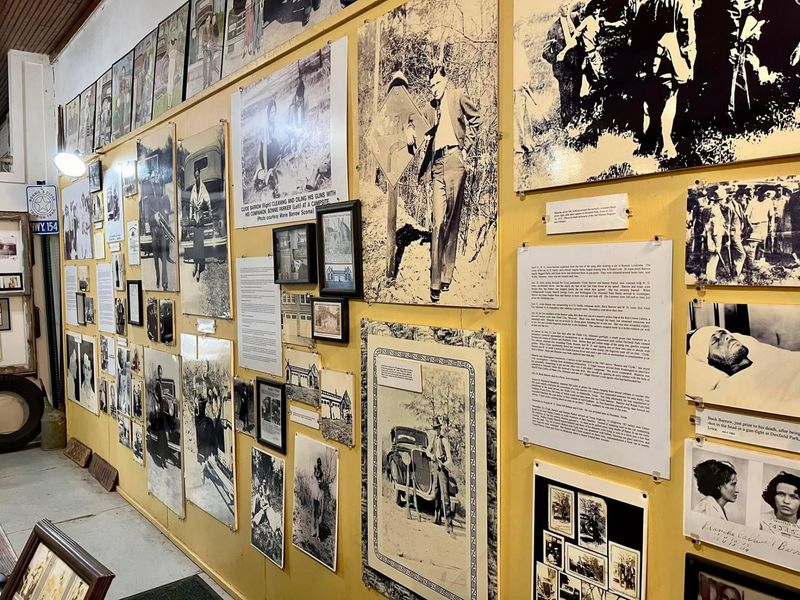
Bring reading glasses. Nearly every wall surface is covered in newspaper pages, magazine stories, and photographs, and several visitors say a serious reader could spend hours here.
The photographs range from rare snapshots of the couple’s life on the road to images of the lawmen and the aftermath. Real headlines from the period show how the country followed the chase almost day by day during the Depression, when the pair were both a source of fascination and alarm.
Copies of Bonnie’s poems add another layer. Bonnie Parker wrote verse about life on the run, and seeing her words displayed alongside the news coverage reveals how she wanted the story told compared with how newspapers told it.
Some items are period pieces rather than things the couple owned, and a few guests point out that certain photos repeat in different sizes. Others note that much of this information now lives online.
Still, standing in front of an actual front page from 1934 is different from scrolling past it on a phone.
Children’s drawings and clothing from the era round out the displays. The mix is broad, sometimes crowded, and clearly assembled by people who care deeply about the subject.
The Tan Ford Replica At The Center Of The Room
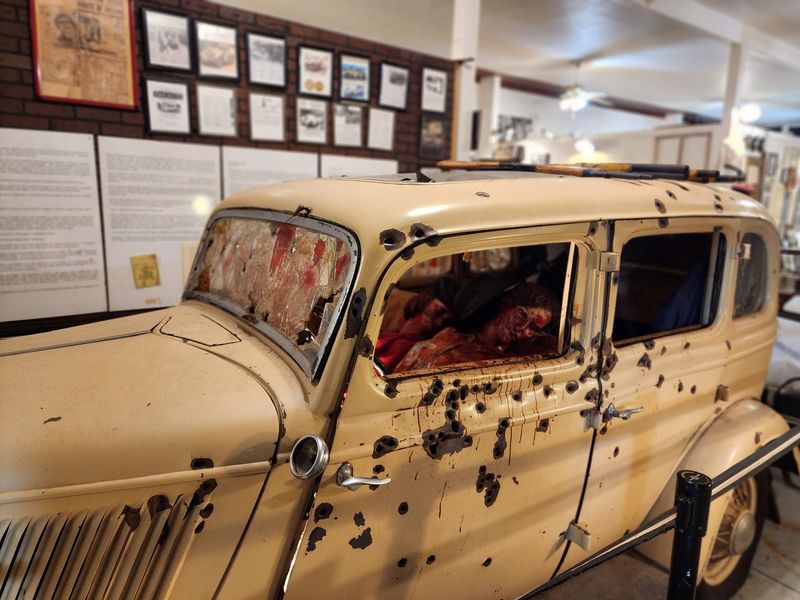
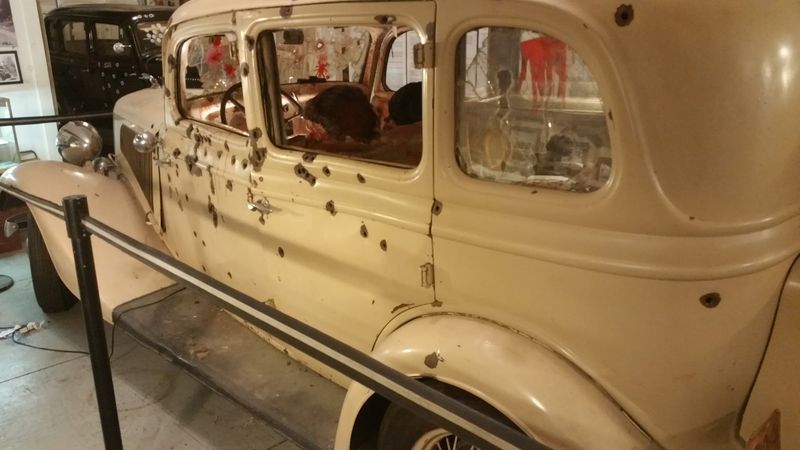
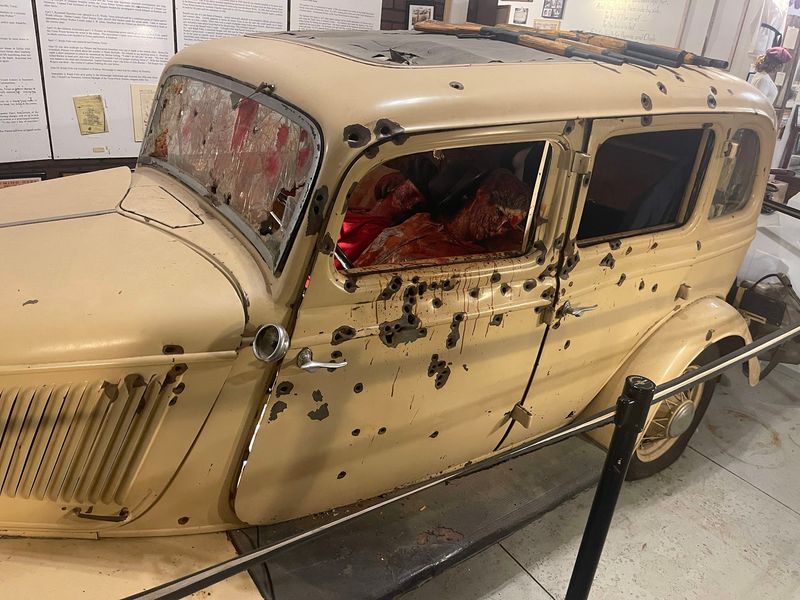
Most eyes go straight to the car. A tan 1934 Ford V8 sedan sits in the museum as its centerpiece, a replica of the one Bonnie and Clyde were driving that morning, complete with simulated damage from the ambush.
Visitors describe it as impactful, and the reason is simple scale. Reading that more than 130 rounds struck the car is one thing, but seeing a full-size body pocked with holes makes the numbers physical.
One guest noted the car was a movie prop, which fits the museum’s mix of history and pop culture.
The original vehicle is not here. It is on display in Nevada, near Las Vegas, where it has become a curiosity in its own right.
The Gibsland replica fills the gap by showing what the Ford looked like after those final seconds on Highway 154.
Nearby, mannequins recreate scenes from the story. A few guests find them eerie, and some of the imagery is graphic enough that families with small children may want to preview the room first.
For older kids interested in history, though, the car often becomes the moment the story clicks.
From Boots Hinton To Perry Carver
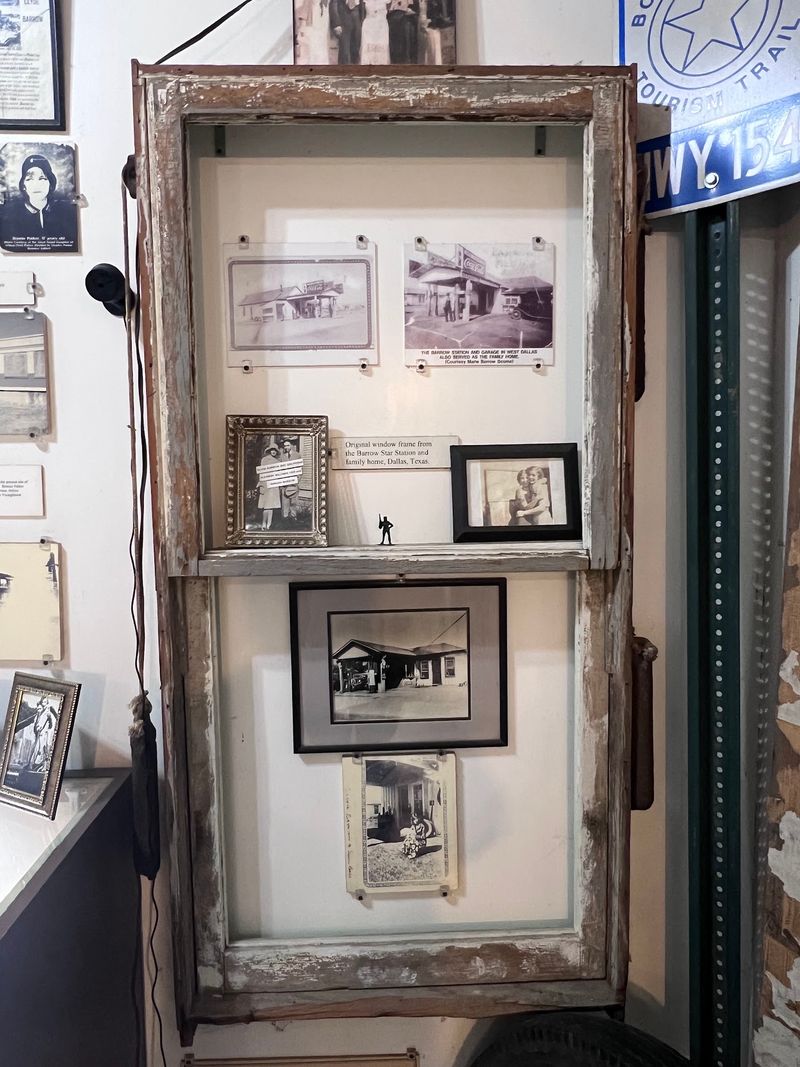
Ownership here comes with an unusual family tie. The museum was originally run by L.J. “Boots” Hinton, son of Ted Hinton, one of the six lawmen positioned on Highway 154 that morning.
That background shaped the collection. Rather than telling only the outlaws’ side, the displays give real space to the officers who tracked them, including Frank Hamer and the Louisiana deputies.
It is a rare chance to see the story partly through the eyes of a lawman’s family.
Today the museum belongs to Perry Carver, a close friend of Hinton, who has added his own memorabilia and keeps expanding the exhibits. Visitors often mention conversations with the man running the place, who is quick to share details about the sheriff involved and the people connected to the case.
One guest who once knew a descendant of Clyde found the owner familiar with him too, which says something about how deep these local connections run. The collection also stretches beyond the famous couple, with pieces tied to John Dillinger and other gangsters of the era, plus movie memorabilia.
Asking questions at the counter is one of the easiest ways to get more out of a visit.
A Collector’s Room, Not A Polished Gallery
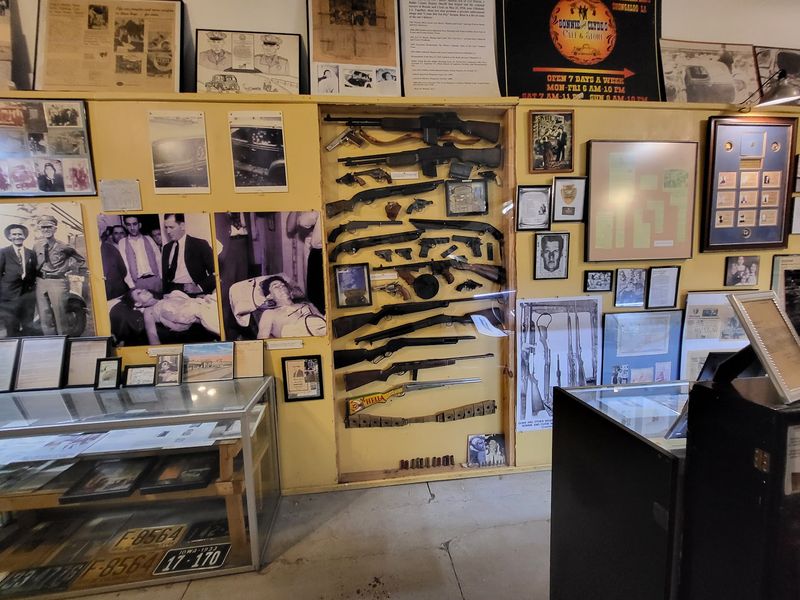
Set expectations early and the visit goes better. The exhibit space feels less like a state museum and more like a devoted collector’s storage room, which one visitor described almost exactly that way.
Information appears all over, sometimes repeating in different corners, and a few guests wish the displays followed a clearer storyline about who Bonnie and Clyde were. Others found it neatly arranged and well put together.
Both reactions are fair, depending on how much order a person needs.
Practical details matter too. The building has fans rather than air conditioning, so summer afternoons can feel warm inside.
Some visitors mention a musty smell, along with mothball or incense notes, and the aisles are narrow.
That last point deserves attention for anyone using a scooter or wheelchair. One visitor reported the aisles were hard to move through and the entry ramp would challenge a wheelchair user, and the cafe side has similar limits.
Calling ahead at 318-843-1934 is a smart move for anyone with mobility concerns.
None of this erases the collection’s value. It simply means the museum rewards curious readers who enjoy digging through layers, rather than guests expecting glass cases and audio guides.
Burgers, Fries And A Friendly Cat Next Door
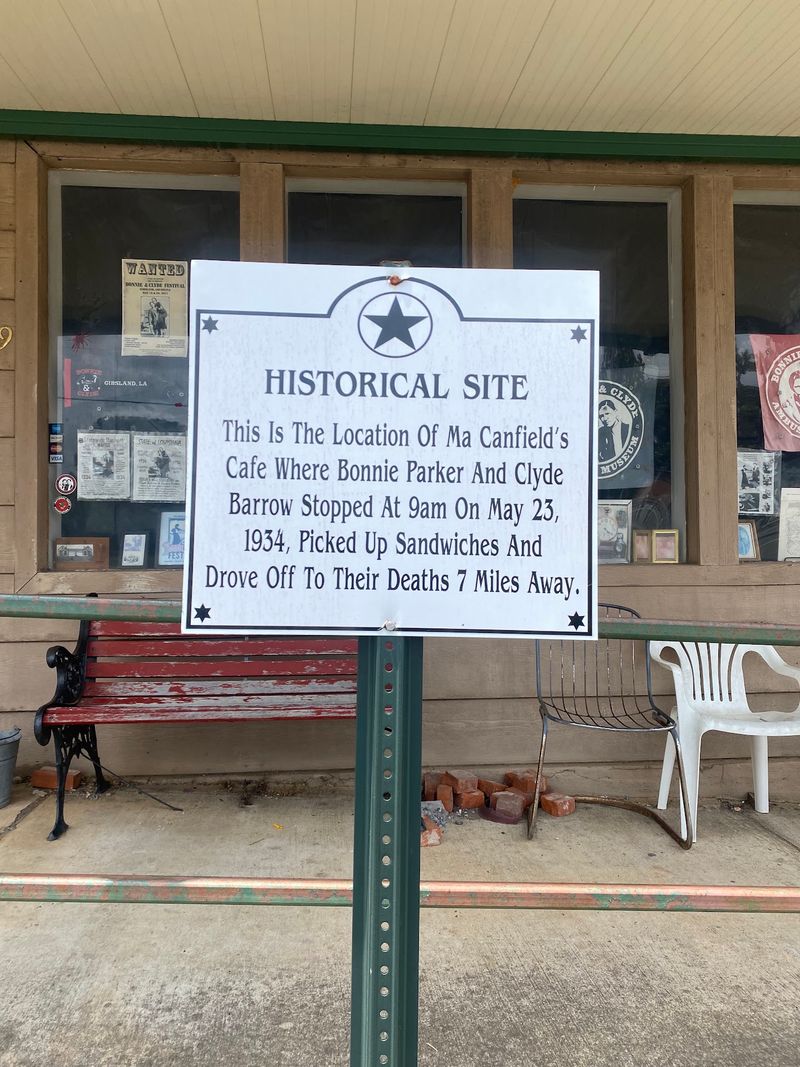
Hunger has a way of settling the debate over whether to stop. The cafe attached to the museum, in the same building where Bonnie and Clyde bought their last sandwiches, turns a quick look around into a proper lunch break.
Visitors keep bringing up the burgers, cooked fresh, along with soft serve ice cream, milkshakes, and root beer floats. One guest claimed the french fries were the best they had ever eaten, which is a bold statement for a small-town counter in north Louisiana.
The people working the cafe get warm mentions as well. Travelers describe the woman behind the counter as kind and accommodating, and several say they stopped in for food even when the museum was the secondary reason.
There is also a resident cat. More than one guest mentioned a friendly kitty who greets visitors and happily accepts a scratch behind the ears, though nobody seems to have caught his name.
Eating here adds a small layer to the history. The menu is modern, but sitting in the old Ma Canfield’s Cafe space connects the meal to that May morning in a way no roadside chain could.
Hours, Admission And The May Festival
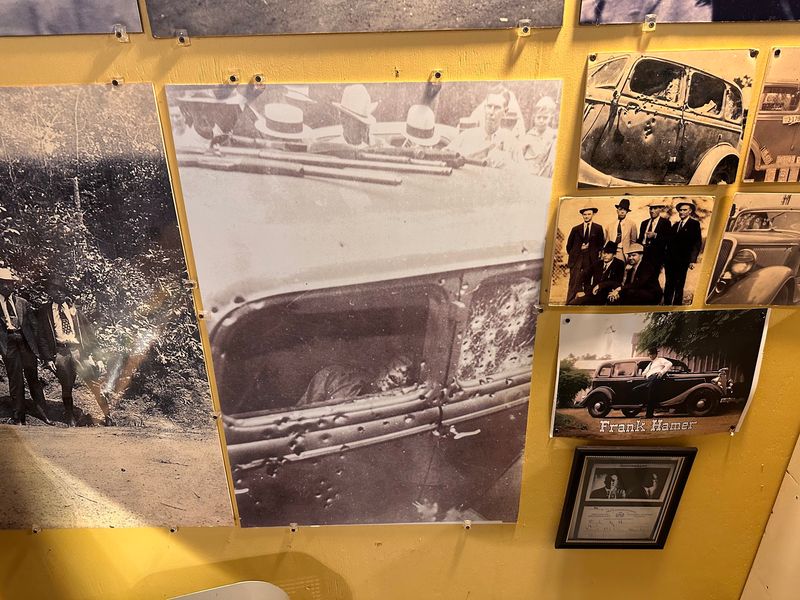
Planning is refreshingly simple. The museum opens every day of the week from 9 a.m. to 5 p.m., so weekend road-trippers and weekday travelers get the same window.
Admission runs $10 per person, according to recent visitors. One guest noted an older online listing showing $7, so it is worth assuming the higher figure.
Most people spend 45 minutes to an hour inside, though dedicated readers can easily stretch that to half a day.
Gibsland sits in Bienville Parish, just off Interstate 20 between Shreveport and Ruston, which makes it an easy detour for anyone crossing north Louisiana. Travelers heading to or from Minden, Arcadia, or Monroe will find it a short hop from the highway.
Timing a trip for May changes the whole experience. Each year the town hosts a Bonnie and Clyde Festival marking the anniversary, often with reenactments, and it honors the lawmen as well as remembering the outlaws.
Relatives sometimes appear too. One visitor at the 92nd anniversary met Buddy Barrow, son of Clyde’s brother L.C., and Bonnie Ray Parker, daughter of Bonnie’s sister, who signed a book Buddy wrote.
Rain did not seem to dampen anyone’s spirits.
Why The Detour Still Makes Sense
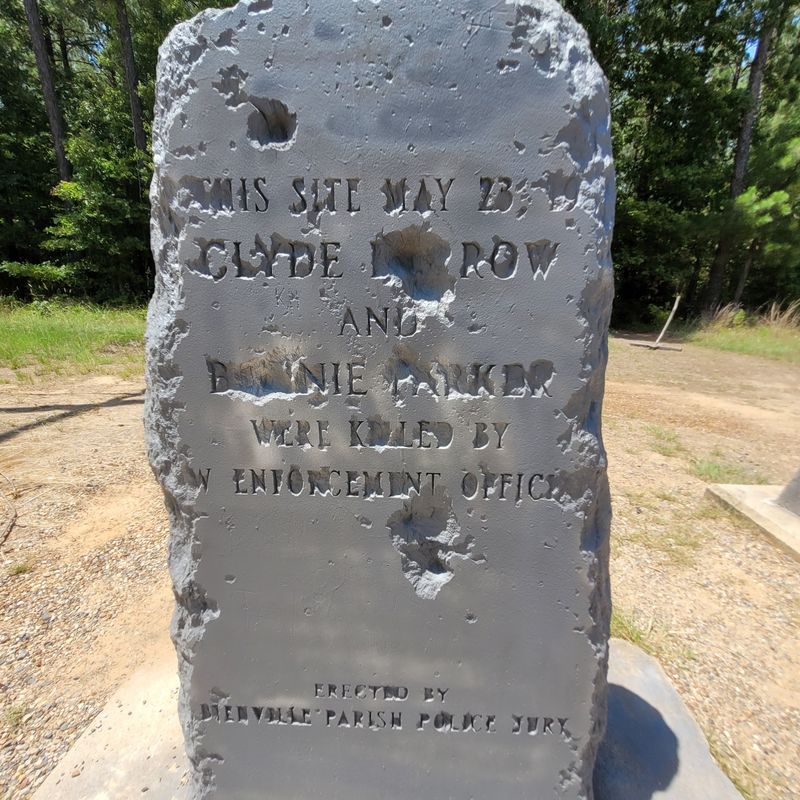
Honesty helps here. Several visitors say they would not plan an entire trip around this museum unless they were serious Bonnie and Clyde buffs, while others call it the holy grail for exactly those fans.
Both views land in the same place. For travelers already crossing north Louisiana, the stop pays off with a building the outlaws actually visited, a collection shaped by a lawman’s son, and a burger lunch in the same cafe space.
The ambush markers down Highway 154 finish the story where it happened.
History lovers, true crime readers, and Depression-era enthusiasts will get the most from it. Families with young children might skim the more graphic displays, and anyone sensitive to heat or musty air should plan for a shorter visit on hot days.
What lingers, for many, is not the replica car or the mannequins. It is those letters from two mothers asking for their children’s belongings, written in careful handwriting and kept in a small room on Main Street.
Read them, then drive the few miles south to the granite markers under the pines. The road is quiet now, and that quiet says plenty on its own.