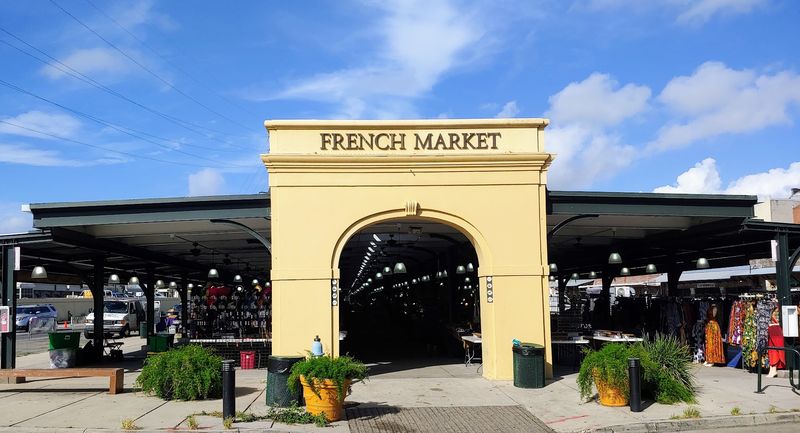
Long before Decatur Street had a name, people were already trading goods on this bend of the Mississippi. The French Market took its first official shape in 1791, and it has kept selling along the river ever since.
Today it stretches about six blocks through the lower French Quarter, mixing pralines, po’boys, flea market tables, art, and live music under old colonnades. Its story says a lot about how New Orleans grew, and it still makes a lively place to spend a morning.
Six Blocks Along Decatur Street
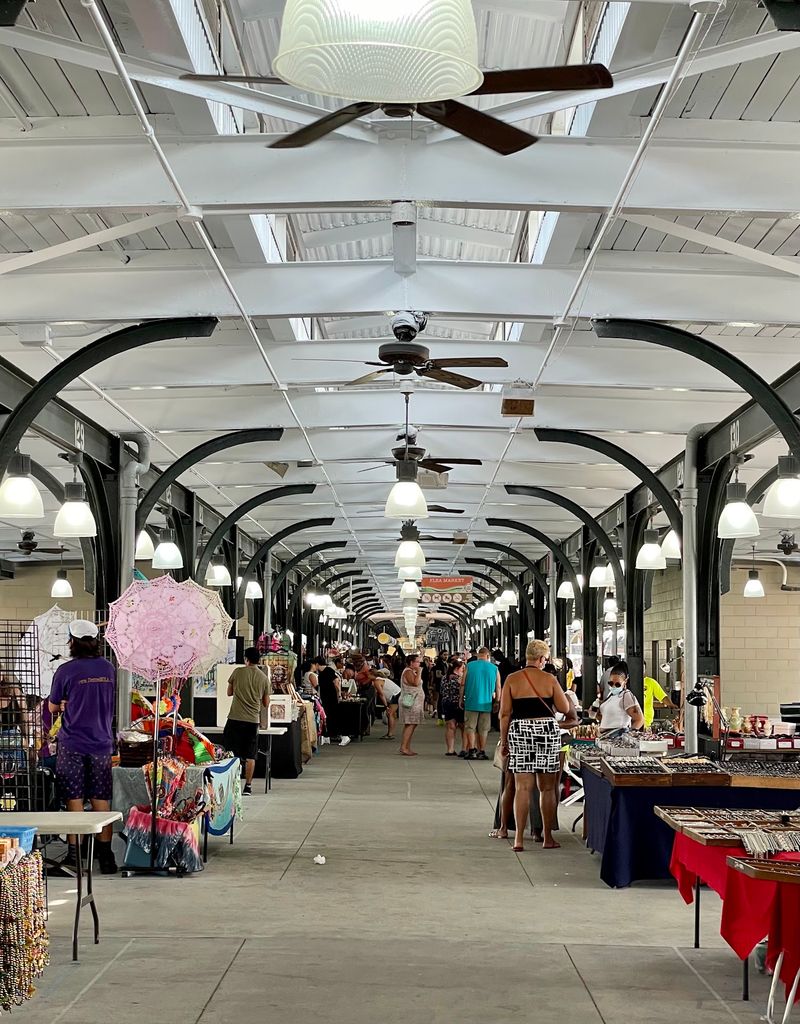
Picture a long, covered corridor running beside the river, with Jackson Square at one end and Esplanade Avenue at the other. That stretch of roughly six blocks is the French Market District, following Decatur Street and North Peters Street as they curve with the Mississippi.
The market’s main address is 1008 N Peters St, in the lower French Quarter. From most Quarter hotels, it is an easy walk, and the levee sits just a few steps beyond the stalls.
Visitors often describe the place as a giant open-air bazaar, which is fair, though it also holds permanent shops, cafes, and a farmers market section.
What surprises many first-timers is how the offerings change as you walk. The upriver end leans toward food, with stands selling seafood, beignets, and local snacks.
Further along, the flea market tables take over, packed with jewelry, T-shirts, crafts, and the kind of souvenirs that only New Orleans would think to sell.
The roofline does a lot of quiet work here too. Covered sheds keep off the worst of the sun and the sudden afternoon showers, so browsing stays comfortable even when the Quarter’s sidewalks feel like a griddle.
Some shoppers say it feels noticeably cooler than standing out in the street.
Bulbancha, The Place Of Many Tongues
Trading on this riverbank did not begin with the French or the Spanish. Native nations, including the Oumas and the Choctaw, used the site as a gathering and exchange point well before European ships arrived, and the area has been called Bulbancha, often translated as the place of many tongues.
When Jean-Baptiste Le Moyne de Bienville founded New Orleans in 1718, he arrived at a spot that already worked as a commercial hub. Historical accounts describe the Oumas trading with travelers along the southern riverfront.
The Oumas and Tchouchoumas nations had also kept a market along Bayou Saint John, and over time those trading spaces folded into the area now known as the French Market.
That mix of languages and cultures set a pattern that never really went away. Choctaw vendors later became known for selling herbs and spices at the market, contributions that fed straight into the city’s kitchens.
Thinking about the market this way changes how a walk through it feels. The souvenir stands and food stalls sit on ground that has hosted bargaining, bartering, and haggling for far longer than the buildings themselves have existed.
The roof is newer, but the habit of meeting here to swap goods is very old.
How 1791 Made The Market Official
Here is a twist worth knowing: the French Market became official while Spain was running the city. By the late 1700s, Spanish officials governing Louisiana began turning informal river trading into something structured, guided by colonial regulations known as the Indian Law Compilation.
In 1791, the first market structure went up on the riverside of the levee between St. Ann and Dumaine Streets. Early descriptions place these open-air stalls between the water’s edge and the first row of houses, which tells you how closely the city hugged the river at the time.
That general location has remained the core of the market for more than two centuries.
The early years were rough on the buildings. A hurricane in 1812 wrecked some of the first structures and briefly left the city without a formal trading space.
Rather than ending the market, the storm pushed the city toward sturdier construction.
The name stuck partly because of the city’s French roots and the French-speaking population that shopped there. Flags changed from Spain to France to the United States, but people kept coming to the same strip of riverbank to buy their food.
That steady use is what backs up the market’s claim as one of the oldest public markets in the country.
The 1813 Meat Market Building
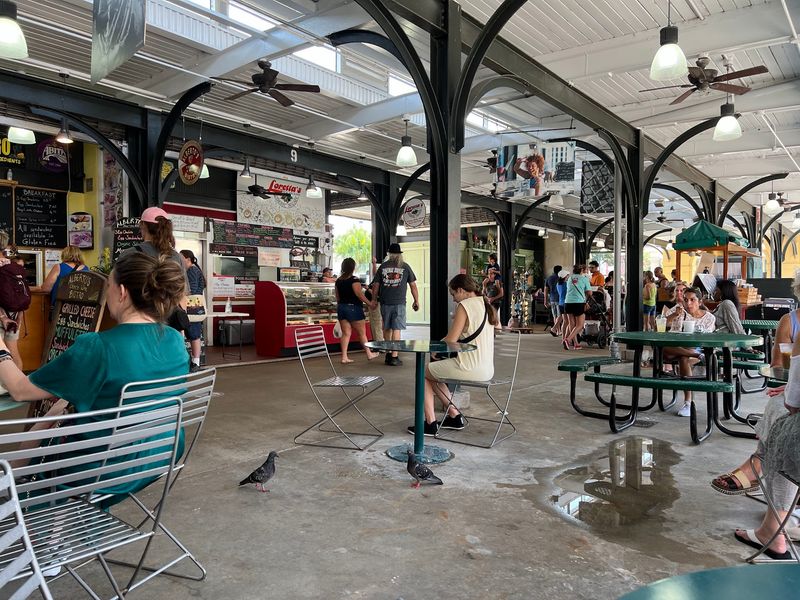
Few buildings in New Orleans have outlasted as much weather as the old Meat Market. Known in French as Le Halle des Boucheries, it was formally built in 1813 by the firm of Gurlie and Guillot, working from designs by City Surveyor Jacques Tanesse.
The structure went up right after the 1812 hurricane, and it was meant to last. It did.
More than two hundred years later, it still stands at the upriver end of the market, a short walk from Jackson Square.
Most people now know it by a different name entirely. The building is home to Cafe du Monde, which has served beignets and cafe au lait in the market since 1862.
Many visitors line up for powdered sugar without realizing they are sitting inside one of the oldest pieces of the original market complex.
That reuse is a very New Orleans kind of preservation. Instead of becoming a museum piece behind a velvet rope, the old butchers’ hall kept feeding people, just with a different menu.
Fried dough replaced cuts of beef, and the arches that once shaded meat vendors now shade a rotating crowd of coffee drinkers.
Next time the sugar lands on your shirt, glance up at the columns overhead.
Vegetable Sheds, Red Stores, And A Pioneering Architect
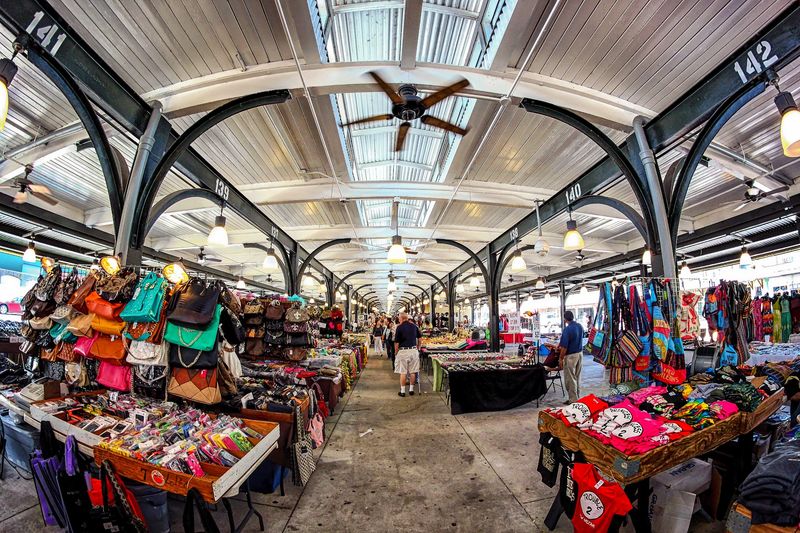
Growth came quickly once the Meat Market was standing. Between 1822 and 1830, City Surveyor Joseph Pilie designed and oversaw construction of a dedicated Vegetable Market, a building that still serves the market today.
Around 1833, the city added a group of buildings called the Red Stores, placed between the Vegetable Market and the levee. These additions turned a few separate structures into something closer to a full marketplace, sized for a port city that was booming with river traffic and new residents.
The most interesting chapter may belong to 1870. That year, a new Bazaar Market facility opened, designed by Joseph Abeilard, recognized as one of America’s first African American architects.
Accounts of the building single out how well lit and practical it was, offering a central space for a wide range of goods.
African American vendors were central to the market’s commercial life as well. They helped popularize coffee, pralines, and calas, the rice fritters that were a common New Orleans street food in the 1800s.
The market’s place on the Louisiana African American Heritage Trail recognizes those contributions.
Walking the length of the market, you are moving through several different eras of design, each one added as the city’s needs changed.
Colonnades From The WPA Era
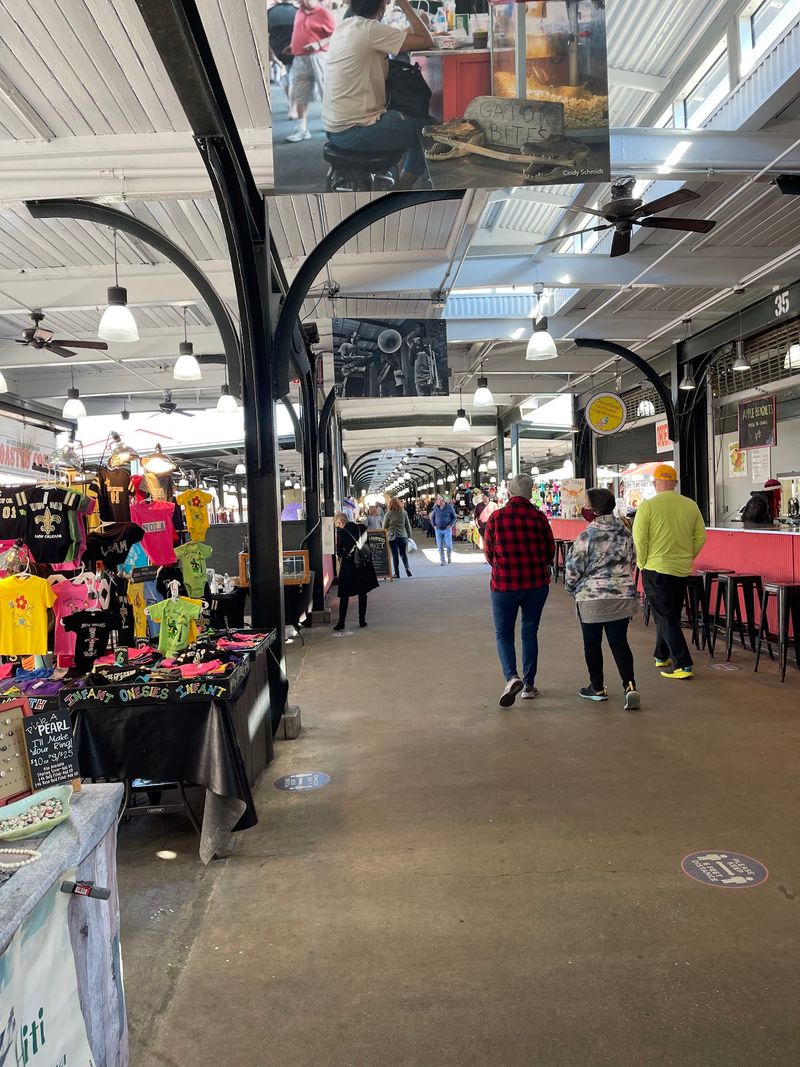
Those long rows of columns that show up in so many photos owe a lot to the Great Depression. In the 1930s, the Works Progress Administration carried out major renovations at the French Market, rebuilding infrastructure and giving the district the colonnade look it carries today.
The work was practical as much as decorative. The WPA project also gathered the area’s wholesale fruit and vegetable businesses into a more centralized facility, which made the market run more efficiently.
By the late 1800s, Sicilian immigrants had become a major presence in that fruit and vegetable trade. Their work shaped the produce side of the market for generations, and that heritage still shows up in the stalls today.
More rounds of change followed later in the century. Mayor Maurice Moon Landrieu pushed a revitalization in the 1970s, and Mayor Ernest N.
Dutch Morial continued improvements through the 1970s and 1980s. Those efforts helped turn the market into the managed district visitors walk through now.
The result is a place that has been rebuilt again and again without losing its basic purpose. Each era left a layer, from Spanish open sheds to brick halls to Depression-era columns, and the selling never stopped long enough for the place to go quiet.
Gator On A Stick And Other Food Stall Favorites
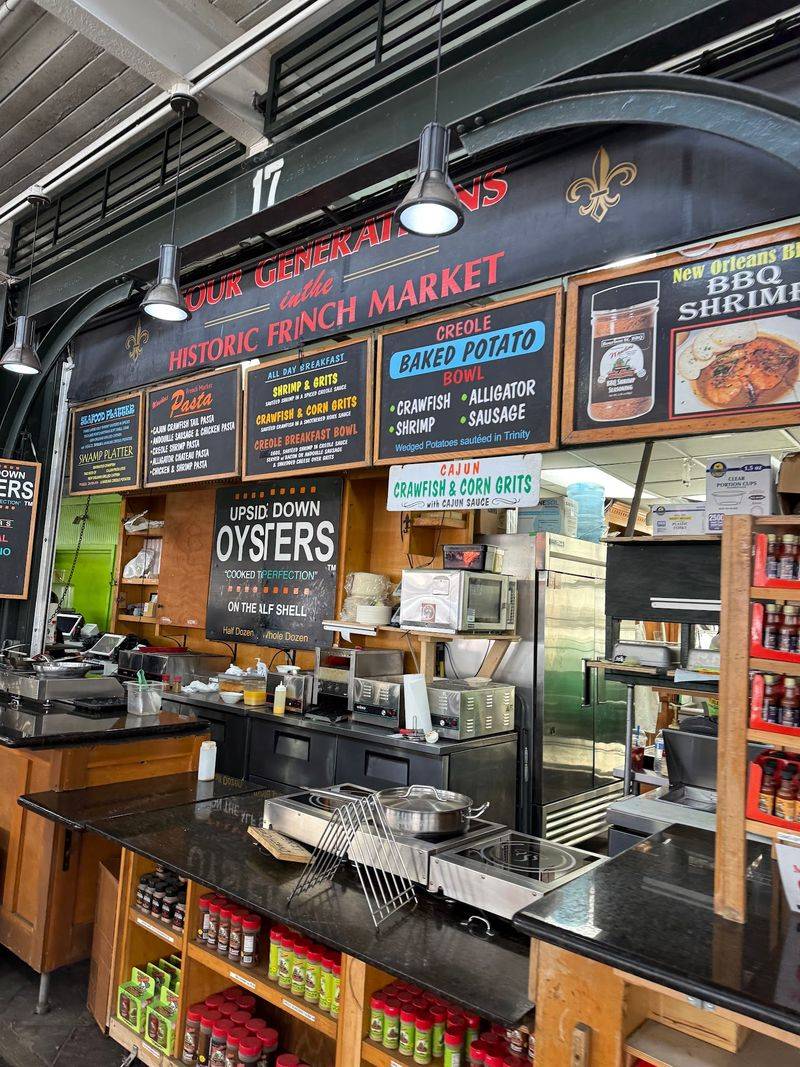
Hungry shoppers tend to drift toward the food end first, and it is easy to see the pull. Stands here serve gumbo, muffulettas, po’boys, and plenty of seafood, which visitors note makes up a large share of the choices.
Alligator gets a lot of attention. One stand, N’Awlins, has drawn praise for gator on a stick, frog legs, a gator po’boy, gator bites, and shrimp and grits.
Holy Crepes! offers frozen cold brew and frozen basil lemonade, and Loretta’s turns out praline beignets that shoppers single out.
Prices are worth checking before you order. One visitor reported paying about $15 for an order of four gator bites and wished the menu had been easier to see, since the QR code would not open.
Not everything has to be a full meal. Snacking your way down the corridor is a fine strategy, especially with tables and shady spots scattered along the route.
Cafe du Monde anchors the upriver end with beignets and cafe au lait, so a sweet finish is never far away. Between the stalls and the cafe, the market can easily stand in for lunch, as long as you are fine eating with your fingers and watching the river crowd go by.
Pralines, Hot Sauce, And The Farmers Market
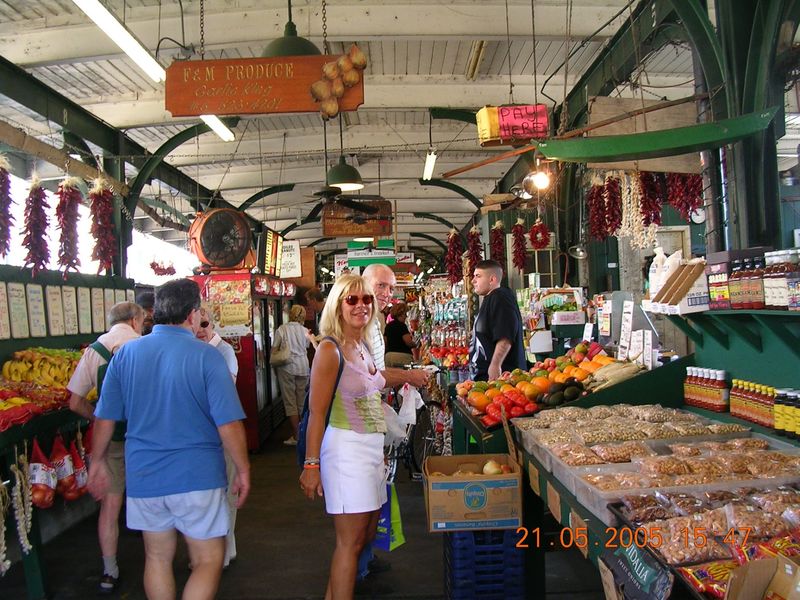
Sugar, pecans, and butter have a long history on this riverbank. Pralines show up again and again in what shoppers talk about, and they rank among the most mentioned items at the market.
The Farmers Market section is where those sweets share space with Louisiana produce, Gulf seafood, hot sauces, and Creole spice blends. A lot of visitors use this stretch to stock up on edible gifts that travel well, since a bottle of hot sauce survives a suitcase better than a po’boy.
Seasonal timing matters here. The market’s calendar includes the French Market Creole Tomato Festival, which celebrates one of the most anticipated local crops of the year.
Visitors who caught it describe wandering through food and music on a summer weekend.
Morning visits, especially on weekdays, tend to bring a calmer pace and the freshest produce. Later in the day, some sellers are already packing up, which matters if you have a specific item in mind.
For anyone curious about the market’s food roots, this section connects most directly to them. Pralines and calas were sold here by African American vendors in the 1800s, and Choctaw sellers brought herbs and spices.
The products on today’s tables are modern, but the habit of buying a sweet treat by the river is not.
Flea Market Tables Full Of Beads And Gator Heads
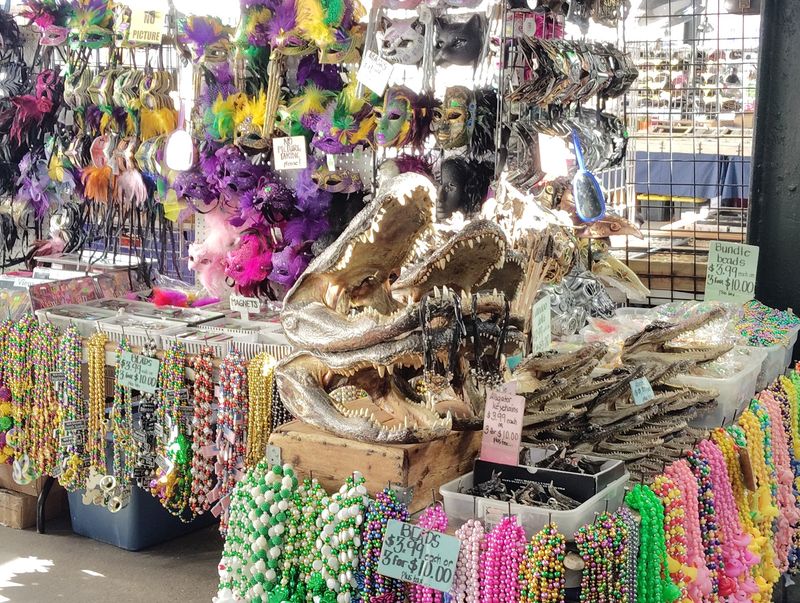
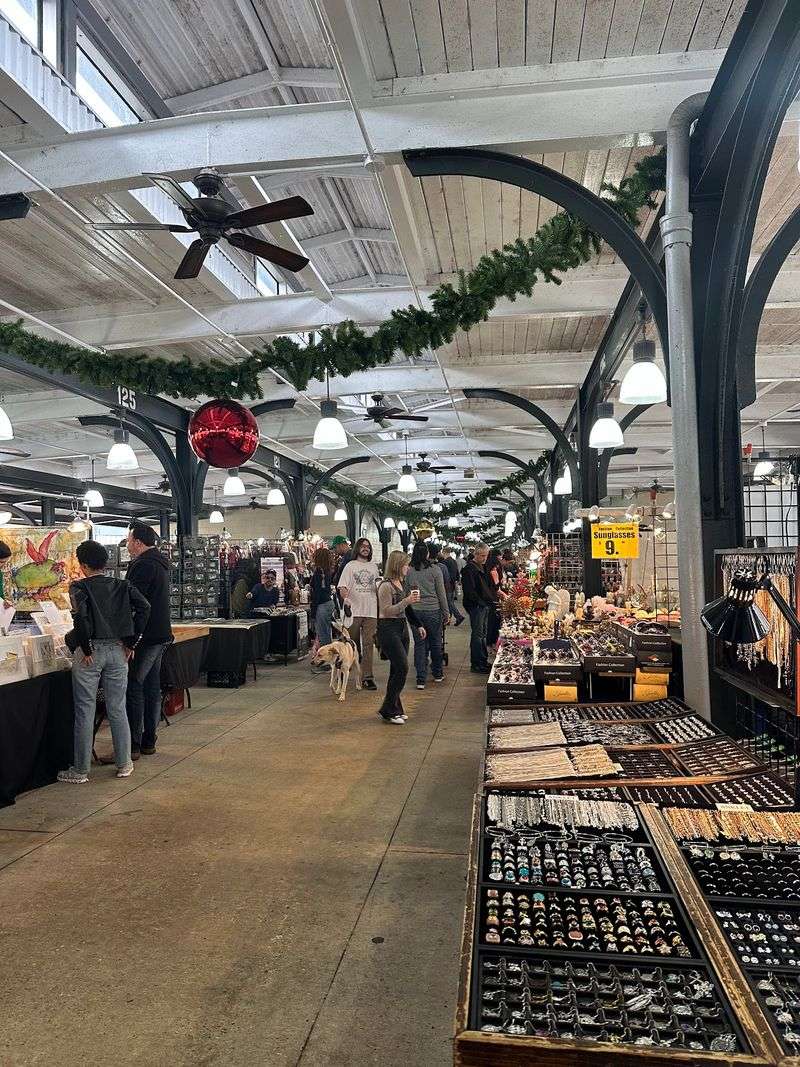
Somewhere between the hoodies and the handmade earrings, you will probably spot a row of grinning alligator heads. They are one of the market’s stranger signature souvenirs, sold alongside every style of Mardi Gras beads imaginable.
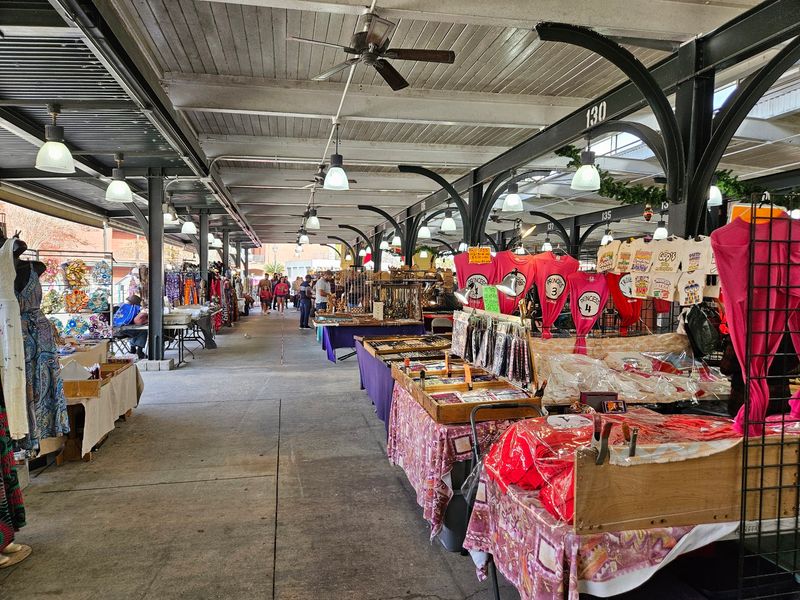
Souvenirs are the single most talked-about subject among shoppers, and the flea market is where most of them live. Tables carry NOLA-branded shirts, hoodies, jewelry, leather goods, secondhand clothes, ornaments, art, and imported crafts.
One shopper found souvenir T-shirts for $10, and another bought a dress for a wedding.
Variety has limits, though. Several visitors point out that the same types of goods repeat from booth to booth, and one noted you may need to wade past mass-produced items to find local craftspeople.
Two or three vendors may sell similar things at different prices.
A little strategy pays off here:
Walk the full length before buying, compare prices, and treat the first number as a starting point. One shopper advised caution if a vendor tries to put jewelry on you or your children before quoting a price.
Cash helps too. Some vendors accept apps like Cash App, Zelle, or Venmo, but asking first saves confusion at the table.
Shops Of The Colonnade And Longtime Vendors
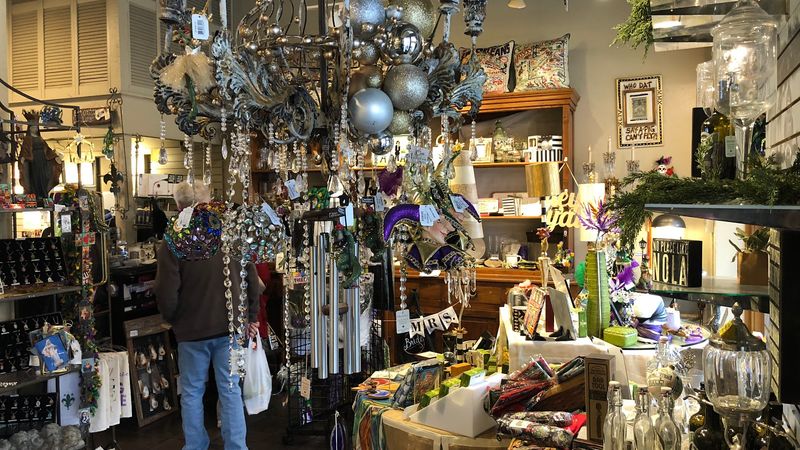
Prefer four walls and a door to an open table? The Shops of the Colonnade offer a more structured way to shop, with boutiques selling local artwork, jewelry, apparel, gourmet sweets, and home decor.
Fleur de lis designs show up everywhere in this section, on pillows, ornaments, and household pieces with a clear New Orleans stamp. It is a good stretch for gifts that look a little more polished than a novelty shirt.
Some vendors have deep roots in the market. Latin’s Hand has operated for more than three decades, selling Latin American craftsmanship from countries such as Ecuador, Peru, and Mexico, including woven hammocks and colorful backpacks.
Then there is Awa Thioubou, known around the market as the Godmother of the Market. She has sold West African clothing and jewelry here for about 25 years, a reminder that the international mix in this market is not just history.
Shoppers often say the best finds come from local people selling their own work and crafts. Taking time to talk with sellers tends to reveal where an item was made and who made it.
Many visitors describe the vendors as friendly and helpful, which makes those conversations easy to start, even on a busy afternoon.
Dutch Alley, Jazz, And Working Artists
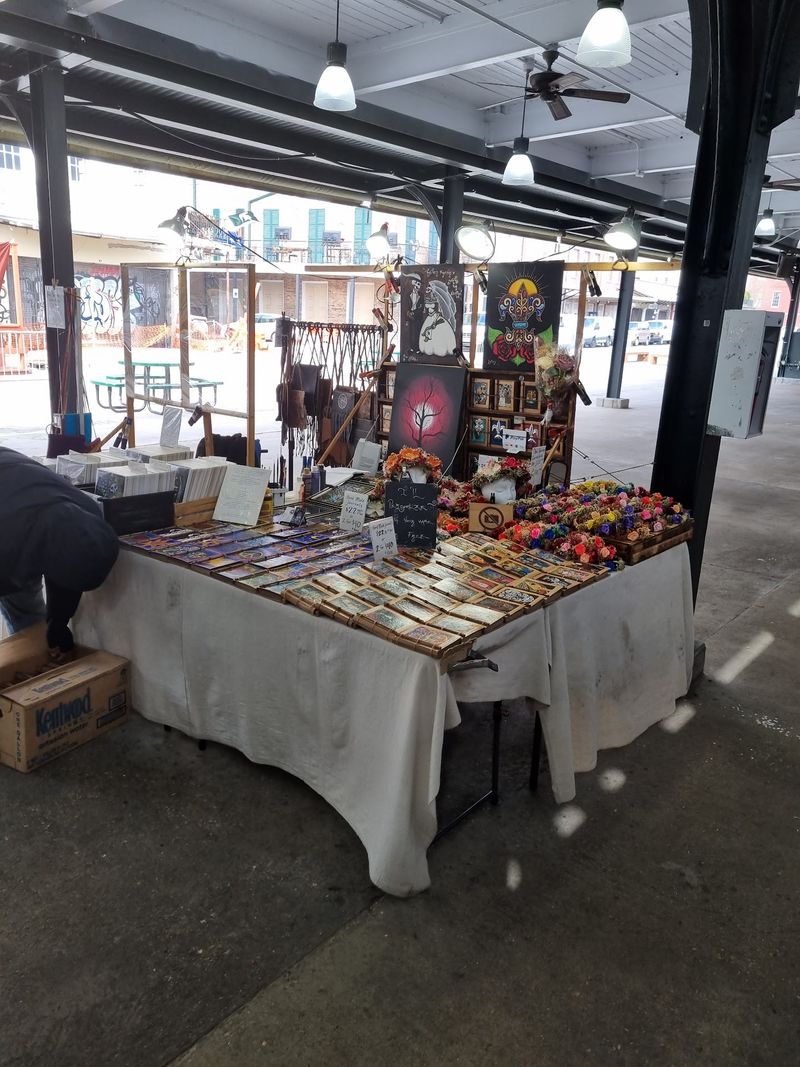
Music has a way of finding you here. Shoppers mention live jazz bands, talented players performing at noon on a Monday, dance performances, and painters working in the open air.
Much of that creative energy gathers around Dutch Alley, a promenade in the French Market District set aside for public art and cultural programs. The New Orleans Jazz National Historical Park keeps its office and visitor center in the district, offering educational programs about the city’s music.
Down the same alley, the Dutch Alley Artists Co-Op runs an artist-owned gallery showing work from 25 local artists. Jewelry, paintings, prints, and mixed-media pieces fill the space, and visitors often get to meet the people who made them.
That direct contact separates this corner from the flea market. Instead of guessing where a piece came from, you can ask the artist about it.
Shoppers also say painting prices outside can be surprisingly low, so art lovers on a budget should keep their eyes open. Even if you buy nothing, the sound of a brass line drifting across the stalls changes the mood of the whole market.
It is one of the clearest reasons to slow down rather than rushing toward the next souvenir stand.
A Festival Calendar From Satchmo To St. Nicholas
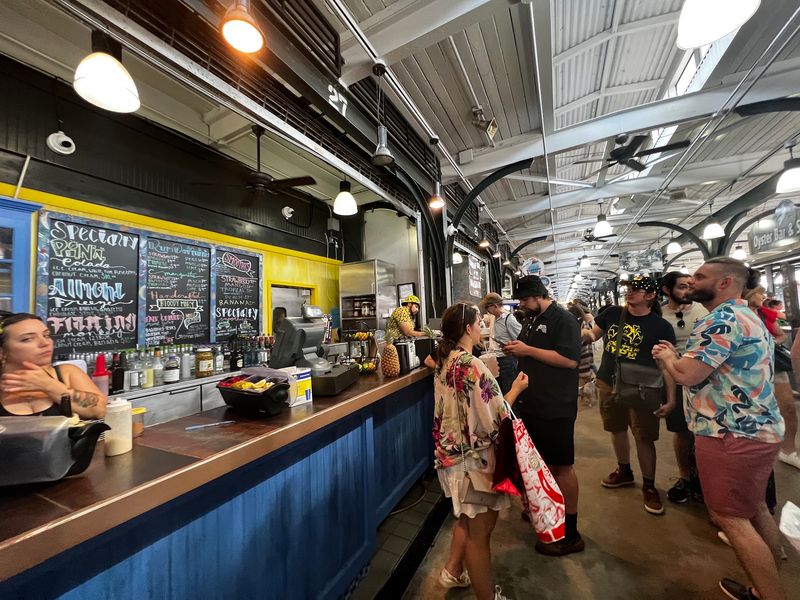
Some weekends, the market turns into a stage. Throughout the year it hosts concerts, cooking demonstrations, and seasonal festivals that pull crowds into the lower Quarter.
French Quarter Festival spreads local music and food across the whole neighborhood, and the market sits right in the middle of it. Summer brings the French Market Creole Tomato Festival and Satchmo Summerfest, which honors Louis Armstrong.
Fall has the Boo Carre Halloween and Harvest Festival, a playful name that riffs on the Vieux Carre. December winds down with the St. Nicholas Day Fair.
One visitor also recommends New Year’s Eve, when fireworks can be enjoyed from the riverside.
Festival days change the experience a lot:
Expect bigger crowds, more music, and more food options, but also heavier foot traffic and tougher parking. If you prefer quiet browsing, check the calendar on the market’s website before planning a trip.
The events also tie back to the market’s old role. For centuries, people came here to make groceries and catch up with neighbors.
Festivals keep that gathering habit alive, giving residents reasons to return to a place many visitors only see once. A tomato festival in a two-hundred-year-old market is a pretty fitting way to celebrate local produce.
Hours, Timing, And Getting There
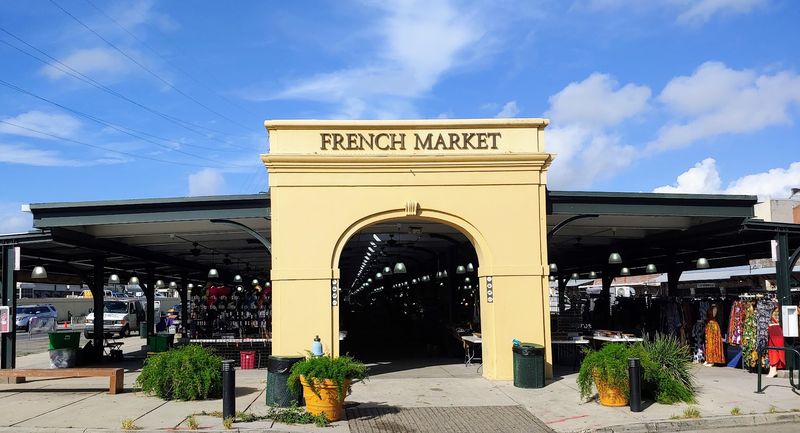
Timing is the single most useful tip. The French Market is listed as open daily from 10 AM to 6 PM, and the market notes it opens even on holidays, though individual shops and eateries may keep their own hours.
Arriving late can be disappointing. One visitor showed up around 4:30 PM and found quite a few vendors already packing up.
Another came near closing on a Tuesday and still found nice shirts in a relaxed setting, so late visits are a gamble rather than a lost cause.
Plan on two to three hours to browse, eat, and walk the riverfront. A half day is reasonable if you add nearby sights.
Getting there on foot from the Quarter is simple. The streetcar also makes it easy to reach, and visitors praise that option.
Driving is another story, since some shoppers describe traffic and parking as frustrating, especially with construction underway.
A few practical notes from shoppers help. Restrooms have been described as clean, the covered areas cut the heat, and bringing cash avoids hassles.
The main phone number is 504-636-6400, and the website, frenchmarket.org, lists shopping and events. Dress for warm weather either way, because even shaded aisles get sticky in summer.
Why The River Still Sets The Scene
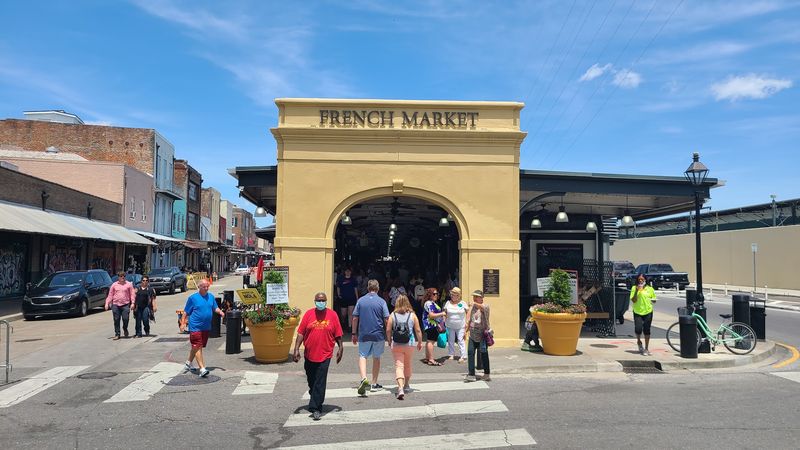
Step out from under the colonnade and the Mississippi is right there, wide and brown and busy with barges. That view explains the market better than any plaque.
Every era of this place came from the river. Native traders met here because of it, Spanish officials built sheds beside it, and the 1812 hurricane that tore up early buildings came with it.
Even the curve of Decatur Street follows the water.
After shopping, the Moonwalk boardwalk offers river breezes and a front-row seat to passing boats. Jackson Square and St. Louis Cathedral sit at the upriver end, and Crescent Park extends riverside walking further downriver.
Is the market for everyone? Not exactly.
Some visitors find parts of it crowded or repetitive, and one noted cleanliness complaints. Shoppers who enjoy bargaining, snacking, and people watching tend to have the best time, with one saying just walking around was entertainment enough.
Still, few places in Louisiana let you buy a praline on ground where people have traded since before the city existed. Grab something sweet, find a bench by the levee, and watch the river do what it has done for centuries here, bringing people and goods to the same spot.