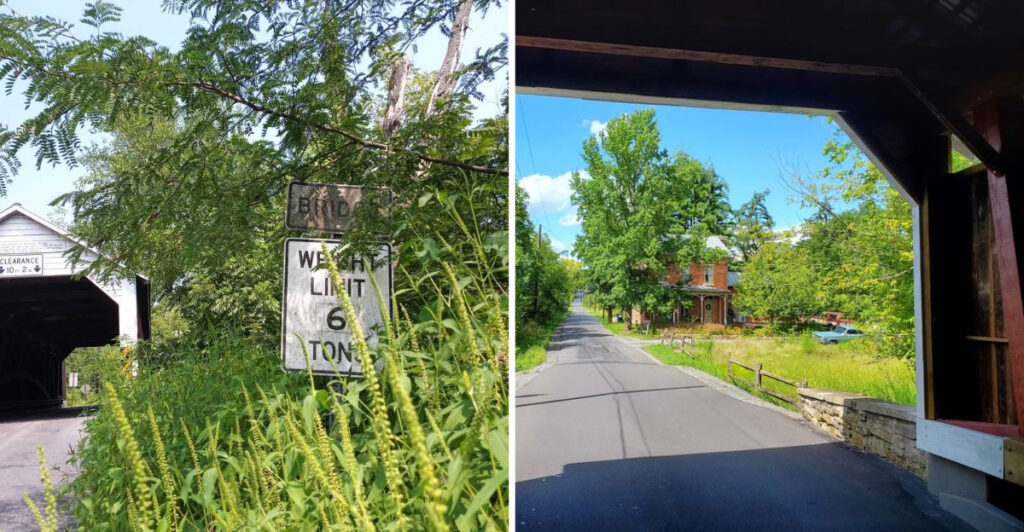
Pennsylvania history comes with a roof and still carries traffic.
This wooden crossing has been spanning Buffalo Creek since 1825, making it the oldest surviving covered bridge in the state. It reached its 200th anniversary in 2025, yet vehicles can still roll through the same covered span.
The bridge stretches about eighty feet across the creek and uses a Burr arch-truss design. A 2022 rehabilitation refreshed the roadway while keeping the historic structure in service.
Pennsylvania has more than two hundred covered bridges, but none reaches farther back.
Drive beneath the timber roof, cross the creek, and you are following a route people have used for two centuries.
Two Centuries Of History Still Cross Buffalo Creek
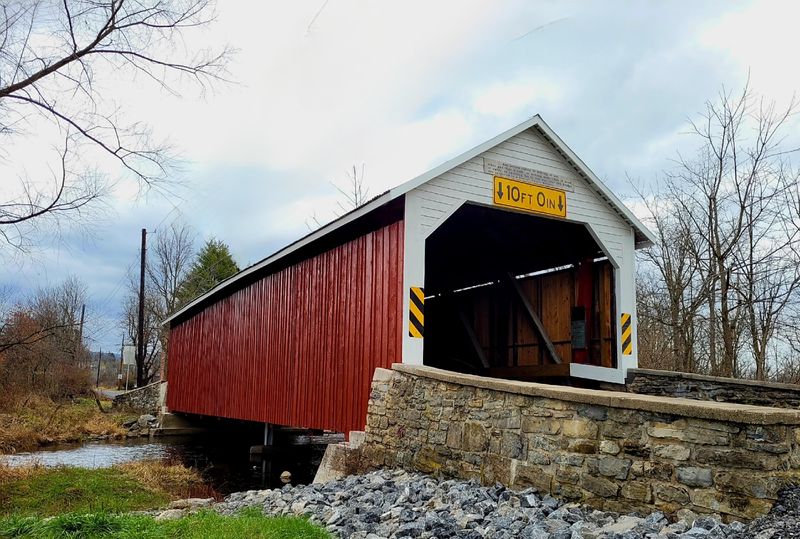
Two hundred birthdays usually call for cake. This bridge received new historical markers and a community celebration instead.
Hassenplug Covered Bridge was built in 1825 over Buffalo Creek in Mifflinburg. Its National Register record lists 1825 as the significant construction year, placing the span among the earliest surviving covered bridges in the country.
The bridge celebrated its bicentennial in August 2025. Historical markers were installed near both ends, adding details about the span, its National Register status, and its two centuries of service.
Its age becomes easier to picture when you think about what transportation looked like when travelers first crossed here. Horses, wagons, dirt roads, and small-town routes shaped daily movement through central Pennsylvania.
Buffalo Creek still runs beneath the same crossing today. The covered roadway creates a short shadowed passage while the wooden sides and roof frame the creek landscape around it.
You do not have to admire Hassenplug from a distance. You can stand beside it, walk through it, and watch modern traffic use a route first opened in the nineteenth century.
The calendar has moved on. The bridge keeps carrying the story forward.
Pennsylvania’s Oldest Covered Bridge Still Carries Traffic
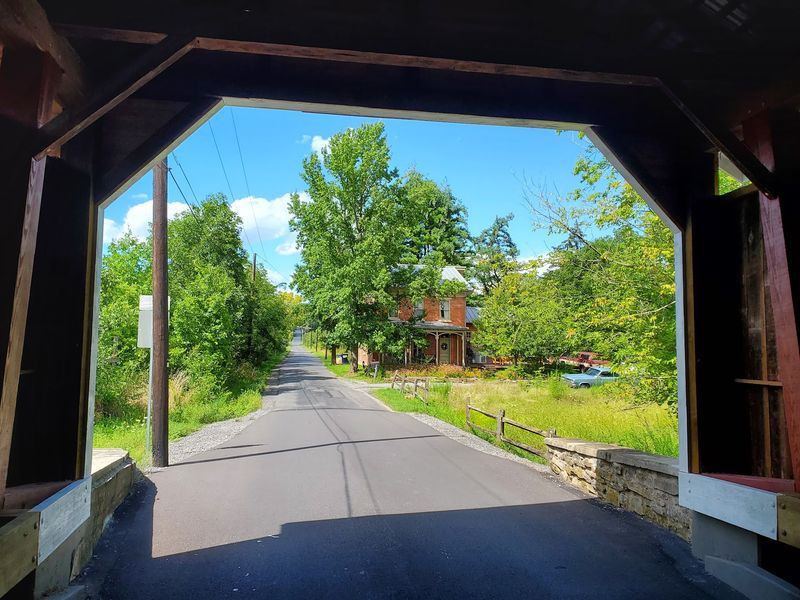
Pennsylvania is famous for covered bridges, but only one gets to stand first in line by age.
Hassenplug is recognized as the oldest surviving covered bridge in the Commonwealth. It was listed on the National Register of Historic Places on February 8, 1980, as part of Union County’s historic covered-bridge collection.
New York’s Hyde Hall Covered Bridge also dates to 1825, so Hassenplug belongs among the country’s oldest surviving covered bridges rather than standing alone as the undisputed oldest.
Its working status makes the Mifflinburg span especially unusual. It is recognized as the oldest covered bridge in the United States that still allows both pedestrian and vehicular traffic.
Drivers continue to enter the narrow wooden passage, cross Buffalo Creek, and continue along North Fourth Street. Pedestrians can also pass through while staying alert for vehicles sharing the span.
You can find the bridge on North Fourth Street, Mifflinburg, Pennsylvania 17844, just north of the borough’s central streets.
The crossing lasts only moments by car. Its timeline stretches back two hundred years.
The Burr Arch Truss Does The Heavy Lifting
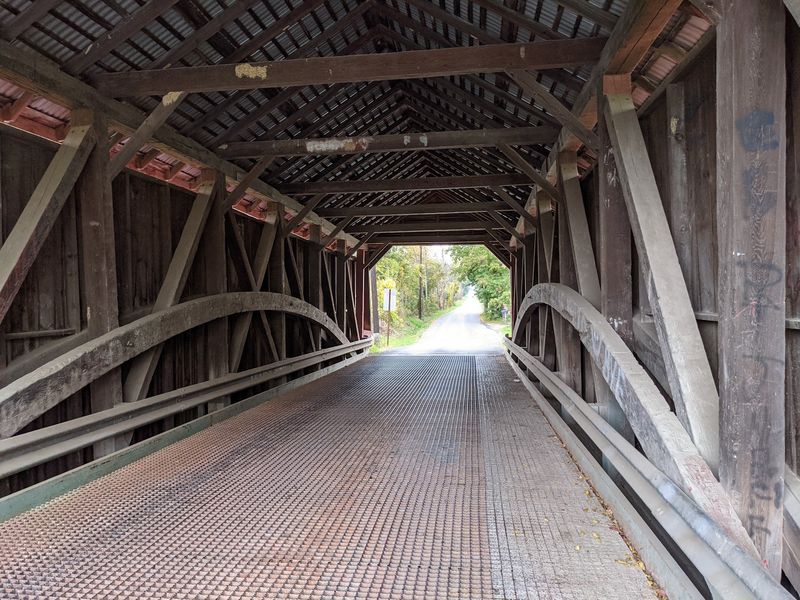
Look inside and the bridge begins explaining how it has stayed upright for so long.
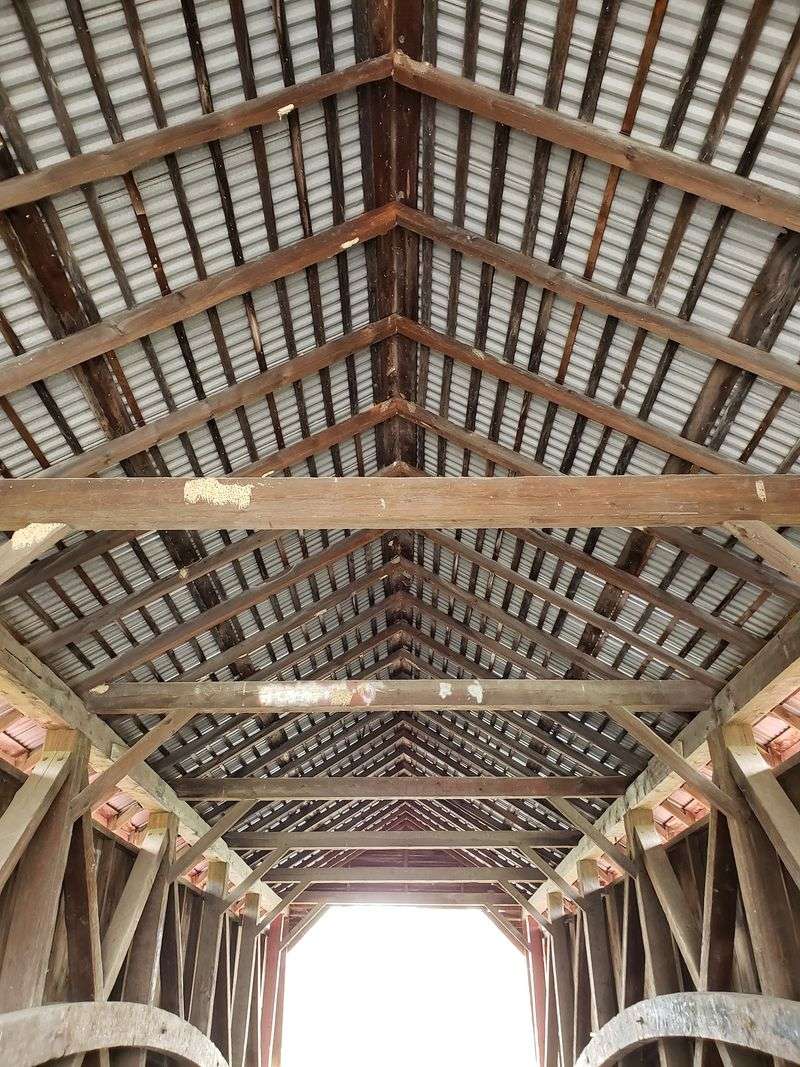
Hassenplug uses a Burr arch-truss system, a form developed by bridge builder Theodore Burr in the early nineteenth century. The design combines a timber truss with large curved wooden arches running along the sides of the span.
Those arches are easy to spot once you know where to look. They rise through the interior framework and give the bridge its most distinctive structural feature.
Burr patented an influential version of the system in 1817. The form went on to become one of the most widely used designs among surviving nineteenth-century covered bridges in Pennsylvania.
Hassenplug’s span measures about eighty feet and crosses Buffalo Creek in a single covered section. Wooden members, siding, connections, and the enclosed roadway give you a close look at construction from an era before steel highway bridges became ordinary.
The roof and siding shield much of the timber from direct exposure to rain, snow, and sun, helping protect the wooden structure inside.
Walk slowly through the span and glance toward the sides instead of looking only toward the exit.
The great curves in the timber are the bridge showing its work.
The Hassenplug Name Belongs To A Nearby Family
Some bridge names come from roads. This one came from the neighbors.
The Hassenplug name is tied to the family that lived near the north side of Buffalo Creek. Their brick homestead stood close to the crossing, and the family name became attached to the bridge.
That local name gives the structure a direct connection to the people who once lived beside it. Two centuries later, the surname remains fixed to the crossing and the maps that point visitors toward it.
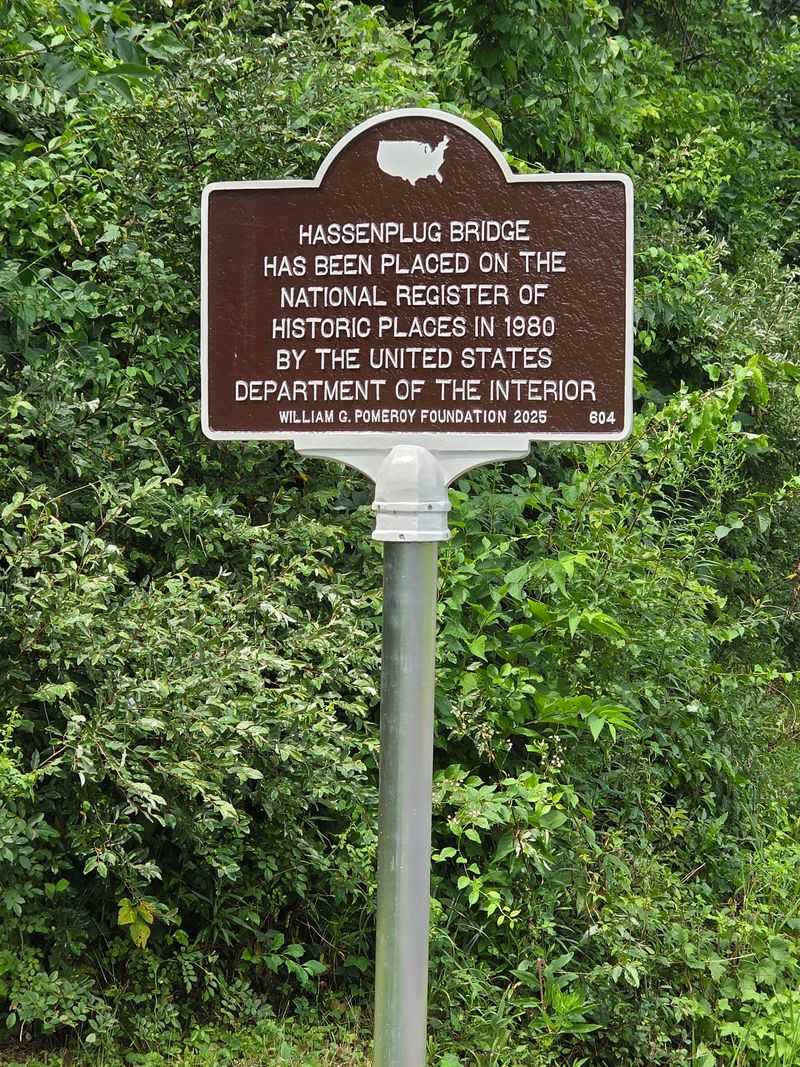
The historical markers installed in 2025 add another layer to the stop. One recognizes the bridge’s National Register listing, while another highlights its age, Burr arch-truss construction, and continued use by pedestrians and vehicles.
The family connection also places the bridge firmly inside Mifflinburg’s story. Houses, farms, roads, and Buffalo Creek all developed around the same crossing as the borough grew.
Seeing the bridge where it was built keeps that setting intact. The creek is still underneath, the old family name remains attached, and North Fourth Street still runs directly through the wooden span.
A surname survived on the map. The bridge made sure nobody forgot where to look.
Wooden Planks Returned During The Latest Rehabilitation
For decades, the drive across Hassenplug sounded more metallic than nineteenth century.
A major rehabilitation completed in 2022 removed the steel-grating roadway and returned a wide wooden driving surface to the bridge. Structural work also replaced deteriorated pieces while preserving much of the existing timber.
The steel floor dated to a 1959 rehabilitation. When the 2022 project was completed, vehicles once again rolled across wooden planks inside the covered span.
The work also included new structural components where needed, including portions of the arches and vertical posts. More than half of the bridge timbers were preserved during the project.
The rehabilitation kept Hassenplug in active use rather than turning it into a stationary display. Cars and pedestrians still share the crossing today.
Look closely and you can see different eras within the structure. Older timber sits beside newer repair work, allowing the bridge to continue serving North Fourth Street without hiding the maintenance that keeps it standing.
The wooden roadway became especially fitting as the bridge approached its bicentennial.
Two centuries have passed beneath the roof. Timber is still carrying the next chapter.
Koons Trail Gives You A Longer Look At The Bridge
Driving through takes seconds. Koons Trail gives you time to turn around and actually look.
The trail begins on North Fourth Street at Hassenplug Covered Bridge and runs for about a mile along Buffalo Creek on both sides of the crossing. Wildflowers, birds, wetlands, and creek views add a natural side to the historic stop.
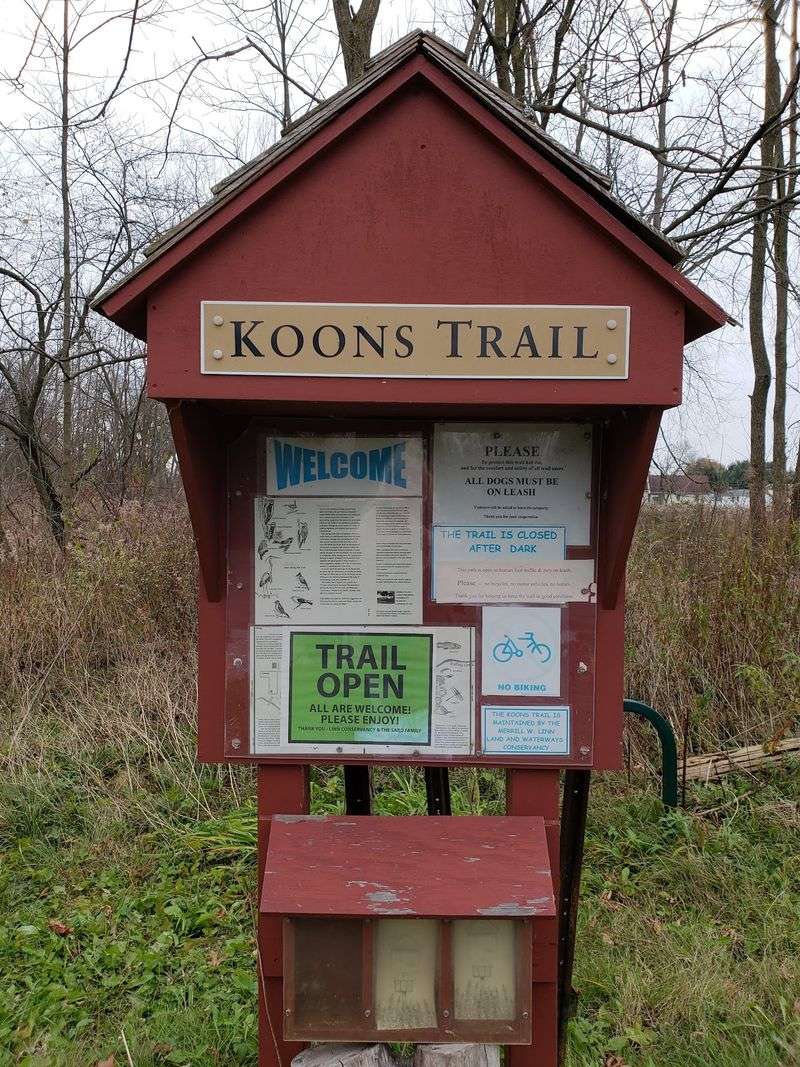
A trailhead kiosk provides information before you begin. North of Buffalo Creek, restored floodplain areas include a wildflower meadow and a wetland overlook.
South of the creek, paths pass through wooded areas and sections known for seasonal wildflowers. The changing landscape makes the walk more than a straight line beside the road.
The trail also gives you room to see the bridge from outside. From farther back, the roofline, siding, creek setting, and approaches are easier to take in than they are from inside the enclosed roadway.
You do not need to turn the stop into a major hike. About a mile gives you enough room to stretch your legs, follow the water, and see how naturally the bridge sits within the surrounding landscape.
Drive through once if conditions allow. Then slow everything down and let the bridge take longer than ten seconds.
Downtown Mifflinburg Adds More History Beyond The Bridge
Once the bridge has pulled you off the main route, Mifflinburg gives you reasons not to rush away.
The borough center lies a short distance south of Hassenplug along North Fourth Street. Historic buildings, local businesses, and small-town streets continue the nineteenth-century atmosphere beyond Buffalo Creek.
Mifflinburg became an important center of buggy and carriage manufacturing, and that history remains visible at the Mifflinburg Buggy Museum.
The connection works naturally with a covered bridge built during the era of horse-drawn travel. One stop preserves the crossing, while the other explores the vehicles and workshops that helped shape transportation in the town.
Union County also has other historic covered bridges, including Hayes Bridge, giving you the option of extending the afternoon into a broader tour of the county’s wooden crossings.
The surrounding farmland and small communities keep the drive connected to the rural landscape around Hassenplug. North Fourth Street can quickly lead you from town into open country.
Hassenplug remains the oldest bridge in the county’s collection and the one that reached the remarkable two-century mark in 2025.
Cross it, follow Buffalo Creek for a while, explore Mifflinburg, and take one last look before leaving.
Two hundred years after its first crossings, Hassenplug Covered Bridge still lets Pennsylvania history roll straight through.