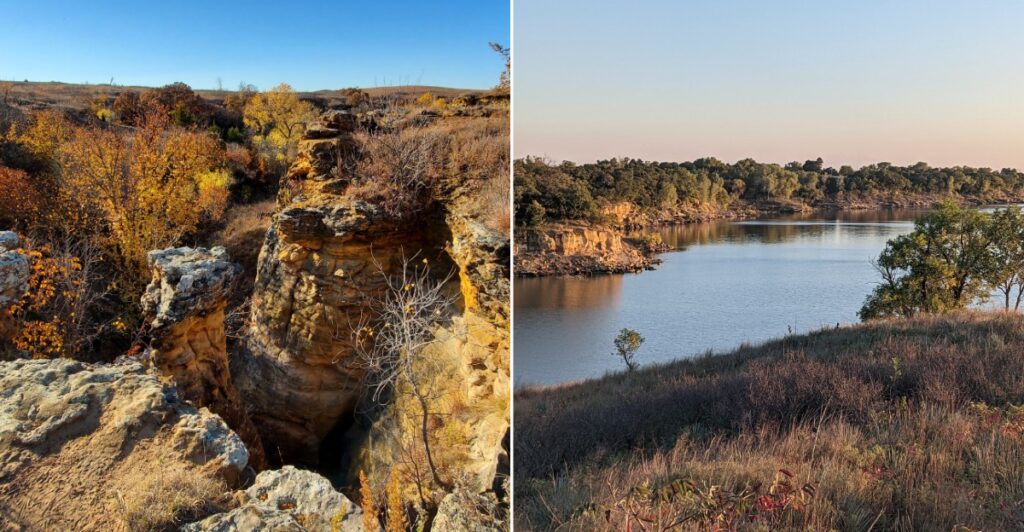
Outlaws once hid stolen horses inside a canyon here, according to local legend. The canyon still has caves, crevices, and red rock walls to explore.
The sandstone formed about 100 million years ago. Back then, an ancient inland sea covered much of North America.
Now those old beach sands rise as towering bluffs above a prairie lake. Kansas surprises people who expect only flat fields.
This corner of the state hides canyons, hand-carved pioneer caves, and rock art carved long ago. I like how one park can feel like a road trip through time.
Fall makes it even better, with golden grasses and cooler trails.
Winter can bring bald eagles fishing near the river. So why wait for snow to close the window on a place this strange and beautiful?
You Are Standing In The Place Where Kansas State Parks Began
Every Kansas state park has a family tree, and Kanopolis State Park sits at the very top. Kansas authorized its first state park in 1958 and officially dedicated it on May 30, 1959.
The story starts even earlier with the water. Kanopolis Lake became Kansas’s first major federal reservoir when construction was completed in 1948.
The U.S. Army Corps of Engineers built the reservoir primarily for flood control.
That big project later opened the door for a park along its shores. So a plan to tame floods ended up creating a playground.
Not a bad plot twist.
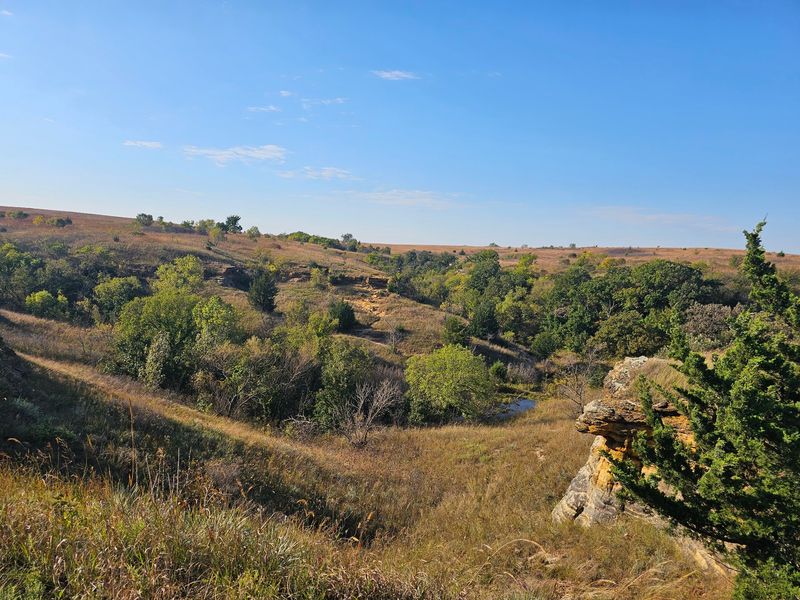
The park sits in the Smoky Hills region of central Kansas, southwest of Salina. Rolling hills, bluffs, woods, and prairie surround the lake.
Getting there is easy enough for a weekend drive. The park office address is 200 Horsethief Rd, Marquette, KS 67464.
The park stays open year-round, which matters for late-season trips. Some facilities may close for winter, so check ahead before you pack the car.
The office generally operates Sunday through Friday from 8 AM to 4 PM. Stop in if you need a paper trail map.
Park staff can point out trail conditions and crossing tips. That kind of local knowledge beats guessing every single time.
Those Red Cliffs Started As Beach Sand By An Ancient Sea
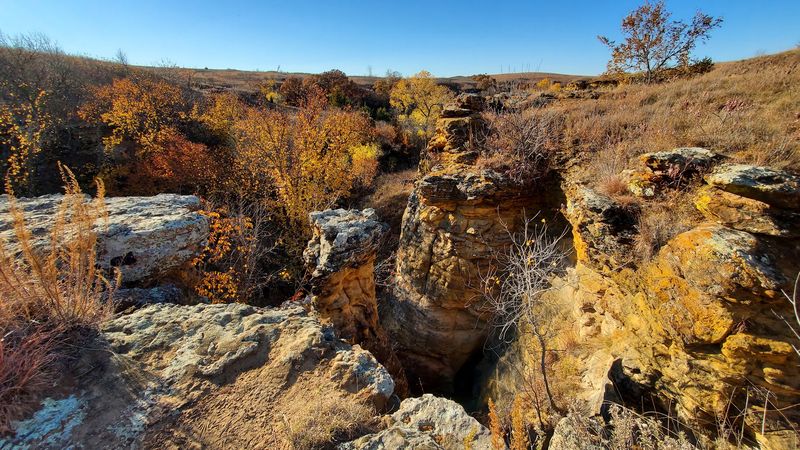
About 100 million years ago, waves lapped against sandy shores right where you’d stand today. An inland sea covered much of North America back then.
That sandy sediment slowly hardened into stone. Today it rises as the Dakota sandstone bluffs that make this park famous.
The rocks glow in shades of red and orange. Older layers from the Kiowa Formation add to the story beneath them.
Geology class never looked this good.
Deep canyons and rugged rock formations cut through the landscape. It’s the kind of terrain that makes people double-check that they’re still in Kansas.
Fall is a smart time to see the cliffs. Golden prairie grasses frame the warm-colored rock, and that contrast is great for photos.
Bring a camera with plenty of battery life. Early morning and late afternoon light can make the sandstone look extra rich.
Sturdy shoes are a must on the rocky ground. Some areas are sandy and uneven, so slow steps are your friend.
Keep an eye on where you put your hands when climbing. Poison ivy and snakes can share these spaces, especially in warmer months.
A little caution keeps the adventure fun.
Horse Thieves Picked A Pretty Great Hideout
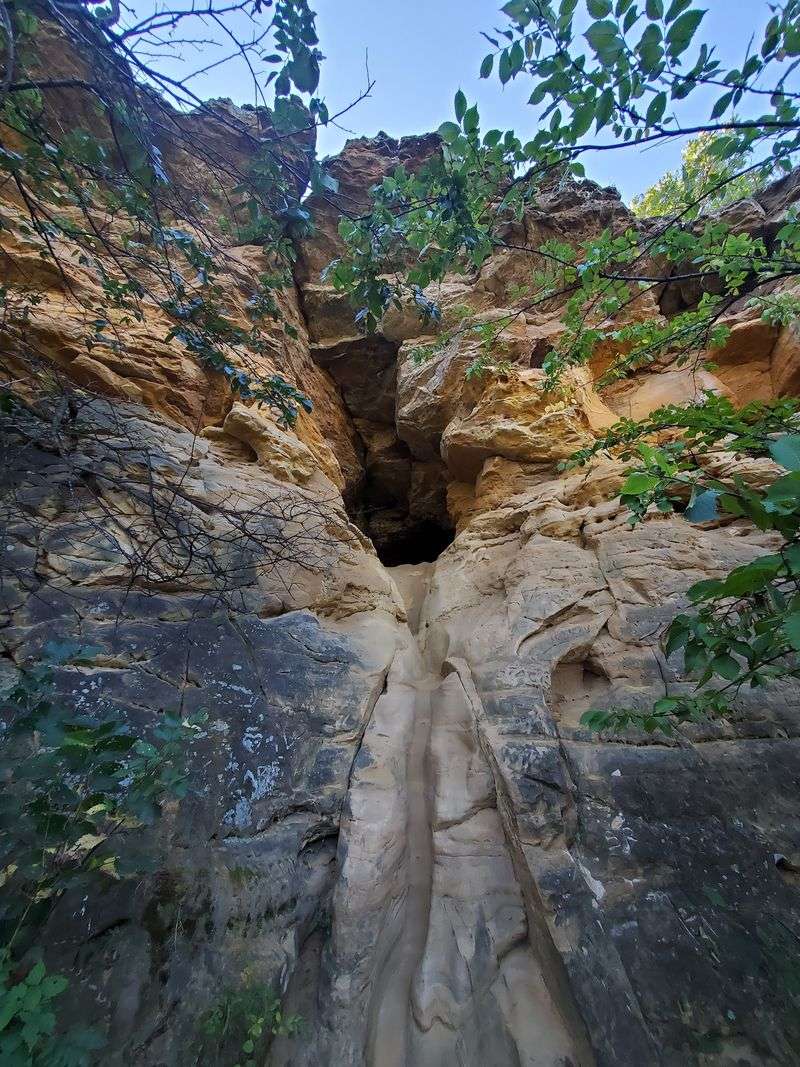
Legend says outlaws once tucked stolen horses away in this canyon. Honestly, you can see why they liked it.
Horsethief Canyon twists between striking rock walls. Caves and crevices pop up along the way, begging for a closer look.
The trails here are open year-round. That makes the canyon a strong pick for a late fall hike before winter settles in.
Expect a real workout, though. The hiking can be challenging, with varied terrain and multiple water crossings.
Some crossings get deep after wet weather. A quick chat at the park office can help you plan the safest route.
Grab a paper map before heading out. Phone apps can lead hikers astray in rugged spots like this.
The canyon trails are shared with horseback riders and bikers. Give horses plenty of space and follow trail manners.
Pack more water than you think you’ll need. Many trails don’t have water sources, and canyon hikes can take longer than planned.
Cooler fall days also mean fewer bugs. Ticks can be fierce in summer, so a crisp autumn afternoon feels like a reward.
The outlaws never got to enjoy it this comfortably.
Pioneers Carved A Schoolhouse Right Into The Rock
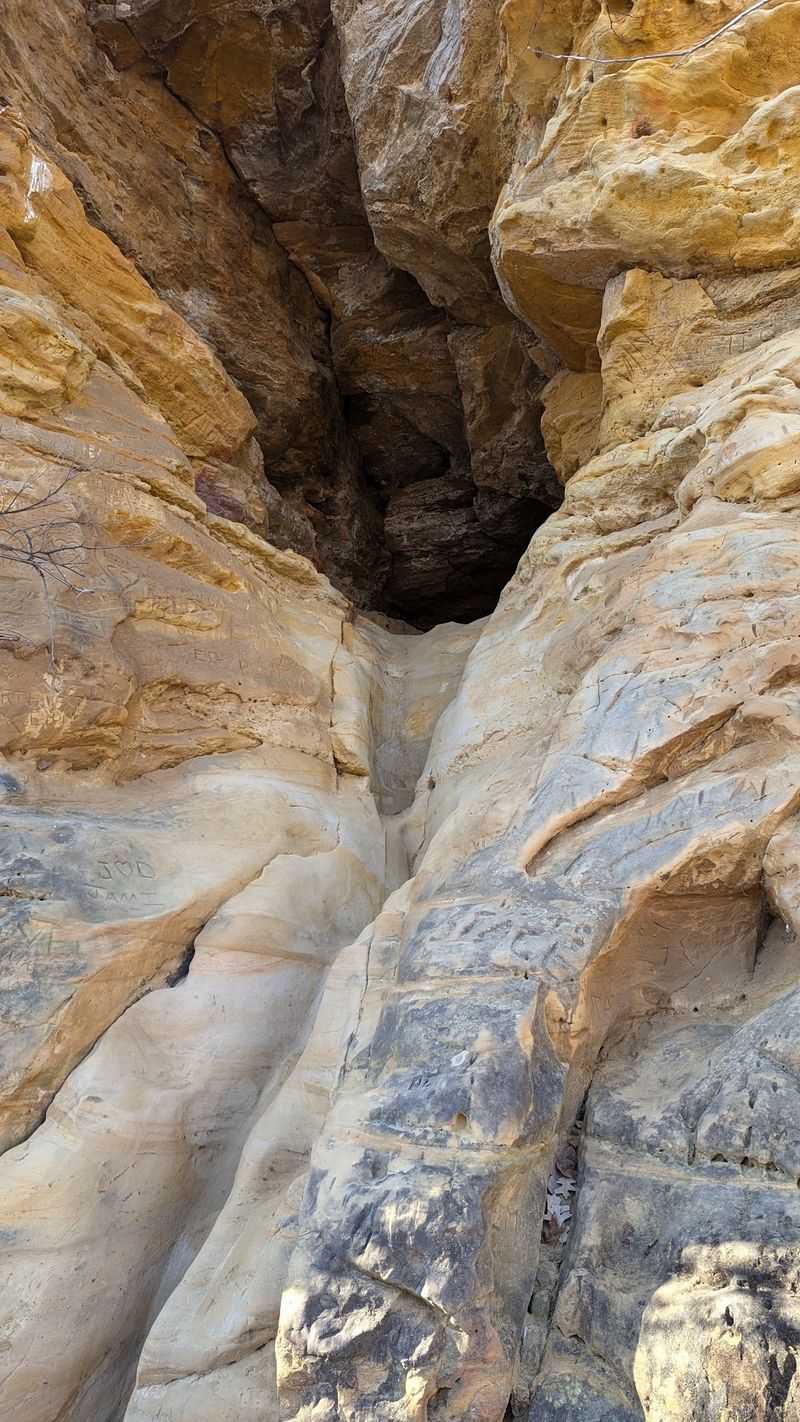
Forget log cabins for a minute. Some early settlers here simply carved their rooms straight into sandstone.
The Faris Caves sit northwest of Kanopolis State Park, within the adjoining Smoky Hill Wildlife Area. Their origins trace back to a miner in the 1880s.
Pioneers used the caves in surprisingly practical ways. They served as living quarters, a schoolhouse, and even a milk house.
Think about that for a second. Kids once learned their lessons inside a rock wall.
Recess must have been interesting.
The milk house idea makes sense too. Thick stone walls help keep things cool without electricity.
Visiting the caves feels like opening a pioneer scrapbook. The carved rooms show how people adapted to prairie life.
I believe places like this make history feel real. You aren’t reading about settlers in a book.
You’re standing where they actually worked and lived.
Treat the caves with care. Avoid scratching names or marks into the soft sandstone.
Fall access needs planning. Portions of the wildlife area are restricted during hunting season, and its designated refuge is closed September 1 through January 31.
Ancient Carvings Turn A Hike Into A History Lesson
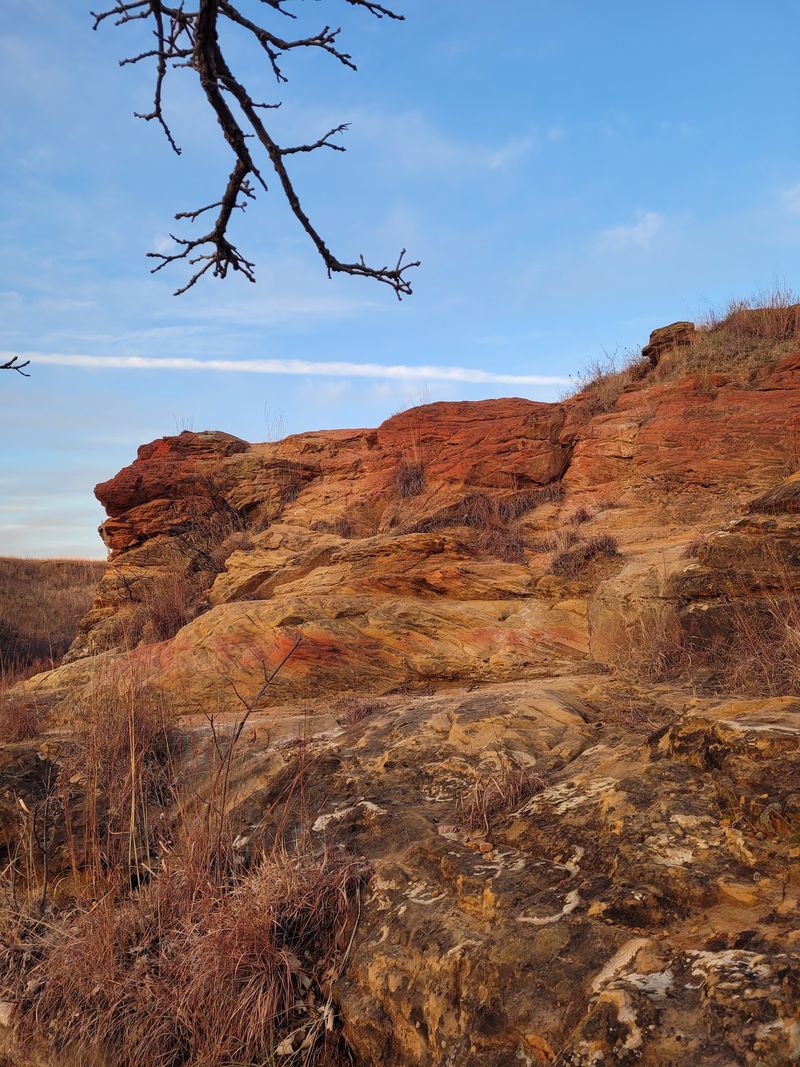
Long before campers and boaters arrived, tribes such as the Pawnee, Cheyenne, Apache, and Kiowa knew this land well. Their story is still written in stone.
The Indian Hill site sits within the park. Petroglyphs are carved directly into its sandstone walls.
Here’s a fact worth sharing at dinner. Kansas has 30 Native American rock art sites on the National Register of Historic Places, and Indian Hill is one of them.
That listing recognizes how important these carvings are. They connect visitors to people who lived here many generations ago.
Respect matters most at a place like this. Never touch, trace, or rub the carvings, since skin oils and pressure can wear them down.
Look closely and take photos instead. A zoom lens or binoculars can help you see fine details without getting too close.
Bring kids along and turn it into a guessing game. What might each shape have meant to the people who carved it?
I can’t imagine a better way to teach patience and curiosity. These markings have lasted far longer than any of us.
They deserve a quiet moment of attention before you move on.
Thirty Miles Of Trails Means Nobody Gets Bored
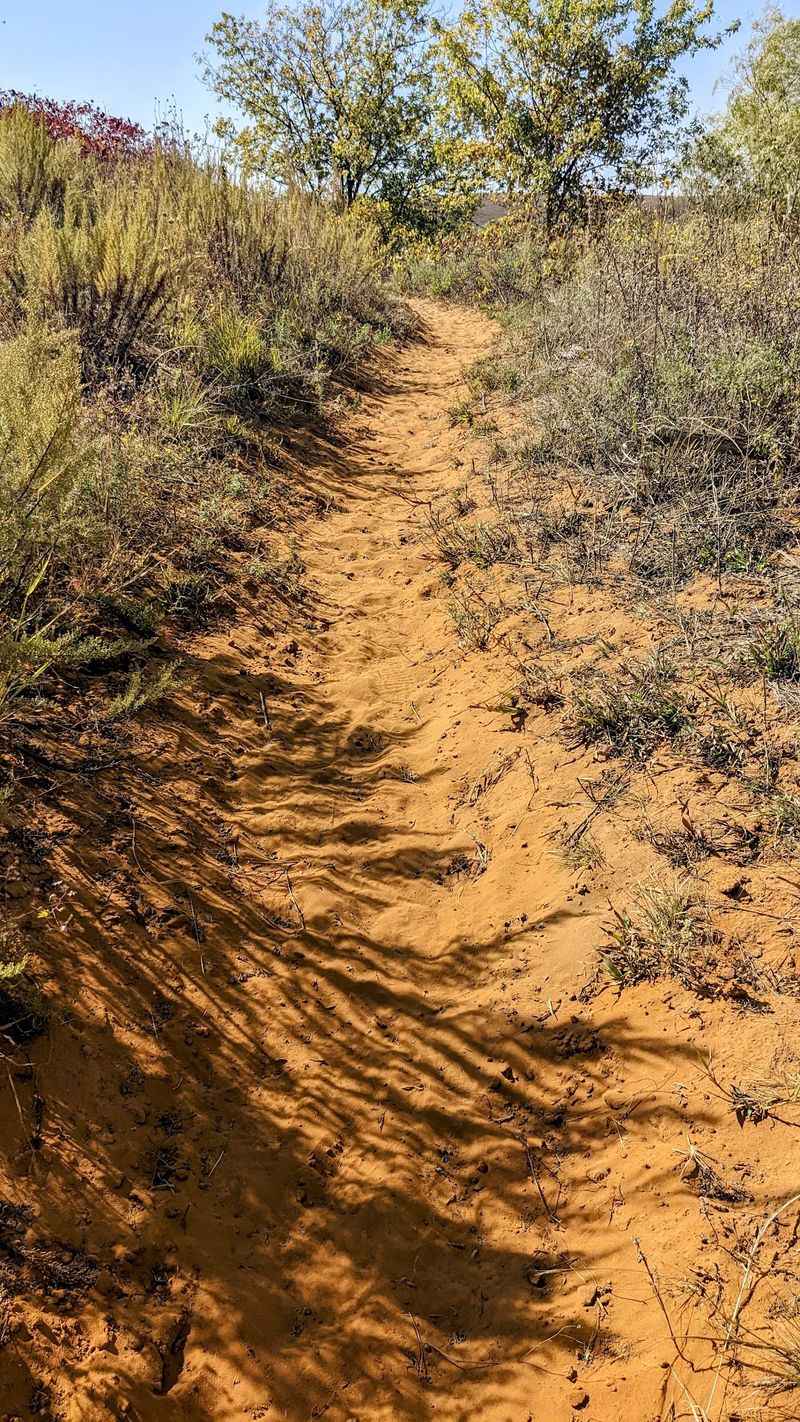
Hikers, mountain bikers, and horseback riders all get a slice of the action here.
Kanopolis State Park and the adjoining Smoky Hill Wildlife Area offer more than 30 miles of trails, approximately 15 miles of which cross the wildlife area.
Some trails stay open all year. The Horsethief Canyon Trails and Rockin’ K Trails fit that list.
Other routes follow a season. The Alum Creek Trails and Prairie Trails have restrictions from November 1 through January 31.
That timing matters for fall visitors. Check seasonal closures before setting out, especially when planning to ride horses or mountain bikes.
Want a trail just for walkers? The Buffalo Track Canyon Nature Trail is hiking-only and open year-round.
For accessible walking, the separate Wildlife Viewing Area offers a 0.6-mile ADA-accessible trail. Both areas provide chances to enjoy native plants and wildlife.
Don’t forget the paperwork. A valid state park vehicle permit is required, so arrange that before arriving.
Bikers should know some paths have deep, loose sand. The Alum Creek area tends to suit riders better than sandier routes.
Horse lovers have it good here too. The park offers horse camping, and many trails welcome riders.
In Kansas, few parks pack this much trail variety into one stop.
The Lake Still Has Plenty To Offer When Summer Ends
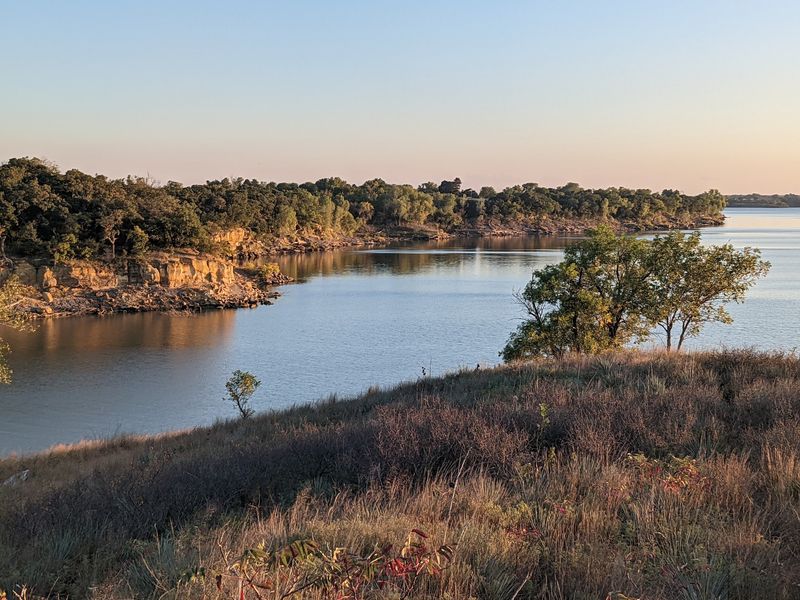
Walleye, catfish, crappie, white bass, and largemouth bass all swim in these waters. That’s a pretty good guest list for any angler.
Kanopolis Lake covers roughly 3,000 to 3,500 acres. There’s plenty of room for boats, kayaks, and quiet fishing spots.
A full-service marina helps boaters get on the water. Boat ramps make launching simple too.
Fall brings a nice bonus. Water clarity often improves, which can make the lake look extra inviting.
Summer visitors love the sandy beach area. It offers day-use swimming with changing houses and restrooms nearby.
Swimming might feel chilly by late fall. Still, a beach walk with fewer people around has its own charm.
Water levels can change from season to season. A low lake shifts the shoreline, so expect the view to vary.
Fishing in cooler weather can be relaxing. Pack a warm jacket, a thermos of cocoa, and a little patience.
Kids can try their luck from shore too. Even a small catch feels like a trophy on a crisp afternoon.
And if the fish refuse to bite, the bluffs across the water make a pretty fine consolation prize.
Stay The Night And Catch The Eagles At Dawn
More than 200 primitive campsites and numerous utility sites spread across Kanopolis State Park. That’s plenty of choices for one weekend.
Campgrounds in the Langley Point and Horsethief areas offer different experiences. Sites range from primitive spots to full utility hookups.
Not a tent person? Six deluxe cabins are available year-round, so cold nights don’t have to end the fun.
Reservations can be made online. Booking early is smart for popular fall weekends.
Staying overnight opens the door to wildlife. Beyond the state park, the surrounding Smoky Hill Wildlife Area and federal reservoir lands provide extensive habitat.
White-tailed deer, wild turkey, pheasant, quail, and prairie chickens live here. Waterfowl also move through the area.
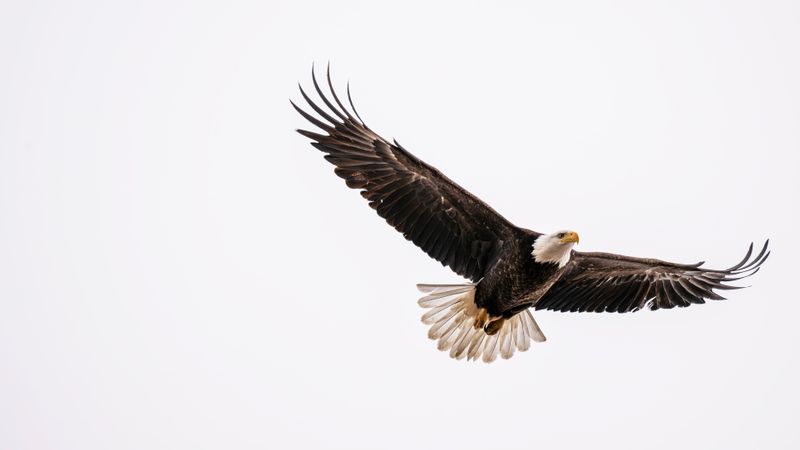
Winter visitors might spot bald eagles and ospreys fishing in the river. Bring binoculars and keep your eyes on the water.
Want one more stop? Kanopolis also manages nearby Mushroom Rock State Park.
Its unusual rock formations look like giant stone mushrooms, making it a fun picnic side trip.
Store food carefully at camp, since critters get curious at night. A tidy site means a peaceful sleep.
Before the first snow falls, this corner of Kansas feels wonderfully calm. Cozy cabin, crackling fire, eagles at sunrise.
Not a bad plan.