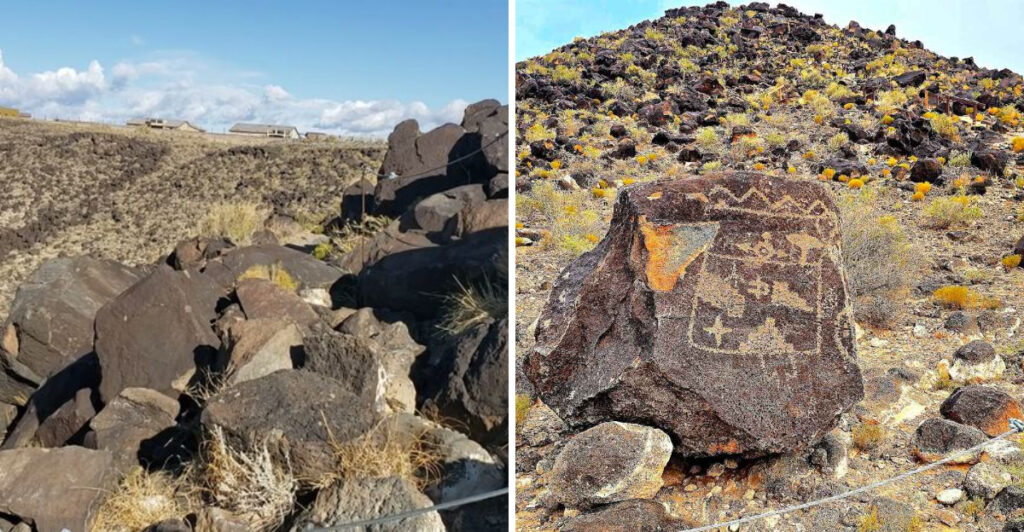
You know that feeling when a place makes you stop talking for a second? This is one of those places.
A black boulder sits under the desert sky, marked with carvings made more than a thousand years ago. Someone stood at that stone and left a sign for a world they would never see.
That thought stays with you.
At this outdoor site in New Mexico, history is not locked in a case. It is on the rocks beside the trail, waiting for you to notice the details.
Some carvings look simple at first. Then you keep looking, and they start to feel like questions.
Who made this? What did it mean?
Who else stood here wondering the same thing?
It is a place that rewards slow steps and curious eyes. Go for the scenery, but do not be surprised when the carvings steal the whole day.
Ancient Marks Across Black Volcanic Stone
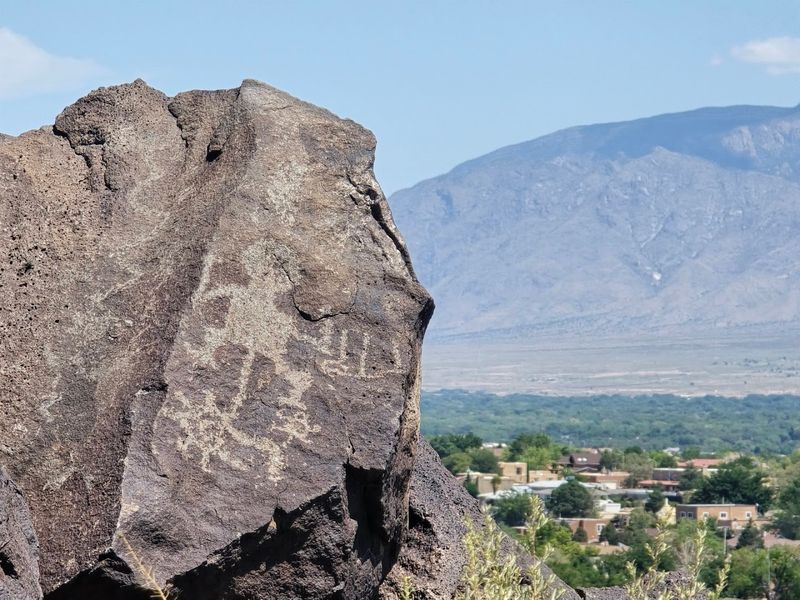
A massive basalt boulder covered in ancient carvings can stop you in your tracks. At its base, the rock feels less like scenery and more like something still speaking.
The petroglyphs at this canyon are carved directly into dark volcanic rock by chipping away a layer called desert varnish, the thin dark coating that naturally forms on basalt surfaces over time.
When the desert varnish is chipped away, the lighter rock underneath is revealed, creating images that have lasted for centuries under the open New Mexico sky.
Some petroglyphs in the monument may date back thousands of years, while most were carved between about 1300 A.D. and the late 1600s.
The images include spirals, geometric shapes, human figures, hands, feet, and animals, each one placed with clear intention by the person who made it.
Roughly 90 percent of the carvings here were made by the ancestors of today’s Pueblo people during that later period, according to park history and current research.
You can find this extraordinary open-air gallery at Boca Negra Canyon, located at 6900 Atrisco Dr NW, Albuquerque, NM 87120.
Desert Trails Framed By Rugged Rock
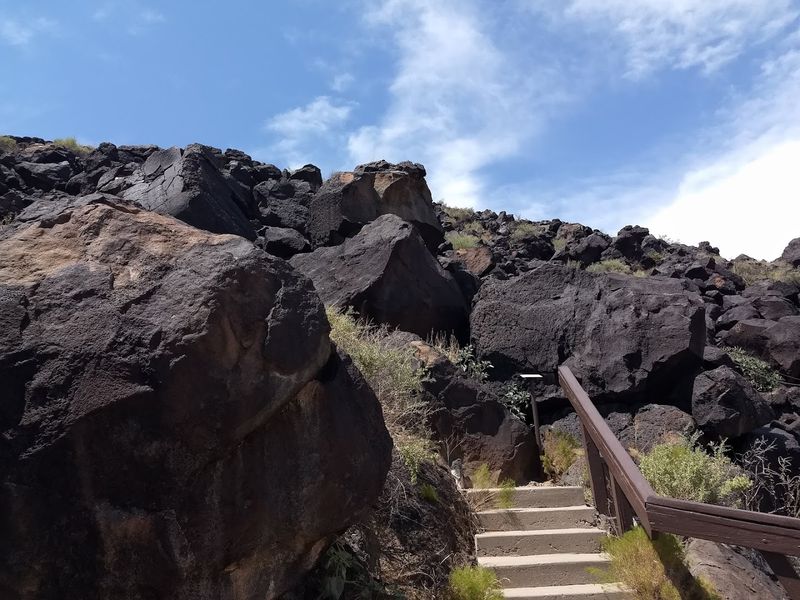
Three self-guided trails wind through the canyon, each one offering a different kind of encounter with the rocky, sun-warmed landscape.
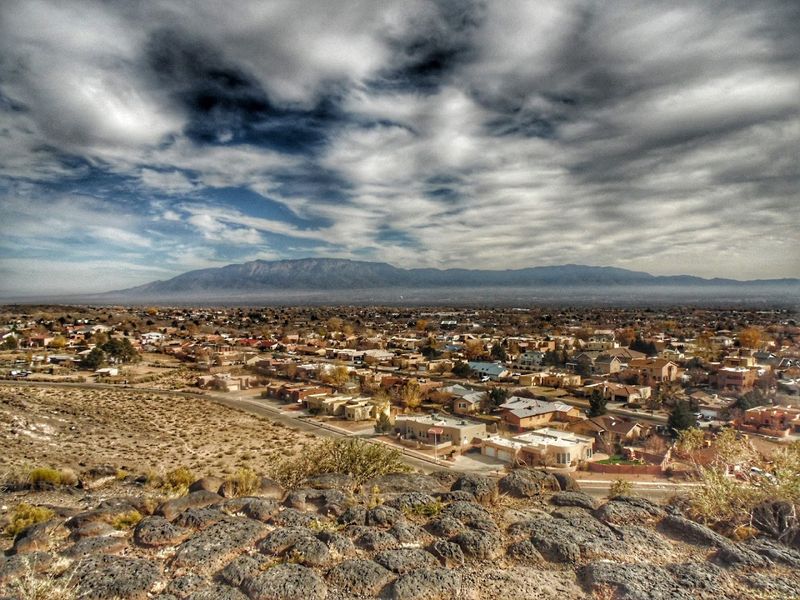
The Mesa Point Trail is the most demanding of the three, climbing steeply over uneven volcanic rock with a 119-foot elevation gain that rewards you with sweeping views of Albuquerque and the Sandia Mountains in the distance.
The Macaw Trail is the shortest route and less demanding than Mesa Point, a good choice for visitors who want a lighter walk through the petroglyphs.
A third path, the Cliff Base Trail, hugs the base of the rock formations and puts you face to face with carvings at a very intimate distance.
The trails are made up of a mix of sand, short boardwalk sections, and uneven asphalt, so proper footwear is important here, not just a suggestion.
Park guidance recommends bringing water and wearing a hat, since there is almost no shade along any of the routes.
All three trails combined take roughly an hour to complete, making this a satisfying stop even on a tightly scheduled travel day during an Albuquerque travel visit.
Sunlit Paths Through Sacred Stone
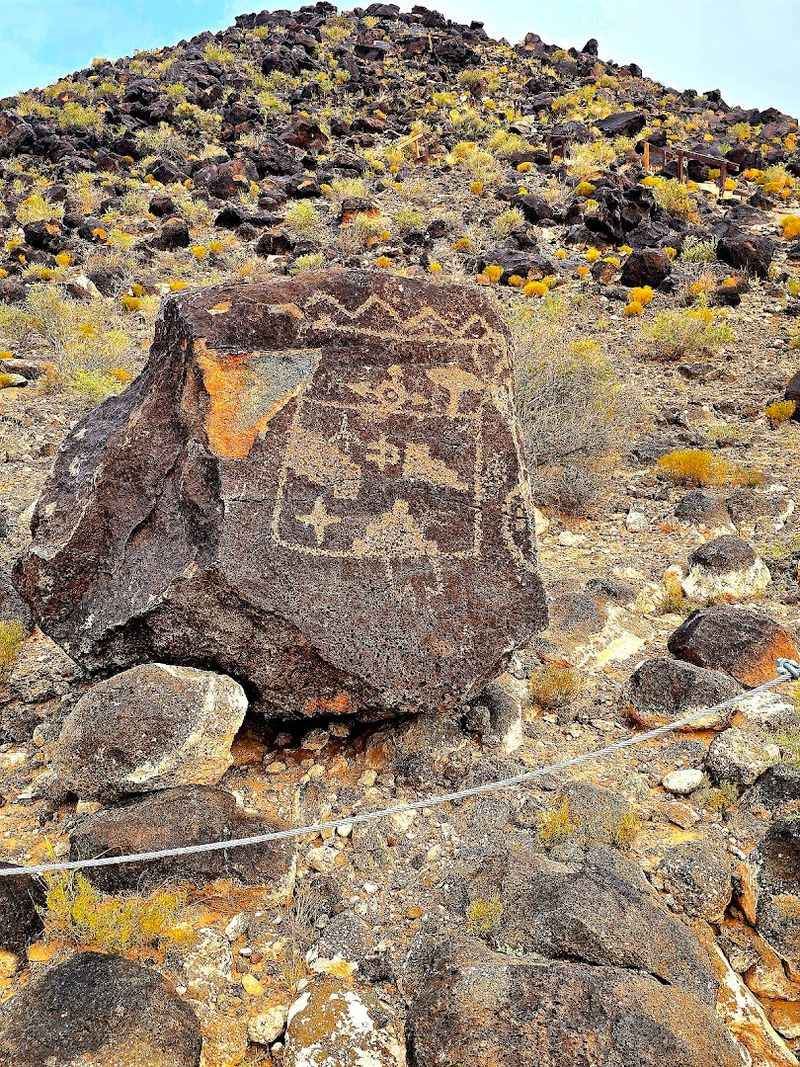
The desert light here can make the whole canyon feel sharper and more alive. Once the sun climbs above the escarpment, the trails seem to wake up.
Morning visits tend to offer the best viewing conditions for the petroglyphs, since the low-angle light creates shadows that bring the carved lines into sharp relief against the dark stone surface.
Visitors who arrive on bright midday visits often find the carvings harder to read, since flat overhead light flattens the contrast between the chipped areas and the surrounding varnish.
The canyon sits along the West Mesa escarpment, a 17-mile-long ridge formed by volcanic eruptions approximately 200,000 years ago, giving the whole area a dramatic, otherworldly silhouette against the sky.
Along the paths, I kept pausing to look back at the Sandia Mountains rising to the east, their color shifting from dusty tan to deep purple as the morning wore on.
The trails are open daily from 8:30 AM to 4:30 PM, with last entry at 4:00 PM strictly enforced, so planning arrival time carefully makes a real difference to the experience.
Sunscreen, sturdy shoes, and curiosity are the best things you can pack for this outing, especially when the sun is high above the rocks.
High Desert Views With Timeless Silence
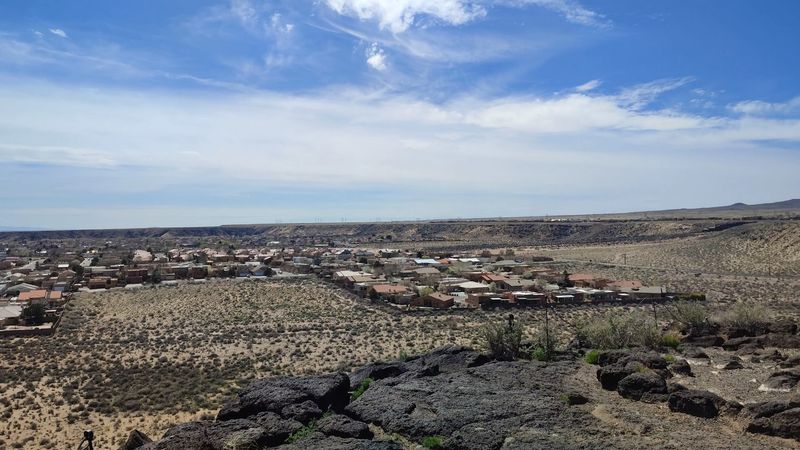
At the top of the Mesa Point Trail, I stopped and just listened. The quiet up there felt earned rather than empty somehow.
From the highest accessible point of the trail, the view stretches out over Albuquerque’s rooftops toward the Sandia Mountains, which shift colors dramatically depending on the time of day and the angle of the sun.
That broad, uninterrupted horizon gives the canyon a feeling of vastness that is hard to find this close to a major city, and it makes the ancient carvings feel even more significant in context.
The West Mesa escarpment, on which the canyon sits, was shaped by lava flows from volcanic eruptions roughly 200,000 years ago, and the dark basalt underfoot is a constant reminder of that deep geological history.
On clear mornings, the silence at the top is broken only by the occasional wind moving across the rock and the distant sound of city life far below.
For families with young children, the broad views can make the short climb feel worth the effort, especially when the city and mountains open up below.
The view from the top is one of the canyon’s strongest moments, the kind that catches you off guard and makes the ancient stone around you feel even more powerful than it did at the trailhead far below.
Carved Symbols Beneath Open Sky
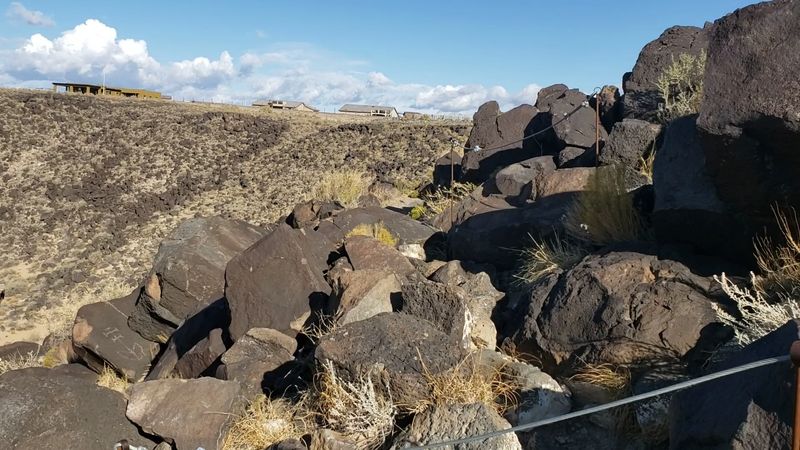
The variety of symbols carved into the canyon’s boulders becomes more striking once you slow down and start looking carefully at each rock face.
Rio Grande style imagery appears throughout the site, including human figures, animal forms, spirals, stars, handprints, and footprints, all carved with surprising detail given the hardness of the basalt.
Roughly 100 petroglyphs are accessible along the three trails, and each one feels like a small conversation started by someone who lived an entirely different life in this same landscape.
Early Spanish settlers also left their marks here, adding Christian crosses, sheep, and livestock brands to the rock surfaces, creating a layered historical record that spans multiple cultures and centuries.
Extra context about the symbols can turn a pleasant hike into something much more thoughtful, especially because many meanings are still living, sensitive, or not publicly explained.
The petroglyphs hold deep spiritual meaning for contemporary Pueblo Indians and other Native peoples, and that living connection to the carvings adds a layer of respect to every step along the trail.
Carvings positioned on rocky outcrops against the open sky make it easy to understand why people keep coming back to this place again and again, long after a quick first look would have missed so much at first glance.
Basalt Boulders Holding Centuries Of Memory
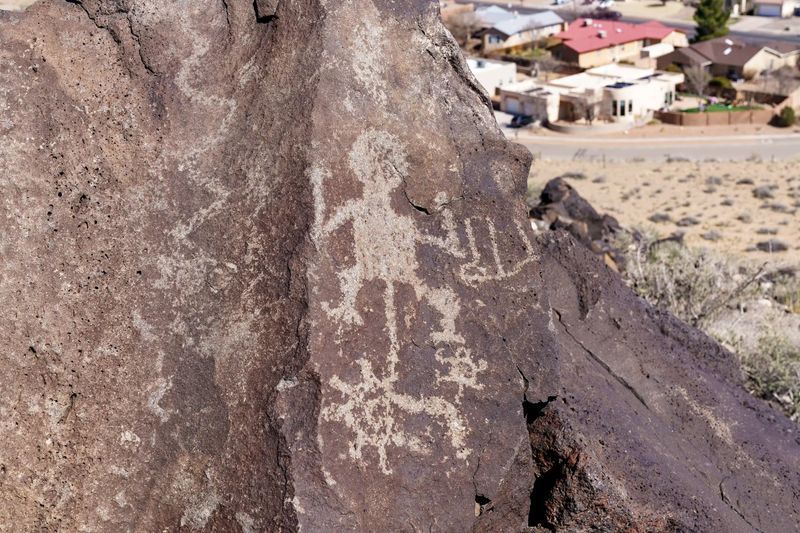
Every boulder in this canyon has a story. Some have been holding that story for centuries without saying a word out loud.
The basalt rocks here are remnants of volcanic activity that took place approximately 200,000 years ago, and the dark desert varnish that coats their surfaces is a thin mineral layer that builds up slowly over time through a combination of moisture, dust, and microorganisms.
Ancient artists used stone tools to chip through that dark varnish, exposing the lighter rock beneath to create images that have proven remarkably durable against the elements.
The contrast between the dark outer layer and the lighter carved lines makes the petroglyphs highly visible, especially when viewed in the slanted light of early morning or late afternoon.
Petroglyph National Monument, of which Boca Negra Canyon is a part, is jointly managed by the National Park Service and the City of Albuquerque Open Space Division, and that partnership helps maintain the site’s accessibility and condition.
Vandalism has been a concern at the monument, with modern markings damaging some surfaces, which is a disheartening sight among centuries-old art and protected cultural history that deserves careful treatment from each visitor who comes here.
The boulders that remain untouched, however, are extraordinary, and they carry a weight of human memory that feels almost physical when you stand close to them.
Quiet Canyon Corners Filled With History
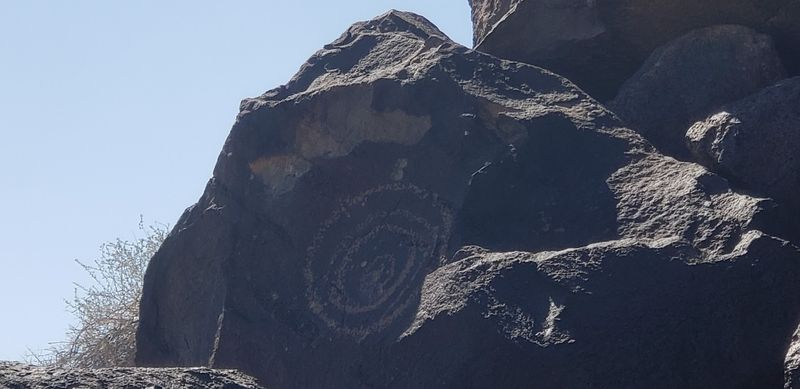
Along the quieter edges of the canyon, away from the main trail traffic, small pockets of stillness can make the history feel especially close.
The canyon is part of Petroglyph National Monument, which protects one of the largest concentrations of petroglyphs in North America, and Boca Negra is described as the most accessible section of the monument for visitors with limited time.
Picnic areas with covered shelters sit near the trailheads, offering a shaded spot to rest before or after a hike, and clean restrooms and a water station are available on site, which makes the visit comfortable even on warm days.
The entrance area can be a useful place to check basic trail information, current conditions, and practical details before heading onto the rocky paths.
The canyon is also noted as a spot where certain bird species can be spotted, though the encroachment of residential development on the surrounding land has reduced wildlife sightings compared to earlier decades.
A weekday morning tends to offer the most peaceful experience, with fewer crowds and a quieter atmosphere that lets the historical weight of the place settle in properly.
Those quiet canyon corners, where old carvings sit undisturbed on sun-warmed rock, are the moments that stay with you long after you have driven back into the city and returned to daily life again, still thinking about the silence between these rocks there.
A Walk Through Stone And Story
By the end of the last trail loop, I made my way back to the parking area. The short hike felt much larger than its length.
Boca Negra Canyon compresses thousands of years of human expression into a visit that takes about an hour, and that ratio of time spent to history encountered is hard to beat anywhere in the American Southwest.
The three trails vary enough in difficulty that families, solo hikers, and older visitors can all find a route that suits them, though the rocky and uneven terrain means strollers and wheelchairs are not practical on the paths themselves.
An ADA-accessible view scope is available near the parking area for visitors who cannot manage the rocky terrain, which is a thoughtful addition that makes at least some of the petroglyphs visible to everyone.
Entry fees have not been charged recently, though the site does have a gate, and hours run from 8:30 AM to 4:30 PM every day of the week, making it easy to fit into almost any travel schedule.
For current planning details, check the official National Park Service page or the City of Albuquerque’s Boca Negra Canyon information before you go.
Past the last boulder, I looked back once more at those carved stones and thought about all the stories still waiting quietly inside them for the next visitor to come along soon and notice what time left behind in the rock, the silence, and desert light.