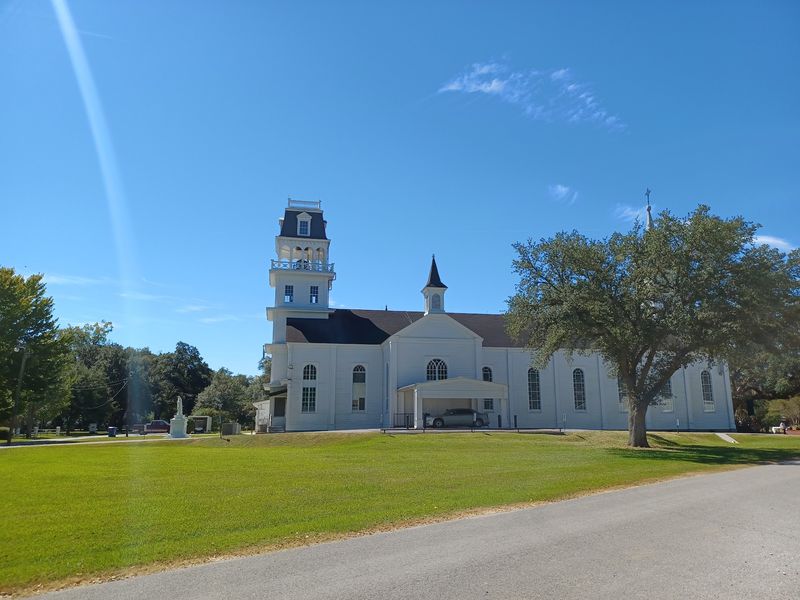
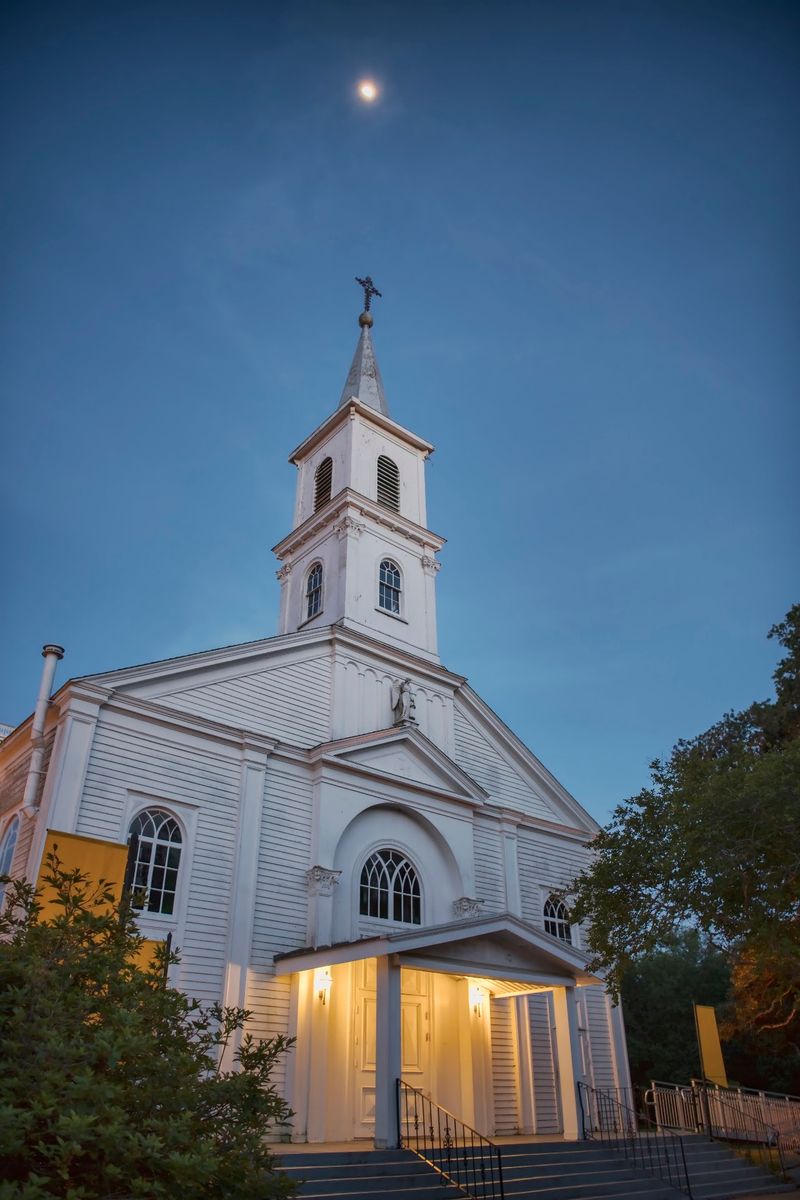
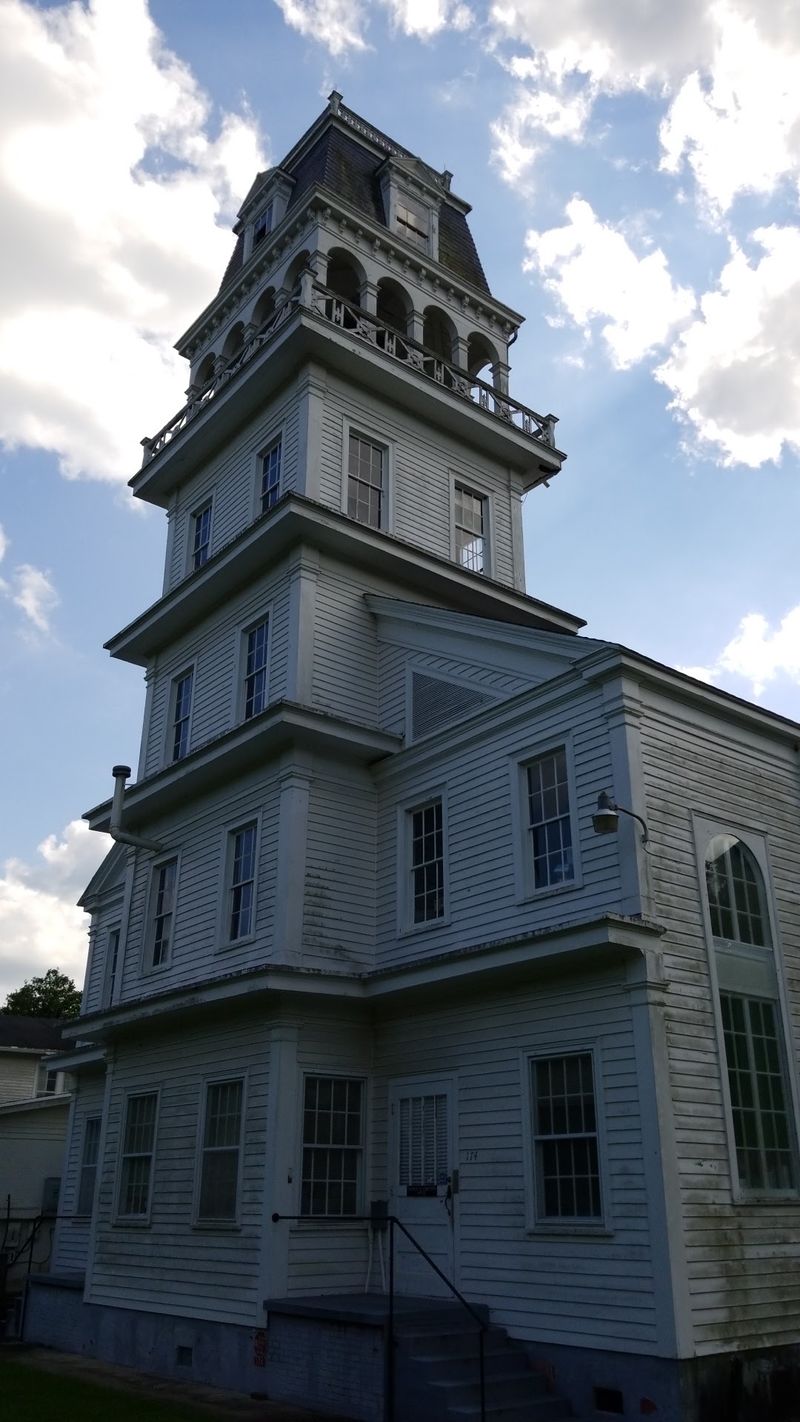
A tall belfry capped with a French-style mansard roof rises above the live oaks of Grand Coteau, and it looks like it wandered over from a village outside Paris. That belfry belongs to St. Charles Borromeo Catholic Church, a wooden church finished in 1879 on Church Street in St. Landry Parish.
Inside, painted mysteries, stenciled ceilings, and glowing stained glass keep the Old World feeling going. It is one of the rare American churches built in the Second Empire style, and it still serves a busy parish today.
A Wooden Church On Church Street In Grand Coteau
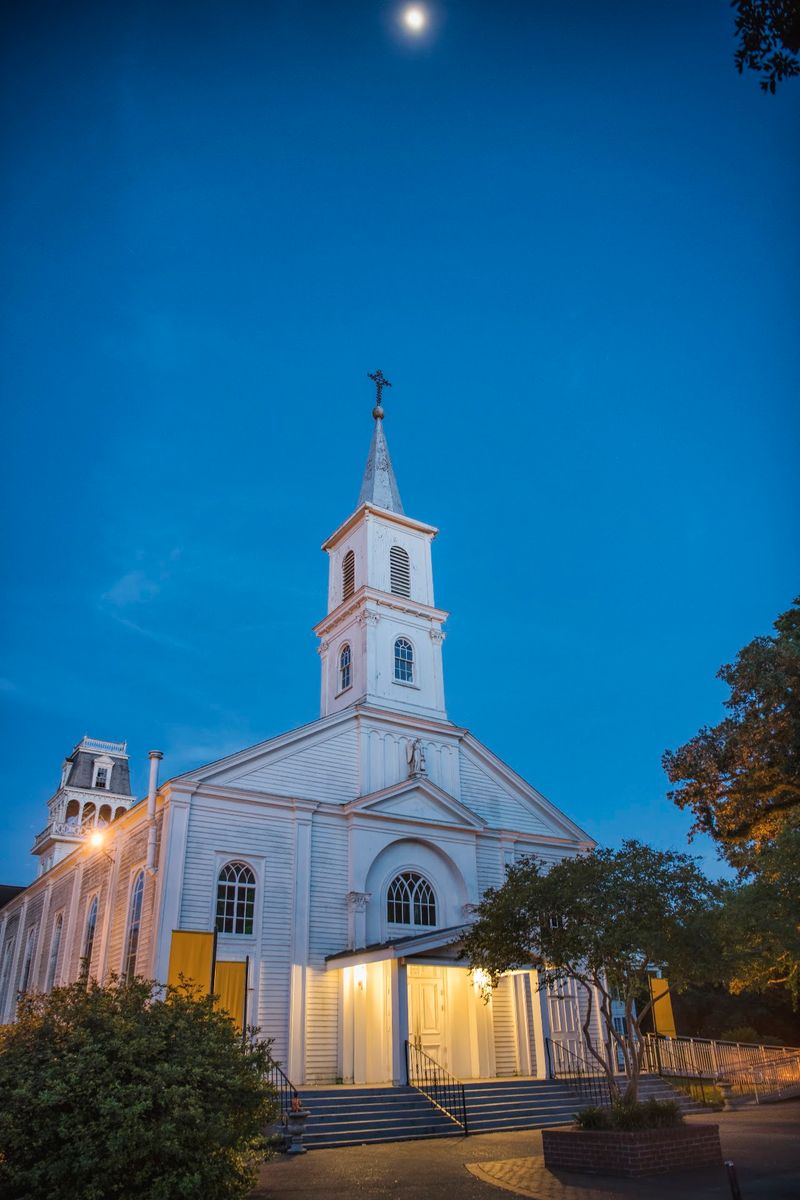
Grand Coteau sits just north of Lafayette, a short hop off Interstate 49, and its name means large hill in French. The town is small, but it carries a big Catholic story, and St. Charles Borromeo Church at 174 Church St. sits at the center of it.
The building you see today dates to 1879. It is made of wood, which surprises people who expect a church this grand to be built from stone.
Painted and carefully kept, it rises over a quiet street lined with old trees and historic homes.
The parish itself is much older than the building. It was founded in 1819, which makes it the third-oldest church parish in the Catholic Diocese of Lafayette.
Jesuit priests have served here for generations, and the church still holds regular Masses for its community.
Visitors often mention how well the church is kept, inside and out. They also point to the grounds, calling them peaceful and inviting.
That combination of an old building, a living parish, and a calm setting is what makes a stop here feel different from a quick look at a landmark. You are visiting a place people still use every week, not a roped-off museum piece.
How French Jesuits Shaped A Louisiana Parish
Back in 1837, a group of Jesuits arrived in Grand Coteau, and many of them spoke French. That mattered, because the Catholics living around the town spoke French too.
The priests fit right into daily life here.
The Jesuits were given charge of the parish and, at the same time, founded St. Charles College, a school for boys. Their arrival turned Grand Coteau into a center for Catholic learning.
The Academy of the Sacred Heart, founded in 1821, was already nearby, so the town became a place defined by schools, prayer, and study.
With the Jesuits came a love of European art and building styles. Their roots ran deep in French Catholic tradition, and that taste for detail shows up all over St. Charles Borromeo.
When the time came to build a larger church, the goal was clearly something that would feel at home in France.
Jesuit ties are still visible inside. Original windows near the main altar honor St. Ignatius Loyola, who founded the Jesuit order, and St. Francis Xavier, one of its most famous missionaries.
One longtime choir member has described the parish as a close community where families know one another and many people volunteer.
The Mansard Belfry That Looks Straight Out Of Paris
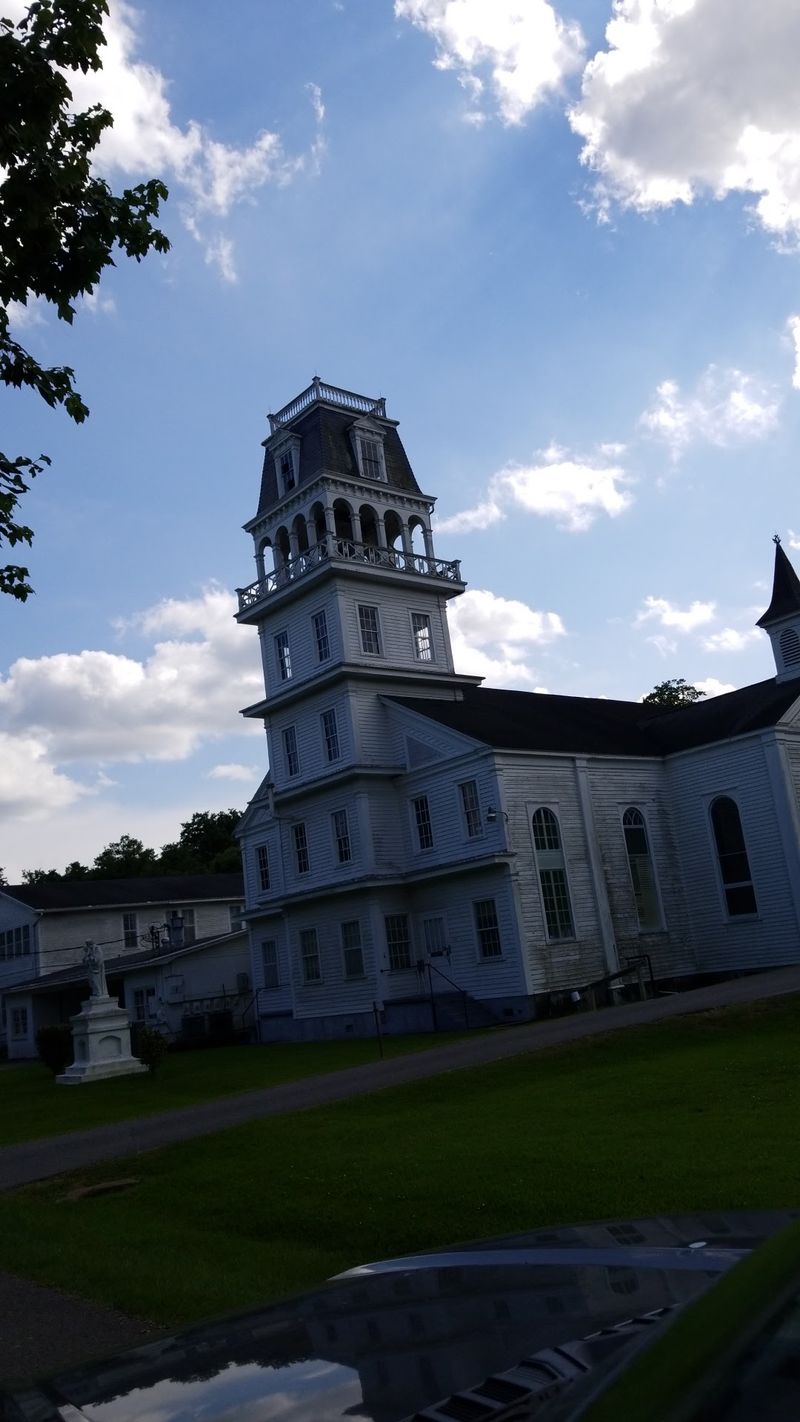
Look up first. The single feature that makes people think of Europe is the enormous belfry rising above the sanctuary, topped with a tall mansard roof dotted with dormer windows.
Mansard roofs belong to the Second Empire style, which took off in France in the mid-1800s under Emperor Napoleon III. Paris was being rebuilt in that era, and those steep, windowed roofs became a sign of wealth and style.
Seeing one crown a church in rural Louisiana is unusual, and churches in this style are rare anywhere in the United States.
The design is linked to James Freret, a New Orleans architect who studied at the École des Beaux-Arts in Paris in the early 1860s. He trained under Charles-Auguste Questel and traveled through France, England, and Italy.
Back home, he became known for Second Empire buildings, especially churches across the Deep South.
Freret drew his plans in 1875, and the church finished in 1879 included some changes from those drawings. Even so, his French training is easy to spot.
The front also has a pedimented gable and a square tower leading up to a steeple, adding a Renaissance Revival profile to the Parisian roofline.
Stenciled Ceilings And The Fifteen Painted Mysteries
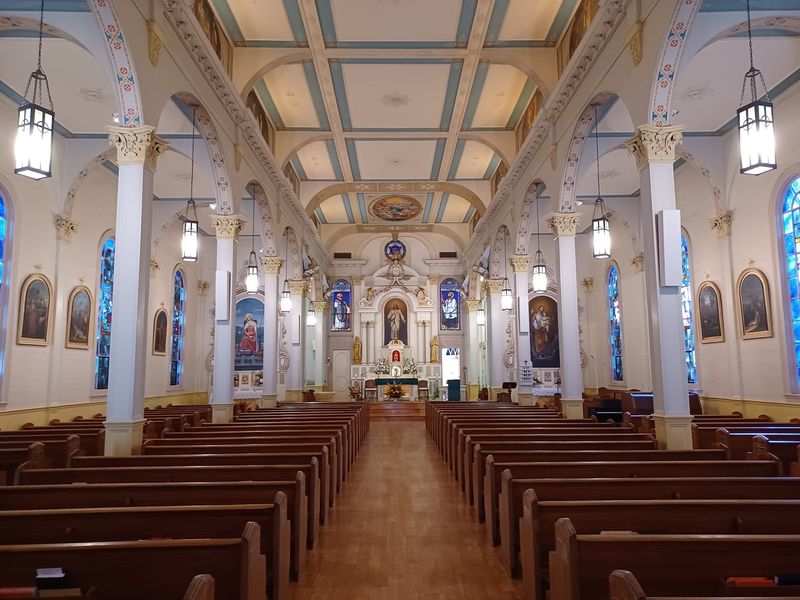
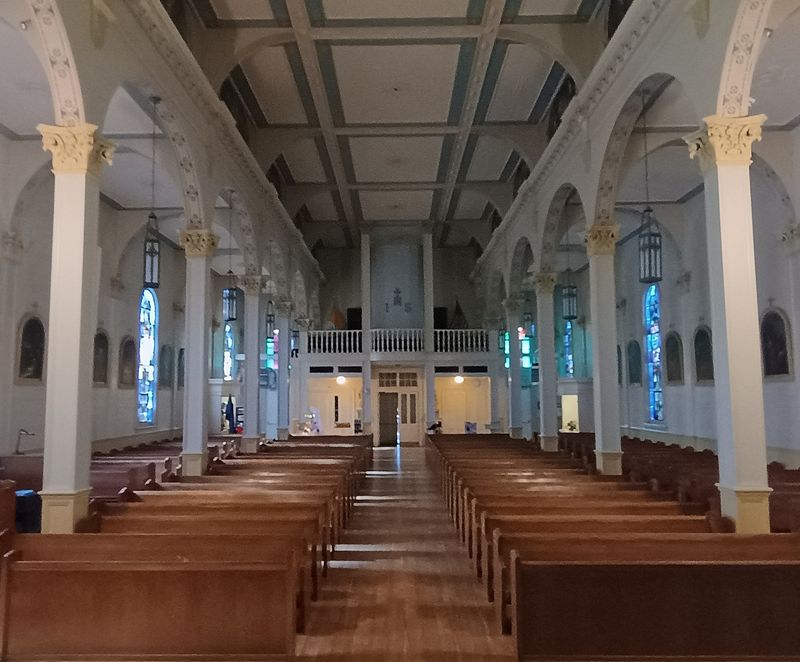
Walk inside and your eyes go up. A row of slender, square paneled piers topped with Composite capitals lines the nave, and they lead toward a flat ceiling covered in stenciled patterns.
Visitors often note how much light fills the room.
The art here tells a story. Artist Erasmus Humbrecht painted the fifteen Mysteries of the Rosary for the church.
Fourteen sit in niches along the side walls, seven on each side, so you can follow them as you walk the aisles.
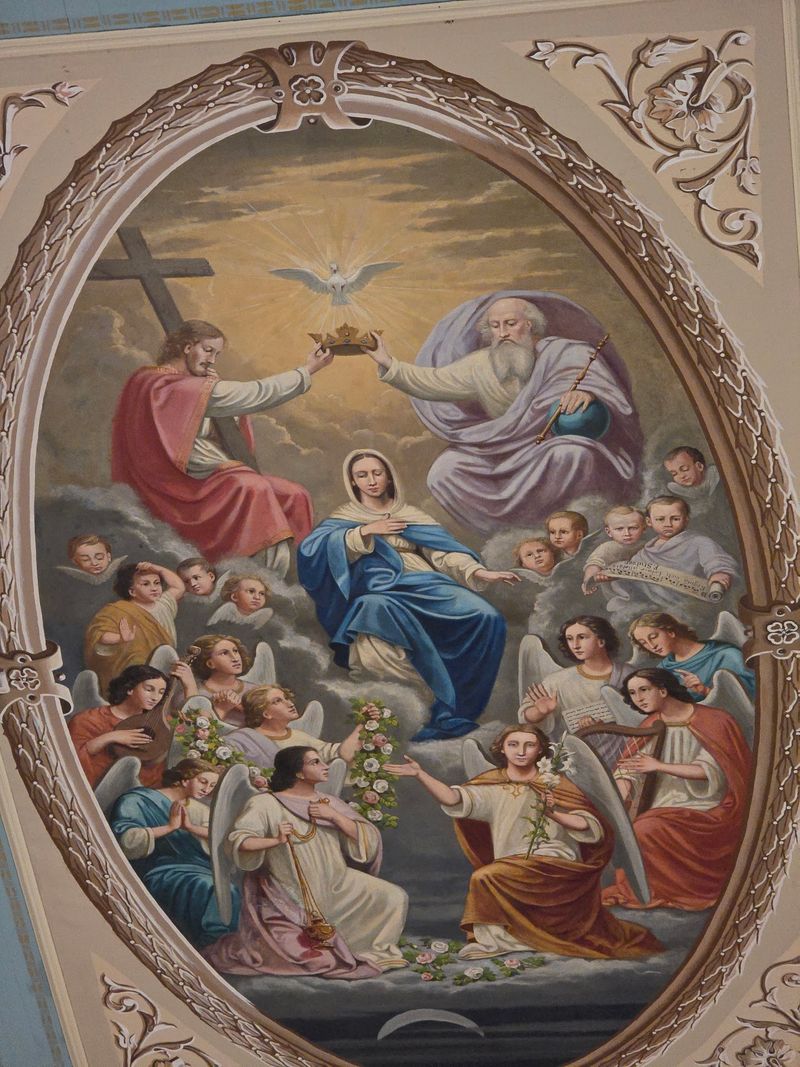
The fifteenth, The Coronation of Mary, Queen of Heaven, is a large oval painting on the ceiling above the sanctuary and altar. It pulls your gaze straight upward, the way painted ceilings do in old European churches.
Humbrecht also painted frescoes in St. Louis Cathedral in New Orleans. His work links this small-town church to one of the best-known Catholic buildings in the state.
Paintings of the four Evangelists hang on the transept walls as well.
Statues and ornate altars complete the picture. One visitor summed up the feeling as the smell of lit candles, the artwork, and the windows all together.
It is a lot to take in, so move slowly.
Emil Frei Stained Glass And Its Hidden Symbols
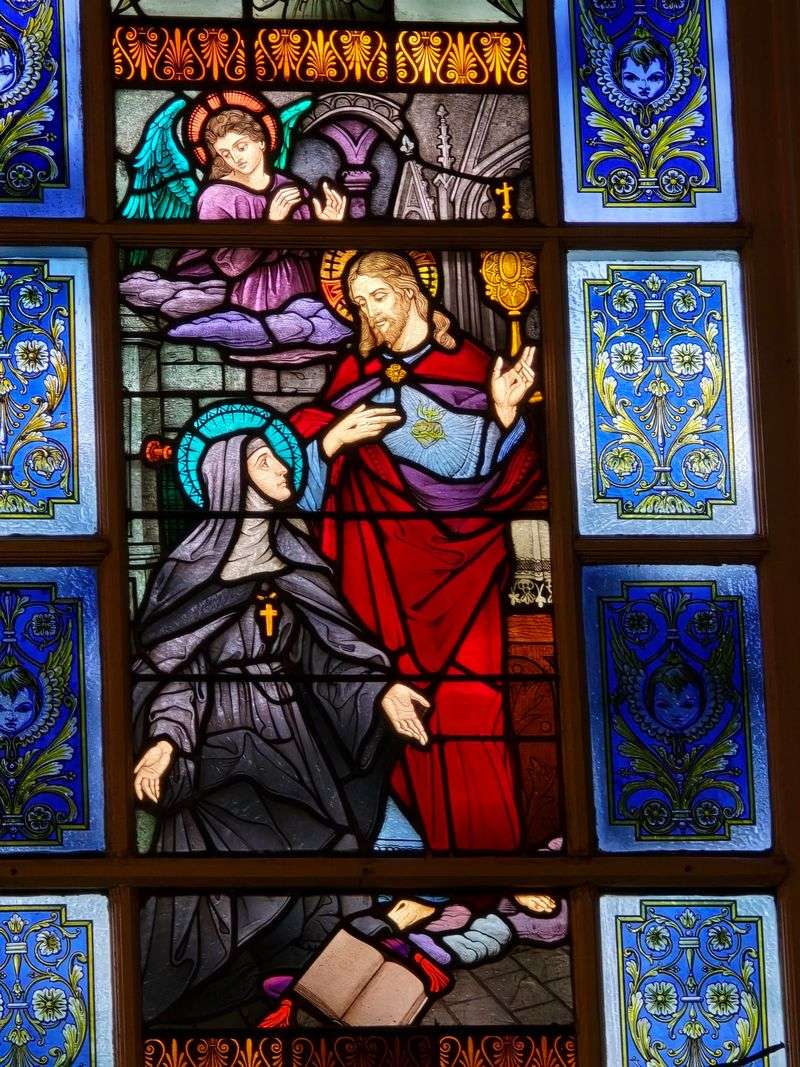
Sunlight changes everything in this church, thanks to its windows. Many of them came from the well-known Emil Frei studio and were installed in the 1920s and 1940s.
The transept windows date to the 1920s. They show the Annunciation, when the Angel Gabriel visits Mary, along with images of St. Matthew, St. Joseph, and St. John.
In the main seating area, windows added in the late 1940s illustrate the twelve promises of the Sacred Heart, and some are said to depict real people.
Near the main altar, the original windows honor St. Ignatius Loyola and St. Francis Xavier, a quiet reminder of the Jesuits who built this parish. High above the altar sits a window with a mother pelican feeding her young.
That old Christian symbol stands for Christ’s giving love, and it is easy to miss unless you know to look up.
Visitors regularly single out the windows as a highlight, calling them amazing. Try to come on a bright weekday morning when the color spills across the pews.
Bring patience, not a checklist. Each window rewards a few minutes of looking, and the details reveal themselves the longer you stand there.
A Lourdes Grotto, A Cemetery, And Oak-Lined Grounds
Step outside and the European feeling keeps going. Beside the church stands a replica of the grotto of Our Lady of Lourdes in France, one of the most visited Catholic shrines in the world.
The original sits in the foothills of the Pyrenees, and pilgrims have traveled there for well over a century. Here, people can pray at a copy of that shrine without crossing an ocean.
It makes a natural quiet spot after touring the church.
Next to the church lies the parish cemetery, the resting place of many local families. It is a calm place for reflection, so walk respectfully and keep voices low.
Live oak-lined drives near the church add shade and a sense of age to the whole scene.
Visitors often describe the grounds as peaceful and holy, and one recommends allowing extra time to walk the surrounding historic area. That is good advice.
Grand Coteau is one of the few mostly rural districts listed on the National Register of Historic Places, with more than 70 notable buildings in Creole, French, Acadian, Anglo-American, and Victorian styles. A slow stroll turns a church visit into a small-town afternoon.
Who Feels At Home In This Quiet Sanctuary
Plenty of people come here for different reasons. Some are parishioners who attend Mass each week, some are history lovers, and some just need a peaceful place to sit.
Worshippers will find an active parish. There is a Perpetual Adoration chapel, which visitors mention as a special feature.
One person who had not been to church in a long time described returning here as a pleasant experience, which says a lot about the welcome.
Families tracing their roots also find help. St. Landry Parish records draw genealogy researchers, and one family described the office staff as patient and kind while they searched old bound books dating to the early 1900s.
Others have shared how the priests and staff cared for their loved ones during hard times.
Architecture fans and photographers get a rare Second Empire church, detailed artwork, and historic grounds. As one visitor put it, the whole place is a work of art, religion aside.
A small heads-up for summer visitors: one parishioner noted that the church can get quite warm during services. Dress lightly and bring water in the hotter months.
Otherwise, the atmosphere is calm, reverent, and friendly toward respectful guests.
Planning Your Visit And Why The Belfry Stays With You
Good timing makes a big difference. The parish office lists weekday hours of 8 am to 4 pm Tuesday through Thursday, noon to 4 pm on Monday, and 8 am to noon on Friday.
Those hours are listed as closed on Saturday and Sunday, though Masses are held on weekends.
A longtime parishioner has mentioned a Saturday Mass at 4 pm and Sunday Masses at 7:30 am and 10:30 am, but schedules can change. Call the office at 337-662-5279 or check st-charles-borromeo.org before you go.
No admission price appears in available information, so treat your visit as you would any working church.
Getting there is simple. The church sits at 174 Church St., a short drive from Lafayette and close to I-49.
Plan a little extra time to see the Lourdes grotto, walk the historic streets, and visit the Academy of the Sacred Heart, where the shrine to St. John Berchmans marks the only Vatican-recognized miracle in the United States.
When you drive away, glance back once. That dormered mansard belfry above the oaks is the image that lingers, a little piece of France standing tall in St. Landry Parish.