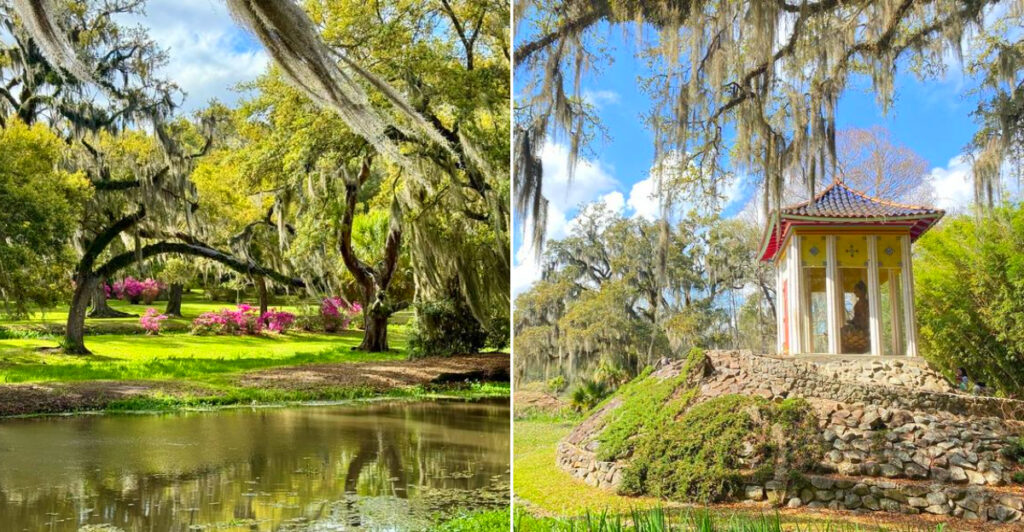
Rolling down the window changed everything. The humid air hit me carrying the smell of live oaks, Spanish moss, plus something floral I could never name.
I had driven past this salt dome a dozen times without stopping. That was a mistake. The garden unfolds over miles of winding road, where ancient oaks draped in moss form a canopy overhead. Alligators drift across the ponds without warning.
Peacocks strut across the path like they own the place, which they basically do.
A centuries-old Buddha statue sits quietly near a lily pond, a strange gift that feels perfectly at home here. Egrets nest on their own island sanctuary, visible from a viewpoint that makes you forget you are in coastal marshland.
I chose to drive slowly, pulling over every few hundred yards. I drove through a tropical garden on a salt dome that rewrites every assumption about Louisiana.
Treat The Road Like Part Of The Garden
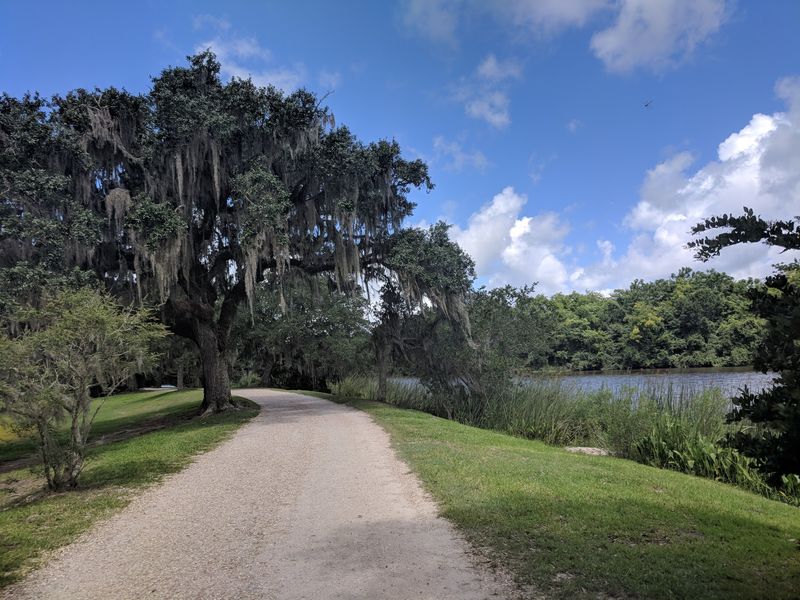
Cars are part of the design here, not a compromise, and that changes how you should visit. A five-mile self-guided road loops through Jungle Gardens, letting you cover a broad landscape without a punishing walk in Louisiana heat.
The smartest approach is simple: drive slowly, treat the route like a moving porch, and pull over often where signs allow.
Some scenes reveal themselves in layers. A live oak looks impressive from the windshield, then much grander when you step out and hear insects, birds, and leaves rubbing overhead.
I found that a quick pass was never enough. Give yourself at least two hours if you can.
The gardens reward an unhurried rhythm, especially if you want time for trails, wildlife watching, and the small pauses that turn a scenic drive into an actual memory you will carry home afterward happily.
Highway 329 Climbs Onto Avery Island
Jungle Gardens is located on Highway 329, also called Avery Island Road, on Avery Island, Louisiana. From New Iberia, Highway 329 is the key route south, carrying visitors out of town and directly toward the island.
Stay on Highway 329 all the way onto Avery Island and follow the posted visitor signs toward Jungle Gardens and the TABASCO complex. There is no numbered street address to hunt for once you reach the island, since the attraction officially uses Highway 329 as its location.
Continue to the Jungle Gardens arrival area and follow signs for the entrance and ticket point. From there, the garden’s self-guided route can be explored by vehicle, with stops along the way for walking.
Pause At The Buddha Temple
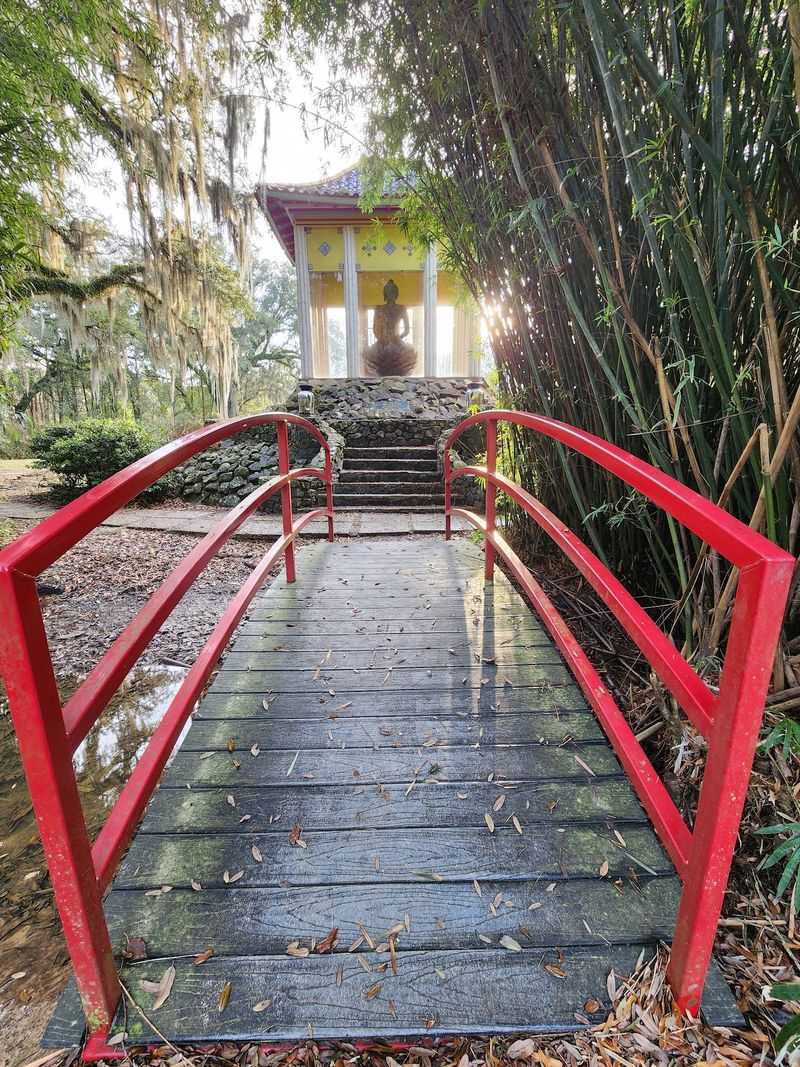
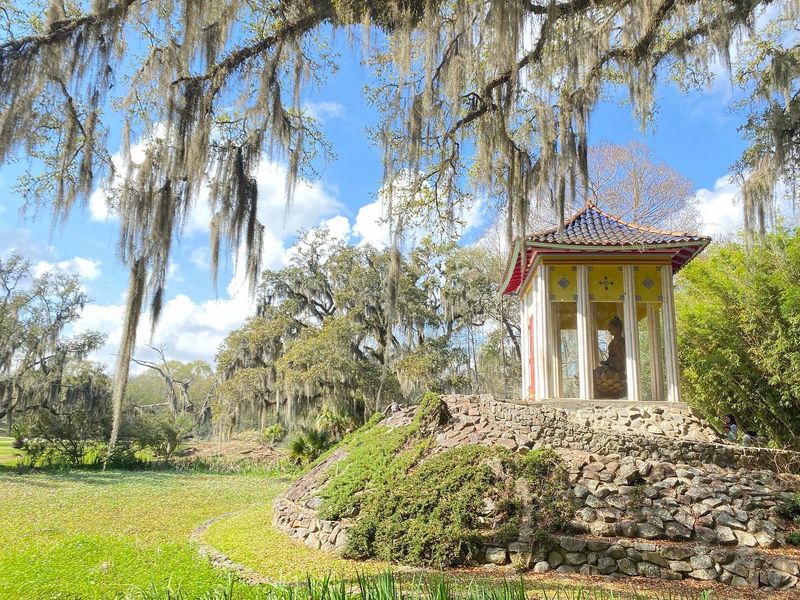
Nothing prepares you for the sudden appearance of a glass temple in coastal Louisiana. One turn brings you to the Buddha, a Chinese statue dating to around 1100 AD, displayed in a serene setting with water, bridges, and carefully arranged plantings.
The contrast is part of the magic. Instead of feeling out of place, the shrine seems to slow the whole garden down.
Its story is just as unusual. Friends sent the statue to E.
A. McIlhenny in 1936 after finding it in a New York warehouse, and architect Owen J.
T. Southwell designed the shelter that protects it.
Today the site also serves as a place of worship for local Buddhists. Stand quietly for a few minutes here.
Even restless visitors tend to lower their voices, and that calm becomes one of the strongest memories of the day there.
Time Your Visit For Bird City
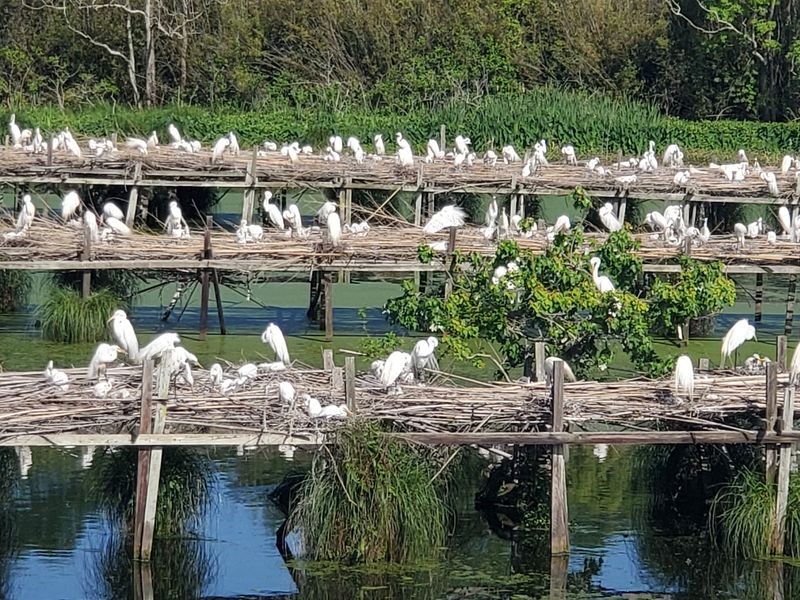
Spring and early summer bring the garden’s noisiest surprise, and it is a wonderful one. Bird City, the rookery started by Ned McIlhenny after he protected young snowy egrets in the 1890s, becomes busy with nesting water birds.
What began with eight rescued egrets grew into a lasting conservation success. Seeing that history alive in feathers and motion gives the place unusual emotional weight.
Binoculars help, but patience matters more. Find a safe stopping place, keep your voice low, and watch the colony settle into its own rhythm.
You may notice adults landing awkwardly, chicks begging, and flashes of white moving through green branches. If birds are your main reason for coming, plan around the nesting season.
Outside those months, the gardens are still lovely, but Bird City loses the bustling drama that makes it unforgettable for many first-time visitors.
Watch For Wildlife With Respect
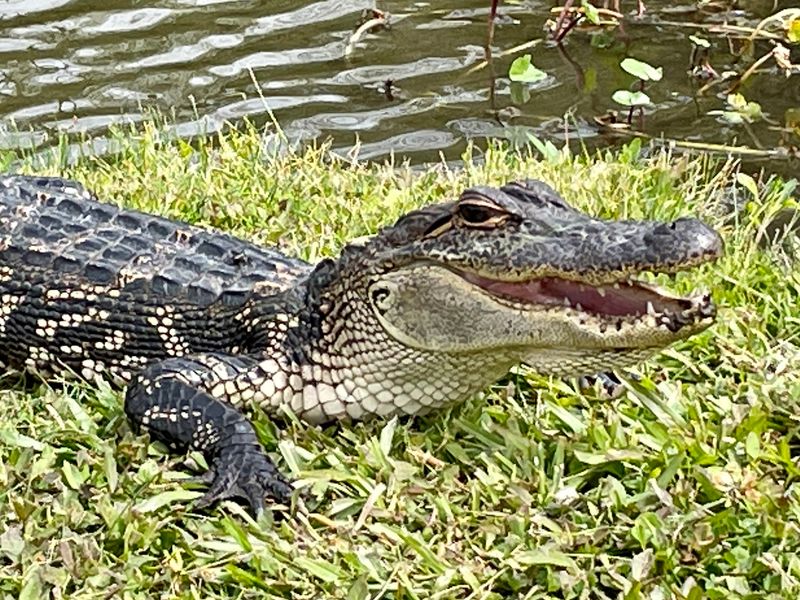
Wildlife watching here comes with a small jolt of respect, especially when an alligator appears beside a calm stretch of water. Jungle Gardens is home to alligators, white-tailed deer, turtles, and many birds, so every stop holds a little suspense.
The trick is to stay alert without turning the visit into a scavenger hunt. Animals show up when they please, not when a map says they should.
Keep a distance, read every sign, and never feed anything. That advice sounds basic, yet it shapes the whole experience.
When people behave well, the gardens stay safer for both visitors and animals. I had better luck by standing still for a few minutes than by marching around loudly with a camera ready.
Quiet attention often reveals movement you would miss while rushing, from ripples near the bank to deer slipping between trees.
Learn Who Built The Dream
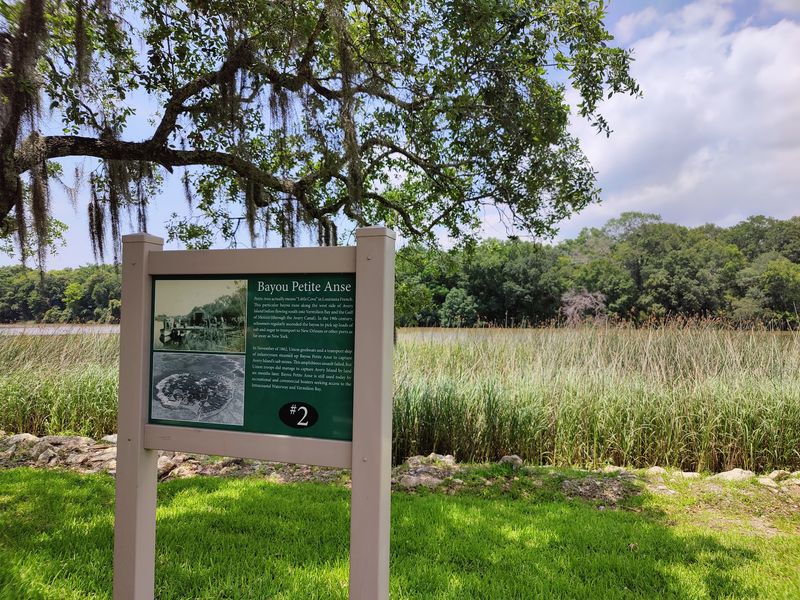
A place this lush can make you forget that someone had to imagine it first. Jungle Gardens grew from the work of Edward Avery “Ned” McIlhenny, son of the Tabasco sauce inventor and a serious naturalist with a strong conservation streak.
He began protecting birds here in the late nineteenth century, then developed the broader garden landscape in the 1920s. Since opening to the public in 1935, the grounds have carried both private vision and public welcome.
That history gives the visit more backbone than a drive alone could offer. You are seeing plant collections, water features, and wildlife habitat shaped by decades of care.
When I thought about that, even the quieter corners felt intentional. Read the interpretive signs instead of breezing past them.
They explain why the gardens feel both ornamental and deeply rooted in the region’s story.
Get Out And Walk A Little
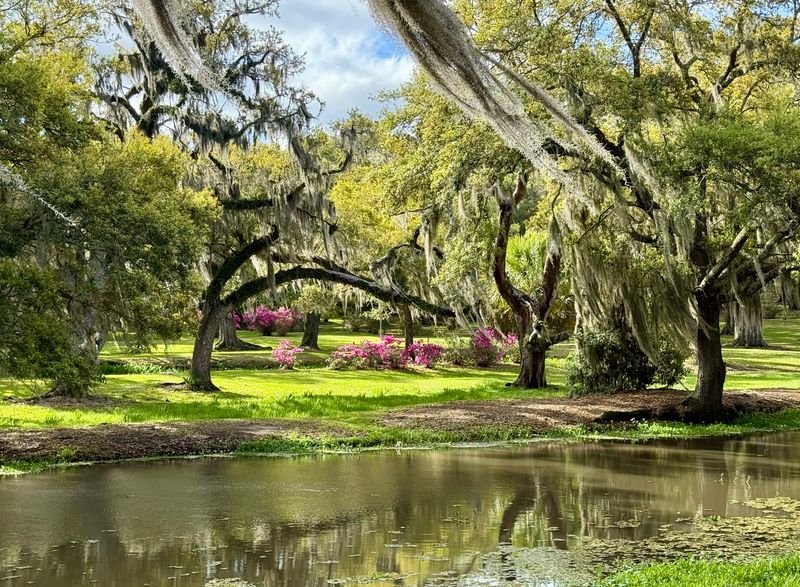
The easiest mistake at Jungle Gardens is staying in the car too much. Driving helps you see the size of the place, but several short walks reveal its character better than the windshield can.
A trail may lead you under live oaks draped with Spanish moss, past camellias and bamboo, or toward a pond where the air feels cooler. Those changes are part of the charm.
Choose a few stops instead of trying to conquer everything at once. The grounds cover 170 acres, so energy disappears faster than expected, especially on days.
Good walking shoes, water, and bug spray can make a difference. I liked driving the route first, then circling back to the spots that seemed inviting.
That approach keeps the visit relaxed and helps you notice details that blur together when you treat the gardens like one scene.
Use The Map And Audio Guide
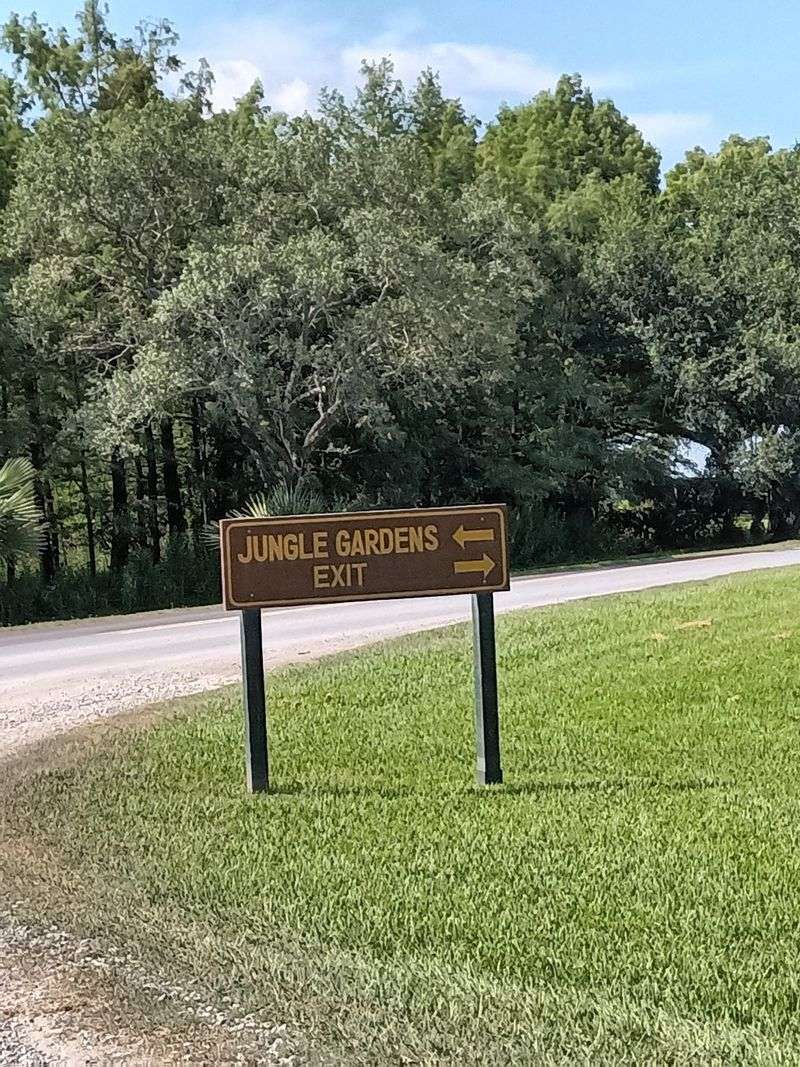
Even a garden built for wandering benefits from a structure. Jungle Gardens offers a self-guided experience, and an audio tour through the TravelStorys app can add context while you drive or walk.
A map from the gift shop is helpful too, especially if you want to match road stops with trails and landmarks. Without some guide, it is easy to drift past places that deserve more than a glance.
Practical details matter more here than people expect. The gardens are open daily from 9 AM to 5 PM, with closures on major holidays, and the entrance area is the place to sort out restrooms and questions.
Taller vehicles should note the height restriction on the RV route. Handle the basics early, and the visit feels smoother.
Then you can spend your attention on birds, water, and trees instead of confusion.
Notice The Landscape Tricks
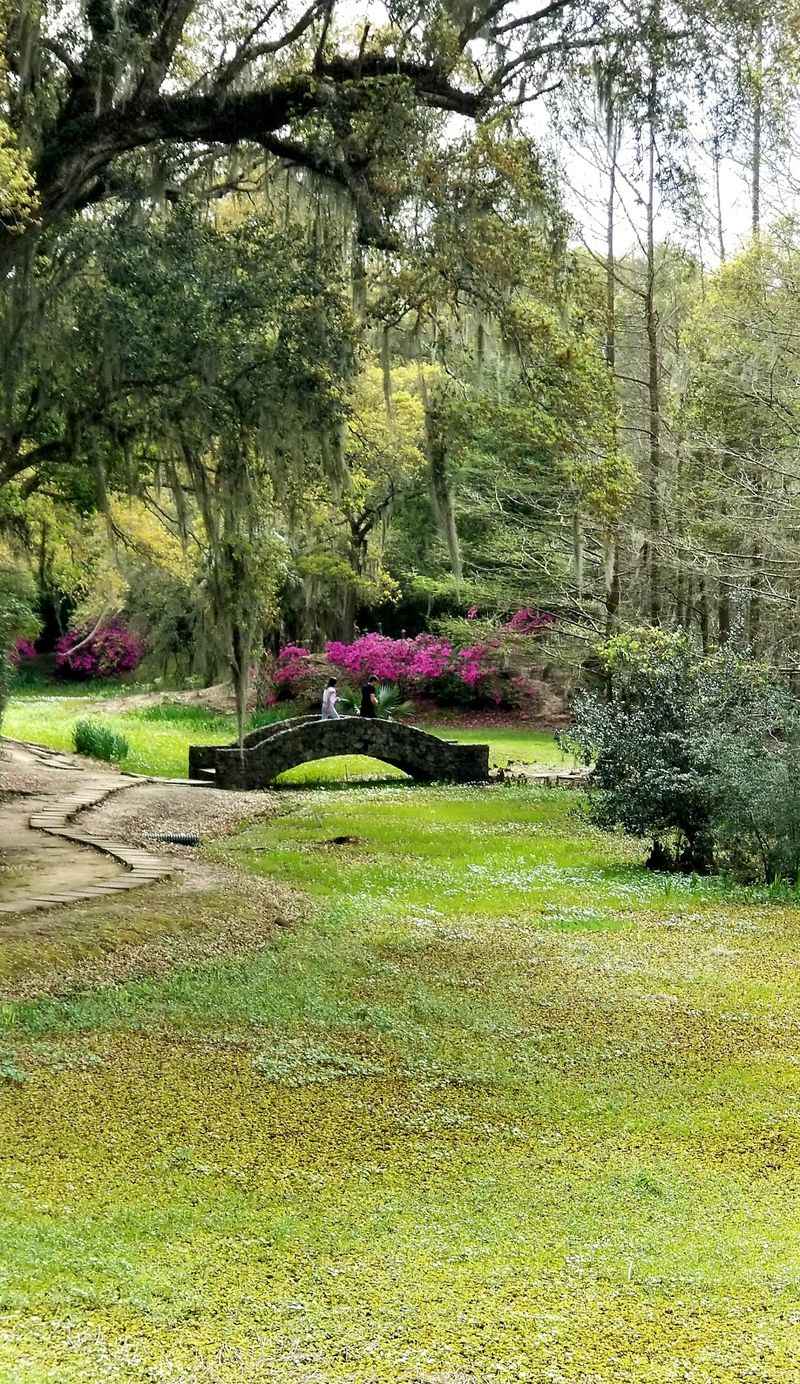
Look closely and you can see that the landscape here was not simply planted, it was reimagined. E.
A. McIlhenny reshaped parts of the property in creative ways, turning an arid gully into a sunken garden and converting an open sand-mining pit into a palm garden.
That kind of intervention gives Jungle Gardens an extra layer of fascination. The beauty feels curated, but not stiff, as if ingenuity and wildness agreed to share the same address.
Knowing those changes makes the scenery more than decorative. A slope, a cluster of palms, or a sheltered hollow may be tied to a deliberate act of preservation or design.
I enjoyed noticing how one area felt intimate while another opened wide to sky and water. If you like gardens as works of art, pay attention to shape as much as color.
It whispers.
Pick Your Season On Purpose
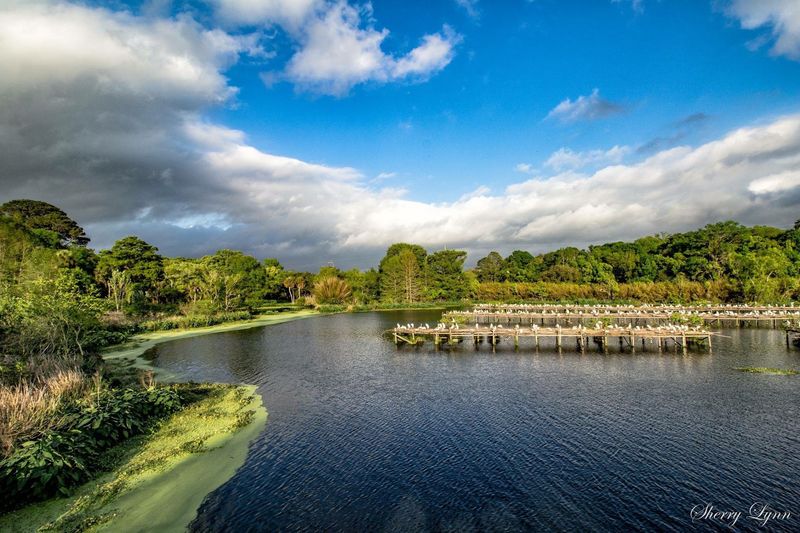
Season changes matter here more than first-time visitors may expect. Early spring through late summer is the big moment for Bird City, while cooler months can make walking more comfortable and bring different blooms like camellias.
Even on quieter days, the gardens keep their personality. Light shifts across water, Spanish moss catches the breeze, and old oaks make the roads feel older than the car you arrived in.
Heat and humidity can change your pace fast, so start earlier in the day if possible. That simple choice can mean better wildlife activity and a much nicer walk at stops.
Winter visits may feel less dramatic if you came only for nesting birds, but they can still be enjoyable. Instead of chasing a perfect season, match your visit to what you care about most: birds, blossoms, long walks, or easy driving.
Pack For A Real Outdoor Visit
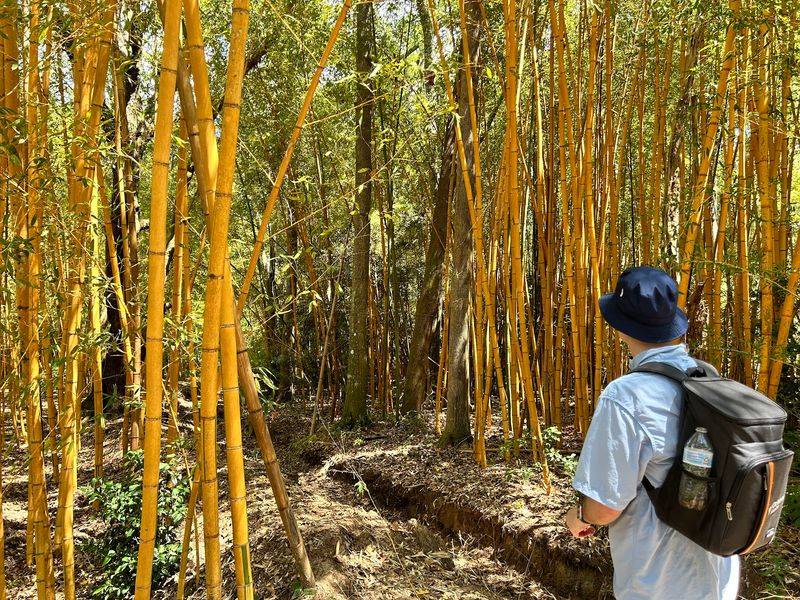
One of the least glamorous tips is also one of the useful: come prepared for a real outdoor place, not a indoor attraction. Roads can be narrow in spots, surfaces may feel rough, and the experience works best when you stay patient behind the wheel.
Bring water, keep your phone charged for photos or the audio guide, and wear shoes that can handle walks on uneven ground.
Respect matters as much as comfort. Do not feed alligators, do not crowd wildlife, and do read the signs before wandering toward the water.
Restrooms are easiest to use near the entrance, so take care of that before you get deep into the route. A little planning removes distractions.
Then the gardens can do what they do best, which is make you feel far away from ordinary Louisiana travel in the best way.