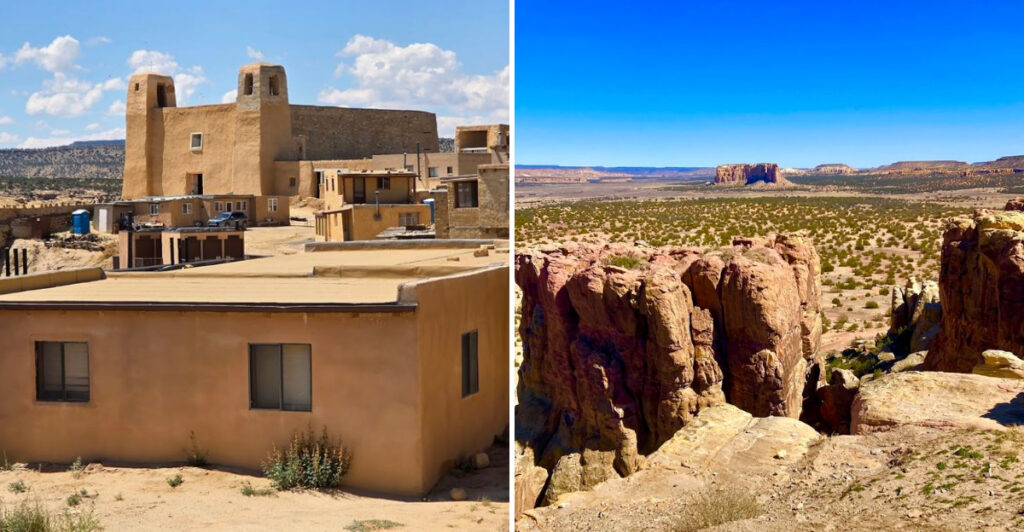
The first thing I noticed was the wind moving across the mesa. Then I noticed how quiet everything felt.
On top of a 367-foot sandstone mesa in New Mexico, this village feels separated from the rush of everything below. Adobe homes sit along worn paths, and the desert stretches so far that it almost feels like the sky has more space here.
People have lived in this community for more than a thousand years, which gives every wall and doorway a different kind of weight. You do not need a dramatic caption to understand it.
You just stand there for a second and let the place speak for itself. This article takes you through the mesa-top views, the old homes, the narrow walking paths, and the feeling of visiting a place where history is not locked behind glass.
It is still part of the day and the land around it.
Adobe Homes Above The Desert
Homes built from the same earth they stand on feel quietly powerful here, stacked together on a mesa top that rises sharply above the New Mexico desert floor.
The adobe construction at this pueblo is not a museum recreation or a carefully staged display for tourists.
These are real homes, built and maintained by real families who have lived here across generations that stretch back more than a thousand years.
The walls are thick and smooth, tinted in warm shades of tan and rust that shift color depending on the angle of the sun.
Adobe is made from a mixture of clay, sand, and organic material, and it works brilliantly in the desert because it stays cool during blazing summer days and holds warmth when temperatures drop at night.
Watching a local resident move through one of the narrow passages between homes gave me a sense of daily life that no guidebook could ever fully capture.
The homes sit in rows, some two or three stories high, their wooden ladders propped against outer walls just as they have been for centuries.
Acoma Pueblo, near Acoma, NM 87034, preserves this architecture not as a relic but as a living tradition.
Cliffside Views Across The Mesa
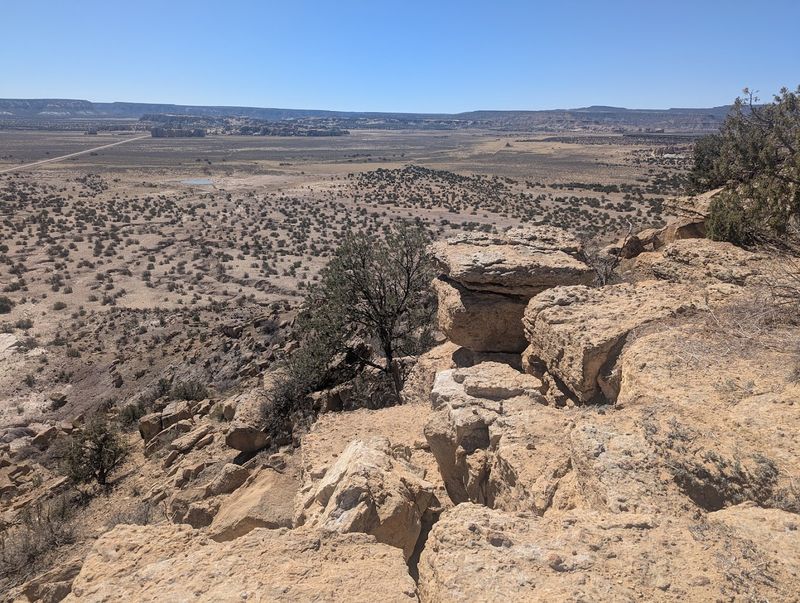
At the edge of the mesa, the desert spreads in every direction like a vast, textured painting that no artist could fully replicate.
The drop from the mesa top is sharp and sudden, and standing near the rim gives you a real sense of just how dramatically this community sits above the surrounding landscape.
Red and orange rock formations rise from the desert floor in the distance, and the horizon stretches so far that you almost feel like you can see the curvature of the earth.
On clear days, which are common here in New Mexico, the visibility reaches for miles with very little modern development interrupting the view.
I stood at one overlook for a long time, watching the light shift across the canyon walls below, and the silence was so complete that I could hear the wind moving through the dry grass at my feet.
The mesa itself is made of sandstone that has been slowly carved by wind and water over millions of years, giving the cliffs a layered, almost striped appearance.
Photographers will find that the golden hour light here creates colors that almost seem too vivid to be real.
Narrow Paths Through Living History
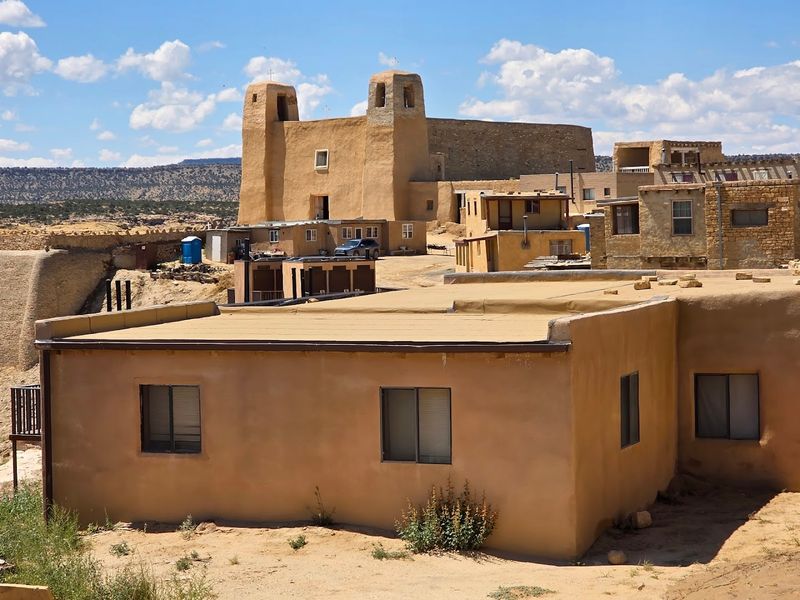
The pathways between the old adobe walls of this pueblo feel less like sightseeing and more like being quietly welcomed into a conversation that has been going on for centuries.
The paths are narrow, sometimes barely wide enough for two people to pass each other, and the walls on either side rise close enough that you can reach out and touch the rough plaster with both hands.
Every turn reveals something unexpected, a wooden door painted turquoise, a clay pot sitting in a niche in the wall, or a view that suddenly opens up to the wide desert sky.
The ground underfoot is worn smooth by countless footsteps, which is a reminder that this is not a reconstructed historic site but a community that has been in continuous use longer than most nations have existed.
Guided tours are led by members of the Acoma community, and their knowledge of the village adds layers of meaning to what you see around every corner.
I found myself slowing down naturally, not because I was told to, but because the place itself seemed to ask for that kind of attention.
Few travel experiences match the feeling of paths that connect the present to such a deep and unbroken past.
Sunlit Walls And Wide Skies
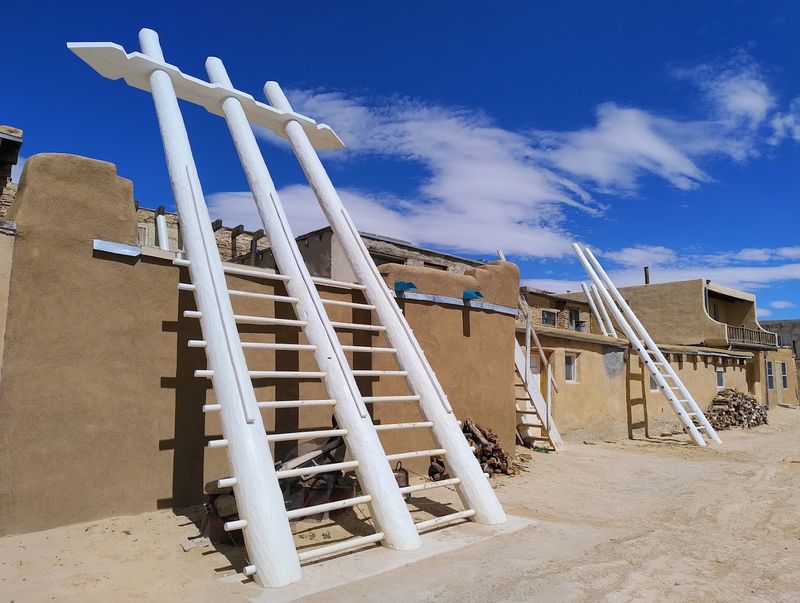
The way the afternoon sun hits the adobe walls at this pueblo is something I genuinely did not expect to find so striking.
The surfaces catch the light at different angles depending on the time of day, shifting from pale cream in the morning to deep amber and copper tones as the afternoon moves toward evening.
New Mexico is famous for its sky, and from the top of the mesa, that sky is absolutely impossible to ignore.
The blue here has a depth and clarity that feels almost unreal, especially when set against the warm earth tones of the buildings below it.
Clouds, when they appear, cast slow-moving shadows across the village and the mesa top, creating a natural light show that changes the mood of the whole place within minutes.
I sat on a low wall near the center of the village for about half an hour just watching the light move, which sounds simple but felt like one of the most satisfying things I did on the entire trip.
The combination of sunlit earthen walls, enormous sky, and total quiet creates an atmosphere that is both grounding and quietly exhilarating.
It is the kind of beauty that does not shout for attention but stays with you long after you have driven back down the road.
Handmade Pottery And Local Craft
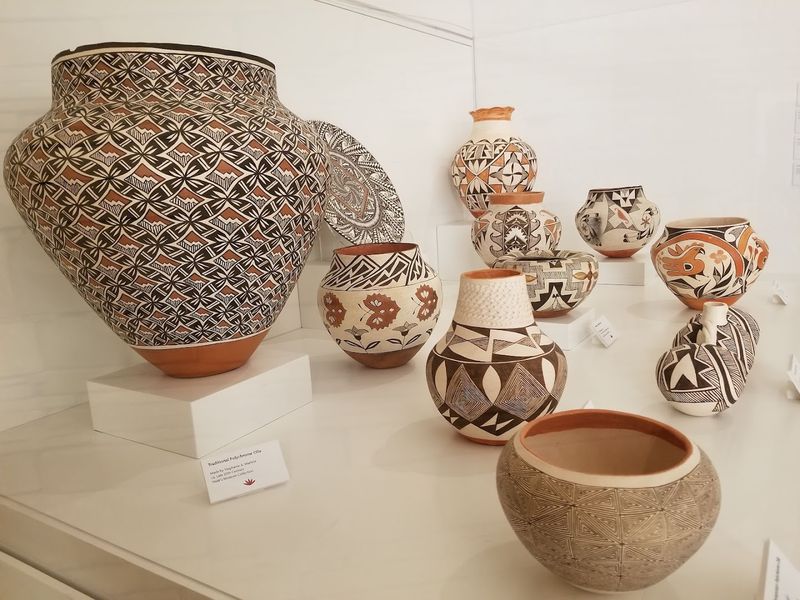
Acoma pottery is one of the most recognized art forms in the American Southwest, and seeing it up close for the first time makes it immediately clear why collectors and museums prize it so highly.
The pieces are hand-coiled rather than wheel-thrown, which gives each one a slightly individual character that factory production could never replicate.
The designs are often geometric and precise, featuring fine patterns, including many black-and-white designs that require enormous skill and patience to paint by hand using a brush made from a single yucca leaf.
Many of the potters are women who learned the craft from their mothers and grandmothers, carrying forward a tradition that connects directly to ancient ceramic styles found throughout the region.
During my visit, I watched a local artist demonstrate the painting process, and the steadiness of her hand while drawing perfectly even lines was impressive to witness.
Pottery is available for purchase directly from Acoma artisans at the village, which means your money goes straight to the community rather than to an outside retailer.
Buying a piece here is not just a souvenir transaction but a direct connection to a living artistic tradition that has survived and adapted for over a millennium.
Quiet Corners Of The Pueblo
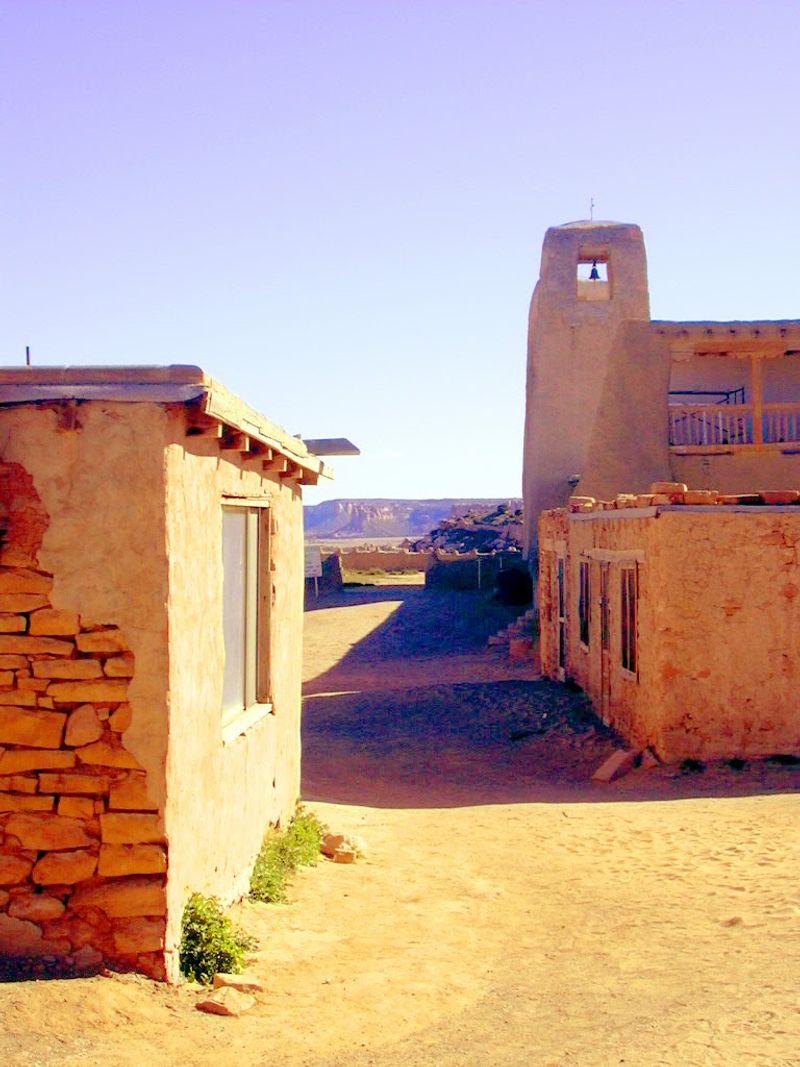
Not every part of the village is on the main tour path, and the quieter corners of the pueblo carry a different kind of energy that I found unexpectedly moving.
Away from the areas where visitors gather, the sound of the wind becomes more noticeable, and the sense of stillness settles in with a weight that feels almost physical.
Old wooden beams stick out from the upper walls of some buildings, remnants of roof structures from earlier periods, and they give the architecture a texture that speaks directly to the age of the place.
Patches of shadow fall across worn stone steps, and small details like a weathered door frame or a carefully stacked pile of firewood tell quiet stories about the people who live here.
I noticed a cat sleeping on a sun-warmed wall in one of the side passages, completely unbothered by the few visitors nearby, which somehow felt like one of the most honest images of daily life I encountered all day.
The pueblo is not a theme park or a staged environment, and those quieter moments remind you that real people call this place home.
Respecting that reality, by staying on designated paths and following community guidelines, keeps the experience respectful for everyone involved.
Ancient Architecture In The Desert
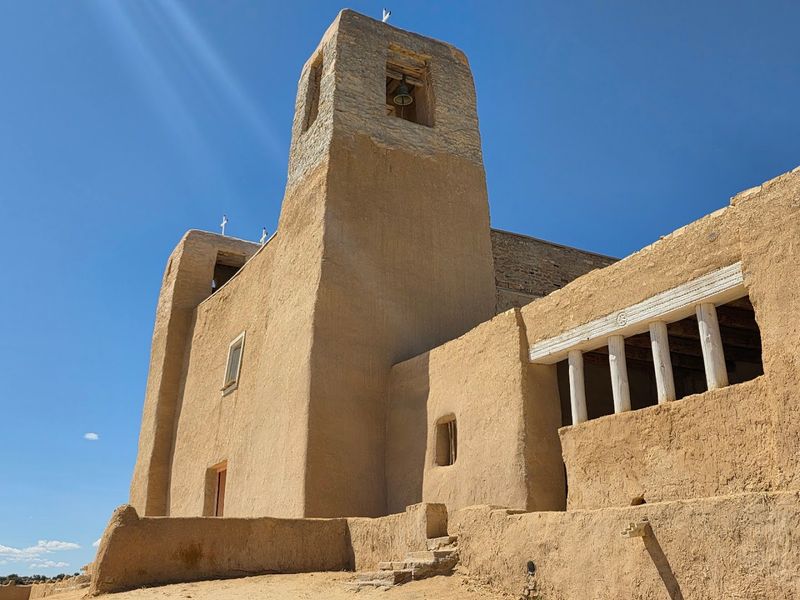
Few places in North America offer the chance to stand inside architecture that has been occupied for nearly 1,000 years, with roots often traced to around the 12th or 13th century.
The multi-story buildings were constructed without modern tools or machinery, using stone, adobe, and timber carried up the steep mesa walls by hand.
The engineering logic behind the design is fascinating because the thick walls regulate interior temperature naturally, the flat rooftops serve as outdoor living spaces, and the vertical stacking of rooms maximizes usable area on a limited mesa footprint.
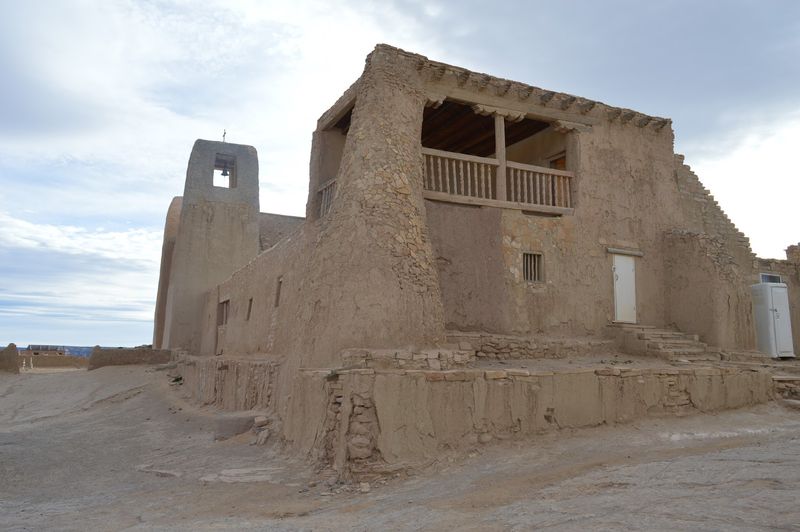
The San Esteban del Rey Mission Church, built in the early 1600s, stands as one of the most striking structures in the village, with walls that are nearly ten feet thick and towers that rise dramatically above the surrounding rooftops.
Its construction required enormous labor from the Acoma people, and the massive wooden beams inside were carried from forests many miles away.
Inside the mission, those ancient beams overhead gave me the weight of that history in a way that reading about it never quite delivers.
The architecture here is not ancient in a fragile or faded sense but in a solid, enduring way that commands deep respect.
A Sacred Mesa With Timeless Views
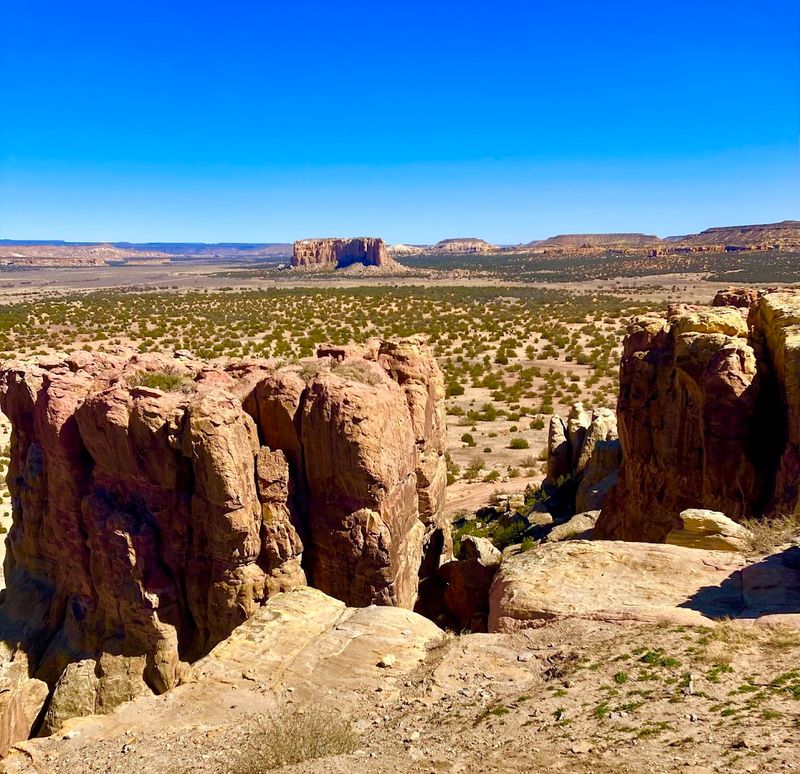
The Acoma people refer to their mesa-top home as Sky City, and spending even a few hours here makes that name feel less like a label and more like an accurate description of how the place actually feels.
The mesa rises 367 feet above the surrounding desert floor, and the sense of elevation is not just physical but almost spiritual in the way it changes your perspective on the landscape around you.
This is a place that the Acoma people consider sacred, and that reverence is visible in the care taken to maintain both the structures and the traditions that have defined the community for generations.
A guided tour led by Acoma community members is required for visits, which is both a practical arrangement and a meaningful one because it ensures that the story of this place is told by the people who actually own it.
Photography is restricted in certain areas out of respect for sacred spaces, and honoring those boundaries is part of being a responsible visitor.
I left with a deep appreciation for a community that has held onto its identity, its language, and its home ground through centuries of change and challenge.
Sky City is not just a destination but a testament to human resilience, standing proudly at Acoma Pueblo in New Mexico, as it has for more than a thousand years.