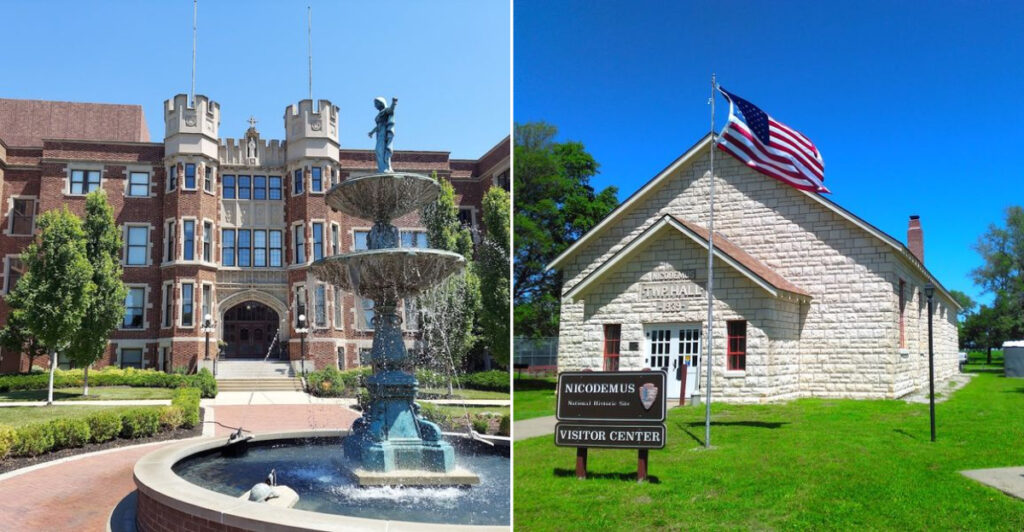
Some towns do not need to move fast to make a strong impression.
Across the charming small towns of Kansas, there is still the kind of old fashioned character that makes a main street stroll feel like stepping into a slower, sweeter chapter of the past.
Historic storefronts, quiet sidewalks, classic diners, courthouse squares, antique shops, and wide-open skies all add to the feeling. The magic is in the details.
A faded sign, a friendly wave, a century-old building, or a small café that still feels like a gathering place can make time seem softer around the edges.
These towns remind you that simple beauty still has plenty of power. I have always loved places where the past feels close enough to notice, and a Kansas small-town road trip sounds like the perfect way to trade hurry for charm.
1. Abilene, Dickinson County
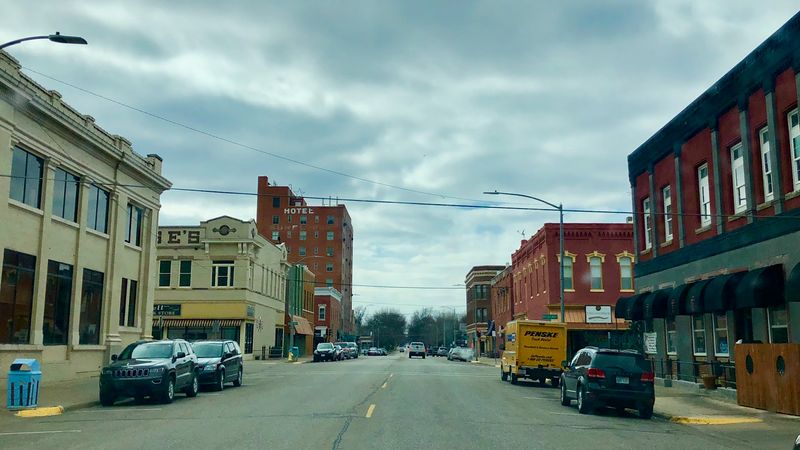
Long before it became the boyhood home of President Dwight D. Eisenhower, Abilene, Kansas earned its reputation as one of the wildest cattle towns on the American frontier.
Situated in Dickinson County, this compact community packs a remarkable amount of history into just a few walkable blocks.
The Eisenhower Presidential Library and Museum is the crown jewel of Abilene, drawing visitors from across the country who want to understand the man who shaped mid-century America.
But Abilene is more than one famous name. The Old Abilene Town recreation brings the 1870s cattle drive era roaring back to life with authentic storefronts and costumed guides.
The Greyhound Hall of Fame adds a wonderfully quirky chapter to the town’s identity, celebrating the sport of greyhound racing in an unexpected but totally earnest way.
Abilene rewards slow walkers and curious minds equally. Give it a full day and it will give you stories worth sharing for years.
2. Council Grove, Morris County
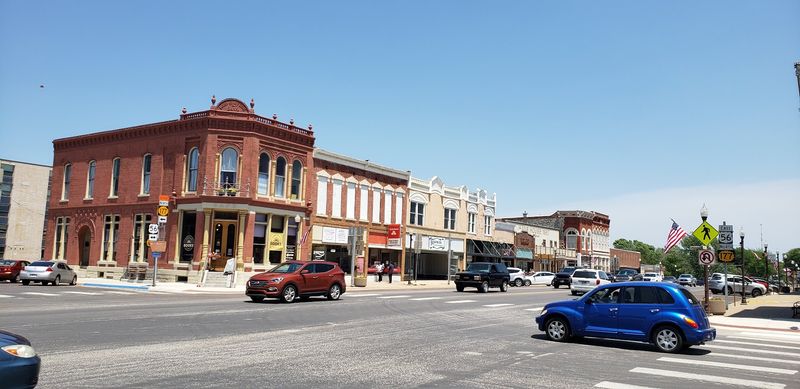
There is a quiet dignity to Council Grove, Morris County, that hits you the moment you cross into town.
This was the last major supply stop on the Santa Fe Trail, and the weight of that history still lingers in the limestone buildings lining Main Street.
Council Grove earned its name from a treaty council held beneath a massive oak tree in 1825, where U.S. commissioners and Osage tribal leaders agreed on safe passage for traders heading west.
That oak is long gone, but the town has preserved its legacy through museums, trail markers, and a genuine reverence for the past.
The Kaw Methodist Mission, now a state historic site, tells the layered story of Indigenous education and missionary life on the plains.
The Neosho River winds peacefully through Council Grove, making it a lovely spot for a quiet afternoon stroll.
Honestly, few Kansas towns carry their history with such grace and unpretentious pride as this one does.
3. Lindsborg, McPherson County
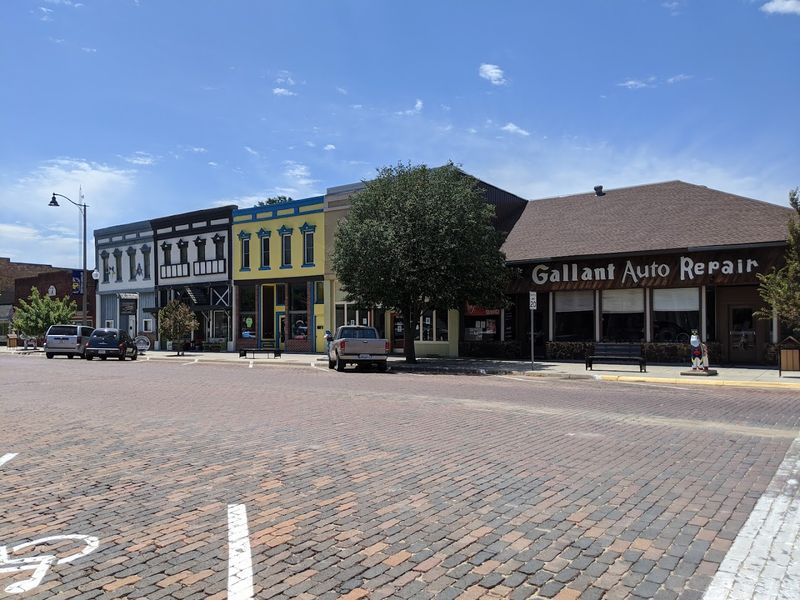
Nicknamed “Little Sweden USA,” Lindsborg in McPherson County is one of the most delightfully specific small towns you will ever encounter.
Swedish immigrants settled here in 1869, and the community has held onto that heritage with a warmth and creativity that feels completely authentic rather than manufactured for tourists.
Giant red Dala horse sculptures dot the streetscape, Swedish flags flutter from storefronts, and the aroma of traditional baked goods drifts from local bakeries.
The Birger Sandzen Memorial Gallery houses an impressive collection of work by the Swedish-American impressionist painter, making Lindsborg a genuine arts destination on the Kansas plains.
Bethany College, founded by Swedish Lutheran settlers, anchors the town intellectually and culturally.
Every other year, the community stages a full Messiah festival, a choral tradition dating back to 1882 that draws performers and audiences from across the region.
Lindsborg proves that a small town with a clear identity and a proud community can create something truly extraordinary in the middle of the Great Plains.
4. Cottonwood Falls, Chase County
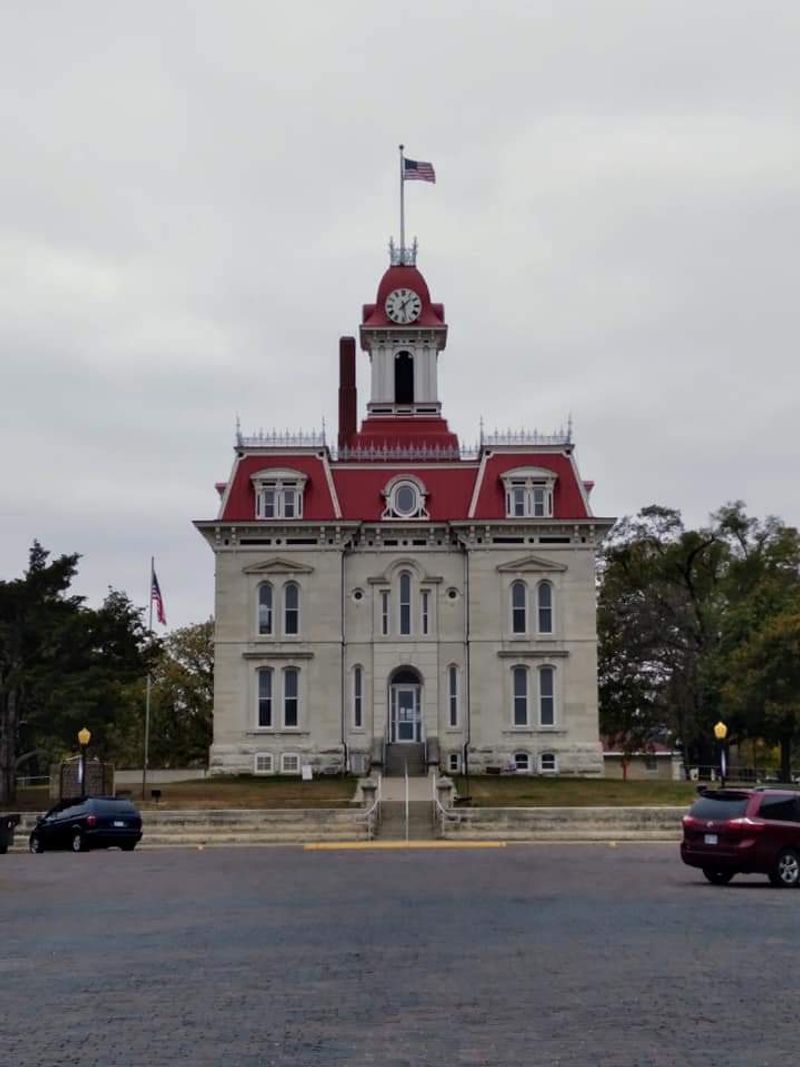
Sitting at the heart of the Flint Hills, Cottonwood Falls in Chase County is the kind of place that makes landscape photographers stop their cars and just stand there for a while.
The rolling tallgrass prairie surrounding this tiny town is some of the most visually dramatic scenery in the entire state.
The Chase County Courthouse, completed in 1873, is the oldest operating courthouse in Kansas and is widely considered one of the most beautiful courthouse buildings in the entire country.
Its French Renaissance design rises unexpectedly from the prairie, and standing before it feels like a genuinely cinematic moment. The building alone is worth the drive.
Cottonwood Falls also sits near the Tallgrass Prairie National Preserve, one of the last remaining stretches of native tallgrass prairie in North America.
Bison roam freely there, and the hiking trails offer a rare chance to experience the landscape as it existed centuries ago. This town is small in population but enormous in natural and architectural character.
5. Wamego, Pottawatomie County
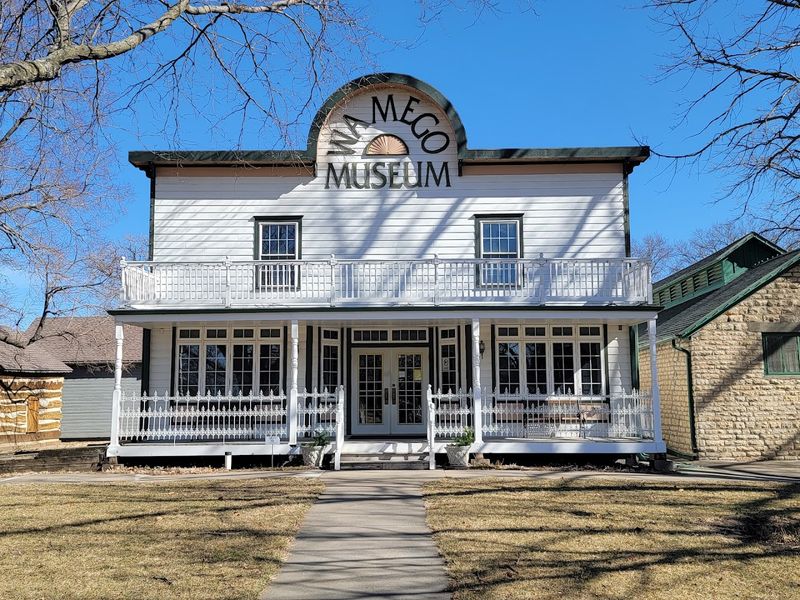
Pottawatomie County’s Wamego has leaned fully into its connection to one of the most beloved stories in American culture, and the result is a town that is equal parts charming and entertainingly offbeat. L.
Frank Baum, the author of The Wonderful Wizard of Oz, has a strong cultural presence here, and the Oz Museum on Lincoln Avenue is the undisputed centerpiece of the whole experience.
The museum houses one of the largest private collections of Oz memorabilia in the world, including original movie props, vintage books, and rare promotional materials from the 1939 film.
Walking through it feels like stepping into a fever dream of yellow bricks and ruby slippers, in the best possible way.
Beyond the Oz connection, Wamego has a genuinely lovely historic downtown with independent shops, a restored 1906 carousel in City Park, and the Dutch Mill, a historic windmill that has stood since 1879.
Wamego balances nostalgia for a fictional Kansas with real pride in its own authentic history, and that balance is surprisingly effective.
6. Atchison, Atchison County
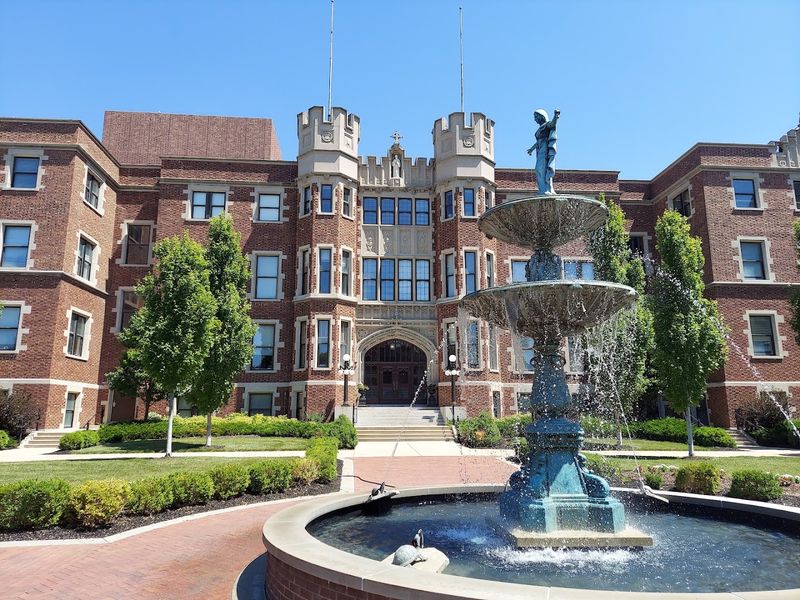
Perched dramatically above the Missouri River, Atchison is one of those Kansas towns that immediately impresses with its architecture and topography.
As the seat of Atchison County, this city of about 11,000 residents carries layers of history that reach back to the very founding of the state.
Atchison is the birthplace of Amelia Earhart, the legendary aviator who became the first woman to fly solo across the Atlantic Ocean.
The Amelia Earhart Birthplace Museum, a charming Victorian home overlooking the river, is a pilgrimage site for aviation enthusiasts and history lovers alike.
The International Forest of Friendship nearby honors aviators from around the world with trees representing every nation.
The town also has a reputation as one of the most haunted cities in Kansas, which lends it a deliciously spooky edge.
Victorian mansions, steep bluffs, and a thriving arts community round out the Atchison experience.
Few Kansas towns combine natural drama, historic depth, and genuine personality quite so effortlessly as Atchison does.
7. Lecompton, Douglas County
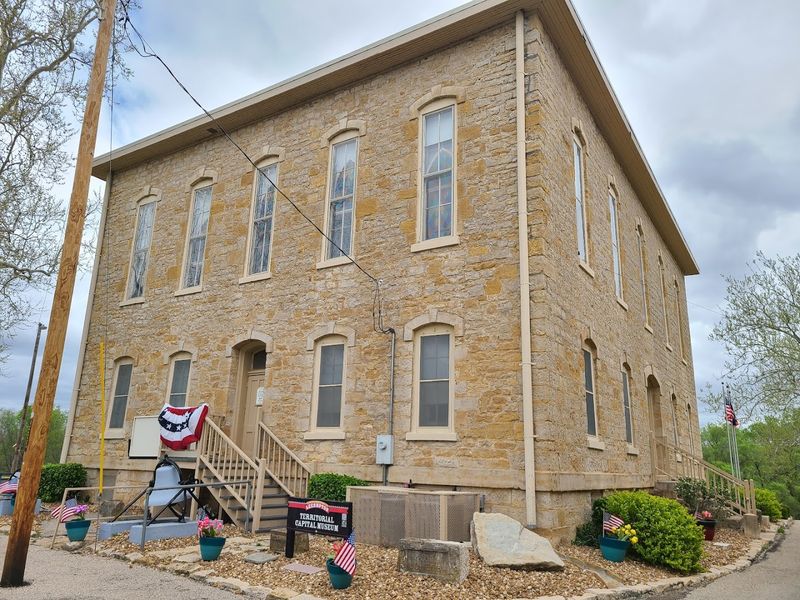
Few places in Kansas carry the weight of national history quite like Lecompton, a tiny town in Douglas County with an outsized role in the story of American democracy.
In the 1850s, Lecompton was the territorial capital of Kansas, and the battles fought here over slavery and statehood helped ignite the tensions that led to the Civil War.
Constitution Hall, a modest stone building that still stands in Lecompton today, was the site where pro-slavery delegates drafted the controversial Lecompton Constitution in 1857.
That document, and the fierce opposition to it, made “Bleeding Kansas” a phrase known across the entire nation.
The building is now a state historic site with exhibits that bring this dramatic chapter to life with clarity and depth.
Lane University also has deep roots in Lecompton, and its former building and museum collections remain part of the town’s historic story.
The town is quiet and small today, but that stillness makes the historical significance feel even more profound. Lecompton is proof that big history can live in very small places.
8. Fort Scott, Bourbon County
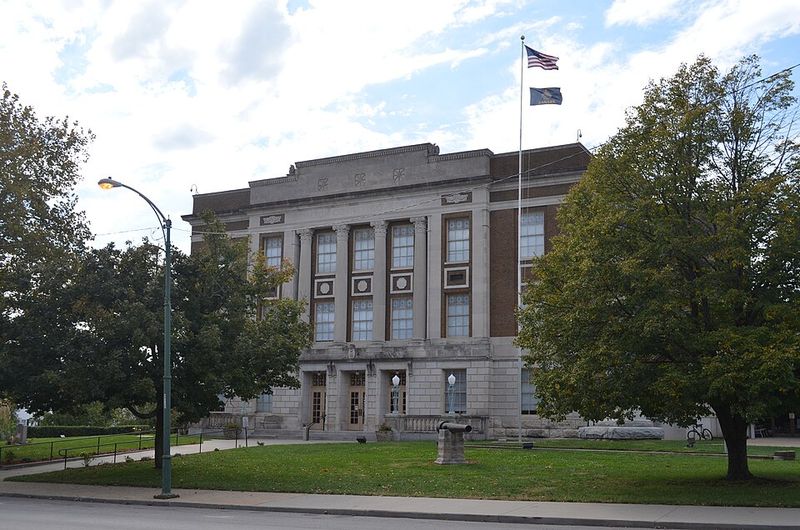
Named after General Winfield Scott, Fort Scott in Bourbon County is a town where American military history and frontier life intersect in a way that feels tangible and immediate.
The Fort Scott National Historic Site preserves twenty original and reconstructed mid-19th century buildings arranged around a broad parade ground, creating one of the most complete representations of frontier military life in the entire country.
During the Civil War, Fort Scott served as a major Union supply depot and was one of the first places in the nation to organize African American troops.
That history is honored with serious attention at the site’s museum and through interpretive programs that run throughout the year.
Beyond the fort, Fort Scott’s downtown features beautifully restored Victorian commercial buildings, independent restaurants, and a walkable historic district that rewards slow exploration.
The Gordon Parks Museum, honoring the legendary photographer and filmmaker who grew up in Fort Scott, adds a powerful artistic dimension to an already rich cultural landscape. This town earns every minute you give it.
9. Lucas, Russell County
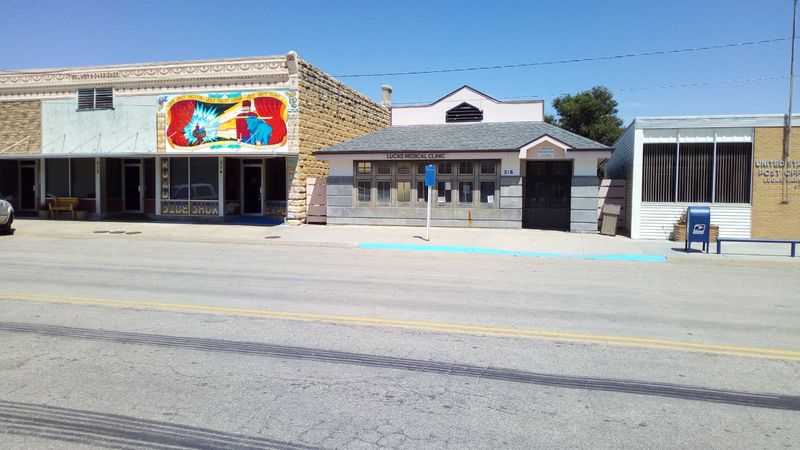
Russell County’s Lucas is perhaps the most wonderfully strange small town in all of Kansas, and that is genuinely meant as the highest compliment.
This community of fewer than 400 people has somehow become internationally recognized as a folk art destination, earning the title of Grassroots Art Capital of Kansas.
The centerpiece of Lucas is the Garden of Eden, a property created by Civil War veteran Samuel Dinsmoor between 1907 and 1927.
Dinsmoor spent decades covering his yard with concrete sculptures depicting biblical scenes, political commentary, and his own personal mythology. It is bizarre, brilliant, and completely unlike anything else in the Midwest.
Lucas has built on that eccentric foundation with additional folk art installations scattered throughout town, including a community-built outhouse that is itself a work of art.
The Grassroots Art Center provides broader context for the regional folk art movement.
Lucas proves that a tiny town with a bold creative identity can draw curious visitors from across the globe, and it does so with cheerful, unpretentious confidence.
10. Marysville, Marshall County
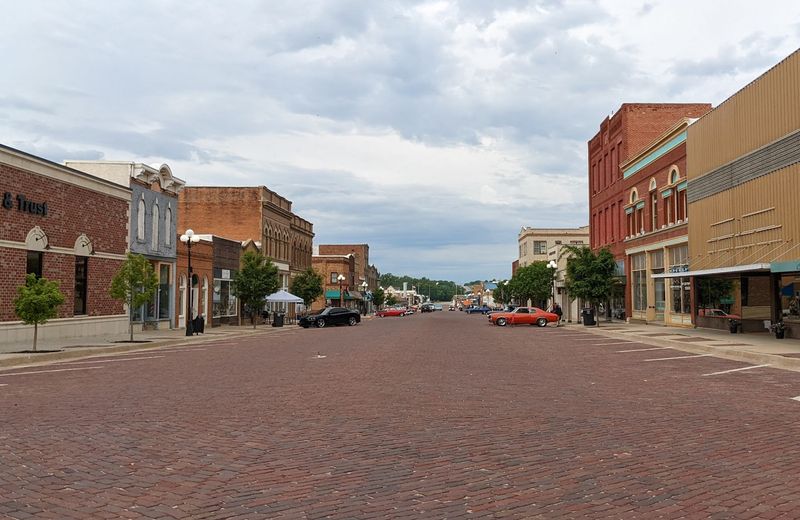
Marysville, the seat of Marshall County in northeastern Kansas, holds a place in American transportation history that most people would not expect from a town of about 3,000 residents.
It was home to the first home station on the entire Pony Express route, and that distinction has shaped the town’s identity in fascinating ways.
The Original Pony Express Home Station No. 1, a stone structure built in 1859, still stands in Marysville and now operates as a museum.
Visitors can step inside and imagine the young riders who stopped here briefly before thundering westward with mail pouches full of urgent correspondence.
The Pony Express only operated for 18 months, but its legend has lasted well over a century.
Marysville is also home to the Black Squirrel, a naturally occurring melanistic squirrel that has been adopted as the town’s quirky and beloved mascot.
The community takes genuine pride in these unusual residents, and spotting one on a walk through town feels like a small, joyful reward. Marysville is full of those kinds of unexpected pleasures.
11. Ellinwood, Barton County
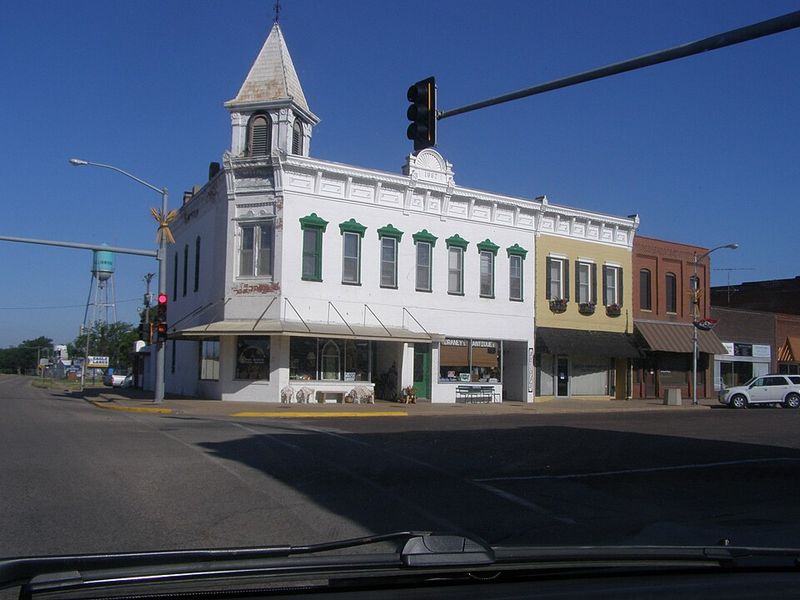
Barton County’s Ellinwood looks like a perfectly ordinary small Kansas town from street level, but beneath those quiet sidewalks lies one of the most genuinely surprising attractions in the entire state.
Ellinwood is home to a network of underground tunnels built in the late 1800s that once connected businesses across the downtown area.
These tunnels were used by merchants to store goods, move products between buildings during harsh winters, and conduct business away from the elements.
Local guides lead tours through the preserved passages, sharing stories about the German-Russian immigrants who settled Ellinwood and built a community with remarkable ingenuity and determination.
The tunnels are only part of what makes Ellinwood worth visiting.
The town has a charming downtown with historic storefronts, a strong sense of community pride, and the kind of friendly small-town atmosphere that feels increasingly rare.
Ellinwood does not shout about its hidden history, and that understated confidence makes discovering it all the more satisfying.
It is a town that genuinely rewards the curious traveler who takes the time to look a little deeper.
12. Nicodemus, Graham County
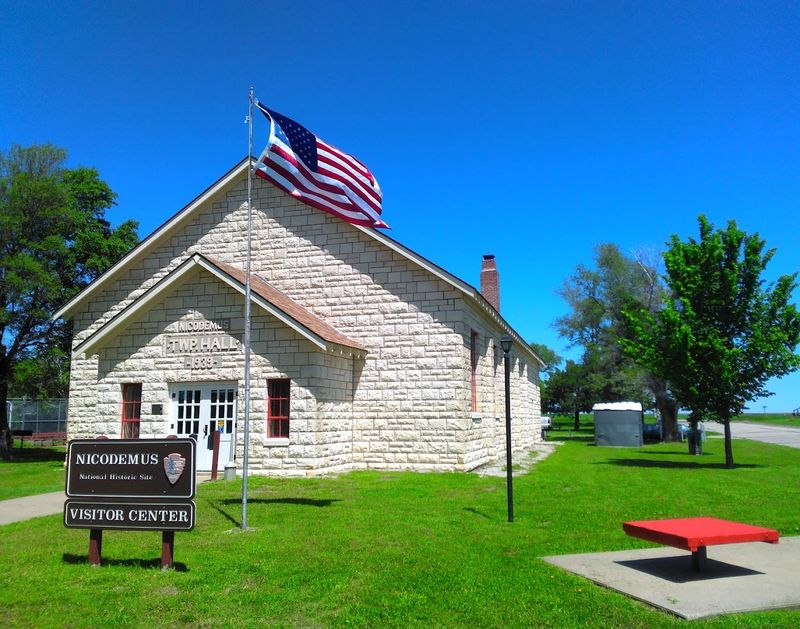
Nicodemus, set on the windswept plains of Graham County in northwestern Kansas, carries a history of extraordinary courage and determination.
Founded in 1877, it is the oldest and only remaining western settlement established by African Americans during the post-Civil War Reconstruction era, and that distinction makes it one of the most significant historic sites in the entire country.
Formerly enslaved people and their descendants traveled from Kentucky to build a new life on the Kansas prairie, facing brutal winters, drought, and social hostility with remarkable resilience.
The Nicodemus National Historic Site preserves five original structures and tells the full story of the Exoduster movement, the mass migration of Black Americans to Kansas in search of freedom and opportunity.
The annual Homecoming celebration, held every July since 1878, brings descendants of original settlers back to Nicodemus from across the nation.
It is one of the longest-running community reunions in American history. Nicodemus is a place of profound meaning, quiet beauty, and living community memory that deserves far more recognition than it typically receives.