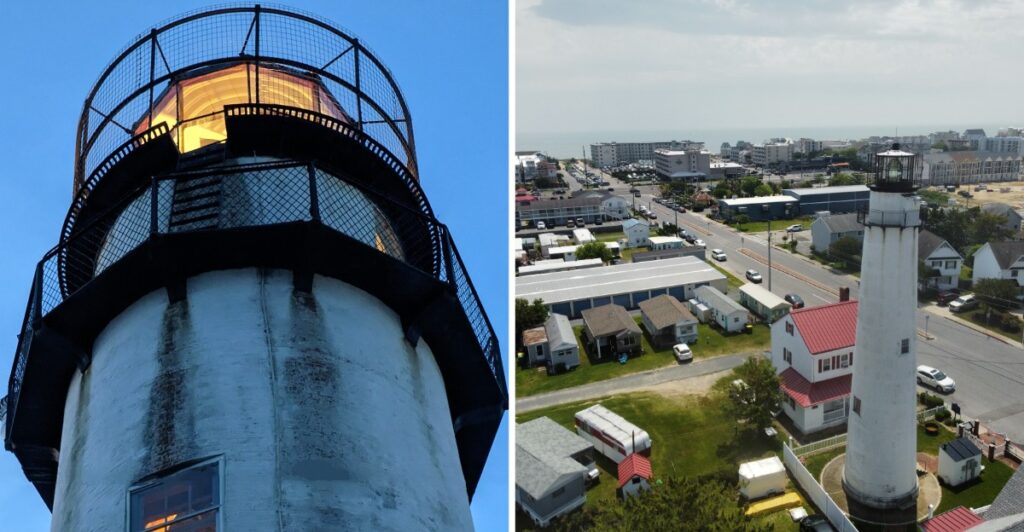
This lighthouse practically has one foot in another state.
Its real job has always been offshore.
Built in the 1800s near the Delaware-Maryland line, the white brick tower once helped mariners steer clear of dangerous shoals offshore. More than a century later, its light still has a job to do.
You cannot climb the tower, but that does not make this a drive-by photo stop.
Walk the grounds. Check out the old boundary marker. Then look up at the tower and remember how long it has been standing watch over this little corner of Delaware.
The whole site is compact, so give the details a chance to catch up with you.
Two states meet nearby, but the lighthouse still gets the last look.
The Light First Lit In 1859
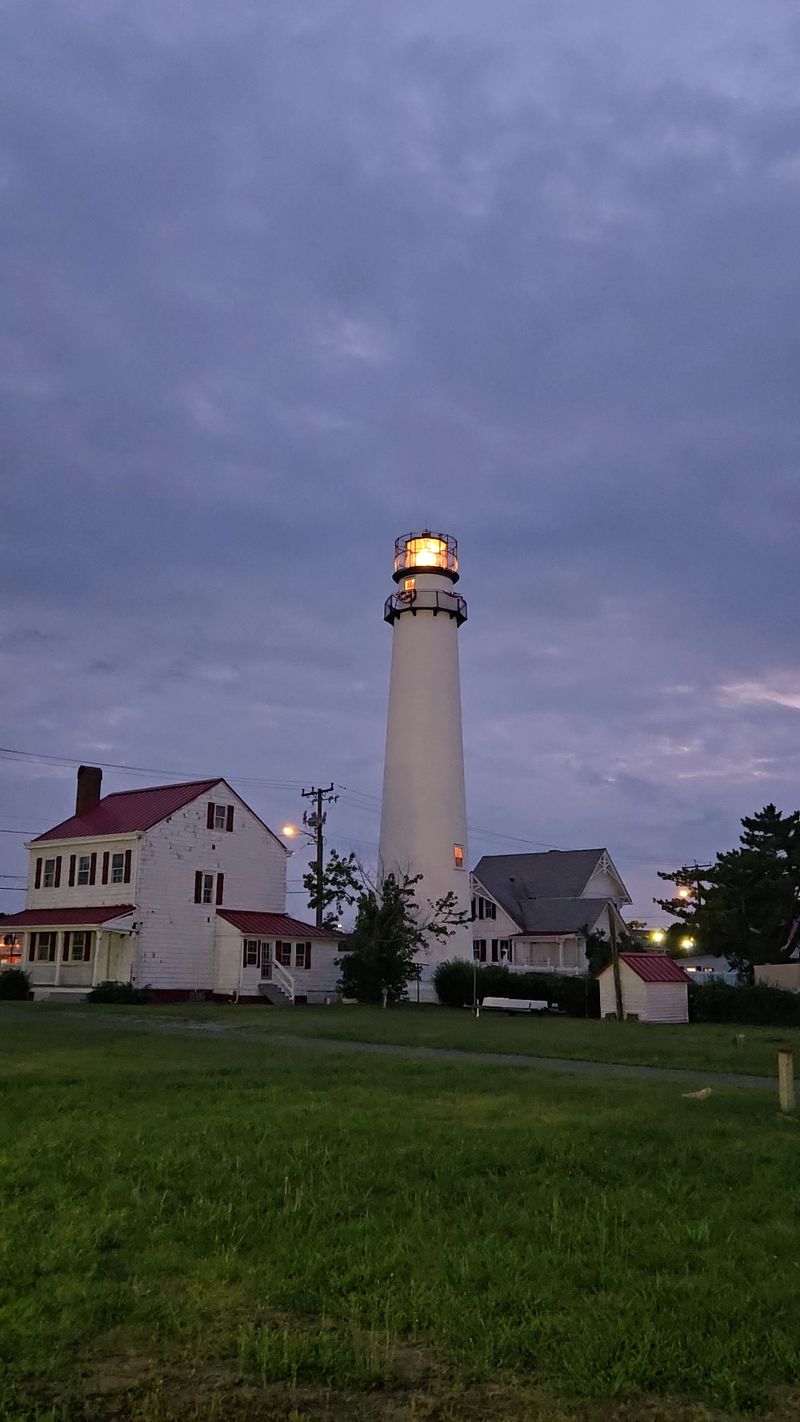
Fenwick Island Lighthouse was first lit on August 1, 1859.
The station was established because ships traveling along the coast faced the Fenwick Shoals, a shallow offshore hazard several miles from shore. The lighthouse gave mariners a fixed coastal light to help identify their position and avoid the shoals.
Congress had authorized the project before construction, and the completed tower became part of the nineteenth-century network of aids to navigation along the Atlantic coast.
The first light came from a third-order Fresnel lens installed in the lantern room. From the start, the purpose of the station was practical: mark a dangerous stretch of water and give vessels another reference point along the coast.
Today, the tower still stands near the same state-line setting, though the surroundings have changed considerably since the nineteenth century.
If you are visiting for the history, start with the first-light date and the offshore shoals, then move through the rest of the station timeline from there.
An Eighty-Seven-Foot Tower Stands Near The State Line
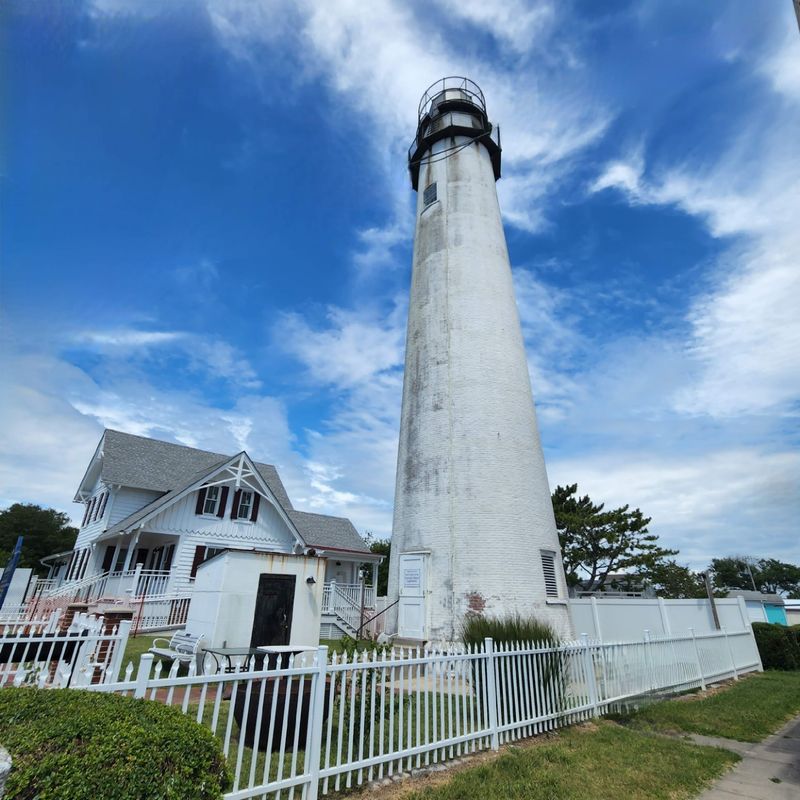
The conical brick lighthouse rises about 87 feet near the southern edge of Delaware.
Its construction uses an unusual double-wall design, with a conical outer brick tower surrounding a cylindrical inner tower. The white exterior and dark lantern section make the lighthouse easy to identify from the nearby streets.
The station also sits very close to the Delaware-Maryland boundary. On the grounds, a stone marker records the 1751 Transpeninsular Line, part of the historic boundary between the two colonies.
Walk from the tower toward the marker and you can take in both the lighthouse and the state-line history within the same visit. The marker can be viewed from the public grounds.
The surrounding area is now residential, so the lighthouse no longer stands in an isolated coastal landscape. Homes and streets sit close to the property, while the Atlantic remains farther east beyond the developed shoreline.
The state-line marker is easy to include in the same circuit as the lighthouse. After looking at the tower from the front, walk toward the boundary stone, then return along the public side of the grounds.
That route keeps the visit simple and avoids crossing into private residential areas.
For photos, step back far enough to include the full tower rather than trying to frame it from directly below. The open view around the grounds makes the 87-foot height easier to take in from a little distance.
The Original Third-Order Fresnel Lens Still Operates
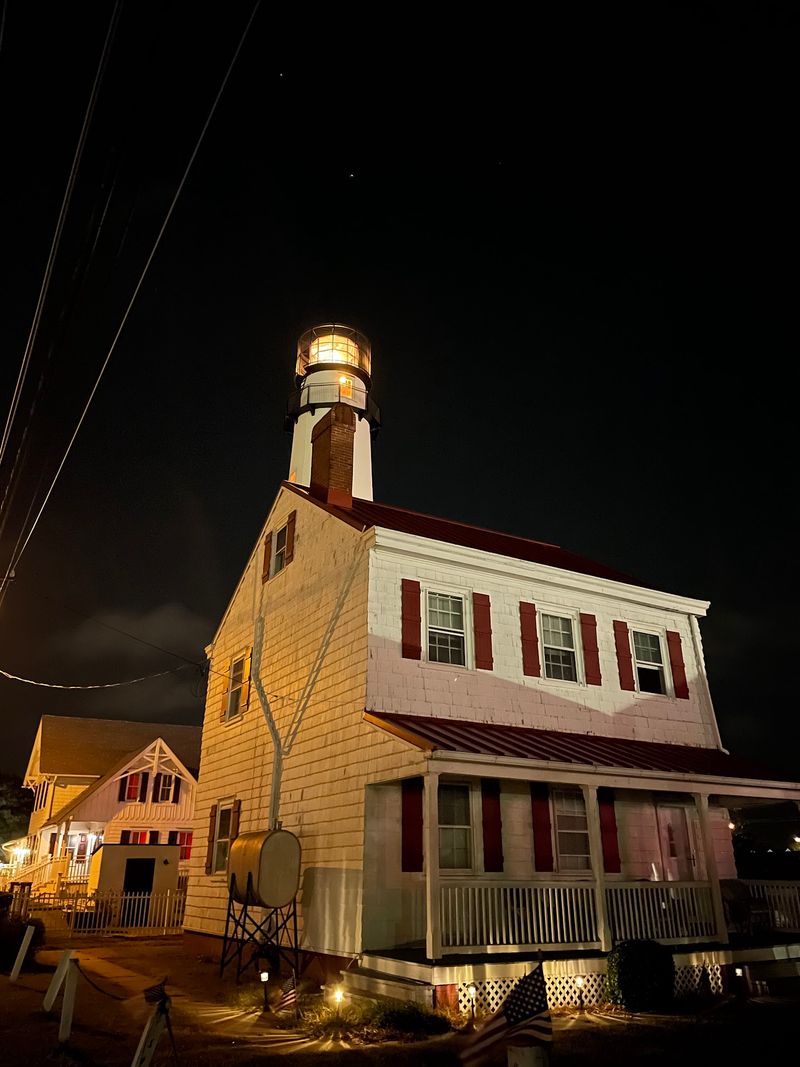
The lighthouse was equipped with a third-order Fresnel lens when it began service in 1859.
The lighthouse’s original lamp burned whale oil before electrification arrived.
A Fresnel lens uses concentric rings of glass prisms to collect and direct light more efficiently than a thick conventional lens. That design allowed lighthouse lamps to send a stronger beam farther across the water without requiring an enormous solid piece of glass.
The lens at Fenwick Island remained a defining part of the station’s equipment. When the Coast Guard extinguished the lighthouse in 1978, the original optic was removed.
The lighthouse was relit in 1982 with an electric light. The original third-order Fresnel lens was later returned and is now the operating optic in the tower.
The station therefore has a service history that includes a break between 1978 and 1982 rather than completely continuous operation from 1859 to the present.
If you are looking at the lantern room from the grounds, remember that visitors cannot climb the tower. The original Fresnel lens remains above in the lantern as part of the working light.
The Beam Reaches Roughly Fifteen Miles Offshore
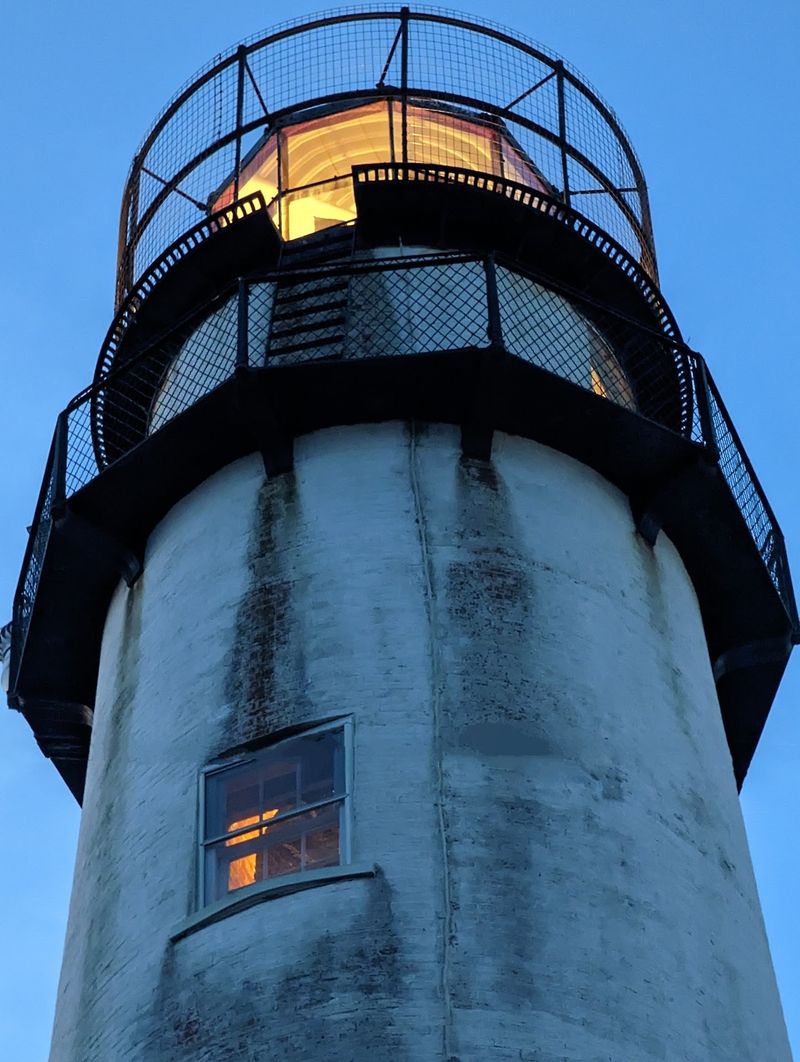
The third-order lens projects the white light roughly 15 miles out to sea.
Fenwick Shoals lie approximately six miles offshore from the lighthouse.
That range gave vessels offshore a visible coastal reference near the Fenwick Shoals and the Delaware-Maryland line.
Lighthouse range depends on several factors, including the height of the light above the water, the power of the lamp, atmospheric conditions, and the curvature of Earth. A taller focal point allows a light to remain visible farther toward the horizon.
At Fenwick Island, the 87-foot tower and Fresnel optic worked together to create a useful coastal signal.
Modern navigation now includes GPS, radar, electronic charts, and other systems that did not exist when the tower opened. The lighthouse, however, remains an operating private aid to navigation.
From the public grounds, the tower appears close to the surrounding neighborhood, but its light was designed to be visible far beyond the beach and streets nearby.
Automation Arrived In 1940
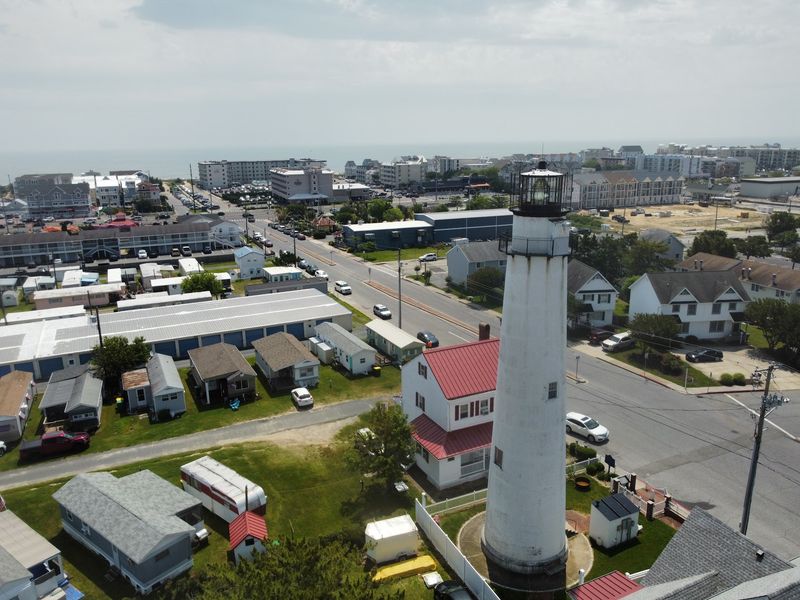
Fenwick Island Lighthouse became automated in 1940.
Before automation, keepers were responsible for maintaining the station and its light. Their duties included caring for the lamp and lens, monitoring equipment, and keeping the station in working order.
Automation reduced the need for a resident keeper to manage the light through the night.
The surviving keeper’s houses remain near the lighthouse, but they are private residences rather than public museum interiors.
In 1881, another keeper’s residence rose west of the tower.
Visitors should admire them from the public grounds and respect the residential boundaries around the station.
Plan the stop around the public property, tower exterior, and interpretive material rather than expecting access to the former keeper’s homes or the lantern room.
Look at the relationship between the tower and the nearby houses from the grounds, and notice how closely the buildings cluster around the station.
By 1940, the light no longer required the same round-the-clock keeper presence that had defined earlier decades of the station.
The Station Entered The National Register In 1979
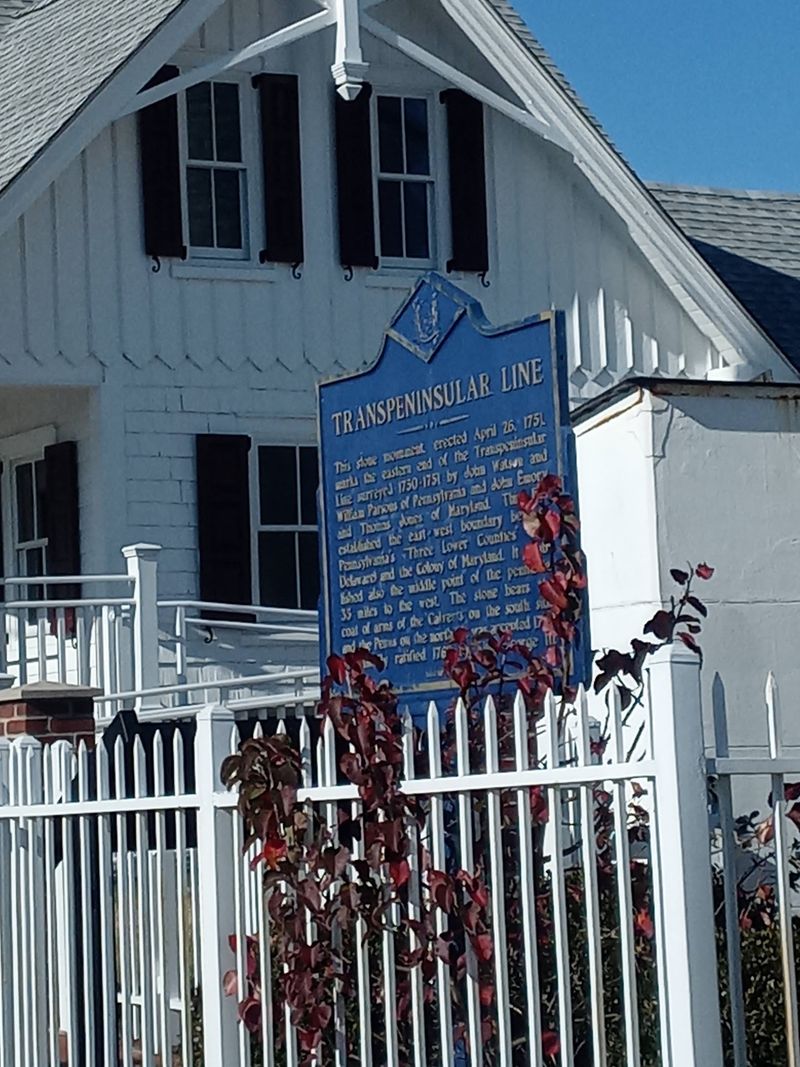
Fenwick Island Lighthouse Station was added to the National Register of Historic Places on August 13, 1979.
Its stone marker displays the Penn and Calvert family coats of arms opposite.
The listing recognizes the station’s significance in transportation and architecture. The lighthouse served maritime navigation, while the tower itself preserves nineteenth-century lighthouse design and construction.
The National Register listing came shortly after an important change in the station’s operation. The Coast Guard extinguished the light on December 13, 1978.
The lighthouse returned to service in 1982 with an electric light. The original third-order Fresnel lens was later returned to operation.
Today, the State of Delaware owns the lighthouse, and the New Friends of the Fenwick Island Lighthouse help open the site to visitors and care for its public history.
The station is at 146th Street, Fenwick Island, Delaware. Use that location for the lighthouse grounds, and check the current seasonal schedule before making a special trip.
The light was extinguished in 1978 and returned to service in 1982.
Seasonal Visits Focus On The Grounds And History
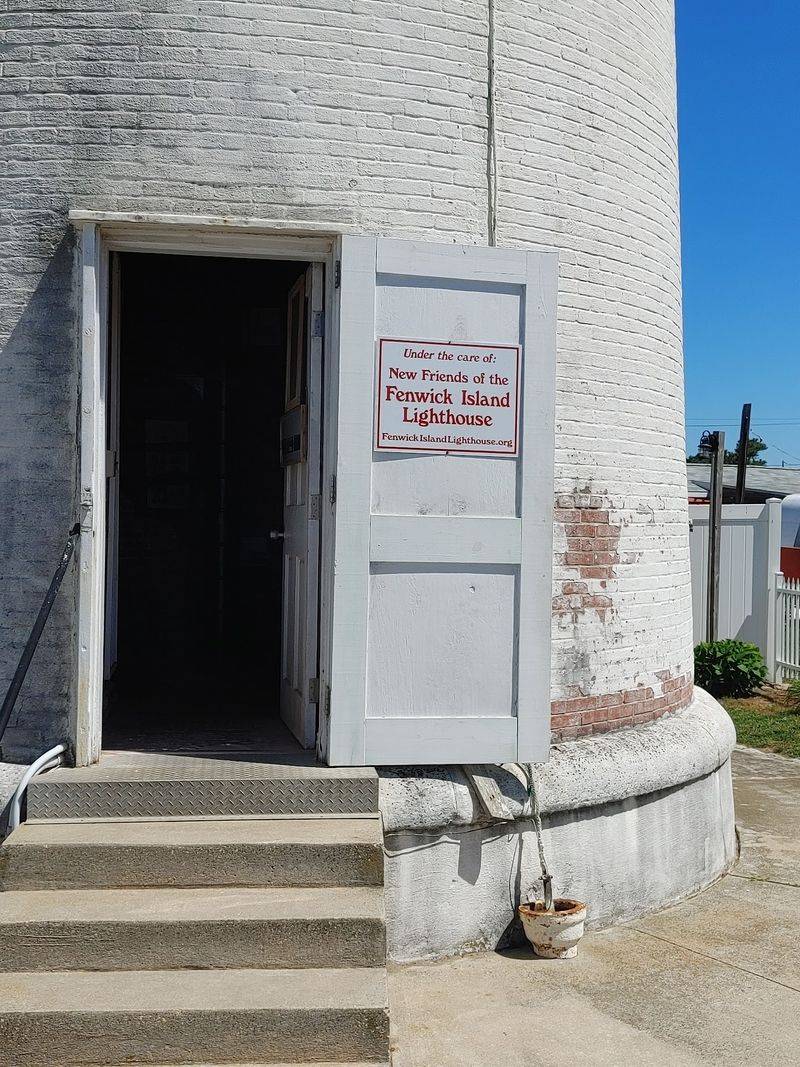
Public access follows a seasonal schedule, generally from April through October, with different open days and hours depending on the month.
The site closes during the colder months and may also close in rainy weather, so checking the current schedule before driving over is the easiest way to avoid arriving when the grounds are not staffed.
During open periods, visitors can walk the lighthouse property, see the tower exterior, examine the boundary marker, and learn about the station’s history from the interpretive material and volunteers.
Tower climbing is not permitted. Plan the visit around the grounds and exterior rather than expecting access to the lantern room or stairway.
The surviving keeper’s houses are private residences, so keep to the public areas and avoid treating those buildings as museum spaces.
Because the lighthouse stands in a residential neighborhood, drive slowly and follow local signs as you approach the property.
If you arrive outside staffed hours, respect closures and private property around the station. Seasonal access is limited, and the tower itself remains closed to climbing even when the grounds are open.
A stop here pairs naturally with time elsewhere in Fenwick Island because the lighthouse sits close to the developed beach community rather than at a remote headland.
For a shorter visit, focus on the tower, the 1751 boundary marker, and the 1859 first-light story.
If you have more time, read through the station timeline, and trace the sequence from automation in 1940 to deactivation in 1978 and reactivation in 1982.