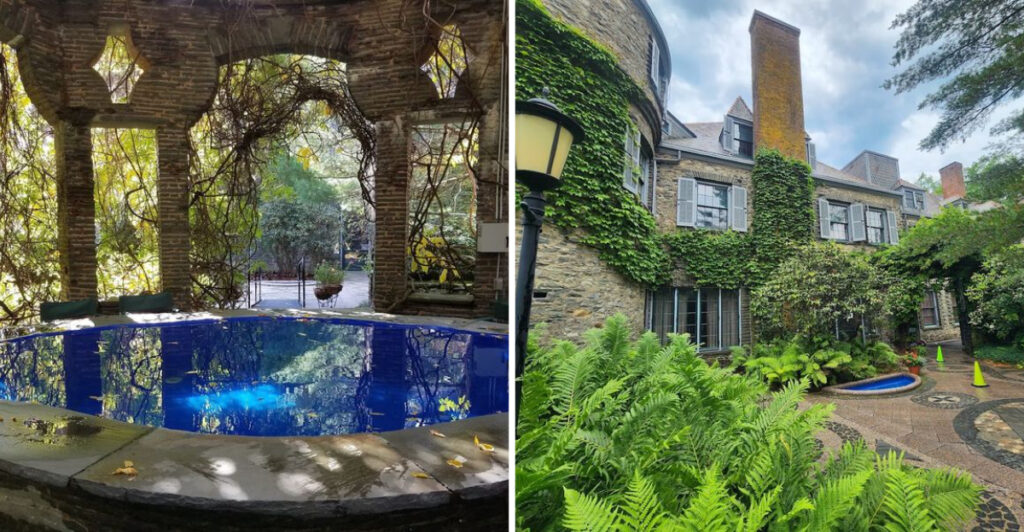
How often does a mansion make you stop before you even reach the front door?
Above Milford, a grand stone estate commands the hillside with round towers and the kind of silhouette that belongs in a European story.
Pennsylvania has elegant homes, but this one arrives with theatrical presence.
Completed in 1886, the residence was designed by Richard Morris Hunt as a summer retreat for James and Mary Pinchot. Local stone gave the mansion its weight, while French inspiration shaped its dramatic character.
The architecture delivers the first surprise. The deeper story comes from Gifford Pinchot, whose life connected the estate to American forestry and Pennsylvania politics.
This is more than a beautiful house. It is a mansion with influence, and a legacy large enough to match its towers.
Grey Towers Rises Above Milford Like A Stone Castle
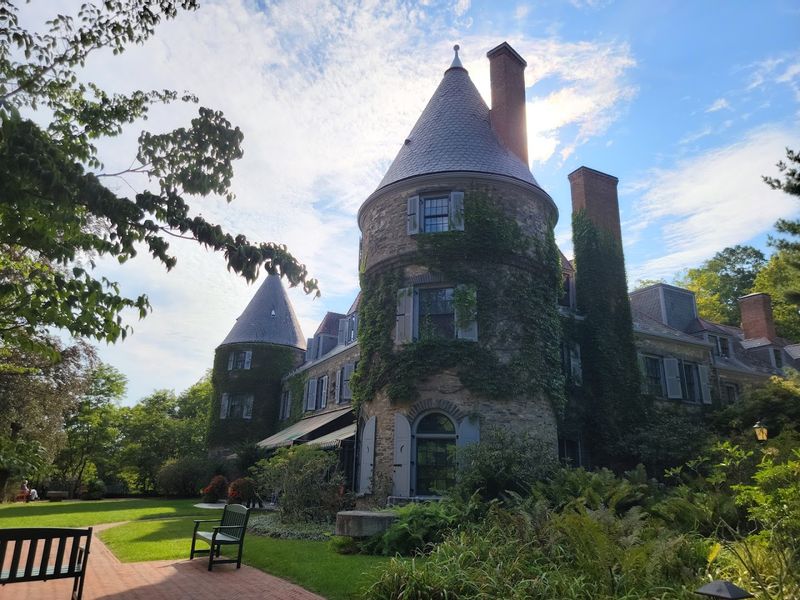
Grey Towers occupies an elevated site overlooking Milford, giving the mansion a commanding presence before you reach the front entrance.
Richard Morris Hunt designed the home in a château-style form, with asymmetrical sections, steep roofs, rounded towers, and locally sourced stone. Construction began in the mid-1880s, and the residence was completed in 1886 for James and Mary Pinchot.
The approach is part of the experience. The main visitor parking lot sits roughly 600 feet from the mansion, and the gently rising walkway follows the route of the estate’s former carriage drive. Benches provide resting places along the way.
That gradual arrival gives you time to watch the building reveal itself through the trees. First come the rooflines, then the towers, followed by the full stone façade.
Does it resemble a grand family retreat or a castle guarding the hillside? From certain angles, it manages to look like both.
The Estate Sits Above The Heart Of Milford
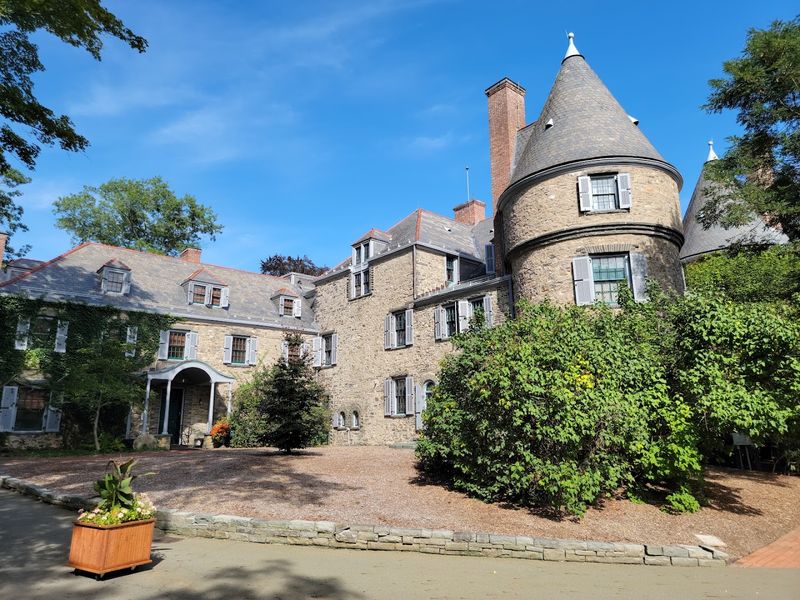
Grey Towers occupies an elevated setting overlooking Milford, giving the approach a sense of scale before the mansion fully appears. The estate is located at 151 Grey Towers Drive in Milford, Pennsylvania.
The property is managed by the United States Forest Service, an appropriate caretaker for a home so closely connected to the development of American forestry.
Visitor parking is separated from the mansion, while designated accessible spaces and a drop-off area are available closer to the building.
Before visiting, check current Forest Service information for tour availability, seasonal programs, closures, and access conditions. Mansion entry and organized activities may operate differently from general access to the grounds.
Do not rush straight toward the front door. The changing views along the approach help reveal how deliberately the mansion was positioned above town.
The Pinchots did not build Grey Towers to disappear into the landscape. They gave it a hillside worthy of those towers.
Richard Morris Hunt Designed The Dramatic Exterior
James Pinchot commissioned Richard Morris Hunt, one of the most prominent American architects of the nineteenth century, to design the family’s summer residence.
Original architectural records held by the Library of Congress identify Hunt as the architect and James Wallace Pinchot as the client. Surviving drawings date to around 1886.
Hunt’s design reflected the Pinchot family’s French background and drew upon European château architecture. Local materials kept the mansion connected to northeastern Pennsylvania, even as its towers and rooflines suggested something far more continental.
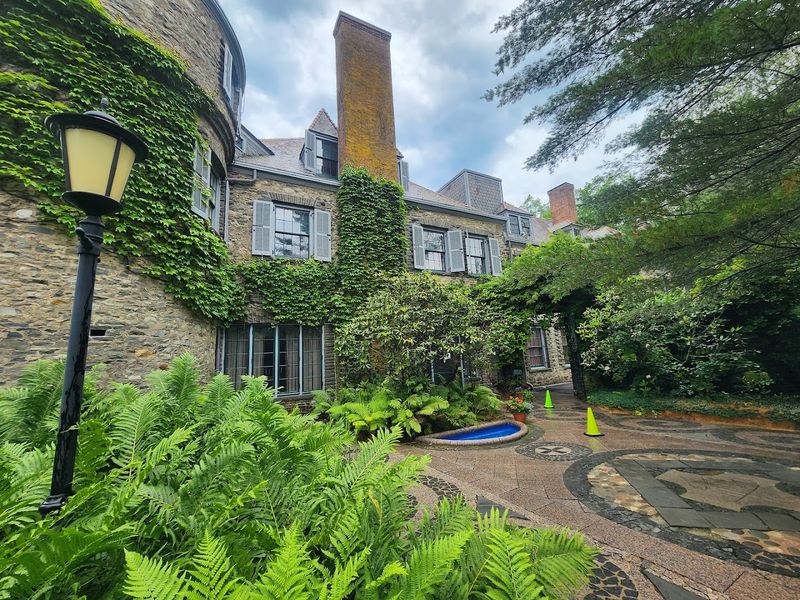
The exterior rewards a slow look. Towers anchor the corners, roof sections rise at different heights, and windows interrupt the heavy stone walls with carefully arranged patterns.
You do not need an architecture degree to spot the effect. The building changes as you circle it, with each side presenting a different combination of stone, glass, roof, and tower.
That variety prevents the mansion from appearing like one enormous block. It is grand, but never visually dull.
The Pinchots Built More Than A Summer Retreat
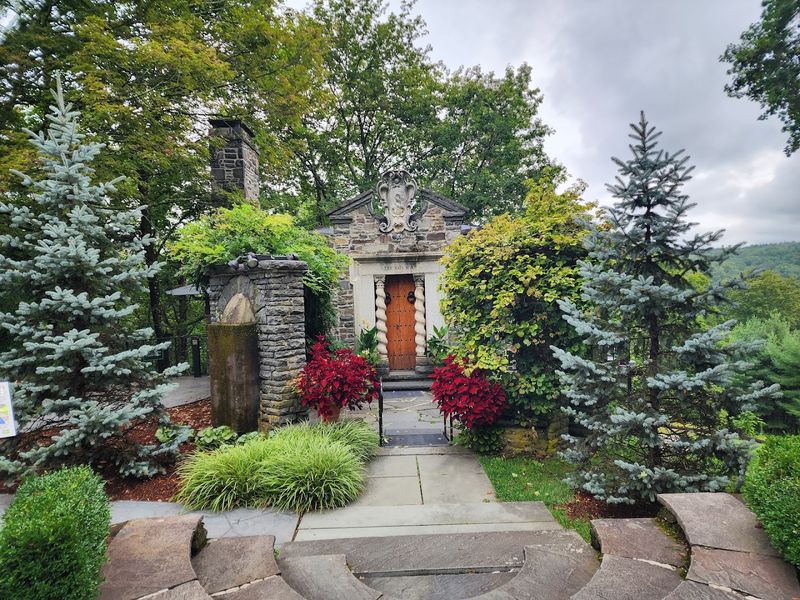
James and Mary Pinchot built Grey Towers as a summer home for their family, completing it in 1886.
James had grown up in Milford and later became a successful businessman in New York. After returning to the area, he became increasingly concerned about the destructive logging practices affecting American forests.
Grey Towers became a place where the family entertained guests, discussed public affairs, and developed ideas about land and conservation. James encouraged his eldest son, Gifford, to pursue forestry at a time when the profession was barely established in the United States.
The estate therefore carries two histories at once. One concerns wealth, architecture, and family life during the late nineteenth century.
The other concerns changing attitudes toward forests and the responsibilities that came with owning land.
As you explore, those stories repeatedly cross paths. Formal architecture stands beside woodland, and decorative garden features share space with exhibits about public service and conservation.
The Finger Bowl Added Playfulness To Outdoor Meals
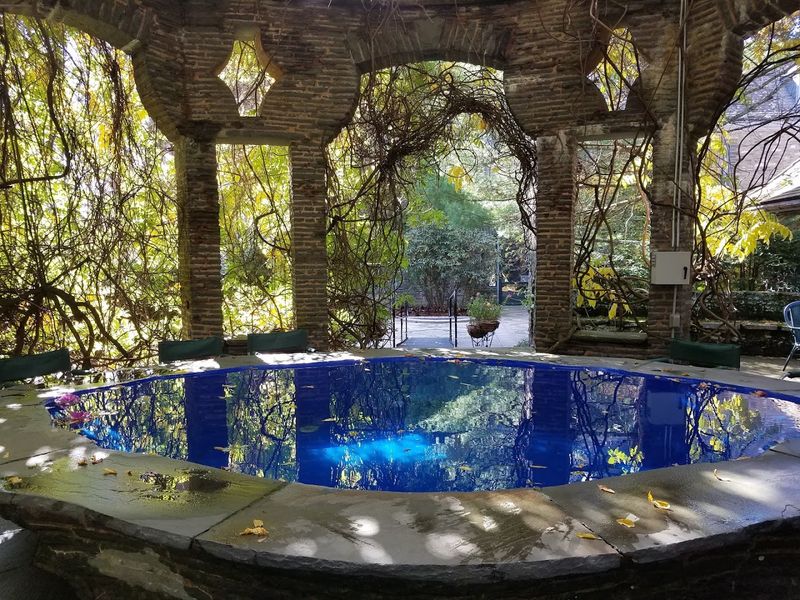
One of the estate’s most memorable features is the Finger Bowl, an outdoor dining table built around a raised, water-filled basin.
Guests seated around the edge could float bowls or dishes across the water instead of passing them around a conventional table. The design transformed an outdoor meal into a social game as well as a practical dining arrangement.
The feature is closely associated with changes made to the estate during the period when Gifford Pinchot and his wife, Cornelia, lived at Grey Towers.
It also reveals a lighter side of the property. The mansion may appear formal from the driveway, but the Finger Bowl shows that life here was not limited to serious meetings and ceremonial rooms.
Imagine trying to send lunch across the water without creating a small collision in the middle. It must have made every meal slightly more entertaining.
Today, the Finger Bowl is one of the details visitors tend to remember because it is so unexpected. Grand houses have dining rooms. Very few have dining tables that behave like miniature canals.
Gifford Pinchot Connected The Estate To American Conservation
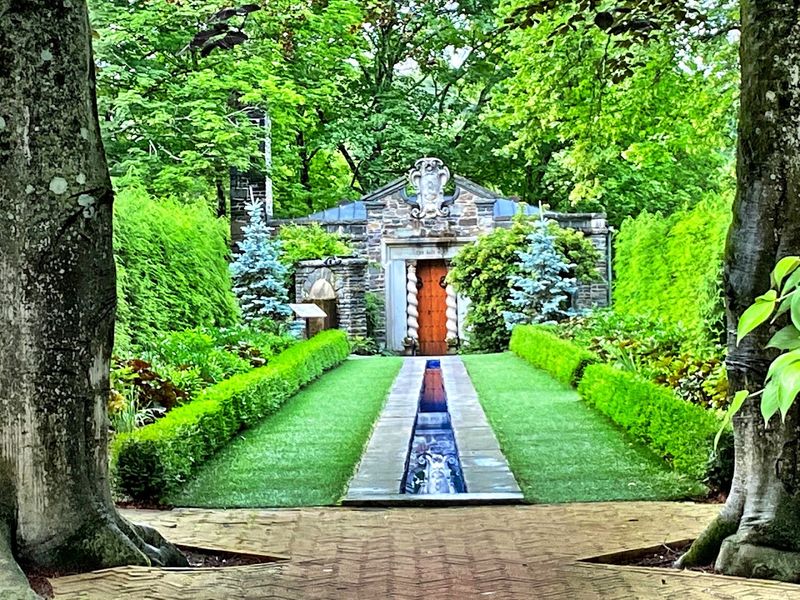
Gifford Pinchot grew up in the family that built Grey Towers and went on to become one of the most influential figures in American forestry.
He trained in forestry in Europe before helping establish the profession in the United States. President Theodore Roosevelt later selected him to lead the federal forestry organization that became the United States Forest Service.
Pinchot promoted the managed use and long-term protection of forests instead of uncontrolled extraction.
His work helped place millions of acres of national forest under scientific management and influenced policies that continued long after his federal service ended.
He also served two nonconsecutive terms as governor of Pennsylvania, from 1923 to 1927 and again from 1931 to 1935.
Grey Towers remained central to his personal and professional life. The house served as a residence, gathering place, and setting for discussions about forestry, government, and public responsibility.
That legacy separates Grey Towers from a mansion preserved solely for its furniture or architecture. The estate helps explain how conservation developed into a major public policy issue.
The Family Gave Grey Towers To The Forest Service
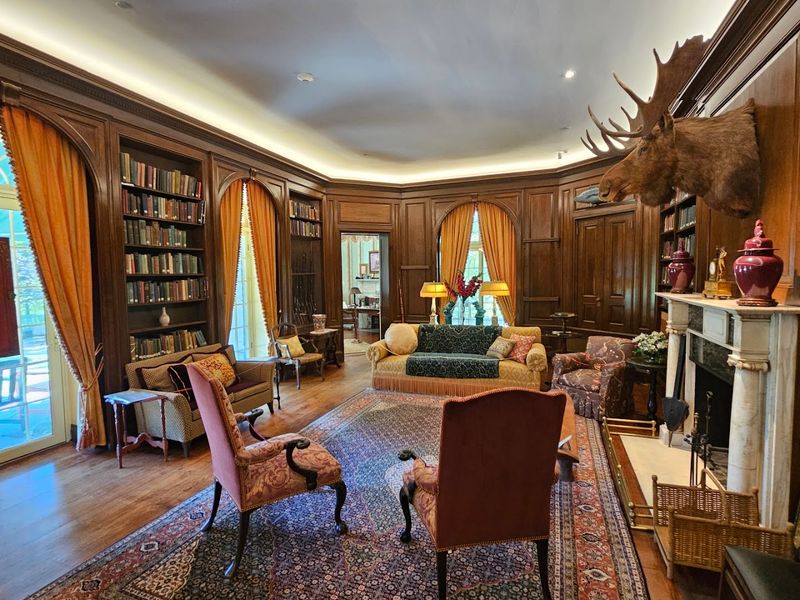
In 1963, the Pinchot family donated Grey Towers and approximately 102 surrounding acres to the United States Forest Service.
The transfer ensured that the estate would remain connected to the agency Gifford Pinchot helped establish. The property now serves as a historic site, educational setting, and center for programs related to conservation.
The Forest Service continues to manage the mansion and grounds, preserving both the family history and the broader story of American forestry.
That arrangement gives the property a living purpose. Grey Towers is not simply a former mansion frozen at one point in time.
It continues to host interpretation, educational activities, public programs, and conversations about land stewardship. The subjects discussed here have changed over the decades, but the connection between people and forests remains central.
You arrive expecting impressive architecture. You leave understanding why the people who lived behind those stone walls influenced the landscape far beyond Milford.
The Grounds Deserve Time Of Their Own
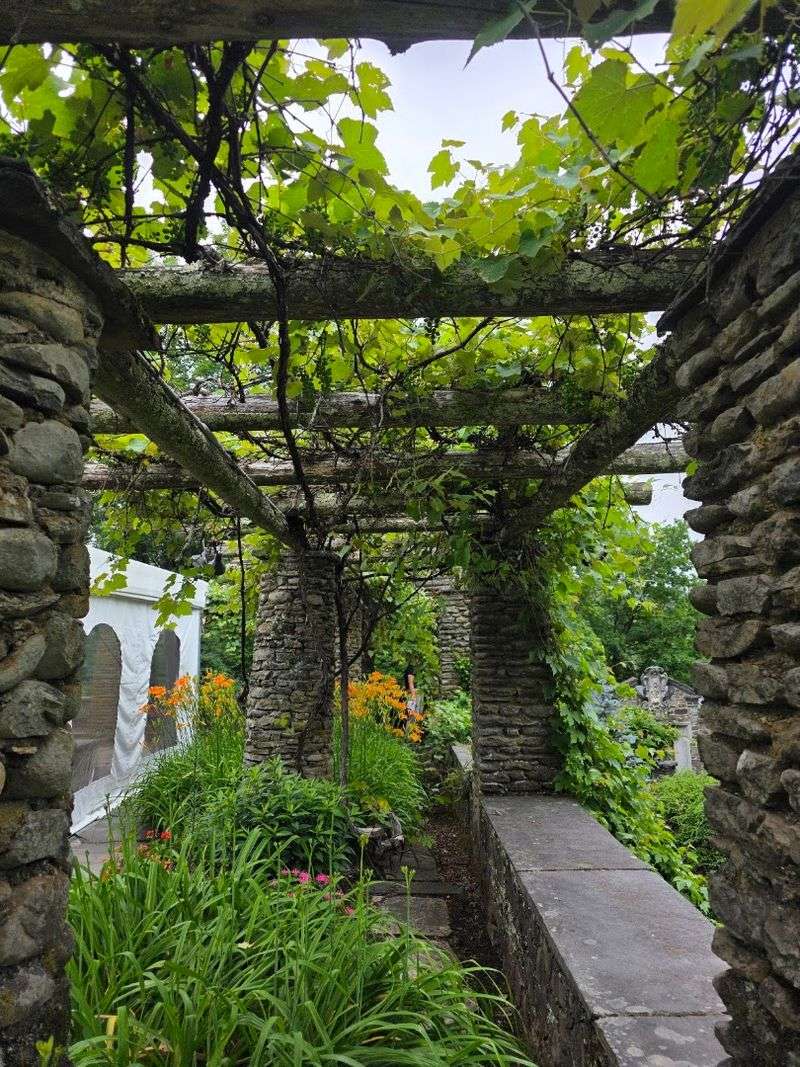
The mansion dominates the property, but the surrounding lawns, gardens, mature trees, and paths add another layer to the visit.
James Pinchot undertook extensive planting on land that had previously been affected by clearing, linking the development of the estate with his growing interest in restoring the landscape.
As you move around the property, the mansion repeatedly appears through openings in the trees. Each view changes its character. From one position, the towers look imposing.
From another, the stone house appears almost absorbed by the woodland.
Seasonal conditions naturally change what you will see, so current programs and access should always be confirmed before your trip.
Still, Grey Towers offers plenty to examine even before you enter the mansion. Study the stonework, look for the Finger Bowl, follow the approach road, and consider how the building was positioned above town.
A quick photograph may capture the towers, but giving the estate more time reveals the bigger story. This grand Pennsylvania mansion was a family home, a political gathering place, and an important setting in the history of American conservation.