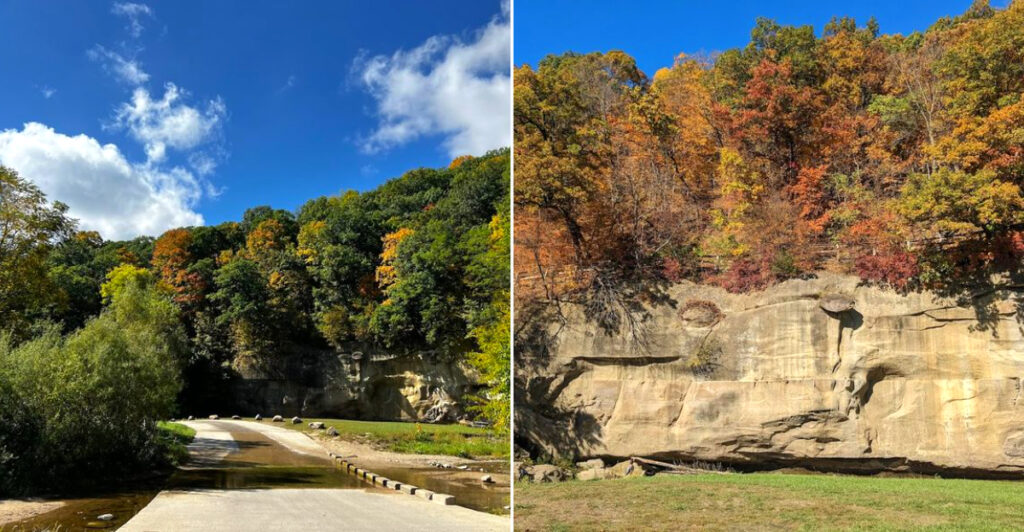
Most scenic drives ask you to admire the water from a safe distance. This Iowa park lets your tires meet it.
The road drops into a wooded gorge and slips straight through shallow creek crossings. Sandstone walls rise nearby.
Trees lean over the road. The whole scene feels like Iowa quietly showing off.
This is the kind of park where the drive becomes part of the adventure. Kids notice it immediately, adults pretend to stay calm, and everyone ends up watching for the next splash.
You may arrive expecting a simple state park loop. Then the road bends, the creek appears, and suddenly the Midwest feels a little more cinematic than expected.
What Ledges State Park Actually Is
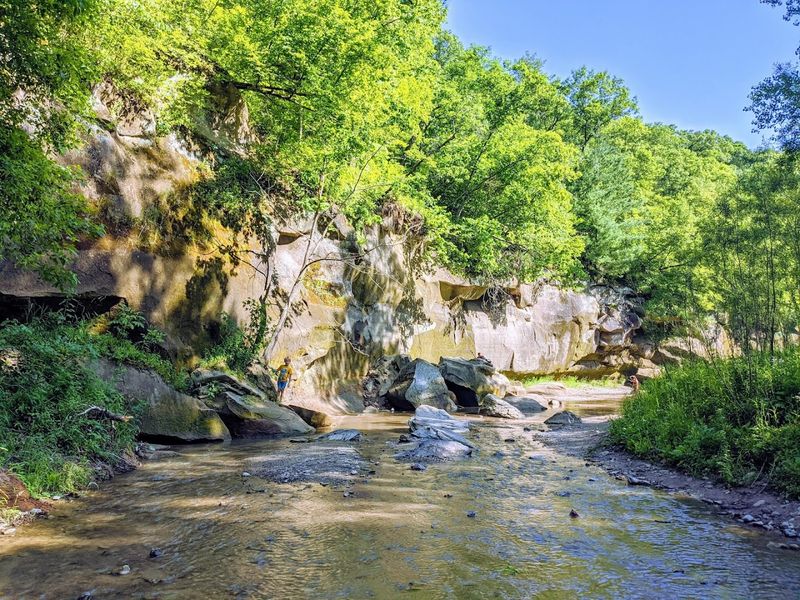
Ledges is not a flat little park. This Iowa favorite is shaped around Pea’s Creek and the Des Moines River valley, with sandstone bluffs, wooded trails, and winding creek beds giving it real drama.
The park has been drawing Iowa families, hikers, campers, picnickers, and creek-stomping kids for generations.
Its name comes from the layered sandstone ledges that rise along the canyon walls, creating the kind of scenery that feels surprisingly rugged for central Iowa.
This is not a polished nature walk where everything feels overly arranged.
The terrain has real climbs, the lower canyon feels adventurous, and the creek adds a splashy little twist that makes the park especially memorable in summer.
That mix of easy access and actual outdoor character is what gives Ledges its staying power.
Day use is free, which makes it an easy weekend choice when you want scenery, trails, water crossings, and a little bit of Midwest wow without paying admission.
You will find Ledges State Park at 1515 P Ave, Madrid, IA 50156.
Canyon Drive and the Creek Crossing Road
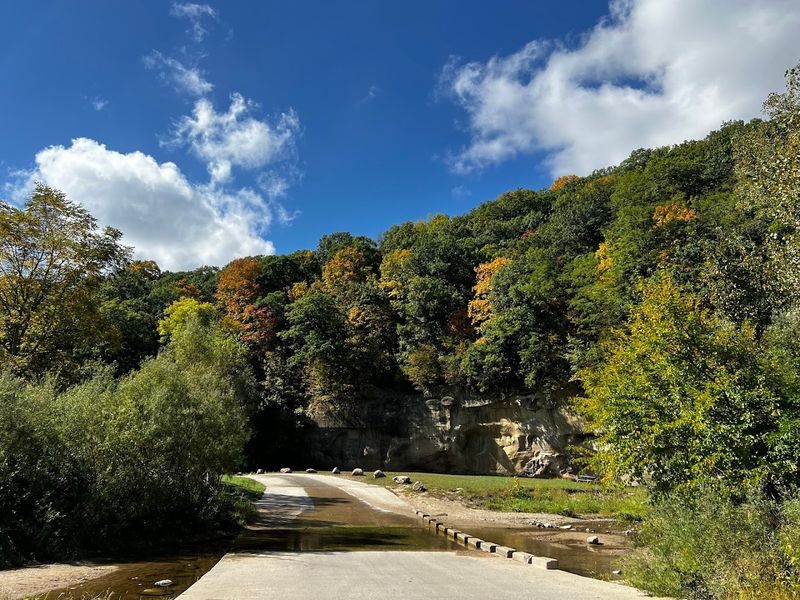
Canyon Drive is the main reason this park ends up on so many road trip lists.
The road descends into the lower canyon and crosses Pea’s Creek, meaning your tires can roll directly through shallow flowing water before the road picks up again on the other side.
It sounds odd until you do it, and then it becomes the highlight of the afternoon. Kids in the back seat lose their minds.
Adults who thought they were just stopping for a short walk end up staying two hours.
The crossings are shallow in normal conditions, but the road surface can get slippery from algae, moss, and wet rock, so slow down and take them carefully. Standard cars usually do fine when conditions are normal, but caution is still the whole game here.
After heavy rain, the lower road can flood and close, and Iowa DNR also lists a 2026 park-wide road preservation project that may restrict vehicle access to portions of the park during the summer.
Check current park alerts before you go, especially if Canyon Drive is the main reason for your trip.
The Sandstone Ledges Up Close
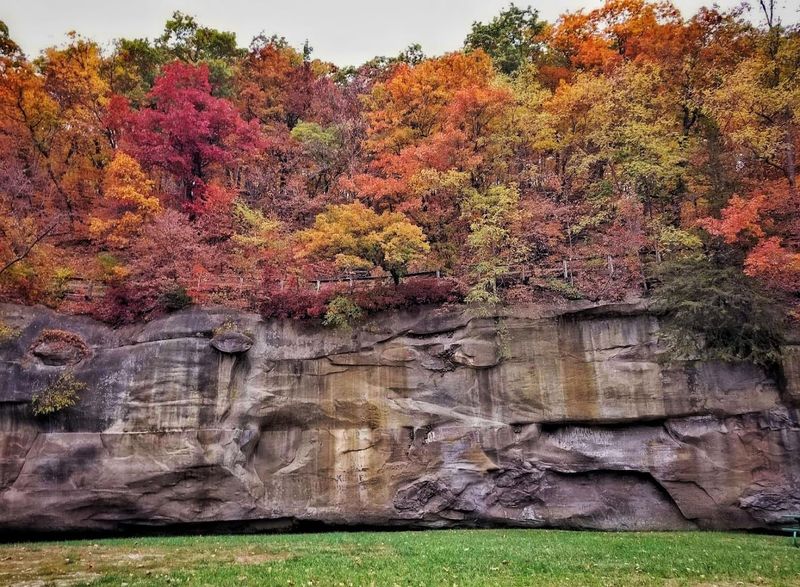
The sandstone formations here are the kind of geology that makes you stop mid-hike and just stare.
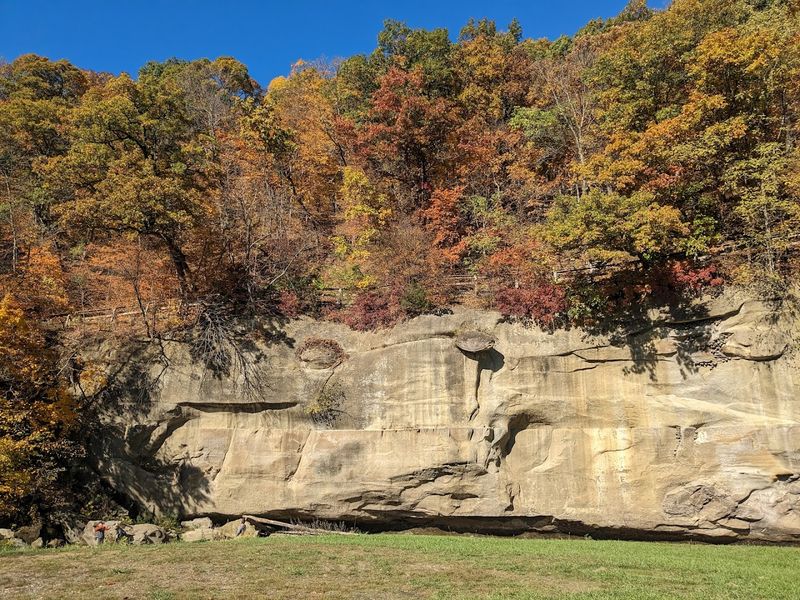
The rock layers are clearly visible, stacked in horizontal bands of tan, rust, and gray, with a story that reaches back hundreds of millions of years.
Iowa DNR notes that the sandstone was deposited about 300 million years ago, while glacial meltwater began cutting down through the sandstone about 13,000 years ago to form the park’s dramatic cliffs and valleys.
That makes the canyon feel ancient without turning the hike into a full geology lecture.
Fall is when the ledges really stand out. With orange and yellow leaves against the gray stone, the color contrast is sharp and the whole canyon looks like it belongs in a nature magazine.
Longtime Iowa residents have reported being genuinely surprised they had never visited before.
Spring brings green moss and running water that cascades down the rock faces after rain.
Each season changes what the ledges look like, which is one reason regulars come back multiple times a year rather than treating it as a one-and-done trip.
Hiking Trails for Every Fitness Level
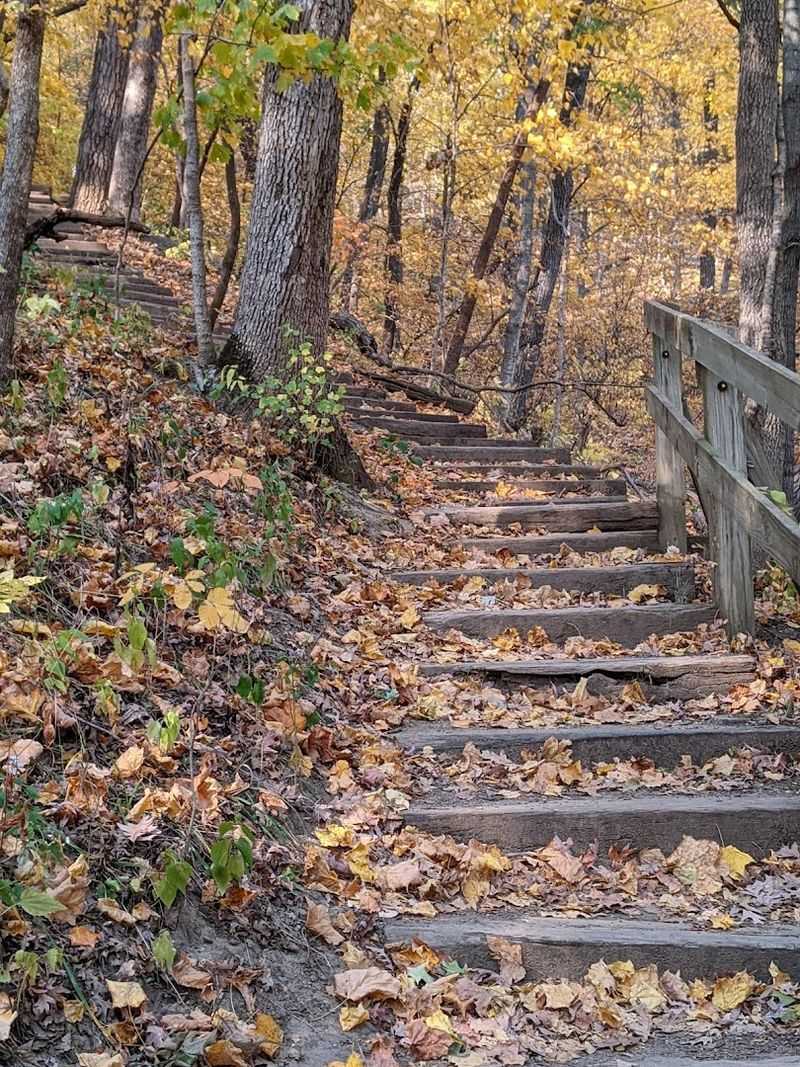
The trail system here covers a solid range of difficulty. That means you can show up with a curious ten-year-old or a friend training for a half marathon and both will find something worth doing.
The upper trails run along the ridge and offer wide open views of the canyon below, while the lower trails get steeper and more rugged as they drop toward the creek.
A hiking pole is genuinely useful on the descent trails. The slopes are real, not gentle, and the packed dirt can get slick after rain.
First-timers who underestimate the elevation change sometimes find themselves breathing harder than expected on the way back up.
The payoff at the bottom is worth the effort. The creek runs cold and clear, and after a sweaty climb down through the trees, wading in up to your ankles feels like the best decision you made all week.
Cell service disappears in parts of the lower canyon, so download a trail map before you head down.
The park does not have trail markers on every turn, so paying attention to where you came from matters more than it might on a more developed trail system.
Creek Stomping and Wading in Peas Creek
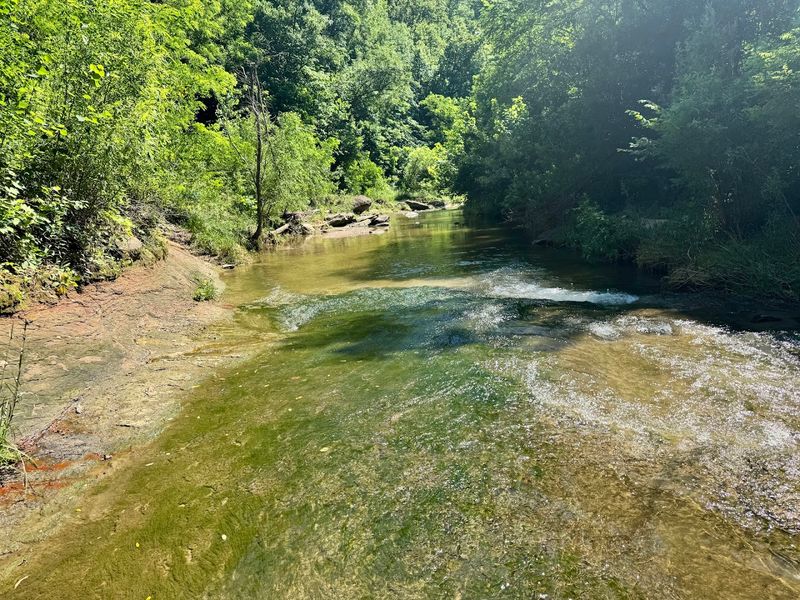
Creek stomping is an unofficial but completely legitimate activity at Ledges, and it might be the most fun you can have with your shoes off in Iowa.
Pea’s Creek runs through the lower canyon and in many spots it is shallow enough for kids to walk straight through without any gear beyond a willingness to get wet.
The creek bed is rocky and uneven, so water shoes or old sneakers you do not mind soaking are a smart call. Flip flops tend to get sucked off by the current or slip on the mossy rocks, which sounds funny until someone goes down.
Dogs are welcome in the park on a leash, and the creek is a favorite spot for them too. Multiple people have noted that their dogs practically drag them down the trail once they hear the water.
Pack a dry bag or a garbage bag in the car for wet shoes and clothes, and bring a fresh pair of socks for the drive home.
The creek is cold even in summer, which makes it a solid escape on a hot July afternoon when the rest of Iowa feels like a slow cooker.
Camping at Ledges State Park
Camping at Ledges puts you inside the park after the day crowd heads home, which is a very different and quieter version of the place.
The campground includes electric, non-electric, full hook-up, walk-to/non-electric, and youth group options, with modern restrooms, showers, a dump station, playground, and firewood sales available in the park.
Reservations are important here because Iowa DNR lists the campsites as 100 percent reservable, and a reservation is required.
The campground accepts reservations March through November and is closed December through February, so this is mainly a spring, summer, and fall camping setup. The facilities make it a comfortable option even for people who are not hardcore roughing-it campers.
The town of Boone is close by if you need to restock supplies, and Ames is a short drive away for more options. You are not isolated in the middle of nowhere, which makes the park a good base for a weekend that mixes outdoor time with easy access to food and gear.
One practical note: check your reservation details before setting up and confirm your site when you arrive. That small step can save confusion during busy camping weekends.
The Upper Park Views and Picnic Areas
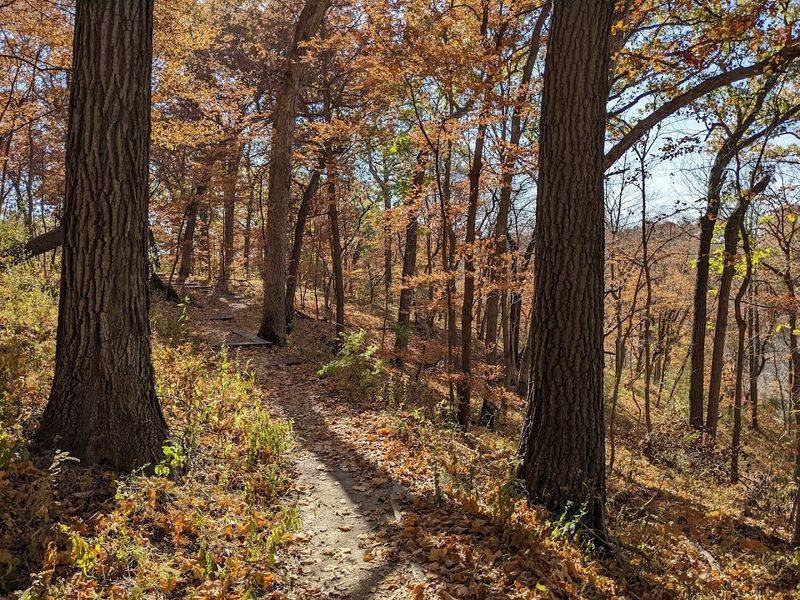
Parking at the upper entrance puts you at the top of the park, which is a completely different starting point than the lower canyon lot.
From up here, the trails run along the ridge and give you wide views down into the wooded canyon below, with the Des Moines River visible in the distance on clear days.
The upper section is more accessible for people who want a walk without a steep descent. The terrain is still natural and interesting, but the grade is gentler and the paths are wider.
Families with strollers or older adults who want to see the park without tackling the canyon stairs often start here.
Picnic areas are spread throughout the upper section with tables and grills, making it a solid setup for a half-day family outing.
The shade from the tree canopy keeps things cool even in midsummer, and the views from the edge of the ridge are worth the short walk from the parking area.
On busy weekends, the lower lot fills up fast, so arriving early or parking at the top and walking down is a practical strategy that saves a lot of circling and frustration.
Wildlife and Nature You Might Actually See
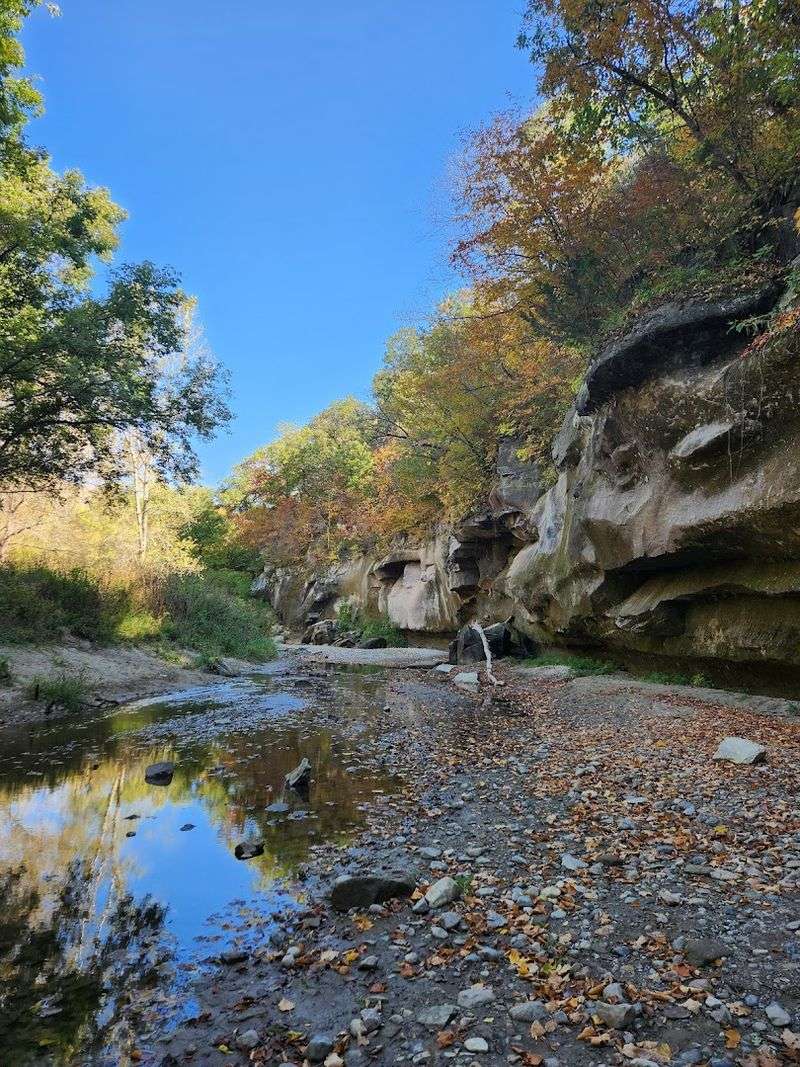
The park is home to a solid variety of wildlife, and if you move quietly on the trails you have a decent shot at spotting more than just squirrels.
White-tailed deer are common in the early morning and late afternoon, often grazing near the tree line above the canyon. Great blue herons work the creek and river shallows with their usual unhurried patience.
Snakes are present in the park, and that is worth knowing before you go. Most are non-venomous, but stepping carefully on rocky terrain and not reaching into crevices is just good practice anywhere with sandstone formations and creek habitat.
Ticks are another real consideration, especially in warmer months. Checking yourself and your gear after a hike is not optional.
One family noted finding ticks on their tent after a summer weekend stay, which is a solid reminder to treat your gear with permethrin before a camping trip.
The plant life along the canyon walls includes ferns, wild berries, and moss-covered rock faces that add texture to every trail. Late summer brings ripe berries to some campsites, a small surprise that feels like a bonus from the park itself.
Best Times to Visit and What to Expect
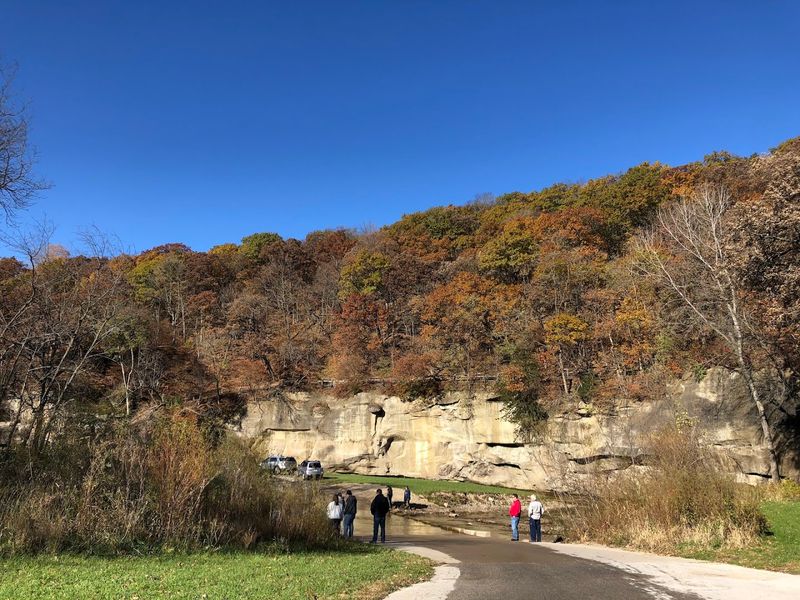
Fall is the consensus favorite season at Ledges. The combination of sandstone canyon walls and dense hardwood forest creates a color display in October that draws crowds from across Iowa and beyond.
The layered rock makes the colors pop in a way that flat terrain simply cannot match, and the light in the canyon on a clear fall afternoon is genuinely hard to beat.
Summer is busy and warm, but the creek keeps things cooler in the lower canyon. Spring brings rushing water and green growth but also muddy trails, so waterproof footwear is a good idea from March through May.
Weekends fill up fast at every season. Arriving before 9 AM on a Saturday almost guarantees you a lower lot parking spot and a quieter first hour on the trails.
Midweek visits offer the most solitude, especially in fall when weekend crowds can be significant.
The park is open daily from 4 AM to 10:30 PM, and day use is free. That no-cost entry makes it easy to pop in for a short visit without feeling like you need to justify the trip with a full-day itinerary.
Practical Tips Before You Go
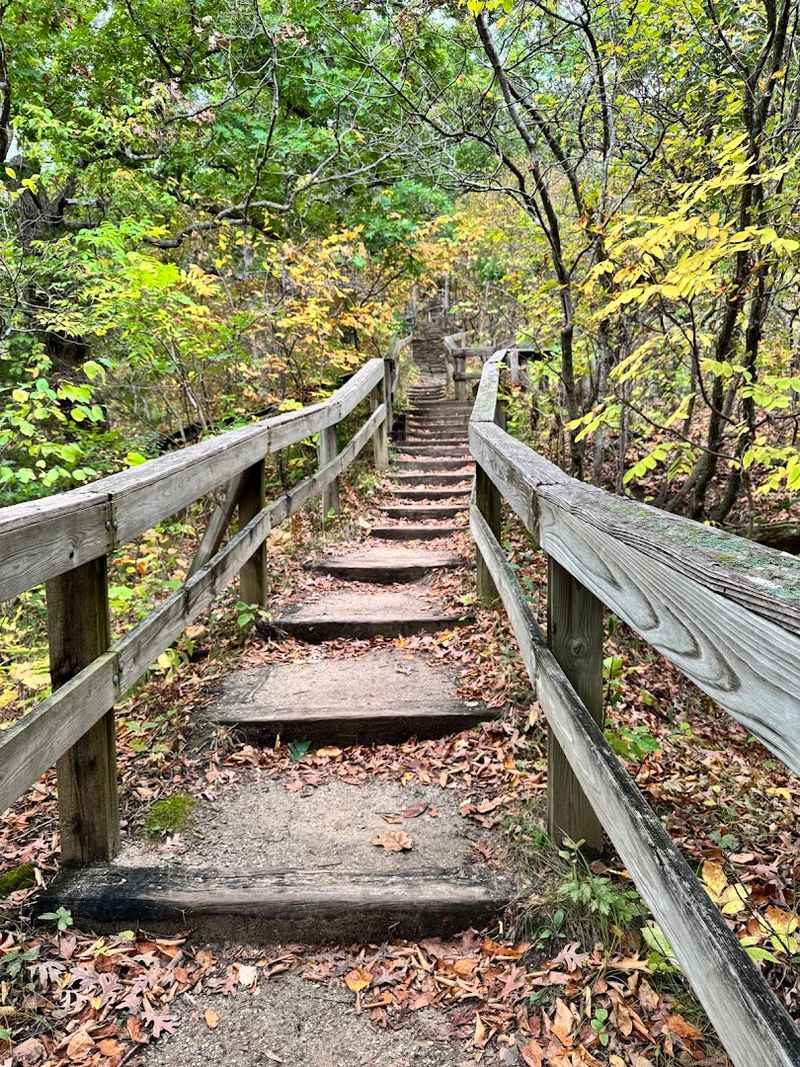
A few things worth knowing before your first visit to Ledges can save you a small headache. Cell service can be weak in the lower canyon, so download the Iowa DNR trail map for the park before you leave the house.
The Iowa DNR Ledges State Park page has current information on alerts, conditions, amenities, and camping reservations. That matters in 2026 because a park-wide road preservation project may restrict vehicle access to portions of the park during the summer.
Use the restroom before you head down into the lower canyon. Facilities are available in several developed areas of the park, but once you are on the lower trails, your options get limited quickly.
The park asks that you carry out your trash from the lower areas since there are no garbage cans down there.
The canyon road can close during and after heavy rain when creek levels rise above the crossings. Calling ahead at 515-432-1852 on rainy days is worth the thirty seconds it takes.
Old shoes you do not mind soaking, a dry bag for wet gear, sunscreen, and plenty of water cover most of what you need.
The park handles the rest, and it does so without charging you a dime for the day.