Out on the Kansas prairie, the last thing you expect to see is a church that looks like somebody dropped a piece of European architecture into the middle of open country.
That surprise is exactly what gives this place its pull. The building has enough presence to stop a road trip in its tracks, especially when the surrounding landscape makes every detail stand out even more. It does not need a dramatic introduction.
The silhouette does the work before you ever reach the door. There is something fun about finding a landmark that completely resets your expectations for the day.
A quiet drive suddenly becomes a sightseeing stop, and the prairie starts looking like part of the composition.
I am hopeless around buildings that appear where they seem least likely to belong.
If I spot something grand rising out of a Kansas horizon, I am pulling over. Half the fun is that split second when I wonder if I am really seeing what I think I am.
A Prairie Skyline That Announces Itself Miles Away
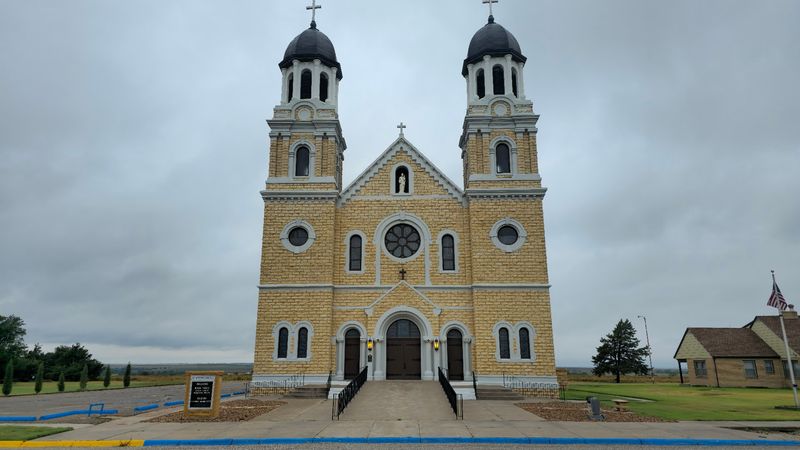
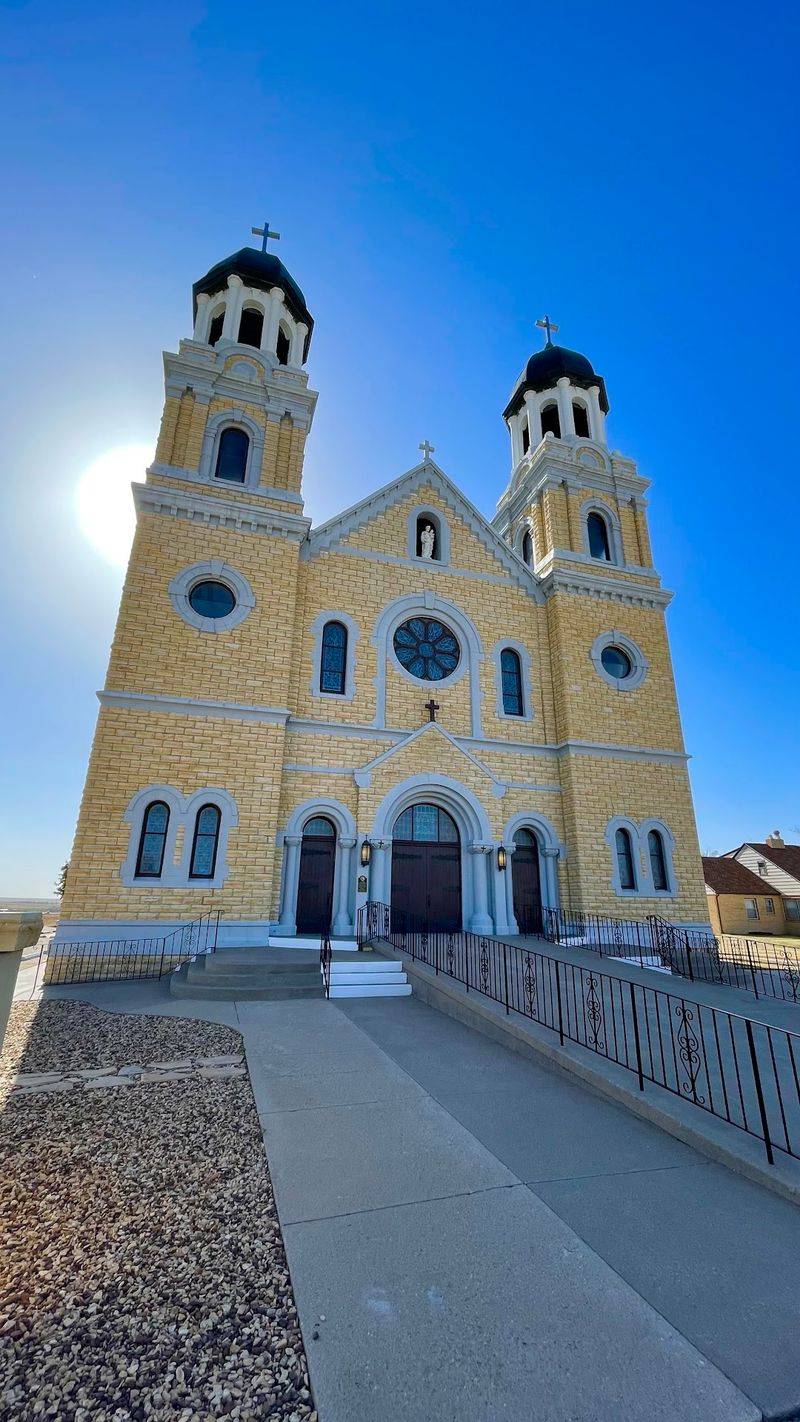
The twin towers can be seen for miles above the surrounding fields, giving Damar a skyline that is hard to miss.
Western Rooks County is mostly open farmland, so a building this tall has little competition. The church stands at 107 N Oak St in Damar, Kansas, and its towers rise about 90 feet to the crosses.
Long-distance views are part of the appeal, especially on the roads approaching town, where the structure gradually rises above the prairie.
The pale limestone exterior can look different as the light changes through the day.
Photographers have plenty of room to frame the church against open country. St. Joseph Cemetery lies outside town, southwest of the present church site, preserving another piece of the parish’s early history.
The scale is still striking. Damar counted 112 residents in the 2020 census, yet its parish built a church substantial enough to serve as a landmark across the surrounding countryside for generations, and visitors approaching town can spot it quite easily.
French Canadian Settlers Started It All In 1888
Damar stands apart from many better-known historic church communities in western Kansas because its roots are strongly French Canadian.
French Canadian families had settled in the area before the town was established in 1888. Mass was first celebrated in a settler’s home in 1887, and a small church followed the next year.
The community was first known as St. Petersville. When the railroad arrived, residents and businesses shifted toward the new townsite, the church was moved, and the settlement became Damar.
French Canadian heritage remained an important part of local identity.
That background helps explain why St. Joseph’s history differs from the Volga German church story associated with communities farther south around Ellis County.
For anyone touring the region’s historic country parishes, Damar offers a genuinely different chapter in the larger story.
The church reflects a French Canadian Catholic community whose families invested years of labor and resources into creating a lasting landmark on the Kansas prairie that still anchors the town.
Built In 1912 With Romanesque Muscle
Rounded arches define the building, one of the clearest signs of its Romanesque Revival design. Construction of the present church began in 1912, but it was not completed all at once.
The twin towers were finished in 1913, the interior was plastered in 1917, and the first Mass in the new church was celebrated that year.
Twin towers flank the entrance, each one holding vertical rows of arched openings that draw your eye upward.
The main doorway sits beneath a deep recessed arch that adds real shadow and depth to the facade.
The exterior limestone was quarried near Waldo and shipped to Damar by rail. Parishioners supplied much of the labor, helping make such an ambitious building possible for a small rural congregation.
The church measures 128 feet long and 55 feet across its transepts.
Romanesque Revival design was used for American churches in that era, but St. Joseph stands out for its scale, symmetrical towers, rounded arches, and extensive stonework in a community this small.
That Famous Penny-Thickness Copper Roof
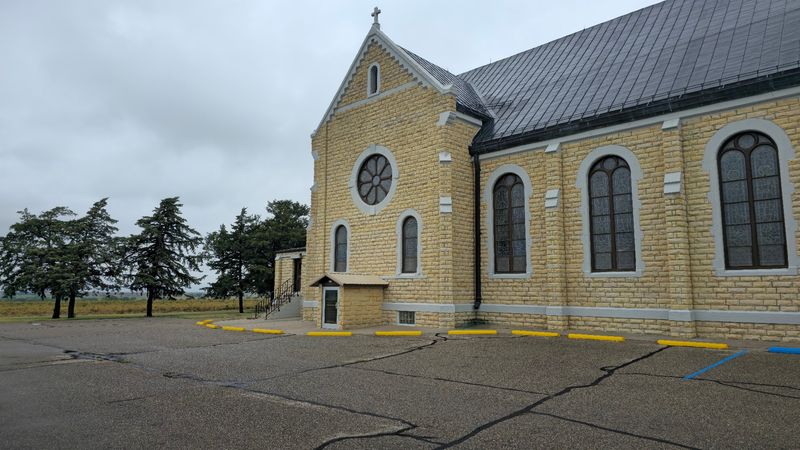
Here is the detail guides love repeating: the roof is copper, and National Register documentation describes the sheeting as roughly penny-thickness.
The exact installation date is less tidy. One summary in the nomination says 1947, while the detailed history says penny-thickness copper was installed in late 1948 or early 1949.
That uncertainty makes late 1940s the safest dating today.
Against St. Joseph’s pale limestone, the aged copper gives the roof and twin tower caps a noticeably different color and texture.
Over time, copper develops the green patina associated with many older civic and religious buildings.
The roof was one of several major improvements made after the original construction period. Interior decoration and stained-glass windows were also added during the broad 1944-to-1952 renovation era.
Bring a zoom lens if you have one. Details along the roofline, including the trim work and tower caps, reward a closer look far more than a quick phone snapshot from the sidewalk.
Small choices, big visual payoff.
Listed On The National Register Since 2005
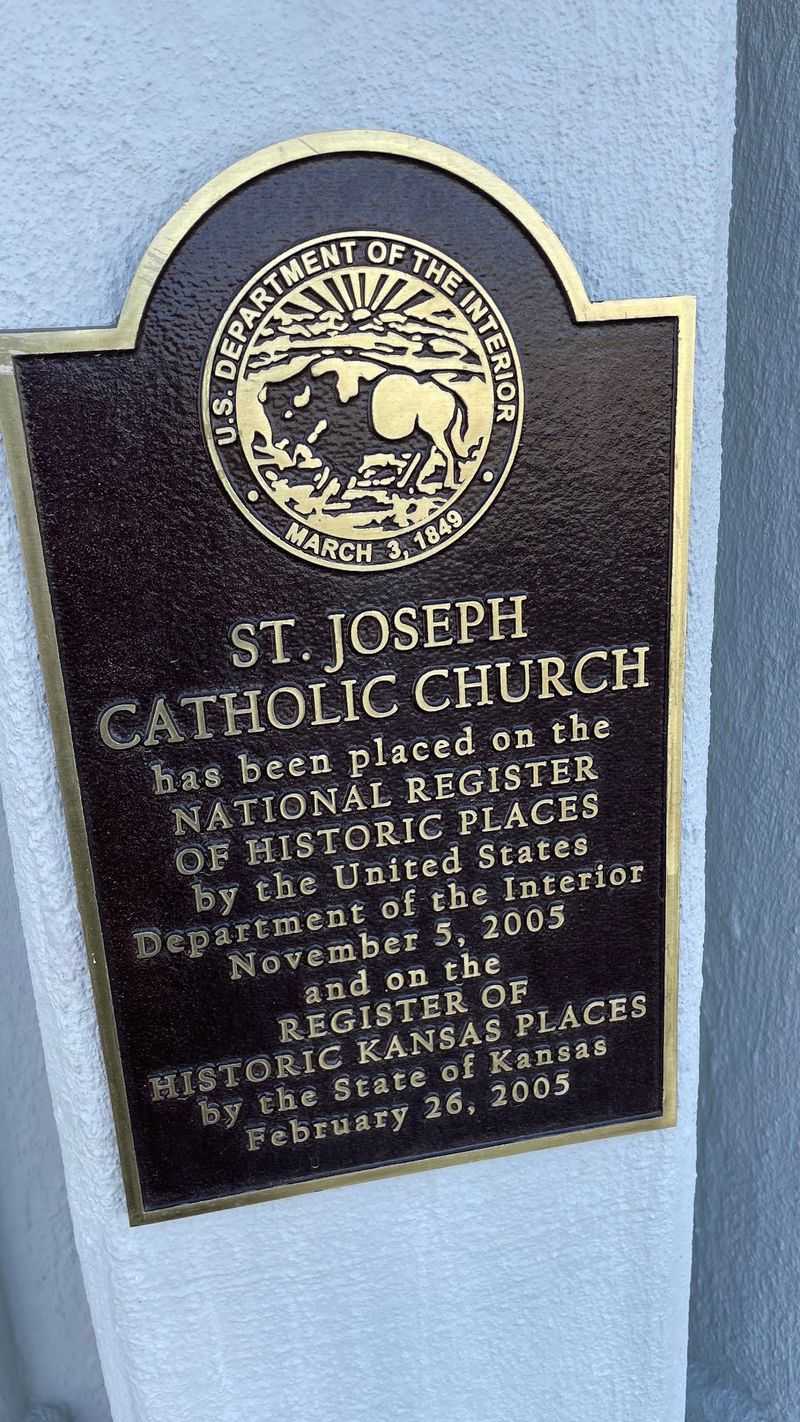
Official recognition arrived in 2005, when the church was added to the National Register of Historic Places.
That listing matters more than a plaque suggests. It confirms the building holds architectural and cultural value worth preserving, and it helps a small parish access resources for maintenance work on stone, glass, and roofing.
I like knowing that a structure I am admiring has documentation behind it rather than just local pride. Researchers had to measure, photograph, and write up the history before approval came through.
Kansas has a surprising number of registered rural churches, and comparing them makes for an excellent road trip theme. Damar earns its spot on that map without needing an interstate exit sign.
The designation also encourages visitors to treat the site with care, staying off fragile areas and keeping noise down near the sanctuary.
Respect costs nothing. A building that has stood since 1912 deserves gentle guests, and the community clearly works hard to keep it in shape year after year.
Stepping Inside When The Doors Happen To Be Open
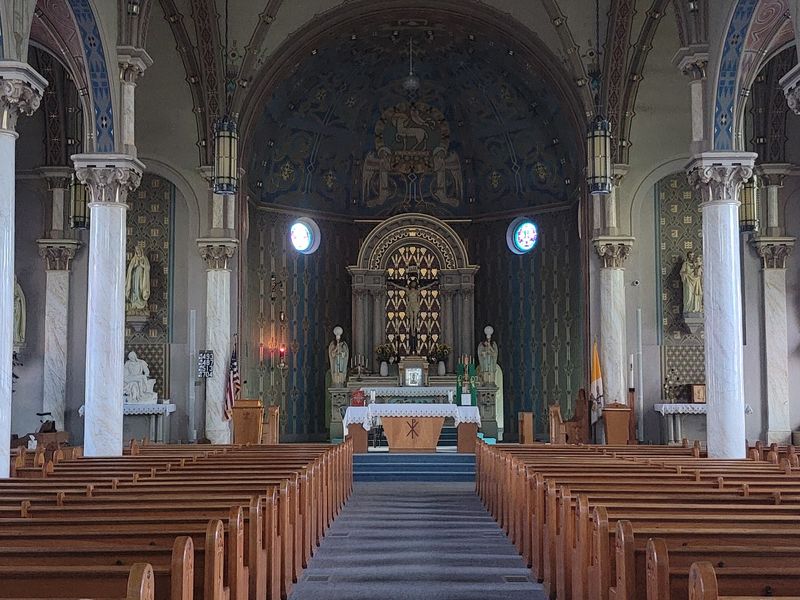
Visitors do not necessarily have to rely on luck to see the interior.
The Kansas Sampler Foundation currently says St. Joseph’s is open during daylight hours, while the Diocese of Salina confirms that it remains an active parish with regular Masses.
Visitors should still enter respectfully and avoid disrupting services.
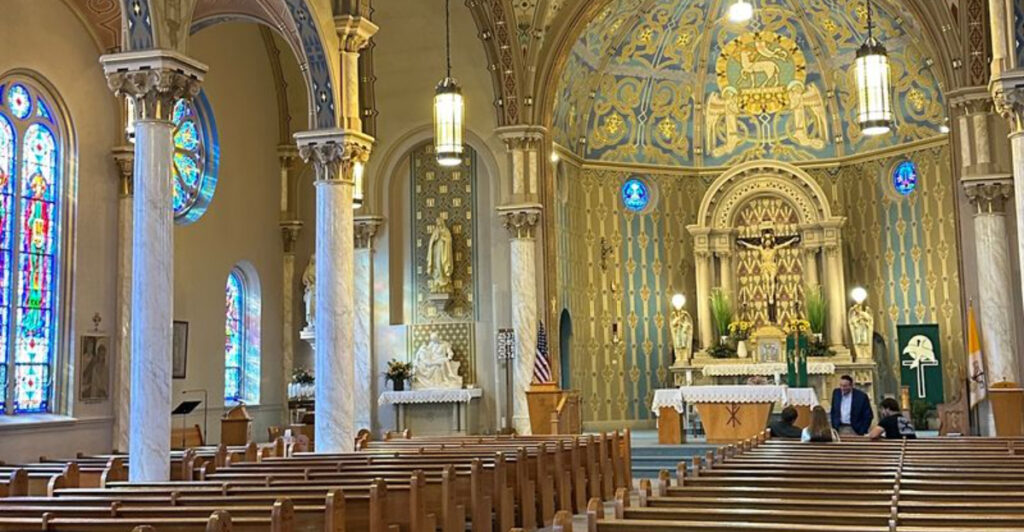
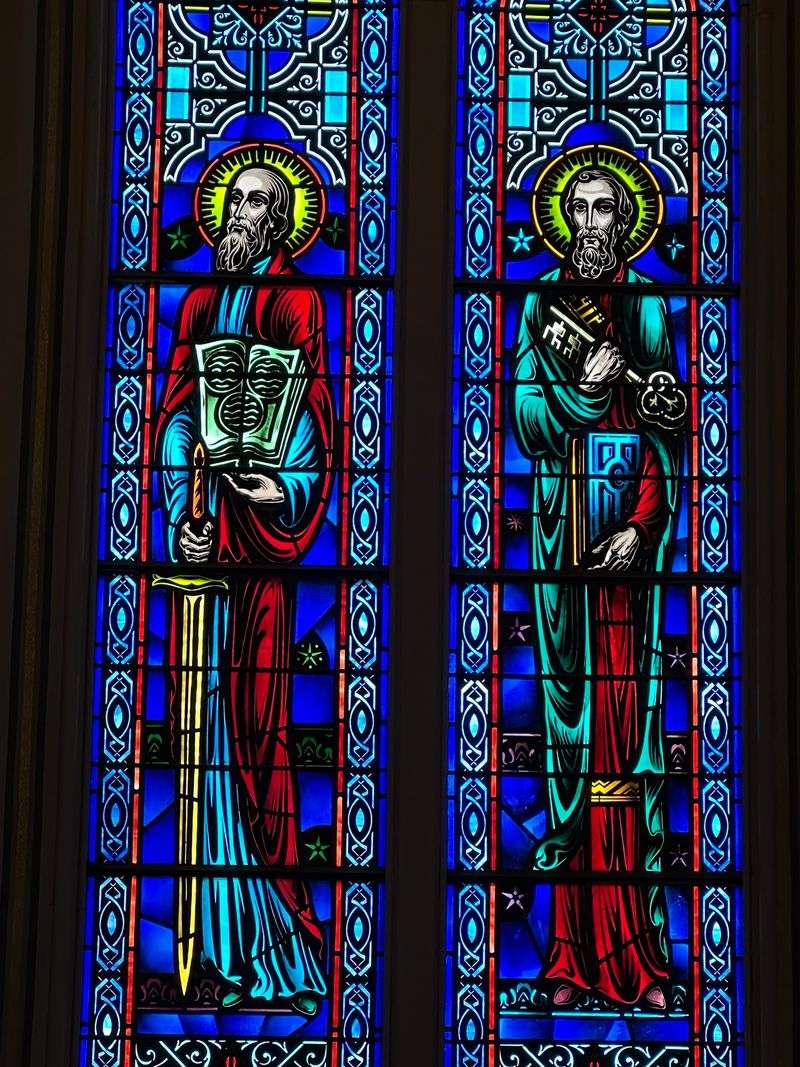
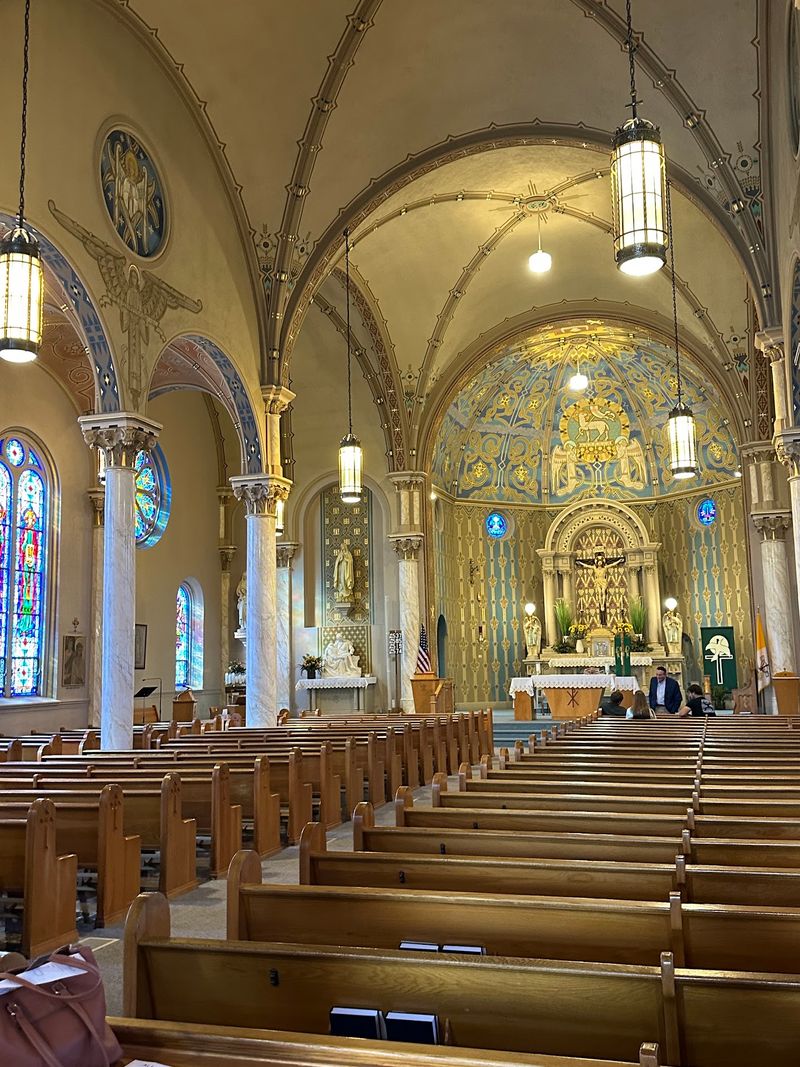
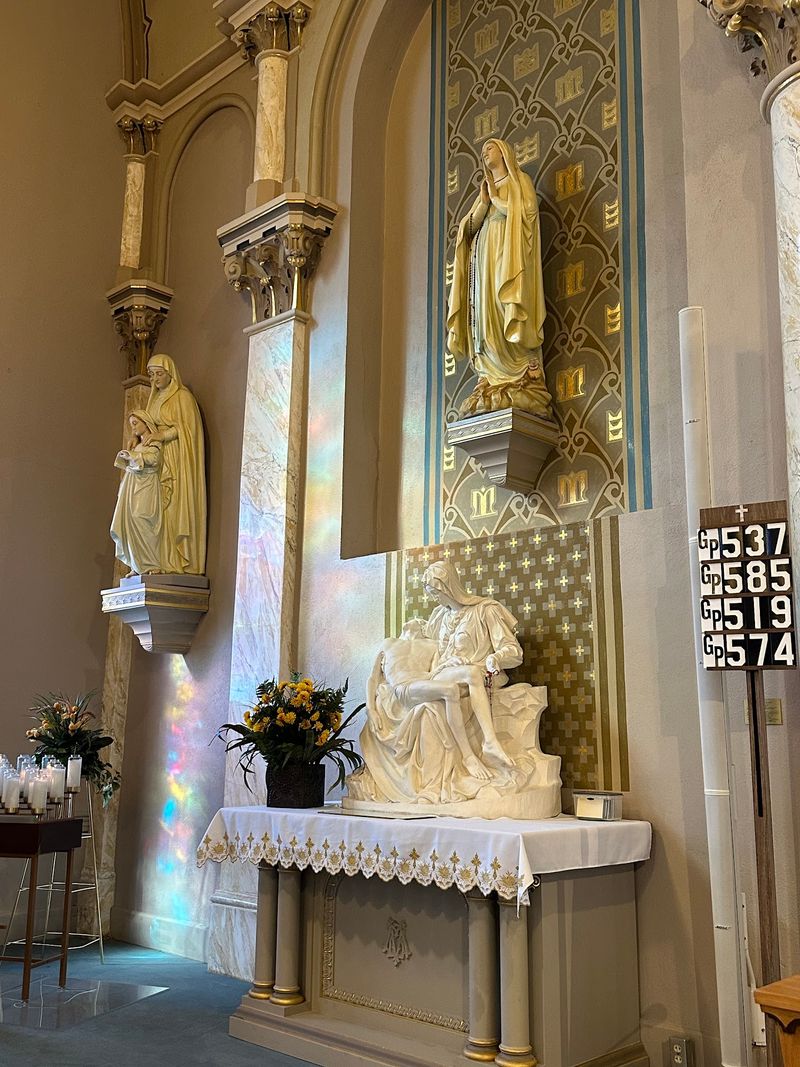
Inside, the arched ceiling carries sound through the sanctuary. Stained-glass windows brighten the nave, while decorated columns use scagliola, a finish designed to resemble polished marble.
The interior is one of the reasons the church earned recognition as an architectural landmark.
Its painted decoration, stained glass, arches, and rows of columns give the sanctuary a much richer appearance than the restrained limestone exterior suggests.
Current parish information lists Mass on Sunday and Wednesday, with additional First Friday observances. Checking the parish schedule before a longer drive is still sensible.
Enter quietly either way. People worship here, and visitors are guests in a working house of worship throughout every ordinary week in Damar.
The Hilltop Cemetery With The Best Vantage Point
Ask around about the finest view and the answer points uphill, outside of town.
The parish cemetery occupies a rise beyond the houses, and from there the church sits perfectly framed against open country. Headstones carry French surnames going back generations, which quietly reinforces the settlement story.
I walked the rows slowly, reading dates and noticing how many families repeat across the grounds. Ancestors of people still farming nearby rest here, and descendants visit regularly to tend the plots.
Sunset works beautifully from this spot, with the towers turning dark against an orange sky. Wind comes hard across the hill, so a jacket helps even in mild months.
Keep your footsteps respectful and avoid leaning on older markers, since prairie weather has already been rough on them. Gravel access can get soft after heavy rain, so a slow approach saves your tires.
Of everything I photographed in Damar, the hilltop frame is the shot I keep coming back to.
Planning The Detour And What Sits Nearby
Nobody stumbles onto this place by accident, and that is part of the charm.
Damar sits north of Hays and well away from I-70, so reaching it requires a deliberate detour. The current parish address is 107 N Oak St, and the church stands prominently near the center of town.
Nicodemus National Historic Site is only a short drive north in neighboring Graham County, making the two landmarks easy to combine on the same outing.
Damar’s own visitor information specifically lists Nicodemus among nearby attractions.
Services in Damar are limited, so filling the tank and bringing snacks before leaving a larger community is practical.
The town is about five miles south of U.S. Highway 24, with access from Kansas Highway 18.
Downloading directions ahead of time is also sensible when traveling rural roads.
Take the long way, enjoy the open country, and let those twin towers reward your patience the moment they clear the wide Kansas horizon.